Your tap water carries a cocktail of chlorine, heavy metals, and trace pharmaceuticals that no basic fridge filter was designed to handle. The difference between a simple carbon block and a true multi-stage system is the difference between “less bad” and genuinely clean, great-tasting water you actually want to drink.
I’m Mohammad Maruf — the founder and writer behind AirfryerBite. I’ve spent years analyzing filter certifications, micron ratings, and total dissolved solids (TDS) reduction data to understand what separates a marketing promise from real contaminant removal.
Whether you are concerned about lead, PFAS, fluoride, or simply tired of plastic bottle waste, finding the right quality water filter means matching the right technology to your specific water chemistry and daily volume needs.
How To Choose The Best Quality Water Filter
Choosing a water filter comes down to matching the filtration technology to your specific tap water problems. A basic carbon pitcher is fine for improving taste, but it will not touch fluoride, heavy metals, or dissolved solids. For those contaminants, you need a system with a much tighter membrane, like reverse osmosis.
Match the Filter Type to Your Contaminants
Carbon block filters (often 0.5 micron) are excellent for reducing chlorine, sediment, and volatile organic compounds (VOCs) while retaining beneficial minerals. Reverse osmosis (RO) systems use a semi-permeable membrane that blocks dissolved solids, fluoride, arsenic, and nitrates, but they typically strip out all minerals, which some users find leaves a “flat” taste that requires a remineralization stage.
Check for Real Certifications
Do not rely on “tested to reduce” language alone. Look for certification marks from NSF International or IAMPO that verify the product meets specific NSF/ANSI standards: Standard 42 for aesthetic effects (taste, odor), Standard 53 for health-related contaminants, Standard 58 for RO system performance, and Standard 372 for lead-free components. These certifications provide third-party validation.
Evaluate Filter Lifespan and Flow Rate
A longer filter life (measured in gallons or months) reduces long-term cost, but it can come with a slower flow rate. Standard pitcher filters last 40 gallons; advanced options like the ZeroWater dispenser uses a dense five-stage filter that lasts about 40 gallons but can take 20–30 minutes to process a full tank. Under-sink systems like the SimPure V7 claim a 20,000-gallon filter life with a fast 1.6 GPM flow rate, making them highly convenient for daily cooking and drinking.
Quick Comparison
On smaller screens, swipe sideways to see the full table.
| Model | Category | Best For | Key Spec | Amazon |
|---|---|---|---|---|
| Clearly Filtered Pitcher | Pitcher | Broadest contaminant range | 100-gallon filter life, NSF certified | Amazon |
| Waterdrop G3P800 | Under Sink RO | Highest capacity RO | 800 GPD, 3:1 pure to drain | Amazon |
| Bluevua RO100ROPOT-Lite | Countertop RO | No-installation RO with glass carafe | 7-stage UV, 3:1 ratio | Amazon |
| SimPure V7 | Under Sink | Mineral retention | 0.5 micron, 20,000 gallon life | Amazon |
| ZeroWater 32-Cup | Dispenser | Zero TDS output | 5-stage ion exchange, TDS meter | Amazon |
| Brita Wave 10 Cup | Pitcher | Everyday taste improvement | 40-gallon filter, electronic indicator | Amazon |
| 3M Aqua-Pure DW8090 | Under Sink Filter | Reliable under-sink replacement | 625-gallon auto shut-off | Amazon |
In‑Depth Reviews
1. Clearly Filtered Filtered Water Pitcher
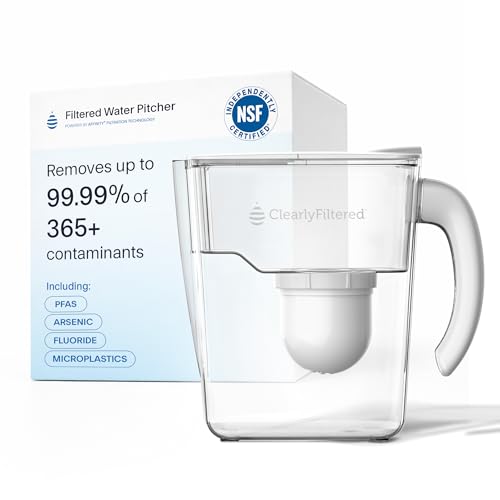
This pitcher uses proprietary Affinity Filtration Technology that binds contaminants at the ionic level, targeting over 365 different substances including fluoride, lead, and PFAS. Independent NSF certification validates its claims, a rarity among pitcher-style filters. The 80-ounce capacity fits comfortably on standard refrigerator shelves, and the Tritan plastic body is BPA and BPS free.
Users consistently report a dramatic improvement in taste, noting that the water tastes clean and refreshing without any chemical aftertaste. The long filter life is a major selling point, with each filter handling up to 100 gallons (roughly four months of daily use). The flow rate is moderate, but the water quality justifies the wait.
One caveat: the plastic construction, while high-grade, has had isolated reports of black growth inside the pitcher after many months. The manufacturer attributes this to cleaning practices, but it is worth noting for those who prefer all-metal systems. Overall, this is the most complete solution in a no-installation pitcher format.
Why it’s great
- Targets 365+ contaminants including fluoride and PFAS.
- Long 100-gallon filter lifespan reduces replacement frequency.
- Made from durable, medical-grade Tritan plastic.
Good to know
- Filter replacement cost is higher than standard pitchers.
- Slow flow rate compared to under-sink systems.
2. Waterdrop G3P800 Reverse Osmosis System
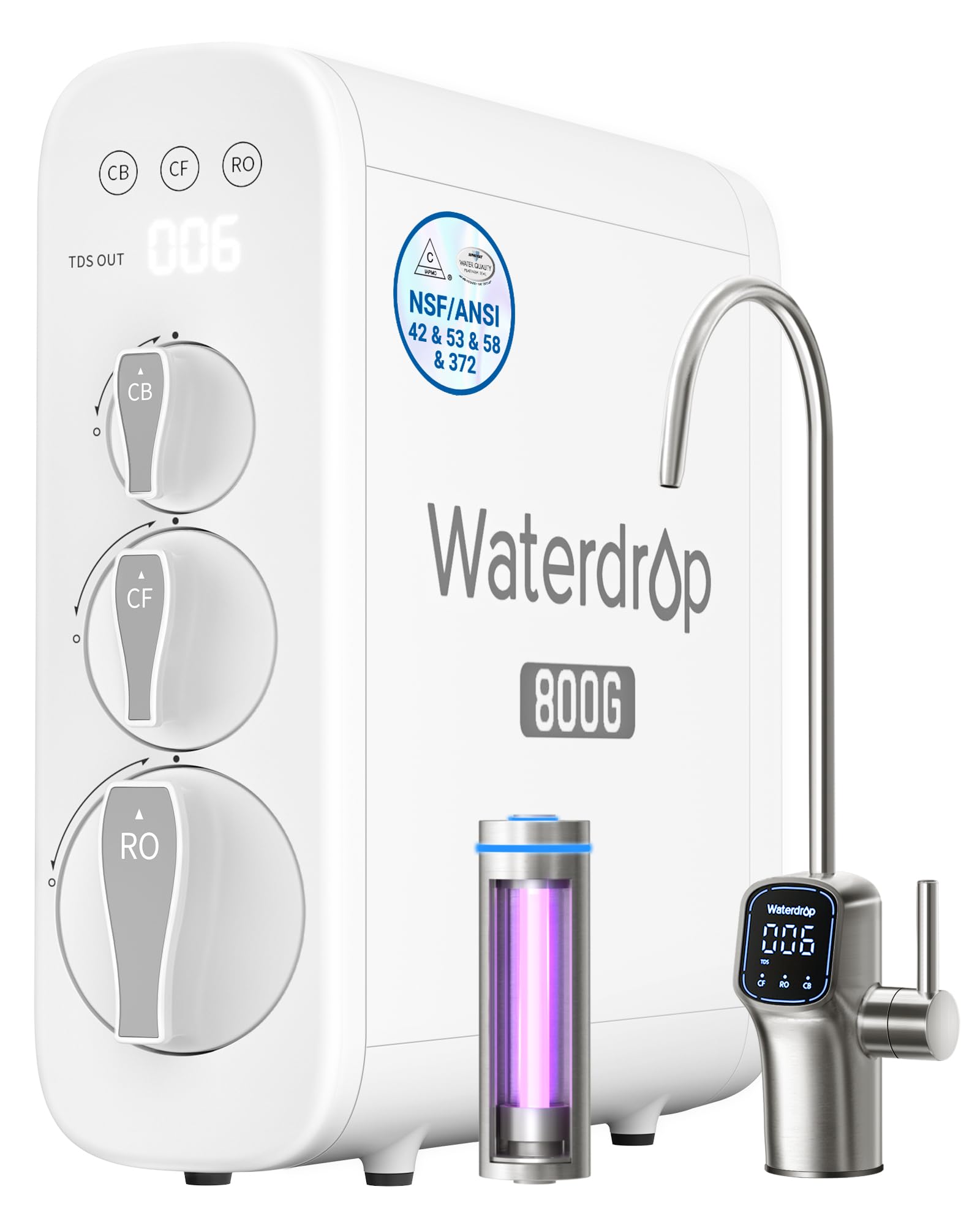
This tankless under-sink RO system delivers a massive 800 gallons per day, filling a cup in just five seconds. The 10-stage filtration process uses a combination of PP cotton, carbon block, and a reverse osmosis membrane to reduce PFAS, fluoride, heavy metals, and nitrates. It is fully certified by IAPMO R&T against NSF/ANSI standards 42, 53, 58, and 372, which is a gold standard for water quality verification.
The smart faucet features an LED display that shows TDS levels in real time, so you always know exactly what your water quality is. The tankless design saves significant under-sink space and eliminates the risk of bacterial growth in a storage tank. The 3:1 pure-to-drain ratio is also efficient for an RO system, wasting only one cup of water for every three cups of filtered water.
Installation requires two drilled holes (one for the faucet, one for the drain connection) and an electrical outlet for the pump. The twist-in filter replacements are designed to be quick and tool-free. Users praise the quiet operation and the dramatically reduced TDS levels, often dropping from over 450 ppm to single digits.
Why it’s great
- Highest capacity at 800 GPD with near-instant flow.
- Comprehensive NSF/ANSI certifications across four standards.
- Smart faucet with real-time TDS monitoring.
Good to know
- Requires professional installation due to drilling needed.
- High initial investment compared to pitchers.
3. Bluevua RO100ROPOT-Lite Countertop Reverse Osmosis System
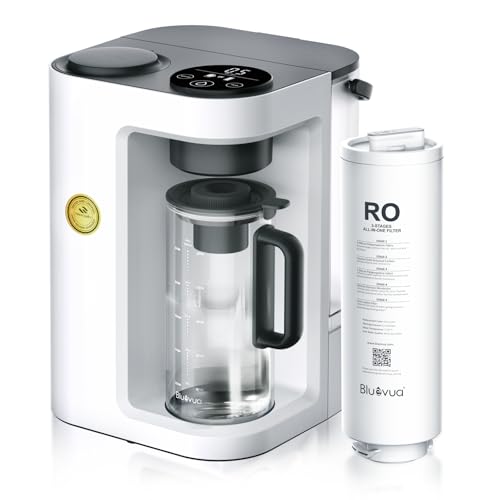
This countertop unit provides RO-quality water without any plumbing work. The 7-stage system includes a 5-in-1 composite filter, UV sterilization, and a remineralization stage that puts back beneficial minerals, solving the flat-taste issue common with RO systems. The glass carafe is a premium touch, eliminating any plastic leaching concerns for the final water storage.
The smart LED panel lets you select the exact volume you want and shows real-time TDS levels. Users report TDS reductions from over 500 ppm down to single digits, with the remineralizer boosting it to around 4 ppm for a balanced taste. The 3:1 pure-to-drain ratio is excellent for a countertop RO, and the single yearly filter replacement simplifies maintenance.
The glass infuser included for fruit-infused water is a creative bonus, but the core appeal is the combination of RO purity with the convenience of a plug-and-play appliance. The compact footprint works well for small kitchens or RVs. One note: the filtration speed is slower than under-sink systems, at about 0.26 liters per minute.
Why it’s great
- Zero installation required — just plug and pour.
- Glass carafe avoids plastic aftertaste.
- Remineralization improves taste over standard RO.
Good to know
- Slower flow rate than under-sink RO systems.
- Filter replacement costs around -80 per year.
4. SimPure V7 Under Sink Water Filter System

The SimPure V7 takes a different approach from RO systems: it uses a 5-stage composite filtration with double-activated carbon blocks and KDF-55 media to reduce chlorine, heavy metals, and odors while preserving beneficial minerals. This means your water tastes clean and fresh without the flatness you get from a pure RO system. The 0.5-micron rating is impressive for a non-RO filter.
The entire housing is crafted from 304 food-grade stainless steel, a significant upgrade over plastic under-sink filters. The 3-minute tool-free installation with direct-connect hoses fits 3/8-inch and 1/2-inch cold water lines, making it accessible for renters and apartment dwellers. The 20,000-gallon filter life and 1.6 GPM flow rate mean you can fill a glass in about three seconds without any lag.
Users consistently praise the build quality and the dramatic improvement in water taste. The compact 3.6-inch diameter profile fits even crowded under-sink cabinets. Keep in mind that this system does not reduce TDS, so it is not the right choice if you are dealing with high dissolved solids or fluoride.
Why it’s great
- All-metal 304 stainless steel housing is extremely durable.
- Retains beneficial minerals for a natural taste.
- Very fast flow rate at 1.6 GPM.
Good to know
- Does not reduce TDS or remove fluoride.
- Filter life may be shorter than claimed with very dirty water.
5. ZeroWater 32-Cup 5-Stage Water Filter Dispenser

ZeroWater’s claim to fame is its five-stage ion exchange technology that is independently verified to reduce total dissolved solids (TDS) to zero. The included instant-read TDS meter lets you check the exact purity level before dispensing, which is a powerful transparency tool. The 32-cup dispenser is massive, making it ideal for large families or office settings.
The filtration is exceptionally thorough, removing virtually all organic and inorganic materials including metals, minerals, and salts. Users with hard water (500 ppm TDS) have measured outputs of 0 ppm. This purity does come with a trade-off: the water can taste “flat” or “almost sweet” because all minerals are stripped. Many users add mineral drops for balance.
Filtration speed is slow due to the dense filter, often taking 20–30 minutes for a full tank. Filters last about 40 gallons, which at high usage means monthly replacements. The initial “funk” odor, reported by some users, typically fades after a few days of use. The build quality is solid with a reliable O-ring seal.
Why it’s great
- Reduces TDS to 0 ppm for the purest possible water.
- Built-in TDS meter provides real-time verification.
- Large 32-cup capacity reduces refill frequency.
Good to know
- Slow filtration speed; can take 20-30 minutes per tank.
- Water tastes flat; mineral drops are recommended.
6. Brita Wave 10 Cup Water Pitcher
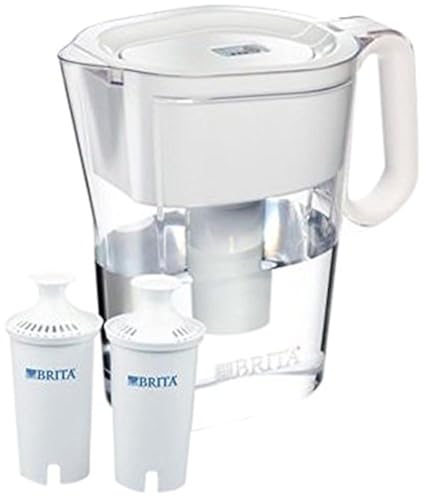
The Brita Wave is the standard-bearer for basic water filtration, focused primarily on improving taste by reducing chlorine. Each filter has a 40-gallon lifespan, roughly equating to 300 standard water bottles. The flip-top lid makes refilling straightforward, and the electronic filter indicator eliminates guesswork about when to swap the cartridge.
Users consistently praise the sturdy construction and the noticeable improvement in water taste compared to straight tap water. The pitcher is designed to fit on most refrigerator shelves, though it is on the taller side. The copper filtering material is effective for its intended purpose: removing the pool-taste of municipal chlorine.
There are two common issues: the spout door can sometimes stick, potentially causing spills if the pitcher tips against a cabinet. Also, the pitcher can be hard to lift when full for users with limited hand strength. It does not reduce lead, fluoride, or TDS, so it is best seen as a taste enhancer rather than a health purification system.
Why it’s great
- Widely available and affordable to maintain.
- Electronic indicator takes the guesswork out of filter changes.
- Noticeably improves water taste by removing chlorine.
Good to know
- Does not reduce lead, fluoride, or TDS.
- Spout door can stick, leading to potential spills.
7. 3M Aqua-Pure DW8090 Under Sink Replacement Water Filters
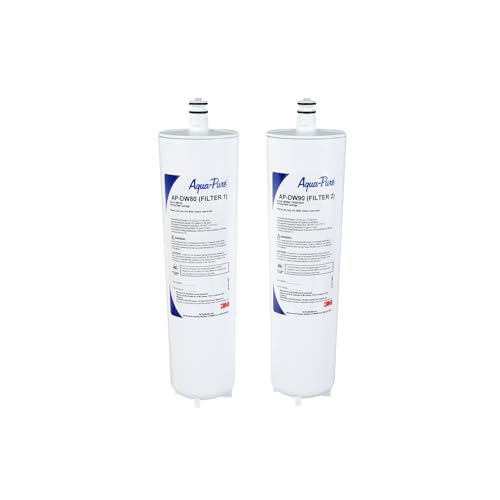
These are the replacement cartridges for the 3M Aqua-Pure AP-DWS1000 under-sink system, not a standalone filter. The set includes the DW80 and DW90 cartridges that work together for dual-stage carbon block filtration. They are designed to reduce particulate, chlorine, lead, parasitic cysts, VOCs, and MTBE, providing comprehensive taste and odor control.
The system features a built-in automatic shut-off meter that turns off the water supply after 625 gallons, reminding you to change the cartridges. This is a smart preventative feature that ensures you never run the system with expired filters. Users who have owned this system for decades report consistent performance and water that tastes superior to both tap and standard bottled water.
The Sanitary Quick Change (SQC) design makes swapping cartridges fast and tool-free. However, these are replacement filters, so you must already own the AP-DWS1000 base unit. The initial investment for the system plus these cartridges is substantial, but users with well water appreciate the long 18-month lifespan between changes for a two-person household.
Why it’s great
- Long 625-gallon life with automatic shut-off reminder.
- Proven track record; users report 10+ years of reliable service.
- Dual-stage carbon block reduces VOCs and lead effectively.
Good to know
- Requires the specific AP-DWS1000 base system to function.
- Replacement cost is high compared to pitcher filters.
FAQ
Do I need a filter that reduces TDS?
How often should I replace my water filter?
Is reverse osmosis water safe to drink long-term?
What is the difference between a countertop and under-sink water filter?
Final Thoughts: The Verdict
For most users, the quality water filter winner is the Clearly Filtered Filtered Water Pitcher because it strikes the best balance between contaminant removal range (365+ targets), independent NSF certification, and a convenient no-installation format. If you want the highest purity with zero dissolved solids, grab the Waterdrop G3P800 RO System for its incredible 800 GPD flow and smart TDS monitoring. And for a no-plumbing, premium RO experience with great taste, the Bluevua RO100ROPOT-Lite is the clear choice.