The promise of tender, fall-off-the-bone ribs or a perfectly marbled brisket is what drives every backyard cook to invest in a dedicated smoker. But not all smoke is created equal—the difference between dry, acrid meat and a juicy, deeply flavored masterpiece lies in the machine’s ability to hold steady, low temperatures and manage airflow. Choosing the wrong design can turn a weekend cookout into a frustrating battle against temperature swings and fuel waste.
I’m Mohammad Maruf — the founder and writer behind AirfryerBite. I’ve spent years analyzing hardware specifications, market trends, and user experiences across dozens of brands to understand what separates a budget fire hazard from a true low-and-slow workhorse. My research focuses on measurable specs: cooking area, temperature range, insulation quality, and build integrity.
Selecting the perfect setup for your patio means weighing fuel type, size, and temperature control against your cooking style. This guide breaks down the top contenders in the best meat smoker category, giving you the concrete details needed to make a confident purchase.
How To Choose The Best Meat Smoker
Picking a smoker isn’t like choosing a grill. You’re buying a device built to maintain a precise, low temperature for many hours. The wrong decision can mean spending more time adjusting vents and adding fuel than actually relaxing with a cold drink. Here are the critical factors that define a quality smoker.
Fuel Type: Charcoal, Propane, or Wood Pellet
Charcoal smokers deliver the most authentic smoke flavor but demand constant attention to damper settings and fuel replenishment. Propane smokers offer the most hands-off temperature consistency with a simple dial, though you sacrifice some flavor complexity. Wood pellet smokers provide an automated, set-it-and-forget-it experience with rich wood-fired taste, but they rely on electricity and moving parts that can fail. Your choice depends on how much hands-on involvement you want in the cooking process.
Cooking Area and Capacity
Square inches of cooking area is the most honest spec for capacity. A smoker with 450 square inches can handle a single brisket or a couple of racks of ribs. For feeding a crowd of 10 to 15 people, look for models with 880 to 960 square inches, or even larger if you plan to cook multiple whole birds or pork butts simultaneously. Always check the layout—vertical smokers pack more racks into a smaller footprint, while offset smokers require more horizontal space but allow for larger cuts.
Temperature Control and Construction
Look for thick steel construction (14-gauge or thicker) and proper seals around doors and chambers. Thin metal loses heat rapidly and struggles in cold or windy weather. For pellet smokers, a PID (Proportional-Integral-Derivative) digital controller is a must—it maintains temperature within a tight range by adjusting the pellet feed rate automatically. For charcoal and offset smokers, adjustable dampers and a calibrated thermometer are your only tools, making build quality and tight seals even more important.
Quick Comparison
On smaller screens, swipe sideways to see the full table.
| Model | Category | Best For | Key Spec | Amazon |
|---|---|---|---|---|
| Traeger Ironwood 885 | Pellet | WiFi-enabled set-and-forget | 885 sq. in., 165–500°F | Amazon |
| Z GRILLS 700D6 | Pellet | Dual-wall insulation value | 697 sq. in., 180–500°F | Amazon |
| Oklahoma Joe’s Highland | Offset Charcoal | Classic offset smoking | 900 sq. in. total, porcelain | Amazon |
| DAMNISS 8-in-1 | Pellet | Compact pellet smoking | 456 sq. in., 180–500°F | Amazon |
| Pit Boss 3-Series Gas | Propane | Hands-off gas convenience | 880 sq. in., 100–320°F | Amazon |
| Sophia & William Offset Charcoal | Offset Charcoal | Large group offset cooking | 941 sq. in., one-piece chamber | Amazon |
| Sophia & William Vertical Charcoal | Vertical Charcoal | Vertical offset for uniform heat | 961 sq. in., 5-layer racks | Amazon |
| Propane Vertical Smoker | Propane | Budget-friendly gas entry | 3 racks, adjustable rails | Amazon |
In‑Depth Reviews
1. Traeger Ironwood 885

The Traeger Ironwood 885 is the benchmark for modern pellet smoking. Its D2 controller and WiFIRE technology let you adjust temperature, set timers, and monitor dual meat probes directly from your phone, giving you total freedom to walk away from the cooker. The Super Smoke Mode kicks in between 165°F and 225°F, pushing more hardwood smoke across the meat for a noticeably deeper bark and smokier flavor than standard pellet settings produce.
With 885 square inches of cooking area across two tiers, this smoker can handle 7 racks of ribs, 10 chickens, or 9 pork butts in a single session—plenty for a serious gathering. The double-wall insulation maintains stable temperatures in cold and windy conditions, a major advantage over thinner single-wall pellet grills that struggle with winter cooking. The build quality is dense, weighing over 170 pounds, and the textured grip door handle with fireproof rope seal prevents smoke leakage.
The primary drawback is the premium price point, which places it above many competitors. Additionally, the need for proprietary Traeger pellets and relatively expensive drip pan liners adds to ongoing operating costs. Some users also experienced initial WiFi setup frustrations with the app, though once connected, performance was reliable.
Why it’s great
- Super Smoke Mode delivers unmatched pellet flavor intensity
- WiFi control and dual probes for true set-and-forget convenience
- Double-wall insulation maintains temperature in cold weather
Good to know
- Premium price and ongoing pellet/liner costs add up
- App setup can be finicky for some users
- Single meat probe included, second probe sold separately
2. Sophia & William Offset Charcoal Smoker (941 sq. in.)

This offset smoker from Sophia & William delivers 941 total square inches of cooking surface, split between a 551 sq. in. main grate, a 198 sq. in. warming rack, and a 192 sq. in. offset firebox. That is enough room to feed 10 to 15 people without crowding your meat. The one-piece smoker chamber is a standout feature—many offset smokers in this price range use a two-piece design that leaks heat and smoke, but this welded single body seals tightly, allowing real temperature control through the adjustable dampers.
The heavy-duty steel construction and large 10-inch wheels make it stable on uneven patio surfaces and resistant to wind. The porcelain-enameled iron cooking grates distribute heat evenly and resist rust better than standard chrome-plated wire. The side firebox includes additional grates, giving you the option to grill directly over charcoal as well as smoke, adding versatility. Users consistently report that holding 220°F to 250°F is intuitive once the dampers are dialed in, producing clean blue smoke and excellent bark on briskets and pork shoulders.
The build quality, while good for the mid-range, still uses thinner steel than premium offsets from brands like Oklahoma Joe’s, so it may not hold heat as efficiently in sub-freezing temperatures. Some owners noted minor grease leakage at the barrel end where the drip bucket attaches, and there is no factory provision for an aftermarket blower fan, which some offset enthusiasts prefer for long overnight cooks.
Why it’s great
- One-piece welded chamber prevents smoke and heat leaks
- Large 941 sq. in. total area for big gatherings
- Porcelain-enameled grates offer even heating and easy cleaning
Good to know
- Thinner steel than premium offsets; less heat retention in cold
- Grease can pool at the barrel end without a drip bucket
- No blower attachment port for automated fan control
3. Oklahoma Joe’s Highland Offset Smoker

The Oklahoma Joe’s Highland is a legendary entry in the offset smoker world, offering a total of 900 square inches of cooking space (619 primary, 281 secondary warming rack). Its porcelain-enamel steel body and lid provide superior heat retention and rust resistance compared to the raw painted steel found on many budget offsets. The adjustable dampers on the firebox and smokestack give you granular control over airflow, enabling you to hold a consistent 225°F to 275°F for hours once you learn the airflow balance.
Users consistently praise this smoker for the quality of the barbecue it produces—real, clean offset flavor with a deep smoke ring and tender meat. The wagon-style wheels make it easy to maneuver on a patio or lawn, and the cool-touch handles are a practical safety touch. Many owners have reported using the Highland for years without significant rust, especially after seasoning the interior with bacon grease or high-heat cooking oil. The firebox is large enough to hold a full chimney of lump charcoal, allowing for extended burn times without refueling every 45 minutes.
The primary complaint is the thin-gauge steel (around 20-gauge in the cooking chamber), which can make temperature maintenance difficult in windy or cold weather. Many owners invest in a gasket seal kit and a high-temp silicone sealant to reduce smoke leakage from the firebox door and main chamber. The paint can bubble and peel during the initial seasoning burn, which is cosmetic but concerning for new users. The packaging also leaves something to be desired, with reports of scratches, bent legs, and missing hardware upon delivery.
Why it’s great
- True offset design for authentic, clean smoke flavor
- Porcelain-enamel steel resists rust better than painted steel
- Large capacity; fits full packer brisket and multiple racks of ribs
Good to know
- Thin steel walls require gasket sealing for best heat retention
- Paint may bubble during seasoning; cosmetic issue only
- Packaging often arrives damaged with scraped paint or bent parts
4. Pit Boss 3-Series Gas Vertical Smoker
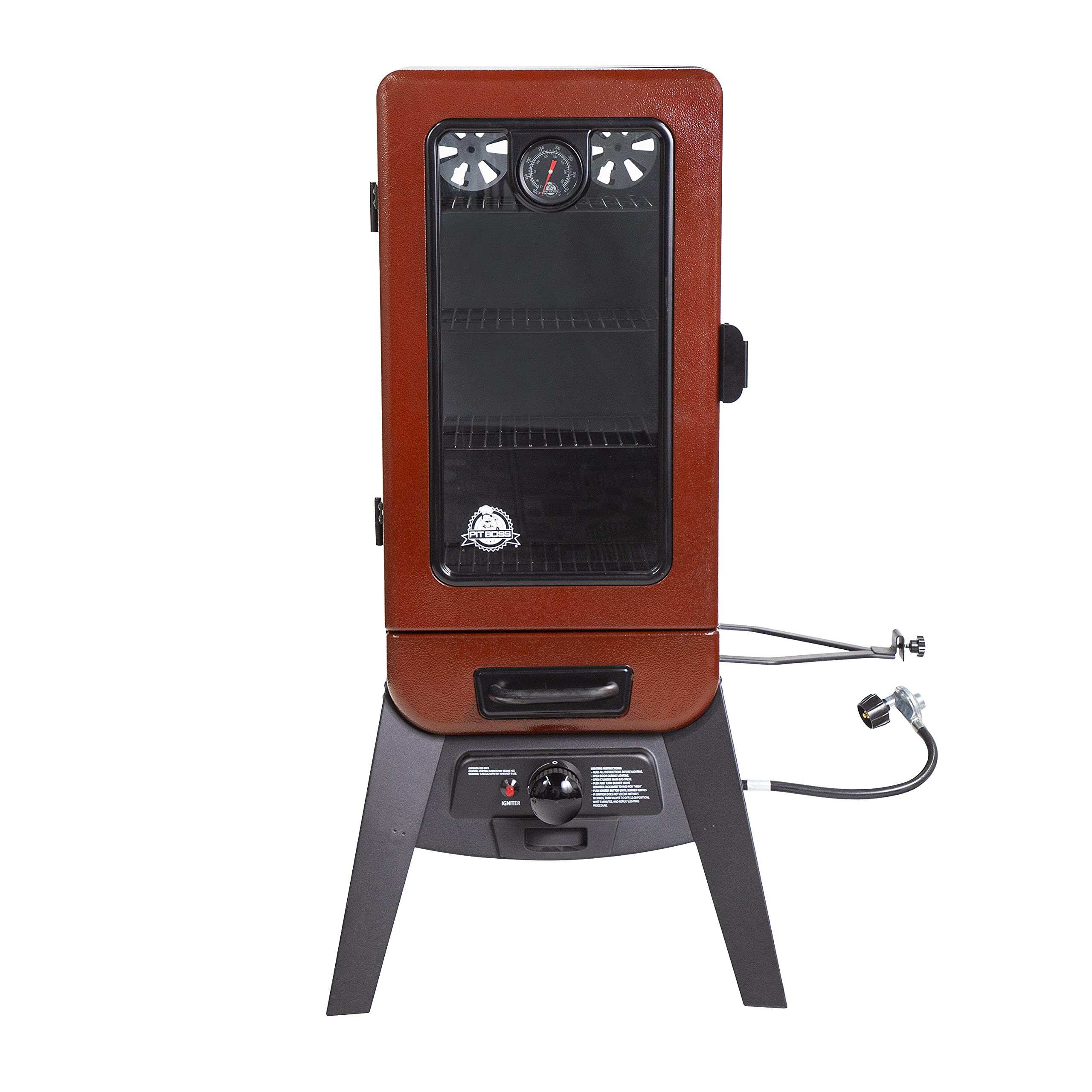
The Pit Boss 3-Series Gas Vertical Smoker is engineered for the cook who values convenience and capacity without the hassle of tending charcoal or worrying about pellet jams. Its dual valve and dual burner system pushes 12,500 BTU, allowing you to dial in precise temperatures from 100°F up to 320°F using propane. The 880 square inches of cooking space is spread across four racks, giving you plenty of room to smoke multiple cuts simultaneously, and the large viewing window lets you monitor color and bark formation without opening the door and losing heat.
The front-access grease drawer and external wood chip removal system make cleanup significantly easier than vertical smokers that require reaching inside the cooking chamber. The high-temp door seal retains optimal heat and smoke, reducing fuel consumption. The piezo ignition fires reliably on the first click, and the two rear wheels make it mobile enough to roll into a garage for storage. Users consistently report that ribs, pork butt, and salmon come out with excellent smoke flavor and tender texture, particularly when using a larger water pan to increase humidity inside the chamber.
The 100°F to 320°F temperature range is narrower than pellet or charcoal smokers, which can exceed 450°F, so you won’t be searing steaks directly on this unit. Some users found that holding 250°F in winter temperatures below 20°F required running the burner on maximum, which reduced the available temperature range for higher-heat smoking. A few owners also noted minor smoke leakage from the door and chip tray, though this is typical for vertical gas smokers at this price point and can be mitigated with a gasket kit.
Why it’s great
- Dual burner with precise valve control for steady low temperatures
- Front-access grease drawer and external chip removal for easy clean-up
- Large viewing window lets you check food without losing heat
Good to know
- Max temperature of 320°F limits high-heat searing capability
- Winter performance below 20°F requires max gas output
- Some smoke leakage at door and chip tray seals
5. Sophia & William Vertical Offset Charcoal Smoker (961 sq. in.)
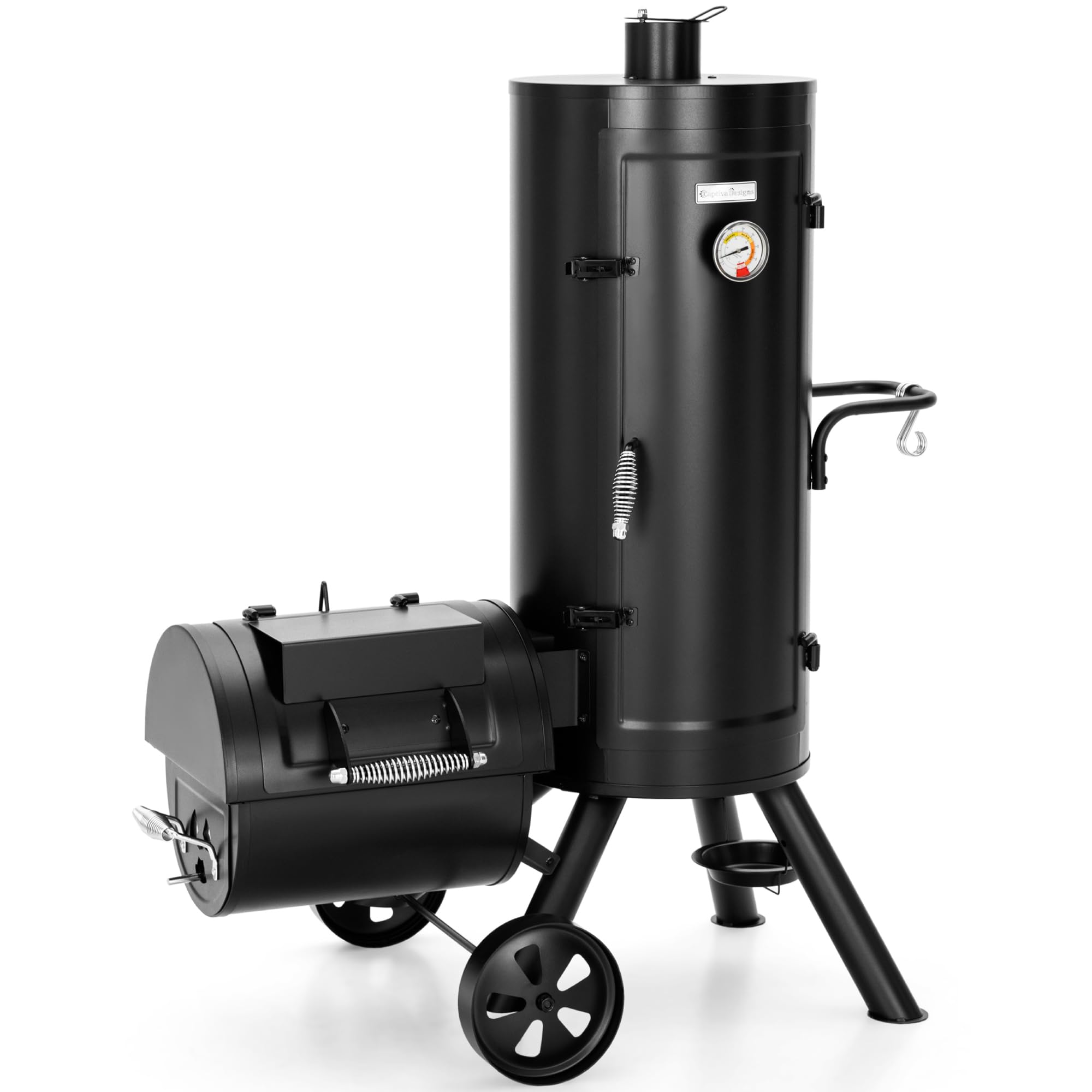
This vertical offset charcoal smoker from Sophia & William takes the classic offset design and stacks it, providing 961 square inches of cooking space across five chrome-plated primary racks, plus a 106 sq. in. offset firebox zone. The vertical orientation means heat and smoke rise uniformly through the chamber, eliminating the hot and cold spots common with horizontal offsets—you don’t need to rotate meat mid-cook. The removable grates are adjustable in height, so you can configure the interior to fit a full packer brisket on one level while smoking sausages or jalapeño poppers on another.
The heavy-duty steel construction, adjustable door latches, and side water filling door are designed to minimize heat and smoke loss. The push-out ash tray and grease cup simplify post-cook cleanup, a welcome feature for a vertical smoker this size. Hanging racks are included, allowing you to smoke whole poultry or racks of ribs vertically for even exposure to the smoke. Users report that the vertical offset design holds a steady 220°F to 250°F with minimal babysitting, and the smoke flavor is comparable to traditional offset smokers because the source is still offset, not directly beneath the food.
Like many mid-range vertical smokers, the steel gauge is not as thick as high-end models, which can make temperature swings more pronounced in windy conditions. A few users mentioned the grease cup and drip bucket could be larger to catch all the drippings during a long brisket cook. The assembly is straightforward but requires two people due to the height and weight of 101 pounds. There is no factory blower port, so automating airflow for overnight cooks requires aftermarket drilling.
Why it’s great
- Vertical design for uniform heat distribution and no rotation needed
- Adjustable 5-layer racks plus hanging hooks for versatile loading
- Push-out ash tray and grease cup for easy cleanup
Good to know
- Thinner steel can struggle with temperature stability in strong wind
- Grease cup may need more capacity for long overnight cooks
- No pre-drilled blower port for automation upgrades
6. Z GRILLS 2025 Pellet Grill & Smoker 700D6

The Z GRILLS 700D6 brings professional-grade PID control and dual-wall insulation to a mid-range price point. The Gen 3.0 PID controller automatically adjusts the pellet feed rate and airflow to maintain your target temperature within a few degrees, even when opening the lid or dealing with changing weather. The 697 square inch cooking area fits 29 burgers, 6 racks of ribs, or 5 whole chickens, making it suitable for larger family gatherings. The dual-wall insulation in the lower chamber is a notable upgrade at this price, reducing pellet consumption and keeping temperatures stable in cold conditions.
This unit includes two meat probes and an integrated hopper clean-out, allowing you to switch between wood pellet types without emptying the entire hopper by hand. The 8-in-1 functionality covers grilling, smoking, baking, roasting, searing, braising, barbecuing, and charring, with a temperature range from 180°F to 500°F. Users consistently report excellent results with brisket, chicken, and jerky, noting that the smoke flavor is rich and the temperature holds steady for hours. The included rain cover adds value, and the sturdy wheels make it easy to move across a patio.
The build quality is solid for the price range, but the burn cup requires frequent cleaning and is not easily accessible without disassembling grease-covered components. Some users reported that the lid paint can strip if exposed to oven cleaner, and switching pellets is complicated because the auger system holds residual pellets that must be manually removed. A small number of owners experienced electronic control unit failures after a few weeks of use, with the grill turning on by itself or displaying error codes, and customer support responses were slow in those cases.
Why it’s great
- PID 3.0 controller provides precise temperature stability
- Dual-wall insulation saves pellets and performs in cold weather
- Hopper clean-out and two meat probes included
Good to know
- Burn cup is difficult to access for required cleaning
- Switching pellet types requires manual auger emptying
- Electronic control unit failures reported by a minority of users
7. DAMNISS Electric Wood Pellet Smoker 8-in-1
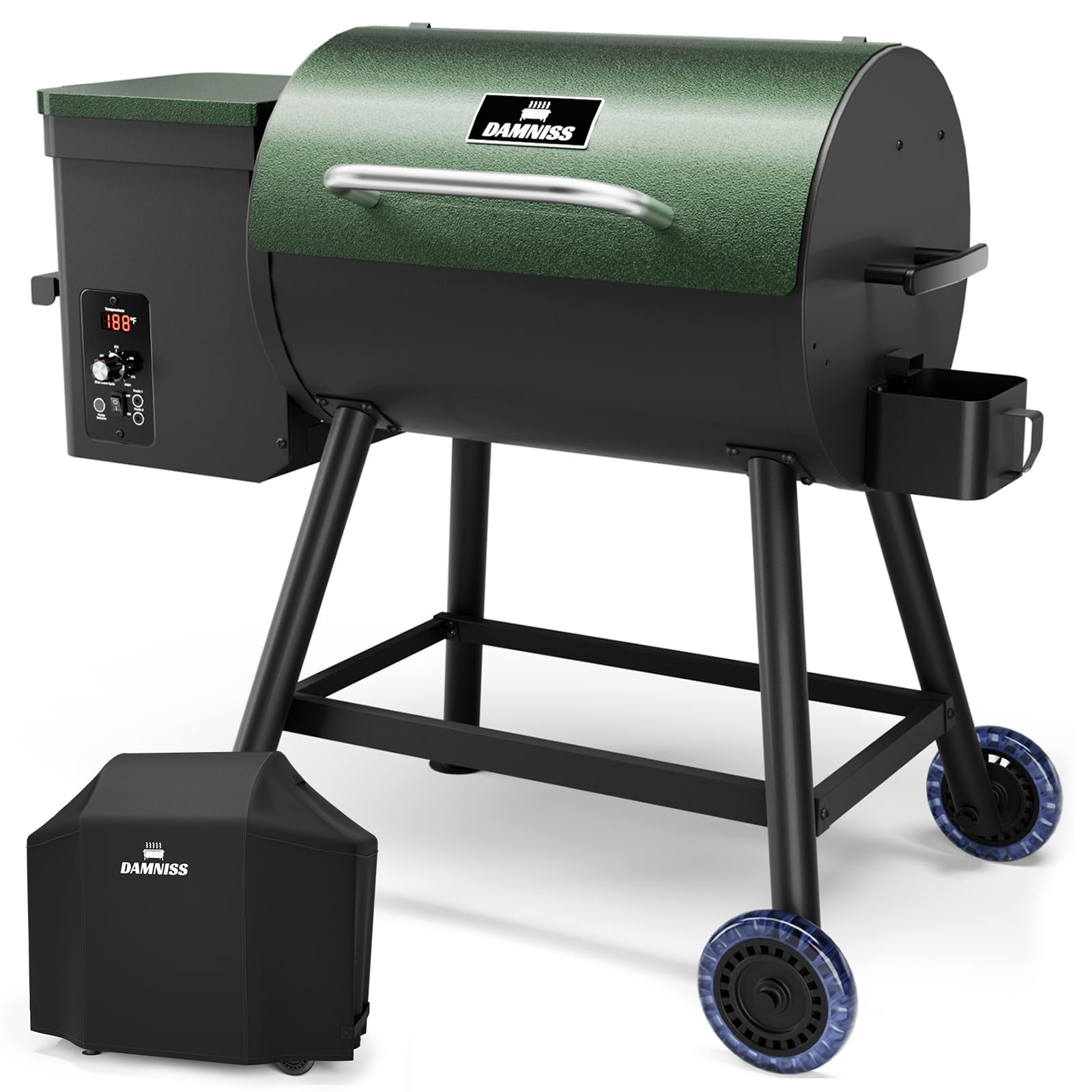
The DAMNISS 8-in-1 pellet smoker is built for the cook who wants pellet convenience without dedicating a huge footprint to a smoker. With 456 square inches of cooking area across two racks, it fits a whole brisket, 3 to 4 racks of ribs, and some vegetables—perfect for weekend cookouts and small family gatherings. The PID digital controller maintains temperatures from 180°F to 500°F, giving you the ability to slow-smoke pork butt at 225°F or sear steaks at 450°F with consistent results.
The stainless steel body and thickened insulated lid provide decent heat retention for a compact unit, and the cast iron grates offer excellent heat conductivity for searing. The pellet consumption rate of 1 to 2 pounds per hour is efficient, and the auto-feed system keeps the fire pot supplied. The included rain cover and sturdy wheels make it practical for year-round use. Users praise the ease of assembly and the quality of the smoke flavor, noting that ribs and pulled pork come out tender with a good bark. The manufacturer provides responsive customer service, with one user reporting a missing probe was quickly resolved.
The 456 square inch capacity is smaller than many vertical pellet smokers, so it won’t handle large catering-sized cooks without multiple batches. Some users noted that the smoke production is lighter at low temperatures (under 300°F) compared to higher-end pellet grills, though this can be adjusted by lowering the cook temperature and using a smoke tube for extra flavor. The grease tray tends to get messy quickly and requires frequent cleaning to prevent buildup.
Why it’s great
- PID controller for steady temperatures between 180°F and 500°F
- Efficient pellet usage—1 to 2 lbs per hour
- Compact stainless steel build fits smaller patios
Good to know
- 456 sq. in. is small for large gatherings or big briskets
- Lighter smoke production at low temps; smoke tube may help
- Grease tray gets messy and needs regular cleaning
8. Propane Smoker with Cover, Vertical Gas Smoker

This vertical propane smoker is a straightforward, budget-friendly entry point for beginners who want to learn the basics of low-and-slow cooking without a complex setup. The three removable smoking racks slide out on interior rails with food on them, making loading and unloading simple. The racks are adjustable in height, allowing you to accommodate larger cuts by removing a shelf. The water bowl and wood chip tray are accessible from the side or front without opening the main door, reducing heat loss every time you need to add chips or refill water.
The cabinet door seals tightly to trap smoke inside, and the design is compact enough to fit on small patios or balconies. The gas burner provides consistent heat that is easier to control than a charcoal fire for total beginners. The included cover adds protection when stored outside. Users appreciate the simplicity—light the propane, set the temperature dial, add wood chips to the tray, and let it run. The vertical airflow ensures even smoke distribution across all three racks, so food at the top and bottom cooks at a similar rate.
The build quality is adequate for the price, but the metal is thinner than more expensive vertical smokers, which can lead to heat loss in colder weather and a shorter lifespan. The maximum temperature is not listed, but gas vertical smokers typically struggle to exceed 300°F to 325°F, limiting your ability to sear or cook poultry with crispy skin. A few users noted that the included temperature gauge can be inaccurate, so an external thermometer is recommended for precise smoking.
Why it’s great
- Easy gas operation with dial control for consistent heat
- Removable water and chip trays accessed without opening main door
- Compact footprint and adjustable racks for flexible loading
Good to know
- Thin metal construction may not hold heat in cold weather
- Max temperature is limited; no searing capability
- Included thermometer may be inaccurate; use an external probe
FAQ
What is the difference between an offset smoker and a vertical smoker?
How many square inches of cooking area do I need for a family of four?
Can I use a meat smoker in the winter or in cold climates?
What is a PID controller and why does it matter for a pellet smoker?
Final Thoughts: The Verdict
For most users, the best meat smoker winner is the Traeger Ironwood 885 because it combines massive cooking capacity, WiFi-controlled precision, and Super Smoke Mode for authentic wood-fired flavor in a single, well-insulated package. If you want the classic offset experience and don’t mind tending a fire, grab the Oklahoma Joe’s Highland Offset Smoker. And for budget-conscious cooks who want consistent results without pellet costs, the Pit Boss 3-Series Gas Vertical Smoker delivers excellent capacity and convenience at a lower entry point.