Baking with matcha presents a unique challenge — the vibrant green you see in the powder can turn a dull, muddy brown the second it hits a hot oven. The wrong matcha not only fades, it turns bitter, robbing your cakes and cookies of both color and flavor. Finding a powder that holds its hue and tastes clean through the bake cycle is the real trick.
I’m Mohammad Maruf — the founder and writer behind AirfryerBite. Through months of analyzing batch sizes, harvest seasons, stone-grinding techniques, and customer feedback on heat retention, I know exactly which culinary-grade matchas survive the oven without fading.
This guide breaks down the five strongest contenders for your next bake. My mission is to help you confidently choose the best matcha for baking that delivers bold flavor and brilliant color every batch.
How To Choose The Best Matcha For Baking
Picking the right matcha for baking is different than picking one for drinking. Oven heat amplifies bitterness and dulls color, so the grade, harvest timing, and grind fineness matter far more than the price tag. Here are the critical factors to weigh.
Culinary Grade vs Ceremonial Grade
Ceremonial-grade matcha is made from the youngest, most tender leaves and is designed for whisking in hot water. It’s delicate and expensive. Culinary-grade matcha uses slightly older leaves, giving it a bolder, earthier flavor that stands up to flour, sugar, and butter. For baking, culinary grade always wins because it retains its character and color even after prolonged heat exposure.
Harvest Season and Color Stability
Early-spring harvest (first flush) matcha has higher chlorophyll and amino acid content, which translates to a brighter green and a smoother taste. Powders made from later harvests tend to look duller and taste more astringent. Always look for “early spring leaf harvest” or “first harvest” in the product description if you want baked goods that come out vivid green rather than army brown.
Fineness of Grind and Clumping
Stone-ground matcha is micron-fine and integrates into batter without clumps. Blade-ground matcha leaves a gritty texture and uneven color distribution. A finer grind also means the powder disperses more uniformly into wet ingredients, which prevents pockets of concentrated bitterness in your final bake. Stick to brands that explicitly say “stone ground” or “traditional stone grinding.”
Quick Comparison
On smaller screens, swipe sideways to see the full table.
| Model | Category | Best For | Key Spec | Amazon |
|---|---|---|---|---|
| Naturebell Organic Matcha | Culinary Grade | Big batch bakers & daily lattes | 1 lb bag — 151 servings | Amazon |
| Naoki Organic All Purpose Blend | JAS Organic | Vibrant color under high heat | 100g — resealable pouch | Amazon |
| Jade Leaf Organic Culinary Grade | Culinary Grade | Lattes & precise baking recipes | 100g — ~50 lattes | Amazon |
| MatchAiA Organic Premium Culinary | USDA Organic | Budget-friendly bulk baking | 350g tin — 12.3 oz | Amazon |
| Kenko Organic Culinary Grade | USDA Organic | Frequent small-batch recipes | 100g — 50 servings | Amazon |
In‑Depth Reviews
1. Naturebell Organic Matcha Green Tea Powder
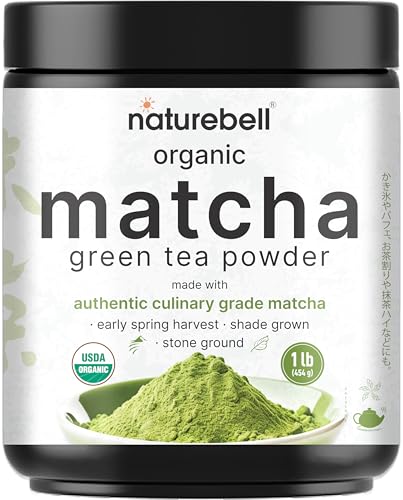
This 1-pound bag delivers a remarkable 151 servings from a single early-spring harvest, making it the volume champion for anyone who bakes multiple times a week. Customers consistently note the bright color and intense flavor — one reviewer reported it held its green perfectly in baked goods and ice cream, while another praised its ability to dissolve easily with a frother, producing a pale jade latte with no bitter edge.
The powder is unsweetened and contains zero sugar, which gives you full control over sweetness in your recipes. The third-party lab testing for radiation and absence of GMOs, gluten, soy, and dairy adds a serious safety layer that frequent bakers appreciate when incorporating matcha into large batches.
Naturebell’s culinary grade (C rank) is purpose-built for high heat. The grind is notably finer than many bulk options, meaning less clumping when creaming butter and sugar together. If you bake in volume and want consistent color batch after batch, this is the one.
Why it’s great
- Massive 1 lb supply — ideal for frequent bakers
- Early spring harvest provides stable green color
- Third-party lab tested for heavy metals and radiation
Good to know
- Not ceremonial grade — slightly more astringent if sipped plain
- Some users report minor clumping without a whisk
2. Naoki Matcha Organic All Purpose Blend
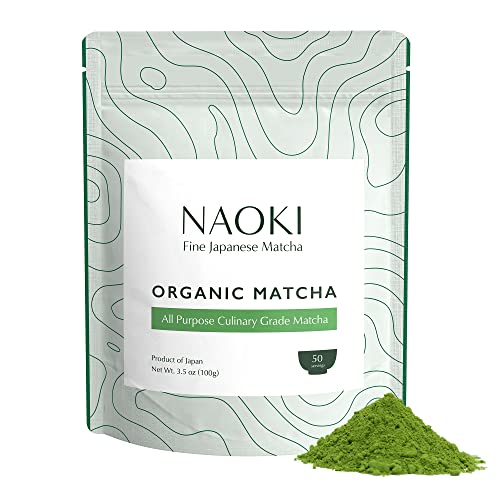
Naoki’s All Purpose Blend is the only product here certified by JAS (Japanese Agricultural Standards), which the USDA recognizes. Grown organically in Kagoshima Prefecture, the tea leaves are processed into tencha at modern facilities and stone-ground right before shipping. This short-chain freshness protocol ensures the chlorophyll stays locked in, so your cakes and muffins retain a brilliant green even after 350°F heat.
Customers describe the flavor as robust and earthy without overwhelming bitterness. One long-term reviewer mentioned that the smooth texture and consistent quality kept them on subscription. Since the bag is resealable, you can store it in the fridge without worrying about moisture sneaking in between bakes.
The 100-gram size hits the sweet spot for a home baker who makes one or two matcha recipes per week. It’s small enough to finish within the ideal 30-60 day freshness window but big enough to test multiple recipes. The price per gram sits in the mid-range, so you are paying for authentic origin and grind quality rather than bulk volume.
Why it’s great
- JAS organic certification ensures strict cultivation standards
- Stone-ground just before export for peak freshness
- Vibrant green holds under high baking temperatures
Good to know
- Smaller 3.5 oz pouch — not for heavy-volume bakers
- Slightly higher price per serving than bulk options
3. Jade Leaf Matcha Organic Culinary Grade

Jade Leaf has become a household name for good reason — it delivers culinary-grade performance at a per-cup cost that rivals budget options. Sourced from the tea fields of Uji and Kagoshima, this single-ingredient matcha contains no sweetener, no fillers, just pure shade-grown powder. The brand specifically recommends using 1 to 3 teaspoons per cup of flour for muffins, cakes, and pancakes, which speaks directly to the baking audience.
Customer feedback is consistently strong: reviewers note the vibrant color, smooth texture, and lack of bitterness even when mixed with almond milk. One enthusiastic baker used it successfully in a Ninja Creami, proving it blends into cold bases without seizing. The resalable pouch keeps the powder fresh, though the brand recommends using it within 30–60 days after opening for optimal flavor.
At 100 grams, this pouch makes about 50 full-sized lattes or roughly 25 baking sessions depending on your recipe. It occupies the middle of the price spectrum but punches above its weight in color retention — many users report that cookies made with Jade Leaf stay bright green after cooling, with no muddy undertones.
Why it’s great
- Excellent color retention in baked goods
- Single-ingredient — no sugar or fillers
- Clear baking instructions on the pouch
Good to know
- Small pouch may feel expensive per ounce vs bulk
- Best used within 60 days of opening
4. MatchAiA Organic Matcha Green Tea Powder
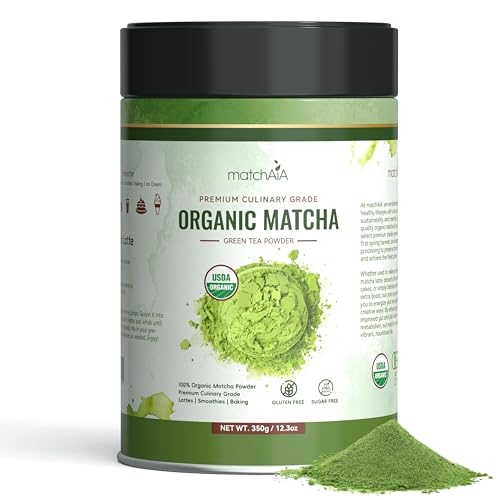
MatchAiA offers the largest single tin in this comparison at 350 grams (12.3 ounces), and it is USDA organic certified from a 14,000-acre sustainable tea garden. The company uses traditional stone-grinding techniques, which preserve the chlorophyll and amino acid content needed for baking color stability. Customers describe the taste as unsweetened with no bitter bite — one reviewer noted it dissolved well even in cold water.
While some users felt the powder wasn’t the smoothest they had tried, the consensus is that it delivers outstanding bang for the buck. The 12.3-ounce tin is especially practical for bakers who go through matcha quickly; you can scoop generously into batter without worrying about running out mid-recipe. The resealable bag inside the tin helps maintain freshness between uses.
Where this product sits is the entry-level price point, making it the most accessible option for someone new to baking with matcha. The larger volume means you can afford to experiment — under-measuring, over-mixing, or testing different heat levels — without stressing about wasting expensive powder.
Why it’s great
- Largest quantity at the lowest per-gram cost
- USDA certified organic from a single estate
- No bitterness — suitable for sweet and savory bakes
Good to know
- Texture is slightly less fine than premium options
- Not specifically labeled culinary grade
5. Kenko Matcha Green Tea Powder
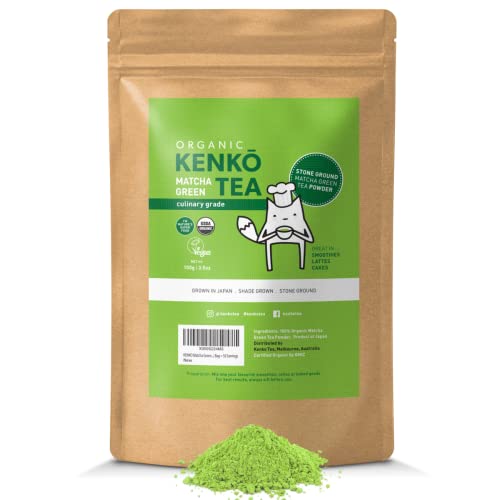
Kenko sources its matcha from the Nishio region of Japan, a climate that produces some of the highest quality tea leaves. The first harvest in early May is shade-grown, hand-picked, and stone ground on granite mills. The brand also performs monthly heavy metal and radiation testing — a transparency level that serious bakers appreciate for large-batch gifting or commercial use.
Customers consistently mention the vibrant green color and smooth, mild taste with no bitterness. One reviewer specifically called out using it in cookies, where the woody flavor profile stood up against sugar and butter beautifully. Another noted that the powder dissolves easily with a wire whisk, producing a frothy texture that translates well into batters.
The 100-gram bag is on the smaller side, but the freshness guarantee is unmatched: Kenko orders in small batches and grinds within the past month, so you get a bag that is actually fresh rather than sitting on a shelf for months. If you bake infrequently but want the absolute best result each time, paying for this freshness premium makes sense.
Why it’s great
- Freshly ground within the past month
- Monthly heavy metal and radiation testing
- Woody flavor profile holds up in cookies and cakes
Good to know
- Small 100g bag — not for bulk bakers
- Higher price per gram than budget alternatives
FAQ
Can I use ceremonial grade matcha for baking?
How many teaspoons of matcha should I use per cup of flour?
Final Thoughts: The Verdict
For most users, the best matcha for baking winner is the Naturebell Organic Matcha because it delivers a massive 1-pound supply from an early spring harvest at the best per-serving cost, with consistent color and clean flavor that holds under oven heat. If you want the most vibrant green and authentic Japanese JAS certification, grab the Naoki All Purpose Blend. And for a mid-range, kitchen-tested classic that bakers trust, nothing beats the Jade Leaf Organic Culinary Grade.