The dense, fibrous flesh and hard skin of a sweet potato make it one of the most punishing items a kitchen knife can face. A dull blade or the wrong profile will crush the vegetable, leading to uneven wedges, bruised flesh, and a frustrating workout every time you prep. The right tool changes that experience entirely.
I’m Mohammad Maruf — the founder and writer behind AirfryerBite. I spend my days analyzing steel alloys, blade geometries, and handle ergonomics to determine which knives deliver clean, repeatable cuts through hard vegetables without binding or chipping.
After evaluating seven distinct blade designs, I have settled on the models that handle the sweet potato’s unique density without sticking or stalling. This guide presents the knife for cutting sweet potatoes that will make your prep work faster, safer, and noticeably more enjoyable.
How To Choose The Best Knife For Cutting Sweet Potatoes
Sweet potatoes are tougher on steel than most home cooks realize. Their dense, starchy interior and rugged skin demand a knife with specific attributes that a standard chef’s knife may lack. Focus on these three factors to avoid wedging, sticking, and unnecessary effort.
Blade Profile: The Nakiri Advantage
A high, flat blade with a straight edge — the classic nakiri or Chinese cleaver profile — makes full contact with the cutting board, allowing you to slice through a whole sweet potato in one clean motion. Rounded chef knives or rocking santoku designs can cause the blade to stall or stick mid-cut, especially through the widest part of a large tuber.
Steel Hardness and Edge Retention
Look for high-carbon stainless steel rated between 56 and 58 Rockwell hardness. Softer steels (below 54 HRC) will dull quickly against sweet potato fibers, requiring frequent resharpening. Harder steels (above 60 HRC) hold an edge longer but become brittle and prone to chipping against tough skin. The 56–58 range delivers the best balance of sharpness, durability, and easy maintenance.
Handle Comfort and Blade Height
A tall blade — at least 2 inches from edge to spine — gives your knuckles clearance above the cutting board, preventing bruised fingers during forceful cuts. Ergonomic handles with a full-tang construction keep the knife balanced, reducing wrist fatigue during heavy prep sessions. Avoid round handles that allow the blade to twist in your grip when cutting through hard flesh.
Quick Comparison
On smaller screens, swipe sideways to see the full table.
| Model | Category | Best For | Key Spec | Amazon |
|---|---|---|---|---|
| TUO Nakiri 6.5″ | Nakiri | Straight vegetable slicing | 6.5″, 56±2 HRC | Amazon |
| Sunnecko 8″ Chef | Chef Knife | Multi-purpose prep | 8″, 12-15° bevel | Amazon |
| TUO Santoku 7″ | Santoku | Non-stick slicing | 7″, Granton edge | Amazon |
| SYOKAMI 7″ Cleaver | Cleaver | Heavy-duty chopping | 7″, 14-16° bevel | Amazon |
| Mercer Asian Chef’s 6″ | Cleaver | Soft bone & hard squash | 6″, Taper-ground | Amazon |
| Sunnecko Nakiri 7″ | Nakiri | Thin, even slices | 7″, 15° bevel | Amazon |
| Mercer Genesis 7″ Nakiri | Nakiri | Professional vegetable prep | 7″, Forged German steel | Amazon |
In‑Depth Reviews
1. TUO Nakiri Knife 6.5″

The TUO Nakiri’s flat, straight edge and tall blade profile make it the most natural fit for sweet potato prep. At 6.5 inches, the blade length is ideal for drawing straight down through a halved tuber without any sawing motion. The German high-carbon stainless steel (rated 56±2 HRC) holds a sharp edge through multiple prep sessions and resists chipping even when you hit the occasional patch of stubborn skin.
The Pakkawood handle is ergonomically contoured and polished at the bolster for a pinch grip that stays secure. At only 8.16 ounces, the knife feels light and nimble, reducing forearm fatigue during bulk chopping. The wood composite handle is also moisture-resistant and will not warp over time — a practical feature for a knife that handles wet, starchy vegetables.
While the straight edge excels at push-cutting sweet potatoes, it is less suited for rock-chopping herbs or garlic. But for its intended job — clean, straight cuts through dense vegetables — this knife outperforms options costing significantly more. The included luxury box and lifetime guarantee add further confidence.
Why it’s great
- Flat edge glides through sweet potatoes without wedging
- Lightweight 8.16-ounce build reduces hand fatigue
- German 1.4116 steel at 56±2 HRC resists chipping
Good to know
- Not designed for rocking cuts on herbs
- Hand wash only to preserve Pakkawood handle
2. Mercer Genesis 7-Inch Nakiri

The Mercer Genesis Nakiri delivers professional-grade build quality without crossing into enthusiast pricing. Its 7-inch blade is precision-forged from high-carbon German steel with a taper-ground edge that gives noticeably better efficiency when cutting through thick sweet potato slabs. The 56+ HRC hardness ensures the edge stays sharp for extended use, and the full-tang construction provides a solid, balanced feel in the hand.
The Santoprene handle is where Mercer excels — the ergonomic, slip-resistant grip stays comfortable even with wet or greasy hands, making it a solid choice for meal-prep sessions where you are handling oil-coated vegetables. At just 4 ounces, it is remarkably light, which helps maintain control during prolonged chopping without wrist strain.
The only drawback is the plain edge design, which offers no food-release dimples. Sweet potato slices may occasionally stick to the blade, requiring a quick wipe between cuts. But for a forged, professionally-rated nakiri at this tier, the edge retention and straight-slice performance are outstanding.
Why it’s great
- Precision-forged German steel with excellent edge retention
- Lightweight 4-ounce build for fatigue-free prep
- Santoprene handle provides a secure non-slip grip
Good to know
- No Granton edge to prevent food sticking
- Hand wash recommended to maintain taper-ground finish
3. TUO Santoku Knife 7″

The TUO Santoku’s hollow-ground Granton edge is the primary reason it makes this list. Those oval dimples along the blade create air pockets that prevent starchy sweet potato slices from sticking to the steel — a common frustration when using a standard chef’s knife. At 7 inches, the blade is long enough to cut through large tubers in one pass, and the 15-degree V-sharp edge requires minimal downward force.
Made from German high-carbon stainless steel rated at 56+ HRC, the blade resists corrosion well and holds its edge through steady use. The Pakkawood handle is ergonomically shaped with a non-slip profile, allowing a natural pinch grip that reduces wrist fatigue. The polished bolster area is comfortable for extended cutting sessions.
The curved belly of the santoku profile does introduce a slight rocking angle compared to a flat nakiri edge, which can cause the blade to stall if you try a pure push-cut through a very hard sweet potato. But for cooks who also need a knife for mincing garlic or dicing onions, this Santoku offers the best compromise between versatility and sweet potato performance.
Why it’s great
- Granton dimples actively reduce food sticking
- Versatile profile handles herbs and garlic too
- 56+ HRC German steel provides strong edge retention
Good to know
- Curved belly can stall on pure push-cuts through dense tubers
- Not ideal for heavy-duty chopping through thick skin
4. Sunnecko 8 Inch Chef Knife

If you want a single knife for your whole kitchen that can still handle sweet potatoes well, the Sunnecko 8-inch chef knife is the strongest candidate. Hand-sharpened to a precise 12-15 degree angle per side, the blade is exceptionally thin behind the edge, which allows it to glide through sweet potato flesh with noticeably less resistance than a typical European chef knife.
The high-carbon stainless steel blade is forged and full-tang, providing excellent balance. The laser-etched pattern on the blade not only looks refined but also reduces friction and food sticking — a subtle but real benefit when slicing starchy root vegetables. The ergonomic Pakkawood handle fills the hand naturally, and the included PVC sheath adds safe storage between uses.
For cooks who prefer a rocking motion, this knife is a delight. For pure push-cutters, the belly may cause incomplete slices on very thick sweet potatoes. Still, for versatility across meats, fruits, and hard vegetables, this is the most capable all-rounder on the list.
Why it’s great
- Thin 12-15° bevel reduces drag through dense flesh
- Versatile 8-inch length handles 90% of prep tasks
- Full-tang build with balanced weight and sheath included
Good to know
- Curved belly can wedge on extra-large sweet potatoes
- Hand wash only to preserve edge and handle
5. SYOKAMI 7″ Cleaver Knife with Herb Stripper
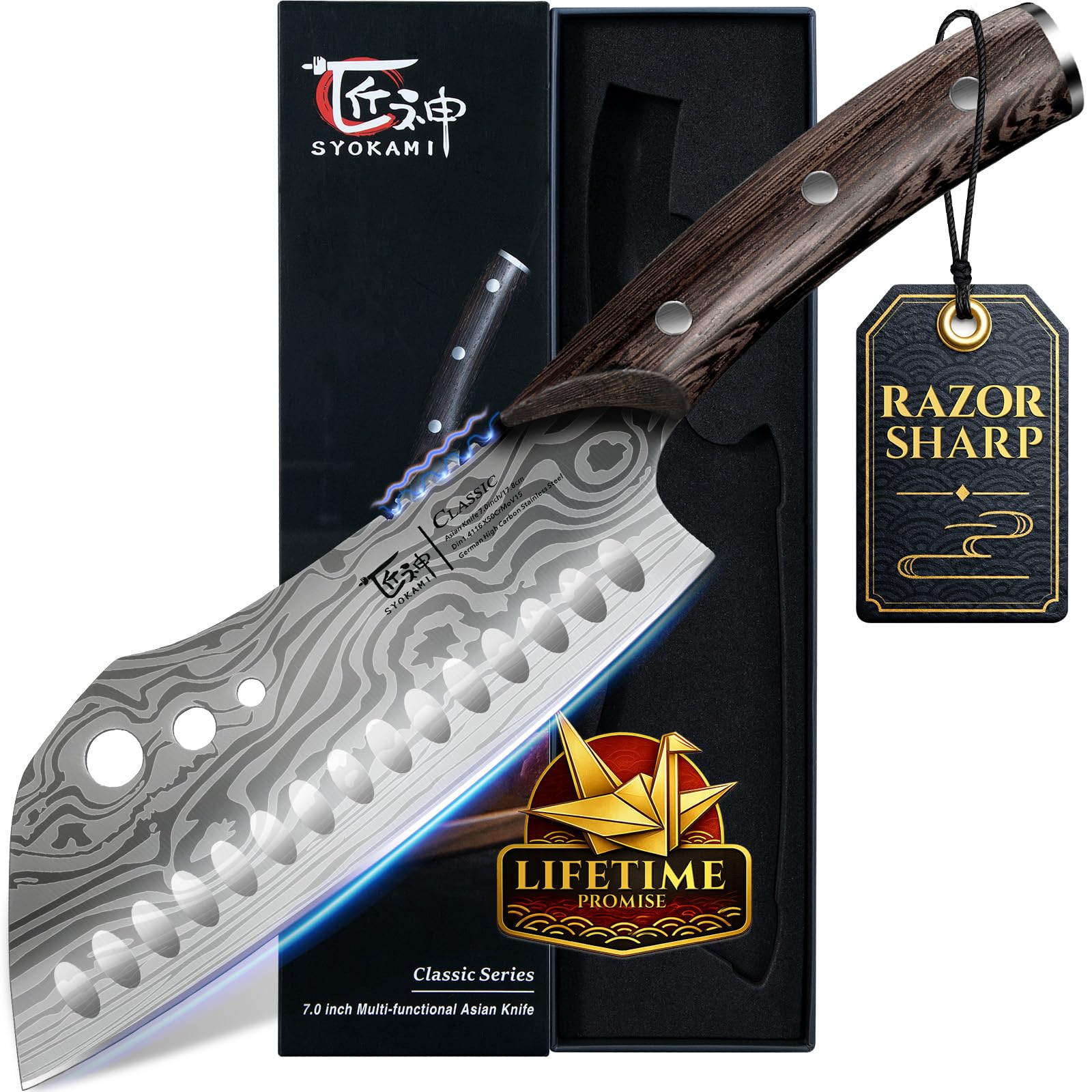
The SYOKAMI 7-inch cleaver combines the broad face of a Chinese chef’s knife with a 14-16 degree bevel per side for razor-sharp utility. The wide blade provides plenty of knuckle clearance, which is especially useful when chopping through large, round sweet potatoes that might otherwise roll under a narrower blade. The high-carbon German steel is full-tang and rated at 56+ HRC, so it resists chipping even during forceful cuts.
One unique addition is the integrated herb stripper with three holes in the blade spine — a clever touch that lets you strip kale, basil, or rosemary leaves without switching tools. The wenge wood handle has a subtle gear-tooth texture near the bolster, providing a non-slip grip even when wet. This makes it a solid choice for home cooks who want a versatile tool that can handle both bulk vegetable prep and delicate herb work.
The broad blade face does add weight, making it slightly heavier than a dedicated nakiri. And while the straight edge excels at push-cutting sweet potatoes, the cleaver profile may feel awkward for cooks used to a slim European chef knife. But for those who appreciate the control of a cleaver, this knife delivers clean, repeatable cuts through even the toughest sweet potato specimens.
Why it’s great
- Broad blade provides excellent knuckle clearance
- Integrated herb stripper adds functional versatility
- 56+ HRC German steel resists chipping on hard skin
Good to know
- Heavier than a dedicated nakiri for long prep sessions
- Wenge wood handle requires hand drying to prevent damage
6. Sunnecko Japanese Nakiri 7″
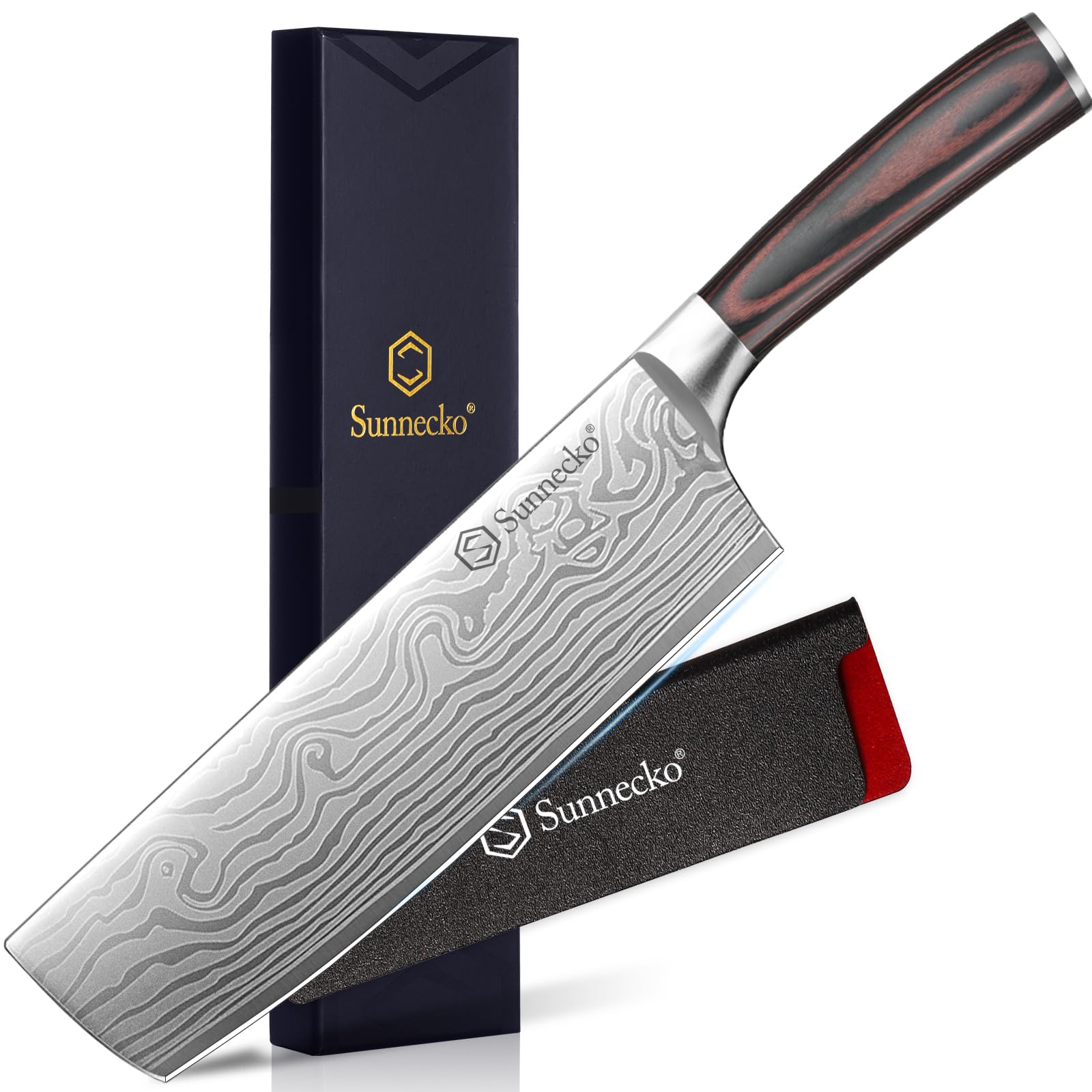
The Sunnecko 7-inch Nakiri is built for the cook who demands paper-thin, even slices from their sweet potatoes every time. The double-bevel edge at 15 degrees per side ensures the blade tracks straight through the vegetable without drifting, which is a common complaint with single-bevel Japanese knives. The ultra-thin blade stock reduces resistance, allowing you to achieve consistent 1/8-inch slices without crushing the flesh.
Forged from high-carbon stainless steel, the blade features a laser-etched wavy pattern that reduces friction and helps starchy slices release easily. The ergonomic Pakkawood handle is shaped for a full grip, and the knife’s balanced weight distribution makes it feel lighter than its size suggests. The included sheath provides safe storage and edge protection.
This knife is strictly a vegetable-focused tool — it should not be used for cutting through bones or frozen foods. The thin edge, while exceptional for slicing, is more vulnerable to chipping on hard surfaces. But for sweet potato prep specifically, it is one of the most precise and effortless options available.
Why it’s great
- Ultra-thin blade delivers paper-thin, even slices
- Double-bevel edge prevents drifting mid-cut
- Laser-etched pattern reduces food sticking
Good to know
- Not suitable for cutting bones or frozen items
- Thin edge requires careful storage and handling
7. Mercer Culinary Asian Chef’s Knife 6″

The Mercer Asian Chef’s Knife is a stamped, dual-edge cleaver designed explicitly for the hardest kitchen tasks — and cutting through sweet potatoes qualifies. The high-carbon German steel blade is taper-ground with a fine stone finish, delivering a razor-sharp edge that can handle thin or soft bones as well as heavy squash. The 6-inch blade length is compact but the broad face provides excellent knuckle clearance and scooping ability.
The Santoprene handle is ergonomically contoured and offers superior grip even with wet hands, which is a genuine safety advantage when applying force to a slippery sweet potato. At 10.2 ounces, it has some heft, which helps momentum carry the blade through dense flesh with less manual effort. The stamped construction keeps the price accessible while maintaining professional-level performance.
The primary trade-off is edge retention — stamped blades do not hold an edge quite as long as forged alternatives, so you will need to hone more frequently. The lack of a Granton edge also means sweet potato slices may occasionally stick. But for cooks who routinely prep large batches of hard root vegetables, this cleaver offers durable, reliable performance at a budget-friendly entry point.
Why it’s great
- Santoprene handle stays secure with wet hands
- Broad face provides excellent knuckle clearance
- Capable of cutting through small bones and hard squash
Good to know
- Stamped edge requires more frequent honing than forged blades
- No non-stick dimples on blade surface
FAQ
Can I use a regular chef knife for cutting sweet potatoes?
Why does my sweet potato stick to the knife blade?
What is the ideal blade length for cutting sweet potatoes?
Final Thoughts: The Verdict
For most users, the knife for cutting sweet potatoes winner is the TUO Nakiri 6.5″ because its flat, straight edge and 56±2 HRC German steel deliver clean, effortless slices through dense tubers without wedging or sticking. If you want professional-grade build quality and a lighter feel, grab the Mercer Genesis 7-Inch Nakiri. And for a versatile all-rounder that also handles herbs and meats, nothing beats the Sunnecko 8 Inch Chef Knife.