Forcing a latte from a basic drip machine or a pod system often results in a thin, watery drink with foam that collapses within minutes — a far cry from the dense microfoam and rich crema that define a proper espresso-based latte.
I’m Mohammad Maruf — the founder and writer behind AirfryerBite. I’ve spent over a year dissecting pump pressures, boiler types, portafilter diameters, and steam wand designs to separate the machines that actually deliver velvety latte texture from those that simply claim to.
This guide cuts through the marketing noise and focuses on the hardware that matters for creating cafe-quality lattes at home. After sorting through dozens of models by build quality and frothing performance, I’ve isolated the strongest contenders for the best home espresso machine for lattes.
How To Choose The Best Home Espresso Machine For Lattes
Selecting a machine for lattes forces you to weigh the steam system as heavily as the brewing system. The wrong machine produces bitter espresso or bubbly, coarse foam that sinks into the milk instead of floating on top.
The Steam Wand: The Real Star for Lattes
A machine can have a 20-bar pump and PID temperature control, but if the steam wand only produces large, uneven bubbles, your latte will lack the velvety microfoam necessary for texture and latte art. Look for a commercial-style, articulated steam wand — a ball-joint or swivel design allows you to position the tip at the correct angle for creating a whirlpool in the milk pitcher, which shears air into fine, consistent microfoam. Avoid machines with a simple panarello wand that injects air outside the milk; these create stiff, dry foam, not silky microfoam.
Portafilter Size and Pressure
For latte brewing, a 58mm portafilter is the gold standard because it holds a larger, more even coffee bed, which leads to balanced extraction even when you’re pulling a double shot that will be cut with milk. A 54mm basket can still work, but the narrower diameter makes it harder to achieve uniform saturation. The pump pressure rating matters less than consistency: look for a machine that maintains a stable 9 bars during extraction, often achieved through an Over-Pressure Valve (OPV). Higher nominal ratings like 20 bars simply indicate the pump’s maximum potential, not the pressure at the group head.
Temperature Stability and PID Control
When you steam milk immediately after pulling a shot, the boiler temperature can swing wildly, causing the steam to lose power mid-froth or the next shot to taste scorched. A PID (Proportional-Integral-Derivative) controller – or at minimum a dual-thermostat system – keeps the water temperature stable to within a degree or two. This consistency is critical for both extracting balanced espresso and producing steam that maintains the same pressure throughout the entire milk texturing cycle.
Quick Comparison
On smaller screens, swipe sideways to see the full table.
| Model | Category | Best For | Key Spec | Amazon |
|---|---|---|---|---|
| Breville Barista Express | Semi-Auto | Integrated grinder control | PID temp control, 54mm portafilter | Amazon |
| De’Longhi La Specialista Arte Evo | Semi-Auto | Cold brew & latte art | Cold Extraction Tech, 15-bar pump | Amazon |
| Ninja Luxe Café Pro Series | Multi-Style | Hands-free frothing & variety | Barista Assist, Dual Froth System Pro | Amazon |
| Gevi 20 Bar Espresso Machine | Semi-Auto | Precision brewing with OPV | 58mm portafilter, PID + OPV | Amazon |
| De’Longhi Magnifica Evo | Super-Auto | One-touch latte convenience | 13 grind settings, manual frother | Amazon |
| Empstorm 20 Bar Machine | Semi-Auto | Cold & hot brew flexibility | PID/NTC dual temp, 58mm portafilter | Amazon |
| CASABREWS Ultra Machine | Semi-Auto | Budget entry with LCD | 20-bar pump, 4 temp settings | Amazon |
| AIRMSEN Espresso Machine | Semi-Auto | All-in-one burr grinder | 10 grind settings, 20-bar pump | Amazon |
| Chefman Crema Supreme | Semi-Auto | Large capacity & grind settings | 30 grind levels, 3L tank | Amazon |
In‑Depth Reviews
1. Breville Barista Express BES870XL
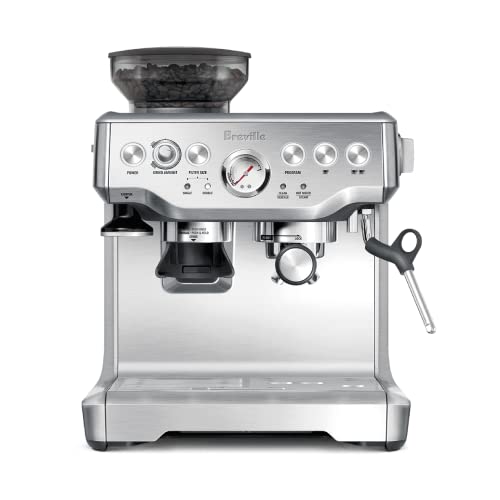
The Barista Express has become a reference point in the home espresso segment because it integrates a precision conical burr grinder with a PID-controlled thermoblock for tight temperature stability. The 1600W boiler and low-pressure pre-infusion ramp up to full pressure gradually, which helps prevent channeling in the puck — a critical factor when pulling a double shot that will be stretched into a 12-ounce latte.
The manual steam wand is the machine’s strongest asset for latte drinkers. It delivers dry, consistent steam pressure that allows you to stretch milk to a silky microfoam rather than the stiff, dry foam produced by panarello-type wands. The 54mm portafilter is slightly smaller than commercial standard, but the included single and dual wall filter baskets let you use fresh or pre-ground coffee while still achieving a respectable crema layer that holds up against milk.
Durability is a real consideration here: the machine weighs over 22 pounds, and the all-metal construction (with a brushed stainless steel body) suggests it can handle daily use. The 67-ounce water tank is generous for home use, and the integrated tamper and Razor trimming tool reduce the learning curve for dose consistency. The trade-off is a steeper learning curve for dialing in the grind size versus a super-automatic, but the payoff is significantly better texture control for lattes.
Why it’s great
- PID digital temperature control delivers stable water temps for balanced espresso extraction
- Integrated conical burr grinder grinds fresh on demand directly into the portafilter
- Manual steam wand produces real microfoam suitable for latte art
Good to know
- 54mm portafilter is narrower than pro 58mm standard, which can make even saturation trickier
- Steamer takes a few seconds to reach full pressure after brewing a shot
2. De’Longhi La Specialista Arte Evo

De’Longhi’s La Specialista Arte Evo differentiates itself with a true commercial-style steam wand that delivers the steam pressure needed to texture microfoam consistently, alongside a built-in conical burr grinder with eight settings. The 15-bar Italian pump operates with an Active Temperature Control system that maintains three infusion temperature options — low, medium, high — letting you adjust for bean roast level, which directly impacts the flavor of your latte base.
The standout feature for latte lovers is the Cold Extraction Technology, which brews cold-pressed espresso in under five minutes. This allows you to produce cold brew lattes without waiting 12 to 24 hours, and the cold extraction pathway is completely independent from the hot water system, so there is no cross-temperature contamination. The 3.5-pound bean hopper and 12-ounce stainless steel milk jug are practical inclusions that match the machine’s 15-inch height and 21.5-pound weight.
The included barista kit — dosing funnel, tamping mat, and a dedicated tamper — helps standardize your puck prep. The steam wand is the real differentiator here for latte art: it creates a tight swirling vortex in the pitcher that shears air into uniform microfoam. The machine lacks a pressure gauge, but the Active Temperature Control compensates by ensuring the water hitting the puck stays within a narrow optimal window, reducing the risk of sour or bitter shots that can ruin a milk-based drink.
Why it’s great
- Commercial-style steam wand produces consistent microfoam for latte art
- Cold Extraction Technology makes cold brew espresso in under 5 minutes
- Active Temperature Control with 3 infusion settings for different roast levels
Good to know
- Grinder has only 8 settings, which limits fine-tuning for some beans
- No OPV means extraction pressure is not manually adjustable
3. Ninja Luxe Café Pro Series ES701

The Ninja Luxe Café Pro Series represents a radical departure from traditional semi-automatic design by integrating a hands-free Dual Froth System Pro that combines steaming and whisking simultaneously. This means you can create hot or cold microfoam — including thin froth, thick froth, extra-thick froth, and cold foam — without needing to angle a steam wand manually, which removes the single biggest skill barrier for latte beginners.
On the brewing side, the Barista Assist Technology actively monitors each extraction and adjusts grind size recommendations for the next brew based on the previous shot’s performance. The built-in scale delivers weight-based dosing rather than time-based grinding, which is more accurate for achieving consistent extraction yields. The 25 grind settings on the conical burr grinder provide more granularity than most integrated grinders, and the quad-shot option allows you to pull four shots into one drink — useful for a large latte without running back-to-back extractions.
The machine weighs over 27 pounds and measures nearly 15 inches tall, so it commands counter space. The independent hot water system means you can brew Americanos without using the espresso path, and the cold brew mode uses a separate lower-temperature extraction channel that prevents bitterness. For latte drinkers who prioritize convenience and froth variety over traditional manual skill, this machine removes almost all the variables that typically lead to disappointing results.
Why it’s great
- Dual Froth System Pro creates hot and cold microfoam hands-free with 5 preset textures
- Barista Assist Technology provides weight-based dosing and adaptive grind recommendations
- Quad-shot basket pulls up to 4 shots at once for large lattes
Good to know
- Heavy unit at 27 pounds; dedicated counter space is essential
- Programming the initial grind setting requires reading the manual carefully
4. Gevi 20 Bar Espresso Machine
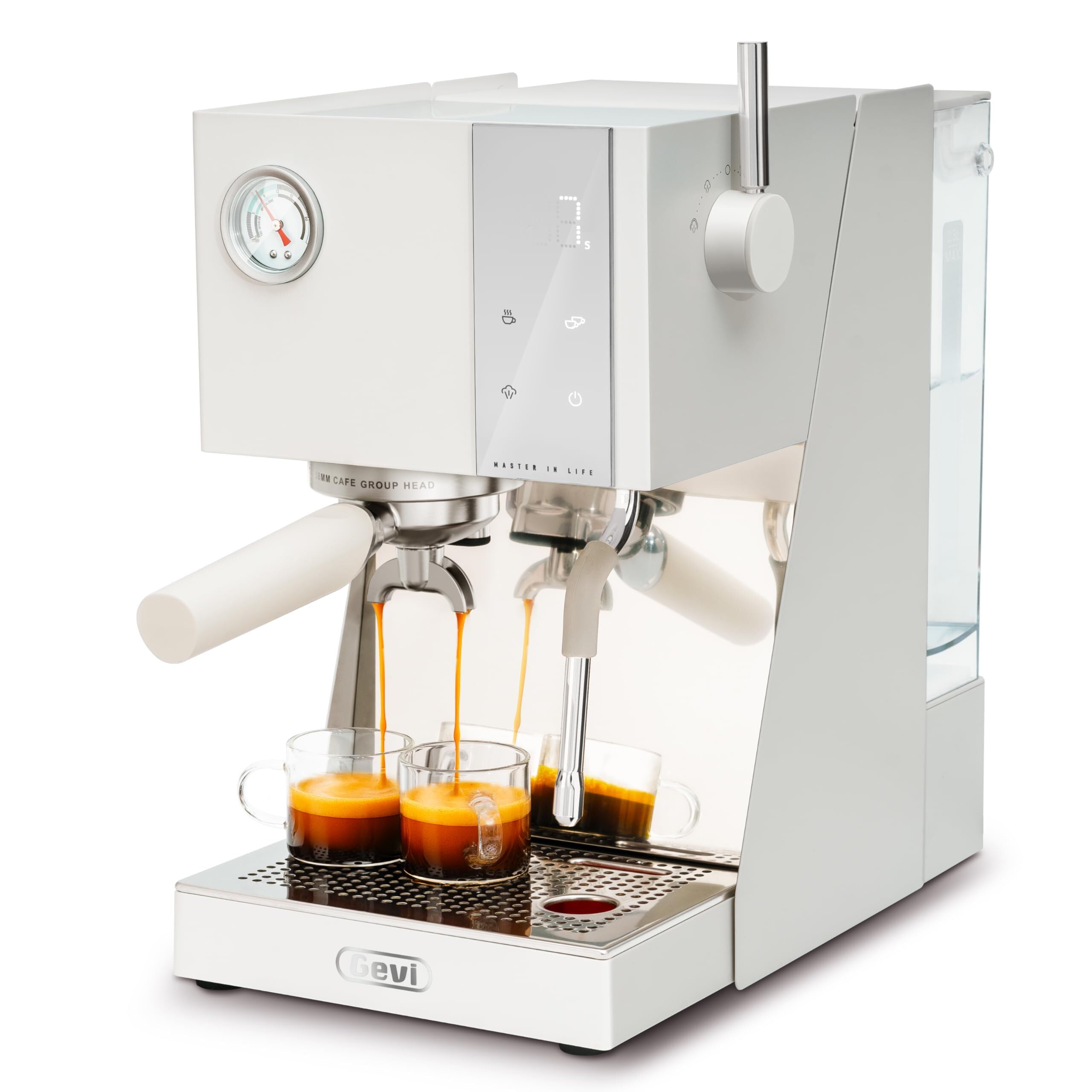
Gevi’s machine enters the mid-range segment with specifications that usually cost more: a true 58mm commercial-sized portafilter, a 20-bar Italian Ulka pump, and a built-in OPV that regulates group head pressure to the 9-12 bar sweet spot. This OPV is a critical component for latte drinkers because uncontrolled brew pressure can extract harsh, bitter compounds that clash with milk’s natural sweetness.
The PID and NTC dual-chip system offers three temperature presets — 92°C, 94°C, and 96°C — allowing you to match the water temperature to the roast level of your beans. The real-time touch display shows live pressure readings, shot timer, and temperature, so you can track whether the extraction is staying in the optimal range. The 2.3-liter removable water tank is notably large for this price tier, supporting multiple consecutive shots without refilling, which matters when making several lattes in one session.
The professional steam wand on this unit is a ball-joint design that articulates freely, letting you position the tip at the correct angle for creating a milk vortex. The wand produces dry steam that textures milk consistently, though it takes a few seconds longer to reach full pressure than machines with a dedicated steam boiler. The included 58mm stainless steel tamper and milk pitcher complete the kit, and the 21.6-pound weight indicates solid internal build quality from the brass components.
Why it’s great
- 58mm commercial portafilter delivers even water dispersion and richer crema
- OPV maintains 9-12 bar extraction pressure for balanced, non-bitter shots
- PID + NTC dual control with 3 temperature presets for roast-specific brewing
Good to know
- Steam wand takes a short moment to reach full pressure after brewing
- No built-in grinder; requires a separate grinder for fresh beans
5. De’Longhi Magnifica Evo ECAM29043SB

The De’Longhi Magnifica Evo is a super-automatic machine designed to handle the entire brew cycle from bean to cup with the press of a single button, which makes it the most convenient option on this list for daily latte production. Its integrated conical burr grinder offers 13 grind settings — enough to dial in for different bean origins — and the machine grinds, doses, tamps, extracts, and discards the puck automatically.
The manual milk frother is a traditional steam wand, not a panarello attachment, which means it can produce genuine microfoam if you learn the technique. The wand is articulated and reaches comfortably into a standard milk pitcher. The machine also includes a dedicated hot water spout for Americanos and a bypass doser that lets you use pre-ground decaf without mixing beans in the hopper. The 60-ounce water tank and 20.8-pound weight are consistent with the super-automatic category’s all-in-one chassis.
The automatic clean cycle and dishwasher-safe removable parts significantly reduce maintenance friction, which is important for a machine that gets used daily. The five one-touch recipes — Espresso, Coffee, Americano, Iced Coffee, and Long — cover the basics, but the lack of a pre-programmed latte button means you steam milk manually. For the latte drinker who wants the grinding and brewing automated but prefers to control milk texture personally, this is a strong middle ground.
Why it’s great
- Fully automatic bean-to-cup cycle minimizes daily effort and cleanup
- Manual steam wand with articulation creates real microfoam, not dry froth
- 13 grind settings and bypass doser offer flexibility for different beans and decaf
Good to know
- No dedicated latte recipe button; requires manual steaming for milk drinks
- Plastic exterior may feel less premium than all-metal alternatives
6. Empstorm 20 Bar Espresso Machine
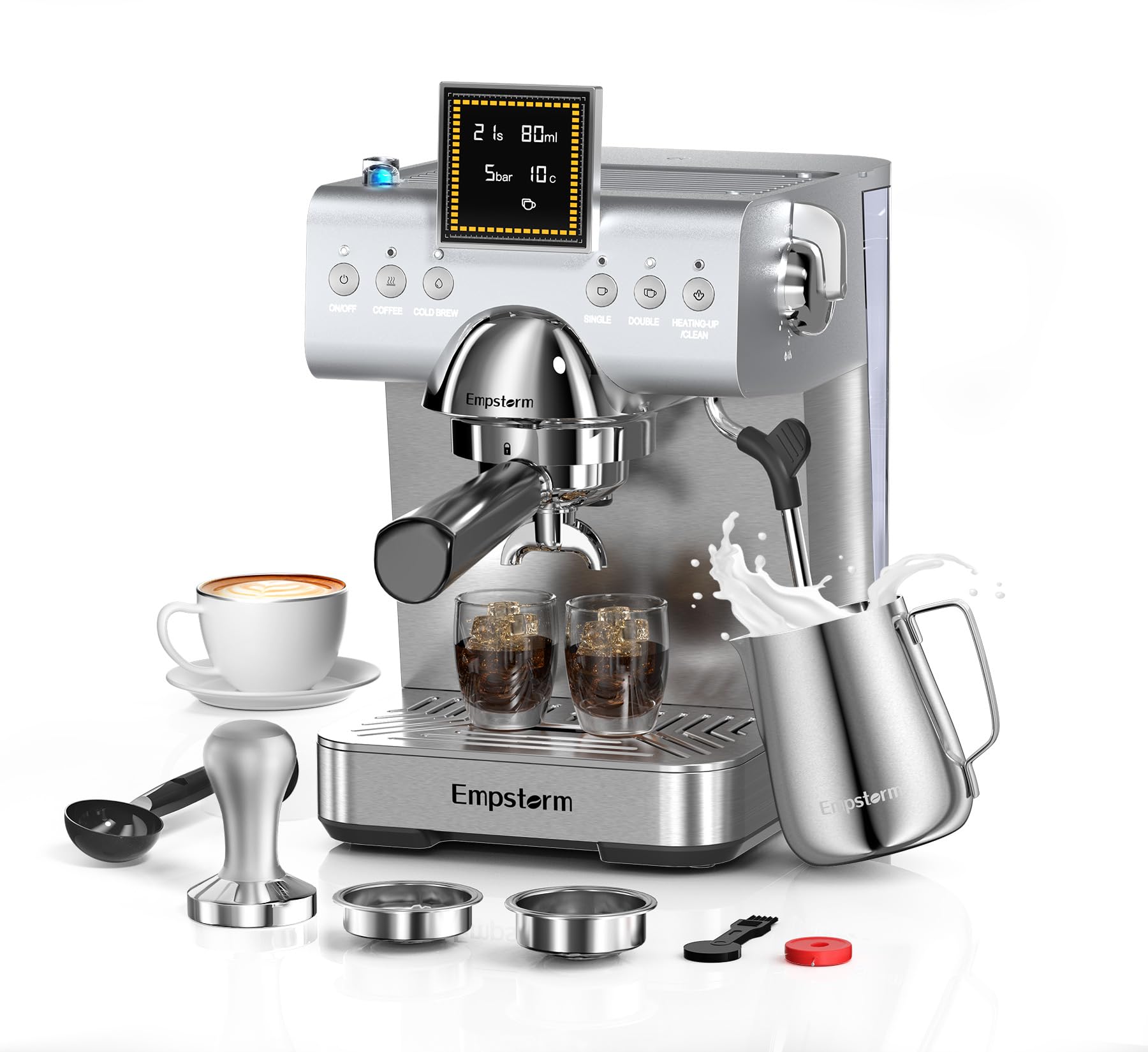
The Empstorm machine competes in the upper mid-range by offering a combination rarely seen at this price: a 58mm commercial portafilter, a full PID/NTC dual temperature control system, and an independent cold brew extraction channel that operates at lower pressure to prevent bitterness. The 20-bar Italian pump and 1350W boiler provide the thermal mass needed for back-to-back shots without significant temperature drop-off.
The barista-grade digital display shows live metrics that matter for latte dial-in — flow rate in ml, extraction pressure in bars, brewing time in seconds, and water temperature at the group head. The 360-degree articulated steam wand rotates freely and produces low-moisture steam that creates dry, velvety microfoam. The included 350ml latte art pitcher and 58mm stainless steel portafilter are functional accessories that match the machine’s capacity for producing textured milk drinks.
The PID system maintains a steady 92°C (197.6°F) during extraction, which reduces the risk of sour under-extraction or bitter over-extraction. The cold brew channel is a genuinely useful addition for iced lattes, as it produces a concentrated brew that holds up against ice dilution without becoming watery. The compact footprint — just under 9 inches wide and 13.6 inches tall — fits smaller countertops, but the 12.45-pound weight suggests less internal thermal mass than heavier competitors.
Why it’s great
- 58mm portafilter with dual control PID/NTC system for precise temperature stability
- Independent cold brew channel for iced lattes without waiting 12+ hours
- Real-time display shows flow, pressure, time, and temperature during extraction
Good to know
- No built-in grinder; requires separate grinding equipment
- Lighter weight (12.45 lbs) means less thermal retention in the boiler
7. CASABREWS Ultra Espresso Machine

The CASABREWS Ultra is a budget-oriented semi-automatic machine that brings a 20-bar Italian pump and a 1350W boiler to a price point where most competitors offer 15-bar systems. The LCD display guides you through steam, hot water, and pre-programmed shot choices, which reduces the intimidation factor for someone transitioning from a pod system to a manual espresso machine for lattes.
The steam wand on this unit is a standard articulated design that delivers enough power to texture milk for cappuccinos and lattes, though the microfoam quality is slightly less consistent than higher-priced machines due to the absence of PID control on the steam path. The four adjustable brewing temperature settings allow some customization for different roast levels, but the adjustment applies only to the espresso brewing cycle, not the steam system. The 73-ounce water tank is generous for the price segment.
The included 58mm portafilter is a standout feature at this price — it accepts standard 58mm accessories, so upgrading baskets or tampers is straightforward. The brushed stainless steel finish is visually clean, and the machine’s 13.55-pound weight suggests adequate internal build for daily use. For beginners who want to learn latte-making without a large upfront investment, this machine removes the grinder cost variable by accepting pre-ground coffee.
Why it’s great
- 20-bar Italian pump with 1350W boiler for reliable extraction pressure
- 58mm portafilter accepts standard commercial accessories
- LCD display and 4 temp settings help beginners dial in basic shots
Good to know
- Steam wand lacks PID control, leading to slight microfoam inconsistency
- No built-in grinder; works best with pre-ground coffee
8. AIRMSEN Espresso Machine with Burr Grinder
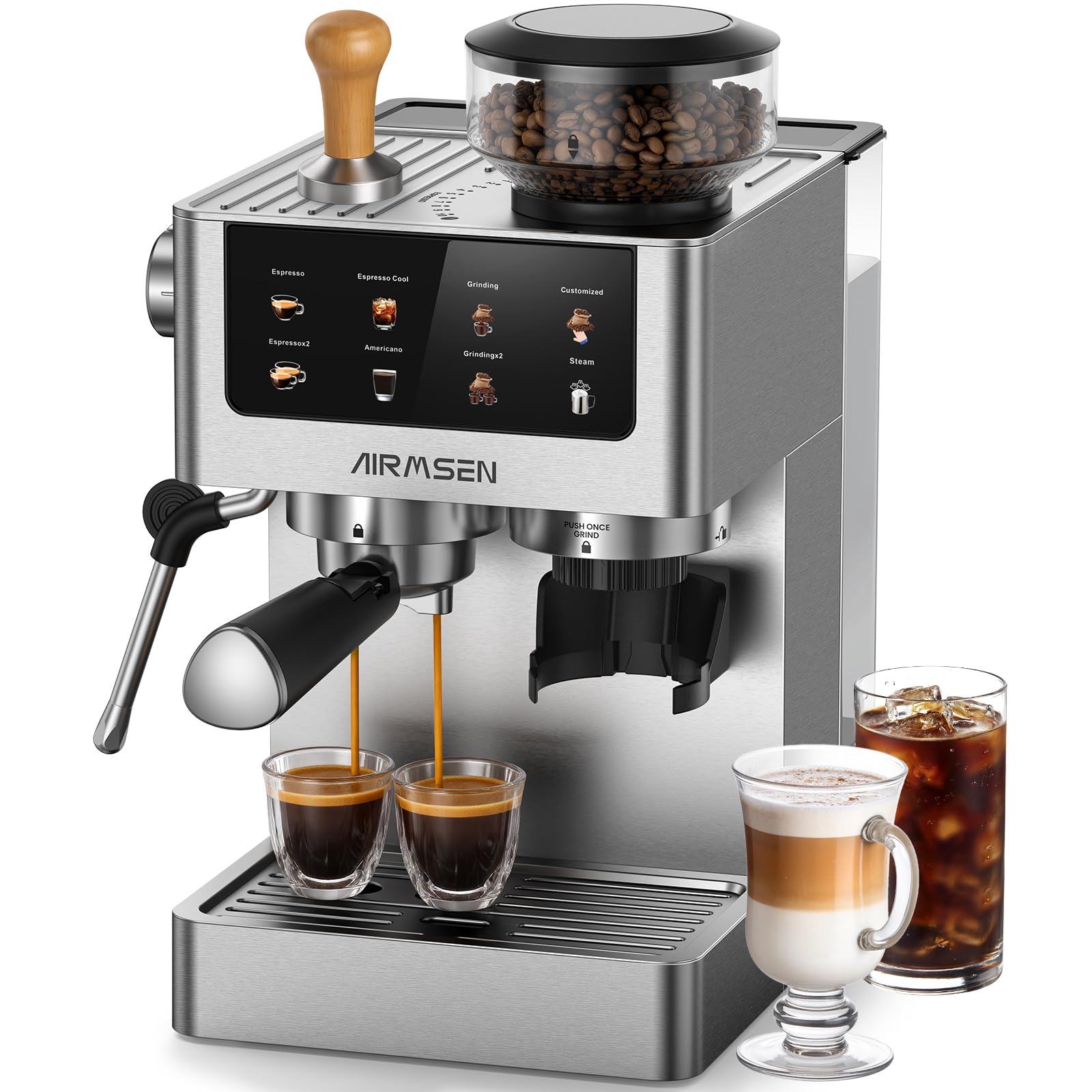
The AIRMSEN machine targets the all-in-one market by integrating a conical burr grinder with 10 grind settings directly into a 20-bar espresso machine, eliminating the need for a separate grinder while keeping the price accessible. The 3Cr13 stainless steel burrs are corrosion-resistant and rated for over 10,000 cups, and the straight-through design prevents bean jams that plague some budget grinders.
The steam wand is a detachable manual design that rinses clean quickly, and it produces enough pressure to create microfoam for lattes. The 51mm portafilter is smaller than the 58mm professional standard, which means the coffee bed is narrower and can be more susceptible to channeling if the grind or tamp is uneven. The full touchscreen control panel simplifies the brew process with single or double shot selection, and the machine includes a 61-ounce water tank and a 6.9-ounce milk box for frothing.
Pre-infusion technology on this unit saturates the grounds fully before ramping to full pressure, which helps compensate for the smaller portafilter by encouraging even extraction. The machine’s compact footprint — 7.9 inches wide, 10.2 inches deep, and 12 inches tall — makes it one of the easier models to fit under standard cabinets. For the latte drinker who wants a grinder and machine in one package without stepping into super-automatic pricing, this is a practical entry point.
Why it’s great
- Built-in conical burr grinder with 10 settings eliminates separate grinder cost
- 20-bar pump with pre-infusion technology for more even extraction
- Compact footprint (7.9″ wide) fits tight counters and small kitchens
Good to know
- 51mm portafilter is smaller than 58mm standard, reducing extraction consistency
- Detachable steam wand rinses clean but lacks the articulation of a pro-style wand
9. Chefman Crema Supreme

The Chefman Crema Supreme is built around volume: a 3-liter water tank, 30 grind settings on its conical burr grinder, and a 58mm portafilter that accepts single and double shot baskets. The 15-bar pump produces adequate pressure for espresso extraction, and the pressure gauge display on the front panel lets you monitor where the extraction falls relative to the ideal zone.
The integrated steam wand is a manual design that textures milk for lattes and cappuccinos, and the included stainless steel milk pitcher has a spout suitable for basic latte art. The 30 grind settings provide the granularity to fine-tune for different beans, and the grinder dispenses directly into the portafilter, reducing mess. The machine weighs 21.78 pounds and measures over 16 inches deep, making it one of the larger models, but the storage compartment inside the detachable drip tray keeps the included accessories — tamper, cleaning tools, and funnel — organized and accessible.
The shot temperature and volume settings can be adjusted to match your preferred recipe, and the machine offers customizable dose control. For households that consume multiple lattes daily or frequently host gatherings, the 3-liter reservoir means fewer refill cycles. The lack of PID temperature control at this price point means the boiler temperature can fluctuate more than on PID-equipped competitors, but the large thermal mass of the 1450W heating element helps moderate the swings to some degree.
Why it’s great
- 3-liter removable water tank handles multiple lattes without constant refilling
- 30 grind settings on the conical burr grinder allow precise dial-in for various beans
- 58mm portafilter with pressure gauge display for monitoring extraction quality
Good to know
- 15-bar pump lacks PID control, so temperature stability is less precise
- Large depth (16.14 inches) requires significant counter space
FAQ
What is the difference between a panarello wand and a commercial steam wand for lattes?
Do I need a built-in grinder for making lattes at home?
Why does PID temperature control matter for lattes?
Final Thoughts: The Verdict
For most users, the best home espresso machine for lattes winner is the Breville Barista Express BES870XL because it integrates a PID-controlled brewing system with a true manual steam wand and a built-in conical burr grinder — delivering the latte quality and workflow control that serious home baristas need. If you want hands-free frothing and cold brew capability, grab the Ninja Luxe Café Pro Series. And for those who prefer a super-automatic experience with one-touch convenience and still want real microfoam, the De’Longhi Magnifica Evo is the strongest option.