A chef’s knife is the single most used tool in any kitchen, yet most home cooks settle for blades that crush rather than slice. The difference between a frustrating prep session and a fluid, enjoyable one is almost always the quality of the steel in your hand — and finding that quality without overspending is the real challenge.
I’m Mohammad Maruf — the founder and writer behind AirfryerBite. After analyzing hundreds of blade geometries, steel compositions, and handle contours across the market, I know exactly where manufacturers cut corners and where they deliver genuine performance for the money.
This guide focuses on the models that deliver professional-grade cutting performance without the luxury markup, helping you identify the value chef knife that matches your grip, your prep style, and your budget.
How To Choose The Best Value Chef Knife
Selecting a chef knife in this category means balancing edge geometry, steel composition, and handle ergonomics against a reasonable spend. You don’t need a three-figure price tag to get razor-sharp performance, but you do need to know which specs actually drive cutting feel and which are just marketing flair.
Blade Steel and Edge Retention
The steel type determines how often you’ll need to sharpen and how the blade reacts to hard ingredients like butternut squash or bone. High-carbon stainless steel offers excellent corrosion resistance and holds a working edge for weeks of daily use. VG-10 core steel, found in many Japanese-style blades, delivers superior hardness (58-60 HRC) and stays sharp longer but requires more careful maintenance and a diamond or water stone for proper sharpening. German stainless steel, typically in the 55-57 HRC range, is softer and easier to hone on a rod, making it more forgiving for beginners.
Handle Comfort and Grip Safety
A chef knife is only as good as its handle during a long prep shift. Santoprene and Fibrox handles provide a soft, non-slip surface even when wet — ideal for high-volume kitchens and home cooks who dislike a slippery grip. Pakkawood and G10 handles offer a more rigid, refined feel and better aesthetic appeal but can become slick if not properly textured. The handle shape also dictates your pinch grip position: look for a smooth transition between the blade heel and handle bolster to avoid hot spots during extended use.
Blade Geometry and Weight Distribution
An 8-inch blade is the standard for a reason — it provides enough length for clean slicing through large proteins and vegetables while remaining nimble enough for controlled mincing. Hollow-ground blades reduce sticking on cheese and root vegetables, while a wide blade profile (around 2 inches tall at the heel) offers better knuckle clearance and scooping ability. Overall weight matters: a lighter knife (around 6 ounces) reduces hand fatigue, while a heavier knife (around 10 ounces) provides more momentum for chopping through dense ingredients with less effort.
Quick Comparison
On smaller screens, swipe sideways to see the full table.
| Model | Category | Best For | Key Spec | Amazon |
|---|---|---|---|---|
| WÜSTHOF Gourmet 8″ | Premium Stamped | All-purpose daily prep | High-Carbon Stainless, 8 in | Amazon |
| Dalstrong Gladiator Kiritsuke 8.5″ | Forged Kiritsuke | Push-cut style & proteins | Forged German Steel, 56+ HRC | Amazon |
| Victorinox Wood 8″ | Mid-Range Forged | Wood-handle aesthetics | Stainless Steel, Maple Handle | Amazon |
| KYOKU Shogun VG-10 8″ | Japanese Damascus | Edge retention & precision | VG-10 Core, 58-60 HRC | Amazon |
| Victorinox Fibrox Pro 8″ | Value Stamped | Budget-friendly workhorse | Stainless Steel, 7.9 in Blade | Amazon |
| Sunnecko 8″ Chef Knife | Entry-Level Japanese | Out-of-box sharpness | High-Carbon SS, Pakkawood Handle | Amazon |
| Mercer Culinary Millennia 8″ | Budget Workhorse | Culinary school / high volume | Japanese Steel, Hollow Ground | Amazon |
In‑Depth Reviews
1. WÜSTHOF 8″ Gourmet Chef’s Knife

The WÜSTHOF Gourmet Chef’s Knife brings over two centuries of Solingen blade-making tradition into an accessible package. The 8-inch high-carbon stainless steel blade arrives laser-cut and laser-tested, delivering exceptional out-of-box sharpness that consistently outperforms many forged knives in its tier. The stamped construction keeps the weight manageable at 240 grams, reducing hand fatigue during extended chopping sessions without sacrificing the rigidity needed for cutting through thick-skinned vegetables and tough proteins.
The synthetic polypropylene handle is designed to resist fading, heat, and impact — a practical choice for busy kitchens where knives see frequent washing. The handle shape promotes a natural pinch grip, and the balance point sits right at the bolster, giving you precise control for both delicate mincing and heavy-duty slicing. Users consistently report that the blade retains its edge well beyond a month of daily use, needing only occasional honing on a steel rod to maintain peak performance.
While this knife is not dishwasher safe and requires hand washing to preserve the edge, the overall package represents a legitimate gateway into WÜSTHOF quality without commanding the premium of their forged Classic series. For anyone seeking a reliable, sharp, and well-balanced chef knife that will last years with proper care, this is the benchmark in the value tier.
Why it’s great
- Razor-sharp out of the box with excellent edge retention after weeks of use
- Lightweight and well-balanced, reducing fatigue during long prep sessions
- Ergonomic non-slip handle provides secure grip even when wet
Good to know
- Stamped construction, not forged — though performance is still top-tier
- Must be hand washed; not dishwasher safe
2. Dalstrong Kiritsuke Chef Knife 8.5″ – Gladiator Series

The Dalstrong Gladiator Series Elite Kiritsuke is an 8.5-inch blade that blends the flat profile of a traditional kiritsuke with the durability of forged high-carbon German steel. Hand-polished to an edge between 14 and 16 degrees per side, this knife excels at push-cut techniques and protein breakdown, making it a favorite among professional chefs who prefer German steel’s ease of maintenance over harder Japanese alternatives. The full-tang construction and 56+ Rockwell hardness rating give the blade enough toughness for heavy use while remaining stain-resistant.
The black G10 handle is triple-riveted and laminated for a sanitary, non-porous surface that stands up to busy kitchen environments. The knife has a satisfying heft that provides momentum through dense ingredients, though the flat belly and low tip mean it is not ideal for traditional rocking chops — users should expect a learning curve if they are accustomed to a rounded gyuto profile. The tall blade height offers excellent knuckle clearance, and the satin finish reduces drag when slicing through raw proteins.
Customer feedback highlights the knife’s superb fit and finish, with many noting that the out-of-box sharpness improves further after a quick strop on leather. The included sheath provides safe storage, though some users find the retention pin a minor weak point. For cooks who value a flat-edged, protein-focused blade with German steel’s forgiving nature, this is a standout pick in its segment.
Why it’s great
- Excellent for push cuts and slicing proteins due to flat profile and sharp edge
- Full-tang forged German steel balances toughness with stain resistance
- G10 handle provides a durable, non-slip grip in wet conditions
Good to know
- Flat belly and low tip make rocking chops difficult
- Sheath retention pin may loosen over time
3. Victorinox Wood 8 Inch Chef’s Knife

The Victorinox Wood 8 Inch Chef’s Knife takes the proven blade geometry of the brand’s famous Fibrox line and wraps it in a beautiful maple wood handle. The stainless steel blade is precision-stamped and laser-tested, delivering the same scalpel-like sharpness that has made Victorinox a staple in professional kitchens worldwide. At just over 6 ounces, the knife feels remarkably light and nimble, allowing for precise, low-effort slicing through tomatoes, herbs, and boneless proteins without hand fatigue.
The rosewood handle is ergonomically shaped and provides a warm, natural grip that many cooks prefer over synthetic materials. The wood is sealed and polished, offering good resistance to moisture when wiped clean after use, though it is not dishwasher safe and requires more care than a Fibrox handle. The balance is exceptional — the knife feels neutral in hand, with no blade-heavy or handle-heavy bias that could compromise control during fine work.
Users consistently praise the out-of-box sharpness, noting that it rivals knives costing three times as much. The edge holds well for several months with regular honing, though the softer stainless steel will eventually need sharpening on a stone or rod. This is the ideal choice for the home cook who wants professional-grade cutting performance with the aesthetic appeal of a natural wood handle, and it makes a thoughtful gift for anyone upgrading their kitchen kit.
Why it’s great
- Exceptional out-of-box sharpness that rivals premium Japanese knives
- Lightweight and perfectly balanced for fatigue-free prep
- Beautiful maple handle with ergonomic shaping for comfortable grip
Good to know
- Wood handle requires hand washing and occasional oiling
- Not as corrosion-resistant as high-carbon stainless variants
4. KYOKU Shogun Series VG-10 Damascus 8″ Chef Knife

The KYOKU Shogun Series brings serious Japanese steel performance to the value category with a VG-10 core clad in 67 layers of Damascus stainless steel. The blade is hand-sharpened using the traditional Honbazuke method to an acute 8 to 12 degree edge per side, making it extraordinarily sharp out of the box — capable of push-cutting through ripe tomatoes and raw fish with almost no resistance. The 58-60 HRC hardness rating means the edge will hold for months with proper care, though sharpening requires a diamond or water stone rather than a standard steel rod.
The fiberglass G10 handle is constructed with a signature mosaic pin and is designed to withstand temperature changes, corrosion, and moisture without warping. The handle profile is relatively slim, favoring cooks with smaller hands or those who prefer a more precise pinch grip. The full-tang construction gives the knife a solid, balanced feel, and the Damascus cladding not only looks stunning but also helps food release from the blade during slicing.
Included with the knife are both a protective sheath and a presentation case, making it a strong gifting option for culinary enthusiasts. Users report that with regular stropping, the blade remains razor-sharp for months between full sharpenings, and the knife excels at mincing herbs and slicing boneless proteins. The only real trade-off is the learning curve for maintaining such a hard, acute edge — but for the price, this is one of the best gateways into true Japanese cutlery.
Why it’s great
- Exceptional 58-60 HRC VG-10 steel provides outstanding edge retention
- Damascus cladding reduces food sticking during slicing
- Comes with sheath and elegant gift box for storage and presentation
Good to know
- Hard steel requires diamond or water stone for sharpening
- Fiberglass handle may feel slippery for some users when wet
5. Victorinox Fibrox Pro 8″ Chef’s Knife
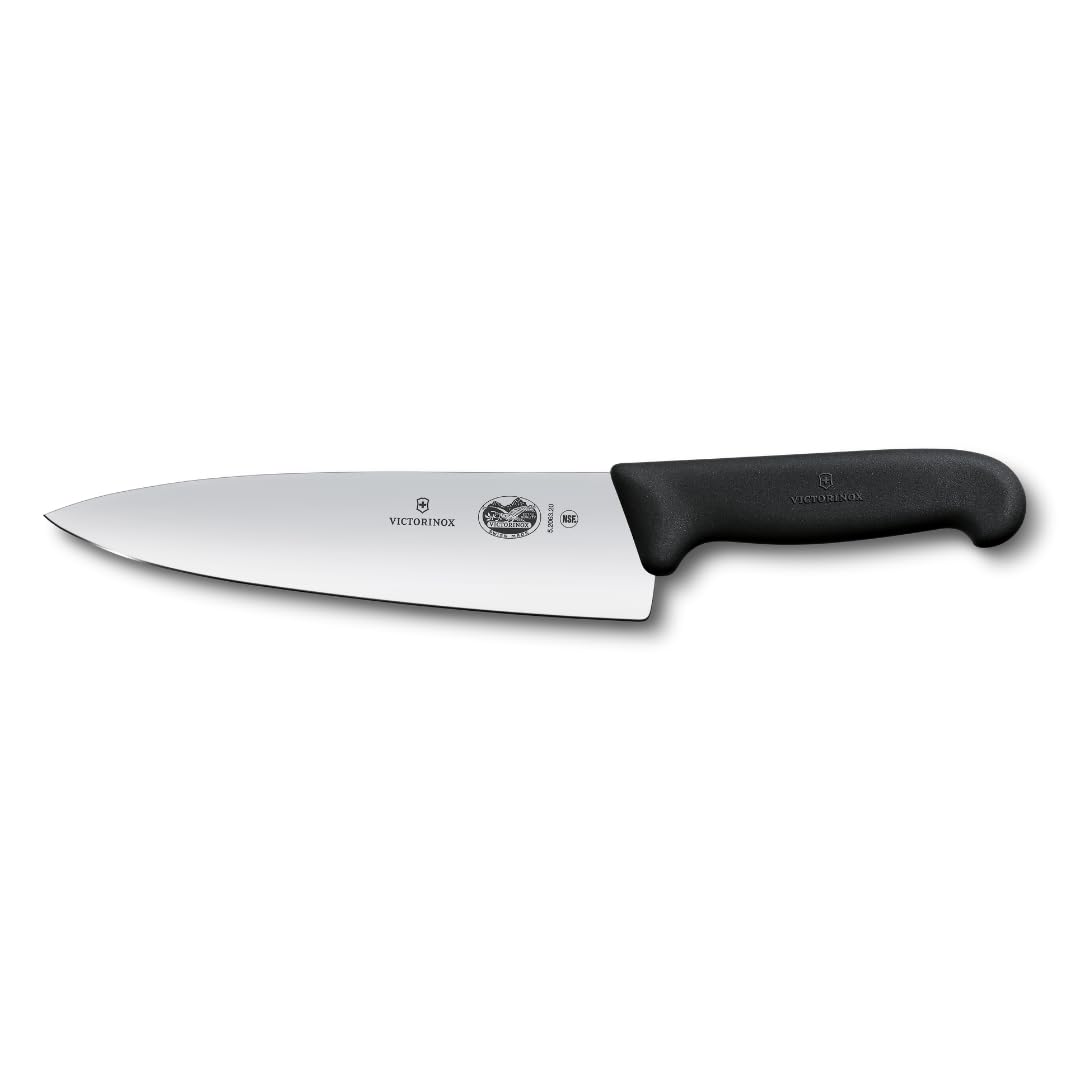
The Victorinox Fibrox Pro 8″ Chef’s Knife is the undisputed benchmark for budget-friendly professional cutlery, consistently rated as the top pick by America’s Test Kitchen and used in culinary schools worldwide. The high-carbon stainless steel blade is stamped from a single sheet and laser-tested for edge consistency, delivering a sharpness that rivals knives costing three times as much. The blade weighs just under 6 ounces, making it one of the lightest 8-inch chef knives available, which translates to significantly less hand fatigue during long prep sessions.
The Fibrox handle is the defining feature of this knife — a thermoplastic elastomer (TPE) material that provides a non-slip grip even when your hands are wet or greasy. The handle shape is ergonomically contoured with a slight finger guard, and the weight balance is neutral, giving you excellent control for both fine slicing and heavy chopping. The stainless steel blade is also dishwasher safe according to the manufacturer, though hand washing is recommended to preserve the edge longer.
Customer feedback consistently highlights the knife’s incredible value proposition: it arrives sharp, stays sharp for weeks with regular honing, and is easy to sharpen when it eventually dulls. The chromium carbide steel composition is low-maintenance and corrosion-resistant, making it an ideal first chef knife for beginners or a reliable backup for experienced cooks. The only notable drawback is the utilitarian aesthetic — this knife is built for function, not display — but for pure cutting performance relative to cost, nothing in this guide beats it.
Why it’s great
- #1 rated by America’s Test Kitchen for budget chef knives
- Extremely sharp out of box and holds edge well for weeks of daily use
- Non-slip Fibrox handle provides excellent grip even when wet or oily
Good to know
- Lightweight feel may not appeal to cooks who prefer a heavier, more substantial blade
- Utilitarian handle design lacks the aesthetic appeal of wood or Damascus finishes
6. Sunnecko 8 Inch Chef Knife

The Sunnecko 8 Inch Chef Knife is a Japanese-style blade that punches well above its entry-level price point. Hand-sharpened to a 12 to 15 degree angle per side, this knife arrives frighteningly sharp — many users report cutting themselves during the first cleaning because the edge is so aggressive. The high-carbon stainless steel blade is forged with a laser-etched pattern that mimics traditional Damascus, giving it a premium look that belies its accessible cost.
The ergonomic Pakkawood handle is contoured to fit the hand naturally and provides a comfortable, warm grip that improves with use as the wood conforms to your fingers. The full-tang construction offers good balance, though the knife is slightly blade-heavy compared to Victorinox or WÜSTHOF, which some users find aids in chopping momentum. The included PVC sheath protects the blade during storage and is especially useful for cooks who travel between kitchens or take their knives camping.
Customer reviews emphasize the exceptional value — the knife looks and performs like a much more expensive Japanese gyuto, with edge retention that holds up well for the steel grade. The primary trade-offs are the softer stainless steel, which will need sharpening more frequently than VG-10 or premium German alloys, and the need for hand washing to preserve the Pakkawood handle and edge. For budget-conscious cooks who want a beautiful, sharp knife with Japanese styling, this is a compelling option.
Why it’s great
- Incredibly sharp out of the box at a 12-15 degree edge angle
- Beautiful laser-etched Damascus pattern with a comfortable Pakkawood handle
- Full-tang construction and included sheath add durability and safety
Good to know
- Softer steel requires more frequent sharpening than premium alloys
- Pakkawood handle needs hand washing and occasional conditioning
7. Mercer Culinary Millennia 8″ Chef’s Knife

The Mercer Culinary Millennia M18000 is the knife you will find in the hands of culinary students and line cooks who need reliable performance at a very low cost of entry. The 8-inch blade is made from one-piece high-carbon Japanese steel with a wide hollow-ground edge that reduces food sticking during slicing. The hollow grind also creates a thinner blade profile behind the edge, allowing for cleaner cuts through dense ingredients like potatoes and carrots.
The handle is a dual-material construction — Santoprene for comfort and polypropylene for durability — with textured finger points that provide slip resistance even in wet, greasy conditions. The protective finger guard adds an extra layer of safety, which is especially valuable for beginners still developing their knife grip. The knife weighs approximately 9.5 ounces, giving it more heft than the Victorinox Fibrox, which some cooks prefer for the added momentum when chopping through tough vegetables.
Users consistently note that the knife arrives sharp and takes an edge easily with a standard honing rod or stone. The Japanese steel is easy to maintain and sharpen to a razor finish, though it will need more frequent attention than harder alloys like VG-10. The primary complaints are the included blade guard, which some find flimsy, and the lack of a pinch-grip-friendly choil area. For anyone building their first knife kit or needing a durable beater knife for high-volume tasks, this remains a top contender.
Why it’s great
- Hollow-ground blade reduces food sticking and allows cleaner slicing
- Ergonomic Santoprene handle provides excellent wet grip and comfort
- Easy to sharpen and maintain with standard tools
Good to know
- Blade guard is basic and may require replacement
- Heavier weight (9.5 oz) may cause fatigue for some users during long sessions
FAQ
What does “full tang” mean and why does it matter for a chef knife?
How often should I sharpen a value chef knife at home?
Is a stamped chef knife worse than a forged one for value models?
Final Thoughts: The Verdict
For most users, the value chef knife winner is the WÜSTHOF 8″ Gourmet Chef’s Knife because it combines legendary German blade heritage with a light, well-balanced feel and exceptional out-of-box sharpness at a price that undercuts most forged competitors. If you want the absolute best cutting performance relative to cost in a no-frills package, grab the Victorinox Fibrox Pro 8″. And for the cook who values aesthetic beauty and Japanese-style edge geometry, nothing beats the KYOKU Shogun Series VG-10 Damascus.