Your lower back aches by mid-morning, the arches of your feet feel like they are burning by 2 PM, and by the time you kick off your boots in the evening, a dull throb radiates from your heels up through your knees. That daily cycle of fatigue and pain is not something you have to accept as the cost of doing a job that keeps you on concrete, tile, or hardwood floors for eight to twelve hours. The right orthotic insert changes the geometry of how your foot meets the ground, redistributing force away from sensitive tissue and providing a rigid platform that keeps your skeleton aligned.
I’m Mohammad Maruf — the founder and writer behind AirfryerBite. I have spent countless hours cross-referencing material science data, comparing biomechanical support structures, and analyzing tens of thousands of verified buyer reports to isolate which inserts actually hold up under prolonged standing without collapsing or causing new pressure points.
This guide distills that research into a focused set of recommendations. Whether you work in a warehouse, a hospital, a kitchen, or a retail floor, you need a pair of inserts that deliver genuine structural support rather than just a soft layer of foam. After sifting through the data, I have identified the options that consistently outperform the rest, and below you will find the definitive list of the best shoe inserts for standing all day.
How To Choose The Best Shoe Inserts For Standing All Day
Not every insole sold as “supportive” actually stands up to a full shift on hard floors. Many rely on soft foam that feels good in the store but compresses permanently within two weeks, leaving you with no arch support and a shoe that feels tighter. To avoid that trap, you need to evaluate three core aspects: the material density of the support structure, the geometry of the heel cup, and the thickness profile relative to your shoe volume.
Arch Support Stiffness and Material
The most critical variable for prolonged standing is the rigidity of the arch. A flexible foam arch bends under load, allowing your foot to pronate and your plantar fascia to stretch painfully. Look for inserts that use a semi-rigid TPU or polypropylene shell under the arch. These materials resist flexing and hold your foot in a neutral position even when you are carrying extra weight or standing on unyielding surfaces. The description should mention a “3D dynamic TPU arch support layer” or a similar structural component.
Heel Cup Depth and Stability
A deep U-shaped heel cup cradles the calcaneus and prevents the heel pad from splaying outward under load. This containment is what stops heel pain from starting in the first place. Shallow cups allow the foot to slide, which shifts the insert out of alignment and forces your muscles to compensate. Look for inserts that explicitly state a “deep U-shaped heel cup” or “enhanced heel stabilization structure” and avoid any product that describes the heel area only as “cushioned.”
Thickness and Shoe Fit Compatibility
An insert that is too thick for your shoe will compress your toes against the upper and create new pain. If you wear work boots or sneakers with a removable factory insole, you can replace that insole with a thicker orthotic. For casual loafers or low-profile shoes, choose a thinner design that still provides a rigid arch shell. Many buyers overlook this and end up with an insert that fits lengthwise but makes the shoe unwearable due to volume. Always check the “Product Dimensions” height and compare it to your shoe’s internal space.
Quick Comparison
On smaller screens, swipe sideways to see the full table.
| Model | Category | Best For | Key Spec | Amazon |
|---|---|---|---|---|
| Welnove Work Orthotic Insoles | Premium | 10-hour concrete shifts | 3D dynamic TPU arch + GEL pads | Amazon |
| EASYFEET Orthotic Work Insoles | Premium | Thin fit for daily shoes | Triple-layer cushion + shock pads | Amazon |
| Professional Heavy Duty Support | Mid-Range | 230+ lbs / heavy build | Double PORON + Golden Triangle | Amazon |
| BestHalo Heavy Duty Insoles | Mid-Range | High arches / post-surgery | Biomechanical high-arch shell | Amazon |
| Dr. Scholl’s Custom FiT Comfort | Budget | Quick relief / lightweight use | Multi-layer foam + 3D arch | Amazon |
In‑Depth Reviews
1. Welnove Work Orthotic Insoles for Plantar Fasciitis
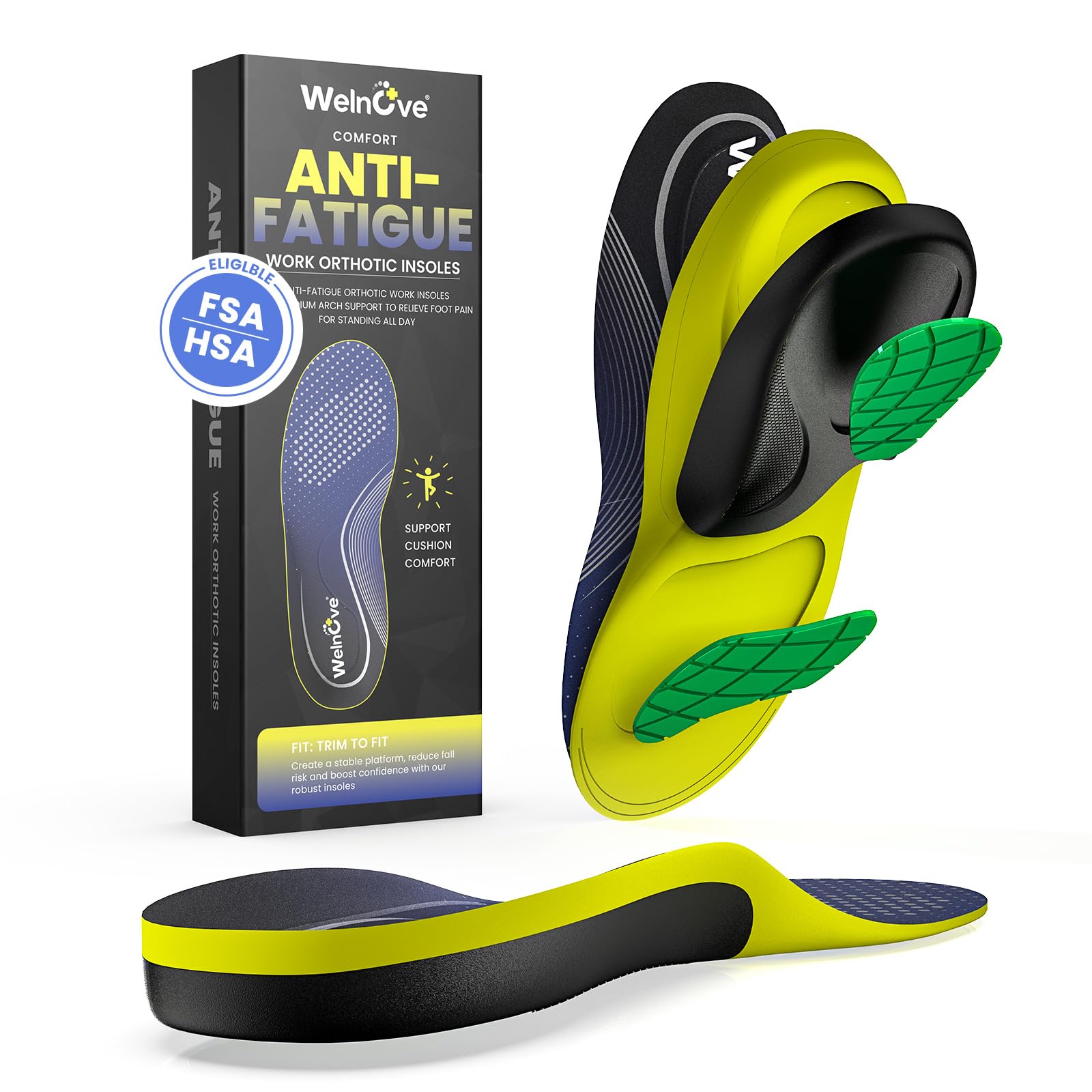
The Welnove insert delivers the most complete support package for anyone who spends a full shift on hard flooring. It combines a semi-rigid 3D dynamic TPU arch shell with shock-absorbing GEL pads placed at both the heel and the ball of the foot. That triple-layer construction — PU foam cushioning, TPU support, and targeted GEL — addresses the two main failure points of standing all day: arch collapse and joint impact.
Buyers who work ten-hour shifts on concrete report that the Welnove inserts eliminated foot burning and allowed them to wear steel-toe boots without the usual fatigue by the end of the day. The deep U-shaped heel cup keeps the calcaneus stable, and the thick PU base does not flatten out after months of use. One reviewer with a year of daily wear stated these outperformed inserts that cost more than twice as much.
The only catch is thickness. These are not low-profile inserts, so they work best in shoes with removable factory insoles. The manufacturer recommends removing the original insole and wearing the Welnove insert for 3-5 hours per day during the first week to let your feet adjust to the rigid arch support.
Why it’s great
- TPU arch shell provides genuine rigidity that does not collapse under load
- Dual GEL pads at heel and forefoot absorb repetitive impact
- Deep heel cup stabilizes the foot and prevents side slippage
Good to know
- Thick build requires shoes with enough internal volume
- Packaging refers to “2 pack” which means one pair, not two pairs
- Initial stiffness requires a gradual break-in period of several days
2. EASYFEET Orthotic Work Insoles Men Women

The EASYFEET insert is the best option for people who need genuine orthotic support but cannot fit a thick insole into their daily footwear. The total package height is noticeably slimmer than most rigid inserts, yet the design still includes a cushioning layer plus shock-absorbing pads at the heel and metatarsal area. This allows the insert to fit into casual leather shoes, sneakers, and even some dress shoes without crowding the toe box.
Buyers who stand for eight-plus hours carrying equipment report that the EASYFEET eliminated foot pain that used to start within the first three hours. The breathable fabric top layer and the thin profile mean the insert does not create a squeaking noise against the shoe liner, a frequent complaint with thicker orthotics. Several long-term users confirmed the support lasts up to twelve months before the cushioning layer shows signs of wear.
The arch support is medium rather than high, so this is not the right choice if you have flat feet that require aggressive repositioning. It is, however, an excellent middle ground for people who want a noticeable reduction in foot fatigue without the bulk or cost of a full custom orthotic.
Why it’s great
- Low-profile design fits a wider range of shoe types
- Shock-absorbing pads return energy and reduce leg fatigue
- Breathable fabric prevents moisture buildup during long shifts
Good to know
- Medium arch support may not be enough for severe overpronation
- Not as durable as thicker TPU-shelled options for very heavy users
- Some buyers found the fit slightly narrow for wide-width shoes
3. Professional Heavy Duty Support Pain Relief Orthotics

This insert is engineered specifically for heavier body types and those who suffer from plantar fasciitis combined with flat feet. The defining feature is the use of double PORON cushioning, a high-performance urethane foam that retains its rebound properties far longer than standard EVA. Paired with the “Golden Triangle” three-point support system that contacts the forefoot, arch, and heel simultaneously, the insert creates a tripod effect that stabilizes the entire foot.
Buyers weighing over 230 pounds report immediate improvement in heel pain and a noticeable reduction in lower back strain after switching to these inserts. The deep U-shaped heel cup locks the foot in place and prevents the heel pad from spreading, which is the primary mechanism behind heel spur pain. Multiple reviews mention that the inserts fit into size 10 and 11 work boots without any trimming required, though they do take up significant internal volume.
The PORON layers do not compress permanently under sustained weight, which is a common failure point in cheaper foam inserts. However, the overall thickness of the insole means you should remove the factory insole before inserting these, and you may need to loosen laces to accommodate the added volume.
Why it’s great
- Double PORON foam resists permanent compression under 230+ lbs
- Three-point geometry distributes pressure across the whole foot
- Effective plantar fasciitis relief reported within days by heavy users
Good to know
- Thick build may make shoes feel a full half-size smaller
- Firm feel is not plush — this is a support insert, not a soft pad
- Requires removal of the original insole for proper fit
4. BestHalo Heavy Duty Plantar Fasciitis Insoles
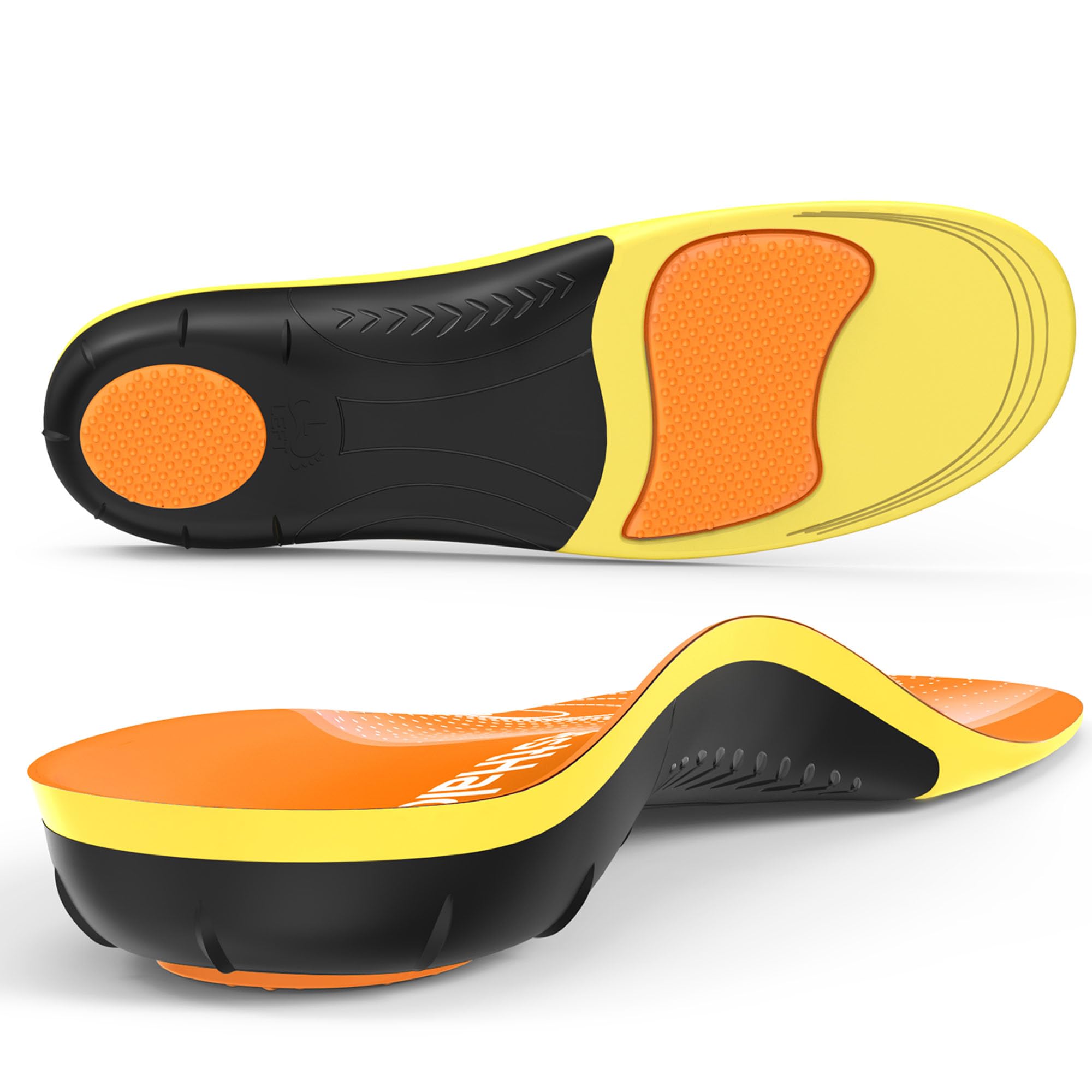
The BestHalo insert targets a specific but often underserved demographic: people with naturally high arches who need aggressive support to prevent supination and heel pain. The shell is designed using biomechanical principles to maintain the foot in a neutral alignment, and the EVA foam layer is denser than typical athletic insoles. The high-arch profile creates a pronounced lift under the medial longitudinal arch that actively shifts weight away from the heel and onto the midfoot.
Post-surgery patients and those with chronic supination report that the BestHalo eliminated pain radiating from the feet up to the hips. One reviewer with a history of foot surgery found these more comfortable than prescription orthotics costing multiple times more. The deep heel cup is notably aggressive, keeping the foot locked in a single position during walking, which is excellent for stability but may feel restrictive to users accustomed to free movement.
The high arch profile is not suitable for flat feet or for people with low arches. A subset of buyers with medium arches found the arch too high, causing new lower back pain after a two-week trial. If you have a confirmed high arch, this is an outstanding option. If you are unsure of your arch type, start with a medium-support insert instead.
Why it’s great
- Pronounced high-arch profile corrects supination and gait issues
- Biomechanical design stabilizes the foot in neutral alignment
- Durable EVA and gel construction outlasts many athletic insoles
Good to know
- Too aggressive for flat feet or medium arches
- May cause discomfort during the first week of adjustment
- The heel cup is deep enough to feel restrictive during walking
5. Dr. Scholl’s Custom FiT Comfort – Plantar Fasciitis Insoles
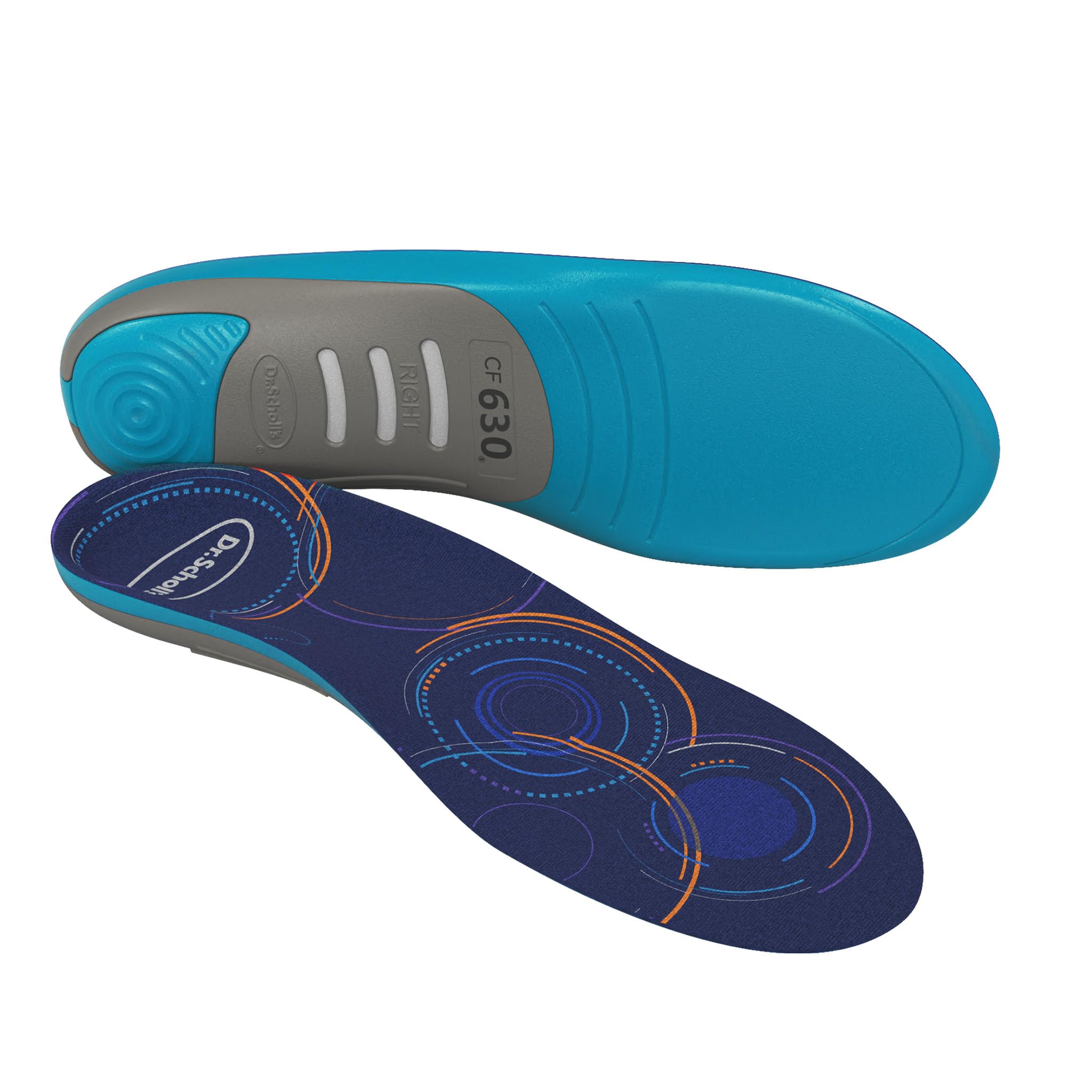
Dr. Scholl’s is the most recognizable name in foot comfort, and the Custom FiT Comfort model is their best effort for the standing-all-day demographic. The insert uses a multi-layer lightweight foam system with a flexible 3D arch support that adapts to different foot shapes. It is designed for shoes with removable insoles and requires no trimming, which simplifies the purchase decision for someone who wants a drop-in solution without measuring or cutting.
Buyers working in restaurants, hospitals, and warehouses report that these insoles provide noticeable relief from heel pain and plantar fasciitis during full shifts. The foam layer absorbs shock well and does not feel overly rigid, making it a good entry point for people who have never used a supportive orthotic before. The Dr. Scholl’s Arch Finder compatibility means you can check your arch type via a wet test to confirm the fit before purchasing.
The trade-off for that soft, accessible feel is long-term durability. The multi-layer foam does compress over time, and heavier users or those with very severe pain may find the support insufficient after a few months. The width is also a common complaint among buyers with wide feet — the insert is too narrow for 2E+ shoes, causing the foot to slide or hang over the edge.
Why it’s great
- No-trim design fits most standard shoes right out of the box
- Soft multi-layer foam provides immediate comfort for new users
- Widely available and backed by a major foot care brand
Good to know
- Foam compresses faster than rigid TPU or PORON alternatives
- Too narrow for wide (2E+) shoe sizes
- Mild arch support may not relieve severe plantar fasciitis pain
FAQ
How long does it take to adjust to rigid shoe inserts for standing all day?
Should I remove the factory insole before inserting orthotic shoe inserts?
Can I use the same pair of inserts for work boots and casual sneakers?
What does the weight rating on an insert mean for standing all day?
Final Thoughts: The Verdict
For most users, the best shoe inserts for standing all day winner is the Welnove Work Orthotic Insoles because the combination of a rigid TPU arch shell, dual GEL shock pads, and a deep heel cup provides the structural integrity needed for shifts on concrete or tile without permanent compression. If you need a thinner profile that fits into casual street shoes and sneakers, grab the EASYFEET Orthotic Work Insoles. And for heavier body types over 230 pounds who need aggressive plantar fasciitis relief, nothing beats the Professional Heavy Duty Support Orthotics with its double PORON cushioning.