Finding a quality matcha on a grocery shelf or online can feel like a gamble with your wallet. Too often, you end up with a dull, brownish powder that tastes bitter and grassy rather than the smooth, creamy, umami-rich experience you are after. The difference between a can that disappoints and one that transforms your morning ritual comes down to a handful of non-negotiable specs.
I’m Mohammad Maruf — the founder and writer behind AirfryerBite. I analyze the hardware and supply chains behind premium pantry staples, breaking down origin stamps, harvest data, and grind quality to separate real ceremonial-grade matcha from clever marketing.
This guide ranks the top contenders based on origin, harvest timing, and grind fineness so you can buy with confidence. If you are looking for the best store bought matcha that delivers authentic flavor without the guesswork, these five options have been tested against the specs that matter.
How To Choose The Best Store Bought Matcha
Not all green powders that call themselves matcha are equal. The good stuff starts with shade-grown tencha leaves harvested once a year, stone-ground into a micron-fine dust, and sealed in an opaque tin to protect its chlorophyll. Three critical specs separate a daily-drinker from a dusty cabinet regret.
First Harvest vs. Second Harvest vs. Culinary Grade
First harvest matcha uses the youngest, most tender leaves at the top of the plant. These leaves contain higher concentrations of L-theanine and lower levels of catechins, which means you get a naturally sweet, creamy sip with almost no astringency. Second harvest leaves are still fine for lattes but will carry a slightly more bitter edge. Culinary grade is often stemmy, dull-colored, and designed to be buried under sugar and milk. For straight drinking or high-quality lattes, always look for first harvest ceremonial grade on the label.
Origin: Prefecture and Single-Origin Transparency
Japan’s major growing regions — Uji in Kyoto, Yame in Fukuoka, and Kagoshima — each produce matcha with a distinct flavor profile. Uji leaves tend toward deep umami and marine sweetness. Yame yields a creamy, buttery body with natural sugars. Kagoshima offers a balanced, rounded flavor with notes of chestnut and sweet potato. The best store-bought options name the specific prefecture and often the farm. Avoid blends that only say “packed in Japan from domestic and imported ingredients.”
Grind Particle Size and Tin Packaging
Authentic ceremonial matcha is stone-ground on granite mills until the particles measure between 5 and 10 microns. That fine grind creates the silky mouthfeel and the ability to dissolve fully in water without clumps. Coarse-ground matcha feels gritty and sinks to the bottom. Equally important is the container: matcha is highly susceptible to light and oxygen. A sealed, opaque tin — never a transparent bag or jar — is the only safe packaging for a powder you plan to drink in the weeks after opening.
Quick Comparison
On smaller screens, swipe sideways to see the full table.
| Model | Category | Best For | Key Spec | Amazon |
|---|---|---|---|---|
| Matcha Moon Pure Zen | Ceremonial | Traditional straight drinking | 1st Harvest Uji Kyoto | Amazon |
| Midori Spring Gold No.2 | Ceremonial | Nutty latte lovers | Roasted Tencha 5-Cultivar | Amazon |
| FKRO Tea Master | Ceremonial | Daily ceremonial with umami | Kagoshima Single Origin | Amazon |
| Naoki Yame Blend | Ceremonial | Sweet, buttery straight matcha | Silver Award Yame, Fukuoka | Amazon |
| DoMatcha Organic Ceremonial | Ceremonial | Larger quantity, versatile use | 2.82 oz / 75 Servings | Amazon |
In‑Depth Reviews
1. Matcha Moon Pure Zen Ceremonial Grade Matcha
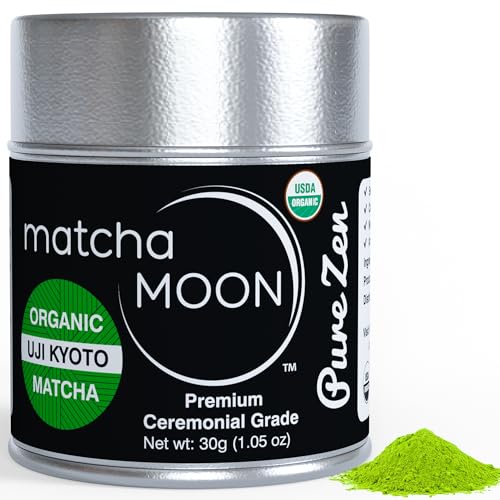
Matcha Moon Pure Zen locks in the trifecta that serious matcha drinkers demand: USDA organic certification, first harvest sourcing from Uji Kyoto, and a sealed 30g tin that blocks light and oxygen. The powder itself is a vibrant, neon green that signals high chlorophyll content and careful processing. When whisked, it produces a thick, consistent micro-foam without clumping, even when you use water at the correct 175°F temperature rather than boiling.
The flavor profile leans toward a bright, grassy, and light taste with a clean finish and zero bitterness — exactly what you want from a straight ceremonial preparation. Several customer reviews confirm that the powder holds up well even when you push the ratio of matcha to water higher than normal, a sign of genuine first-harvest leaf quality. The L-theanine content provides steady energy without the jittery crash associated with coffee.
The main trade-off is the small unit size. At 30 grams, you get roughly 15 traditional servings if you use the standard 2-gram scoop for usucha (thin tea). Heavy daily drinkers may want to buy two tins at once to avoid running out mid-week. For the purity, origin transparency, and silky texture, this remains the most reliable ceremonial option for anyone who drinks matcha straight or with minimal additions.
Why it’s great
- First harvest from Uji Kyoto, the most prestigious growing region
- No bitterness even with hot water or a high powder-to-water ratio
- Consistently produces micro-foam with a bamboo whisk
Good to know
- 30g tin yields roughly 15 servings, which goes quickly for daily drinkers
- Some buyers find the flavor mild compared to roasted or blended varieties
2. Midori Spring Gold No.2 Ceremonial Grade Matcha
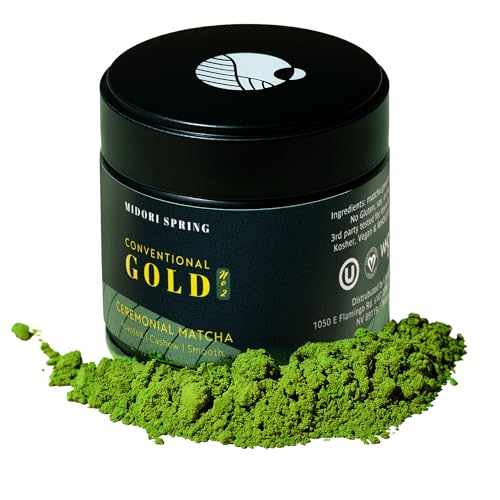
Midori Spring breaks from the standard grassy profile by using a longer roasted tencha that gives the Gold No.2 a warm, nutty, and almost toasty character. The blend combines five cultivars — Okumidori, Samidori, Kanayamidori, Yabukita, and Sayamakaori — which add complexity that single-cultivar matchas cannot match. The color remains a strong vibrant green, though slightly less electric than the Uji-based options, which is typical of roasted tencha processing.
When mixed, the powder dissolves smoothly and creates a creamy, full-bodied mouthfeel with low astringency and high umami. It works exceptionally well in lattes because the nutty notes stand up to oat milk or coconut cream without being overpowered. Customer feedback highlights the mental clarity and lack of jitters or energy crashes, suggesting the L-theanine content is genuinely meaningful. Third-party lab testing for metals and toxins adds an extra layer of confidence for buyers who prioritize purity.
The packaging is compact at roughly 2.4 ounces, and the tin is opaque and airtight. This is not the finest ceremonial matcha for straight drinking — the roasted flavor is a deliberate departure from tradition — but for anyone who makes lattes or cold brews and wants a bold, satisfying profile that avoids bitterness, Midori Spring delivers category-leading value.
Why it’s great
- Unique roasted tencha flavor that is nutty, creamy, and low in astringency
- Third-party lab tested for metals, toxins, and purity
- Mixes exceptionally well with milk for lattes without turning bitter
Good to know
- Less floral and grassy than traditional Uji matcha, which purists may not prefer
- Small tin size, similar to other 30g class options, requires reordering regularly
3. FKRO Tea Master Organic Ceremonial Grade Matcha
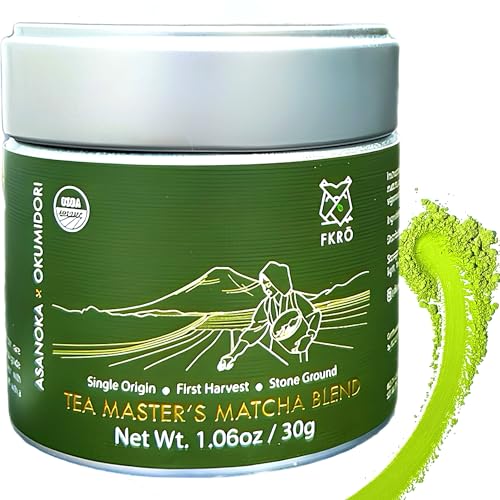
FKRO Tea Master comes from the Nishi family farm in Kagoshima and uses the rare Asanoka and Okumidori cultivars stone-ground in small batches. The flavor is a balanced umami with subtle notes of nori, sweet potato, and chestnut — a profile that offers depth without overwhelming the palate. The powder is super fine, whisking into a smooth liquid with no clumps, and the color is a deep, vibrant green that matches the best ceremonial options on the market.
Each gram contains about 19 mg of L-theanine and 80 mg of caffeine, giving a steady energy lift that many reviewers describe as great for replacing coffee. The sourcing transparency is excellent: the tea master who curated this blend is the 58th National Tea Appraisal champion in Japan, so the quality pedigree is genuine. The 30g tin is sealed and flown in fresh from Japan monthly, which keeps oxidation low and aroma high.
The main reason this sits in the mid-range tier is that its flavor, while very good, is more rounded and less distinctively sweet or creamy than the premium Uji or Yame options. It is an outstanding everyday ceremonial matcha for lattes or straight drinking, but if you want that singular buttery or marine note, you may prefer a more region-specific tin. For the price, it is one of the strongest all-around performers.
Why it’s great
- Single origin from Kagoshima with a 4th-generation tea master selection
- Balanced umami with subtle savory notes, no bitterness, and easy frothing
- Provides steady energy with 19 mg L-theanine per gram, no jitters
Good to know
- Less pronounced natural sweetness compared to Uji or Yame prefectures
- 30g tin, medium size; not the most economical for heavy daily use
4. Naoki Matcha Fragrant Yame Blend
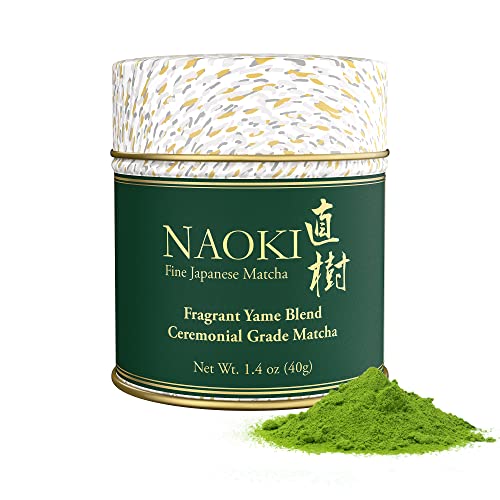
Naoki’s Fragrant Yame Blend earned a Silver Award in a Japanese national tea competition, and tasting it makes that credential obvious. The matcha comes from Yame, Fukuoka, a region where wide temperature swings between day and night create incredibly sweet tencha leaves. The resulting powder has a light, buttery, and creamy profile with fresh natural sweetness that does not require any added sugar or milk to be enjoyable.
At 40 grams, this tin offers a slightly larger serving than most of the 30g competitors, making it a better value for the quality tier. The powder is on the lighter side in terms of umami, which means it appeals to intermediate matcha drinkers who want a smoother entry point into straight drinking. It whiskes easily into a bright green liquid with zero clumping, and the finish is incredibly smooth without the dry or astringent aftertaste that plagues lower-grade matchas.
The premium nature of this tin is reflected in its best-use recommendation: it really shines when drunk straight with just water. Latte drinkers will enjoy it too, but the subtle sweetness is best appreciated undiluted. If you have been disappointed by other brands that tasted dusty or bitter, this Yame blend provides a clear corrective experience.
Why it’s great
- Award-winning blend with a Silver medal in Japanese national competition
- Naturally sweet, buttery, and creamy with no bitterness at all
- 40g tin provides more servings than standard 30g ceremonial options
Good to know
- Mild umami profile may not satisfy those who prefer a very strong, savory matcha
- Best enjoyed straight with water; the subtle sweetness is lost in milk-heavy lattes
5. DoMatcha Organic Ceremonial Green Tea Matcha Powder
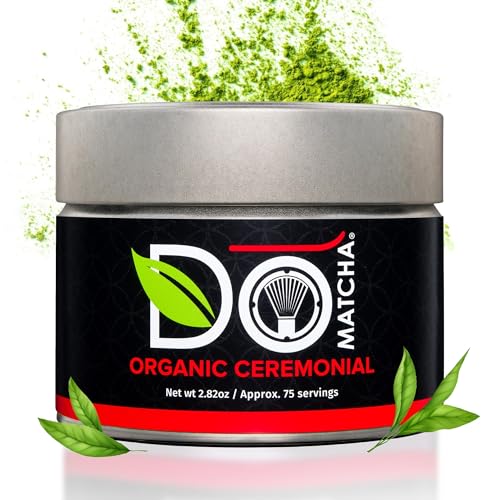
DoMatcha’s organic ceremonial matcha is the bulk option in this lineup without sacrificing classification. At 2.82 ounces — more than double the size of most tins here — it yields roughly 75 servings, making it the most practical choice for daily drinkers who go through a tin every two to three weeks. The powder produces a neon green color and a mellow, sweet-grassy flavor with a very smooth finish that matches the quality of smaller, pricier brands.
The L-theanine and caffeine combination is effective; reviewers consistently report steady, calm energy without the withdrawal symptoms or grogginess associated with coffee. The matcha is USDA organic and Kosher certified, and the opaque canister protects the powder from light damage. It works well for hot tea, iced lattes, and even smoothies, giving it genuine versatility across different preparation methods.
The flavor is slightly less complex and less creamy than the single-origin first-harvest options from Uji or Yame, which is expected given the larger harvest pool needed to produce this quantity. For the ceremonial-grade quality at this volume, DoMatcha is an excellent choice for anyone who wants a clean, reliable matcha for everyday use without constantly reordering small tins.
Why it’s great
- 75 servings per tin, the most economical option for heavy daily drinkers
- Neon green color with a smooth, mellow sweet-grassy taste
- USDA organic, Kosher, and suitable for hot, iced, or blended drinks
Good to know
- Lacks the deep umami and buttery notes of premium first-harvest single-origin tins
- Larger tin means you consume it over a longer period; must be stored airtight after opening
FAQ
How do I know if a matcha is really ceremonial grade from the Amazon listing?
Can I use ceremonial grade matcha for lattes or is that wasteful?
Why does some matcha clump and sink while others dissolve smoothly?
Final Thoughts: The Verdict
For most users, the best store bought matcha winner is the Matcha Moon Pure Zen because it delivers the genuine first harvest Uji Kyoto experience with zero bitterness and excellent blendability at a reasonable cost. If you want a nutty, roasted flavor that shines in lattes, grab the Midori Spring Gold No.2. And for the largest tin size that still qualifies as ceremonial grade, nothing beats the DoMatcha Organic Ceremonial.