The line between crunchy, tangy sauerkraut and a limp, moldy batch often comes down to one thing: your jar. A proper sauerkraut jar controls oxygen, supports lacto-fermentation, and keeps your cabbage submerged while gases escape, all without leaking brine or absorbing odors into the container itself.
I’m Mohammad Maruf — the founder and writer behind AirfryerBite. I’ve spent years analyzing container seals, material porosity, and airlock mechanisms across hundreds of fermentation vessels to identify the designs that consistently produce crisp, well-fermented kraut batch after batch.
The market is split between traditional ceramic crocks with waterlock seals, modern glass jars with one-way airlocks, and plastic containers with adjustable inner lids. Finding the right container means matching your batch size and commitment level to a vessel that delivers consistent, anaerobic conditions. This guide reviews the best sauerkraut jar available right now, covering ceramic crocks, wide-mouth glass jars, and dedicated fermentation kits for every home fermenter.
How To Choose The Best Sauerkraut Jar
Fermentation is a controlled microbial process. Your jar must create an anaerobic (oxygen-free) environment that allows lactic acid bacteria to thrive while preventing spoilage organisms from taking hold. Four key factors determine whether your container supports or sabotages that process.
Seal Type: Airlock vs. Waterlock vs. Standard Lid
A standard screw-on lid traps carbon dioxide, building pressure that can blow the lid off or break the glass unless you “burp” it daily. Dedicated fermentation jars use either an airlock (a one-way valve that lets CO₂ escape without letting oxygen in) or a waterlock moat (a channel filled with water that creates a gas-permeable but airtight barrier). Waterlock crocks are traditional and excellent for large batches, while airlock lids on glass jars offer easier monitoring for smaller volumes.
Material: Glass, Ceramic, or Plastic
Glass is non-porous and won’t absorb odors, but it can break under thermal stress. Ceramic crocks provide thermal stability and block UV light, which can degrade nutrients during long ferments, but they are heavy and unglazed exteriors can stain. High-density polypropylene mixed with clay (like traditional onggi-style containers) offers a middle ground — breathable enough for slow fermentation yet fully dishwasher safe. Choose glass for visibility and ease of cleaning; choose ceramic for batch size and temperature consistency.
Capacity and Headspace
A typical head of cabbage yields between 1 and 1.5 quarts of shredded kraut. A 1-gallon jar holds roughly 5 pounds of prepared cabbage, enough for about 5-6 pint jars of finished kraut. Ensure at least 2 inches of headspace between the packed cabbage and the lid — CO₂ production during fermentation needs room above the brine to prevent overflow and pressure buildup. For weekly kraut consumption, a 1-gallon vessel works well. For monthly batch processing, look for a 3-liter or larger ceramic crock.
Weights and Submersion System
The single most common fermentation failure is cabbage floating above the brine line and developing mold. A proper sauerkraut jar includes either glass weights, ceramic weights, or an adjustable inner lid that presses the solids below the liquid surface. The weight must be heavy enough to hold dense cabbage mass down but removable for daily tamping during the first 48 hours. Some jars include a wooden tamper for initial packing, which is a nice bonus but not a substitute for weights during the full fermentation period.
Quick Comparison
On smaller screens, swipe sideways to see the full table.
| Model | Category | Best For | Key Spec | Amazon |
|---|---|---|---|---|
| Crazy Korean Cooking 0.4 Gal | Plastic Onggi | Small counter ferment | Clay-infused PP, inner vacuum lid | Amazon |
| TOMO Fermentation Crock 3L | Ceramic Crock | Large kraut batches | Waterlock seal, 2 weights, tamper | Amazon |
| Folinstall 2 Pack Airlock Jar | Glass + Airlock | Beginners and dual batches | 4.3 in wide mouth, 3 airlocks | Amazon |
| Folinstall 2 Pack Wide Mouth Jar | Standard Glass | Dry goods + kraut storage | Silicone gasket, square shape | Amazon |
| Paksh Novelty 1 Gal Glass 2-Pack | Budget Glass | Simple storage, tea brewing | USDA approved, microwave safe | Amazon |
In‑Depth Reviews
1. TOMO Fermentation Crock with Weights — Ceramic 3L

The TOMO 3L crock is the closest thing to a traditional German fermentation vessel you will find without importing a heavy stoneware pot from Europe. The fully glazed ceramic interior prevents odors from seeping into the vessel wall, a common issue with unglazed crocks that develop a permanent sour smell after a few batches. The waterlock moat is extra wide compared to most sub- crocks, meaning you can go several days between refilling the water channel without the seal breaking — a real convenience for long ferments that run two to four weeks.
The kit includes two ceramic weights and a wooden tamper, which together solve the submersion problem completely. The weights are heavy enough to hold down a full cabbage head plus shredded mass, and the tamper allows you to pack the initial layers tightly enough to draw out brine within minutes. Users report fitting 3-4 Napa cabbages for kimchi or roughly 5 pounds of shredded green cabbage for a 3-liter sauerkraut run. The only space consideration is height — at 10 inches tall with the lid seated, it takes up more vertical room than a standard jar.
One notable advantage of ceramic over glass is thermal stability. The earthenware walls buffer against kitchen temperature swings, keeping the fermentation environment more consistent during cool nights or warm afternoons. For anyone who wants to batch-ferment enough kraut to last a month without babysitting individual jars, this crock is the most reliable option on this list.
Why it’s great
- Extra-wide waterlock reduces refilling frequency during long ferments
- Fully glazed interior prevents odor absorption and staining
- Includes both weights and tamper — complete set out of the box
- Ceramic walls buffer temperature swings for stable fermentation
Good to know
- Heavier than glass — around 7 pounds empty
- Cannot see fermentation activity without removing lid
- Limited to room-temperature ferments; not microwave or oven safe
2. Folinstall 2 Pack 1 Gallon Fermentation Jars with Airlocks

This Folinstall set delivers the two best features a new fermenter can ask for: a 4.3-inch wide mouth and dedicated airlock lids. The wide opening is a practical necessity for sauerkraut because it lets you pack shredded cabbage directly into the jar with your fist, and later reach in to remove the weights and finished kraut without spilling brine everywhere. The glass is noticeably thicker than generic gallon jars, and the square shape fits neatly against cabinet walls without wasted space.
The airlock system uses a screw-on lid with a silicone grommet that accepts standard three-piece airlocks. You get three airlocks in the box — one spare — plus extra silicone grommets, so you can run two jars simultaneously and have a backup for a future batch. The airlock removes the need for daily burping and creates a true one-way gas exchange. Users making sauerkraut, pickles, and even small-batch wine report consistent results with zero mold issues as long as the cabbage stays submerged.
Measurement marks in both milliliters and fluid ounces are etched into the glass, not printed on a sticker, so they survive dishwashing cycles without fading. The chalkboard labels and pen included make it easy to date and label each batch. For anyone starting fermentation or fermenting multiple recipes at once, this two-pack provides everything except the weights — a minor cost addition that still leaves this set below the price of a single ceramic crock.
Why it’s great
- True airlock eliminates daily burping and oxygen exposure
- 4.3-inch mouth accommodates hands and measuring cups easily
- Etched measurement marks survive dishwasher cleaning
- Two jars plus extra airlocks for simultaneous fermentation
Good to know
- Does not include weights — must purchase glass weights separately
- Airlock lids are plastic and may degrade with prolonged UV exposure
- Square shape requires a solid shelf surface to prevent tipping
3. Crazy Korean Cooking Premium Kimchi & Sauerkraut Container 0.4 Gal

This container takes a different approach than glass or ceramic jars. The material is high-quality polypropylene blended with 7-10% natural clay, a nod to the traditional Korean onggi fermentation principle where porous clay walls allow slow air exchange that promotes healthy microbial activity. While modern plastic construction makes the container fully dishwasher safe and shatterproof, the clay infusion provides a subtle porosity that glass cannot replicate. The result is a vessel that many users say produces noticeably crisper kimchi and sauerkraut compared to sealed glass jars.
The standout design feature is the adjustable inner vacuum lid. This secondary lid presses directly onto the surface of the food, pushing it below the brine line and minimizing air space above. A small plug in the center of the inner lid lets you compress the vegetables further and release trapped air pockets. The outer screw lid then locks everything in place. At 0.4 gallons, this container is smaller than the other options here — ideal for fermenting a single head of cabbage or a test batch before scaling up.
Cleanup is straightforward since the plastic is non-porous at the microscopic level and the smooth surfaces don’t trap food particles. Several long-term users note that the container does not retain any fermented smell between washes, which is a common complaint with plastic buckets. The sandy brown color also hides any staining from turmeric-heavy kimchi or beets. For fermenters with limited counter space who want a dedicated vessel that won’t break if knocked over, this is the most practical compact option.
Why it’s great
- Clay-infused PP provides subtle porosity for crisper fermentation texture
- Adjustable inner vacuum lid pushes food below brine without extra weights
- Fully dishwasher safe and does not retain odors between uses
- Shatterproof and compact — safe for tight countertops
Good to know
- Small capacity — only 0.4 gallons, limited to small batches
- Not microwaveable, so cannot be used for hot-pack processing
- Outer lid does not have a one-way airlock; requires occasional burping
4. Folinstall 2 Pack Wide Mouth 1 Gallon Glass Jar with Airtight Lid
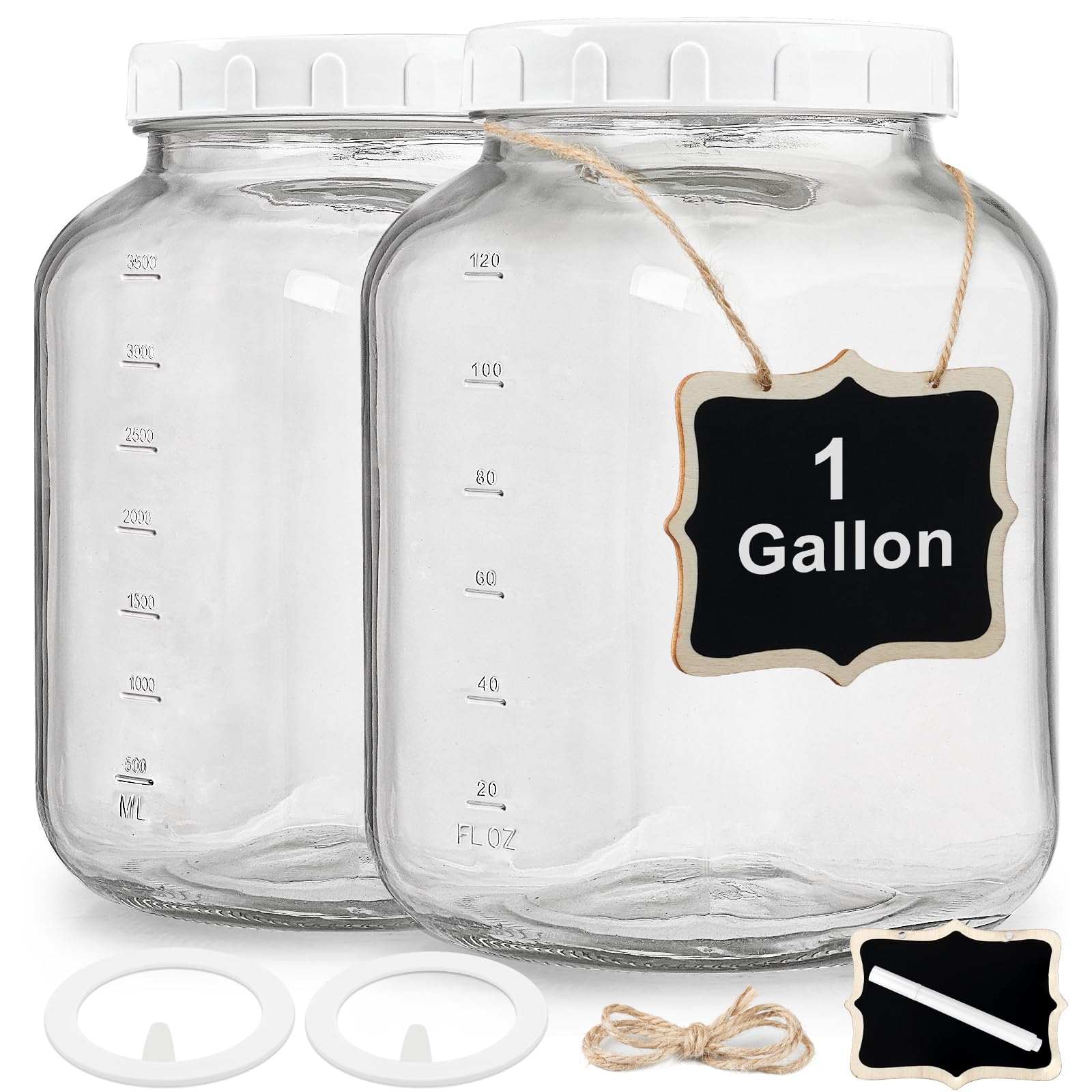
If you need a jar that pulls double duty as both a fermentation vessel and a dry goods storage container, this Folinstall set is the most versatile option. The screw-on lids incorporate a silicone gasket that creates an airtight seal comparable to dedicated fermentation lids, though without a dedicated airlock valve. The square shape maximizes shelf space efficiency — two jars side by side take up roughly the same footprint as a single round gallon jar. This geometry also makes stacking possible for pantry organization.
The glass is thick and heavy, with walls that feel denser than standard Ball or Kerr mason jars. The 4.3-inch mouth is identical in diameter to the airlock version from the same brand, so you can swap lids between the two sets if you buy both. Measurement marks are etched into the glass in two scales (milliliters and fluid ounces), though these are less critical for sauerkraut than for kombucha or brewing applications. Users consistently praise the quality of the included chalkboard labels and the liquid chalk pen for batch tracking.
For sauerkraut specifically, these jars work best when paired with glass fermentation weights to keep the cabbage submerged. Without an airlock lid, you will need to loosen the screw lid slightly every 12-24 hours during the first week to release built-up CO₂ pressure. The silicone gasket does provide an excellent seal for long-term storage of finished kraut in the refrigerator — better than standard canning lids that can rust over time. This is the set to buy if your kitchen serves multiple storage needs beyond just fermentation.
Why it’s great
- Square shape maximizes storage efficiency on shelves and counters
- Silicone gasket creates an airtight seal superior to standard metal lids
- Thick, durable glass resists chipping and thermal shock
- Includes reusable chalkboard labels and pen for batch identification
Good to know
- No airlock — requires manual burping during active fermentation
- Not microwave safe despite the manufacturer indicating otherwise
- Weights not included; must purchase separately for kraut submersion
5. Paksh Novelty 1 Gallon Glass Jar 2-Pack with Airtight Metal Lids

The Paksh Novelty two-pack represents the entry point for anyone who wants to try fermentation without committing to specialized equipment. The jars are standard cylindrical gallon jars with metal screw lids that provide a basic airtight seal. The glass is thicker than discount-store jars, and the wide mouth accepts standard mason jar accessories including plastic fermentation lids and glass weights. At roughly half the price per jar of the Folinstall options, this set is the most economical way to get a gallon vessel on your counter.
However, there are functional trade-offs worth noting. The metal lids are the weakest component — several users describe them as feeling “flimsy” compared to the jar glass itself, and the metal can rust over time if left in a humid environment or run through the dishwasher repeatedly. Unlike the dedicated fermentation jars above, these lids lack silicone gaskets, so the airtight seal depends entirely on how tightly you screw the lid. For active fermentation, you will need to either replace the lid with a proper fermentation lid or commit to daily burping.
For storage of fully fermented kraut in the refrigerator or for non-fermentation uses like sun tea, dry goods, and cold-brew coffee, these jars perform perfectly. The 2-pack also makes an affordable gift or starter set for someone curious about home fermentation. If your budget is tight or you plan to primarily store rather than ferment, this set offers the best value per jar. For serious kraut makers who want hands-off fermentation with airlock convenience, the incremental cost of the Folinstall airlock set is worth the upgrade.
Why it’s great
- Lowest cost per jar in this roundup — excellent entry-level value
- Thick glass resists breakage better than standard canning jars
- Wide mouth accepts standard fermentation lid accessories
- Microwave safe for reheating liquids and quick sterilizing
Good to know
- Metal lids lack silicone gaskets and may rust over time
- No airlock — daily burping required for active fermentation
- Round shape wastes shelf space compared to square alternatives
FAQ
Can I use a regular mason jar instead of a dedicated sauerkraut jar?
How long does sauerkraut need to ferment in a 1-gallon jar?
Do I need to buy glass weights separately for a standard jar?
Why does my sauerkraut smell like sulfur during the first week?
Final Thoughts: The Verdict
For most users, the best sauerkraut jar winner is the Folinstall 2 Pack with Airlocks because it combines the affordability and visibility of glass with the convenience of a true one-way airlock system, making fermentation hands-off from start to finish. If you want to batch-ferment larger quantities, grab the TOMO Fermentation Crock for its waterlock seal and included weights. And for compact countertop fermenting or testing small batches, nothing beats the Crazy Korean Cooking Container with its adjustable inner lid and shatterproof clay-infused build.