Finding a wood finish that is both durable and safe for surfaces that touch your food is a frustrating hunt. Many sealers promise protection but fail under moisture or leach questionable chemicals into your cutting board.
I’m Mohammad Maruf — the founder and writer behind AirfryerBite. I have spent years dissecting the chemical composition, food-safety certifications, and application requirements of pure tung oil brands to separate real protection from marketing fluff.
After comparing purity, drying speed, water resistance, and grain enhancement across the top-rated options, I have assembled the only list of trustworthy tung oil finishes that genuinely balance deep wood protection with food-contact safety.
How To Choose The Best Tung Oil
Choosing a pure tung oil finish means looking beyond the brand name and focusing on purity, curing behavior, and the specific finish type you need for your wood surface. Here are the critical factors that separate a premium protective oil from a problematic shortcut blend.
100% Pure vs. Polymerized Blends
The single most important label check is whether the product claims “100% pure tung oil” or “tung oil finish.” Pure tung oil comes directly from the tung tree seed and polymerizes naturally when exposed to oxygen. “Tung oil finish” products often contain varnish, mineral spirits, or metallic dryers to speed up curing, which can compromise food safety and leave a less durable film over time. For cutting boards and kitchen countertops, always opt for certified 100% pure oil with no additive fillers.
Cure Time and Number of Coats
Real pure tung oil takes 24 to 72 hours per coat to fully cure, and many projects require four to six thin coats for an even, waterproof seal. Products marketed as “fast-drying tung oil” have almost certainly been chemically modified. While slow curing is inconvenient, it produces a harder, more moisture-resistant surface that penetrates deep into the wood grain rather than sitting on top. Consider your schedule and project scope before committing to a pure oil that demands patience.
Food-Safe Certification and VOC Content
Not all tung oil sold as “natural” qualifies for direct food-contact surfaces. Look for explicit statements like “FDA food-contact safe ingredients” or “food-grade” on the label or description. Zero VOC (volatile organic compound) claims also matter for indoor use, as low-VOC finishes release fewer fumes during application and off-gassing. Waterproof performance after curing is the final check — a true food-grade tung oil should cause water to bead up immediately on a finished surface.
Quick Comparison
On smaller screens, swipe sideways to see the full table.
| Model | Category | Best For | Key Spec | Amazon |
|---|---|---|---|---|
| OLASIR Pure Tung Oil | Mid-Range | Food-contact kitchen items | 34 oz; food-grade, waterproof film | Amazon |
| NetLea Pure Tung Oil | Mid-Range | Outdoor furniture durability | 32 oz; alcohol-resistant finish | Amazon |
| Walrus Oil Pure Tung Oil | Premium | FDA-safe interior woodwork | 32 oz; low-sheen matte finish | Amazon |
| Real Milk Paint Dark Tung Oil | Premium | Aged look on butcher blocks | 16 oz; zero VOC, resin-enhanced | Amazon |
| Liberon Pure Tung Oil | Premium | Heat/alcohol-resistant countertops | 500 ml; water and heat resistant | Amazon |
In‑Depth Reviews
1. OLASIR 100% Natural Pure Tung Oil (34 oz)

The OLASIR pure tung oil earns the top slot because it delivers a rare combination: genuine 100% pure extracted oil with a clear food-grade safety claim and a quick-drying boiled formula that does not compromise waterproof performance. At 34 fluid ounces, it provides exceptional coverage for multiple thin coats on cutting boards, wooden tableware, and kitchen worktops without requiring frequent reordering. Customers consistently report that after two coats, water beads up and rolls off the surface, confirming the durable protective film.
This oil penetrates deep into the wood fibers to nourish and brighten the natural grain rather than leaving a plastic-like layer on top. The boiled tung oil chemistry speeds up the polymerization process significantly compared to raw tung oil, so you can apply subsequent coats after roughly 12 to 24 hours instead of waiting multiple days. The clear finish maintains the wood’s natural color while adding a subtle luster that does not yellow over time.
One important note: the oil is thick straight from the container, and many users recommend thinning it with a 1:1:1 ratio of tung oil, orange oil, and turpentine for smoother application on hard woods like sugar maple. The product is non-toxic and environmentally friendly, emitting only the natural aroma of tung seeds rather than harsh chemical fumes. For DIY woodworkers and home cooks who need a reliable, food-safe finish that holds up under daily moisture exposure, this bottle is the most practical value on the market.
Why it’s great
- Clear food-grade safety for chopping boards and utensils
- Boiled formula dries faster than raw pure tung oil
- Generous 34-ounce bottle for large or multi-coat projects
Good to know
- Requires thinning for even application on dense hardwoods
- Not intended for ingestion; keep away from children
2. NetLea 100% Pure Tung Oil (32 oz)
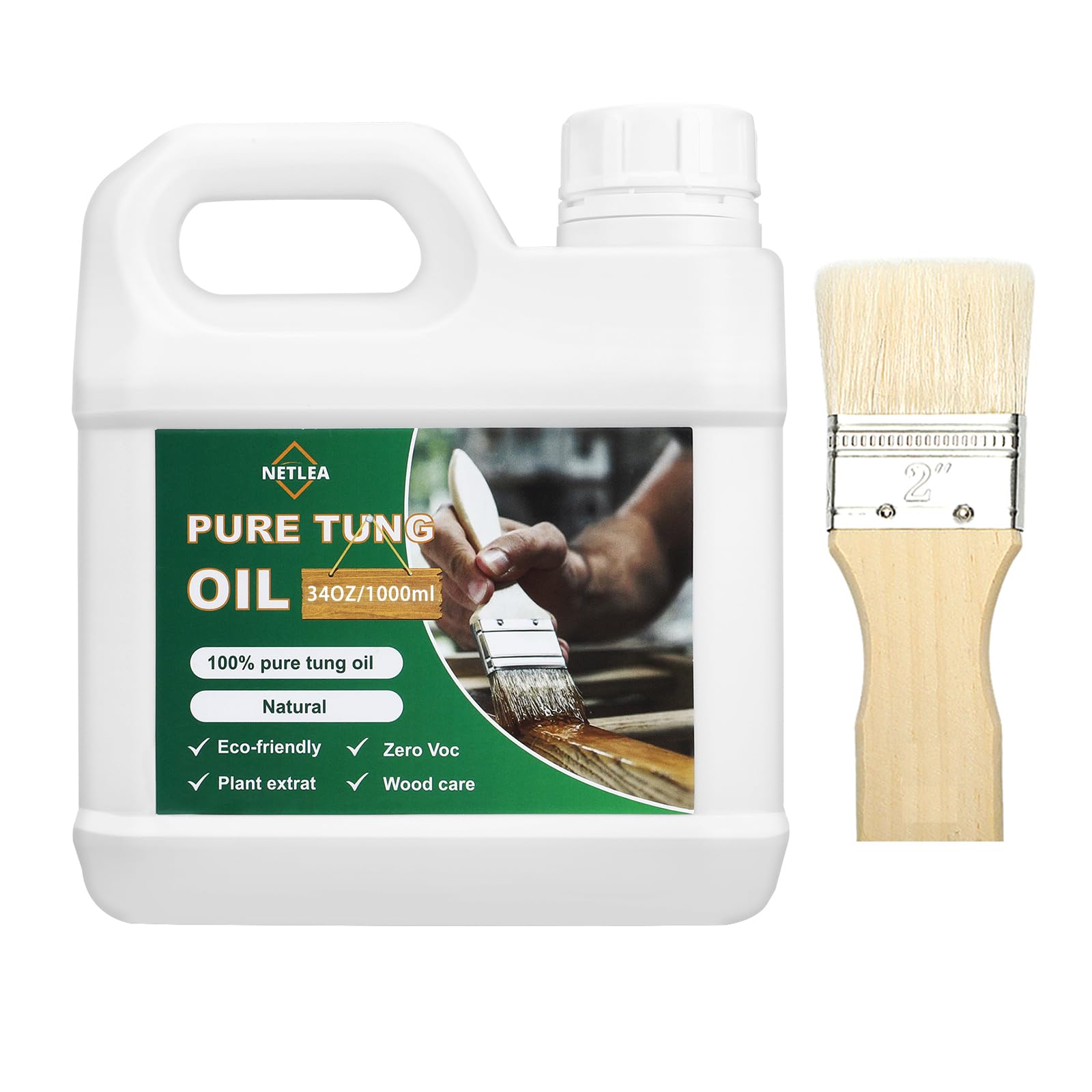
The NetLea pure tung oil is formulated specifically for wood surfaces that face the toughest environmental stressors: outdoor furniture, decks, fences, and garden fixtures. During testing, this oil demonstrated strong water resistance and alcohol resistance, which means it holds up against rain, morning dew, and accidental beverage spills on patio tables. The 32-ounce jug provides enough volume to treat a full outdoor dining set or a medium-sized deck section with several thin coats.
This 100% pure tung oil penetrates deep into wood fibers to create a hard, wear-resistant surface that does not crack or peel under sun exposure. Users report excellent results on IPE decking, a notoriously dense and oily wood that rejects many sealers. The natural oil finish also works well indoors on hardwood floors and wooden boats, making it a versatile option for households with mixed wood surfaces. The finish dries to a warm, hand-rubbed luster that emphasizes the wood’s natural character without adding artificial gloss.
One practical consideration: the liquid is thick and takes considerable time to fully absorb into the wood — days, not hours, for complete penetration on dense lumber. Plan your project timeline accordingly, allowing at least 24 hours between coats for the oil to soak in completely. The product is marketed as non-toxic when dry, but the label does not carry an explicit FDA food-contact certification, so reserve this bottle primarily for furniture, floors, and non-food-contact kitchen projects.
Why it’s great
- Excellent water and alcohol resistance for outdoor use
- Penetrates dense woods like IPE effectively
- Warm luster finish without harsh chemical odor
Good to know
- Slow absorption requires days of cure time on thick wood
- Lacks explicit FDA food-contact certification
3. Walrus Oil 100% Pure Tung Oil (32 oz)
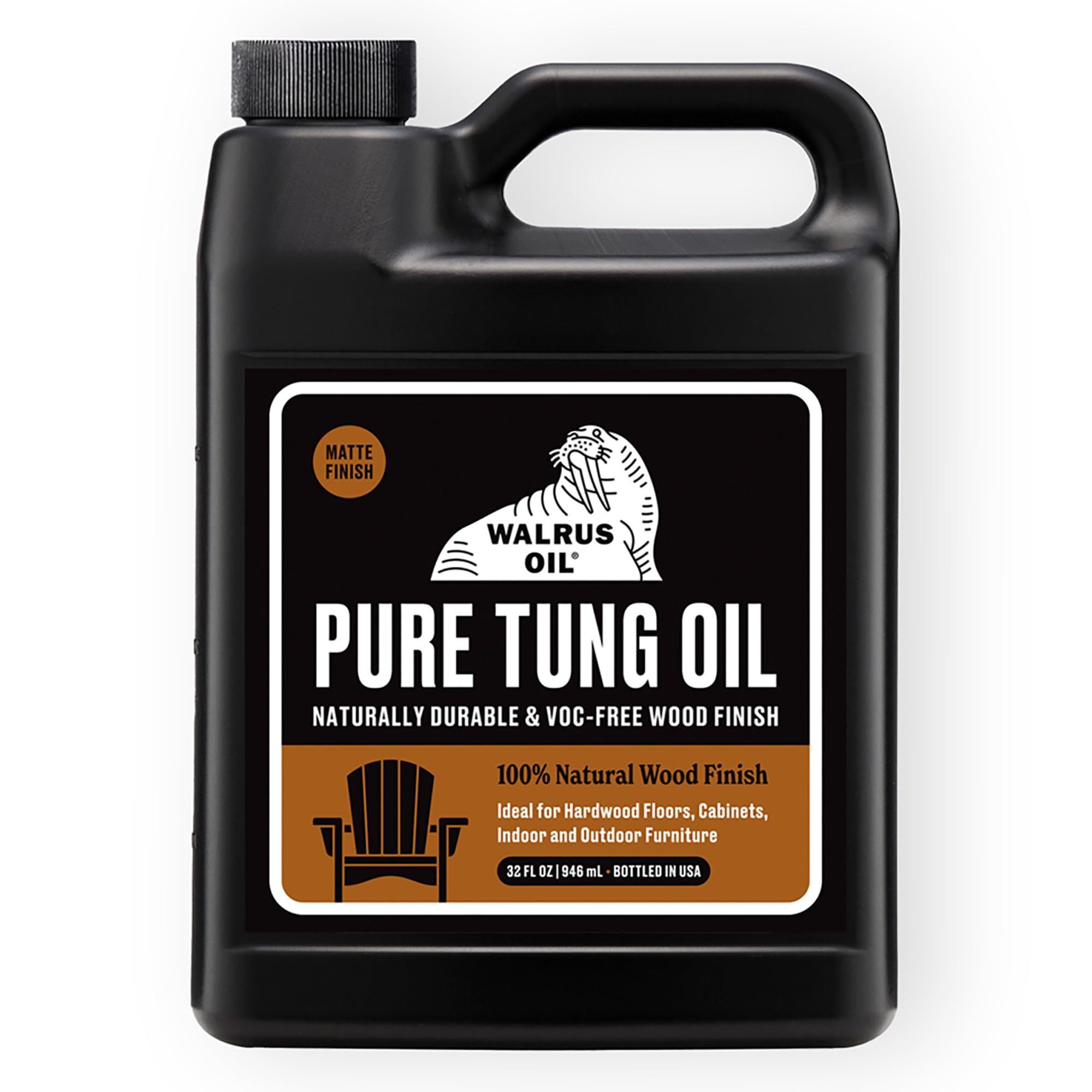
The Walrus Oil pure tung oil stands out for its explicit FDA food-contact ingredient safety certification, making it a top-tier choice for kitchen countertops, cutting boards, and salad bowls where regulatory confidence matters. The oil is 100% pure with zero additives, manufactured and bottled in the USA, and vegan-friendly — appealing to woodworkers who prioritize clean ingredients in their finishing supplies. At 32 ounces, this bottle provides enough oil for multiple furniture projects or a full set of kitchen woodware.
During application, this tung oil shows a noticeable lack of strong odor, which is a clear indicator of no chemical solvents or metallic dryers being added. Users who have applied it to oak, cherry, and coffee tree wood report that it slightly deepens the natural wood color while delivering a low-sheen, hand-rubbed finish that feels smooth to the touch. The matte finish works particularly well on solid wood projects where you want the grain to remain visible without a glossy glare.
The biggest drawback is the curing speed: pure tung oil without drying agents takes considerably longer to polymerize, with some users noting that it remains tacky for 24 to 48 hours between coats. This is not a defect — it is the natural behavior of a pure oil that has not been chemically accelerated. Plan for five to seven days of total project time if you apply the recommended four to six thin coats. The payoff is a food-safe, durable, and beautiful finish that does not require constant reapplication.
Why it’s great
- FDA food-contact safe ingredients for direct food surfaces
- No strong odor, no chemical additives or metallic dryers
- Bottled in the USA with vegan-friendly materials
Good to know
- Very slow cure time — expect 48 hours between coats
- Requires patience and multiple thin coats for best results
4. Real Milk Paint Dark Tung Oil (16 oz)

Real Milk Paint’s Dark Tung Oil breaks the mold of clear finishes by offering a pigmented formula that adds a deep, rich brown tone to wood while maintaining pure tung oil behavior. This is not a stain followed by a sealer — the dark color comes from natural resin blended into the oil, creating a uniform color and waterproof protective layer in a single product. The 16-ounce container is smaller than the other options on this list, but the resin enhancement means the oil covers roughly 500 square feet per can when thinned properly.
Woodworkers using this dark tung oil on birch countertops, walnut butcher blocks, and cedar siding report that it imparts a warm, reddish-brown hue that looks like well-aged wood without the blotchiness common with traditional oil-based stains. Applying it in thin coats mixed at a 1:1 ratio with citrus solvent or odorless mineral spirits produces a soft, matte sheen that enhances the natural grain depth. The finish is food-grade and waterproof, passing ASTM quality tests for durability and moisture resistance.
The learning curve here is real: because the pigment settles, you need consistent mixing and stirring between each coat to avoid uneven color patches. For large projects like a full kitchen island, users strongly recommend buying the pre-mixed half-and-half version rather than the full-strength oil, as the concentrated product can be less forgiving. Cleanup requires mineral spirits rather than water, so allocate proper workspace ventilation. The final look, however, is unmatched for anyone seeking a protective finish that also transforms the wood’s appearance.
Why it’s great
- Rich dark brown color eliminates separate staining step
- Zero VOC, food-grade, and waterproof when cured
- Excellent coverage — up to 500 sq ft per can with thinning
Good to know
- Pigment settling requires thorough mixing before each coat
- Large projects benefit from pre-mixed version to avoid color variation
5. Liberon Pure Tung Oil (500 ml)
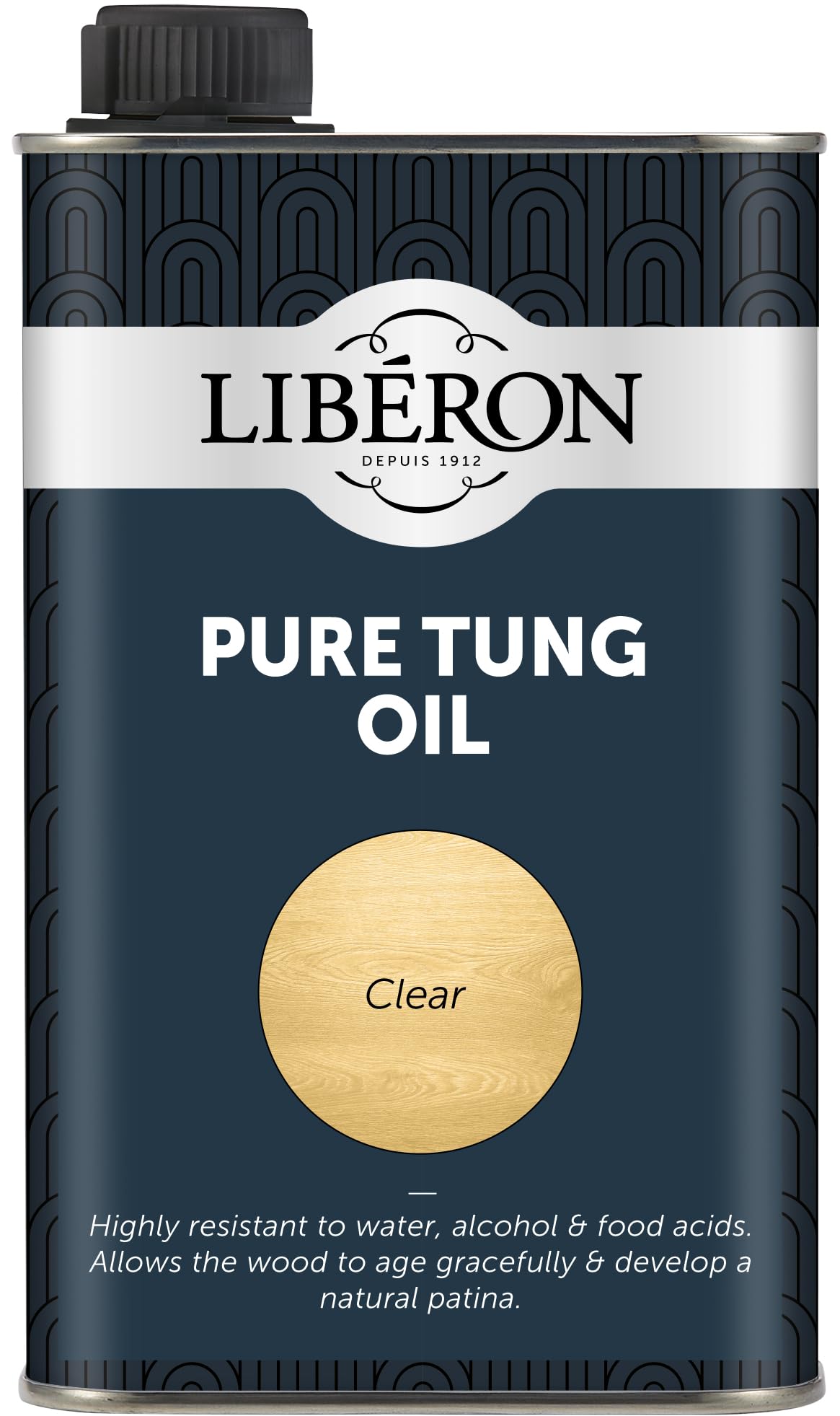
Liberon is a well-established name in European wood finishing, and its Pure Tung Oil delivers a refined formulation optimized for kitchen worktops, exterior oak, and high-use furniture surfaces. The 500-milliliter bottle (approximately 17 fluid ounces) is compact but saturated with premium tung oil that forms a long-lasting matte finish. The distinguishing feature of this oil is its explicit resistance to heat and alcohol, making it a practical choice for kitchen islands and dining tables where hot dishes and spilled wine are daily occurrences.
On beech work surfaces and oak furniture, Liberon tung oil applies smoothly with minimal odor and excellent coverage. Users describe the finish as a “brilliant matte” that does not feel sticky or greasy after full cure. The oil penetrates the top wood layer rather than forming a thick surface film, so it does not chip or peel like varnishes. According to the manufacturer, the oil is suitable for food-contact surfaces including cutting boards and salad bowls, adding a layer of safety for busy kitchens.
The most significant limitation is availability: this product carries a higher per-ounce cost compared to domestic American brands, and its Amazon ranking places it lower in the specialty oil category. Some international customers report occasional shipping delays, and the smaller bottle size means you may need multiple units for a large project like a full set of kitchen cabinets. For focused projects — a single countertop, a teak table, or an oak door — the performance and finish quality justify the investment.
Why it’s great
- Resists heat and alcohol for demanding kitchen environments
- Smooth, low-odor application with brilliant matte finish
- Food-contact safe for cutting boards and countertops
Good to know
- Higher per-ounce cost than domestic alternatives
- Small 500 ml bottle requires multiple units for large projects
FAQ
Can you use tung oil on a cutting board that will be used for raw meat?
How many coats of pure tung oil do I need on a kitchen countertop?
Does tung oil darken wood over time?
Final Thoughts: The Verdict
For most users, the tung oil winner is the OLASIR 100% Natural Pure Tung Oil because it combines food-grade safety, a fast-drying boiled formula, and the largest bottle volume at the most accessible value point. If you want an FDA-certified food-contact finish with zero additives and no chemical odor, grab the Walrus Oil Pure Tung Oil. And for a pigmented dark finish that eliminates the need for staining while still providing pure tung oil protection, nothing beats the Real Milk Paint Dark Tung Oil.