A cutting board that looks stunning on your counter but chips your chef’s knife after a month is not an upgrade—it’s a setback. Walnut occupies a unique sweet spot in the hardwood spectrum: dense enough to resist deep scoring and warping, yet soft enough to let a blade edge pass through without fracturing. The grain structure matters even more. End-grain walnut boards allow the knife to slide between wood fibers, which then reclose after the blade passes—a mechanism often called self-healing. This directly extends the time between knife sharpening sessions and keeps your prep work feeling smooth rather than jarring.
I’m Mohammad Maruf — the founder and writer behind AirfryerBite. I’ve spent years analyzing how different wood species, grain orientations, and board dimensions affect daily cooking workflows and long-term kitchen tool durability.
This guide evaluates seven walnut cutting boards across a wide value and quality spectrum. Each review focuses on measurable differences in grain construction, thickness, surface area, juice groove design, and included maintenance items. By the end, you will know exactly which walnut cutting board fits your cooking habits and counter space.
How To Choose The Best Walnut Cutting Board
The difference between a walnut board that lasts a decade and one that splits within months comes down to three variables: grain orientation, thickness, and the initial oil treatment. Walnut is naturally antimicrobial and resists moisture absorption better than maple or beech, but improper construction shortcuts negate those advantages. Focus on these factors to narrow your options.
End-Grain vs Edge-Grain: What Matters for Your Knife
End-grain boards are assembled by gluing together small blocks with the wood fibers oriented vertically. The knife edge pushes between the fibers rather than cutting across them, which causes less abrasion. This is the construction behind the self-healing property mentioned often in walnut board discussions. Edge-grain boards are cheaper to produce because they are cut from a single wide plank, but they leave the long fibers exposed to shearing forces. Over time, edge-grain boards accumulate more visible knife scars. For a walnut board used daily—especially if you maintain high-quality Japanese or carbon steel knives—end-grain construction is the safer choice.
Thickness and Weight: Why 1.5 Inches Matters
Boards thinner than one inch tend to warp or rock on uneven countertops because the wood lacks enough material to resist the natural expansion from moisture. A board at 1.5 inches thick provides sufficient mass to stay planted during heavy chopping without requiring rubber feet to compensate for instability. Heavier boards also produce a more satisfying, dampened sound when the knife lands, reducing vibration through the wrist. The trade-off is sink cleaning—boards weighing near 8 pounds become awkward to maneuver under a faucet. Consider your sink depth and whether you can comfortably lift the board for rinsing before committing to the thickest option.
Pre-Seasoned vs Bare Wood: Time to First Use
Some walnut boards arrive pre-seasoned with mineral oil and beeswax, meaning you can rinse them and start chopping immediately. Others ship with the wood raw and require three to four coats of oil before the surface becomes sufficiently sealed to repel moisture. Pre-seasoning does not indicate higher quality—it simply saves the initial time investment. The critical factor is whether the board will receive regular oiling every few weeks after purchase. Without periodic maintenance, even the best walnut board will dry out, develop hairline cracks, and lose its protective barrier against stains.
Quick Comparison
On smaller screens, swipe sideways to see the full table.
| Model | Category | Best For | Key Spec | Amazon |
|---|---|---|---|---|
| Sonder Los Angeles Alfred | Premium End-Grain | Organized prep with sorting wells | 1.5 in thick, 3 sorting compartments | Amazon |
| BABILONIA Black Walnut | Premium End-Grain | Heavy-duty chopping with included plate | 1.7 in thick, end-grain, oil & plate included | Amazon |
| HexClad Large Walnut | Mid-Range Double-Sided | Dual-purpose chopping and serving | 1.25 in thick, 19.5 x 13.75 in surface | Amazon |
| WoodForChef Walnut | Mid-Range Edge-Grain | FSC-certified, low-upkeep edge grain | 1.5 in thick, FSC Certified hardwood | Amazon |
| CONSDAN Walnut Board | Mid-Range Edge-Grain | Large prep surface with invisible handles | 20 x 15 in, 1 in thick, invisible handles | Amazon |
| THETCHRY End Grain | Budget End-Grain | Entry-level end-grain with gift box | 17 x 13 in, 1 in thick, sorting compartments | Amazon |
| Virginia Boys Kitchens Walnut | Compact Made in USA | Small kitchen counter, charcuterie display | 12 x 9 in, 1.5 in thick, USA-made | Amazon |
In-Depth Reviews
1. Sonder Los Angeles Alfred Cutting Board
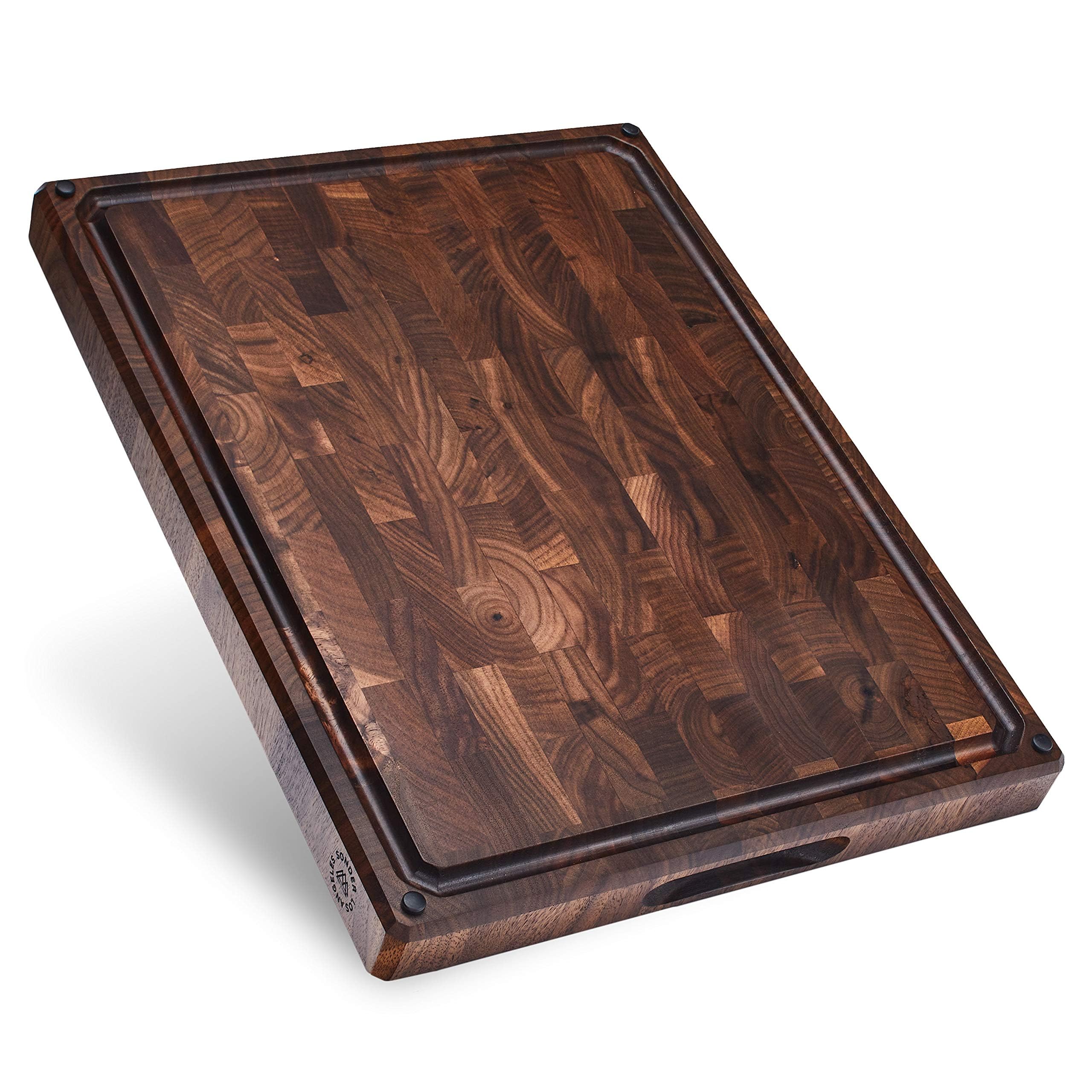
This board delivers the full package: true end-grain American Black Walnut construction at 1.5 inches thick, three sorting compartments built directly into the surface, and a deep juice groove rated at 3.5 fluid ounces. The removable non-slip feet add stability while allowing you to wash the board flat without trapped moisture underneath. Retired chefs have noted this board as a pleasure to prep on, and the self-healing fiber behavior preserves knife sharpness noticeably better than edge-grain alternatives.
The integrated sorting wells are a practical advantage when working through mise en place. Instead of shifting piles of diced garlic, herbs, or chopped vegetables into separate bowls, you can push ingredients directly into the wells and continue cutting without pausing. The surface area—17 by 13 inches—accommodates most weekly prep tasks without overwhelming the sink. Users have reported no warping or splitting after months of regular hand washing and bi-weekly oiling.
Proudly made in the USA from sustainably sourced walnut, the board arrives ready to use with a food-safe mineral oil finish already applied. Maintenance requires oiling every two to three weeks to maintain the protective barrier. The combination of end-grain construction, practical well design, and domestic manufacturing places this board at the premium end of the spectrum for good reason.
Why it’s great
- True end-grain self-heals from knife marks
- Three built-in sorting wells for efficient prep
- Deep 3.5 oz juice groove prevents counter mess
- Made in USA with sustainably sourced walnut
Good to know
- Requires oiling every 2-3 weeks
- Heavy at 7.5 pounds; may be cumbersome for sink rinsing
2. BABILONIA American Black Walnut Cutting Board
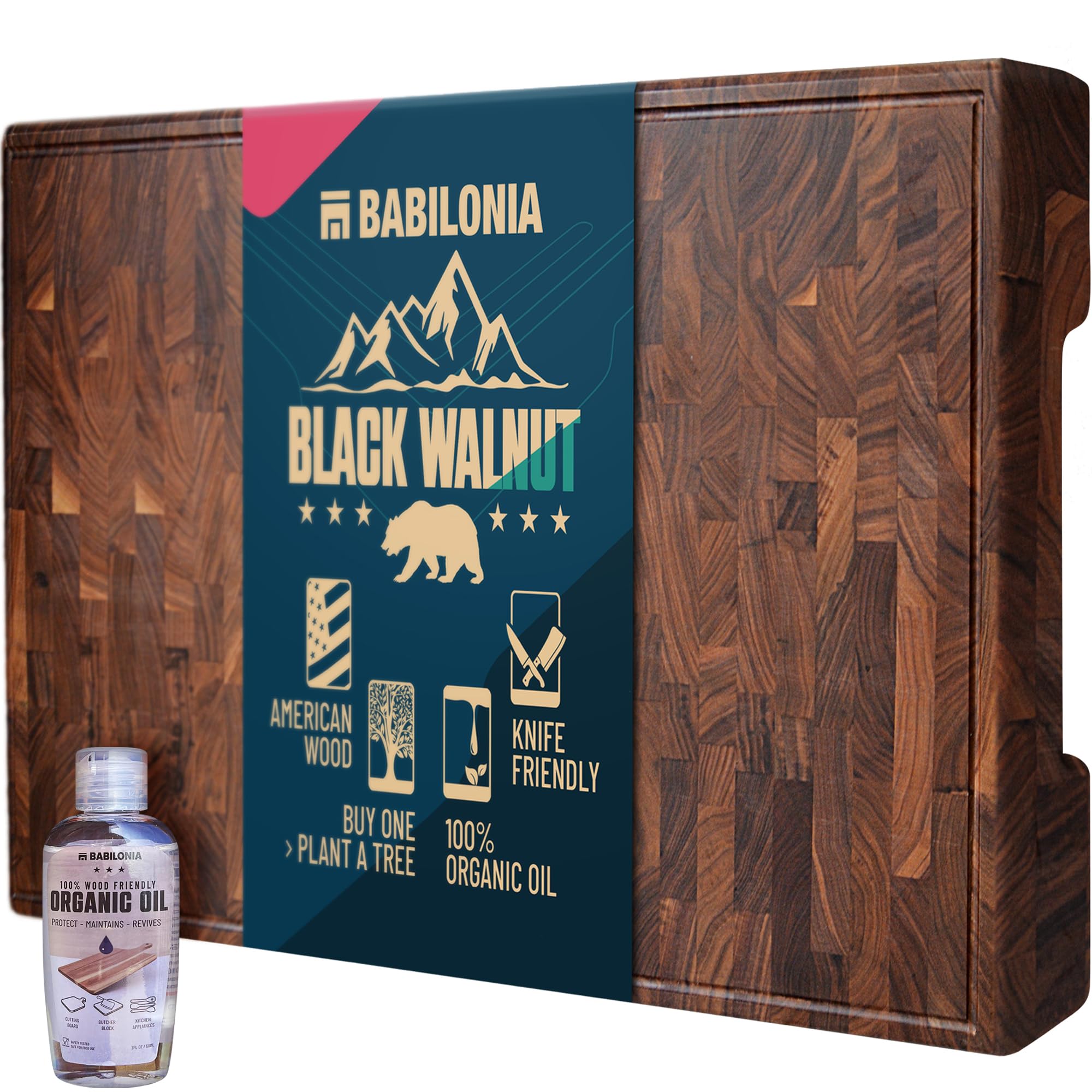
At 1.7 inches thick, this BABILONIA board is the most substantial option in the list. The extra mass translates to zero rocking during heavy chopping and a satisfying dampened sound on impact that reduces wrist strain over long prep sessions. The end-grain construction uses American black walnut, and the board ships pre-seasoned with mineral oil so you can start cooking immediately. A small plate and an additional bottle of organic oil are included, which adds immediate value for someone who does not already stock board conditioner.
The design includes a clever notch and plate system that lets you slide chopped vegetables directly from the board into a bowl or pot without lifting the board. This is a minor workflow improvement that becomes noticeable when processing large batches of onions or peppers. The reversible surface works well as a charcuterie tray for entertaining, and the hidden handles on the sides make flipping and carrying manageable despite the nearly 9-pound weight.
Some users have reported splitting after several months of use, though the vendor provided responsive replacements under the two-year warranty. The board requires diligent hand washing and immediate drying to avoid moisture penetration at the end-grain seams. For cooks who prioritize thickness and a self-contained prep system, this board offers a unique feature set that cheaper options cannot match.
Why it’s great
- Exceptional 1.7-inch thickness for rock-solid stability
- Notch-and-plate system simplifies ingredient transfer
- Included oil and plate reduce startup costs
- Pre-seasoned and ready to use out of the box
Good to know
- Reports of splitting after 2 months in some units
- Very heavy at 8.8 pounds; difficult to clean in small sinks
3. HexClad Large Walnut Cutting Board
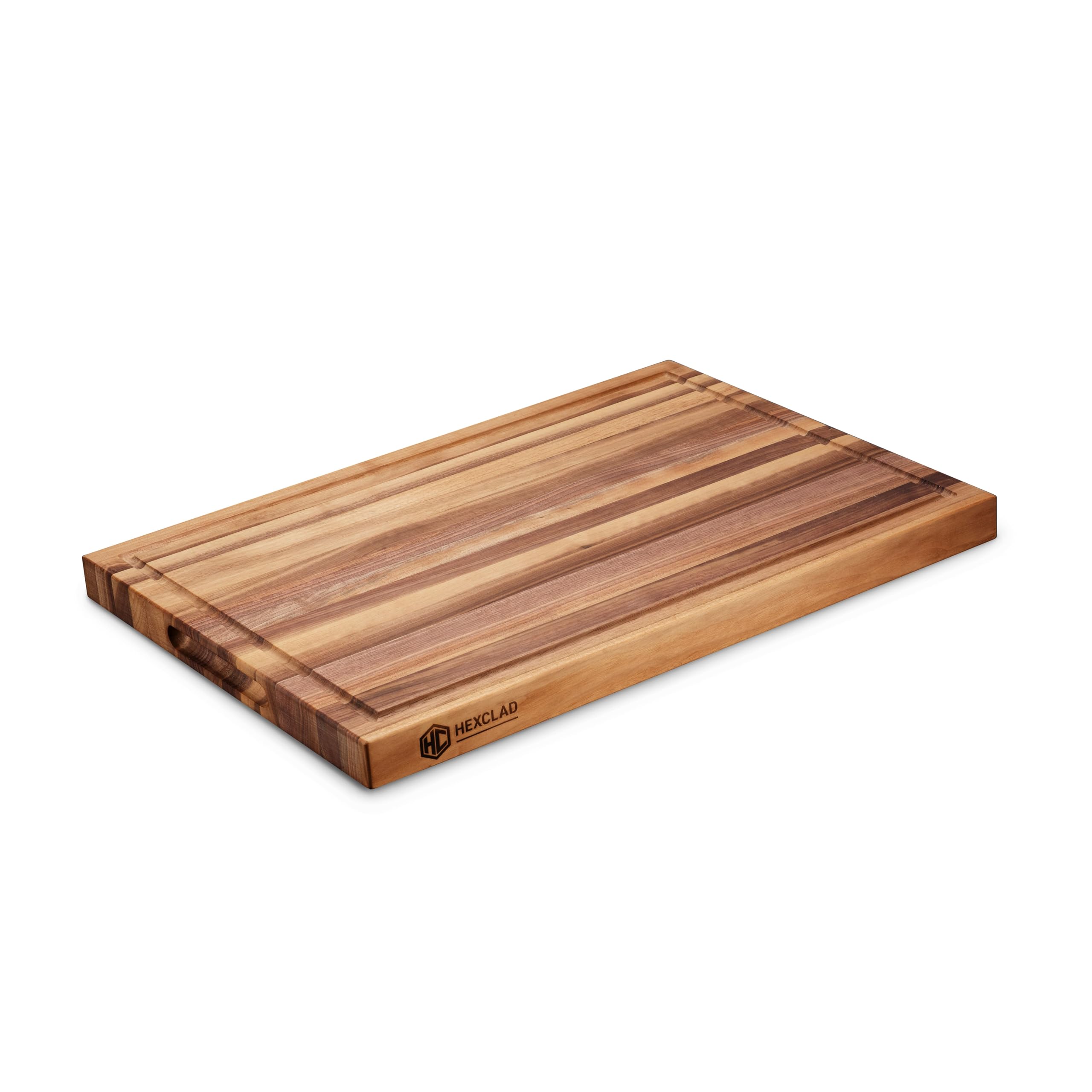
HexClad brings its reputation for durable cookware into the cutting board category with a generously sized walnut board that measures 19.5 by 13.75 inches. At 1.25 inches thick, it is thinner than the premium end-grain boards but still substantial enough to resist warping under normal use. The board is double-sided: one face has a juice groove for catching liquids from meat or fruit, and the other is a flat surface suitable for slicing, dicing, or arranging charcuterie. Recessed handles on both long edges make flipping easy.
The walnut used here is dense and features a tight grain that resists staining and odor absorption. Users have noted that the board arrives with clear care instructions and performs well when maintained with mineral oil and beeswax. The self-healing grain structure allows minor knife marks to close up after oil application, extending the board’s visual lifespan. It is not true end-grain construction, but the walnut density compensates somewhat for the edge-grain pattern.
A few customers observed that the wood feels softer than expected for walnut, resulting in slightly faster surface wear than an end-grain board would show. The board does not include any oil or maintenance supplies, so you will need to purchase mineral oil and beeswax separately. For home cooks who want a wide prep surface with the flexibility of a reversible design, this HexClad board provides the largest usable area in the mid-range tier.
Why it’s great
- Very large surface area for big prep jobs
- Reversible with juice groove on one side, flat on the other
- Recessed handles for easy lifting and flipping
- Dense walnut grain resists odors and staining
Good to know
- Edge-grain construction wears faster than end-grain
- No included oil or wax; must purchase separately
4. WoodForChef Walnut Cutting Board

WoodForChef focuses on responsible sourcing with an FSC certification for its walnut hardwood, making this board a strong choice for environmentally conscious buyers. The edge-grain construction measures 16 by 12 inches with a full 1.5-inch thickness. The deep juice groove runs close to the edge, maximizing the available flat cutting area. The board arrives pre-seasoned with a combination of mineral oil and beeswax, so it requires no initial treatment before use.
Users consistently describe the board as beautiful, heavy, and stable on the counter with no rocking or warping. The edge-grain surface is easier to maintain than end-grain because there are fewer glue seams to monitor, but it does accumulate visible knife marks over time. The walnut wood is less porous than maple, which helps resist moisture absorption and reduces the frequency of required oiling compared to lighter hardwoods.
Several customers noted that the board needs a separate stand for upright storage if you want to save counter space. The product page highlights performance and ease of maintenance, and the majority of reviews confirm that the board delivers on those promises. For cooks who want a responsibly made, thick walnut board without the premium price of end-grain construction, this WoodForChef model offers a solid middle ground.
Why it’s great
- FSC Certified for sustainable sourcing
- Pre-seasoned with mineral oil and beeswax
- 1.5-inch thickness prevents warping
- Deep juice groove keeps counters clean
Good to know
- Edge-grain shows knife marks faster than end-grain
- No included stand for upright storage
5. CONSDAN Walnut Cutting Board

The CONSDAN board offers the largest footprint in this list at 20 by 15 inches, giving you ample room for rolling out dough, carving a large roast, or arranging a party-sized charcuterie spread. Despite the size, the board is only 1 inch thick, keeping the weight manageable for lifting and cleaning. Invisible inner handles are routed into both long edges, providing a comfortable gripping surface without protruding hardware.
The edge-grain walnut surface is prefinished with a food-grade oil that provides moderate moisture resistance from day one. The deep juice groove runs close to the perimeter, leaving a wide central area for cutting. Customers have praised the board for its flatness straight out of the box and its gentle impact on knife edges. Several users repurpose the board as a stovetop cover or extra counter space when not in active chopping use.
At 1 inch thick, this board is thinner than the mid-range and premium competitors. Over time, the reduced thickness makes it more susceptible to warping if exposed to standing water or high humidity. The manufacturer includes a lifetime warranty against defects in materials and workmanship, which provides some reassurance. For cooks who prioritize a massive prep surface and modest weight, this CONSDAN board is a practical choice.
Why it’s great
- Largest surface area at 20×15 inches
- Invisible inner handles for easy carrying
- Prefinished with food-grade oil
- Lifetime warranty against defects
Good to know
- Only 1 inch thick; more prone to warping over time
- Edge-grain shows wear more visibly than end-grain
6. THETCHRY Walnut Wood Cutting Board
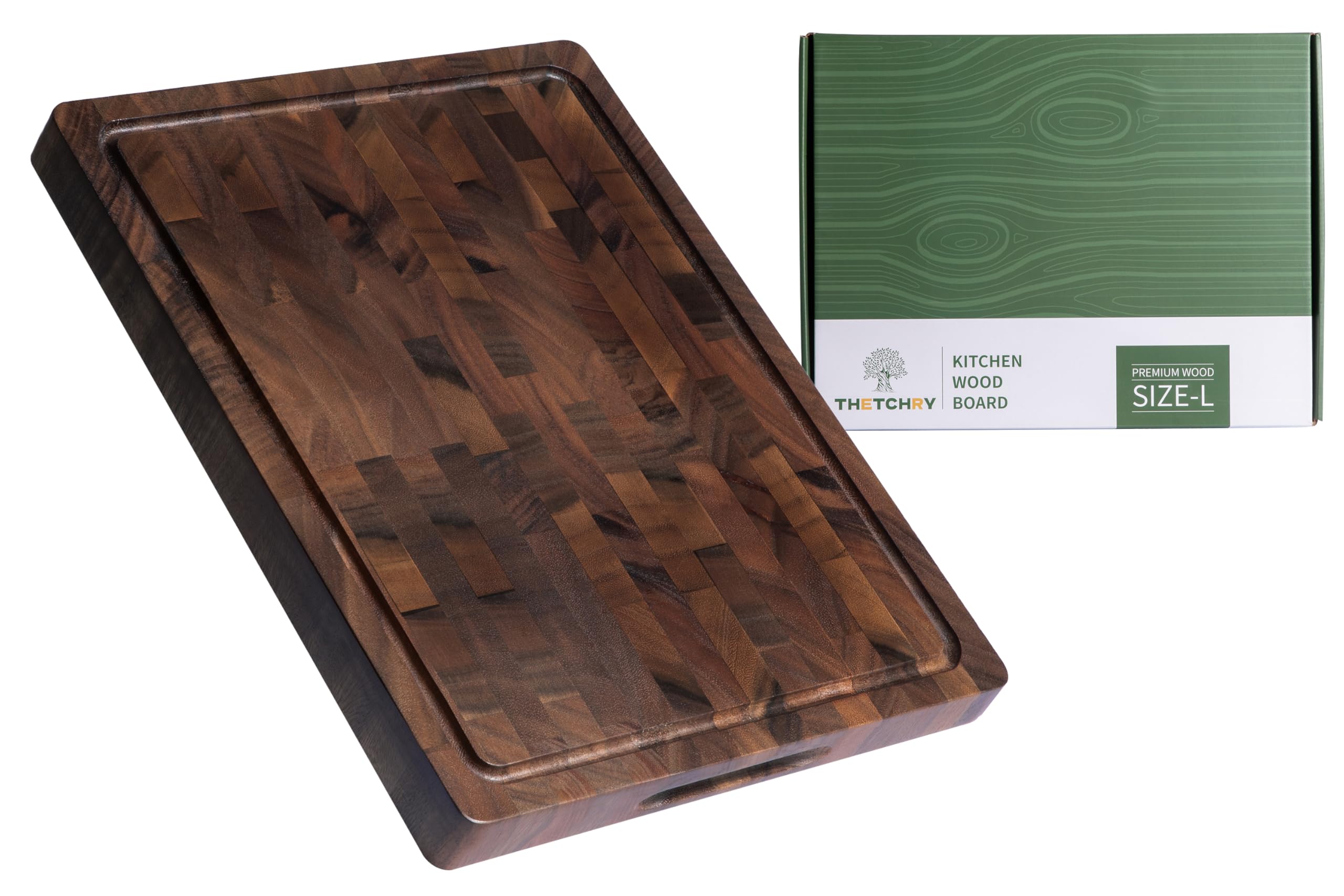
The THETCHRY board brings true end-grain construction at a budget-friendly price point, making it the most accessible entry into the self-healing fiber category. It measures 17 by 13 inches with a 1-inch thickness and features two sorting compartments that slide ingredients into a collection area, simplifying mise en place. The board is double-sided: one side works for chopping while the other serves as a charcuterie display board. It ships with a beeswax paste and an oil brush, so you have the basic maintenance supplies from the start.
The deep juice groove holds up to 3 ounces of liquid, effectively trapping spills from tomatoes, melons, or raw meat. Included stick-on rubber feet provide nonslip stability, though some users found the feet unnecessary and removed them for easier flipping. The walnut color is deep and uniform, with several customers commenting on the board’s stunning visual appearance. The natural wood is coated with beeswax oil rather than chemical finishes, which is a meaningful distinction for anyone avoiding synthetic coatings.
A few users noted that the juice groove appears on both sides, which can trap fine chopped ingredients in the channel when using the flat side. The board is also thinner than premium options at 1 inch, so it may feel less sturdy during heavy chopping. For home cooks who want to experience the benefits of end-grain walnut without a significant investment, this THETCHRY board delivers the core advantages at a lower entry point.
Why it’s great
- True end-grain construction at an accessible price
- Includes beeswax paste and oil brush
- Double-sided with sorting compartments
- Deep juice groove handles up to 3 oz of liquid
Good to know
- Juice groove on both sides traps chopped ingredients
- 1-inch thickness less stable under heavy chopping
7. Virginia Boys Kitchens Walnut Butcher Block
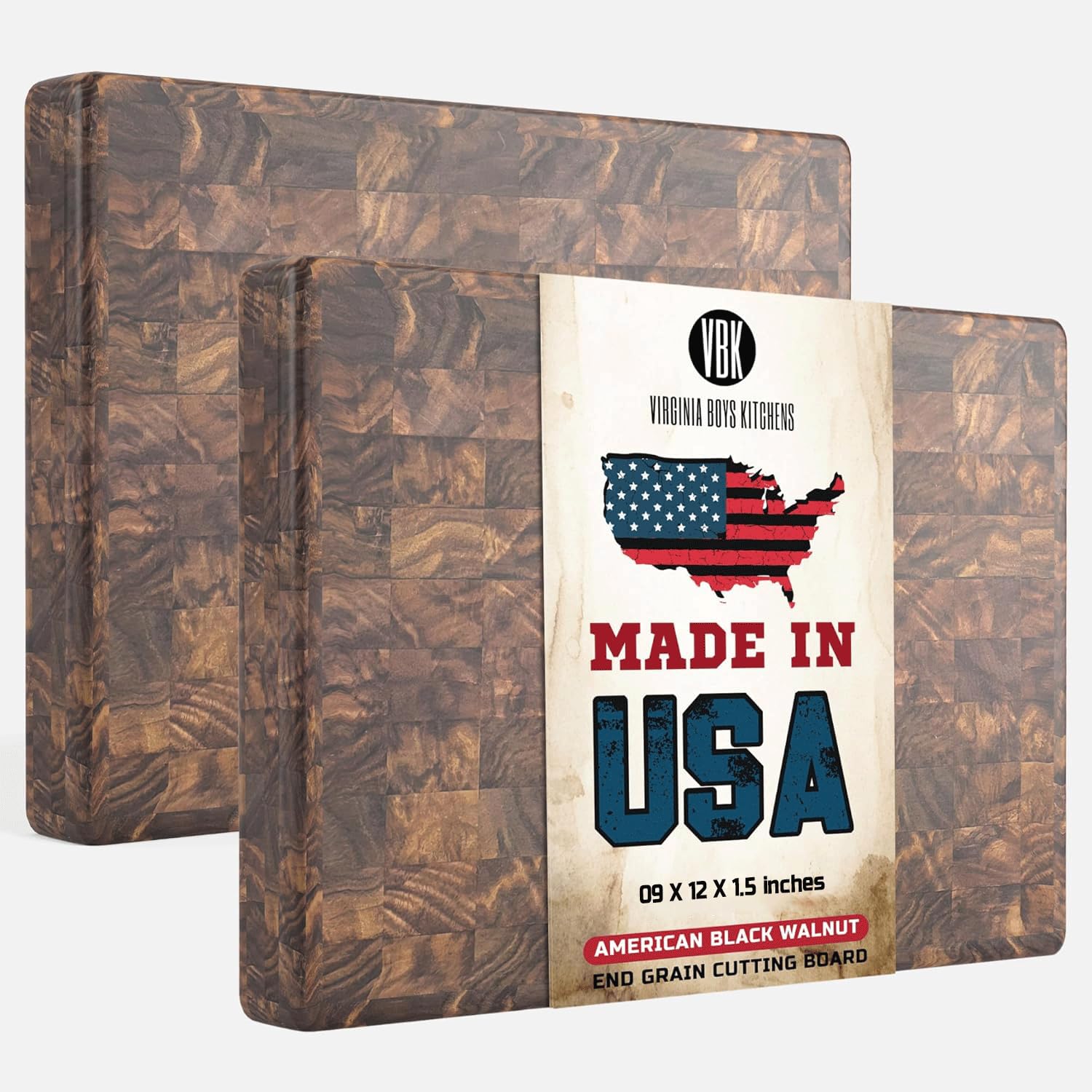
Virginia Boys Kitchens produces this end-grain walnut board entirely in the USA using sustainably sourced American black walnut. The dimensions are compact at 12 by 9 inches with a 1.5-inch thickness, making it ideal for small kitchens, RVs, or as a dedicated cheeseboard for entertaining. The board is finished with food-safe oils and contains no stains or varnishes. The natural chocolate hue of the walnut stands out immediately, and the end-grain pattern creates a visually rich surface that improves with age.
Because this variation ships without feet or a juice groove, the board sits perfectly flat and can be used on both sides without restriction. The smaller size means it fits easily under a faucet for cleaning and takes up minimal counter space when stored upright. Several customers use the board exclusively for charcuterie display, noting that the dark wood provides an elegant backdrop for cheeses, cured meats, and crackers. The manufacturer responds quickly to customer inquiries, which is typical of small-batch operations.
Some negative feedback indicates that the board received did not match the advertised larger dimensions and that the edges felt rough on certain units. Since this is a handcrafted product, minor variation in finish is expected. If you need a workspace for large-scale prep, this board will feel cramped. For cooks who value American craftsmanship, compact storage, and a dedicated board for serving or light prep, this Virginia Boys Kitchens board fills that niche precisely.
Why it’s great
- 100% made in USA from sustainable walnut
- End-grain construction at a compact size
- Food-safe oil finish with no chemical stains
- Excellent charcutiere board due to rich color
Good to know
- Small 12×9 inch surface limits heavy prep tasks
- Some units have rough edges and dimension mismatches
FAQ
How often should I oil my walnut cutting board?
Can I put a walnut cutting board in the dishwasher?
Why does my walnut cutting board smell after cutting onions or garlic?
Is end-grain walnut worth the higher price over edge-grain?
Final Thoughts: The Verdict
For most users, the walnut cutting board winner is the Sonder Los Angeles Alfred because it combines true end-grain construction with practical sorting wells and a deep juice groove, all made in the USA. If you want the thickest board available with a built-in plate transfer system, grab the BABILONIA American Black Walnut. And for those on a tighter budget who still want end-grain benefits, nothing beats the THETCHRY Walnut Cutting Board for delivering self-healing fiber performance at a fraction of the cost.