Swallowing a cheap zinc pill often means most of that mineral never reaches your cells — it passes right through you. The real challenge isn’t finding zinc; it’s finding a form your body can actually use. The difference between a wasted supplement and one that supports your immune system, skin, and energy metabolism comes down to the specific chelate compound and the quality of the manufacturing.
I’m Mohammad Maruf — the founder and writer behind AirfryerBite. I’ve analyzed dozens of supplement formulations, comparing absorption rates of zinc picolinate, bisglycinate, and glycinate forms to separate marketing claims from genuine bioavailability data.
This guide focuses on the specific chelation technologies, third-party testing standards, and dosing strategies that define a truly effective zinc supplement for absorption. You’ll learn exactly which forms outperform others and why brand reputation matters more here than in almost any other supplement category.
How To Choose The Best Zinc Supplement For Absorption
Selecting the right zinc supplement isn’t about grabbing the cheapest bottle on the shelf. The form of zinc, the dosage, the binders used, and the manufacturer’s quality standards all determine whether that supplement will actually deliver measurable benefits. Here are the critical factors to evaluate before buying.
Zinc Form: The Chelate Determines Bioavailability
Zinc oxide and zinc gluconate are cheap to produce but poorly absorbed by the human body. The most bioavailable forms are zinc picolinate (zinc bound to picolinic acid) and zinc bisglycinate or glycinate (zinc chelated to the amino acid glycine). Studies show these chelated forms achieve significantly higher serum zinc levels compared to oxide or gluconate. Look for “picolinate,” “bisglycinate,” or “glycinate” on the label — avoid “oxide” entirely if absorption is your priority.
Dosage and Copper Balance
Most clinical research uses 15-30 mg of elemental zinc per day. Doses above 40 mg long-term can suppress copper absorption, leading to deficiency. Some premium brands include copper in their formula to prevent this imbalance. For short-term immune support during illness, 50 mg is common but should not be maintained indefinitely. Always check the elemental zinc amount per serving — not the capsule weight, which includes the chelate molecule’s mass.
Third-Party Testing and Manufacturing Standards
Mineral supplements are vulnerable to heavy metal contamination (lead, cadmium, arsenic) from raw material sourcing. Reputable brands routinely submit their batches to independent labs like USP, NSF, or ConsumerLab for purity and potency verification. GMP-compliant, FDA-registered facilities enforce stricter batch-to-batch consistency. If a brand won’t publish its third-party test results, consider that a red flag for a product you’ll be consuming daily.
Quick Comparison
On smaller screens, swipe sideways to see the full table.
| Model | Category | Best For | Key Spec | Amazon |
|---|---|---|---|---|
| Thorne Zinc Bisglycinate | Premium | Maximum absorption, gentle stomach | 30 mg bisglycinate, third-party certified | Amazon |
| Metagenics Zinc A.G. | Premium | Doctor-recommended, immune + bone support | Arginine/glycine chelate complex | Amazon |
| Carlyle Zinc Picolinate 50mg | Value | High-dose immune support, long supply | 50 mg picolinate, 300 capsules | Amazon |
| Nordic Naturals Zinc Glycinate | Mid-Range | Sensitive stomachs, vegan daily driver | 20 mg glycinate, gentle formulation | Amazon |
| Nutricost Zinc Picolinate 30mg | Budget | Low cost, standard picolinate dose | 30 mg picolinate, 120 capsules | Amazon |
In‑Depth Reviews
1. Thorne Zinc Bisglycinate 30 mg
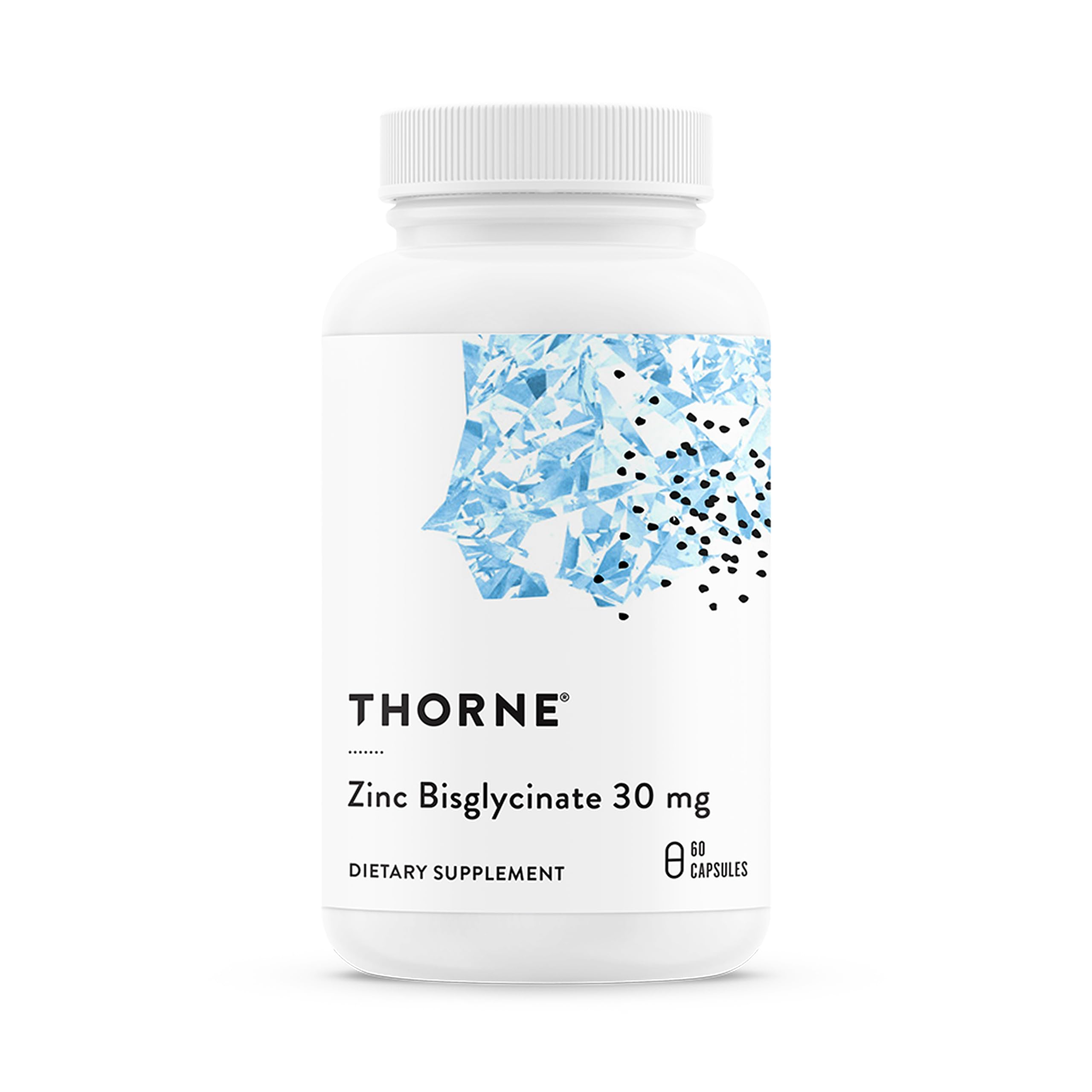
Thorne’s Zinc Bisglycinate sets the gold standard for absorbable zinc. The bisglycinate chelate binds zinc to two glycine molecules, creating a neutral compound that resists stomach acid degradation and passes efficiently through intestinal walls. At 30 mg per capsule, it sits in the therapeutic sweet spot — high enough for meaningful immune and testosterone support but low enough to avoid copper depletion with normal dietary intake. Third-party certification means every batch has been independently verified for both potency and contaminant levels, something most budget brands skip entirely.
User feedback consistently praises its stomach-friendliness. Multiple reviewers report taking it on an empty stomach without nausea or cramping — a common complaint with cheaper zinc forms like oxide or gluconate. The capsule is small, easy to swallow, and leaves no metallic aftertaste. Thorne’s reputation as the number one brand recommended by health-care practitioners (2023 survey) adds a layer of trust that matters for a daily mineral supplement you’ll take for months or years.
For anyone serious about absorption, Thorne’s bisglycinate is the clear frontrunner. It delivers the most researched, most bioavailable form of zinc from a manufacturer that subjects itself to rigorous third-party auditing. If your budget allows a premium investment in your daily health, this is the bottle to buy.
Why it’s great
- Superior bisglycinate chelate for maximal absorption
- Third-party certified for purity and label accuracy
- Gentle on stomach even without food
Good to know
- Higher per-capsule cost than bulk brands
- Only 60 capsules per bottle at daily dosing
2. Metagenics Zinc A.G. (Arginine/Glycine Chelate)

Metagenics Zinc A.G. uses a proprietary chelation strategy that binds zinc to both arginine and glycine. This dual-amino acid complex is designed to exploit multiple transport pathways in the gut, theoretically improving absorption beyond single-chelate formulas. The tablets are formulated for gentle GI tolerance — a critical feature since zinc is notorious for causing nausea at higher doses. Each tablet provides a moderate zinc amount that covers the RDA without oversaturating, making it suitable for long-term use alongside a multivitamin.
Clinicians frequently recommend Metagenics because of the brand’s rigorous quality control. Manufacturing in GMP-certified facilities with third-party potency testing is standard here, not optional. Long-term users in the review data report twelve-plus years of consistent use, citing fewer cold and flu episodes as a tangible outcome. The product is non-GMO and gluten-free, which matters for anyone with sensitivities or clean-eating priorities.
The trade-off is that Metagenics bottles are smaller and the tablets are slightly larger than competitive capsules. But for buyers who prioritize practitioner-grade formulations and want the reassurance of a brand that dominates the professional supplement channel, Zinc A.G. delivers a meticulously engineered absorption profile that justifies its position in the premium tier.
Why it’s great
- Dual amino acid chelate for multi-pathway absorption
- Manufactured in GMP-certified, third-party tested facilities
- Doctor-recommended brand with long-term user loyalty
Good to know
- Tablets larger than some capsule alternatives
- Moderate bottle size requires reordering sooner
3. Carlyle Zinc Picolinate 50 mg

Carlyle’s Zinc Picolinate delivers the highest per-capsule dose in this lineup at 50 mg, paired with picolinic acid for enhanced chelation. The 300-capsule count translates to a ten-month supply at a daily dose, making it the most economical option for anyone who has confirmed they need a higher zinc intake. The quick-release capsule design ensures the picolinate complex dissolves rapidly in the stomach, maximizing the absorption window before intestinal transit.
Customer experiences highlight improved immune defense, clearer skin, and better energy and focus during use. The formula is notably clean — free of gluten, wheat, soy, dairy, artificial flavors, and sweeteners. Carlyle manufactures in facilities that laboratory-test each batch, which provides a reasonable assurance of purity even at this price point. The 50 mg dose is appropriate for short-term immune support or for individuals with diagnosed zinc deficiency under a healthcare provider’s supervision.
The biggest consideration is dosage sustainability. Long-term 50 mg intake can suppress copper absorption, so cycling or pairing with a copper supplement is advisable. Some users also note the capsules are average-sized but not difficult to swallow. For buyers who want maximum zinc per dollar and understand the dosing implications, Carlyle offers unbeatable value per milligram.
Why it’s great
- Lowest cost per milligram in this comparison
- 300 capsules provide a long-term supply
- Clean formula with no artificial additives
Good to know
- 50 mg daily requires copper monitoring long-term
- Price increases noted by repeat buyers
4. Nordic Naturals Zinc Glycinate 20 mg
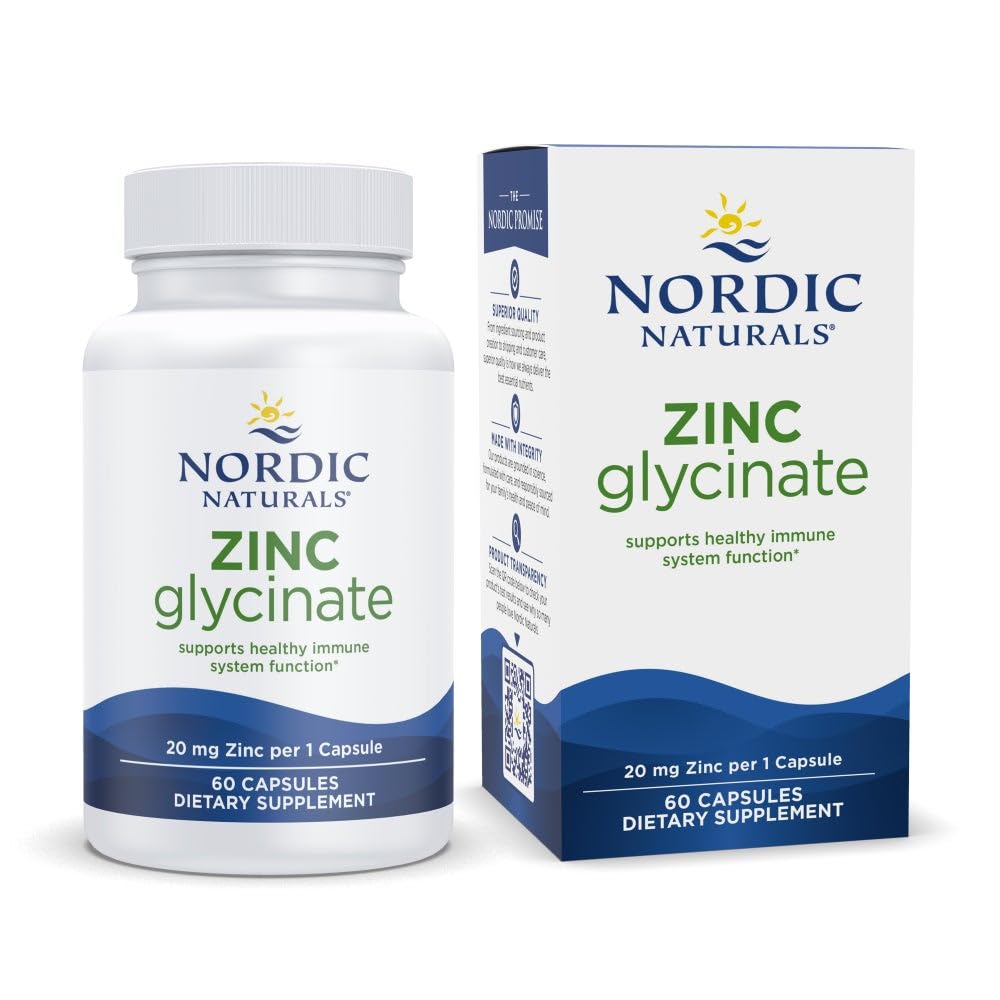
Nordic Naturals takes a different approach with Zinc Glycinate at 20 mg — a lower dose than the competition but formulated for maximum palatability and digestive comfort. The glycinate chelate (zinc bound to the amino acid glycine) is known for its neutral charge, which prevents the gastric irritation associated with ionic zinc forms. This makes it an ideal daily driver for people with sensitive stomachs or those who have tried other zinc supplements and experienced discomfort.
Every batch is third-party tested for purity and freshness, a hallmark of Nordic Naturals’ ethical manufacturing philosophy. The product is certified vegan, non-GMO, gluten-free, and dairy-free, with no artificial colors or flavors. Customers specifically note that it doesn’t upset their stomach and works well as a daily immune booster without the metallic aftertaste of cheaper alternatives. The 20 mg dose also makes copper balance easier to maintain without supplementation.
The main concession is the lower elemental zinc amount. For acute immune support during illness, 20 mg may be less potent than a 30 mg or 50 mg option. But for consistent daily maintenance — especially for plant-based eaters who need reliable zinc absorption without digestive trade-offs — Nordic Naturals delivers a premium, clean experience that justifies its mid-range position.
Why it’s great
- Exceptionally gentle on sensitive stomachs
- Vegan, non-GMO, third-party tested
- Clean formula with no artificial ingredients
Good to know
- 20 mg dose lower than competitors
- Higher per-capsule cost relative to dose
5. Nutricost Zinc Picolinate 30 mg
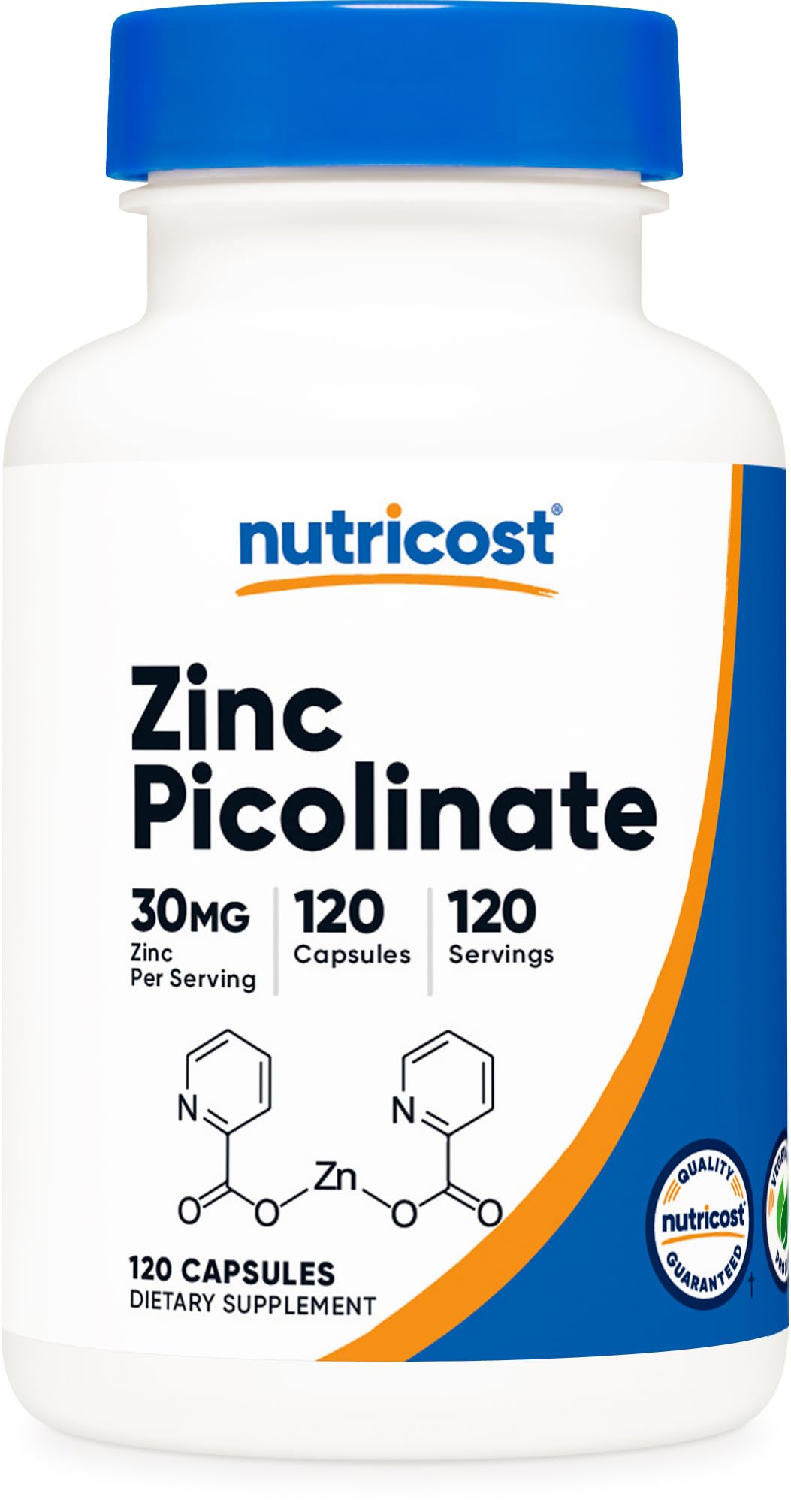
Nutricost’s Zinc Picolinate 30 mg strips away every unnecessary expense to offer a bioavailable picolinate form at a budget-friendly price. The 120-capsule bottle provides a four-month supply at a standard daily dose. The picolinic acid chelate is the same absorption mechanism used by premium brands — zinc is bound to picolinic acid, a natural compound that shuttles the mineral across intestinal membranes with high efficiency.
Users report tangible results, including testosterone levels moving from below normal to normal range, and praise the simple, transparent labeling. The product is manufactured in an FDA-registered, GMP-compliant facility and is non-GMO and gluten-free. A common user tip is to take it with food to prevent nausea — a lighter stomach sensitivity that occasionally occurs with picolinate forms at 30 mg, especially on an empty stomach. The capsules are slightly larger than average but generally manageable.
This is the entry-level champion for anyone new to zinc supplementation or on a tight budget. It delivers the same picolinate chelate that costs triple per capsule from premium brands. You sacrifice some quality-of-life features — softer capsule, aftertaste management, and third-party certification transparency — but the core absorption technology is identical. For budget-conscious buyers who prioritize form over frills, Nutricost is the smart choice.
Why it’s great
- Identical picolinate chelate as premium brands
- Excellent cost per serving for 30 mg dose
- GMP-compliant, FDA-registered facility
Good to know
- Some users report nausea without food
- Capsules larger than premium alternatives
FAQ
What is the most absorbable form of zinc supplement?
Can I take zinc bisglycinate on an empty stomach?
How much elemental zinc should I take daily?
Why do some zinc supplements cause nausea?
Final Thoughts: The Verdict
For most users, the zinc supplement for absorption winner is the Thorne Zinc Bisglycinate because it combines the most bioavailable bisglycinate chelate, third-party certification, and proven stomach gentleness in a clean, trusted formula. If you want a high-dose option for immune defense, grab the Carlyle Zinc Picolinate 50 mg. And for sensitive stomachs seeking a vegan daily dose, nothing beats the Nordic Naturals Zinc Glycinate.