Nothing kills a morning smoothie faster than biting into a gritty twig or discovering the bag you just opened is already stale. The supermarket aisle is lined with bags promising superfood status, but the difference between a truly premium chia seed and a disappointing one comes down to harvest cleanliness, seed density, and whether that omega-3 count on the label actually matches what’s inside the pouch.
I’m Mohammad Maruf — the founder and writer behind AirfryerBite. I’ve spent years analyzing the nutritional density, sourcing certifications, and real-world gelling performance of shelf-stable seeds to separate marketing claims from measurable nutrition.
This guide cuts through the commodity noise to recommend the organic chia seeds that deliver verified omega-3 loads, consistent texture, and zero foreign debris batch after batch.
How To Choose The Best Organic Chia Seeds
Chia seeds are a commodity on the surface, but the growing region, harvest method, and third-party certification all influence whether your pudding gels properly and your omega intake matches the label. Focus on four decision points before you buy.
Whole vs. Milled — What’s Your Use Case?
Whole chia seeds absorb liquid and form a gel, making them ideal for puddings, smoothie thickeners, and vegan egg replacements. Milled (ground) chia releases nutrients more readily for digestion but loses gelling power and oxidizes faster once the bag opens. Whole seeds store longer; milled works better for baking if you want even distribution without visible specks.
Source Geography and Purity
Most organic chia on the market comes from South America, primarily Peru, Bolivia, and Argentina. Seeds from high-altitude regions tend to have higher omega-3 concentrations because the plant produces more fatty acids to regulate cell function in cooler temperatures. Check for harvest protocol — seeds that are mechanically cleaned and sorted by density will have fewer sticks, stones, or hull fragments.
Gel Ratio and Expansion Consistency
Not all chia seeds absorb liquid at the same rate. A quality seed should form a cohesive gel within 15 to 20 minutes of soaking at a 1:4 seed-to-liquid ratio. Seeds that remain watery or develop a slimy layer on top signal low mucilage content — often a sign of older harvests or improper storage that degraded the soluble fiber.
Bag Size and Freshness Window
Once you open a bag, the polyunsaturated fats in chia begin oxidizing. A 1-pound bag typically lasts a single-person household 3 to 4 weeks with daily use. Larger 2-pound bags offer better per-serving cost but require vacuum sealing or refrigeration after opening to prevent rancidity. If you are a light user, stick with smaller bags to match your consumption rate.
Quick Comparison
On smaller screens, swipe sideways to see the full table.
| Model | Category | Best For | Key Spec | Amazon |
|---|---|---|---|---|
| BetterBody Foods 2 lb | Premium | Daily fiber boost | 5350mg Omega-3 per serving | Amazon |
| Garden of Life Raw Organics | Mid-Range | Clean harvest quality | 5g fiber per tablespoon | Amazon |
| Sunfood Superfoods | Premium | Omega-3 density | Ethically sourced 1 lb | Amazon |
| Food to Live Black Chia | Mid-Range | Sprouting & bulk use | Sproutable, non-GMO | Amazon |
| Terrasoul White Chia | Mid-Range | Visual appeal in puddings | White seeds, no black specks | Amazon |
In‑Depth Reviews
1. BetterBody Foods Organic Chia Seeds 2 lb

BetterBody Foods delivers a 2-pound bag that hits the sweet spot between volume and freshness. Each serving packs 5350mg of omega-3 ALA and 10g of fiber — nearly double the fiber of most 1-pound competitors — making this the strongest nutritional profile in this lineup. The seeds are flavor neutral, so they disappear into smoothies, oatmeal, and yogurt without altering taste.
Customer feedback consistently highlights the absence of stems, debris, or off-smells, which is rare in bulk chia bags. The resealable pouch is practical, though transferring to a vacuum-sealed jar after opening extends the shelf life of those delicate polyunsaturated fats. The 2-pound size suits households that use chia daily across multiple recipes.
For users who prioritize a high fiber load and maximum omega delivery per spoonful, this bag offers the best value without sacrificing harvest cleanliness. It also doubles as a vegan egg replacer reliably — the gel sets within five minutes at the standard 1:3 ratio.
Why it’s great
- Highest omega-3 count in the group at 5350mg per serving
- 2-pound bag provides extended use without frequent repurchase
- Consistently clean texture with no foreign debris reported
Good to know
- Large bag requires cold storage after opening to prevent rancidity
- Not sproutable due to standard drying process
2. Garden of Life Raw Organics 100% Organic Chia Seeds

Garden of Life has built a reputation on rigorous sourcing, and their Raw Organics chia seeds reflect that standard. The 12-ounce bag is smaller than the bulk options on this list, but the trade-off is exceptional seed purity — multiple long-term buyers report zero twigs, dirt, or stale seeds across years of repurchases. Each tablespoon delivers 5g of fiber and 2g of protein.
The seeds swell evenly in liquid and form a consistent gel that works perfectly for chia pudding, overnight oats, or as a smoothie thickener. Users who had abandoned chia because of texture issues from other brands found this batch restored their confidence. The mild nutty flavor stays subtle enough not to compete with fruit or cocoa.
One note for frequent bakers: this brand works reliably as a vegan egg substitute at the standard 1-tablespoon-to-3-tablespoons-water ratio. The 12-ounce size is ideal for individuals or couples who want a rotationally fresh supply without committing to a massive bag.
Why it’s great
- Exceptionally clean harvest with no debris reported by long-term users
- Reliable gel formation perfect for puddings and vegan baking
- Mild nutty flavor enhances without overpowering recipes
Good to know
- 12-ounce bag is smaller than bulk alternatives
- Not the best option for ultra-low-cost-per-serving shoppers
3. Sunfood Superfoods Raw Organic Chia Seeds
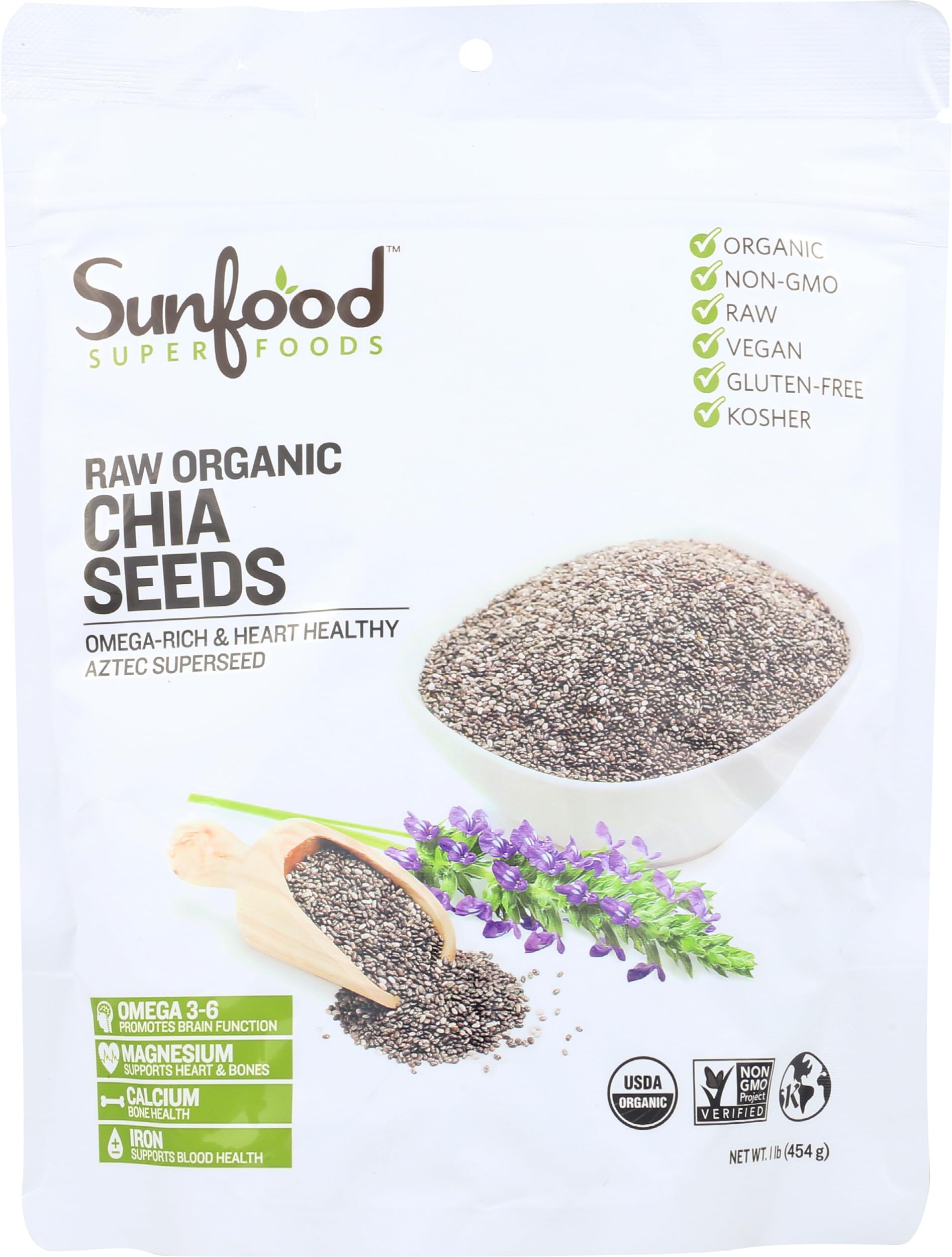
Sunfood is a family-owned San Diego company that focuses on ethically sourced, raw ingredients. Their organic chia seeds are USDA Organic and Non-GMO verified, and the 1-pound bag hits a practical volume for regular users. The seeds are naturally rich in omega-3 and omega-6 fatty acids, with an excellent magnesium and dietary fiber profile for digestive support.
Users consistently note the neutral, slightly nutty flavor that blends seamlessly into smoothies and nutritional shakes. One particularly compelling review highlighted how the soaked seeds helped a heart-transplant patient swallow multiple daily pills — a testament to the reliable gel texture. The resealable packaging is a weak point; several customers report the closure fails, leading to spillage if the bag is bumped.
If you transfer the seeds to an airtight container immediately after opening, this risk is eliminated and the seeds remain fresh for weeks. The ethical sourcing and clean ingredient profile make Sunfood a strong choice for buyers who want to support a smaller brand without compromising on organic certification.
Why it’s great
- Ethically sourced from a family-owned operation
- Neutral flavor works in smoothies, shakes, and baked goods
- Consistent gel texture ideal for medical or daily use
Good to know
- Resealable closure is unreliable — transfer to a jar immediately
- Competing brands offer a higher omega-3 count per serving at similar cost
4. Food to Live Organic Black Chia Seeds
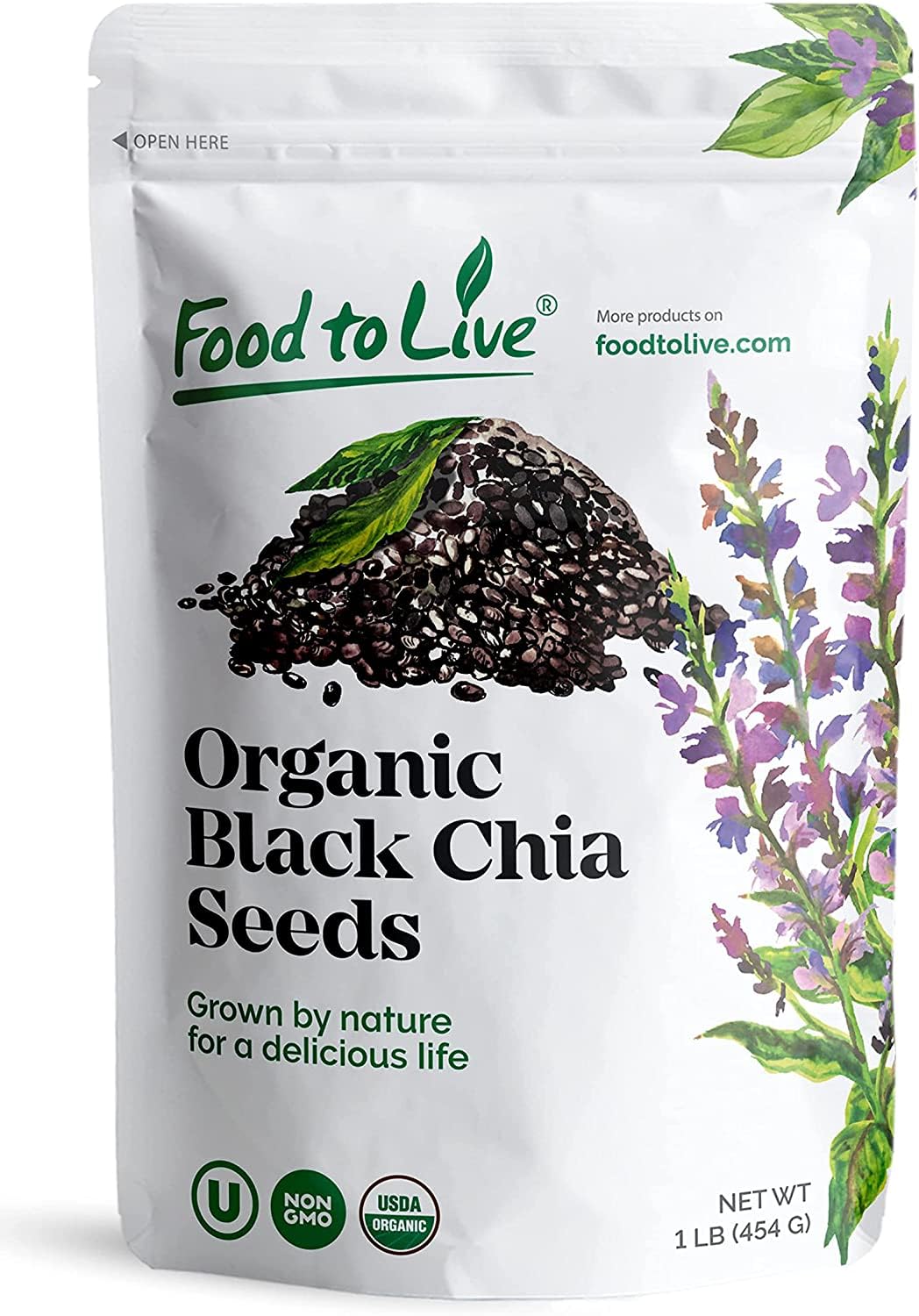
Food to Live positions its black chia seeds as a sproutable product, which is a notable differentiator in this category. Standard chia seeds are often heat-treated or dried at temperatures that kill germination potential. These seeds are certified organic, non-GMO, kosher, and raw, and they retain the ability to sprout — a feature that matters for microgreen growers and raw-food enthusiasts.
The nutritional profile is solid: good levels of thiamine, riboflavin, folate, iron, calcium, and magnesium. Users who incorporate chia into jams and preserves particularly appreciate the high fiber content that helps jams set without added pectin. The 1-pound bag is practical for regular use, and multiple repeat buyers confirm consistent quality across batches.
The only limitation is that the bag size sits at the lower end of the bulk spectrum. If you consume chia daily and prefer larger volumes, the BetterBody Foods 2-pound bag may better suit your rotation. But for sprouters and those who want a raw, viable seed, Food to Live is the clear choice.
Why it’s great
- Certified sproutable — retains germination potential
- Rich mineral profile including calcium, magnesium, and zinc
- Works well for thickening jams and preserves naturally
Good to know
- Smaller 1-pound bag compared to some bulk alternatives
- Sprouting viability depends on proper storage conditions
5. Terrasoul Superfoods Organic White Chia Seeds

White chia seeds solve an aesthetic problem that black seed users know well: dark specks that show up in light-colored dishes like vanilla pudding, white bread, or yogurt parfaits. Terrasoul’s white chia seeds are certified organic, non-GMO, and kosher, and they provide the same omega-3 and fiber benefits as black varieties without altering the visual appearance of your food.
The seeds plump up nicely in liquid, forming a tapioca-like texture that is especially appealing in cold puddings refrigerated overnight. Users report low dust and minimal debris compared to some generic white seeds. The 16-ounce bag is a comfortable size for medium to heavy users, and the price falls in the mid-range tier, meaning you are paying a small premium for the visual advantage.
The downside is the cost per serving relative to black chia seeds. If appearance matters to you — for food photography, entertaining, or simply avoiding the “dirty” look in pale dishes — the premium is worth it. If you blend everything into smoothies, the visual benefit is irrelevant, and a black chia option may stretch your budget further.
Why it’s great
- White seeds avoid dark specks in light-colored dishes
- Excellent gel formation with tapioca-like texture in cold puddings
- Low dust and clean harvest with minimal debris
Good to know
- Higher per-serving cost compared to black chia alternatives
- Visual advantage is unnecessary if you blend into smoothies or dark dishes
FAQ
White chia and black chia have the same omega-3 content?
How long can I store an open bag of chia seeds?
Can I sprout any organic chia seed?
Final Thoughts: The Verdict
For most users, the organic chia seeds winner is the BetterBody Foods 2 lb bag because it delivers the highest verified omega-3 count in the group, a full 10g of fiber per serving, and a consistently clean texture at a practical bulk size. If you want the cleanest harvest with zero debris and reliable gel formation for puddings, grab the Garden of Life Raw Organics. And for sprouting or raw-food applications where seed viability matters, nothing beats the Food to Live Black Chia.