The connection between extra virgin olive oil and digestive wellness isn’t a passing wellness trend—it’s rooted in the high concentration of polyphenols, antioxidants that survive the cold-pressing process and directly impact inflammation and gut microbiota. Picking a low-grade bottle, however, negates those benefits entirely.
I’m Mohammad Maruf — the founder and writer behind AirfryerBite. For months, I’ve been cross-referencing third-party test results, polyphenol concentrations (HPLC methods), oleic acid percentages, and harvest dates to determine which shelf bottles actually deliver measurable gut-health advantages over cheaper blends.
This guide cuts through the marketing language to recommend the five bottles that offer genuine digestive support. My goal is to help you confidently purchase the best olive oil for gut health without falling for labels that misuse the term “extra virgin.”
How To Choose The Best Olive Oil For Gut Health
Not every bottle labeled “extra virgin” delivers the gut-health payoff you are looking for. The difference lies in measurable chemical markers—polyphenol concentration, acidity level, and freshness—that degrade quickly under heat, light, or time.
Polyphenol Concentration Above Everything
Polyphenols are the primary reason olive oil supports digestion. Look for bottles that disclose a minimum of 250 mg/kg; advanced options push above 500 mg/kg, and premium “high phenolic” oils can exceed 900 mg/kg. Check that the manufacturer tested using the HPLC method, which quantifies specific polyphenols rather than offering a vague marketing claim.
Harvest Date Over “Best By” Date
The harvest date tells you how much time has passed since the olives were pressed. An oil produced in the fall of the current year retains far more polyphenol activity than one that sat in a warehouse for 18 months. Early harvest oils (picked green, not ripe) naturally yield higher bitterness and throat-tingling pungency—both markers of active polyphenols.
Certified Extra Virgin and Single-Origin Traceability
Look for a seal from a recognized certifying body (USDA Organic, PDO, PGI) and a clear origin statement on the label. A single-origin bottle—from Tuscany, Sicily, or a specific Greek region—is far less likely to be blended with cheaper, refined oils that strip away the digestive compounds you’re paying for.
Quick Comparison
On smaller screens, swipe sideways to see the full table.
| Model | Category | Best For | Key Spec | Amazon |
|---|---|---|---|---|
| P.J. KABOS | Premium | High-Polyphenol Intensity | 900+ mg/kg (HPLC) | Amazon |
| Zahara | Premium | Award-Winning Flavor | 400 mg/kg Polyphenols | Amazon |
| Fresh Press Farms | Mid-Range | American-Grown Value | 1,000 mg/kg Batch Tested | Amazon |
| Yolioo (26.4oz) | Mid-Range | Daily Use, Larger Bottle | 25.4 fl oz / Cold Pressed | Amazon |
| Yolioo (17.6oz) | Mid-Range | Entry-Level Organic | 16.9 fl oz / Cert. Organic | Amazon |
In‑Depth Reviews
1. P.J. KABOS Family Reserve Organic

P.J. KABOS publishes both HPLC and NMR test results confirming a staggering 900+ mg/kg polyphenol content—one of the highest verified counts in the current market. The 2025/26 harvest ensures you receive oleuropein and hydroxytyrosol at peak activity, compounds that directly influence gut inflammation and microbiome diversity. The flavor is aggressively bitter and pungent, which is a reliable sensory indicator of high phenolic presence, not a flaw.
The single-origin Greek oil from the Ancient Olympia vicinity is USDA Organic, cold-extracted (not heat-processed), and packed in a 16.9oz dark glass bottle to block UV degradation. Each serving delivers 14 mg of hydroxytyrosol per 20 grams per the HPLC analysis, aligning with the European health claim (Regulation EU 432/2012) regarding olive oil polyphenols protecting LDL from oxidative stress.
Multiple gold medals from the 2025 New York, Biol, and Biolnovello competitions reinforce the quality beyond the lab report. The intensity means many users take it by the spoonful rather than drizzling over salads—a strong endorsement of its gut-focused purpose. This bottle is for the buyer who prioritizes measurable polyphenol density above all else.
Why it’s great
- Verified 900+ mg/kg polyphenols (HPLC) — best in class for gut health
- Freshest harvest (2025/26) with best-by date extending to 12/2027
- Independently tested and award-winning (Gold Medals, NY/Italy)
Good to know
- Extremely bitter and pungent flavor not suited for all palates
- Premium tier investment compared to everyday cooking oils
- Small batch availability may fluctuate after each harvest
2. Zahara Extra Virgin Olive Oil

Zahara comes from Oleificio Guccione, a family mill in Sicily that has been producing oil since 1966. The Tonda Iblea olives, hand-picked from centuries-old trees, are cold-pressed within hours of harvest, yielding oil with an average polyphenol level of 400 mg/kg and an acidity below 0.2%—far exceeding the standard for extra virgin classification. The flavor profile shows marked notes of tomato leaf, Mediterranean herbs, and white pepper, which indicates the high phenolic content without the overbearing bitterness of extreme-high oils.
The bottle has earned the prestigious Gambero Rosso “3 Leaves” award for four consecutive years, the highest recognition in Italy for olive oil. It also carries accolades from Slow Food and Der Feinshmecker, confirming its place among top-tier European producers. The 16.9 fl oz bottle comes inside a beautiful gift box, but the packaging design awards don’t overshadow the oil’s performance as a daily gut-support ingredient.
For those who want an approachable high-polyphenol oil that still works beautifully on raw vegetables, grilled fish, or tomato Caprese, Zahara strikes a practical balance. It delivers proven antioxidants and low acidity without requiring you to brace for an intense bitterness. The main trade-off is the smaller bottle and the mid-range price point—justified by the manual harvest and artisanal production volume.
Why it’s great
- Four-year Gambero Rosso 3 Leaves award — quality recognized by top Italian authorities
- Acidity below 0.2% and 400 mg/kg polyphenols from hand-picked Tonda Iblea olives
- Flavorful enough for daily raw use without extreme bitterness
Good to know
- Limited artisanal production may cause stock delays
- Smaller 16.9 oz bottle for the price per ounce
- Individual polyphenol test certificate not included in packaging
3. Fresh Press Farms Pure Gold

Fresh Press Farms challenges the assumption that gut-health olive oil must come from Europe. Grown, cold-pressed, and bottled in Georgia, this high-polyphenol EVOO is batch-tested at 1,000 mg per kg—a level that rivals or exceeds many imported premium bottles. The 2-pack of 16.4 fl oz aluminum cans protects the oil from light oxidation better than clear glass, preserving the polyphenol integrity from grove to pantry.
The oil is certified Whole30, Non-GMO, Keto, and Paleo, which speaks to its clean processing chain. It contains no additives, unrefined, and retains Vitamins E, A, B, C, D, and Omega-9s. Buyers consistently report the characteristic throat tingle that confirms high phenolic density, along with a smooth, slightly peppery finish that works well for sautéed vegetables, salads, and pasta dishes.
The aluminum packaging includes a convenient pour spout, and the slender cans are easier to grip than standard glass bottles. At a mid-range price that undercuts many imported bottles with comparable polyphenol claims, Fresh Press Farms represents the strongest value proposition for anyone wanting verified high-polyphenol intake without the Tuscan or Greek price premium. The only concern raised by some users relates to the plastic spout contact point, though the manufacturer bottles in recyclable aluminum.
Why it’s great
- Batch-tested 1,000 mg/kg polyphenols with third-party verification
- US-grown and bottled — supports domestic agriculture with lower carbon footprint
- Aluminum cans block UV damage, preserving freshness longer than clear glass
Good to know
- Aluminum can make pouring control slightly less precise than glass bottles
- Plastic pour spout introduces minor contact point concern for some buyers
- Medium cooking temperature not ideal for high-heat applications
4. Yolioo Italian Organic (26.4oz)
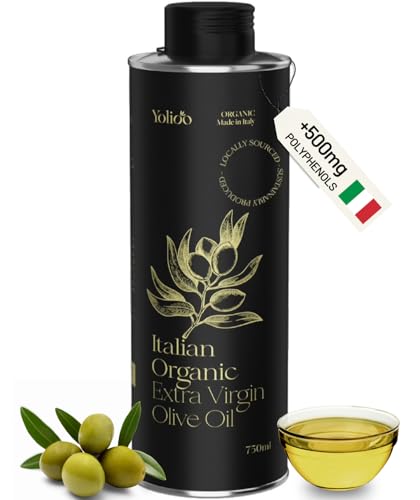
Yolioo’s larger 25.4 fl oz bottle comes from a third-generation family farm near Florence, Tuscany, using olives processed within six hours of harvest at a controlled temperature of 22–24°C. This early-harvest cold-pressing method ensures that the polyphenol content remains intact, delivering the bitter-peppery profile that knowledgeable buyers associate with active antioxidants. The oil is certified organic and fully traceable from field to bottle, providing protection against the adulteration common in bulk olive oil.
Customer reviews consistently mention a rich, balanced flavor with a fresh olive taste that works across salads, pasta, bread dipping, and grilling. The elegant bottle design also makes it a suitable gift item. At this larger volume and mid-range price, Yolioo appeals to households that go through oil quickly and want organic Tuscan sourcing without paying for premium tier packaging.
The trade-off is that the manufacturer does not publish a specific mg/kg polyphenol test result on the label or listing. The absence of third-party batch test data means you are relying on the organic certification and the documented cold-pressing process as quality proxies. For a family-oriented organic EVOO that covers daily cooking and gut-support drizzling duties, this is a solid option, but the buyer who demands lab-verified numbers should lean toward Fresh Press Farms or P.J. KABOS.
Why it’s great
- Large 25.4 fl oz bottle reduces per-serving cost for high-use households
- Certified organic, cold-pressed within six hours of harvest from Tuscan olives
- Rich, balanced flavor suited for both finishing and cooking uses
Good to know
- No published HPLC test result for polyphenol mg/kg verification
- Some buyers reported receiving a dented can with pouring issues
- Taste described as mild by a minority of reviewers seeking stronger intensity
5. Yolioo Italian Organic (17.6oz)
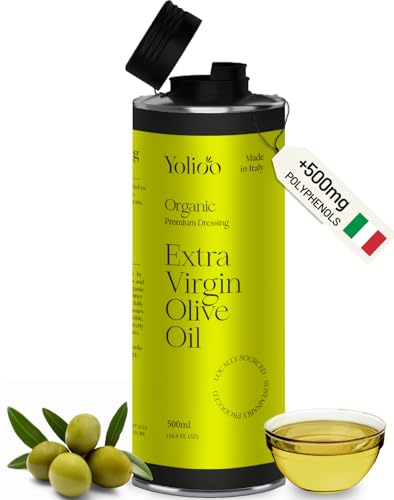
This smaller 16.9 fl oz bottle from Yolioo shares the same Tuscan sourcing and cold-pressing methodology as the larger sibling—olives from a Florence-area family farm, pressed within six hours at 22–24°C, certified organic and extra virgin. The smaller format makes sense for singles, couples, or anyone who wants to rotate oils frequently and finish a bottle before oxidation sets in. The compact can shape also fits easily into crowded pantry shelves.
Reviews on this variant largely mirror the larger bottle: buyers describe a rich, peppery, balanced flavor that recalls the Tuscany region, with specific mentions of its suitability for salads, grilled vegetables, pasta, and focaccia dipping. A few reviewers pointed out that the packaging can arrive with dented edges, which affects pouring precision, but the oil quality itself receives consistent praise for authenticity and smoothness.
Like the larger Yolioo option, this bottle does not come with a published third-party polyphenol count, which places it in the “good quality but unverified spec” category. For those on a tight budget who still want an organic, early-harvest Italian EVOO with documented cold-pressing and traceability, this is the most accessible entry point. Just be aware that the gut-health payoff depends more on freshness and handling than on a high lab number that isn’t provided.
Why it’s great
- Smallest format ensures you finish the bottle before polyphenol degradation
- Certified organic extra virgin from third-generation Tuscan farm
- Rich, peppery, balanced flavor at a budget-friendly price point
Good to know
- No specific polyphenol test certificate available on the listing
- Dented packaging reported by some customers affecting pour control
- Smaller size means higher cost per ounce than the larger Yolioo bottle
FAQ
What is a good polyphenol level in olive oil for gut health?
Does the peppery feeling in my throat mean the oil is healthy?
Should I refrigerate olive oil to keep polyphenols active?
How can I tell if a bottle is truly “extra virgin” for gut health?
Final Thoughts: The Verdict
For most users, the best olive oil for gut health winner is the P.J. KABOS Family Reserve Organic because it offers the highest verified polyphenol count (900+ mg/kg) with third-party HPLC testing and a fresh harvest guarantee. If you want verified high-polyphenol intake without the European price premium, grab the Fresh Press Farms Pure Gold. And for a balanced, award-winning Sicilian oil that works on salads and pasta while still supporting digestion, nothing beats the Zahara.