Filleting a salmon requires a blade that glides along the backbone with surgical precision while bending enough to separate skin from flesh without tearing the delicate meat. The wrong knife leaves ragged edges, wasted yield, and frustrating stuck bones that ruin an otherwise perfect fillet. Finding a tool that balances sharpness, flexibility, and lasting edge retention is the single most important factor for clean results every time.
I’m Mohammad Maruf — the founder and writer behind AirfryerBite. I’ve spent thousands of hours breaking down product specifications, reading user reports, and comparing blade geometries to find which knives truly deliver the flexibility and sharpness that salmon filleting demands.
Whether you are processing a whole side of King salmon or just trying to debone a single fillet for dinner, the right tool changes everything. This guide breaks down the top contenders to help you find your ideal salmon fillet knife.
How To Choose The Best Salmon Fillet Knife
Not every knife labeled “fillet” is built for salmon. The fish’s soft, flaky flesh and curved rib bones demand a blade that is narrow, long, and responsive. Three specs determine whether a knife will elevate your prep or fight you the whole way.
Blade Flexibility
A rigid blade crushes the flesh; an overly floppy one loses control. The ideal salmon fillet knife bends enough to follow the contour of the backbone and peel skin in one clean pass, but stiffens at the spine to let you push through cartilage without snapping. Look for knives between 7 and 9 inches with a thin-profile grind that tapers evenly from bolster to tip.
Steel Composition and Edge Retention
High-carbon stainless steel is the standard for a reason: it resists the corrosive effects of fish oils and saltwater while staying sharp through multiple fillets. Nitrogen-treated alloys like Nitrum or Friodur ice-hardened steel offer harder edges that need less frequent honing. Avoid soft stainless blades that dull after a single salmon — you will spend more time sharpening than cutting.
Handle Ergonomics and Grip Security
Fish slime, water, and blood make handles treacherous. A textured thermoplastic rubber or POM handle gives you a secure grip even when your hands are slick. Full-tang construction adds balance and transfer of force from your wrist to the cutting edge. Birch wood looks classic but can swell and splinter; synthetic materials are more practical for regular wet use.
Quick Comparison
On smaller screens, swipe sideways to see the full table.
| Model | Category | Best For | Key Spec | Amazon |
|---|---|---|---|---|
| ZWILLING Pro 7-inch | Premium Forged | Precision skinning & deboning | Ice-hardened Friodur blade | Amazon |
| WÜSTHOF Classic 7-inch | Premium Forged | Professional high-yield filleting | PEtec edge, 58 HRC hardness | Amazon |
| Arcos Universal 11-inch | Premium Serrated | Thin smoked salmon slicing | Nitrum nitrogen steel, 11-inch serrated | Amazon |
| Victorinox Fibrox 8-inch | Mid-Range Stamped | Versatile freshwater/saltwater use | 8-inch narrow flexible blade | Amazon |
| Dexter Outdoors SOFGRIP 8-inch | Mid-Range Stamped | Scalloped-edge bait cutting | High-carbon DEXSTEEL, NSF certified | Amazon |
| Victorinox Fibrox 8-inch (Narrow) | Mid-Range Stamped | Budget-friendly slim profile | Plastic handle, stamped steel | Amazon |
| Rapala 7-inch Fish’n Fillet | Value Stamped | Entry-level tackle box kit | Birch handle, sheath & sharpener | Amazon |
In‑Depth Reviews
1. ZWILLING Pro 7-inch Fillet Knife

The ZWILLING Pro is forged from a single piece of high-carbon stainless steel using the Sigmaforge process, which creates a seamless transition from bolster to blade tip. The curved bolster encourages a pinch grip that keeps your hand forward, giving you precise control when navigating the salmon’s rib cage. The 7-inch length is ideal for smaller to medium fish, and the ice-hardened Friodur blade holds a laser-controlled edge that starts sharper and stays sharper longer than standard stainless.
The POM handle resists degradation from moisture and frequent dishwashing, though some users note that the handle may feel slightly slick compared to rubberized alternatives. At a weight of 0.6 pounds, the knife feels substantial in hand without being fatiguing during extended filleting sessions. The flexible blade bends just enough to follow curved bones, yet retains enough spine stiffness to separate skin cleanly.
Edge retention is exceptional due to the 57 HRC hardness rating. You will spend more time cutting and less time honing. The knife is best paired with a ceramic or diamond rod for touch-ups — standard steel may not be hard enough to realign the edge. This is a serious tool for anyone who processes salmon regularly and wants professional-level yield from each fish.
Why it’s great
- Sigmaforge one-piece construction eliminates weak points
- Friodur ice-hardened blade for superior edge longevity
- Curved bolster promotes safe, precise finger placement
Good to know
- Handle may feel less grippy when wet compared to rubber
- Blade can be difficult to sharpen without diamond or ceramic tools
2. WÜSTHOF Classic 7-inch Fillet Knife

WÜSTHOF’s Classic series is a benchmark for German cutlery, and the 7-inch fillet knife lives up to that reputation with a very thin, flexible blade engineered specifically for deboning and skinning delicate fish. The Precision Edge Technology (PEtec) delivers a blade that is 20 percent sharper than the previous generation, with edge retention that holds up through multiple salmon sessions without noticeable degradation. The full bolster and finger guard add a layer of safety when you are working close to the backbone.
The composite handle is triple-riveted to the full tang, offering a robust, corrosion-resistant grip that resists fading and heat damage. At 58 HRC, the high-carbon stainless steel strikes a strong balance between hardness and ease of resharpening — you can use a standard honing steel for quick maintenance. The 7-inch blade length is short enough for maneuverability around the rib cage, yet long enough for single-pass skin removal on fillets up to 12 inches wide.
Users consistently report that this knife glides along the fish’s spine with minimal resistance, allowing clean separation of the fillet from the skeleton. The needle-like tip is especially useful for feeling out pin bones and removing them without tearing surrounding meat. If you process multiple fish in a single session, the ergonomic handle reduces hand fatigue significantly compared to budget stamped designs.
Why it’s great
- PEtec edge is exceptionally sharp and durable out of the box
- Triple-riveted full tang provides perfect balance
- Finger guard improves safety during high-speed filleting
Good to know
- Premium price positions it as an investment for serious users
- Thin blade can flex too much if used on larger fish with thick spines
3. Arcos Universal Salmon Knife 11-inch

The Arcos Universal takes a different approach with an 11-inch serrated blade designed primarily for slicing, not traditional filleting. The Nitrum nitrogen-enriched stainless steel offers a harder, more corrosion-resistant edge than standard stainless, and the patented alveoli pattern on the blade surface reduces friction and prevents thin salmon slices from sticking to the steel. This makes it an excellent choice for producing uniform, almost translucent slices of smoked or cured salmon for serving.
The polyoxymethylene (POM) handle is dishwasher-safe and highly resistant to detergents, extreme temperatures, and physical impact. At just 0.19 pounds, the knife is very lightweight, which reduces wrist fatigue during long slicing sessions. The serrated edge cuts through skin and pin bones without crushing the flesh, though the scalloped geometry leaves a slightly coarser cut surface compared to a straight razor edge.
Edge retention is a mixed area — while the Nitrum steel is harder than conventional stainless, the serrated design is more difficult to resharpen at home without a specialized tapered rod. Some users note that the factory edge does not hold as long as they would like, requiring periodic maintenance that is not as straightforward as honing a plain edge. This knife is best viewed as a dedicated slicer for prepared salmon, not a primary filleting tool.
Why it’s great
- Nitrum nitrogen steel resists stains and corrosion effectively
- Alveoli pattern prevents fish residue from sticking to the blade
- Lightweight design reduces fatigue for repetitive slicing
Good to know
- Serrated edge makes home resharpening challenging
- 11-inch length can feel unwieldy for tight work around bones
4. Victorinox Fibrox 8-inch Fillet Knife
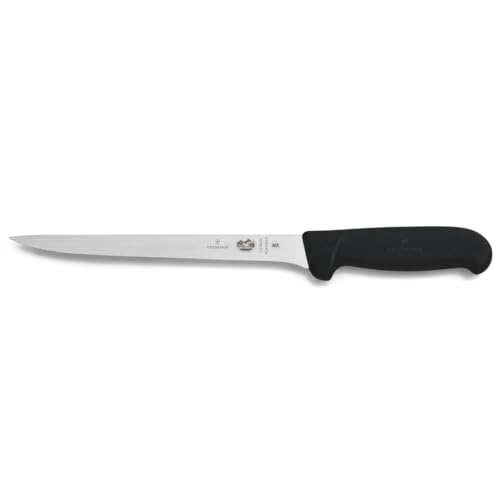
The Victorinox Fibrox is a staple among commercial fishermen and home cooks alike, offering an 8-inch stainless steel blade that is narrow, flexible, and remarkably sharp right from the factory. The thermoplastic rubber Fibrox handle is the standout feature — it provides a non-slip grip that stays secure even when your hands are covered in fish slime and water, a critical safety factor during rapid filleting. At only 3.2 ounces, the knife is extremely light and nimble.
The blade is stamped rather than forged, which keeps costs low without sacrificing cutting performance. The straight edge razor profile allows for clean, drag-free cuts through salmon flesh, and the flexibility lets you work the blade along the backbone with minimal effort. The knife does not include a sheath, so you will need to purchase one separately for safe storage.
Edge retention is adequate for regular home use, though the steel is softer than premium forged options, meaning you will need to touch it up on a honing rod every few fish to maintain peak performance. The Fibrox handle is dishwasher-safe, but hand washing is recommended to protect the edge from impact damage. This is the best value proposition for anyone who wants professional-grade results without spending over forty dollars.
Why it’s great
- Fibrox handle offers superior grip in wet, slippery conditions
- Lightweight design minimizes fatigue during multi-fish sessions
- Exceptionally sharp out of the box with good initial edge geometry
Good to know
- No sheath included — must purchase separately for safe storage
- Blade is softer than premium options, requiring more frequent honing
5. Dexter Outdoors SOFGRIP 8-inch Fillet Knife
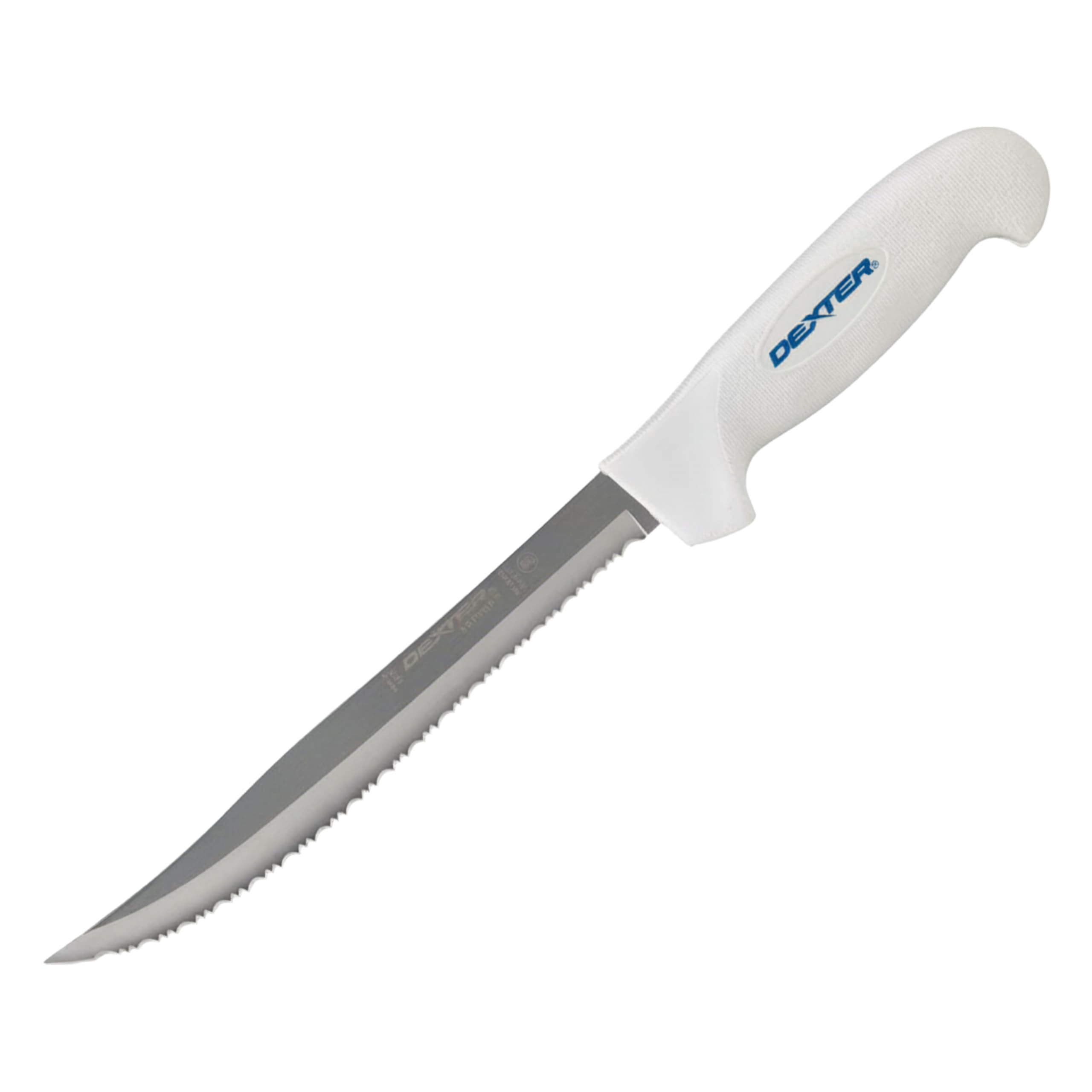
Dexter Outdoors brings over 200 years of American cutlery experience to the SOFGRIP series, featuring a proprietary DEXSTEEL high-carbon stainless alloy that resists stains while maintaining a sharp scalloped edge. The 8-inch blade offers a unique geometry — it is stiff enough to cut through partially frozen bait yet flexible enough for routine filleting of medium to large salmon. The scalloped “tiger edge” grips the skin and prevents the blade from slipping, which is particularly useful when cutting through scales or around fins.
The SOFGRIP handle is soft, textured, and ergonomically contoured to reduce hand strain during prolonged use. It is NSF certified for commercial food service, confirming that the materials meet strict hygiene and food-grade standards. The knife is not dishwasher-safe, however, and requires hand washing to preserve the handle’s texture and prevent moisture intrusion at the bolster junction.
Edge retention on the scalloped profile is respectable, and the serrations stay sharp through many uses even without frequent honing. The trade-off is that sharpening the scalloped edge requires a tapered rod or professional service — you cannot simply run it over a standard steel. This knife excels in outdoor or commercial settings where durability and bite are prioritized over razor-smooth cuts.
Why it’s great
- Scalloped edge provides excellent grip on slippery fish skin
- DEXSTEEL alloy resists staining from fish oils and blood
- NSF certified for commercial kitchen hygiene standards
Good to know
- Not dishwasher-safe — hand wash only to preserve grip
- Scalloped edge requires specialized tools for resharpening
6. Victorinox Fibrox 8-inch Fillet Knife (Narrow)

This narrower sibling of the standard Victorinox Fibrox shares the same Swiss stainless steel construction but with a thinner profile that enhances flexibility for small to medium fish. The 8-inch blade is exceptionally nimble, allowing precise work around pin bones and delicate belly fat. The plastic handle is simple but effective, offering a secure grip even when wet, though it lacks the textured rubber feel of the Fibrox version.
The blade is stamped and lightweight, weighing just 0.13 kilograms, which makes it easy to maneuver for long periods. It is dishwasher-safe, a convenience that is rare in this category, though repeated machine washing will dull the edge faster than hand washing. The knife comes with a basic instruction guide but no sheath or storage case.
Edge retention is typical for Victorinox — good initial sharpness that holds through several fish before needing a light touch-up on a steel. The ultra-thin spine can bend under heavy pressure if you try to push through thick bones, so a sawing motion is recommended when working near the spine. For the budget-conscious buyer who wants a flexible, reliable secondary fillet knife, this is a solid choice.
Why it’s great
- Very thin blade profile offers maximum flexibility
- Lightweight design reduces hand strain during extended use
- Dishwasher-safe for easy cleanup
Good to know
- Plastic handle less grippy than Fibrox rubber version
- Thin spine may flex too much for cutting through thick cartilage
7. Rapala 7-inch Fish’n Fillet Knife
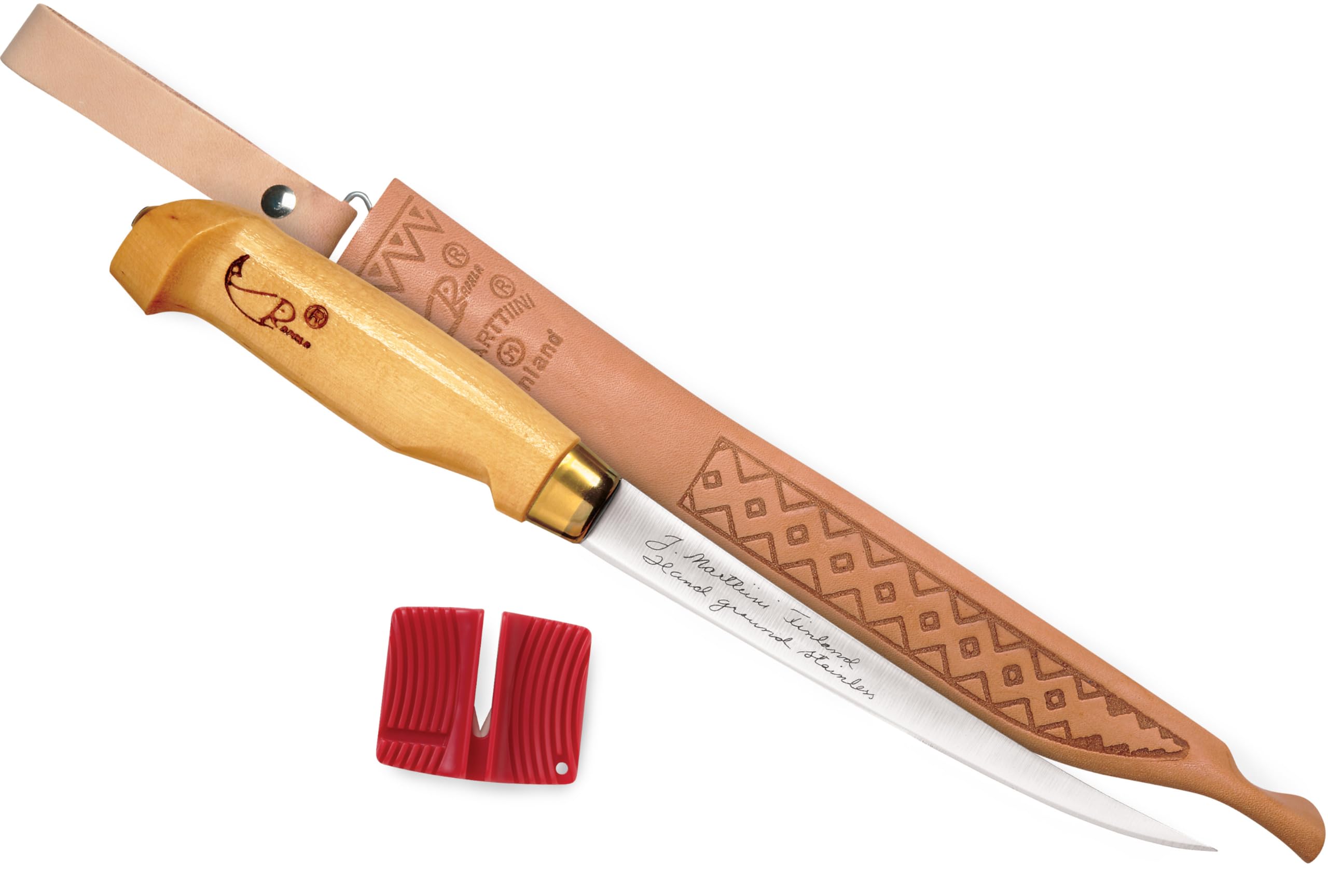
Rapala’s Fish’n Fillet knife is a classic that has been in tackle boxes for generations. The 7-inch full-tang stainless steel blade is hand-ground in Finland and offers a balanced combination of sharpness and moderate flexibility suitable for medium salmon and other freshwater fish. The reinforced birch wood handle provides a comfortable, warm feel that many anglers prefer over synthetic materials, though it requires care to avoid swelling from prolonged moisture exposure.
The kit includes a genuine leather sheath and a single-stage ceramic pull-through sharpener, making it a complete package for anglers who need a ready-to-use setup. The leather sheath includes a polymer insert that prevents the blade from poking through, a thoughtful safety detail. The blade is straight-edged and tapered, allowing clean cuts through flesh without tearing.
Some users note that the birch handle can develop splinters if not periodically burnished or oiled, especially after repeated wet use and drying cycles. The blade steel is adequate for its price point, but edge retention is not as strong as premium stainless alloys — plan to use the included sharpener before each major session. For the angler who wants a traditional, well-rounded kit at an accessible price, the Rapala delivers proven performance.
Why it’s great
- Complete kit includes sheath and ceramic sharpener
- Full-tang birch handle offers a classic, comfortable grip
- Hand-ground Finnish steel is sharp and ready out of the box
Good to know
- Birch handle can splinter if not properly maintained and oiled
- Blade requires frequent sharpening compared to premium steel options
FAQ
What blade length is best for filleting salmon?
Should I choose a straight edge or serrated edge for salmon?
Can a salmon fillet knife be used for other fish?
How often should I sharpen my salmon fillet knife?
Final Thoughts: The Verdict
For most users, the salmon fillet knife winner is the ZWILLING Pro 7-inch because it combines forged construction, ice-hardened steel, and a curved bolster that gives both control and longevity. If you want a budget-friendly alternative that still delivers pro-level grip and flexibility, grab the Victorinox Fibrox 8-inch. And for anglers who value a complete ready-to-go kit with a sheath and sharpener, nothing beats the Rapala 7-inch Fish’n Fillet.