A chef knife that steadies your rhythm rather than fighting your wrist changes how you prep. The wrong blade—too heavy, poorly balanced, or dull out of the box—turns chopping an onion into a wrestling match. The right 8-inch chef knife glides through a tomato skin without crushing the flesh underneath, and that sensation defines the gap between a chore and a craft.
I’m Mohammad Maruf — the founder and writer behind AirfryerBite. I have spent years analyzing blade geometry, steel compositions, edge-retention data, and handle ergonomics across dozens of kitchen knife models to separate genuine performance from marketing weight.
This guide breaks down the seven best performing models available today, each evaluated for edge retention, balance, and real-world cutting feel. You can use this analysis to confidently choose the best kitchen chef knife for your specific prep style and budget.
How To Choose The Best Kitchen Chef Knife
Selecting a chef knife is not about picking the heaviest or most expensive option. Three structural decisions—steel type, construction method, and handle geometry—determine whether a knife feels like an extension of your hand or a clumsy tool you work around.
Steel Hardness and Edge Retention
Hardness is measured on the Rockwell C scale (HRC). Most quality chef knives fall between 56 and 62 HRC. A blade at 58 HRC balances sharpness with enough malleability to resist chipping. Higher HRC steel, like VG10 at 60-61, holds an edge longer but requires a diamond or ceramic sharpener. Lower-carbon stainless steel around 56 HRC dulls faster but sharpens easily on a standard steel rod. For daily home use, 58 HRC is the practical sweet spot.
Forged vs. Stamped Construction
Forged knives are cut from a single bar of steel, heated, and hammered into shape. The process creates a thicker spine that tapers to a fine edge, giving the blade a balanced heft. Stamped knives are cut from a rolled sheet of steel, then heat-treated and sharpened. Stamped blades are lighter and thinner—ideal for users who prefer a nimble feel. Both constructions can be exceptionally sharp; the difference lies in durability under heavy daily use.
Handle Material and Ergonomics
The handle transmits every cut. Fibrox and Delrin offer non-slip grip even when wet, making them favorites in commercial kitchens. Wood handles, like rosewood or maple, provide a warm, classic feel but require hand-washing and occasional oiling. Stainless-steel handles with triple rivets add heft and durability but can feel slippery. The handle shape—rounded versus full bolster—determines whether a pinch grip feels natural or causes hotspot fatigue.
Quick Comparison
On smaller screens, swipe sideways to see the full table.
| Model | Category | Best For | Key Spec | Amazon |
|---|---|---|---|---|
| WÜSTHOF Classic 8″ | Premium Forged | Professional-grade everyday use | 58 HRC / 7.87″ blade | Amazon |
| KAWAHIRO VG10 Gyuto | Hand Forged | Gift-worthy presentation & precision | VG10 Core / 61 HRC | Amazon |
| Mercer Culinary Züm | Forged Mid-Range | Home cooks wanting forged quality | High-Carbon Steel / 8″ | Amazon |
| KYOKU Shogun Damascus | Layered Damascus | Ultra-sharp slicing on veg & meat | 67-layer VG10 / 8-12° edge | Amazon |
| Victorinox Wood 8″ | Classic Wood Handle | Traditional feel & lasting sharpness | Stainless Steel / 8″ plain edge | Amazon |
| Henckels Forged Accent | Forged Entry | Budget-friendly forged option | German Steel / Forged bolster | Amazon |
| Victorinox Fibrox Pro | Stamped Workhorse | Budget-friendly wet-grip safety | TPE Handle / 8″ stamped | Amazon |
In‑Depth Reviews
1. WÜSTHOF Classic 8″ Chef’s Knife

The WÜSTHOF Classic 8″ Chef’s Knife represents the benchmark for German forged cutlery. Forged from a single block of high-carbon stainless steel and tempered to precisely 58 HRC, the blade benefits from PEtec (Precision Edge Technology) which yields a 20% sharper edge with twice the retention of earlier Classic models. The full bolster and finger guard provide a safe, balanced stop during rock-chopping motions.
The triple-riveted synthetic handle resists fading, discoloration, and moisture absorption, making it suitable for high-volume prep without swelling. At 8.5 ounces the knife feels substantial but not fatiguing. The 8-inch blade length handles everything from dicing onions to breaking down a squash. The satin finish minimizes food drag, and the plain edge achieves a clean cut through tomato skin without tearing.
This is a knife that will outlast a decade of daily use with periodic honing on a steel rod. The 58 HRC hardness allows routine realignment without needing diamond stones. Made in Solingen, Germany, the WÜSTHOF Classic carries the Solingen name quality designation and a lifetime guarantee. It is the safest recommendation for anyone serious about improving their kitchen workflow.
Why it’s great
- PEtec edge holds sharpness twice as long as previous WÜSTHOF Classic models
- Full tang and forged bolster create exceptional forward balance for rock chopping
- 57-58 HRC hardness is easy to maintain with a standard honing steel
Good to know
- Premium price point reflects seven-generation German craftsmanship
- Not dishwasher safe—hand washing and drying required to protect the handle
- Weightier feel may not suit users who prefer ultra-light Japanese-style blades
2. KAWAHIRO VG10 Gyuto 8.27″ Chef Knife
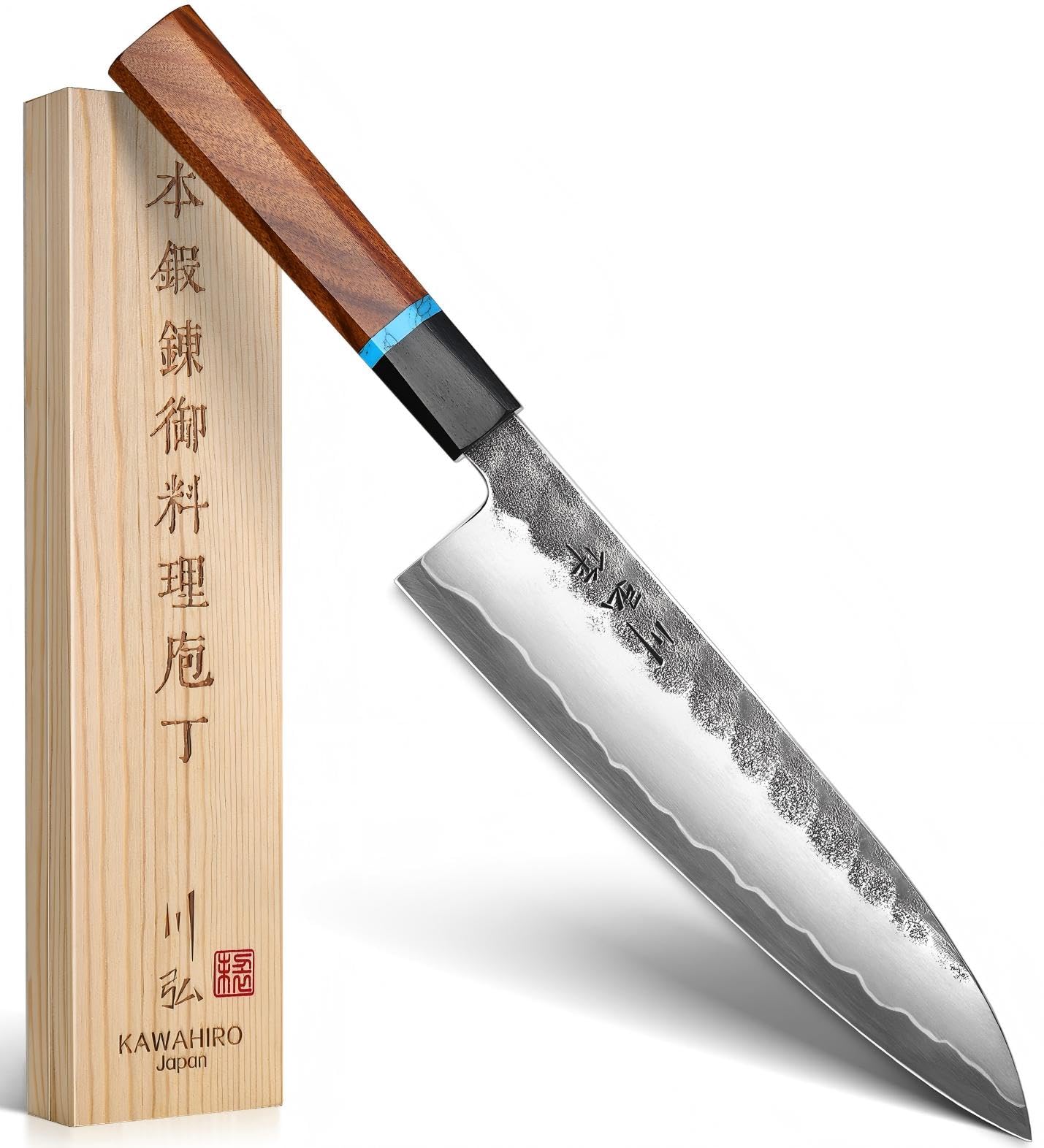
The KAWAHIRO KH-6601 is a hand-forged Gyuto featuring a VG10 stainless steel core sandwiched between two outer layers of softer steel. This 3-layer composite construction gives the blade a hard 61 HRC edge core capable of extreme sharpness, while the outer layers provide the toughness needed to resist chipping during normal use. The blade undergoes the traditional black forge technique, creating a unique layered pattern on every knife.
The octagonal handle is a standout feature—crafted from premium ruby wood, turquoise, and ebony, it offers a comfortable pinch grip that reduces wrist fatigue during extended prep. The packaging includes a premium wooden gift box, certificate of authenticity, and a wipe cloth, making this an excellent presentation piece. The 8.27-inch blade length fits comfortably between traditional 8-inch and 210mm Gyuto standards.
Sharpened to a fine edge, this knife glides through bell peppers, raw salmon, and dense squash with negligible resistance. The VG10 core at 61 HRC will out-cut most German steel knives, but requires a diamond or ceramic sharpener when it eventually dulls. This is a specialized tool for cooks who appreciate Japanese blade geometry and are willing to invest in proper maintenance.
Why it’s great
- VG10 core at 61 HRC delivers long-lasting razor sharpness out of the box
- Octagonal ruby wood, turquoise, and ebony handle offers fatigue-free grip
- Elegant wooden gift box and certificate included for gifting
Good to know
- High HRC requires diamond or ceramic sharpener—not a standard steel rod
- Three-layer composite blade may chip if twisted against bone or frozen food
- Premium price bracket but still below many full-Japanese handmade options
3. Mercer Culinary Züm 8″ Forged Chef’s Knife

The Mercer Culinary Züm 8-inch Forged Chef’s Knife delivers a fully forged blade with high-carbon German cutlery steel at a mid-range price that undercuts most German-brand forged knives. The rounded spine and ergonomic Delrin handle provide a lightweight feel that reduces fatigue without sacrificing blade stability. Users consistently compare its blade thickness, weight, and balance to WÜSTHOF Classic knives at a lower entry point.
The full tang runs through the entire handle, and the forged bolster transitions smoothly from steel to handle material, creating a balanced fulcrum point. The satin-finished blade arrives sharp enough to pass the paper test and holds its edge well through daily home use. The Delrin handle is moisture-resistant and non-slip, making it practical for wet prep environments.
This knife performs reliably for dicing onions, mincing shallots, chopping herbs, and crushing garlic. The high-carbon steel is easy to sharpen on a standard stone. Mercer focuses on culinary-school supply, so this knife is built to withstand commercial kitchen rotation. For home cooks who want the feel of a forged knife without paying German flagship prices, the Züm series is a compelling best-value pick.
Why it’s great
- Fully forged construction with high-carbon German steel at a value-driven price point
- Rounded spine and ergonomic Delrin handle reduce fatigue during long prep sessions
- Blade balance and thickness comparable to premium German knives costing significantly more
Good to know
- Not dishwasher safe—hand wash and dry immediately to prevent handle degradation
- Some units may arrive with cosmetic scratches from packaging issues
- Satin finish requires careful drying to avoid water spots on high-carbon steel
4. KYOKU Shogun Series Damascus 8″ Chef Knife

The KYOKU Shogun Series Chef Knife brings 67-layer Damascus construction and a VG10 steel core to the mid-range segment. The blade is sharpened using the three-step Honbazuke method to an 8 to 12 degree edge angle, which is significantly more acute than the typical 20-degree German edge. This geometry allows the knife to slide through ingredients with minimal wedging or cell damage, preserving texture in herbs and fish.
Cryogenic treatment of the VG10 core stabilizes the steel structure, improving edge retention. At 58-60 HRC, the blade balances hardness with enough toughness to resist micro-chipping during normal use. The fiberglass handle with a signature mosaic pin withstands temperature changes, moisture, and corrosion without swelling or cracking. A fitted sheath and storage case are included for safe storage.
The hammered Damascus finish reduces food stickings—slices of potato or carrot release easily rather than clinging to the blade. The knife feels nimble in hand, suitable for precision work like brunoise dice or slicing raw fish. The included sheath makes this a practical choice for cooks who travel with their knives or store them in drawers. This is a strong mid-range option for users who value acute edge geometry and layered aesthetics.
Why it’s great
- 8-12 degree Honbazuke edge is exceptionally sharp for low-resistance slicing
- 67-layer Damascus pattern reduces food sticking and enhances visual appeal
- Includes both a fitted sheath and a hard storage case for protection
Good to know
- Acute edge is more prone to chipping if used on hard surfaces or frozen foods
- Damascus pattern requires careful hand washing—abrasive sponges can dull the finish
- Fiberglass handle may feel less warm in hand compared to wood traditional handles
5. Victorinox Wood 8″ Chef’s Knife

The Victorinox Wood 8″ Chef’s Knife pairs the same high-carbon stainless steel blade found in the Fibrox Pro with a traditional rosewood handle. The blade is forged and maintains the same laser-tested sharp edge that has made Victorinox a trusted name in commercial kitchens. User reviews consistently report the knife arriving “wicked sharp,” with several users comparing its out-of-box performance to premium Japanese knives at a fraction of the cost.
The rosewood handle exhibits artisan craftsmanship with a comfortable, ergonomic shape that fills the palm naturally. The handle is not sealed with polyurethane, so it absorbs some moisture and requires occasional mineral oil treatment to prevent drying and cracking. This knife is not dishwasher safe—hand washing is required to preserve the wood. The blade tapers to a fine edge that glides through apples, onions, and raw meats with almost no pressure required.
At roughly the same steel quality as the Fibrox Pro, the Wood series offers a warmer, more traditional aesthetic for cooks who prefer natural materials. The knife is lightweight and well-balanced, making it suitable for extended prep sessions. The rosewood handle develops a patina over time as the wood absorbs natural oils from hands. This is an excellent mid-range choice for home cooks who appreciate classic construction.
Why it’s great
- Rosewood handle provides a warm, traditional feel with artisan craftsmanship
- Blade arrives exceptionally sharp—many users compare it to premium Japanese performance
- Lightweight and balanced for comfortable extended prep sessions
Good to know
- Not dishwasher safe—wood handle requires hand washing and occasional oiling
- Handle may absorb moisture and crack if not maintained with mineral oil
- No included sheath or storage case—storage protection must be purchased separately
6. Henckels Forged Accent 8″ Chef’s Knife

The Henckels Forged Accent 8″ Chef’s Knife is a budget-friendly entry into forged knife construction. Made from high-quality German stainless steel, the satin-finished blade is precision-honed for long-lasting sharpness. The forged bolster construction creates a seamless transition from blade to handle, improving the overall balance and durability of the knife compared to stamped alternatives at the same price point.
The ergonomic handle features triple rivets and a stainless-steel logo endcap, giving the knife a solid, professional appearance. The handle material resists moisture and provides reliable grip during use. At just 4.3 ounces, this knife is noticeably lighter than many forged German knives, making it a good option for cooks who prefer a less blade-heavy feel. The manufacturer lists it as dishwasher safe, though hand washing is recommended to maintain edge sharpness.
This knife works well for everyday chopping, slicing, and mincing tasks. The lighter weight means less momentum for heavy cuts, but the forged blade construction still provides adequate rigidity. The knife is a practical starter forged option for home cooks who want to experience the feel of a full-tang forged knife without committing to a higher price tier. Henckels offers solid warranty coverage for defects in materials and workmanship.
Why it’s great
- Forged bolster and full tang at a price point typically associated with stamped knives
- Lightweight 4.3-ounce construction reduces wrist fatigue during extended use
- Triple-riveted handle with stainless-steel endcap provides a secure grip
Good to know
- Lighter weight means less momentum for dense cuts like butternut squash
- Manufacturer suggests dishwasher safe but hand washing preserves edge longer
- German stainless steel at this tier may require more frequent honing
7. Victorinox Fibrox Pro 8″ Chef’s Knife
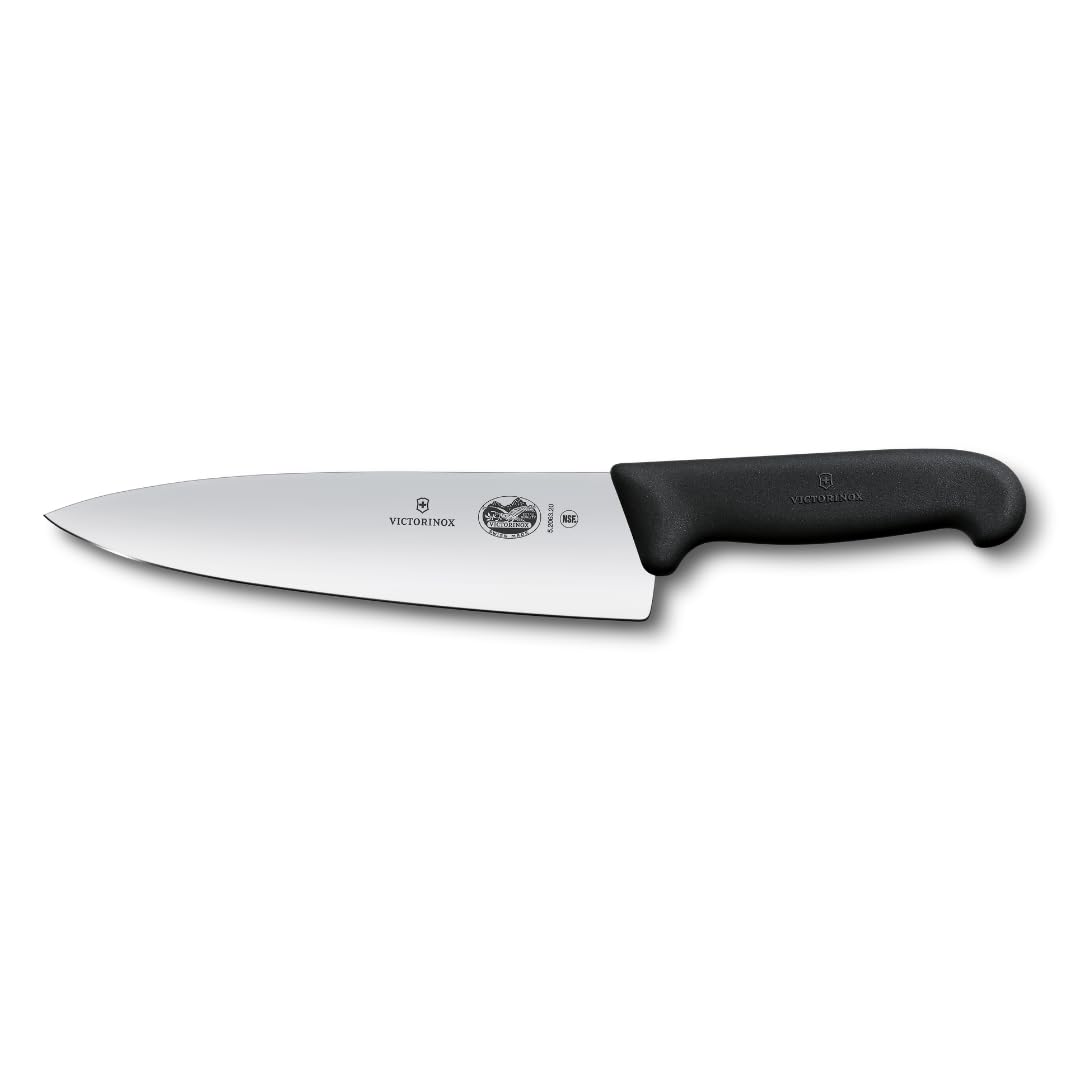
The Victorinox Fibrox Pro 8″ Chef’s Knife is a staple in commercial kitchens and culinary schools worldwide—not because it is expensive, but because it works reliably every day at a price that makes it replaceable. The blade is stamped from high-carbon stainless steel and laser-tested to ensure a consistent, sharp edge. The tapered blade geometry allows the knife to chop, mince, slice, and dice with the efficiency of knives costing several times more.
The Fibrox handle is the defining feature: made from thermoplastic elastomer (TPE), it provides a non-slip grip that remains secure even when the handle is wet or greasy. The handle is weighted and balanced to make the knife feel more substantial than its stamped construction suggests. Victorinox builds these knives to be dishwasher safe, though the edge lasts longer with hand washing. The 0.05-pound total weight makes it one of the lightest full-size chef knives available.
For home cooks on a budget or anyone building a knife kit from scratch, the Fibrox Pro is the most recommended starter knife among professional chefs. The edge arrives sharp and can be maintained with a simple honing steel. The lifetime warranty against defects in material and workmanship adds peace of mind. This is the best budget-friendly entry point into serious knife work without compromising on blade performance.
Why it’s great
- TPE non-slip handle provides exceptional grip even when wet or oily
- Laser-tested stamped blade delivers performance comparable to forged knives
- Dishwasher safe design with lifetime warranty against defects
Good to know
- Stamped construction lacks the weight and feel of a forged full-tang knife
- Lightweight build may not satisfy users who prefer blade-heavy momentum
- Fibrox handle texture can feel slightly rubbery to some users
FAQ
What does 58 HRC mean for a chef knife?
Should I choose a forged or stamped chef knife?
How do I maintain a VG10 steel chef knife blade?
What is the best blade length for a home cook?
Can a dishwasher safe chef knife go in the dishwasher?
Final Thoughts: The Verdict
For most users, the best kitchen chef knife winner is the WÜSTHOF Classic 8″ Chef’s Knife because it delivers professional-grade forged construction, proven edge retention with PEtec technology, and a comfortable full-tang handle that will last through decades of daily use. If you want a beautifully presented Japanese knife with a VG10 core and stunning handle materials, grab the KAWAHIRO VG10 Gyuto. And for a budget-friendly, reliable workhorse that professional chefs trust daily, nothing beats the Victorinox Fibrox Pro 8″ Chef’s Knife.