A cutting board that absorbs odors, stains with every beet slice, or harbors bacteria in deep knife scars isn’t a prep tool — it’s a hygiene risk. The core challenge with any board is keeping it truly clean after raw meat, pungent onions, or acidic fruit. Material choice, porosity, and dishwasher-tolerance determine whether your surface stays fresh or becomes a permanent depot for smells and germs.
I’m Mohammad Maruf — the founder and writer behind AirfryerBite. I specialize in analyzing kitchen hardware specifications, from polymer density and heat deflection ratings to non-porous certifications, to identify which cutting boards actually resist bacterial absorption and wash clean cycle after cycle.
After sorting through five different models based on material science, heat tolerance, and surface non-porosity, I’ve built a focused guide to the clean cutting boards that resist stains, odors, and bacterial buildup without requiring constant oiling or hand-washing rituals.
How To Choose The Best Clean Cutting Boards
The term “clean” covers three distinct concerns: odor resistance after garlic or onion use, stain resistance against berries and beets, and bacterial safety after raw meat contact. Each concern points to a different material property. Wood fiber composites are naturally non-porous and resist liquid absorption. High-density polypropylene offers a low-cost barrier but can develop knife grooves that trap debris. Solid co-polymer boards provide crack resistance and a slick surface that rinses clean without residue.
Material Porosity and Moisture Absorption
The single biggest factor in board cleanliness is how much liquid the surface absorbs during use. Porous wood requires periodic oiling to maintain its seal — skip that step and juices penetrate deep, creating a breeding ground for bacteria. Non-porous materials like Richlite paper composite or high-density polypropylene physically block liquids from entering the surface. Check the manufacturer’s material description for the words “non-porous” or “wood fiber composite” to confirm the board resists moisture infiltration without extra maintenance.
Dishwasher Tolerance and Heat Rating
A board that can’t go in the dishwasher forces manual scrubbing, which often misses bacteria lodged in knife scars. Look for a heat resistance rating of at least 200°F to survive the high-temp wash and dry cycles of a standard residential dishwasher. Some wood fiber boards are rated up to 350°F, meaning they can double as a hot trivet without warping. Polypropylene boards with thinner profiles may warp under sustained 200°F exposure, so thicker boards around 0.75 inches maintain structural stability through repeated washes.
Surface Texture and Knife Scarring
A clean board stays clean only if its surface doesn’t develop deep grooves that trap food particles. Harder materials like co-polymer or compressed wood fiber resist deep scarring from chef’s knives but can feel slightly abrasive on blade edges. Soft polypropylene is gentler on knives but accumulates visible cuts faster. For hygienic use, prioritize a board that balances moderate knife scratch resistance with easy washability — a slightly textured surface that rinses clean without catching food fibers in deep gouges.
Quick Comparison
On smaller screens, swipe sideways to see the full table.
| Model | Category | Best For | Key Spec | Amazon |
|---|---|---|---|---|
| Elihome Classic Series | Wood Fiber Composite | Premium sanitary prep | Non-porous, heat resistant to 350°F | Amazon |
| KitchenAid Classic Nonslip 2-Piece Set | Plastic Set | Multi-board kitchen workflow | Perimeter trench, BPA-free polypropylene | Amazon |
| Thirteen Chefs Large Poly | Commercial Polypropylene | Heavy-duty chopping | 18×12 inches, 0.75 inch thick | Amazon |
| Belwares Wood Composite | Wood Fiber Composite | Lightweight entry-level clean board | Dishwasher safe, heat resistant to 350°F | Amazon |
| San Jamar Saf-T-Grip | Co-Polymer | Compact crack-resistant surface | 0.375 inch thick, crack resistant | Amazon |
In‑Depth Reviews
1. Elihome Classic Series Cutting Board
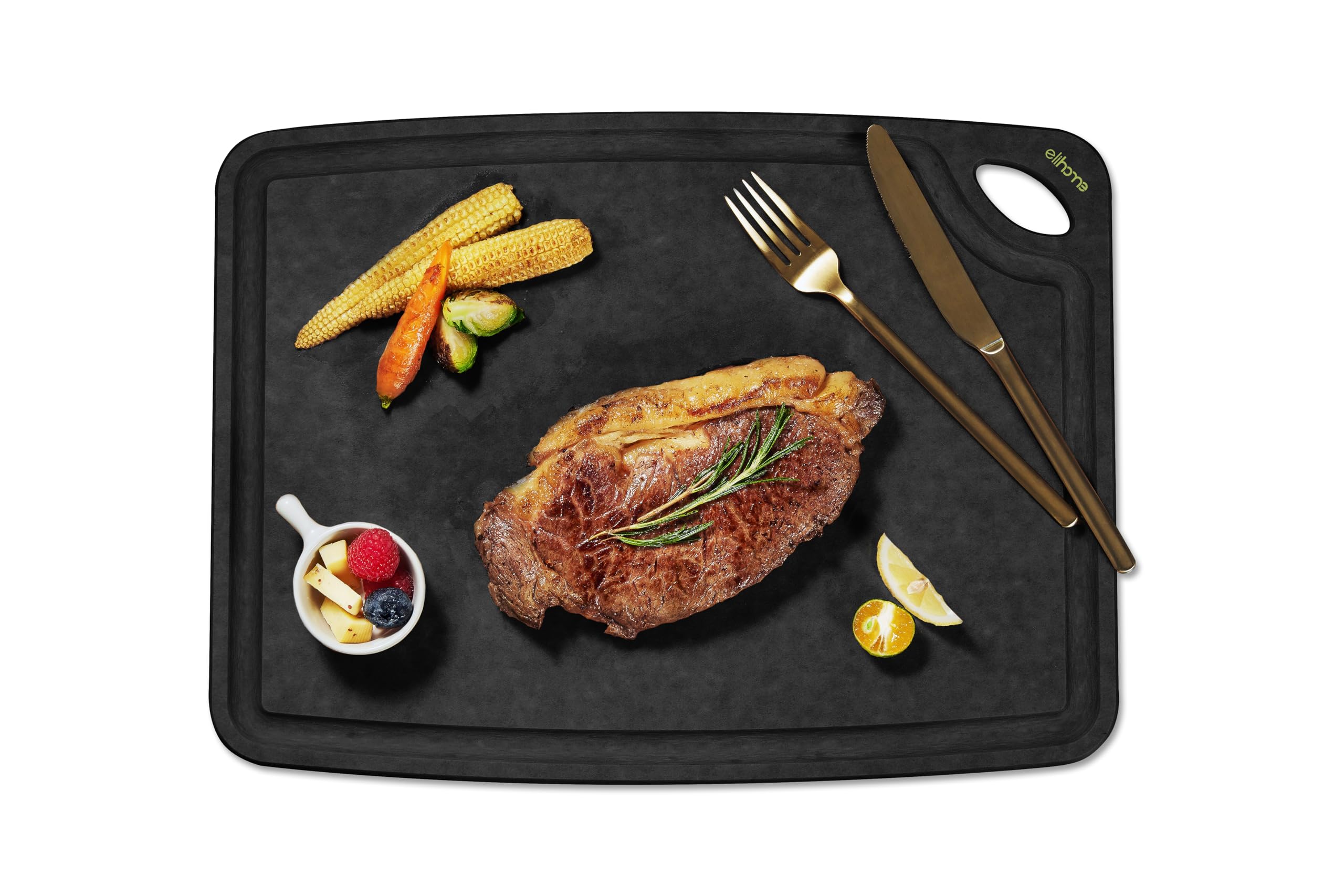
The Elihome Classic Series uses Richlite, a paper composite material that is inherently non-porous. This means liquids from raw chicken or beet juice simply bead on the surface and wipe away rather than soaking in and leaving a lingering odor. The 13-by-10-inch medium size provides adequate prep space for a home kitchen without taking over the counter, and the built-in juice groove catches runoff from meat or fruit slicing.
The board is reversible, giving you two clean sides for the same footprint — use one side for proteins and flip for produce to reduce cross-contamination. At 0.25 inches thick, it is noticeably thinner than traditional wood boards, but the paper composite construction resists warping even after repeated dishwasher exposure at high temperatures. The surface is gentle on knife edges while providing enough friction to keep ingredients from sliding during chop work.
Being made in the USA from a sustainable cellulose-based material, this board appeals to cooks who want the aesthetic of wood without the maintenance ritual of monthly oiling. The black color hides minor stains that do occur, and the non-porous nature means garlic or onion smells rinse off with plain water — no lemon scrub required. If you want a board that prioritizes hygiene above all else, this is the most technically sound option in the lineup.
Why it’s great
- Non-porous Richlite composite resists liquid absorption and bacterial growth
- Heat resistant up to 350°F works as a trivet for hot pots
- Reversible design adds usable surface without extra storage
Good to know
- Thinner profile (0.25 inches) flexes slightly under heavy chopping pressure
- Medium size is small for large batch prep of whole vegetables
2. KitchenAid Classic Nonslip 2-Piece Cutting Board Set
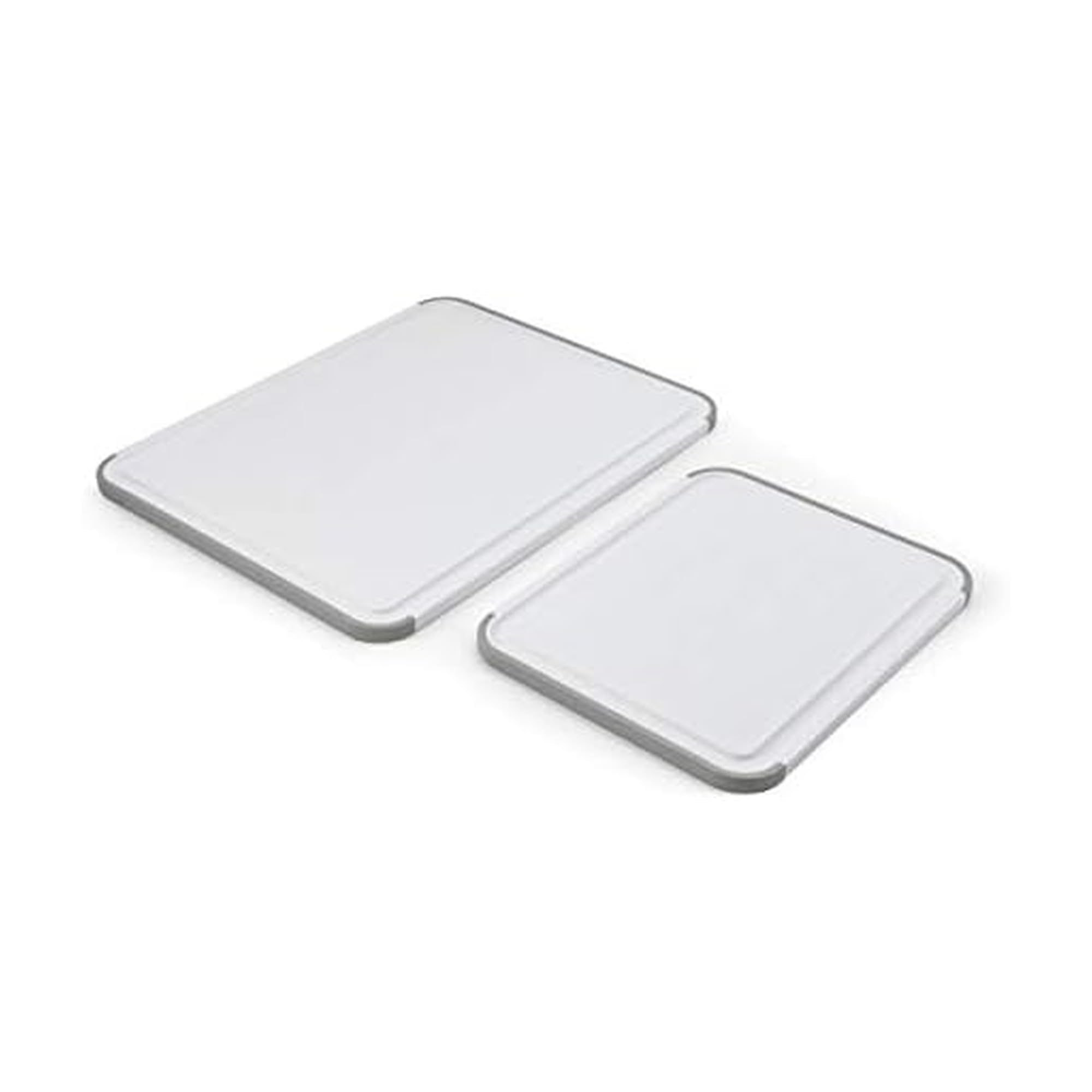
The KitchenAid set gives you two polypropylene boards — one white, one gray — so you can designate one for raw proteins and one for produce, reducing the chance of cross-contamination during meal prep. Each board measures 14 by 11 inches with a 0.8-inch thickness that feels solid on the counter and resists warping through dishwasher cycles. The nonslip edges provide grip on both wet and dry surfaces, preventing the board from sliding while you apply downward pressure with a chef’s knife.
A perimeter trench runs along the edge of each board to collect juices from meat, fruit, or washing produce, keeping your countertop dry and making post-prep cleanup faster. The polypropylene material is BPA-free and nonabsorbent, so liquids sit on the surface rather than penetrating into the plastic. After washing in the dishwasher, the boards dry fully without retaining moisture in hidden crevices — a key detail for maintaining a hygienic surface over years of use.
The two-piece format is the main differentiator here: having separate boards for different food groups is the single most effective practice for kitchen sanitation, and this set makes it easy by color-coding from the start. The boards are also lightweight at under 3 pounds total, so they are easy to move from counter to sink. If you are building a kitchen system that prioritizes hygiene through separation, this set delivers the most value in a single package.
Why it’s great
- Two color-coded boards allow designated use for raw meat and produce
- Perimeter trench catches runoff and keeps counters clean
- Non-slip edges provide stability during chopping
Good to know
- Polypropylene shows knife scars faster than wood composite
- White board may stain from turmeric, beets, or berries
3. Thirteen Chefs Large Poly Cutting Board

The Thirteen Chefs board is built for volume: 18 inches long and 12 inches wide, with a substantial 0.75-inch thickness that sits flat on the counter without wobbling. Made from high-density polypropylene (HDPP), this board resists warping at temperatures up to 200°F, making it dishwasher-safe for thorough sanitation. The black color is a strategic choice — it hides knife scars and stains from dark-colored foods like BBQ sauce or roasted meats, keeping the board looking clean even after heavy use.
At 5 pounds, the board’s weight provides natural stability; it does not slide around during aggressive chopping or cleaver work. The HDPP material is denser than standard consumer-grade polyethylene, so it offers better heat resistance and a harder surface that resists deep gouging. This makes it suitable for commercial kitchen environments but also practical for home cooks who prep large quantities of vegetables or break down whole chickens regularly.
The manufacturer explicitly warns against using serrated knives or hot pans on the surface, as plastic will melt or scar under extreme heat. However, for standard chef’s knife work, the board holds up well and cleans easily with a hot dishwasher cycle. If your primary need is a large, stable, and easily sanitized surface for high-volume meal prep, this board provides the largest usable area in the group at a competitive price point.
Why it’s great
- Extra-large 18×12 inch surface handles entire meal prep loads
- 0.75 inch thick construction resists warping at high dishwasher temperatures
- Black color hides knife scars and dark food stains
Good to know
- Heavy at 5 pounds — less portable than thinner boards
- Serrated knives and hot pans will damage the polypropylene surface
4. Belwares Wood Composite Cutting Board

The Belwares board introduces wood fiber composite at a budget-friendly tier — the same material concept as the Elihome but at a lower cost point. Measuring 14.5 by 11.25 inches with a 0.25-inch thickness, it is lightweight at just 1 pound, making it easy to lift, carry, and store in a drawer or hang on a hook. The compressed wood fiber surface is non-porous, so it resists liquid absorption and associated odors without requiring oiling or seasoning.
Heat resistance up to 350°F means this board can double as a trivet for hot baking dishes or pans straight from the oven. The manufacturer explicitly states it is dishwasher safe, and the material does not warp or crack after repeated high-heat wash cycles. The thin profile does flex slightly under heavy chopping, but for everyday slicing of vegetables, fruits, cheese, and bread, it provides a stable enough base without the bulk of thicker polypropylene boards.
The natural wood-like appearance appeals to cooks who prefer the look of wood but want the convenience of dishwasher-safe cleanup. Unlike traditional wooden boards that require periodic mineral oil treatments, this composite board needs zero maintenance — wash it, dry it, and it’s ready for the next use. If you are transitioning from plastic to a more sustainable material without spending premium money, this board offers the best introduction to wood fiber composite technology.
Why it’s great
- Non-porous wood fiber composite resists stains and odors without oiling
- Heat resistant to 350°F doubles as a hot trivet
- Lightweight and easy to store in tight kitchen spaces
Good to know
- Flexes under heavy chopping due to 0.25-inch thickness
- Smaller surface area limits large batch prep efficiency
5. San Jamar Saf-T-Grip Plastic Cutting Board

The San Jamar Saf-T-Grip is a compact co-polymer board at 9 by 12 inches with a 0.375-inch thickness, designed for portion-controlled prep rather than full meal assembly. The molded-in ruler along the edge provides precise measurement for consistent slicing — useful for meal prep where portion sizes matter. The green color is part of standard HACCP color-coding systems used in commercial kitchens, where different colors are assigned to specific food types to reduce cross-contamination.
The co-polymer material is formulated to resist cracking, even after repeated dishwasher exposure or accidental drops. The surface is smooth and non-absorbent, so liquids bead up and rinse away without leaving residue. The small footprint fits easily in a sink for washing and stores flat in a drawer or upright in a narrow cabinet slot. A built-in safety hook allows you to hang the board for air drying between uses, reducing moisture buildup on the surface.
This board is best suited for specific tasks rather than all-purpose usage — slicing lemons, portioning cheese, cutting sandwich ingredients, or prepping garnishes. The compact size and ruler make it a functional specialty board for cooks who need consistent cut sizes. If you already have a large primary cutting board but need a secondary board for quick tasks that is easy to clean and store, this San Jamar fills that niche without taking up counter real estate.
Why it’s great
- Molded ruler enables consistent portion sizing for meal prep
- Crack-resistant co-polymer withstands dishwasher heat and impact
- Compact size and safety hook for easy storage and air drying
Good to know
- Small 9×12 dimension limits chopping space for large vegetables
- Thin profile may flex slightly during heavy chopping
FAQ
Can I put a wood composite board in the dishwasher without ruining it?
Why does my plastic cutting board smell like onion even after washing?
How thick should a cutting board be to stay clean in a dishwasher?
Does the color of a cutting board affect how clean it stays?
Final Thoughts: The Verdict
For most users, the clean cutting boards winner is the Elihome Classic Series because its non-porous Richlite material provides the highest level of hygiene without requiring any maintenance — it resists odors, stains, and bacterial absorption while being dishwasher safe up to 350°F. If you want a designated board for raw meat and another for produce, grab the KitchenAid Classic Nonslip 2-Piece Set and implement a color-coded system that prevents cross-contamination. And for heavy-duty volume prep, nothing beats the Thirteen Chefs Large Poly Board for its 18-by-12-inch work surface and commercial-grade HDPP construction.