The wrong board, be it glass, stone, or hard plastic, will micro-chip and dull your edge with every slice, forcing you to sharpen more often and replace blades sooner. The right slab of hardwood, chosen by grain orientation and wood species, actually absorbs the blade’s impact, keeping your expensive chef’s knife sharp for weeks longer between honing sessions.
I’m Mohammad Maruf — the founder and writer behind AirfryerBite. I’ve spent years analyzing the material science behind kitchen surfaces, from end-grain fiber density to oil absorption rates, to understand which boards protect steel best while resisting bacterial absorption and warping.
Whether you are outfitting a new kitchen or upgrading from a worn-out plastic board, choosing the best wooden cutting boards comes down to understanding grain structure, thickness, wood species, and maintenance habits—each factor directly determines how long your knives stay sharp and your board stays flat.
How To Choose The Best Wooden Cutting Boards
Selecting a wooden cutting board means balancing knife protection, durability, maintenance, and size. Three key factors separate a board that lasts a decade from one that warps in six months.
Grain Orientation: End-Grain vs. Edge-Grain
End-grain boards are constructed with the wood fibers oriented vertically, so a knife blade separates the fibers rather than cutting across them. This self-healing quality keeps the surface smooth and extends blade sharpness significantly. Edge-grain and flat-grain boards are less expensive but show cut marks faster and dull knives slightly sooner. For heavy daily chopping, end-grain is the superior choice despite a higher entry cost.
Wood Species and Hardness
Teak offers excellent moisture resistance and a high natural oil content, making it low-maintenance but slightly harder on knives than walnut. Walnut is the gold standard for knife-friendliness—it is dense enough to resist deep scoring yet soft enough to absorb blade impact. Cherry sits similarly to walnut in hardness and provides a warm red tone. Acacia is very hard and affordable but can feel harsh on edges. Avoid overly hard tropical woods like ipe or wenge if you prioritize knife life.
Thickness, Weight, and Stability
A board under 1.5 inches thick risks warping over time, especially in fluctuating humidity. Boards 1.5 to 1.75 inches thick stay flat, absorb heavy chopping without bouncing, and provide enough mass to prevent sliding. Rubber feet or built-in handles add further stability during use. A heavier board also doubles as a sturdy serving piece for charcuterie or cheese presentations.
Quick Comparison
On smaller screens, swipe sideways to see the full table.
| Model | Category | Best For | Key Spec | Amazon |
|---|---|---|---|---|
| Yes4All Teak End Grain 24×18 | Premium End-Grain | Heavy chopping & large prep | 1.5 in thick, 13.9 lbs | Amazon |
| Sonder LA Alfred Walnut | High-End End-Grain | Knife preservation & sorting | 3 built-in compartments | Amazon |
| Cozifa Walnut End Grain 17×12 | Mid-Range End-Grain | All-purpose prep & serving | 1.6 in thick, 7.7 lbs | Amazon |
| WoodForChef Cherry 16×12 | Edge-Grain Cherry | Balanced value & knife care | 1.5 in thick, 8 lbs | Amazon |
| Artistic Chef’s Kitchen Walnut End Grain | Decorative 3D End-Grain | Presentation & light prep | 0.75 in thick, 3.8 lbs | Amazon |
| BEEFURNI Teak 18×14 | Edge-Grain Teak | Moisture resistance & gifting | 1 in thick, 5.7 lbs | Amazon |
| WALDWERK Acacia 3-Piece Set | Value Multi-Board Set | Multiple prep zones on budget | 0.8 in thick, set of 3 | Amazon |
In‑Depth Reviews
1. Yes4All Durable Teak Cutting Board (24x18x1.5 in)

The Yes4All board delivers a true end-grain teak surface at a generous 24-by-18-inch footprint, making it the largest board in this lineup. At 1.5 inches thick and nearly 14 pounds, it sits rock-solid on the counter without any slipping during heavy meat cleaving or vegetable dicing. The end-grain construction absorbs knife impact better than any edge-grain alternative, keeping your blade edges noticeably sharper after repeated use.
Teak’s natural oil content means this board resists moisture absorption and staining better than walnut or cherry, so it stays hygienic with less frequent oiling. The built-in juice groove channels liquids from roasted meats or ripe fruit away from the cutting zone, and the two side handles make it manageable to carry despite the weight. The board ships pre-oiled with a food-safe coating, so it is ready for immediate use.
Note that teak is harder than walnut, so while it protects knives far better than bamboo or plastic, it is slightly less forgiving than walnut end-grain. The initial unpacking may have a mild oil scent that fades within a few hours. For anyone who regularly preps large batches of meat or vegetables, this board offers the best combination of size, durability, and knife protection at a mid-range price point.
Why it’s great
- Massive 24×18 work surface handles big jobs
- End-grain teak construction protects knife edges
- Natural oil resistance reduces maintenance frequency
Good to know
- Heavy at nearly 14 lbs—not for small kitchens
- Teak is slightly harder than walnut on blades
- Mild oil smell may linger for a few hours after unpacking
2. Sonder Los Angeles Alfred Black Walnut (17x13x1.5 in)
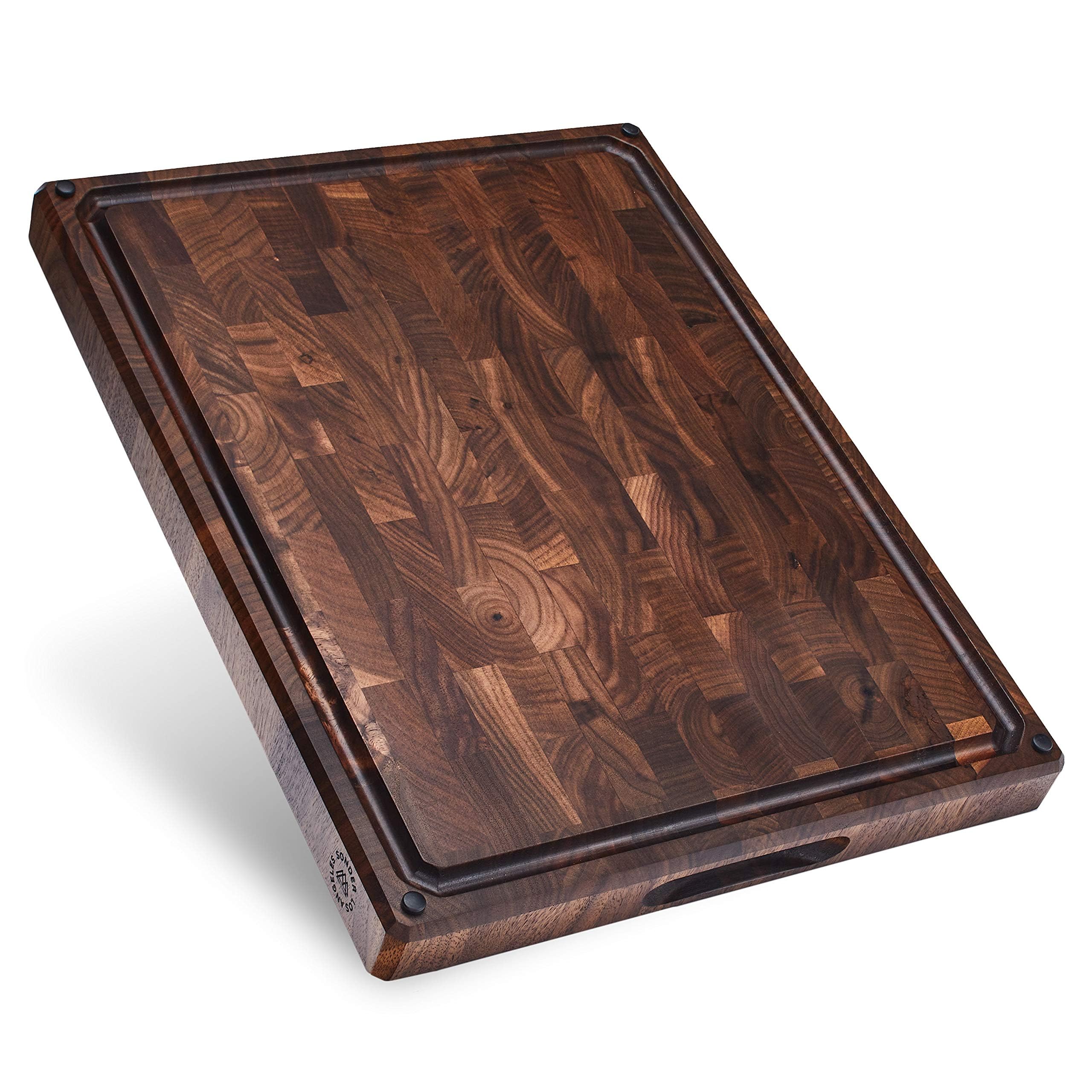
The Sonder LA Alfred board stands apart with three built-in sorting compartments that let you separate chopped garlic from herbs or diced onions from peppers mid-prep. This feature eliminates the need for extra prep bowls and keeps your workflow continuous. Crafted from American Black Walnut in an end-grain pattern, the board self-heals after each cut, preserving the crisp edge of high-carbon chef knives far longer than any edge-grain or composite surface.
At 17 by 13 inches and 1.5 inches thick, the board offers ample real estate for most home cooking tasks while remaining light enough to carry with one hand. The deep juice groove holds up to 3.5 fluid ounces of liquid, preventing countertop messes from juicy steaks or ripe tomatoes. Non-slip rubber feet underneath keep the board planted during aggressive chopping—a critical safety feature that budget boards often skip.
The premium price reflects the domestic craftsmanship and sustainably sourced walnut, and the included gift box makes it a strong contender for a housewarming present. Maintenance requires oiling every three weeks, which is standard for walnut. For cooks who value workflow organization and uncompromised knife care, this is the most thoughtfully designed end-grain board available.
Why it’s great
- Three sorting compartments streamline multi-ingredient prep
- End-grain walnut is supremely gentle on knife edges
- Non-slip feet and deep juice groove keep counters clean
Good to know
- Higher price point reflects USA-made craftsmanship
- Requires oiling every three weeks to prevent drying
- No reversible surface—compartments are one-sided
3. Cozifa American Dark Walnut (17x12x1.6 in)
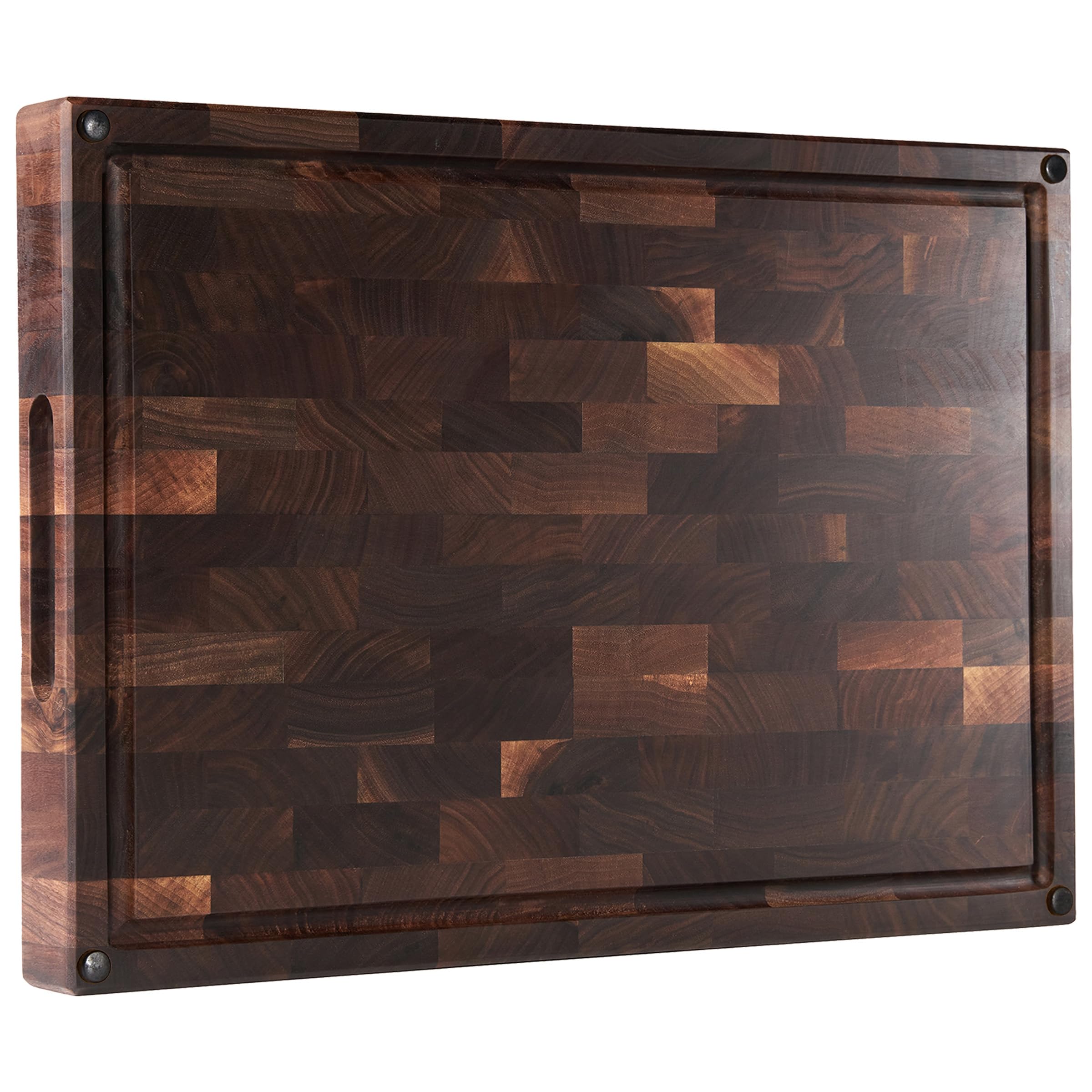
The Cozifa board brings true end-grain walnut construction to a mid-range price, making knife-friendly cutting accessible without the premium markup of boutique brands. At 1.6 inches thick, it exceeds the standard 1.5-inch threshold for warp resistance, and its 7.7-pound mass provides enough heft to stay put during heavy chopping. The finish uses linseed oil, beeswax, and carnauba wax—a safe, non-toxic combo that leaves a smooth, sealed surface ready for immediate use.
The reversible design offers a juice groove on one side for wet prep and a flat surface on the reverse for dry chopping or serving as a cheese board. Built-in handles on both ends make transport easy from counter to table. The board ships in a gift box, adding a nice touch if you plan to give it as a gift.
One downside is that the walnut may show light cut marks faster than teak due to its softer nature, but that is the trade-off for superior knife protection. The brand backs the board with a one-year replacement warranty against manufacturing defects. For home cooks who want genuine end-grain walnut performance without spending over a hundred dollars, this is the smart pick.
Why it’s great
- End-grain walnut at a fraction of boutique prices
- Reversible with juice groove on one side
- Thick 1.6-inch build resists warping
Good to know
- Walnut shows cut marks faster than teak
- Hand wash only—no dishwasher safe
- Regular oiling needed every 3-4 weeks
4. WoodForChef American Cherry (16x12x1.5 in)

The WoodForChef board uses FSC-certified North American Cherry in an edge-grain pattern, offering a balance of knife care and affordability that appeals to cooks who want a solid hardwood board without the end-grain price jump. Cherry sits in the sweet spot of Janka hardness—softer than maple or teak, so it is gentle on blades, but dense enough to resist deep gouging. At 1.5 inches thick and 8 pounds, it has the mass to stay stable during chopping without being cumbersome.
The deep juice groove on one side keeps liquids contained, and the reversible design gives you a flat surface for pastry or bread work. The board arrives pre-seasoned with mineral oil and food-safe beeswax, so you can start slicing immediately. The warm, reddish-brown cherry tones develop a darker patina over time, adding character to your kitchen counter.
Because this is an edge-grain board, cut marks will be more visible than on end-grain, and the surface will not self-heal the way end-grain fibers do. Cherry also requires regular oiling every three to four weeks to prevent the wood from drying and cracking. For those who want a responsibly sourced, knife-friendly board at a reasonable cost, this cherry board delivers consistent performance.
Why it’s great
- FSC-certified cherry wood—eco-friendly choice
- Knife-friendly hardness without excessive marking
- Pre-seasoned and ready out of the box
Good to know
- Edge-grain shows cut marks more than end-grain
- Requires oiling every 3-4 weeks
- No handles or non-slip feet
5. Artistic Chef’s Kitchen Walnut End Grain (15x11x0.75 in)

The Artistic Chef’s Kitchen board is a visual showpiece, constructed from walnut, ebony, and beech in a handcrafted 3D checkered pattern that turns prep into presentation. Each board is unique due to natural wood grain variations, and the end-grain construction ensures it remains gentle on knife edges despite the visual complexity. Four non-slip rubber feet on the bottom keep the board secure during use.
At 15 by 11 inches with only a 0.75-inch thickness, this board is best suited for lighter prep tasks like slicing cheese, chopping herbs, or serving charcuterie rather than heavy-duty meat cleaving. The thinner profile makes it easy to lift and store, and the two side handles simplify carrying. It transitions seamlessly from prep station to dining table as an elegant serving platter.
The thin construction means it will not hold up to repeated heavy chopping or daily commercial use, and the lack of a juice groove limits wet prep. This board prioritizes aesthetics and light function over sheer durability. If you want a board that doubles as kitchen art and handles everyday vegetable and cheese prep gracefully, this is a distinctive choice.
Why it’s great
- Stunning 3D pattern from walnut, ebony, and beech
- End-grain construction protects knife edges
- Non-slip feet and side handles for easy carrying
Good to know
- Only 0.75 inches thick—not for heavy chopping
- No juice groove for wet ingredients
- Best for light prep and serving, not daily butcher work
6. BEEFURNI Teak Wood Cutting Board (18x14x1 in)
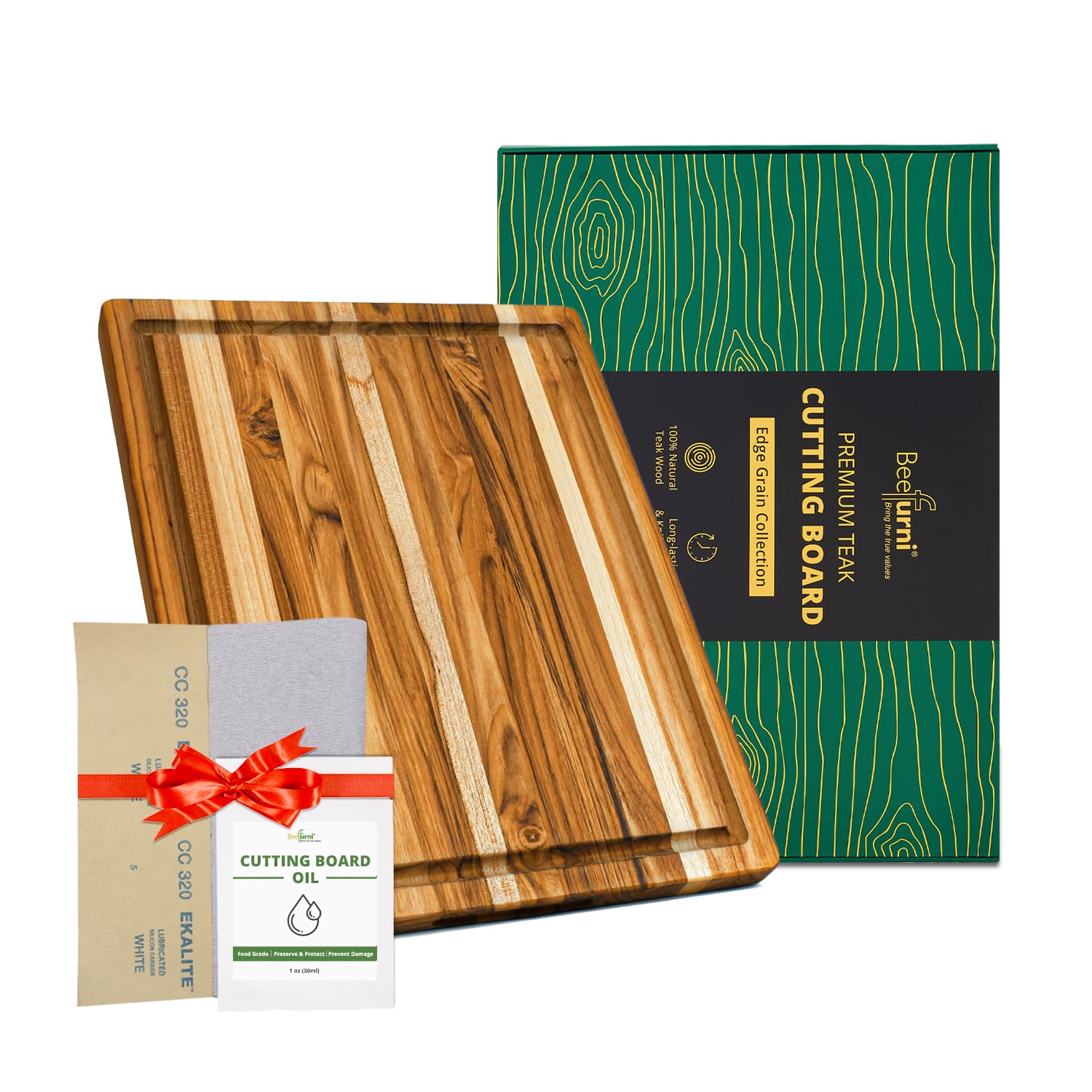
The BEEFURNI board delivers a solid teak edge-grain surface at a budget-friendly price, including a 30ml bottle of cutting board oil and sanding paper for initial maintenance. At 18 by 14 inches with a 1-inch thickness, it provides a generous work area for its size and price point. Teak’s natural moisture resistance means this board requires less frequent oiling than walnut or cherry, making it an easy option for beginners.
The reversible design features a deep juice groove on one side for carving meats or slicing juicy fruit and a flat side for everyday chopping. Built-in handles at both ends make it easy to lift and transfer. The combination of teak heartwood and sapwood gives each board a unique grain pattern that adds character to your kitchen.
The main limitation is the 1-inch thickness, which is below the 1.5-inch threshold for long-term warp resistance, particularly in humid environments. This board also uses an edge-grain construction rather than end-grain, so it will show cut marks over time and does not self-heal. For occasional home use or as a first wooden board, it offers strong value. For daily heavy chopping, you will want a thicker model.
Why it’s great
- Affordable entry into teak cutting boards
- Comes with maintenance oil and sanding paper
- Reversible with juice groove and handles
Good to know
- 1-inch thickness risks warping over time
- Edge-grain shows cut marks and does not self-heal
- Best for light-to-moderate use, not heavy daily prep
7. WALDWERK Acacia Wood Cutting Board Set (3 Boards)

The WALDWERK set provides three solid acacia wood boards in graduated sizes (the largest at approximately 15.75 by 12 inches), plus a wooden stand for vertical storage. Acacia is a dense, hard wood that resists moisture well, making these boards suitable for separating prep tasks—one for raw meat, one for vegetables, one for fruit—without cross-contamination concerns. The stand includes anti-slip knobs to keep the boards stable during storage and drying.
Each board features a milled juice groove that catches liquid runoff, and the 0.8-inch thickness keeps the boards light enough to handle easily. The rustic acacia grain varies from board to board, giving each piece a distinct look. The set works well for small kitchens where counter space is limited, as the vertical stand stores the boards neatly out of the way.
The main compromise is the thin 0.8-inch profile, which provides less mass for heavy chopping and increases the risk of warping if exposed to moisture or high heat. Acacia is also harder than walnut or cherry, so it will be somewhat harder on knife edges over time. This set is ideal for cooks who want multiple dedicated boards for different ingredients without spending a lot. For single-board performance, a thicker solid board is a better long-term investment.
Why it’s great
- Three boards for dedicated meat, veg, and fruit prep
- Wooden stand saves counter space and aids drying
- Juice grooves on every board
Good to know
- Only 0.8 inches thick—prone to warping over time
- Acacia is hard on knife edges compared to walnut
- Best for light prep, not heavy daily chopping
FAQ
What thickness should a wooden cutting board be to prevent warping?
Is end-grain wood cutting board worth the extra cost?
Which wood species is best for knife edge preservation?
Can I put a wooden cutting board in the dishwasher?
Final Thoughts: The Verdict
For most users, the best wooden cutting boards winner is the Yes4All Teak End Grain 24×18 because it combines the knife-protecting benefits of end-grain construction with the largest work surface and teak’s low-maintenance oil resistance at a mid-range price. If you want a board with built-in sorting compartments that transforms your prep workflow, grab the Sonder LA Alfred Walnut. And for budget-conscious cooks who need multiple prep zones, nothing beats the WALDWERK Acacia 3-Piece Set for versatility and storage efficiency.