Chasing that perfect shot from the coffee shop every morning is expensive, time-consuming, and frankly, frustrating. The solution is sitting on your counter: a bag of whole beans that, when ground fresh and pulled correctly, delivers a richer, more complex crema than any café pour. The problem is that most supermarket bags are roasted too dark to hide low-grade beans, leaving you with ash and bitterness instead of chocolate and caramel. The right whole bean espresso, dialed in to your machine, changes everything.
I’m Mohammad Maruf — the founder and writer behind AirfryerBite. I’ve spent countless hours researching roast profiles, extraction yields, and crema stability across dozens of espresso beans to separate the truly exceptional from the over-roasted impostors.
This guide focuses on the specific factors that matter for home espresso — freshness, roast level, blend composition, and crema production — so you can stop guessing and start pulling shots that rival your local barista. Whether you are a super-automatic user or a lever-pull purist, these picks are the best whole bean espresso options available today.
How To Choose The Best Whole Bean Espresso
Whole bean espresso is a different animal from filter coffee. The high pressure of an espresso machine extracts oils and solids that drip brewing leaves behind, so bean selection directly impacts crema, body, and aftertaste. Here are the factors that separate a memorable shot from a muddy mess.
Roast Level and Bean Origin
Espresso typically demands a medium-dark to dark roast. Lighter roasts can taste overly acidic and thin under pressure, while roasts pushed past “second crack” become one-note and ashy. Look for beans described as medium-dark or espresso roast — they retain enough origin character to provide chocolate, nut, or stone-fruit notes without tipping into burnt territory. Arabica beans offer complexity and sweetness, while a small percentage of high-quality Robusta (up to 20–30 percent) boosts crema volume and adds a heavier body.
Freshness and Roast Date
Unlike wine, coffee does not improve with age. For espresso, beans are best between 5 and 21 days post-roast — early enough to have degassed enough for even extraction, yet still vibrant. Bags that display only a “best by” date (often 12–18 months out) are a red flag: the beans are likely stale. Seek roasters that print the actual roast date. A one-way degassing valve on the bag is essential to let CO₂ escape without letting oxygen in.
Crema Expectations and Blend Composition
Crema is the golden foam that crowns a proper shot, formed by CO₂ emulsifying with oils under pressure. A pure Arabica blend produces a fine, lingering crema, but adding quality Robusta dramatically thickens the crema and adds a velvety mouthfeel. However, cheap Robusta tastes rubbery. If you drink straight shots, prioritize Arabica-dominant blends for flavor clarity. If you make milk drinks, a blend with 10–20 percent Robusta adds body without sacrificing taste.
Quick Comparison
On smaller screens, swipe sideways to see the full table.
| Model | Category | Best For | Key Spec | Amazon |
|---|---|---|---|---|
| Jo Espresso Organic | Premium Organic | Balanced classic espresso | Medium-dark roast; USDA Organic | Amazon |
| Lavazza Gusto Forte | Italian Bold | Intense dark shots | Intensity 10/10; 100% Arabica | Amazon |
| Kimbo Extra Cream | Italian Cream | Velvety crema for milk drinks | Arabica blend with Robusta | Amazon |
| San Francisco Bay Espresso | Mid-Range | Everyday value with solid crema | Medium-dark; 100% Arabica | Amazon |
| Caffè Borbone Crema Superiore | Italian Blend | Chocolate-forward crema at a deal | Medium roast; Arabica + Robusta | Amazon |
In‑Depth Reviews
1. Jo Espresso Organic Whole Bean Coffee

Jo Espresso strikes an impressive balance between approachability and performance. Roasted to a medium-dark level, these beans avoid the scorched, ashy character that plagues many espresso blends, instead delivering a heavy dark chocolate note with a velvety finish. Pulling a 20- to 25-second double shot using 18 grams produces a thick, caramel-brown crema that holds up well in both straight espressos and milk-based drinks. The organic certification and specialty-grade Arabica sourcing add confidence that no low-grade filler beans are present.
Home users with super-automatic machines like a Saeco or a Breville report consistent results with minimal dial-in hassle. The beans grind cleanly without leaving oily residue on ceramic burrs, and the puck ejects cleanly after extraction. A few experienced users noted that the flavor profile leans savory and earthy rather than fruity or bright — it resembles a well-executed traditional Italian espresso without the harshness. The 2-pound resealable bag with a tin-tie helps maintain freshness over several weeks of daily use.
For anyone seeking a single bean that works for straight shots, lattes, and drip coffee alike, Jo Espresso delivers reliability across the board. It lacks the extreme boldness of a dark roast but makes up for it with smoothness and forgiveness during extraction. If you are stepping up from commodity beans, this is the bag that will show you what home espresso can actually taste like.
Why it’s great
- Clean, non-bitter dark chocolate flavor without harshness
- Produces thick, stable caramel-brown crema shot after shot
- USDA Organic and Fair Trade certified at a reasonable price point
Good to know
- Not the boldest or strongest flavor — medium intensity
- Some bags may arrive a few weeks past roast date depending on stock
2. Lavazza Gusto Forte Espresso Beans
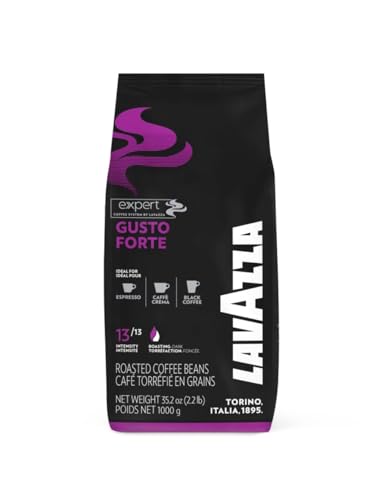
Lavazza Gusto Forte is for the drinker who wants their espresso to announce itself. With an intensity rating of 10 out of 10, this is a full-throttle dark roast built from 100 percent Arabica beans imported directly from Italy. The flavor profile is bold, bordering on intense — think dark bittersweet cocoa with a heavy, lingering finish that sits on the palate. The crema is thick and dark, almost chestnut in color, forming a robust cap that holds together through the last sip.
Users with Gaggia and De’Longhi machines report that these beans do not leave an oily residue that gunks up ceramic grinders, a common complaint with some darker Italian roasts. A single shot in the morning is often enough to carry alertness through the workday, thanks to the combination of high concentration and full extraction. The patented freshness valve on the 2.2-pound bag preserves aromatics better than a standard seal. That said, this is not a gentle bean — it requires an acquired taste for strong, almost bitter dark roasts, and it shines brightest when paired with milk in a cortado or cappuccino.
If you already find most espresso roasts too mild or wish your local café would pull a stronger shot, Gusto Forte is the logical upgrade. It is a laser-focused product for a specific palate — those who want subtlety should look elsewhere. For the hardcore espresso drinker who drinks straight, this bag delivers the jolt and the flavor depth that lighter blends simply cannot provide.
Why it’s great
- Extremely bold, intense flavor that holds up in milk drinks
- Thick, dark crema with excellent staying power
- Does not coat grinder burrs with sticky residue
Good to know
- Too harsh for those who prefer medium or balanced roasts
- Best suited for dark-roast fans who like a near-bitter edge
3. Kimbo Extra Cream Espresso Whole Beans
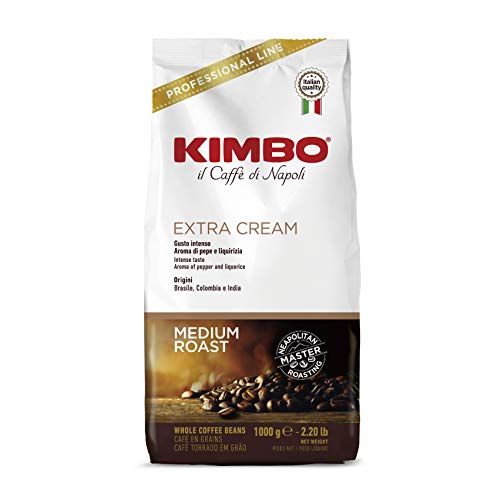
Kimbo Extra Cream lives up to its name. This Neapolitan blend incorporates quality Robusta beans into the mix, which translates directly to a noticeably thicker, creamier crema than a straight Arabica roast can produce. The flavor is smooth and balanced — tasting notes of peppermint and dark chocolate emerge without any of the burnt or rubbery off-notes that ruin cheap Robusta blends. At a 2.2-pound bag size, it offers generous volume for households that pull multiple shots daily.
Users who switched from Lavazza Super Crema report that Kimbo provides a different but equally enjoyable experience: slightly richer body, higher caffeine content, and a crema that clings to the side of the demitasse. The roast level skews medium to medium-dark, avoiding the carbonized flavor of some southern Italian roasts. It pairs especially well with milk, where the creamy texture elevates cappuccinos and lattes without overwhelming the drink. The bag stays fresh for weeks when sealed properly.
The only real drawback is availability consistency — stock fluctuates, and some buyers report receiving bags that are a few months old. But when fresh, Kimbo Extra Cream is a top-tier performer for milk-based drinks or anyone who values crema volume and body over nuanced origin notes. If your priority is a velvety mouthfeel and a forgiving grind window, this is the bean to buy.
Why it’s great
- Extra-thick, silky crema that clings to the glass
- Smooth, balanced flavor without bitterness or acidity
- High caffeine content, reducing the need for a second shot
Good to know
- Freshness can vary depending on batch and seller rotation
- Not the best choice for straight shots due to Robusta presence
4. San Francisco Bay Espresso Roast Whole Bean
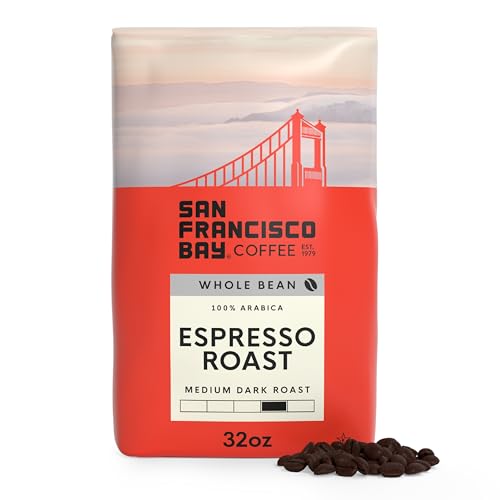
San Francisco Bay Espresso Roast is the workhorse of this list — a reliable, medium-dark Arabica blend that produces a respectable crema without breaking your budget. The flavor is rich and smooth with a pleasant warmth, lacking the sharp bitterness that plagues many mass-market espresso roasts. Customers who drink two to three cappuccinos a week report that a 2-pound bag lasts about five months, making it one of the most economical options for consistent home use.
The beans are aromatic with a visible oil sheen that indicates proper roast development. The crema is not as thick as a Robusta-enhanced blend, but it holds a steady golden layer across a standard 1:2 extraction ratio. Users switching from Starbucks beans consistently note that this roast is less bitter and more nuanced — think toasty nuts and mild chocolate rather than char. The bag is a simple non-resealable packaging, so transferring to an airtight container after opening is recommended.
For the home barista who wants a dependable daily espresso without chasing single-origin nuances, San Francisco Bay delivers. It is forgiving enough for beginner grinders and super-automatic machines, and the price per ounce is hard to beat. You sacrifice a bit of complexity and crema density compared to premium Italian blends, but for everyday drinking, it is a solid, no-regret choice.
Why it’s great
- Excellent value for a 2-pound bag of consistent quality
- Rich, smooth flavor without bitterness
- Good crema production for a 100% Arabica blend
Good to know
- Bag lacks a degassing valve and resealable closure
- Not as bold or thick-creamed as Robusta blends
5. Caffè Borbone Crema Superiore Whole Bean
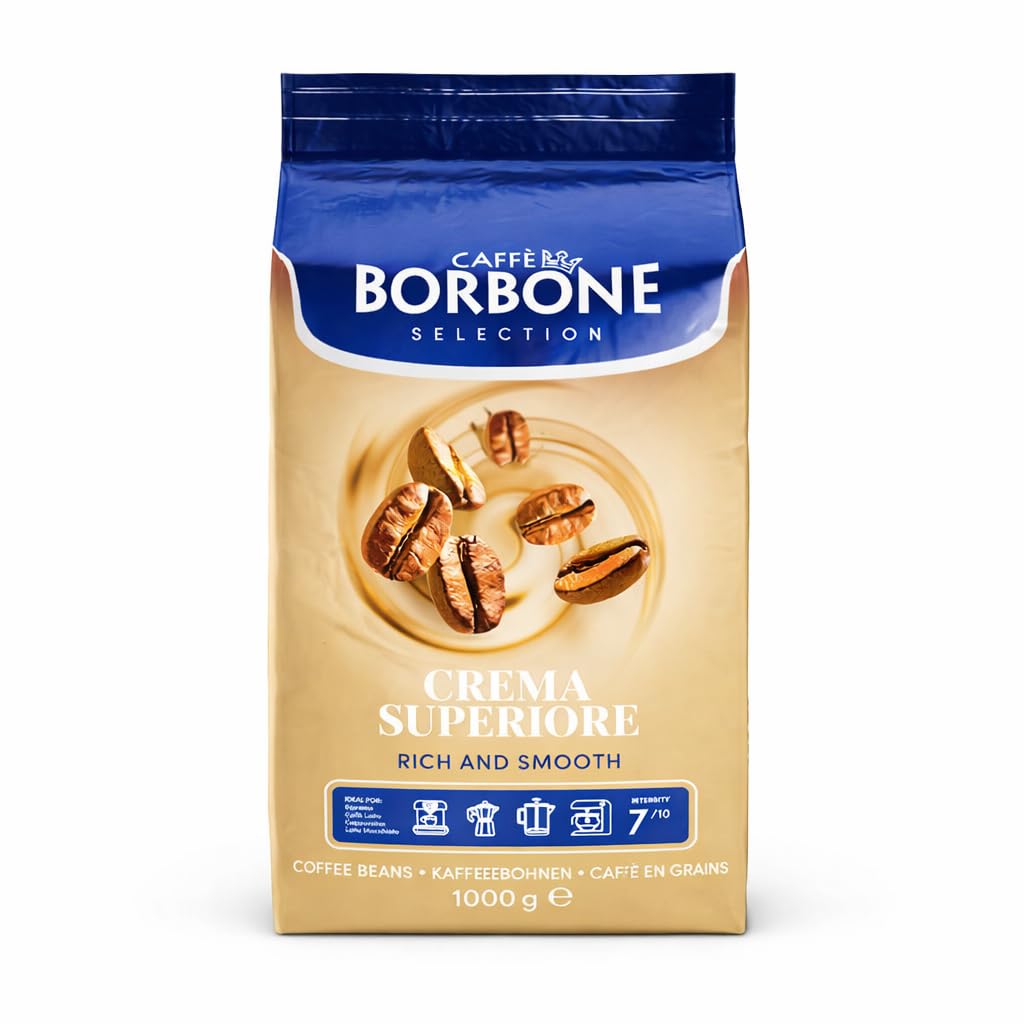
Caffè Borbone Crema Superiore is a medium-roasted blend of Arabica and Robusta beans sourced from South America, Africa, and Asia. The roast level is noticeably lighter than most espresso blends, which allows natural notes of chocolate and vanilla to come through with a gentle sweetness and low acidity. Despite being only a medium roast, it produces an abundant, almost fluffy crema — a direct result of the Robusta content blending with the slower extraction of a medium profile.
Users transitioning from Lavazza blends often comment that Borbone is smoother and less aggressive, making it a great option for afternoon espressos or for those who find traditional dark roasts too harsh. The beans work well across brewing methods: espresso machines, moka pots, French presses, and pour-overs all produce a clean cup with minimal bitterness. The 2.2-kilogram bag (about 2.2 pounds) is generous, but the roast date transparency could be better — some bags arrive without a visible roast date, making freshness a bit of a gamble.
If your ideal espresso is creamy, low-acid, and nutty rather than smoky and intense, Caffè Borbone is a refreshing departure from the standard dark-roast playbook. It is particularly well-suited for milk-based drinks where the gentle flavor and thick crema create a balanced, dessert-like cappuccino. For straight shots, the missing punch may leave dark-roast loyalists wanting more, but for versatility and drinkability, it is a top contender.
Why it’s great
- Creamy, low-acid profile with natural chocolate and vanilla notes
- Produces abundant crema despite medium roast level
- Versatile across espresso machines, moka pots, and drip brewers
Good to know
- Roast date is not always printed on the bag
- Not bold enough for dark-roast purists drinking straight shots
FAQ
What roast level is best for whole bean espresso?
Does Robusta in espresso beans ruin the flavor?
How long do whole bean espresso beans stay fresh?
Can I use the same beans for espresso and drip coffee?
Final Thoughts: The Verdict
For most users, the best whole bean espresso winner is the Jo Espresso Organic because it combines smooth dark chocolate flavor, reliable crema production, and organic certification at a price that works for daily use without sacrificing quality. If you want an intense, bold shot that stands up to milk, grab the Lavazza Gusto Forte. And for a creamy, velvety crema that makes milk drinks sing, nothing beats the Kimbo Extra Cream.