Kitchen cabinets take a beating daily—steam, grease splatter, sticky fingers, and constant wiping. Over time, even the best-finished wood starts looking dry, cloudy, or scratched. A proper wax formulation does more than polish; it penetrates the grain, replenishes natural oils, and builds a sacrificial layer that repels moisture and grime.
I’m Mohammad Maruf — the founder and writer behind AirfryerBite. I’ve spent years analyzing wood finishes, solvent blends, and wax emulsion chemistry to separate the products that actually condition wood from those that just leave a greasy film.
Whether you are refreshing tired oak cabinets or protecting a fresh painted finish, picking the right formula matters. That is exactly why I built this guide to the best wax for kitchen cabinets, breaking down the carrier oils, wax types, and application quirks that determine real-world results.
How To Choose The Best Wax For Kitchen Cabinets
Kitchen cabinet wax falls into two broad camps: liquid polishes that clean and shine in one step, and paste waxes that build a thicker, more durable coating. The right pick depends on your cabinet’s current condition, the finish type, and how much elbow grease you are willing to invest.
Wax Base: Beeswax vs. Carnauba vs. Synthetic
Beeswax delivers a soft, warm luster and excellent moisture resistance. It is forgiving to apply and easy to buff, but it wears faster in high-touch areas. Carnauba wax is harder and creates a glossy, long-lasting shell. Many premium blends combine both for a balance of depth and durability. Synthetic waxes (often found in spray polishes) are simpler to use but do not condition the wood—they sit on top and offer minimal nourishment.
Liquid vs. Paste vs. Emulsion
Liquid waxes (often with added oils like orange or lemon) penetrate dry wood quickly and are ideal for neglected cabinets that need rehydration. Paste waxes require more buffing but produce a thicker, more protective layer that withstands kitchen humidity and grease better. Emulsion waxes (water-based) clean without leaving oily residue, but they lack the conditioning power of solvent-based formulas. For thirsty, weathered cabinets, a liquid conditioner-wax blend works best. For painted or sealed cabinets, a paste wax adds a protective topcoat that resists fingerprints.
Finish Compatibility: Sealed, Painted, or Unfinished Wood
Unfinished or raw wood absorbs wax deeply and benefits from a conditioner like beeswax or orange oil blends. Sealed cabinets (polyurethane, lacquer, or varnish) need a wax that bonds to the existing finish without causing hazing—paste waxes buffed lightly work well here. Painted cabinets, especially those finished with chalk paint, require a dedicated furniture wax (like Annie Sloan’s) that seals the porous paint layer without yellowing. Always test in a hidden spot before committing to a full application.
Quick Comparison
On smaller screens, swipe sideways to see the full table.
| Model | Category | Best For | Key Spec | Amazon |
|---|---|---|---|---|
| Howard Feed-N-Wax | Conditioner + Paste | Restoring dry, weathered cabinets | 64 oz / Carnauba & Beeswax blend | Amazon |
| Fox Run Lemon Oil with Beeswax | Liquid Conditioner | Rehydrating faded or blotchy wood | 16 oz / Beeswax + Mineral Oil | Amazon |
| Milsek Furniture Polish with Orange Oil | Liquid Cleaner-Polish | Daily cleaning with light conditioning | 12 oz / Orange Oil, No Wax | Amazon |
| Jubilee Kitchen Wax | Liquid Wax Cleaner | Grease removal and high-shine on sealed surfaces | 2 x 15 oz / Stain-Resistant Formula | Amazon |
| Annie Sloan Clear Wax | Paste Wax | Protecting painted or chalk-painted cabinets | 4.06 oz / Paste for Painted Finishes | Amazon |
In‑Depth Reviews
1. Howard Feed-N-Wax Wood Polish and Conditioner

This is the heavyweight champion for cabinet restoration. The blend of Carnauba wax for hardness and Beeswax for conditioning creates a protective coating that feeds the wood rather than just coating it. The 64-ounce bottle is a bulk purchase, but one application covers a large kitchen. Users consistently report reviving dry, tired cabinets—even old hardwood floors—with a single coat, and the citrus-honey scent is a pleasant bonus compared to chemical-smelling alternatives.
Application is straightforward: wipe on, let it haze, buff off. The beeswax gives a soft, warm luster while the carnauba component adds a durable shine that resists fingerprints and moisture. It works best on sealed or lightly finished wood; for raw or very porous surfaces, a second coat after 24 hours provides better penetration. Be mindful that the beeswax content makes it slightly too soft for flooring, but for cabinets, it is ideal.
Reviewers note that a little goes a long way—about three-quarters of the bottle covers a living room, kitchen, and hallway. The protection lasts two weeks with normal traffic, and reapplication is easy. It is the smartest investment for anyone with extensive wooden cabinets needing both nourishment and a polished look.
Why it’s great
- Dual wax blend (Carnauba + Beeswax) conditions and protects in one step
- Bulk 64-ounce value reduces cost per application significantly
- Pleasant citrus scent; non-toxic feel after curing
Good to know
- Must buff thoroughly to avoid streaks on smooth finishes
- Over-application can leave a soft residue if not wiped back
2. Fox Run Lemon Oil With Beeswax Furniture Polish
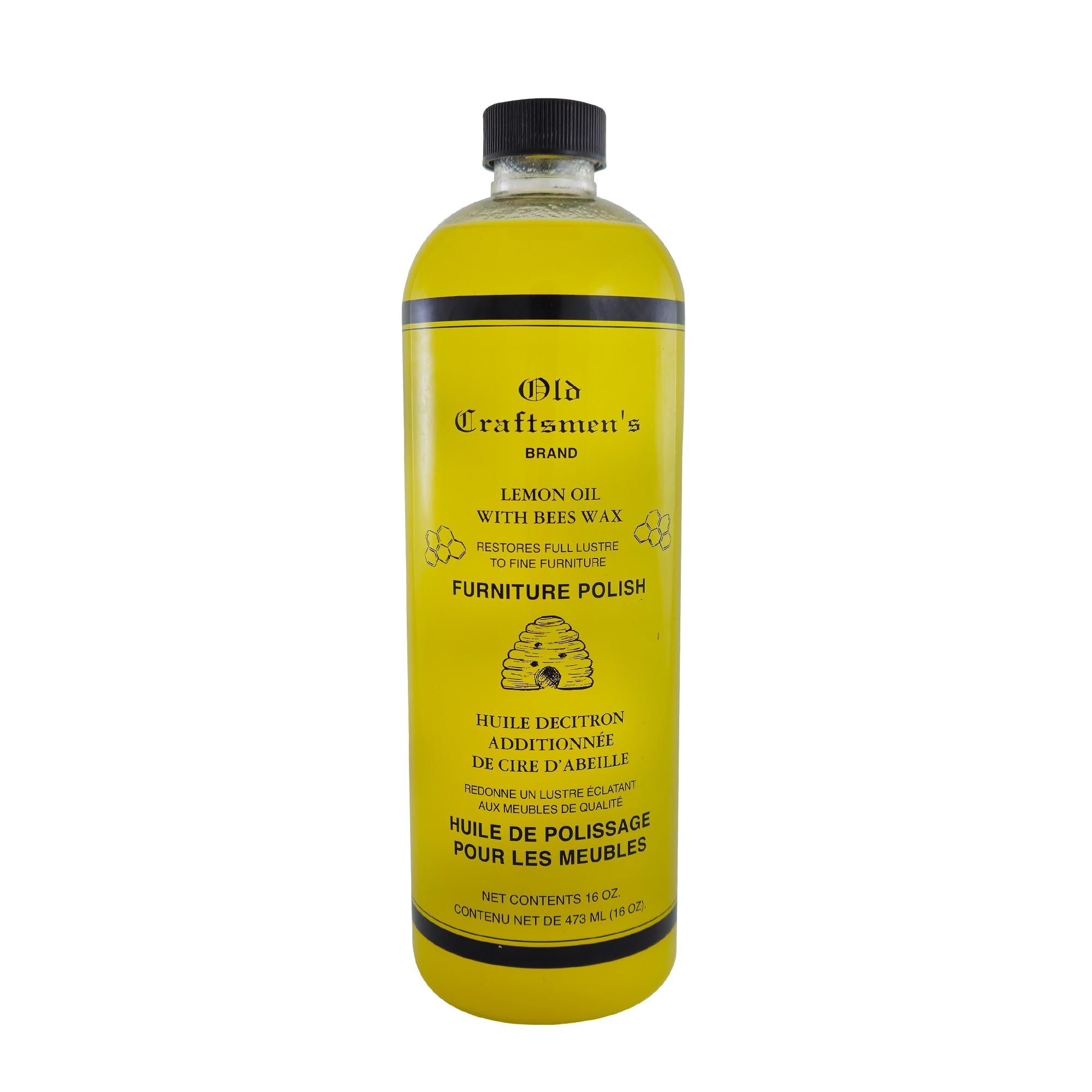
This is a liquid conditioner formulated to penetrate deeply into dry, porous wood. The proprietary blend of mineral oil, lemon oil, and beeswax creates a thin emulsion that soaks into the grain rather than sitting on top. It is particularly effective on cabinets that have turned blotchy or faded from years of sunlight and steam exposure. Multiple customer reports highlight its ability to restore 40-year-old wainscoting and antique oak with lasting results.
The beeswax content slows absorption compared to pure lemon oil, which means it stays on the surface longer before soaking in. This slower evaporation gives you more working time to distribute evenly and reduces the frequency of reapplication—some users report two months between treatments. The pleasant lemon scent is lighter than orange oil alternatives and less greasy after buffing. It works well on both finished and unfinished wood, making it versatile for mixed cabinet setups.
One important note: because it contains mineral oil, it is not ideal for cabinets that will be repainted later, as the oil can interfere with paint adhesion. It is best reserved for raw, stained, or sealed wood where deep conditioning is the primary goal. For the price, it delivers exceptional value per treatment.
Why it’s great
- Penetrates deep into dry wood to restore color and grain
- Low reapplication frequency (up to 2 months between coats)
- Pleasant lemon scent; pleasant to work with
Good to know
- Mineral oil base may hinder future paint adhesion on raw wood
- Not ideal for highly glossy or polyurethane-sealed surfaces
3. Milsek Furniture Polish and Wood Cleaner with Orange Oil

This product is different from the others on this list—it contains no wax at all. Instead, Milsek relies on orange oil and a water-free formulation to clean, polish, and protect without leaving a waxy build-up. It excels at removing heat rings and water stains on finished wood, and it brings out natural luster without the heavy buffing required by paste waxes. The 12-ounce bottle is compact but highly concentrated; users recommend applying it full-strength for the best results.
The orange oil aroma is strong and natural—some find it overpowering at first, but it dissipates quickly. Because it contains no silicone or wax, it leaves a clean surface that does not attract dust between applications. Reviewers with dark espresso cabinets praise its ability to eliminate streaks that other polishes leave behind. It is also versatile enough to clean shower doors and kitchen appliances, though its primary strength is on wood.
For cabinets that are already in decent shape but need a deep clean and a gloss boost, this is a solid pick. It will not condition dry, thirsty wood the way a wax blend does, but it removes grime and restores shine without layering on residue. Use it as a maintenance polish between deeper wax treatments.
Why it’s great
- Removes water rings and heat stains without harsh chemicals
- No wax or silicone means no dull build-up over time
- Strong natural orange scent that many users enjoy
Good to know
- Does not condition or nourish dry wood due to absence of wax
- Strong odor requires good ventilation during application
4. Jubilee Kitchen Wax (2-Pack)

Jubilee is a throwback formula that has been cleaning kitchen surfaces for generations. Unlike conditioning waxes, it functions primarily as a wax-based cleaner—it cuts through kitchen grease, food stains, and fingerprints on laminate, enamel, ceramic tile, chrome faucets, and sealed wood cabinets. The formula dries to a tough, hard shine that resists new stains, making spills easier to wipe away. It is unscented, which is a relief for users sensitive to strong citrus or lemon fragrances.
Application takes more effort than a spray polish. You apply it, let it dry to a haze, and then buff vigorously to achieve a streak-free shine. Multiple reviews note that skipping the buffing step or using too much product results in cloudy streaks. It works best on sealed, non-porous surfaces—do not use it on granite, stainless steel, or raw wood. For painted cabinets, test an inconspicuous area first, as the wax can sometimes highlight imperfections in older paint.
The two-pack provides good value for kitchens with multiple surfaces to treat. Reviewers mention using it on everything from laminate countertops to bathroom fixtures with consistent results. If your cabinets are sealed and the main concern is grease removal rather than wood conditioning, this is a highly effective option.
Why it’s great
- Excellent at cutting through sticky kitchen grease on sealed surfaces
- Creates a hard, stain-resistant protective layer
- Two-pack offers great coverage for whole kitchen
Good to know
- Requires aggressive buffing to prevent streaks and haze
- Not suitable for raw wood, granite, or stainless steel surfaces
5. Annie Sloan Chalk Paint Wax (Clear, 120 mL)

This is a specialty paste wax formulated specifically for sealing chalk paint and other matte painted finishes. If you have painted your kitchen cabinets with Annie Sloan Chalk Paint—or any brand of matte furniture paint—this wax is the required topcoat. It locks in the paint, prevents chipping, and deepens the color while delivering a smooth matte sheen that can be buffed to a soft polish. It is intended solely as a protective sealer for painted surfaces, not as a wood conditioner.
Application requires thin coats applied with a lint-free cloth or dedicated wax brush. Wipe back any excess immediately; if the wax feels sticky after drying, you have applied too much. A little goes a long way—the 120 mL jar can cover multiple cabinet doors or a small dresser. Because it is a pure wax without added oils, it will feed painted surfaces without yellowing. Reviewers praise its durability on kitchen tables and front doors that see daily use, recommending yearly reapplication for high-traffic cabinets.
One drawback: this is the most expensive option per ounce on the list. However, for painted cabinet finishes—especially chalk paint—there is no substitute. Using a generic wax can cause tackiness, yellowing, or poor adhesion. Stick with Annie Sloan for the intended chemistry.
Why it’s great
- Specifically formulated to seal chalk paint without yellowing
- Enhances color depth and provides a smooth, professional matte sheen
- Spot repairs can be done without sanding or stripping
Good to know
- Expensive per ounce compared to general furniture waxes
- Not intended for conditioning raw or stained wood
FAQ
Can kitchen cabinet wax be used on painted cabinets that are not chalk paint?
How do I remove sticky residue from old wax buildup on my cabinets?
Is orange oil furniture polish safe for sealed kitchen cabinets?
Final Thoughts: The Verdict
For most users, the best wax for kitchen cabinets winner is the Howard Feed-N-Wax because it combines deep conditioning with a durable protective layer, making it suitable for both raw and sealed wood cabinets. If you have painted cabinets, grab the Annie Sloan Clear Wax for the perfect finish compatibility. And for quick maintenance between deep treatments, nothing beats the Milsek Orange Oil Polish.