Dealing with well water means dealing with a whole different set of contaminants — sediment, dissolved solids, heavy metals, and that distinct earthy taste a standard Brita just can’t touch. A basic countertop filter can remove chlorine from city water, but it won’t touch the iron, manganese, or hard water scale that plagues private wells, leaving you with a pitcher that’s useless before the first pour.
I’m Mohammad Maruf — the founder and writer behind AirfryerBite. I’ve spent over a decade analyzing water filtration hardware, breaking down micron ratings, NSF certifications, and filter media types to find the units that actually handle the unique chemistry of well water, not just municipal supply.
This guide focuses exclusively on pitchers engineered to reduce sediment, total dissolved solids, heavy metals, and organic compounds commonly found in well water. Here is my take on the water filter pitcher for well water.
How To Choose The Best Water Filter Pitcher For Well Water
Well water chemistry is not uniform — a shallow well in sandy soil produces different sediment loads than a deep limestone well producing hard water. A pitcher that handles one type can fail on another, so matching the filter media to your specific well profile is the deciding factor, not brand loyalty.
Total Dissolved Solids and the TDS Meter
Well water often carries TDS readings above 200 ppm, with some desert and mountain wells exceeding 500 ppm. A standard carbon pitcher may reduce it to the 200-400 ppm range, which still tastes metallic or mineral-heavy. Look for pitchers that use ion-exchange media or multi-stage designs capable of dropping TDS below 50 ppm. A built-in or included TDS meter lets you verify real-world performance without guesswork.
Sediment and Particulate Filtration
Sand, silt, and rust flakes are common in well water from aging pumps or shallow aquifers. A 5-micron or finer pre-sediment stage prevents these particles from clogging the main carbon block. Without a sediment stage, the carbon media gets buried in debris and loses flow rate within weeks, turning a 2-minute pour into a 10-minute wait.
Heavy Metal, PFAS and Chemical Reduction Certifications
Well water can contain naturally occurring arsenic, lead from old well casings, or industrial runoff like PFOA/PFOS. NSF/ANSI Standard 53 covers heavy metal reduction, while Standard 42 covers chlorine taste and odor (less relevant for well water). A pitcher certified under both — or independently tested for a broad range — is your safest bet when you haven’t had a full lab panel done on your well.
Quick Comparison
On smaller screens, swipe sideways to see the full table.
| Model | Category | Best For | Key Spec | Amazon |
|---|---|---|---|---|
| ZeroWater 32-Cup | 5-Stage Dispenser | High TDS well water | IAPMO certified to reduce PFOA/PFOS, lead, chromium | Amazon |
| Clearly Filtered Pitcher | Affinity Filtration | Broad contaminant target | NSF certified to reduce 365+ contaminants | Amazon |
| Waterdrop ED04B-L Electric | Electric Dispenser | Large volume, fast pour | 27-cup capacity, 200-gallon filter life | Amazon |
| Piurify Compact 50 OZ | Electric + UF | Bacteria & microplastic removal | UltraFiltration + Carbon, 6-month filter life | Amazon |
| Waterdrop PT-09W Glass | Glass Body | Chemical-free taste | NSF/ANSI 53 & 42 certified, 5-stage filtration | Amazon |
| Crystal Quest 12-Cup | 6-Stage Filter | Budget-friendly broad reduction | Filters up to 2500 gallons per filter | Amazon |
| Brita Wave 10 Cup | Basic Carbon | Mild well taste improvement | Reduces copper, cadmium, mercury impurities | Amazon |
In‑Depth Reviews
1. ZeroWater 32-Cup 5-Stage Water Filter Dispenser

The ZeroWater 32-Cup dispenser is the most effective gravity-fed pitcher I’ve seen for well water with TDS readings above 300 ppm. Its five-stage filtration system uses ion-exchange resin to drop dissolved solids to zero — verified by the included TDS meter — making it a legit solution for hard water, metallic taste, and mineral-heavy wells. Real-world user reports from Arizona hard water (500 ppm TDS) show a drop to 3 ppm.
At 32 cups (7.5 liters), this dispenser holds enough water to serve a family of four without constant refills. The spigot design eliminates the heavy-pitcher lift issue that plagues large-capacity units. Filters are IAPMO certified to reduce lead, chromium, PFOA/PFOS, and mercury. The trade-off is slower filtration — gravity feeding through dense ion-exchange media takes time, sometimes 30 minutes to fully filter a full reservoir.
Filter life averages 40-70 days depending on your well’s TDS load, which means higher long-term costs compared to standard carbon pitchers. But when your baseline TDS is over 300 ppm, no other gravity pitcher matches the final water quality. The built-in TDS meter removes guesswork: replace the filter when the reading hits 006.
Why it’s great
- Reduces TDS to 0 ppm for high-mineral well water
- Large 32-cup capacity with convenient spigot
- IAPMO certified for lead, chromium, PFOA/PFOS
- Built-in TDS meter tracks real filter performance
Good to know
- Slow filtration speed due to dense media
- Filters last 1-2 months on high TDS well water
- Some users report a fishy smell once TDS climbs above zero
2. Clearly Filtered Filtered Water Pitcher
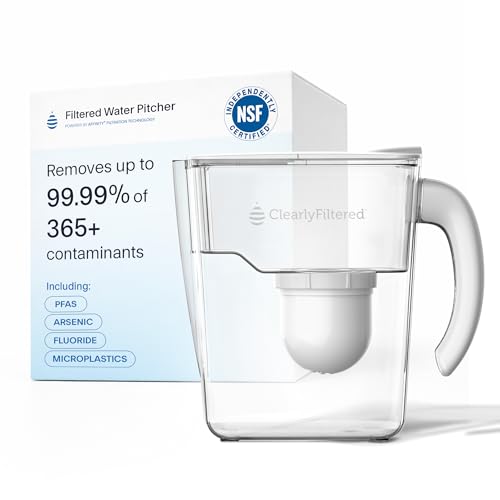
The Clearly Filtered pitcher targets 365+ contaminants — an unmatched claim in the gravity pitcher market — including fluoride, lead, PFAS, arsenic, microplastics, and perchlorate. Its Affinity Filtration Technology uses ionic binding to capture contaminants while leaving beneficial minerals intact. For well water users who suspect heavy metal or chemical contamination from nearby agricultural or industrial runoff, this is the most comprehensive single-pitcher solution available.
The 80 fl oz (10 cup) capacity is moderate, but the pitcher is built from medical-grade Tritan plastic — BPA-free and BPS-free — which addresses concerns about plastic leaching in high-heat environments like a warm kitchen. The spigot and hinge-fill lid are well-engineered, and the ergonomic handle makes pouring manageable even when full. Each filter lasts roughly 100 gallons or 4 months on municipal water; well water with high sediment may shorten that to 2-3 months.
Third-party lab reports confirm 99.99% reduction of the listed contaminants, and NSF/ANSI 42 and 372 certifications back the chlorine taste/odor reduction and lead-free material claims. The premium price per filter is the main drawback — replacement cartridges cost more than double a standard Brita filter — but the coverage depth justifies the cost for well owners who haven’t done a full lab panel on their water.
Why it’s great
- Targets 365+ contaminants including fluoride and PFAS
- Medical-grade Tritan plastic, BPA/BPS-free
- NSF/ANSI 42 and 372 certified
- Preserves beneficial minerals while removing heavy metals
Good to know
- Replacement filters are premium-priced
- Capacity limited to 80 fl oz
- Some users report black growth in pitcher with infrequent cleaning
3. Waterdrop ED04B-L Mega Electric Water Filter Dispenser
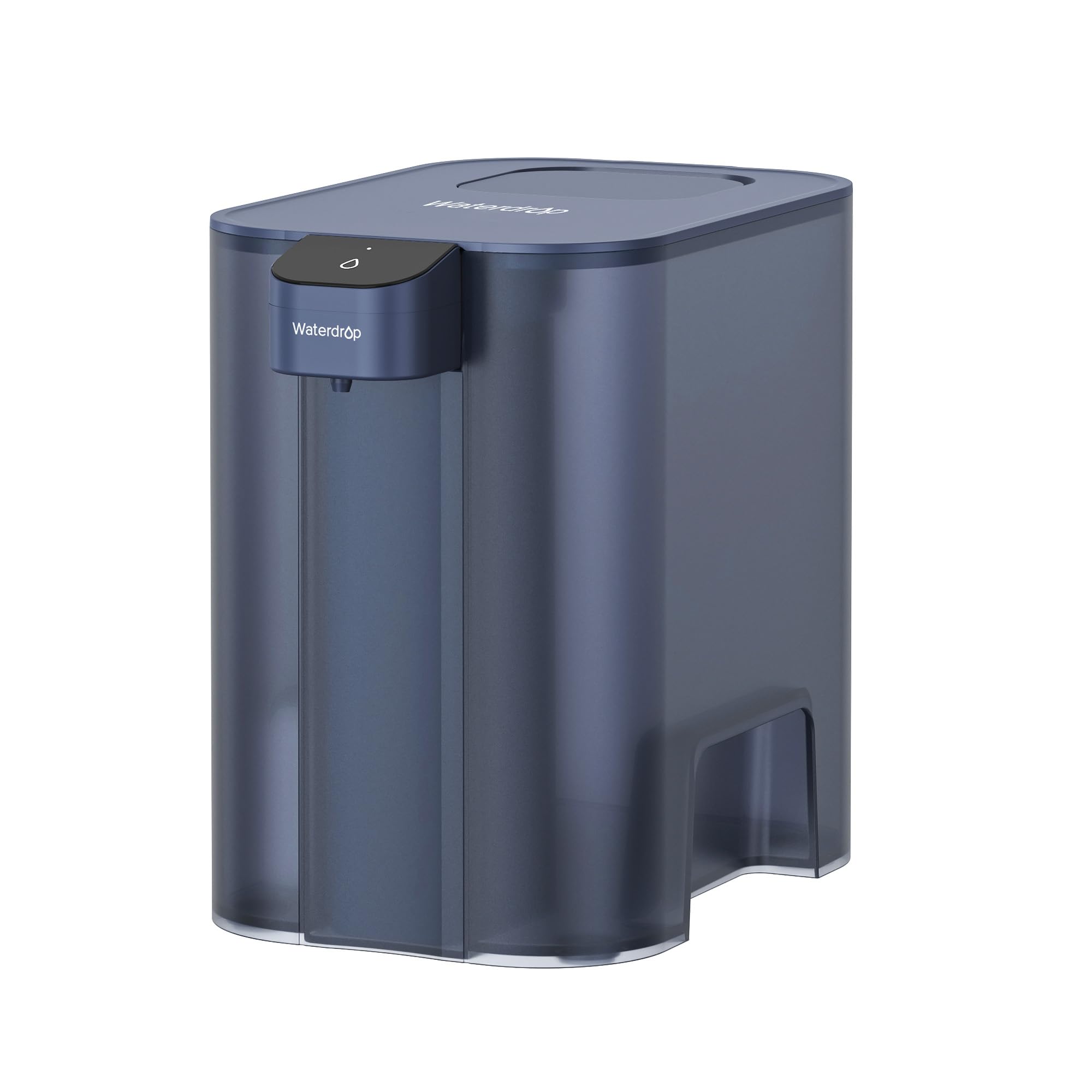
The Waterdrop ED04B-L is an electric dispenser that eliminates the two biggest complaints about well water pitchers: slow gravity flow and heavy pitcher lifting. A built-in pump dispenses water on demand, and the 27-cup reservoir is the largest in this roundup. The filter is NSF/ANSI 42, 53, 401 & 372 certified, reducing lead, chlorine, mercury, benzene, and 45+ other substances. Third-party testing also covers PFOA and PFOS reduction.
One critical detail for well water users: this system does NOT lower TDS. If your well produces water above 300 ppm TDS that tastes metallic or hard, the ED04B-L will remove chlorine, sediment, and heavy metals but leave the mineral content intact. Waterdrop explicitly advises choosing their TDS-reduction model (WD-ED25TW) if low TDS is your goal. The included filter lasts 200 gallons or 3 months, which is excellent longevity for a carbon-block system.
Battery life is rated at 30 days per charge, making it viable for RV or cabin use where well water is the only source. The large capacity and electric pump make it ideal for families who go through 2+ gallons of water daily. The fast flow rate (0.8 liters per minute) means you fill a glass in seconds rather than waiting for gravity feed.
Why it’s great
- Electric pump eliminates heavy pitcher lifting
- 27-cup ultra-large capacity
- NSF/ANSI 42, 53, 401 & 372 certified
- 200-gallon filter lifespan
Good to know
- Does not reduce TDS — mineral content remains
- Battery needs monthly recharging
- Filter indicator may malfunction (noted in user reviews)
4. Piurify Compact 50 OZ Countertop Electric Water Filter Pitcher
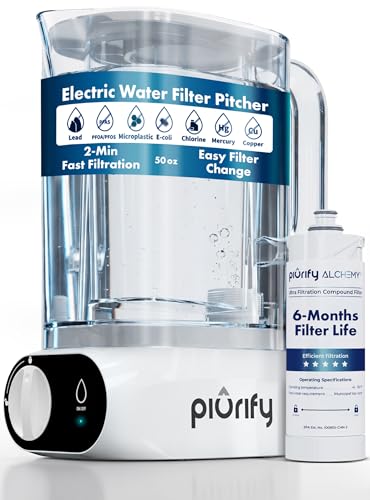
The Piurify combines an electric pump with UltraFiltration membrane technology — a legitimate step above standard carbon-block filtration. The 4-stage process includes a pre-filter, sediment filter, ultra-filtration membrane (0.01 micron rating), and activated carbon block. This setup removes 99.9% of bacteria, 99% of lead, PFAS, microplastics, and chlorine. For well water that may contain microbial contaminants from surface runoff, the UF membrane provides a level of safety gravity pitchers cannot match.
The electric pump delivers water in about 2 minutes per batch — 2X faster than standard gravity pitchers according to the manufacturer. The 50 oz capacity is compact, roughly equivalent to 6 cups, which suits individuals or couples but requires more frequent refills for larger families. The rechargeable battery lasts 30 days, and the auto-shutoff prevents overflow. One user with well water specifically praised how the unit improved taste and encouraged more water consumption.
Filter lifespan is a standout: 6 months or 130 gallons, which significantly lowers per-gallon cost compared to ZeroWater’s 40-70 day cycles on high TDS well water. The trade-off is that the UF membrane does not reduce TDS — it removes particles and microbes but leaves mineral content unchanged. Users with very hard well water may still notice some mineral taste, but they gain protection against bacteria and sediment that no gravity carbon pitcher offers.
Why it’s great
- UltraFiltration membrane removes bacteria and microplastics
- 6-month filter life lowers long-term costs
- Electric pump speeds up filtration vs gravity designs
- Rechargeable, portable for RV or cabin use
Good to know
- Small 50 oz capacity (6 cups)
- Does not reduce TDS — mineral content remains
- Some users report filter doesn’t remove as much TDS as expected
5. Waterdrop PT-09W 10-Cup Large Glass Water Filter Pitcher

The Waterdrop PT-09W is a glass-bodied pitcher designed for users who want to eliminate plastic contact from their water storage. The borosilicate glass body is non-toxic and sustainable, though it does have a plastic inner liner for durability. The 5-stage filter uses advanced carbon fiber and ion-exchange resin to reduce chlorine, mercury, copper, cadmium, PFOA/PFOS, sediment, and large particles. It is NSF/ANSI 42 and 53 certified for chlorine taste/odor reduction and mercury reduction.
The standout spec here is the flow rate: 8.5 oz per minute, roughly 10 times faster than standard gravity pitchers. You can fill an 8 oz glass in under 60 seconds. For well water users who find themselves waiting minutes for a glass of water from a dense ion-exchange filter like ZeroWater, the PT-09W is a significant convenience upgrade. The filter lasts 100 gallons or 2 months, which is average for its class.
Important note: this system does NOT lower TDS. If your well water has high dissolved solids, the mineral content and any associated taste will remain after filtration. The PT-09W excels at removing chemical contaminants and improving taste, but it is not designed to soften hard water or eliminate metallic flavors caused by high TDS. The glass body is heavy and top-heavy, so you’ll need to adjust your fridge shelf configuration to accommodate it.
Why it’s great
- Glass body eliminates plastic storage concerns
- Fast 8.5 oz/min flow rate
- NSF/ANSI 42 and 53 certified
- Reduces PFOA/PFOS, heavy metals
Good to know
- Does not reduce TDS
- Glass body is heavy and top-heavy
- 2-month filter life on average
- Not dishwasher safe
6. Crystal Quest Water Filter Pitcher
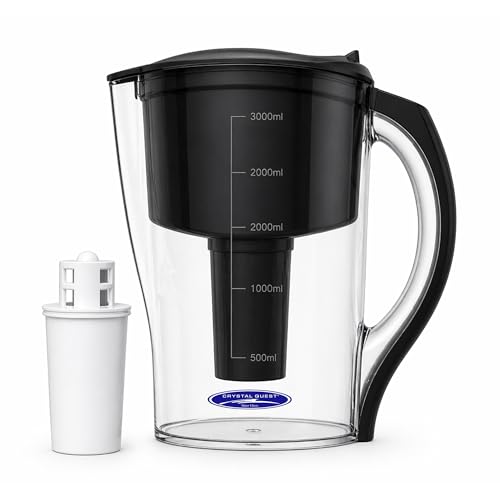
The Crystal Quest pitcher stands apart with its staggering filter lifespan claim: up to 2500 gallons, translating to 6-12 months of continuous use. For well water owners who are tired of replacing filters every 1-2 months, this dramatically reduces maintenance burden. The 6-stage filtration system targets fluoride, chlorine, and heavy metals, and the compact 9″ x 4″ x 11″ footprint fits easily on a fridge shelf.
Real-world user feedback is mixed on performance. One user measured only a minor TDS reduction (260 to 233 ppm), suggesting that while the filter handles sediment and some heavy metals, it is not aggressive on dissolved solids. For well water that is only moderately hard (under 200 ppm TDS), the Crystal Quest provides adequate taste improvement and long filter life at a budget-friendly entry point. The 12-cup capacity is generous enough for a small family.
The BPA-free ABS plastic construction is durable, and the flip-top lid makes refilling convenient. However, the mixed feedback on actual filtration effectiveness means this pitcher is best suited for well water that is already relatively clean but could use some polishing — not for high-TDS or heavily contaminated wells where you need zero-TDS output or microbial reduction.
Why it’s great
- Exceptional filter lifespan — up to 2500 gallons
- Compact 9″ x 4″ footprint fits fridge shelves
- 6-stage filtration includes fluoride reduction
- Budget-friendly initial purchase
Good to know
- Limited TDS reduction measured in real-world tests
- 12-cup capacity moderate for large families
- Some users report color mismatch between listing and received product
7. Brita Wave 10 Cup Water Pitcher
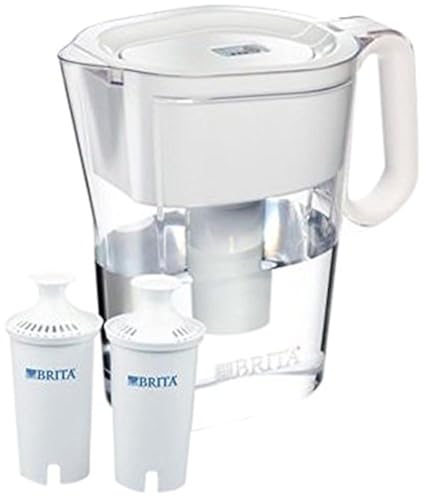
The Brita Wave is the household name for a reason — it reliably reduces chlorine taste and odor, plus it is certified to reduce copper, cadmium, and mercury. For well water that is already treated with a whole-house sediment filter or softener, a Brita can polish the remaining taste and provide a familiar, easy-to-use solution. The 10-cup capacity is adequate for individuals or couples, and the flip-top lid and electronic filter indicator make maintenance simple.
The critical limitation for well water users: the Brita Wave does NOT have ion-exchange media to reduce TDS, nor does it have a sediment pre-filter. Well water with visible sediment or high mineral content will clog the standard carbon filter quickly, reducing flow rate and shortening the 40-gallon rated lifespan. The handle design has also drawn complaints — the 10-cup is heavy when full, and the handle can feel awkward for smaller hands.
If your well water has already been pre-filtered by a whole-house system and you just want the final taste polish, the Brita Wave works fine for a budget-friendly entry point. But if you’re dealing with raw well water that has visible particles or a strong mineral taste, the Brita will underperform and require frequent filter changes, ultimately costing more per gallon than a purpose-built well water pitcher.
Why it’s great
- Familiar brand with reliable carbon filtration
- Electronic filter indicator takes the guesswork out
- Certified to reduce copper, cadmium, mercury
- Low upfront purchase cost
Good to know
- No TDS reduction — high mineral content remains
- No sediment pre-filter — clogs quickly on dirty well water
- 40-gallon filter life is short for well water applications
- Lift handle feels awkward when full
FAQ
Will a standard Brita filter work on my well water?
Does ZeroWater remove beneficial minerals from well water?
What should I do if my well water has bacteria or coliform?
How often should I replace filters on well water?
Final Thoughts: The Verdict
For most users, the water filter pitcher for well water winner is the ZeroWater 32-Cup because it reduces TDS to zero — the single metric that matters most for hard or metallic-tasting well water. If you want microbe and sediment protection that a gravity pitcher cannot match, grab the Piurify Compact with its UltraFiltration membrane. And for the broadest contaminant coverage including fluoride and PFAS without stripping beneficial minerals, nothing beats the Clearly Filtered Pitcher.