Tap water traveling through old pipes or municipal systems can carry heavy metals like lead that accumulate in your body over time, directly impacting your family’s long-term health. A dedicated filtration system that specifically targets this contaminant is not a luxury—it is a non-negotiable barrier between your drinking glass and a chronic bioaccumulative toxin.
I’m Mohammad Maruf — the founder and writer behind AirfryerBite. I have spent thousands of hours cross-referencing NSF certification standards, filter media compositions, and real-world customer longevity data to separate marketing claims from measurable performance in the water filtration space.
To help you cut through the conflicting claims, these reviews isolate each unit’s verified test data, filter stage count, and certified contaminant reduction rates so you can confidently choose the single best water filter pitcher for lead removal without wasting time on underbuilt alternatives.
How To Choose The Best Water Filter Pitcher For Lead Removal
Lead is a heavy metal that standard activated-carbon-only filters do not reliably capture. The difference between a pitcher that looks good on a shelf and one that actually removes lead comes down to three specific factors you must verify before buying.
Verify NSF/ANSI 53 Certification for Lead
Not every “lead-reducing” filter holds third-party certification. NSF/ANSI 53 is the industry standard that requires independent lab testing to prove the filter reduces lead from 150 ppb to below 10 ppb. If the product page does not explicitly state this certification, the filter may still pass some lead through. Always look for the official mark rather than trusting vague marketing language.
Match Pitcher Capacity to Your Daily Consumption
A 10-cup pitcher works for one or two people, while a 27-cup dispenser fits families or offices that go through several liters a day. Larger units reduce refill frequency but take up more fridge or counter space. Measure your shelf height and width before buying—a tall dispenser may not fit under a standard cabinet overhang.
Calculate Total Filter Replacement Cost
Some budget-friendly pitchers require filter changes every 2 to 3 months, which quickly adds up to more than the pitcher itself within a year. Mid-range and premium filters often last 6 months or 120 gallons, cutting long-term expense. Compare the cost per gallon, not just the upfront pitcher price, to see the true value.
Quick Comparison
On smaller screens, swipe sideways to see the full table.
| Model | Category | Best For | Key Spec | Amazon |
|---|---|---|---|---|
| ZeroWater 12-Cup | Pitcher | Lowest TDS water | 5-stage Ion Exchange | Amazon |
| Waterdrop ED04B-Mega | Electric Dispenser | Large household use | 200-gallon filter life | Amazon |
| Brita UltraMax 27-Cup | Dispenser | Fridge-friendly storage | 99% lead reduction | Amazon |
| LARQ 1.9L Pitcher | Pitcher | Design-conscious users | Nano Zero Carbon Filter | Amazon |
| Brita Large 10-Cup | Pitcher | Daily individual use | 6-month filter life | Amazon |
| Brita UltraMax Elite | Dispenser | Office or high-volume use | 27-cup capacity | Amazon |
In‑Depth Reviews
1. ZeroWater 12-Cup Ready-Read 5-Stage Pitcher

The ZeroWater 12-Cup uses a five-stage ion-exchange filtration process that pulls virtually all total dissolved solids (TDS) out of the water, including lead, chromium, and PFOA/PFOS. An integrated TDS meter lets you confirm the dissolved solids level before pouring, which is rare in this category and gives you objective proof that the filter is working. The 96-ounce capacity covers daily drinking needs for most households without taking up excessive fridge space.
Out of the box the included meter reads your starting TDS, and once the filter is primed the water tastes noticeably flatter and cleaner compared to standard carbon-only pitchers. The BPA-free plastic body and NSF-certified lead reduction give you independent verification that the unit performs as advertised. The spigot design speeds up dispensing when you fill a coffee machine or large bottle.
The tradeoff is that the filter media is aggressive—it pulls out beneficial minerals too, and users in areas with very high starting TDS report the filter can saturate within a few weeks rather than the advertised longer window. Replacement filters cost more per unit than Brita or Waterdrop equivalents, so the long-term expense is higher despite the moderate pitcher price.
Why it’s great
- Built-in TDS meter provides real-time verification of filter effectiveness
- Five-stage ion exchange removes lead and other heavy metals comprehensively
- Spigot enables convenient pouring for larger containers
Good to know
- Filters can wear out faster than expected in high-TDS water areas
- Replacement filter cost adds up significantly over time
- Removes beneficial minerals along with contaminants
2. Waterdrop ED04B-L Mega Electric Dispenser
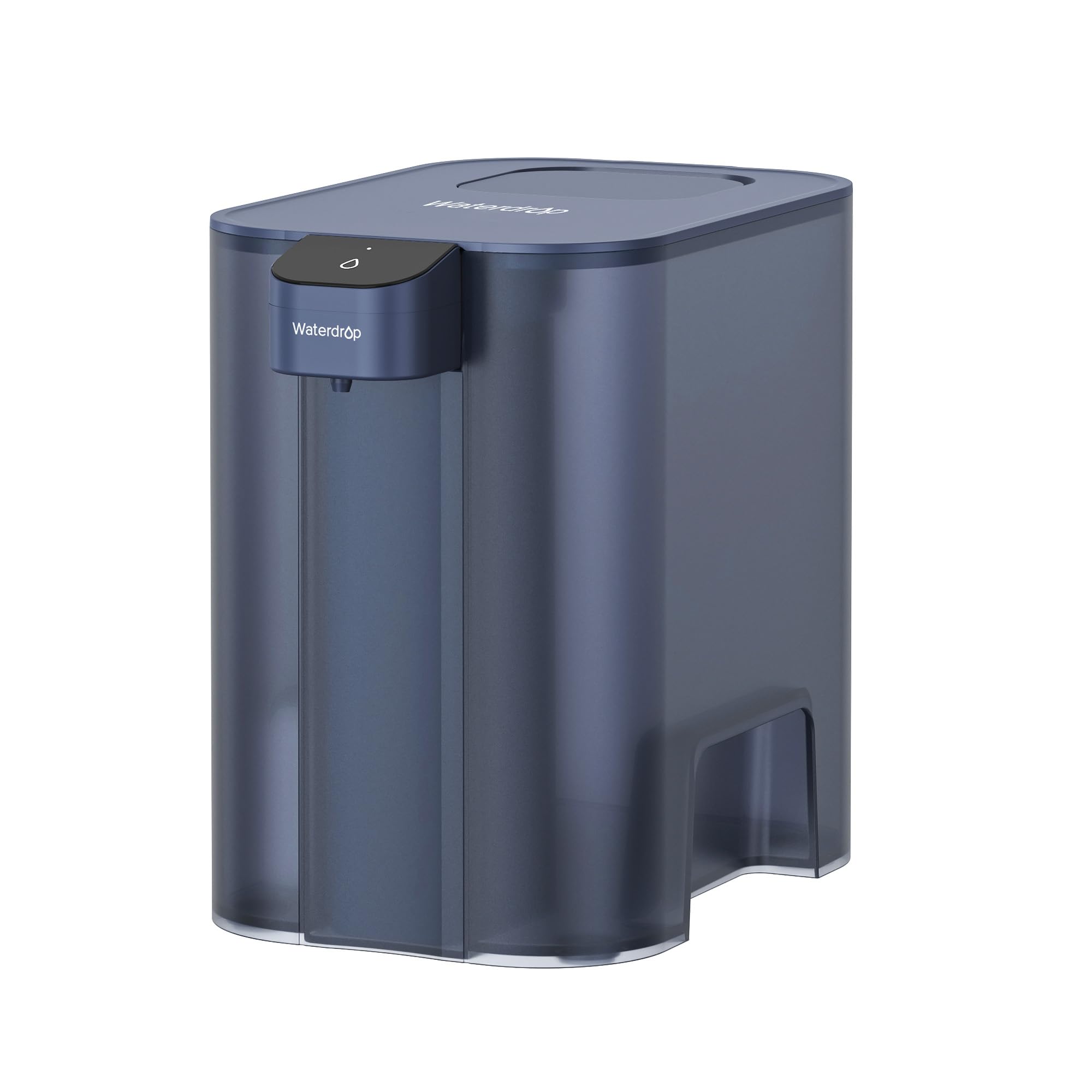
The Waterdrop ED04B-Mega breaks the conventional pitcher mold with a fully electric design that filters water on demand rather than letting it sit in a reservoir. The 27-cup capacity is effectively the largest in this lineup, and the unit requires no manual pouring—just press the button and filtered water flows out instantly. It is certified under NSF/ANSI 42, 53, 401, and 372, covering lead reduction alongside chlorine, mercury, benzene, and bisphenol A.
The built-in rechargeable battery lasts up to 30 days on a full charge, which makes this unit practical for both kitchen countertops and locations without easy access to a wall outlet, such as an RV or cabin. Filter life extends to 200 gallons or roughly three months, which beats most standard pitcher filters by a significant margin. The carbon block media does not lower TDS, so mineral content remains intact while contaminants are removed.
The electric pump introduces a mechanical component that could fail over time, and replacing the filter requires following the specific reset process or the indicator may not sync correctly. Some users also note the unit does not fit under low fridge shelves due to its height, so countertop placement is the default setup. The battery indicator can sometimes be inconsistent if the unit is not charged regularly.
Why it’s great
- Electric dispensing removes the need to lift and pour a heavy pitcher
- 200-gallon filter lifespan reduces replacement frequency dramatically
- Runs on rechargeable battery for placement flexibility
Good to know
- Does not reduce total dissolved solids for those who prefer low-TDS water
- Electric components add complexity and potential failure points
- Tall design may not fit under standard refrigerator shelves
3. Brita UltraMax 27-Cup Dispenser
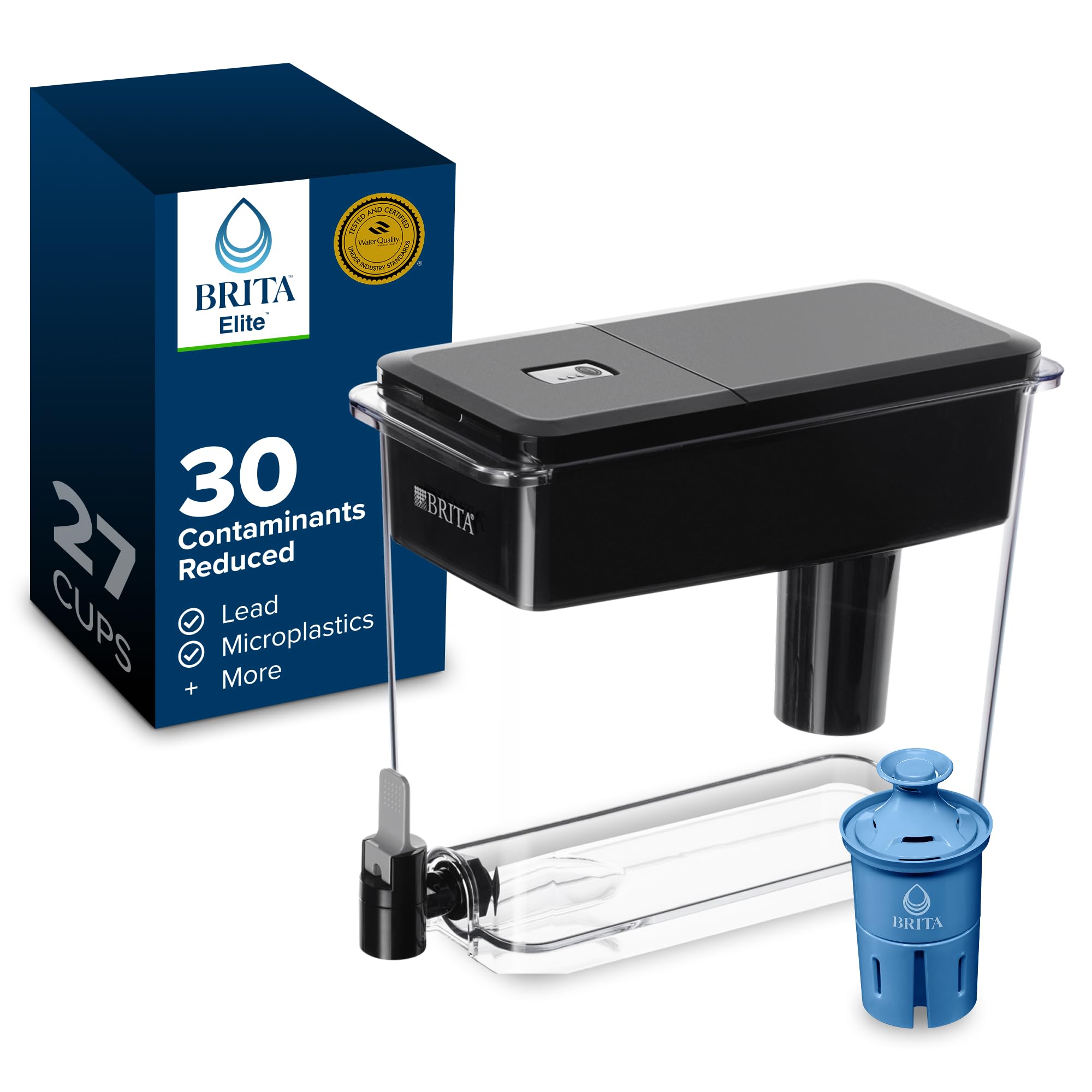
The Brita UltraMax dispenses 27 cups of filtered water through a precision spigot while sitting compactly on a countertop or refrigerator shelf. It uses the Elite filter, which is NSF certified to remove 99 percent of lead and reduce over 30 other contaminants including microplastics, mercury, and chlorine. The filter lasts 120 gallons or approximately six months, which places it well above average in lifespan for this price tier.
The SmartLight indicator on the lid changes color to remind you when to replace the filter, removing guesswork from maintenance. The locking lid prevents spills when you tilt the dispenser, and the spigot pours fast enough to fill a water bottle in a few seconds without dripping between uses. Users consistently report a noticeable improvement in taste over tap water, especially in areas with strong chlorine or metallic flavor profiles.
Some units have developed leaks at the spigot seal after a few months of heavy use, though Brita’s customer support typically addresses this with replacements. The dispenser does not remove as many total dissolved solids as the ZeroWater system, so if you want completely mineral-free water this is not the best choice. The plastic construction feels sturdy but will scratch if cleaned with abrasive pads.
Why it’s great
- SmartLight indicator eliminates guesswork for filter replacement timing
- Elite filter lasts six months and removes 99 percent of lead
- Spigot pours quickly without dripping
Good to know
- Occasional spigot leaks reported after extended use
- Does not reduce TDS as aggressively as ion-exchange systems
- Plastic body can scratch if cleaned too aggressively
4. LARQ Water Filter Pitcher 1.9L
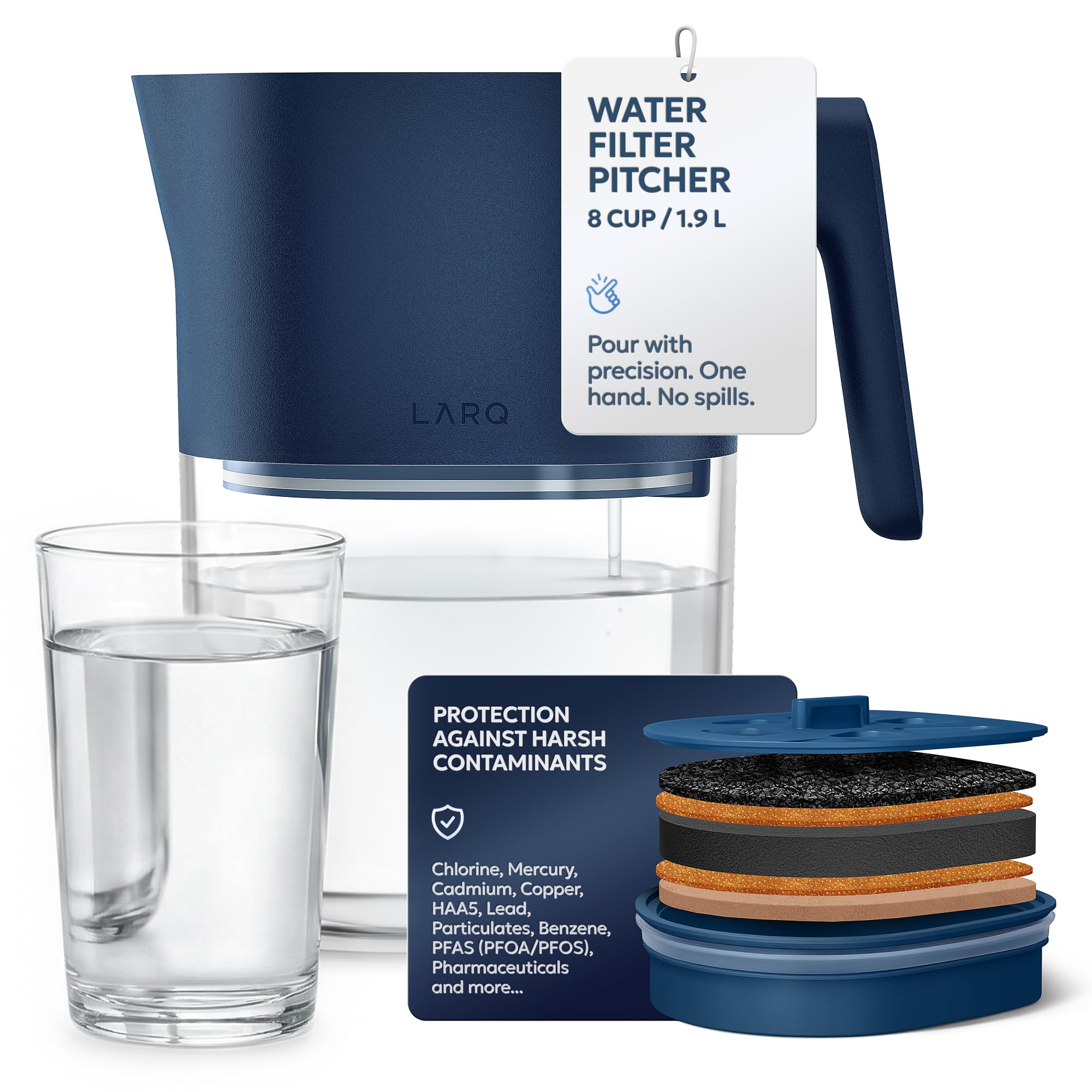
The LARQ pitcher uses a plant-based Nano Zero carbon filter independently tested to NSF/ANSI 42, 53, and 401 standards, removing chlorine, lead, mercury, PFAS, benzene, VOCs, and microplastics down to 40 microns. The 1.9-liter capacity suits daily hydration for one or two people, and the clear carafe combined with the Monaco Blue accent trim makes it one of the more visually refined options in the category. The BPA/BPS-free build and dishwasher-safe parts simplify cleaning.
Filtration speed is competitive—about 1 minute 34 seconds per cup—and the water comes out tasting crisp without the chemical aftertaste typical of many municipal supplies. The ergonomic handle and compact footprint mean it slides easily onto a fridge shelf or counter corner. Each filter lasts up to 60 gallons or around three months, replacing more than 450 single-use plastic bottles over its service life.
Replacement filters can be harder to source than Brita or ZeroWater cartridges, and the glass carafe is fragile if dropped. The lid requires a manual push to open rather than flipping up automatically, which is a minor friction point during refills. The first few cups after installing a new filter may appear cloudy due to harmless carbon fines, though this clears quickly.
Why it’s great
- Plant-based carbon media reduces lead, PFAS, and microplastics effectively
- Clear glass carafe with stylish design stands out visually
- Dishwasher-safe parts simplify maintenance
Good to know
- Replacement filters are less widely available than major brand cartridges
- Glass carafe is more fragile than plastic alternatives
- Lid does not flip open automatically during refill
5. Brita Large 10-Cup Pitcher with Elite Filter

The Brita Large 10-Cup Pitcher delivers the company’s Elite filter technology in a classic form factor that fits easily on refrigerator shelves. It reduces 99 percent of lead, chlorine taste and odor, cadmium, mercury, benzene, and asbestos according to NSF standards. The Longlast+ filter lasts up to 6 months or 120 gallons, which makes the per-gallon cost among the lowest in the category for a certified lead-reducing filter.
The easy-fill locking lid stays secure during pouring, and the ergonomic handle makes one-handed operation comfortable even when full. The filter reminder sticker on the body helps track change intervals without needing batteries or electronics. Users consistently praise the taste improvement, with many reporting they drink more water overall after switching from tap or bottled alternatives.
It uses a sticker indicator rather than an electronic meter, so you have to remember to update it manually. The plastic construction, while durable, can develop hairline cracks around the lid hinge area after extended use according to some long-term reviews. The 10-cup capacity works well for individuals or couples but requires frequent refills for larger families.
Why it’s great
- Elite filter removes 99 percent of lead and lasts 120 gallons
- Low per-gallon cost compared to most competitors
- Compact shape fits standard fridge shelves easily
Good to know
- Sticker indicator requires manual tracking and is easy to forget
- Plastic lid hinge may show wear after extended use
- 10-cup capacity requires frequent refills for larger households
6. Brita UltraMax Elite 27-Cup Dispenser
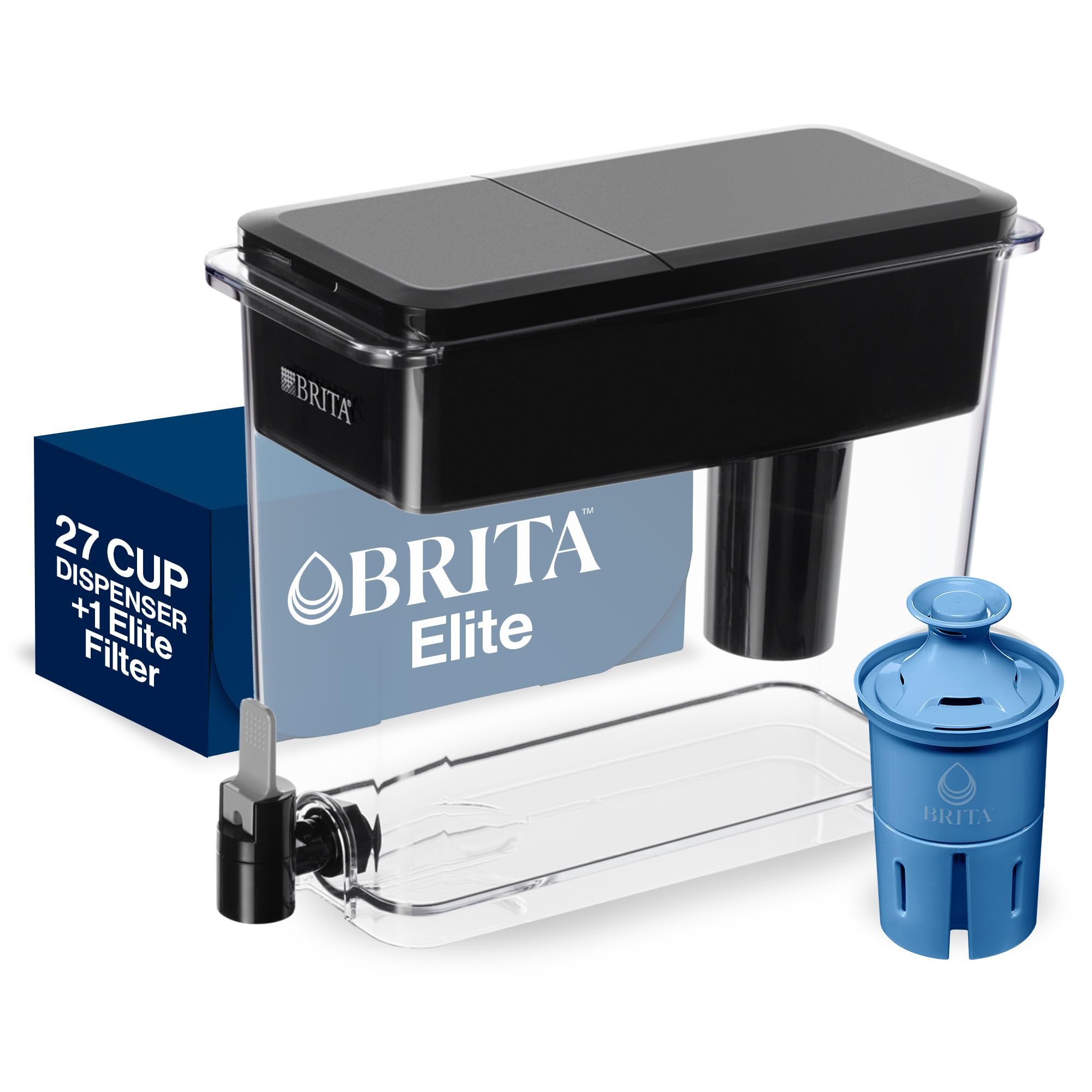
The Brita UltraMax Elite holds 27 cups of water and uses the Elite filter to reduce lead by 99 percent along with microplastics, chlorine, copper, and mercury. The design fits on standard countertops or refrigerator shelves, and the spigot pours smoothly without dripping. The flip-top lid makes refilling easy, and the large clean-water reservoir holds roughly twice the volume of the top reservoir, so you get more usable water between refills.
This model is equally at home in a busy kitchen, an office break room, or a daycare center where multiple people need quick access to filtered water. Users note that the water tastes significantly cleaner than tap, especially in areas with chlorinated supply. The filter change sticker indicator helps you track when the six-month replacement cycle is due, though some users wish it were electronic.
Some units have experienced cracking in the plastic tank after a couple of months of use, which appears to be a quality-control issue rather than a universal design flaw. The electronic filter monitor, when present, tracks time rather than actual water volume, which can lead to premature or delayed replacement recommendations. The unit is heavy when full and may be difficult for some users to lift onto a high shelf.
Why it’s great
- 27-cup capacity significantly reduces refill frequency for families or offices
- Elite filter reduces lead by 99 percent across 120 gallons of use
- Smooth spigot pours without dripping or splashing
Good to know
- Plastic tank cracking reported in isolated cases
- Electronic monitor tracks elapsed time rather than actual volume filtered
- Heavy when full, making it awkward to lift onto refrigerator shelves
FAQ
Does NSF/ANSI 53 certification guarantee the filter removes lead?
Why does my ZeroWater filter need replacement after only two weeks?
Can I use a lead-removal pitcher with well water?
Final Thoughts: The Verdict
For most users, the water filter pitcher for lead removal winner is the ZeroWater 12-Cup because it combines an integrated TDS meter with five-stage ion-exchange media that delivers the lowest measurable lead and dissolved solids of any pitcher reviewed. If you want the convenience of electric dispensing and a massive 27-cup capacity, grab the Waterdrop ED04B-Mega. And for a certified lead-reducing filter with the lowest long-term replacement costs, nothing beats the Brita UltraMax 27-Cup.