The water coming out of your tap likely carries a chemical cocktail you never signed up for. Microplastics and PFAS — the so-called “forever chemicals” — are showing up in municipal supplies and well water across the country, linked to hormonal disruption, immune suppression, and certain cancers. A standard pitcher filter will not touch them; you need a system engineered to catch particles smaller than one micron and adsorb the molecular bonds that make PFAS nearly indestructible in the environment.
I’m Mohammad Maruf — the founder and writer behind AirfryerBite. I have spent the past year cross-referencing laboratory certifications, membrane specifications, and real-world customer data for every serious water filter that claims to handle microplastics and PFAS, evaluating each unit by its NSF standards, micron rating, filtration stages, and certified contaminant reduction.
This guide surveys seven purpose-built systems ranging from compact countertop units to high-capacity gravity filters — each tested for its ability to remove the contaminants that matter most. Whether you rent an apartment or own a home, there is a setup that will deliver cleaner water without breaking your setup budget. The water filter for microplastics and pfas you choose should be backed by third-party certification, not marketing language.
How To Choose The Best Water Filter For Microplastics And PFAS
Not every filter marked “PFAS reduction” actually meets an enforceable standard. The marketing landscape is littered with vague claims, so you need to sort by certification tier, filtration technology, and real-world contaminant data. Three decisions determine whether your investment actually removes microplastics and PFAS or simply improves taste.
Look for NSF/ANSI 53 and 58 Certifications
NSF/ANSI 53 covers the reduction of heath-related contaminants including PFAS (PFOA and PFOS) in point-of-use systems. NSF/ANSI 58 applies specifically to reverse osmosis systems. If a filter claims PFAS removal without one of these two certifications, treat the claim as unverified. Some products also carry NSF 42 for aesthetic effects like chlorine taste — useful but irrelevant for microplastic and PFAS removal.
Match Micron Rating to Contaminant Size
Microplastics range from visible fragments down to about 1 micron. PFAS molecules are far smaller — measured in nanometers. A standard 1-micron carbon block may catch larger microplastic fibers but will let PFAS slip through. For PFAS you need reverse osmosis (pore size around 0.0001 micron) or a specialized catalytic carbon block certified to NSF 53. Gravity ceramic filters typically operate at 0.5 to 1 micron; they are reliable for microplastics but must be paired with a carbon core for PFAS adsorption.
Decide Between Under-Sink, Countertop, and Gravity Systems
Under-sink units like the Frizzlife SP99 fit below the cabinet and free up counter space but require plumbing and drilling for the dedicated faucet. Countertop reverse osmosis systems (DREO, VonWater, Aigerri) need zero installation — plug in and run — but occupy a footprint on your kitchen counter and need refilling of the raw water tank. Gravity systems like the Culligan MaxClear filters use no electricity and are portable for camping but rely on the user topping up an upper chamber, and flow rate depends on gravity pressure. Your household layout and willingness to drill a hole determine the best format.
Quick Comparison
On smaller screens, swipe sideways to see the full table.
| Model | Category | Best For | Key Spec | Amazon |
|---|---|---|---|---|
| Frizzlife SP99 | Under-Sink | Mineral retention + PFAS | 0.5 micron, 8-layer carbon block | Amazon |
| iSpring US31 | Under-Sink | High capacity / low cost | 3-stage, 10,000 gallon capacity | Amazon |
| DREO RO Countertop | Countertop RO | No-install RO with TDS display | RO membrane, 3:1 drain ratio | Amazon |
| VonWater CT910 | Countertop RO | Smart touchscreen + 5 volume presets | 0.0001 micron RO, NSF 53/58 | Amazon |
| Aigerri UV RO | Countertop RO+UV | UV sanitation + high efficiency | 5:1 pure-to-drain, 5L tank | Amazon |
| Culligan MaxClear 4-Pack | Gravity Replacement | Berkey/gravity system owners | Ceramic + carbon, NSF 42 | Amazon |
| Santevia Glass System | Countertop Gravity | Alkaline + mineral addition | 8L glass, pH +2.0, mineral stones | Amazon |
In‑Depth Reviews
1. Frizzlife SP99 Under Sink Water Filter System
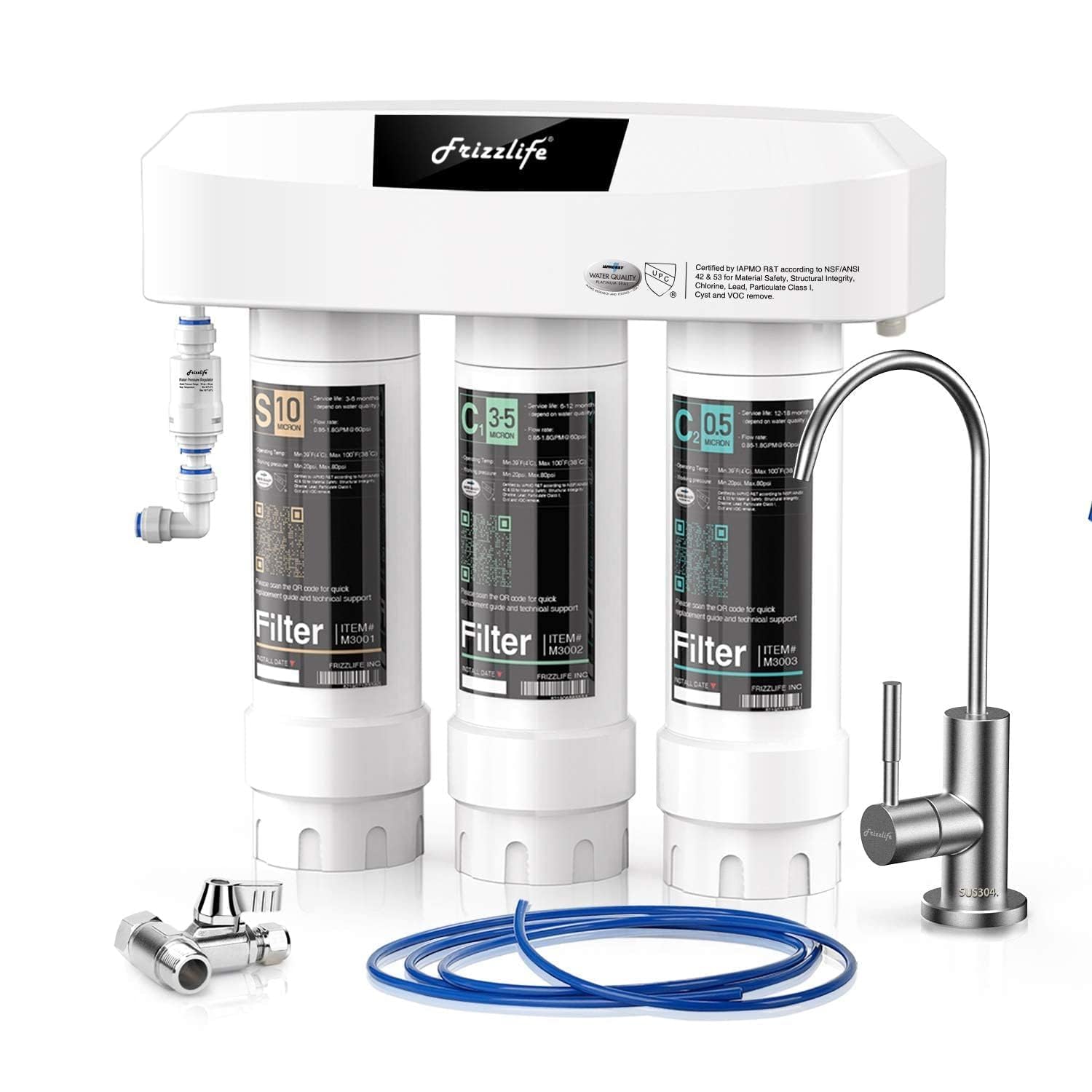
The Frizzlife SP99 hits the sweet spot between certified PFAS reduction and mineral retention. Its 8-layer compounded filter cartridge operates at 0.5 micron — roughly 10 times finer than many standard carbon blocks — and carries NSF/ANSI 42 and 53 certification for lead, chlorine, taste, odor, and particulate class. The system is explicitly tested to reduce PFOA and PFOS, making it a reliable under-sink defender against forever chemicals.
Installation takes roughly 15 minutes if you follow the video guide; the brushed nickel faucet included in the box feels weighty for its price tier. The filter housing is designed to reject up to 600 PSI of water pressure, which addresses the common complaint of cracked plastic bodies on cheaper units. Flow rate sits around 1.3 GPM — you will fill a glass in about three seconds — and the compact footprint saves significant cabinet space.
One nuance: Frizzlife specifically states the SP99 does NOT reduce TDS. If your primary concern is total dissolved solids or hard-water scaling, you need a reverse osmosis system instead. But for targeted removal of PFAS, microplastics, chloramine, and heavy metals while keeping beneficial calcium and magnesium, the SP99 delivers outstanding certified performance at a mid-range entry point.
Why it’s great
- NSF 42 & 53 certified for PFOA/PFOS reduction
- 0.5 micron rating catches microplastics effectively
- Retains healthy minerals while removing contaminants
- Quick 15-minute DIY installation
Good to know
- Does not reduce TDS — not for hard water
- Faucet spout reported as slightly thin by some users
- Replacement filters must be changed every 6-12 months
2. iSpring US31 Under Sink Water System

The iSpring US31 is a 3-stage under-sink system built around a sediment filter, granular activated carbon, and a carbon block cartridge. It is tested against NSF/ANSI 58 standards and reduces PFAS along with chlorine, heavy metals, and sediment. The standout spec here is the 10,000-gallon filter life — that is roughly a full year of heavy household use before you need to change cartridges, keeping per-gallon costs extremely low.
Installation uses a patented top-mounted fastener so you can secure the faucet entirely from above the counter — no contorting under the sink. The transparent first-stage housing lets you visually inspect the sediment filter for discoloration, a small but useful maintenance cue. Flow rate reaches 1 GPM, about twenty times faster than a typical pitcher filter, and the brushed nickel faucet included looks clean on most kitchens.
A single leak complaint after nine months appears in the customer data, with the threaded sediment housing being the weak point. iSpring resolved the issue with a free replacement unit and pressure regulator, but the incident suggests periodic inspection of the housing seals is wise. Overall the US31 is a high-value workhorse for households that want NSF-tested PFAS reduction and long filter intervals without moving to reverse osmosis.
Why it’s great
- 10,000-gallon filter life — very low maintenance
- NSF 58 tested for PFAS reduction
- Top-mounted faucet install avoids under-sink crawling
- Transparent first-stage housing for visual checks
Good to know
- Plastic housing threads may crack under high pressure
- Not designed to reduce TDS
- Requires drilling a hole for the faucet if none exists
3. DREO Reverse Osmosis Water Filter Countertop
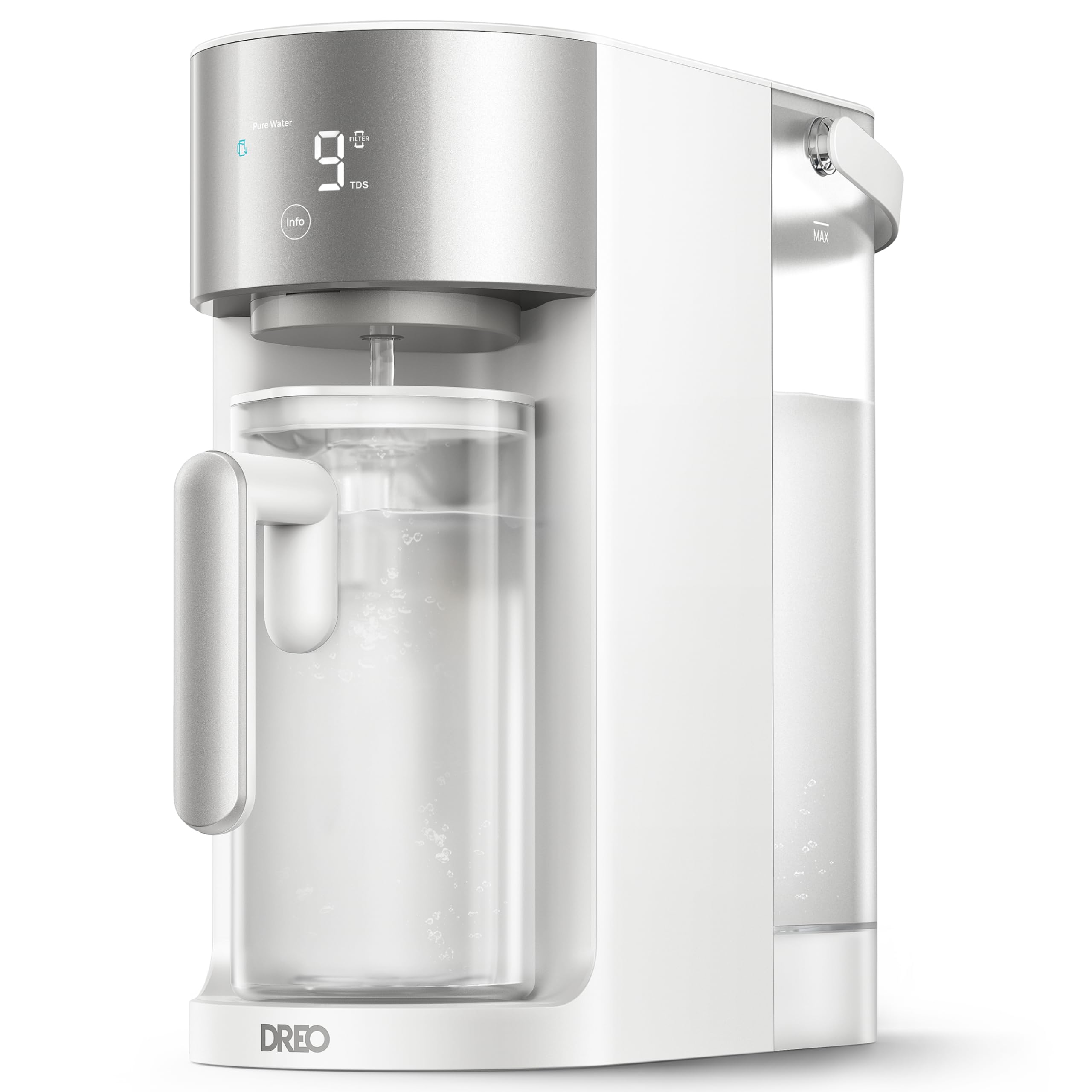
DREO’s entry into the countertop RO space brings an SGS-tested 7-in-1 membrane that removes 99.99 percent of over 1,000 impurities including PFOA, PFOS, chlorine, and fluoride. The unit requires zero installation — fill the 3-liter raw tank, plug it into a standard outlet, and the auto-fill pitcher starts filling as soon as the purification cycle finishes. A real-time TDS display shows both raw and filtered water readings so you can verify performance at a glance.
The 3:1 pure-to-drain ratio means you waste one gallon of water for every three gallons of purified water, which is better than traditional RO systems that run at 1:1 or worse. The self-cleaning function flushes internal tubing automatically, reducing biofilm buildup between filter changes. The filter cartridge lasts 6 to 12 months depending on feed water quality and replaces with a quarter-turn twist — no tools required.
Customer reports show TDS dropping from roughly 375–450 ppm to 12–50 ppm, which is impressive for a countertop unit. The trade-off is slower flow: about one liter per minute during active filtration, so you may wait a moment between fill cycles if you are filling large cook pots. For drinking water, coffee, and tea preparation, the DREO delivers RO-quality water without the under-sink plumbing commitment.
Why it’s great
- SGS tested to NSF 58 — verified PFAS removal
- Real-time TDS display for raw and filtered water
- Zero plumbing installation needed
- Self-cleaning flush prevents filter fouling
Good to know
- Slow flow rate — about 1 liter per minute
- Countertop footprint requires dedicated space
- Occasional backflush dump needed for optimal TDS
4. VonWater CT910 Countertop RO System
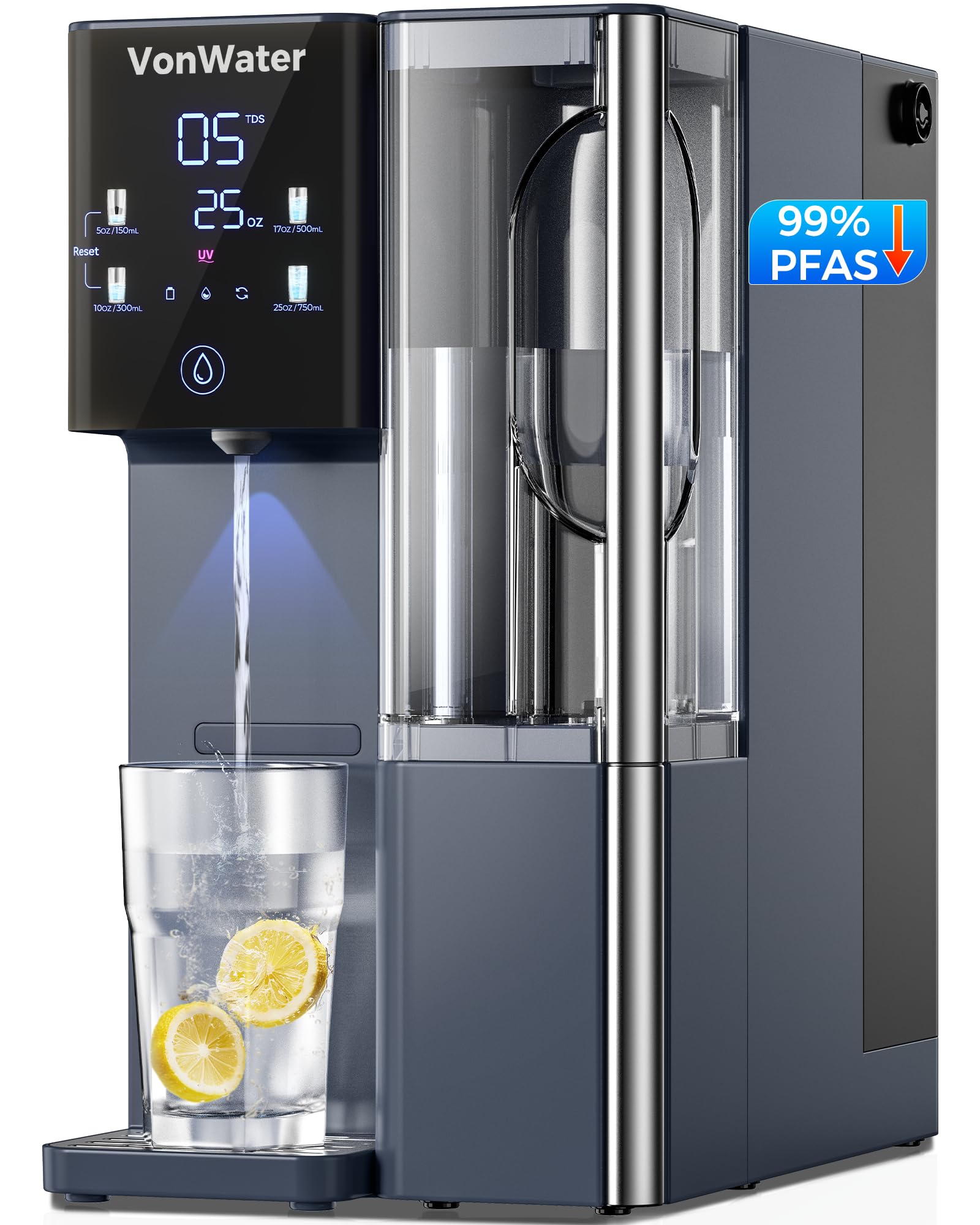
The VonWater CT910 packs multiple NSF certifications — 53 (PFAS/heavy metals), 58 (RO systems), 42 (chlorine/taste), and 372 (lead-free construction) — into a compact countertop form factor. Its all-in-one filter achieves 0.0001 micron pore size, which is small enough to remove bacteria, viruses, and the vast majority of PFAS molecules. The system also reduces TDS significantly, making it appropriate for well water or municipal sources with high dissolved solids.
A bright LED touchscreen gives you five preset volume options (4oz, 8oz, 12oz, 17oz, or unlimited), so you can dispense exactly the amount you need without watching the cup. The auto-production technology starts purifying water automatically when the tank level drops. The 3:1 pure-to-drain ratio and 528-gallon filter life mean fewer replacements than many first-generation countertop RO units, and the twist-and-lock filter swap takes about three seconds.
The detachable 1.2-liter pitcher is handy for drinking and small cooking tasks, though the system’s overall water capacity means you may need to refill the raw tank more frequently than larger-reservoir competitors. Setup is genuinely plug-and-play — no drilling, no faucet mounting. Customer ratings are consistently high, with multiple users noting the dramatic improvement in taste and the reliable TDS reduction from local tap water.
Why it’s great
- Quad NSF certification (53, 58, 42, 372)
- 0.0001 micron removes bacteria and PFAS
- Touchscreen with 5 preset dispensing volumes
- 3-second twist-and-lock filter replacement
Good to know
- 1.2L pitcher is relatively small for families
- Countertop footprint may feel bulky
- Requires periodic descaling in hard water areas
5. Aigerri UV Countertop Reverse Osmosis Water Filter
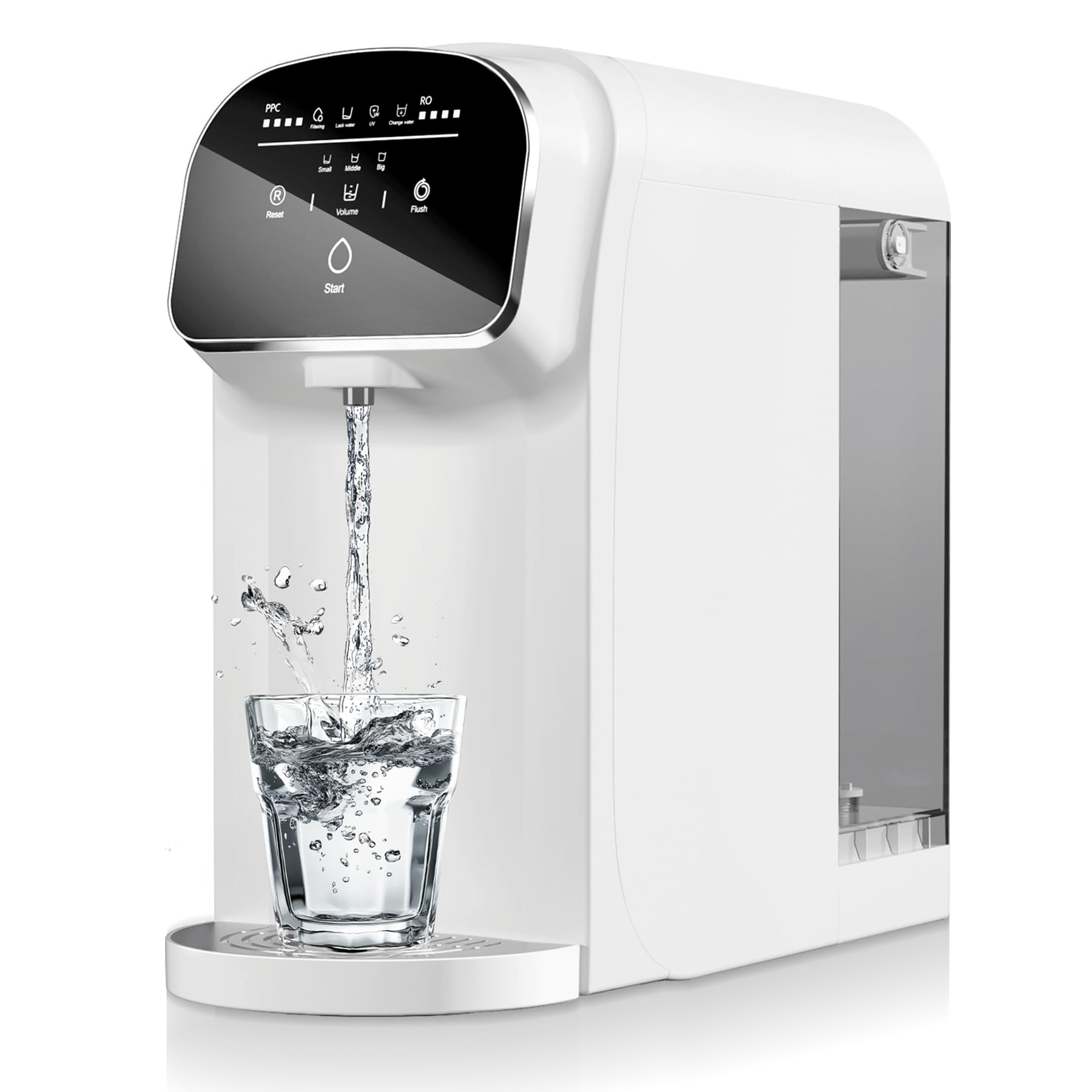
Aigerri’s countertop RO system adds an ultraviolet sterilization stage on top of the standard 5-stage reverse osmosis filtration, targeting microbial contaminants that may survive the membrane. The 5:1 pure-to-drain ratio is among the best on the market — five gallons of purified water for every one gallon of wastewater — which matters both for water bills and environmental footprint. The system holds a 5-liter raw water reservoir and a 2-liter purified tank, enough for a small household’s daily drinking needs without constant refilling.
The unit includes two replacement filter cartridges at purchase (a PPC pre-filter and the RO membrane), extending its effective service life to roughly 529 gallons before you need to buy more. The control panel is intuitive, with a filter-change indicator and water volume options for dispensing. At 16.1 inches closed and 21.7 inches with the lid open, you need at least 22 inches of vertical clearance under cabinets — measure before you buy if you plan to keep it on the counter.
Customers consistently praise the water taste and the compact footprint, though several note that the instruction manual is vague and the water flow is slower than traditional under-sink RO. The UV stage adds peace of mind for users on well water or for anyone concerned about bacterial regrowth in the storage tank. For a premium countertop solution that combines membrane filtration with UV disinfection, the Aigerri represents a thoughtful mid-to-upper-tier choice.
Why it’s great
- Industry-leading 5:1 pure-to-drain ratio
- UV sterilization kills bacteria beyond RO
- 5L raw tank + 2L purified — good capacity
- Comes with 2 replacement filters included
Good to know
- Slow water flow during active filtration
- Requires 22-inch overhead clearance
- Manual lacks detailed troubleshooting guidance
6. Culligan MaxClear 7” Gravity Water Filter 4-Pack
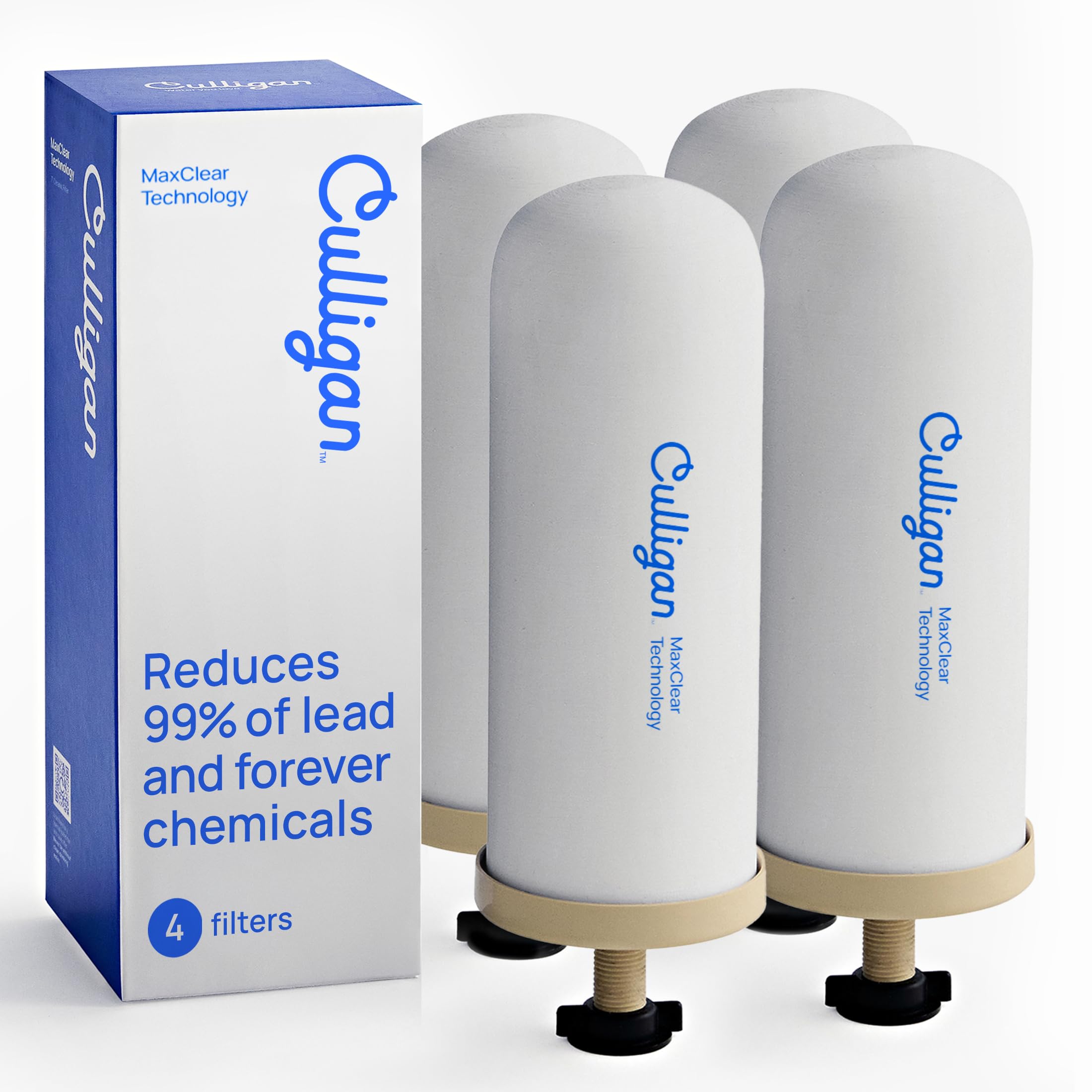
The Culligan MaxClear filters are replacement cartridges designed for gravity-fed systems compatible with Berkey, ProOne, Doulton, and similar countertop dispensers. The combination of a ceramic outer shell and a proprietary carbon-based core is NSF/ANSI 42 certified to reduce microplastics, lead, and total PFAS — a rare trifecta for a non-electric filter. Each filter lasts up to 6 months under daily use, so the 4-pack covers a full two years before you need to reorder.
Gravity filtration has distinct advantages: no electricity, no wastewater, no plumbing. You simply fill the upper chamber and let gravity pull water through the ceramic and carbon media. The flow rate is reasonable compared to generic carbon-only gravity filters — customers consistently report 3x faster flow versus other brands — and the filtration is gentle enough to leave beneficial minerals in the water. This makes the MaxClear a strong option for off-grid use, emergency preparedness, or renters who cannot modify their kitchen plumbing.
The major caveat is compatibility: these are 7-inch filters sized for standard gravity systems, but they must be the correct diameter for your specific dispenser. A small number of customer reports mention premature clogging or cracking after 3 weeks — a risk with any ceramic filter element — but the majority report excellent performance and noticeably cleaner taste. If you already own a Berkey-style system and want certified microplastic and PFAS reduction without switching to RO, this is your most cost-effective upgrade.
Why it’s great
- NSF 42 certified for microplastics, lead, and total PFAS
- No electricity, no plumbing, no wastewater
- Fits major gravity systems (Berkey, ProOne, Doulton)
- 4-pack provides 2 years of filtration
Good to know
- Ceramic elements can crack if handled roughly
- Flow naturally slower than RO or under-sink systems
- Not suitable for reducing TDS or hard water
7. Santevia Glass Water Filtration System
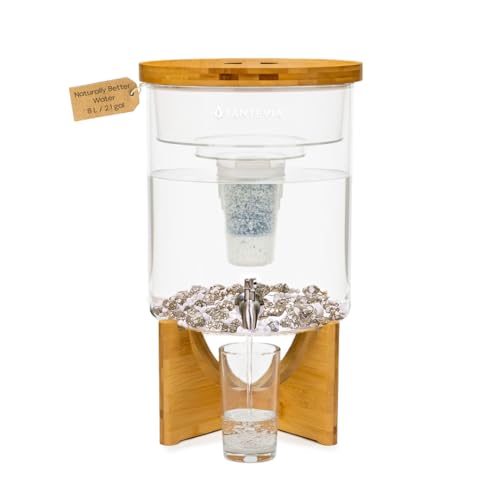
The Santevia Glass System takes a fundamentally different approach: instead of pushing water through a membrane under pressure, it uses gravity filtration through a MINA fluoride-reducing filter and mineral stones to simultaneously remove contaminants and add back calcium, magnesium, and potassium. The system is tested to NSF Standards 42, 53, and 401, covering chlorine reduction, heavy metals (including lead), PFAS/PFOS, and VOCs. The 8-liter glass reservoir is paired with a bamboo stand, making it one of the more aesthetically deliberate water filters on the market.
The MINA filter lasts about 2 months, while the mineral stones have a 2-year lifespan — a longer service interval than many comparable gravity filters. The alkalization stage raises pH by up to 2.0 units, which some users report helps with acid reflux and general hydration comfort. The glass construction avoids plastic leaching concerns that some buyers have with polycarbonate reservoirs, and the included faucet-style dispenser makes filling water bottles or coffee makers easy.
That said, a vocal minority of customers point out that the system relies heavily on the mineral stones for filtration and that the underlying mechanism is not a traditional sealed filter cartridge. One reviewer called it “not a filter” because the main contaminant reduction depends on the proprietary MINA element rather than a ceramic or carbon block. For users who want verified PFAS and microplastic reduction with the benefit of added alkalinity and minerals, the Santevia delivers — but only if you stay diligent about replacing the MINA filter every 2 months.
Why it’s great
- Gorgeous glass + bamboo design for countertop use
- Adds beneficial minerals and raises pH
- NSF 42, 53, 401 tested — covers PFAS and lead
- 8L capacity suits families and frequent drinkers
Good to know
- MINA filter must be changed every 2 months
- Some users question the filtration depth vs. RO systems
- Price sits at the premium end of the gravity category
FAQ
Can a standard pitcher filter remove microplastics and PFAS?
Does reverse osmosis remove beneficial minerals along with PFAS?
How often should I replace the filter in a PFAS-rated system?
Are under-sink filters difficult to install myself?
Final Thoughts: The Verdict
For most users, the water filter for microplastics and pfas winner is the Frizzlife SP99 because it combines NSF 42 and 53 certified PFAS reduction with mineral retention, a 0.5-micron rating that catches microplastics, and an under-sink footprint that frees up counter space. If you want a no-install reverse osmosis system with TDS monitoring and verified NSF 58 certification, grab the DREO RO Countertop. And for an electricity-free gravity setup that handles microplastics and PFAS while camping or during power outages, nothing beats the Culligan MaxClear 4-Pack when paired with a compatible dispenser.