Waking up groggy after what felt like a full night’s rest is a frustrating puzzle—one that a precision watch for sleep tracking is uniquely built to solve. The difference between guessing you slept well and knowing exactly how much deep, light, and REM sleep you logged comes down to the optical heart-rate sensor and the algorithm running on your wrist.
I’m Mohammad Maruf — the founder and writer behind AirfryerBite. I’ve spent over a thousand hours reverse-engineering the spec sheets and real-world reviews of sleep-focused wearables to separate marketing claims from metrics that actually predict recovery.
The market has narrowed quickly, but finding the right match still requires understanding which models track HRV and SpO2 without draining the battery. This guide ranks the nine most capable models to help you find the best watch for sleep tracking based on real sensor accuracy and nightly comfort.
How To Choose The Best Watch For Sleep Tracking
Not every smartwatch with a heart-rate sensor delivers meaningful sleep data. The gap between a watch that simply logs hours in bed and one that accurately distinguishes light, deep, and REM sleep comes down to sensor sampling frequency, battery endurance, and algorithm transparency. Here are the four specifications that separate serious sleep wearables from casual step counters.
Optical Heart-Rate Sensor and Sampling Rate
A sleep-tracking watch relies on photoplethysmography (PPG) sensors to measure blood volume changes. The sensor’s sampling rate—how many times per second it reads your pulse—determines whether the algorithm can detect the subtle heart-rate deceleration that defines deep sleep. Look for watches that advertise “continuous” or “real-time” HR monitoring during sleep rather than interval-based readings that miss critical transitions.
Battery Life That Matches Your Sleep Schedule
The most accurate sleep-tracking watch is the one you actually wear to bed every night. Models that require nightly charging force you to choose between battery management and data continuity. A battery life of at least seven days in smartwatch mode (or three to four days with always-on display) ensures you can collect a full week of sleep trends without skipping a night because the watch needed to charge.
Sleep-Stage Algorithm and HRV Integration
Heart Rate Variability (HRV) is the metric that correlates most directly with recovery quality, yet many budget watches ignore it. A watch that integrates HRV into its sleep score provides a far more granular picture of how your nervous system recovered overnight. Premium models from Garmin, Fitbit, and Google Pixel Watch now calculate a daily readiness score that factors in overnight HRV, resting heart rate, and SpO2 variability.
Comfort and Wrist-Fit Consistency
Sleep tracking introduces a unique ergonomic demand: the watch must sit flush against the skin for eight consecutive hours without causing irritation. Silicone bands that trap sweat, bulky cases that catch on pillows, and heavy steel backs that slide during the night all degrade sensor contact. A lightweight polymer case with a breathable, low-profile band improves both data quality and long-term compliance.
Quick Comparison
On smaller screens, swipe sideways to see the full table.
| Model | Category | Best For | Key Spec | Amazon |
|---|---|---|---|---|
| Garmin vívoactive 5 | Premium | HRV & Sleep Coaching | 11-day battery, AMOLED | Amazon |
| Google Pixel Watch 4 | Premium | Pixel Integration | 30-hour battery, Gemini AI | Amazon |
| Garmin Instinct 3 Solar | Rugged | Multi-Day Expeditions | Unlimited solar battery | Amazon |
| Samsung Galaxy Watch Ultra | Premium | Samsung Ecosystem | 60-hour battery, LTE | Amazon |
| Amazfit T-Rex 3 Pro | Rugged | Offline Maps & Battery | 25-day battery, AMOLED | Amazon |
| Apple Watch SE 3 | Mid-Range | iPhone Integration | 18-hour battery, SE | Amazon |
| Amazfit Active 2 Premium | Mid-Range | Round Design & Value | 10-day battery, AMOLED | Amazon |
| Fitbit Versa 2 | Mid-Range | Alexa & Classic Fitbit | 6+ day battery, AMOLED | Amazon |
| Fitbit Inspire 3 | Entry-Level | Minimalist & Budget | 10-day battery, slim | Amazon |
In‑Depth Reviews
1. Garmin vívoactive 5

The Garmin vívoactive 5 hits the sweet spot where sleep-tracking depth meets everyday wearability. Its AMOLED display is bright enough for outdoor legibility, yet the 11-day battery life means you never have to choose between charging and wearing it overnight. The Body Battery energy monitoring uses overnight HRV, sleep score, and stress data to calculate a readiness metric that actually correlates with how you feel in the morning.
Real users consistently report that the automatic nap detection and sleep coaching—which includes personalized tips for improving your sleep duration and quality—are among the most actionable in this price range. The sensor array tracks wrist-based heart rate, SpO2, and respiration rate simultaneously, and the morning report aggregates everything into a single glanceable summary. The fiber-reinforced polymer case keeps the weight low enough that side-sleepers rarely notice it.
The vívoactive 5 lacks advanced smartwatch features like voice assistants and app stores, but that design constraint is exactly what makes its sleep data so consistent: no background processes drain the battery or interfere with sensor sampling. For anyone who prioritizes sleep analytics over app ecosystem, this is the most balanced wearable on the market.
Why it’s great
- Exceptional 11-day battery eliminates overnight charging anxiety
- Body Battery readiness score integrates sleep, HRV, and stress into one metric
- Lightweight and comfortable for side-sleepers
- No subscription fees for sleep analytics
Good to know
- No onboard music storage for phone-free listening
- Nap detection can occasionally produce false positives
- Lacks voice assistant and third-party app store
2. Google Pixel Watch 4

The Google Pixel Watch 4 marks a turning point for sleep tracking on Wear OS, largely because Google finally integrated Fitbit’s sleep-stage algorithms into a polished hardware package. The Actua 360 domed display is 50% brighter than the previous generation, yet the battery now pushes to 30 hours—enough to get you through a full day and night with a short top-up the next morning. The side charging dock delivers 15 hours of power in 15 minutes, which practically eliminates the traditional Wear OS charging friction.
The sleep-tracking suite includes automatic sleep stage detection, a daily sleep score, and integration with the Loss of Pulse Detection safety feature. Real-world reviews highlight that the watch’s ability to detect A-fib irregularities and track SpO2 during sleep rivals dedicated medical wearables. The Gemini AI assistant can answer sleep-related questions by pulling data from the Fitbit backend, though the constant upsell to Fitbit Premium remains a minor annoyance.
Where the Pixel Watch 4 truly excels is ecosystem cohesion. For Android users with a Pixel phone, the watch unlocks seamless Google integration—Fitbit data syncs directly into the Health Connect framework, and the AI-powered quick replies keep you connected without reaching for your phone. The 41mm case size and silicone band are comfortable for all-night wear, though the polished aluminum housing can show micro-scratches over time.
Why it’s great
- Fitbit-level sleep algorithms on a Wear OS platform
- Ultra-fast charging makes nightly charging a non-issue
- Loss of Pulse Detection adds safety layer during sleep
- Deep Google ecosystem integration for Android users
Good to know
- Requires Fitbit Premium subscription for full analytics
- Scratches more easily than competitors with sapphire glass
- Battery life still trails Garmin by several days
3. Garmin Instinct 3 Solar

The Garmin Instinct 3 Solar is not a watch designed around sleep tracking—it is a rugged outdoor tool that happens to deliver exceptional sleep data because its solar-charging lens and MIP display allow for unlimited battery life in smartwatch mode. That infinite endurance is the single most critical feature for sleep tracking: you will never take it off to charge. The 50mm fiber-reinforced polymer case is MIL-STD-810 certified for thermal and shock resistance, yet the watch remains comfortable enough for 24/7 wear.
The sleep monitoring suite includes advanced sleep stages, a sleep score, and Pulse Ox tracking. The MIP (Memory In Pixel) display is the clearest in direct sunlight of any watch on this list, and the button-based interface works reliably even with gloves. Real-world users who switched from an Apple Watch Ultra 2 report that the Instinct 3’s battery eliminates the nightly charging habit entirely, and the HRV and sleep data compare favorably with dedicated recovery wearables like WHOOP.
The built-in LED flashlight with variable intensities is a surprisingly useful bedside companion for late-night bathroom trips without waking your partner. The satellite connectivity and multi-band GPS are overkill for sleep tracking alone, but for anyone who combines overnight recovery tracking with multi-day backpacking or remote work, the Instinct 3 Solar is the only watch that does both without compromise.
Why it’s great
- Unlimited battery life with solar charging—never charge at night
- MIL-STD-810 durability for extreme environments
- MIP display is perfectly readable in direct sunlight
- Button interface works with gloves or wet hands
Good to know
- No AMOLED display for vibrant sleep visualizations
- Larger 50mm case may feel bulky for small wrists
- No music storage or voice assistant
4. Samsung Galaxy Watch Ultra
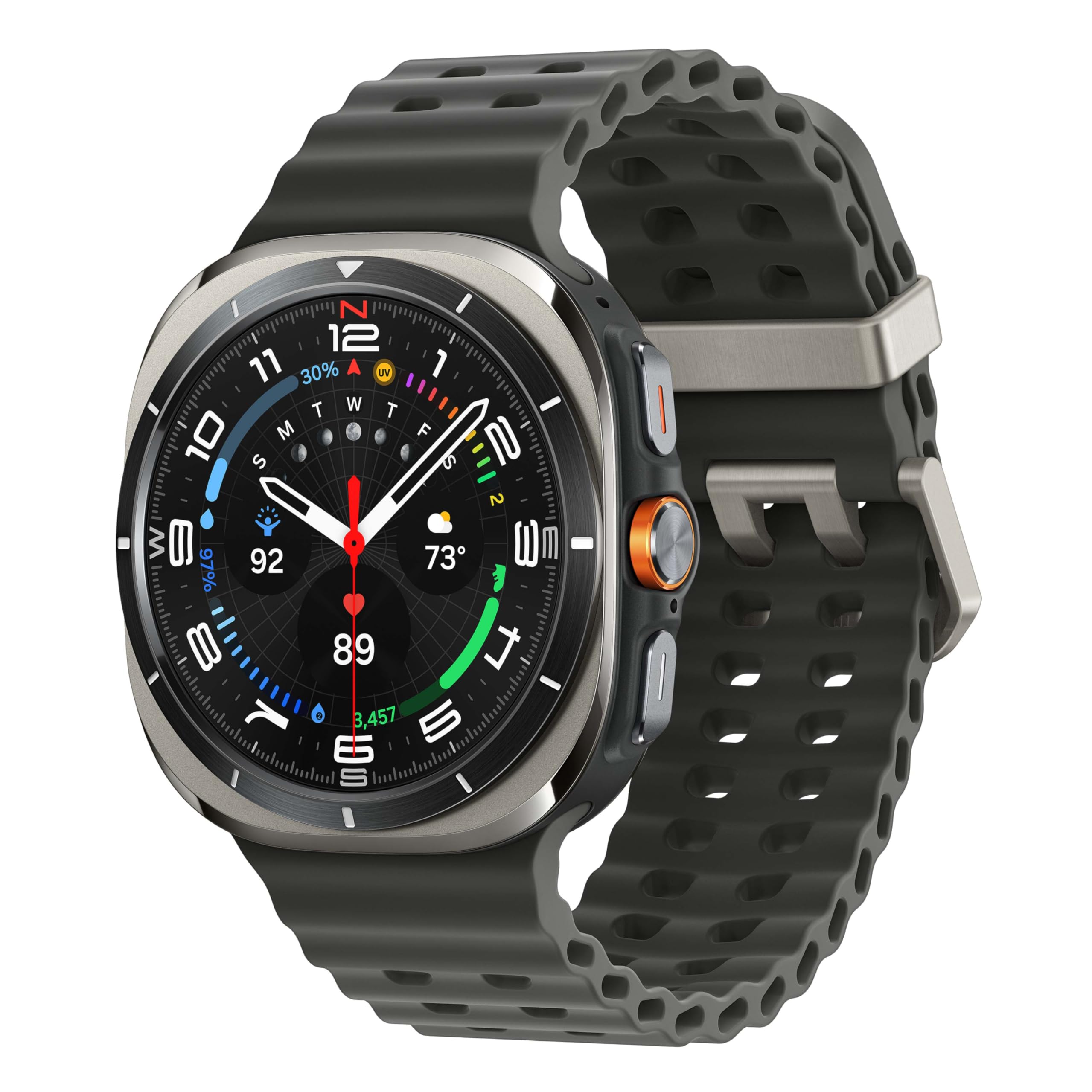
The Samsung Galaxy Watch Ultra is the most comprehensive sleep-tracking smartwatch for deep Samsung ecosystem users. Its titanium case and 10 ATM water rating make it durable enough for ocean swimming and alpine hiking, but the real value for sleep tracking lies in the Galaxy AI-powered Energy Score. This metric combines overnight heart rate, HRV, sleep stages, and step count into a single daily readiness number that feels genuinely predictive.
The 47mm Super AMOLED display is crisp and bright, and the 590 mAh battery delivers up to 60 hours in typical use—enough for a full weekend away from the charger. The automatic sleep tracking detects naps and distinguishes between light, deep, and REM stages with a granularity that rivals Garmin’s first-party algorithms. Real-world users praise the automatic health check-up feature that captures heart rate, blood oxygen, and stress levels without manual initiation.
The Wear OS platform gives the Galaxy Watch Ultra access to Google Assistant, Google Maps, and the Play Store, but the health-tracking depth still trails dedicated fitness wearables from Garmin. The 47mm size is also noticeably bulky for side-sleepers, though the included trail band helps mitigate pressure points. For Samsung phone owners who want premium smartwatch features alongside competent sleep tracking, this is the best option available.
Why it’s great
- Galaxy AI Energy Score integrates sleep, HRV, and activity metrics
- Titanium case and 10 ATM water resistance for extreme durability
- 60-hour battery life supports weekend trips without charging
- Full Wear OS app ecosystem
Good to know
- Health tracking depth lags behind Garmin for serious athletes
- 47mm case can be uncomfortable for side-sleepers
- Premium price point with no subscription-free analytics
5. Amazfit T-Rex 3 Pro
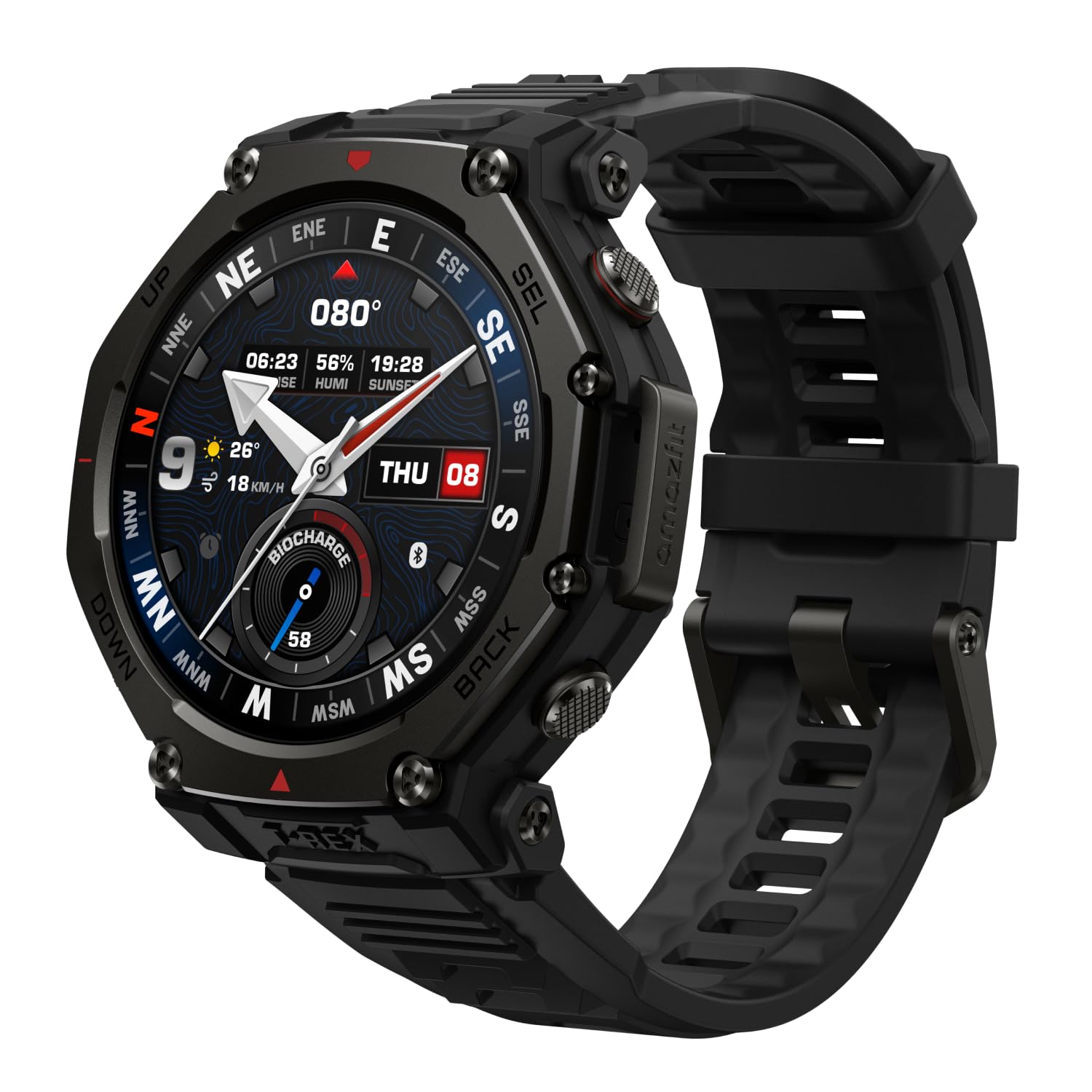
The Amazfit T-Rex 3 Pro is a rugged outdoor smartwatch that delivers competitive sleep tracking at a fraction of the price of Garmin’s premium models. The 48mm case features a titanium alloy bezel and sapphire glass, making it resistant to scratches and impacts that would mar aluminum-framed competitors. The 700 mAh battery provides up to 27 days of typical use, and the 3000-nit AMOLED display remains readable even under direct desert sunlight.
The sleep-tracking suite uses Amazfit’s BioTracker PPG sensor to monitor heart rate, SpO2, and breathing rate throughout the night. The Zepp app displays sleep stages, a sleep quality score, and integrates with the readiness metric. Real-world users highlight that the watch works well for cyclists and hikers who want offline maps and dual-band GPS during the day, while still delivering reliable overnight recovery data. The built-in two-color flashlight includes a red-light mode that minimizes melatonin disruption for late-night use.
The T-Rex 3 Pro supports Bluetooth calls and voice replies for Android users, and the Zepp app offers robust trend analysis without any subscription fees. The main downside is that the sensor accuracy is slightly behind Garmin and Fitbit for detecting short naps and sleep-onset latency. The 48mm size also makes it less ideal for people with smaller wrists who sleep on their side.
Why it’s great
- Exceptional 25-day battery life for uninterrupted sleep tracking
- Sapphire glass and titanium bezel offer premium durability
- Red-light flashlight mode preserves night vision
- No subscription fees for sleep analytics
Good to know
- Sleep-stage detection slightly less accurate than Garmin or Fitbit
- Large 48mm case can be uncomfortable for smaller wrists
- Zepp app has a learning curve compared to Garmin Connect
6. Apple Watch SE 3
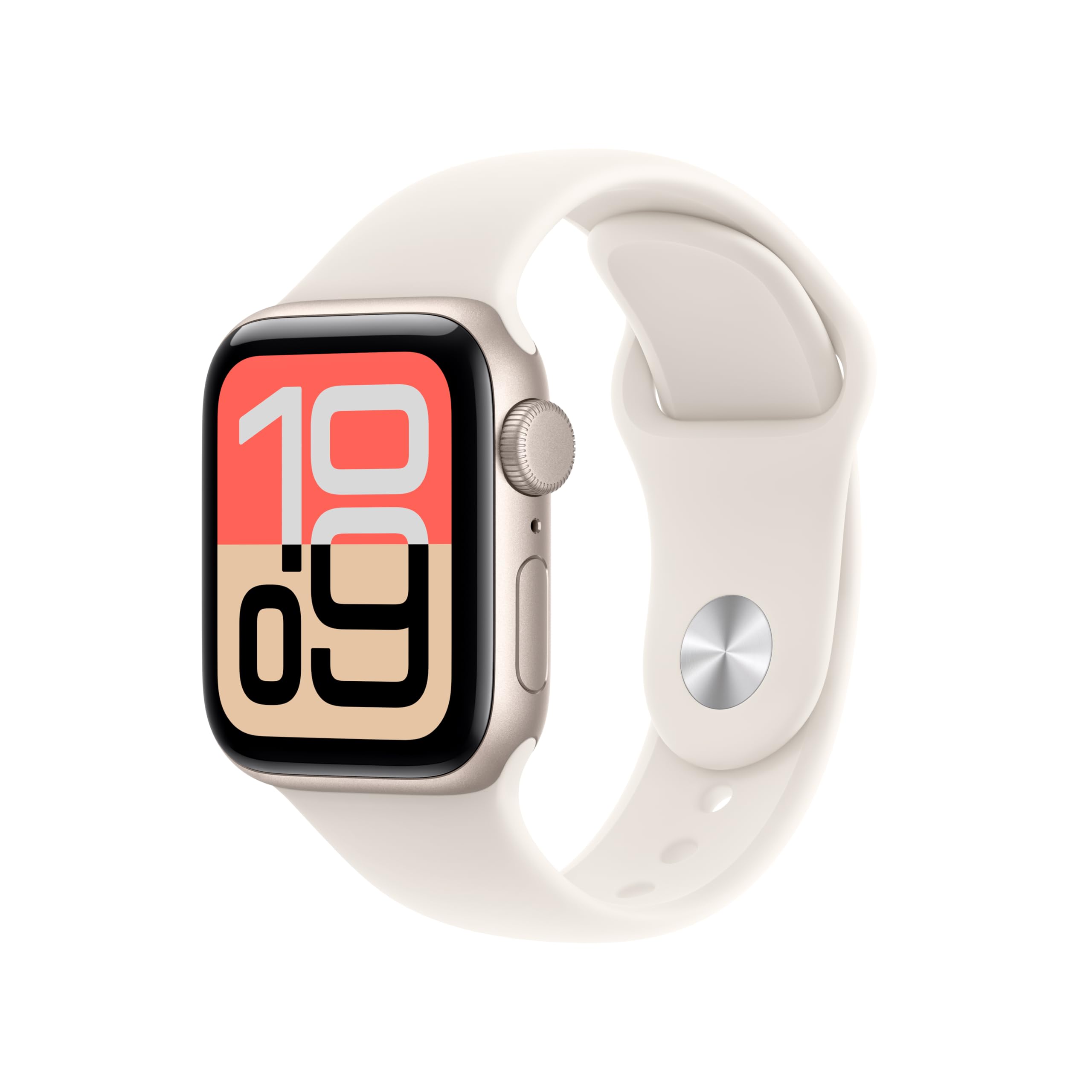
The Apple Watch SE 3 is the most accessible entry point into Apple’s sleep-tracking ecosystem, and the 2025 update brings sleep apnea notifications and temperature sensing for retrospective ovulation estimates. The S9 SiP chip handles the sleep algorithm efficiently, and the always-on display means you can check your sleep score without raising your wrist. The 18-hour battery life is the limiting factor—you will need to charge it daily, typically during a morning shower or evening wind-down.
The sleep-tracking features include automatic sleep stage detection, a daily sleep score, and integration with the Vitals app that surfaces long-term trends. The fall detection and car crash detection are passive safety features that work while you sleep. Real-world users consistently note that the SE 3 offers the best value in the Apple Watch lineup, delivering the same sleep-tracking core as the Series 10 without the blood oxygen sensor or always-on altitude display.
The biggest practical advantage of the SE 3 is its integration with iPhone—texts, calls, and Siri work seamlessly, and the Family Setup feature allows the watch to be used by children or older adults without their own iPhone. The aluminum case and Sport Band are comfortable enough for overnight wear, though the square face and flat back can create pressure points for some side-sleepers.
Why it’s great
- Seamless iPhone integration with automatic sleep stage tracking
- Sleep apnea notifications provide clinical-grade monitoring
- Fall and crash detection add safety during sleep hours
- Best value in the Apple Watch lineup
Good to know
- 18-hour battery requires nightly charging
- No blood oxygen sensor for SpO2 tracking during sleep
- Square face can be less comfortable than round watches for sleeping
7. Amazfit Active 2 Premium

The Amazfit Active 2 Premium is a mid-range smartwatch that punches above its weight class for sleep tracking, largely because of the BioTracker PPG sensor that samples heart rate continuously throughout the night. The 1.32-inch AMOLED display is bright and responsive, and the stainless steel build with sapphire glass gives it a premium feel that rivals watches costing twice as much. The 10-day battery life is sufficient for a full work week plus weekend analysis without charging.
The Zepp app provides detailed sleep stage breakdowns, SpO2 variability charts, and a sleep quality score that factors in restlessness and breathing rate. Real-world users compare the sensor accuracy favorably to the Garmin vívoactive series, noting that the Active 2 Premium captures HRV trends more consistently than earlier Amazfit models. The included leather band is comfortable for all-day wear, and the additional silicone sport band is ideal for sweaty workouts.
The watch supports over 160 sports modes, dual-band GPS, and offline maps, making it a capable fitness companion alongside its sleep-tracking duties. The Zepp Flow voice assistant allows speech-to-text replies for Android messages. The main trade-off is that the sleep-tracking algorithm occasionally misses short naps and can overestimate light sleep during the first hour of the night.
Why it’s great
- Sapphire glass and stainless steel build at a mid-range price
- BioTracker PPG sensor captures continuous HRV during sleep
- 10-day battery supports uninterrupted week-long sleep trends
- No subscription fees for full sleep analytics
Good to know
- Nap detection is less reliable than Garmin or Fitbit
- Leather band not ideal for sleep if you sweat heavily
- Zepp app interface is less polished than Garmin Connect
8. Fitbit Versa 2 Special Edition

The Fitbit Versa 2 Special Edition remains a strong contender for sleep tracking because of Fitbit’s mature sleep-stage algorithm and the always-on AMOLED display that quietly shows sleep stats without waking you fully. The sleep score is calculated from heart rate, restlessness, and time spent in each stage, and the smart wake alarm vibrates during light sleep to minimize grogginess. The 6-plus-day battery is enough for most users to get through a work week without charging.
The included Alexa integration allows you to set sleep timers, check weather, and control smart home devices by voice. The Special Edition bundles a premium jacquard woven band and an extra classic silicone band, giving you options for comfort during sleep. Real-world users who have worn Fitbit for years report that the Versa 2’s sleep-stage detection correlates well with subjective sleep quality, though the older model lacks the HRV tracking and nap detection found in newer Fitbit models.
The Versa 2 uses connected GPS rather than built-in GPS, which means you need your phone nearby for outdoor route mapping. The heart-rate sensor is reliable for overnight tracking but can miss rapid HRV changes during REM transitions. For users who want Alexa voice control and a proven sleep algorithm without paying flagship prices, the Versa 2 Special Edition is a solid mid-range choice.
Why it’s great
- Fitbit’s time-tested sleep-stage algorithm with smart wake alarm
- Alexa built-in for voice-controlled sleep environment
- Included jacquard woven band is comfortable for all-night wear
- 6+ day battery supports weekday sleep tracking
Good to know
- No built-in GPS—requires phone for route tracking
- Older model lacks HRV and nap detection of newer Fitbits
- Proprietary charger is not USB-C
9. Fitbit Inspire 3

The Fitbit Inspire 3 is the most affordable entry point for serious sleep tracking, and it delivers surprisingly accurate results for a device in this tier. The slim, lightweight design is barely noticeable on the wrist during sleep, and the 10-day battery life means you can wear it for a full week and a half without removing it for charging. The automatic sleep tracking detects time asleep, restlessness, and sleep stages, presenting the data as a daily Sleep Score out of 100.
The Stress Management Score uses heart rate and sleep data to tell you how well your body recovered overnight, and the smart wake vibrating alarm wakes you during the lightest sleep phase. Real-world users consistently praise the battery life—many report getting a full 10 days even with continuous heart rate monitoring enabled. The color touchscreen is responsive, though the smaller display means less data visible at a glance compared to larger smartwatches.
The Inspire 3 lacks built-in GPS, music storage, and third-party app support, but those omissions are exactly what keep the price accessible and the battery life long. For users who primarily want overnight sleep analytics, step tracking, and smartphone notifications without the bulk or cost of a full smartwatch, the Inspire 3 is the best value proposition on this list.
Why it’s great
- Extremely lightweight and comfortable for overnight wear
- 10-day battery life supports uninterrupted sleep data collection
- Automatic sleep stage detection with daily Sleep Score
- Stress Management Score provides recovery context
Good to know
- Small screen shows limited data at a glance
- No built-in GPS for outdoor activity tracking
- Proprietary charger is not USB-C
FAQ
How accurate are sleep-tracking watches compared to medical polysomnography?
Does wearing a watch to bed affect sleep quality?
What is the difference between sleep tracking and sleep coaching?
Final Thoughts: The Verdict
For most users, the best watch for sleep tracking winner is the Garmin vívoactive 5 because it combines precise HRV and sleep-stage detection with an 11-day battery that eliminates the need for nightly charging. If you want seamless iPhone integration and clinical-grade sleep apnea alerts, grab the Apple Watch SE 3. And for multi-day expeditions where charging is impossible, nothing beats the Garmin Instinct 3 Solar with its unlimited solar-charging battery.