Selecting an iron supplement that actually raises your ferritin without causing gut distress feels like a guessing game. Between non-heme vs. heme forms, cofactor inclusion, and bioavailability labels, the difference between a wasted bottle and a real solution comes down to specific formulation choices.
I’m Mohammad Maruf — the founder and writer behind AirfryerBite. I’ve spent years analyzing the formulation science behind micronutrient supplements, cross-referencing clinical data on absorption rates and gastrointestinal tolerance to separate marketing claims from measurable efficacy.
This guide breaks down the specific specs that matter — elemental iron type, cofactor dosage, and digestive tolerance — so you can match the right formula to your deficiency profile and find the best vitamin for anemia that fits your body’s actual needs.
How To Choose The Best Vitamin For Anemia
Not all anemia supplements are built the same. The wrong formulation can leave you with gut cramps and zero ferritin improvement. Focus on these three factors to pick a formula that actually works with your body.
Elemental Iron Type: Heme vs. Non-Heme
Non-heme iron (ferrous sulfate, ferrous bisglycinate) is plant-derived and requires stomach acid and vitamin C for absorption. Heme iron (from animal hemoglobin) bypasses many absorption barriers and is significantly gentler on the digestive tract. If you have a sensitive stomach or inflammatory bowel conditions, heme iron is the safer bet. Non-heme forms often require cofactors like vitamin C to reach adequate absorption rates.
Cofactor Completeness: B12, Folate, and Vitamin C
Anemia rarely stems from iron deficiency alone. Low B12, low folate, or a MTHFR gene mutation that prevents folic acid conversion can stall red blood cell production even with adequate iron intake. Look for active methylated forms — methylcobalamin (B12) and L-5-MTHF (folate) — plus vitamin C to enhance non-heme iron uptake. A formula skipping these often under-delivers on blood-building results.
Digestive Tolerance and Absorption Markers
Constipation, nausea, and metallic aftertaste are the top reasons people quit iron supplements. Ferrous bisglycinate and heme iron polypeptide are consistently associated with fewer GI side effects than standard ferrous sulfate. For a true stomach-friendly option, heme iron formulas require no food pairing and rarely cause cramping. Always check for “non-constipating” or “stomach friendly” claims backed by user verification rather than marketing fluff.
Quick Comparison
On smaller screens, swipe sideways to see the full table.
| Model | Category | Best For | Key Spec | Amazon |
|---|---|---|---|---|
| Hemeboost 11.6mg | Heme Iron | Gentle absorption | Heme iron polypeptide, 60 tablets | Amazon |
| KAPPA NUTRITION Iron 26mg | Multi-Iron Complex | Blood-building cofactors | 9-in-1 blend, 90 capsules | Amazon |
| Pure Encapsulations Folate 1000 | Methylfolate | MTHFR support | Metafolin L-5-MTHF, 90 capsules | Amazon |
| NovaFerrum All Good | Non-Heme Iron | Sensitive stomachs | 50mg iron, 90 servings | Amazon |
| Vitalibre Iron Complex | Non-Heme + Cofactors | Energy & absorption | 36mg ferrous bisglycinate, 60 vegan tablets | Amazon |
In‑Depth Reviews
1. Hemeboost 11.6mg Heme Iron

Hemeboost uses heme iron polypeptide derived from animal hemoglobin, which mirrors the form of iron your body naturally absorbs through food. At 11.6mg of elemental iron per tablet, it delivers a bioavailable dose that bypasses many of the absorption barriers that make non-heme forms unreliable — especially for individuals with low stomach acid or inflammatory gut conditions.
User bloodwork confirms its effectiveness: one reviewer saw ferritin stabilize after a hospital transfusion, and another noted the only supplement on Amazon that produced a measurable difference in lab results. The tablet is small and unflavored, making it easy to swallow even for those with pill aversion. Its gentle profile means it can be taken without food, a major advantage for morning routines or sensitive stomachs.
The price per serving sits at the higher end of the market, but the heme delivery mechanism and zero-constipation feedback justify the premium for anyone who has tried cheaper iron pills and quit due to side effects. It is also Halal-certified and free from common allergens, broadening its appeal across dietary restrictions.
Why it’s great
- Heme iron eliminates absorption and stomach issues for most users
- Documented bloodwork improvements in user reviews
- Safe for pregnancy and breastfeeding
Good to know
- Higher cost per tablet than non-heme alternatives
- Requires consistent daily use for 2+ weeks to feel effect
2. KAPPA NUTRITION Iron 26mg 9-in-1 Advanced Complex
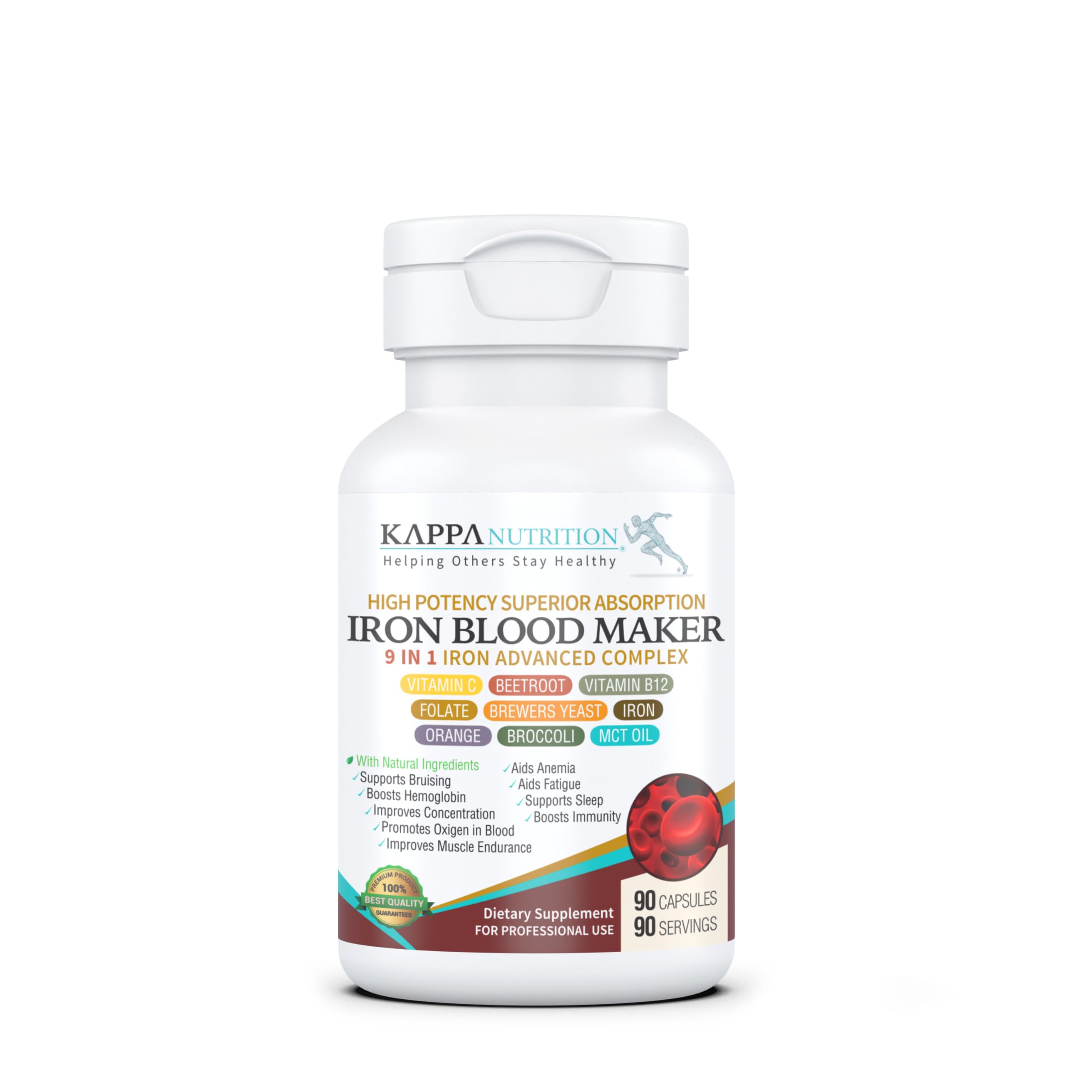
KAPPA NUTRITION’s formula packs the broadest cofactor profile in this lineup — iron (26mg), vitamin C (150mg), folate (667mcg DFE), B12, beetroot, brewers yeast, broccoli, and MCT oil. The theory: multiple synergistic ingredients targeting blood health from different angles. Practically, this means you get both iron repletion and nitric oxide support from beetroot plus energy via MCT oil, a unique combination rarely seen in standard iron supplements.
Real user lab results are striking: one reviewer reported ferritin rising from 9 to 27 ng/mL, iron from 23 to 38 mcg/dL, and saturation from 6% to 12% over two months with just one capsule daily. Another pre-surgery user raised hemoglobin from 9.6 to 14.2 g/dL in three weeks when adding this vitamin to their protocol. Those are clinical-grade improvements from an over-the-counter capsule.
The vegan capsule format and lack of flavor mean no aftertaste, and multiple reviews note zero constipation or nausea — a common dealbreaker for iron users. The 90-count bottle provides three months of daily dosing at a very accessible tier, making it a strong value relative to the ingredient breadth.
Why it’s great
- Hemoglobin increases documented in as little as 3 weeks
- 9 actives in one capsule reduce need for separate supplements
- No smell, no taste, no constipation issues
Good to know
- Non-heme iron may require vitamin C co-administration for optimal absorption
- Brewers yeast may not suit everyone with yeast sensitivities
3. Pure Encapsulations Folate 1000
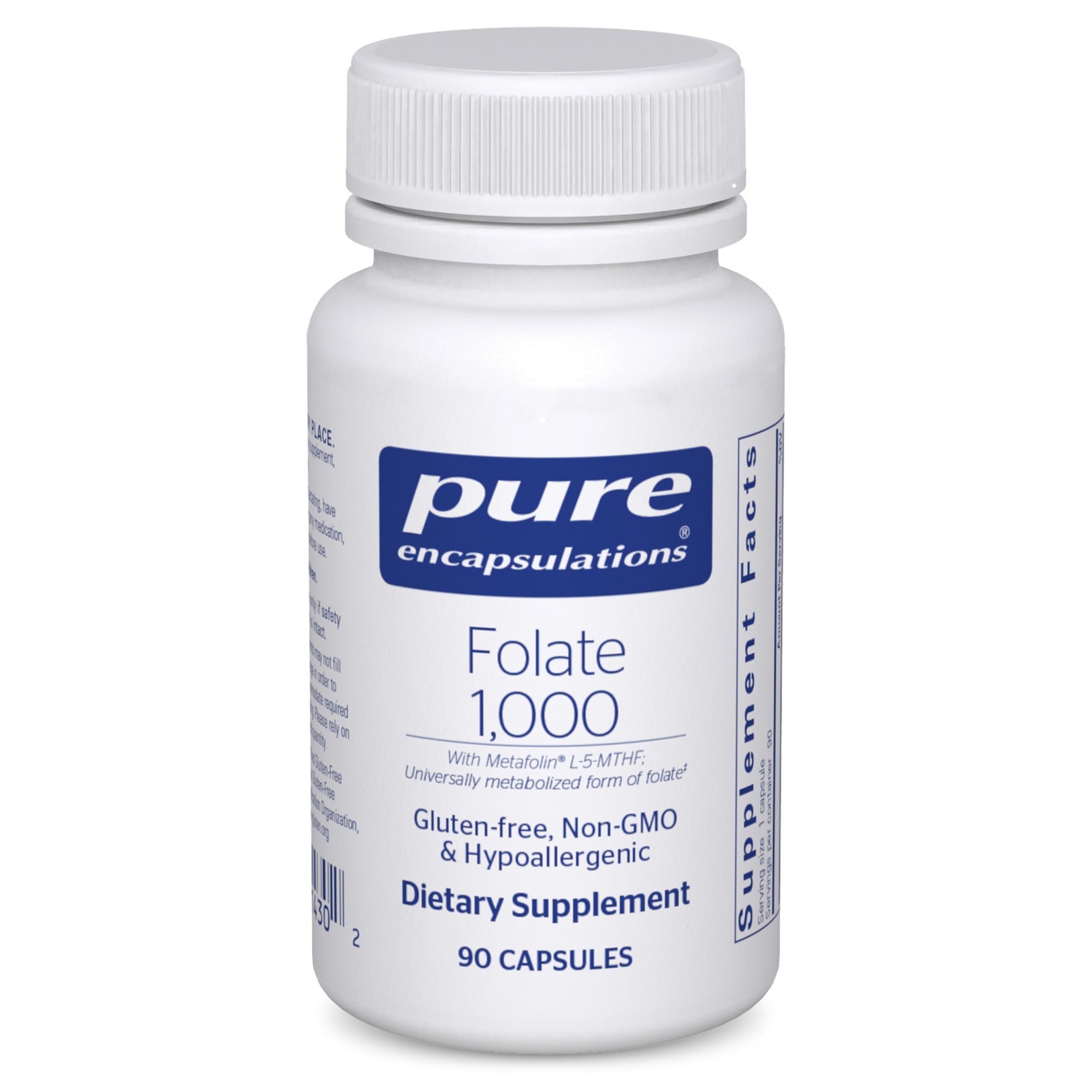
This is not a full-spectrum anemia formula — it’s a targeted methylfolate (L-5-MTHF) supplement delivering 1,667 mcg DFE per capsule. For individuals with MTHFR gene mutations that prevent conversion of synthetic folic acid into active folate, this is the precise active form needed for red blood cell production. Without adequate methylfolate, even high iron intake cannot sustain hemoglobin synthesis.
Pure Encapsulations maintains a strong reputation for third-party testing and label accuracy, backed by user feedback citing verified milligram-per-tablet consistency. One reviewer noted that this supplement “saved my husband after heart failure,” pointing to its role in cardiovascular support beyond basic anemia correction. The capsule is small and easy to swallow, and the formula is free from common allergens including gluten and GMOs.
The primary limitation is that this product addresses only the folate side of anemia. If your deficiency is driven by low iron or B12, you will need to pair it with an additional supplement or choose a broader formula. The price per bottle sits at the premium end, justified by the rigorous manufacturing standards and the specialized methylated form.
Why it’s great
- Active methylfolate bypasses MTHFR conversion issues
- Third-party tested for purity and label accuracy
- Supports cardiovascular health beyond anemia
Good to know
- Only contains folate — must combine with iron and B12 for full anemia protocol
- Premium tier pricing reflects quality control standards
4. NovaFerrum All Good Iron Capsules

NovaFerrum positions itself as a gentle non-heme iron option, and user reviews consistently confirm it lives up to that claim. Multiple users report that this is the only iron supplement they can take without the gnawing hunger pains or stomach upset that ferrous sulfate causes. The 50mg elemental iron dose is higher than most competitors, making it a potent option for individuals with significant deficiency who need a larger daily intake.
The formula is certified vegan, gluten-free, Kosher, and Halal — a rare combination that accommodates nearly every dietary restriction. It is also recommended by pediatric hematologists for treating iron deficiency anemia in children, a strong endorsement of both its safety and efficacy. The fruit flavor helps mask any metallic taste, improving compliance for picky users.
On the downside, the 50mg dose may be excessive for mild deficiency cases or for maintenance use, and some users may experience digestive issues at that level despite the gentle formulation claims. The unit count is listed as one serving, which can be confusing when comparing bottles — confirm the capsule count per container before purchase.
Why it’s great
- Pediatric hematologist-recommended for iron deficiency
- Vegan, gluten-free, Kosher, and Halal certified
- Gentle enough for highly sensitive stomachs
Good to know
- High elemental dose may be too strong for mild deficiencies
- Unit count labeling is unclear — verify capsule quantity
5. Vitalibre Iron Complex for Women & Men

Vitalibre combines 36mg of ferrous bisglycinate — a non-heme form known for high absorption and reduced GI distress — with a full cofactor suite including vitamin C (30mg), methylcobalamin B12 (30mcg), P-5-P B6 (5mg), and L-5-MTHF folate (400mcg). This is the most complete non-heme cofactor package in this comparison, designed to support every step of the red blood cell synthesis pathway without forcing users to buy separate bottles.
User feedback consistently highlights renewed energy and normalized blood test results. One reviewer noted resolving low iron levels and no longer feeling drowsy while driving — a practical benchmark for an effective anemia supplement. Others report it works well even when taken on an empty stomach, which is unusual for non-heme formulations that typically require food pairing to avoid nausea.
The vegan tablet formula is free from soy, gluten, dairy, and artificial fillers. At 60 tablets per bottle, the monthly supply aligns well with the mid-range bracket. The only limitation is the non-heme absorption ceiling — individuals with severe GI absorption issues may still benefit more from a heme-based alternative.
Why it’s great
- Includes all four key cofactors in bioactive methylated forms
- Gentle enough for empty-stomach use
- Non-constipating with no artificial binders or fillers
Good to know
- Non-heme form requires intact stomach acid for optimal absorption
- 60-count bottle provides one-month supply at standard dosage
FAQ
Can I take a vitamin for anemia if I have a MTHFR gene mutation?
How quickly should I expect ferritin levels to rise after starting an iron supplement?
Final Thoughts: The Verdict
For most users, the best vitamin for anemia winner is the Hemeboost 11.6mg Heme Iron because its heme delivery system provides reliable absorption without the digestive side effects that cause most people to quit iron therapy. If you want a complete blood-building cofactor suite at an excellent value, grab the KAPPA NUTRITION Iron 26mg 9-in-1 Complex. And for MTHFR-specific folate support or pairing with an existing iron regimen, nothing beats the quality control of Pure Encapsulations Folate 1000.