Cramming a clean, filling meal into a wrapper that actually tastes good is the holy grail of snacking. Most vegetarian protein bars either taste like cardboard or pack enough sugar to cancel out any nutritional benefit. The best options bridge that gap with whole-food ingredients, meaningful protein counts, and textures that don’t require a glass of water for every bite.
I’m Mohammad Maruf — the founder and writer behind AirfryerBite. I’ve spent years combing through ingredient labels, analyzing protein-to-fiber ratios, and sorting real consumer feedback to separate the genuinely nutritious bar from the overpriced candy bar in disguise.
Every option here has been vetted for plant-based protein sources, clean ingredient profiles, and honest texture reports. This guide breaks down the top contenders for anyone hunting the best vegetarian protein bars that deliver real satiety without a sugar crash.
How To Choose The Best Vegetarian Protein Bars
Shopping for a protein bar in the vegetarian aisle means filtering past marketing claims about “natural” and “plant-based” to find the actual nutritional backbone. The bar that works for a post-workout refuel is different from one that holds you over during a long meeting. Understanding a few key specs makes the decision far simpler.
Protein Source & Amino Acid Profile
Vegetarian bars typically rely on soy, pea, brown rice, or hemp protein. Pea and rice blends often provide a complete amino acid profile that mirrors whey, while soy is a complete protein on its own. Check whether the bar lists a whole-food base like oats, nuts, or seeds in the first few ingredients — this indicates a less processed protein source that digests more comfortably.
Fiber Content and Satiety
A bar with under 3 grams of fiber is essentially a candy bar in a health wrapper. For genuine hunger suppression between meals, aim for at least 4 to 5 grams of fiber per serving. Ingredients like chicory root fiber, oats, nuts, and seeds contribute to that number and slow down sugar absorption, preventing the classic energy spike-and-crash cycle.
Watch the Sugar and Sugar Alcohols
Many “low sugar” vegetarian bars use sugar alcohols like maltitol, sorbitol, or erythritol. These can cause bloating and gas in sensitive individuals. Look for bars that sweeten with whole-food sources like dates or monk fruit, and check total sugar content — anything below 5 grams is ideal for a clean profile, while 10 grams or more from added syrups defeats the purpose.
Quick Comparison
On smaller screens, swipe sideways to see the full table.
| Model | Category | Best For | Key Spec | Amazon |
|---|---|---|---|---|
| GoMacro MacroBar | Mid-Range | Clean ingredients & organic certification | 12g Protein, Certified Organic, Soy-Free | Amazon |
| PROBAR MEAL Bar | Mid-Range | Whole-food meal replacement | 15g Protein, Hearty Oat & Nut Texture | Amazon |
| Grab The Gold Protein Bar | Premium | Sustained energy & low sugar | 11g Protein, 7g Fiber, Organic Oats | Amazon |
| NuGo Slim | Premium | Low sugar & keto-friendly macros | 18g Protein, 3g Sugar, Low Glycemic | Amazon |
| MUSASHI High Protein Bar | Premium | Maximum protein per bar | 45g Protein, Whey Isolate, 2g Sugar | Amazon |
In‑Depth Reviews
1. GoMacro MacroBar Organic Vegan Protein Bars

GoMacro hits the sweet spot between clean eating and actual taste satisfaction. Each bar delivers 12 grams of plant-based protein from pea and brown rice, wrapped in a soft, chewy texture that reviewers consistently describe as “not chalky” and “like a treat.” The Double Chocolate Peanut Butter Chips flavor manages to feel indulgent without the artificial aftertaste that plagues many vegan bars.
The ingredient philosophy here is what sets it apart: Certified Organic, Non-GMO, Kosher, and Soy-Free. This matters for anyone with soy sensitivities or who simply wants to avoid heavily processed isolates. The bars use organic brown rice syrup and organic fair-trade chocolate, keeping the sugar profile reasonable while maintaining a flavor that actually makes you want to reach for another one.
Texture consistency is a recurring theme in user feedback — the bars stay soft and pliable, not dry or crumbly. House-made peanut butter chips add real crunch without chemical binders. The 2.3-ounce size is substantial enough to bridge a 4-hour gap between meals, and the mother-daughter owned brand story adds a layer of trust that mass-market bars rarely offer.
Why it’s great
- Soft, chewy texture without chalkiness
- Certified Organic, Vegan, and Soy-Free
- Recognizable, whole-food ingredients
Good to know
- Only 12g protein per bar
- Slightly higher sugar content than low-carb competitors
2. PROBAR MEAL Bar
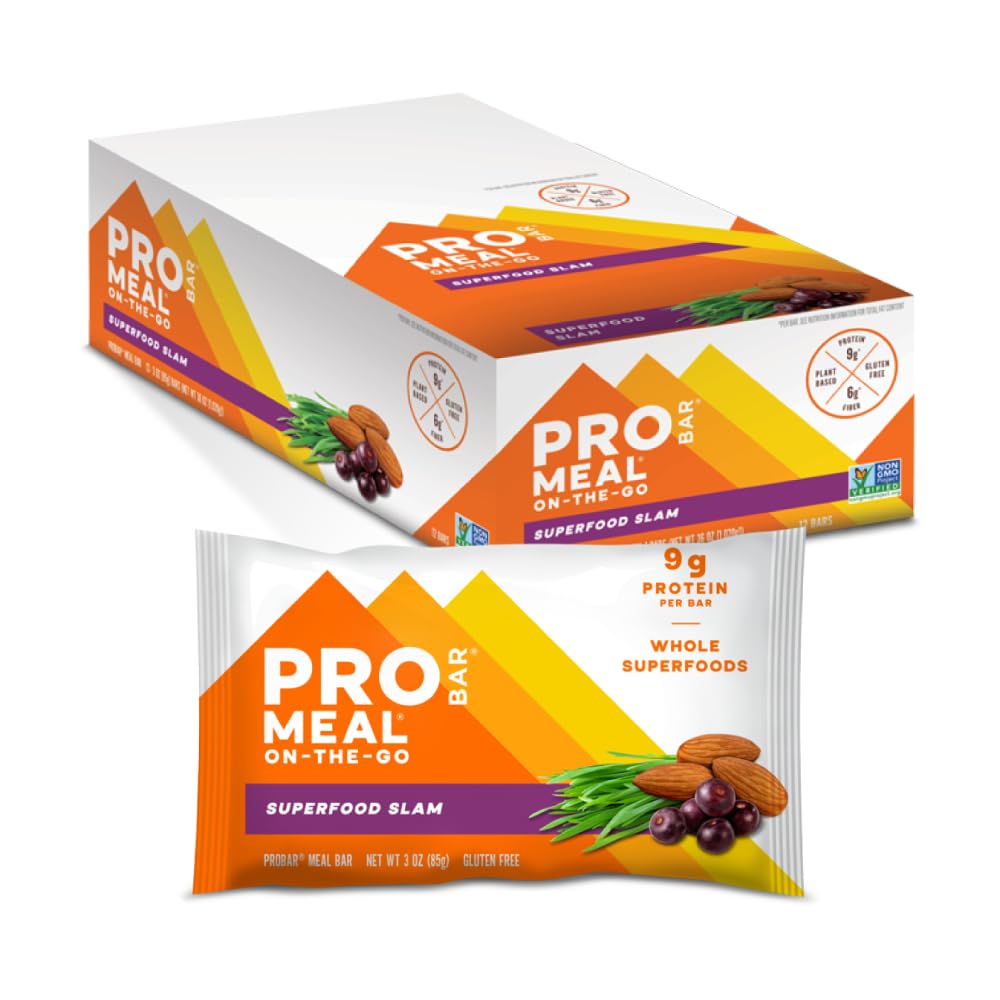
This is the bar you grab when a protein bar needs to replace an actual meal, not just a snack. PROBAR MEAL delivers 15 grams of plant-based protein from whole oats, nuts, seeds, and brown rice crisps — ingredients you can visually identify before the first bite. The texture is hearty and chewy, with a satisfying density that keeps hunger at bay for hours.
At 2.3 ounces per bar, the physical volume is noticeably larger than standard protein bars. Users consistently mention using these for hiking, cycling, and camping trips where carrying real food is impractical. The “Superfood Slam” flavor combines dates, cocoa, and seeds for a natural sweetness that doesn’t rely on artificial syrups. Each bar also provides a solid dose of fiber and complex carbohydrates for sustained energy release.
The trade-off is that this is not a high-protein bar in the traditional sense — 15 grams is moderate. Some reviewers note that bars can vary in moisture content; a few batches arrived drier than expected. Still, the whole-food base and gluten-free certification make it a reliable option for anyone who prioritizes ingredient transparency over raw protein numbers.
Why it’s great
- Real, whole-food ingredients you can see
- High volume and density for meal replacement
- Non-GMO Project Verified and Gluten-Free
Good to know
- Only 15g protein per bar
- Consistency can vary between batches
3. Grab The Gold Chocolate Peanut Butter Protein Snack Bars

Grab The Gold brings 35 years of handcrafted snack experience into a compact 2-ounce bar that punches above its weight in fiber. With 7 grams of fiber and only 11 grams of protein, this bar is engineered for sustained energy rather than muscle-building macros. The base of certified organic gluten-free oats and rich organic chocolate creates a texture that’s more like a baked oatmeal square than a typical protein bar.
User feedback consistently highlights how fresh and flavor-forward these bars taste compared to mass-produced alternatives. The chocolate peanut butter combination avoids the artificial peanut butter flavor that cheap bars rely on, using real peanuts and organic cocoa. Multiple reviewers mention that “you can’t keep them in the pantry” — they get eaten too fast. The bar is also dairy-free, kosher, and vegan, making it a safe choice for various dietary restrictions.
The lower protein count means this works best as a sustained-energy snack or pre-workout bite rather than a post-lift recovery tool. The calorie count is a bit higher than some competitors, but the fiber-to-protein ratio makes it uniquely filling for its size. The individual wrappers are small enough to stash in a pocket or fanny pack for trail use.
Why it’s great
- 7g fiber delivers exceptional satiety per gram
- Organic oats and chocolate base
- Fresh, non-artificial flavor profile
Good to know
- Only 11g protein per bar
- Higher calorie count for the serving size
4. Nugo Slim Dark Chocolate Mint

NuGo Slim is the bar for macro trackers who refuse to compromise on taste. With 18 grams of vegan protein, only 3 grams of sugar, and 6 grams of fiber, the numbers line up perfectly for low-carb and keto-friendly diets. The Dark Chocolate Mint flavor is so convincing that multiple reviewers compare it to a Thin Mint cookie — high praise for a bar with no artificial sweeteners and no maltitol.
The low-glycemic certification matters here. NuGo Slim was tested by GI Labs of Toronto, confirming a very low glycemic index. This means no blood sugar spike, no crash, and no mid-afternoon energy slump. The protein comes from a blend of Non-GMO plant sources, and the bar is certified gluten-free and vegan. The absence of palm oil in the chocolate coating is a thoughtful detail that improves both texture and ethical sourcing.
Texture is a step above most low-sugar bars — the mint chips add a satisfying crunch that breaks up the dense protein base. The 170-calorie count keeps it light enough for a snack but substantial enough to delay a meal. The only minor friction point is the chocolate coating’s sensitivity to heat; users in warm climates should plan their delivery timing to avoid melted bars.
Why it’s great
- Only 3g sugar with 18g plant protein
- Low-glycemic certified for stable energy
- Tastes like a Thin Mint cookie
Good to know
- Chocolate coating may melt in high heat
- Moderate portion size for the price
5. MUSASHI High Protein Bar

Musashi is not messing around — 45 grams of protein per bar is nearly triple what most vegetarian bars offer. The catch is that this uses whey protein isolate, which means it is vegetarian but not vegan. For anyone who consumes dairy, this is a powerhouse recovery tool with a 2:1:1 ratio of naturally occurring BCAAs for muscle repair. The Milk Chocolate Brownie flavor aims for indulgence while keeping total sugars at just 2 grams.
The bar is dense and chewy — some users describe it as “toffee-like” and note that it requires a drink to get through comfortably. Texture is the most polarizing aspect here; some find the density satisfying and chewy, while others report a rubbery consistency. The large 3.2-ounce size is substantial enough to serve as a complete post-workout meal replacement for athletes with high caloric needs.
Musashi’s 35-year track record in sports nutrition adds credibility, though the brand is newer to the U.S. market. The sugar alcohol content can cause digestive discomfort for sensitive individuals, so it’s worth testing tolerance before committing to a subscription. For sheer protein density, this bar is in a league of its own, but the texture and dairy content make it a niche choice rather than an everyday snack.
Why it’s great
- 45g protein per bar — industry-leading density
- Only 2g total sugars
- Full BCAAs profile for recovery
Good to know
- Uses whey isolate, not vegan-friendly
- Dense, chewy texture may not suit everyone
FAQ
Are vegetarian protein bars suitable for weight loss?
How much protein should a vegetarian bar have for post-workout recovery?
What is the difference between a meal bar and a protein bar?
Can vegetarian protein bars cause bloating or digestive issues?
Final Thoughts: The Verdict
For most users, the best vegetarian protein bars winner is the GoMacro MacroBar because it nails the balance of clean organic ingredients, satisfying texture, and reliable flavor without compromising on certification standards. If you want a bar that replaces an entire meal with whole-food density, grab the PROBAR MEAL Bar. And for strict macro tracking with only 3 grams of sugar, nothing beats the NuGo Slim for guilt-free indulgence.