A flimsy, dull blade turns chopping an onion into a frustrating, uneven mess that bruises the vegetable and risks a dangerous slip. The right vegetable knife delivers clean, precise cuts through everything from delicate herbs to dense carrots, transforming prep work from a chore into a controlled, satisfying motion. That straight edge and tall blade profile are engineered for the push-cut and the rock-chop, making it the single most important tool for anyone who cooks with produce.
I’m Mohammad Maruf — the founder and writer behind AirfryerBite. I break down the steel alloys, edge geometries, handle ergonomics, and heat-treatment specs that separate a blade you fight with from one that becomes an extension of your hand.
After examining the steel composition, blade grind, and handle balance on dozens of models, I’ve winnowed the field to the seven contenders that genuinely matter. Find the one that matches your cutting style in my curated list of the best vegetable knife for everyday prep.
How To Choose The Best Vegetable Knife
Picking a vegetable knife is different from choosing a general-purpose chef’s knife. The geometry is built around straight cuts through tall items like onions, celery, and potatoes, so the blade shape, steel, and handle all serve that specific motion. Focus on these three factors to find a blade that makes your prep faster and safer.
Blade Profile: Nakiri vs. Santoku vs. Cleaver
A nakiri vegetable knife has a tall, straight blade with a squared-off tip designed specifically for push-chopping. A santoku offers a curved belly and a sheepsfoot tip, making it more versatile for rocking cuts and slicing meat. A Chinese-style cleaver, despite its intimidating look, has a thin, lightweight blade that excels at scooping up diced ingredients. For dedicated vegetable work, the nakiri and cleaver profiles are the most efficient because they maximize edge contact with the board on each push cut.
Steel Composition and Hardness
High-carbon stainless steel (around 0.6–0.8% carbon) offers a good balance of edge retention and stain resistance. A Rockwell hardness of 58–60 HRC is the sweet spot for a vegetable knife — it holds a sharp edge through a week of meal prep without being brittle or difficult to sharpen. Softer steel (55 HRC or below) will need honing every few sessions, while harder steel (62 HRC and up) can chip against a polypropylene cutting board with careless technique.
Handle Ergonomics and Balance
A full-tang construction, where the steel runs the entire length of the handle, provides the best balance and durability. The handle material should offer a secure grip even when wet — textured polymers and synthetic rubber (Santoprene) are better than polished wood for safety. The balance point should fall right at the bolster or slightly forward, giving you leverage for the push-cut motion without wrist fatigue during extended chopping sessions.
Quick Comparison
On smaller screens, swipe sideways to see the full table.
| Model | Category | Best For | Key Spec | Amazon |
|---|---|---|---|---|
| Mercer Culinary Genesis Nakiri | Premium | Professional push-cutting precision | 7-inch, high-carbon German steel, 58 HRC | Amazon |
| Sunnecko Nakiri | Mid-Range | Crisp edge-straight out of the box | 7-inch, carbon steel, 15° edge, full tang | Amazon |
| PAUDIN Cleaver | Mid-Range | Versatile meat and veggie chopping | 7-inch, high carbon stainless, wooden handle | Amazon |
| TUO Santoku | Mid-Range | All-in-one prep for veggies and meat | 7-inch, high carbon German steel, ergo handle | Amazon |
| Mercer Culinary Asian Chef’s Knife | Mid-Range | Classic Chinese cleaver handling | Chinese chef’s knife, Santoprene handle | Amazon |
| SYOKAMI Cleaver | Budget | Three-in-one versatility on a budget | 7-inch, 3-in-1 chef, santoku, nakiri | Amazon |
| ROCOCO Meat Cleaver | Budget | Effort-saving design with a unique look | Stainless steel, unique effort-saving shape | Amazon |
In‑Depth Reviews
1. Mercer Culinary M20907 Genesis 7-Inch Nakiri Vegetable Knife

The Genesis Nakiri is a workhorse designed for the linear push-cut motion that vegetable prep demands. Its 7-inch blade is forged from high-carbon German steel, heat-treated to a balanced 58 HRC, so it takes a keen edge and holds it through multiple meal-prepping sessions without becoming a chore to sharpen. The full-tang construction and Santoprene handle give you a secure, non-slip grip that keeps the blade stable even when your hands are wet from washing produce.
The straight edge and tall, flat blade profile are perfectly suited for chopping through large volumes of onions, carrots, and celery. I especially appreciate the bolster-free design, which allows you to sharpen the entire edge length easily and makes honing more effective. The balance point sits exactly at the handle junction, so the knife feels light and agile rather than blade-heavy.
This is the kind of knife that feels wrong when you first pick it up if you’re used to a curved chef’s knife — but after ten minutes of push-chopping, the motion becomes natural, and you’ll notice how much more consistent your cuts are. For dedicated vegetable work, this is the gold standard at a price that won’t make you wince.
Why it’s great
- High-carbon German steel at a balanced 58 HRC for great edge retention
- Santoprene handle provides excellent wet-grip security
- Full tang gives perfect balance for push-cut motions
Good to know
- The blade profile takes a session to adjust to if you’re used to a curved chef’s knife
- Not ideal for rock-chopping because of the flat edge
2. Sunnecko Japanese Nakiri Knife 7 Inch
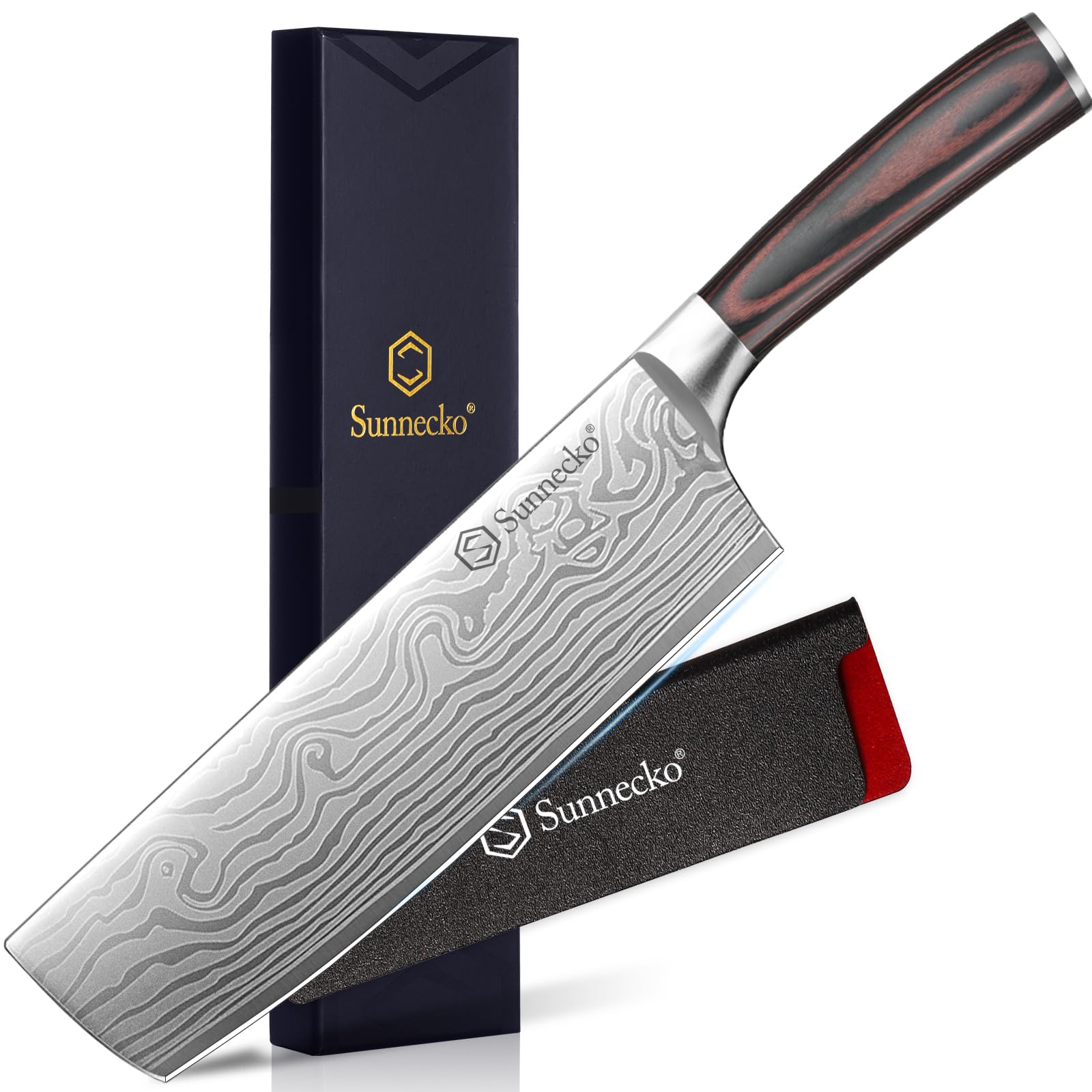
The Sunnecko Nakiri arrives with a factory edge ground to a steep 15° angle, which is noticeably sharper than the typical 20° edge found on most Western blades. This acute grind lets it slice through tomato skins and paper-thin garlic slivers without crushing the cells, preserving the texture and flavor of your produce. The carbon steel composition means it won’t rust as aggressively as pure high-carbon steel, but it still takes a refined edge that outperforms standard stainless.
The full-tang construction and included sheath are thoughtful touches that protect both the blade and your fingers during storage. The blade height is generous at approximately 2 inches, giving you plenty of knuckle clearance on the cutting board so you can chop without rapping your fingers against the board. The handle is comfortable for medium-to-large hands, though users with smaller hands may find the grip a bit thick.
I found that the edge does need more frequent honing than a German-style blade — about every third use — because the acute angle is more prone to micro-rolling. For home cooks who value extreme sharpness over low maintenance, this is an excellent trade-off. The included box makes it a strong candidate for a gift, too.
Why it’s great
- 15° edge angle delivers incredible out-of-box sharpness
- Full-tang design with a protective sheath included
- Tall blade provides excellent knuckle clearance
Good to know
- Acute edge requires more frequent honing than a standard 20° blade
- Handle may feel thick for users with smaller hands
3. PAUDIN Cleaver Knife, Ultra Sharp Meat Cleaver 7 Inch

The PAUDIN 7-inch cleaver walks the line between a vegetable knife and a light meat cleaver, making it a versatile option for cooks who process both proteins and produce in the same session. The blade is made from high-carbon stainless steel with a full-tang construction that extends through the wooden handle, ensuring the blade won’t separate from the handle during heavy chopping. The wooden handle has a comfortable palm-filling contour that feels secure without being slippery.
The blade profile is thinner than a traditional cleaver, which is exactly what you want for vegetable work. It slices through butternut squash and cabbage cores with controlled force, and the wide blade surface doubles as a scoop for transferring diced ingredients to a pan. The edge holds well for a mid-range offering, though I noticed it needed a light touch-up on the honing rod after about a week of daily use.
One minor consideration: the wooden handle requires more care than synthetic options. It should be hand-washed and dried immediately to prevent the wood from drying out or cracking over time. For users who want a single knife that handles chicken, produce, and aromatics without switching tools, this cleaver is a smart pick.
Why it’s great
- Thin cleaver profile works for both vegetables and light meat processing
- Full-tang construction with a comfortable wooden handle
- Wide blade surface doubles as a scoop for transferring ingredients
Good to know
- Wooden handle requires hand-washing and immediate drying
- Edge needs honing after about a week of regular use
4. TUO Santoku Knife, 7 inch Japanese Chef Knife

The TUO Fiery Phoenix series santoku is built around the compromise between the straight edge of a nakiri and the curved belly of a chef’s knife. The 7-inch blade is forged from high-carbon German steel, offering a Rockwell hardness that sits in the sweet spot for everyday use — sharp enough for thin vegetable slices but tough enough to handle light-duty butchery tasks like cutting chicken thighs. The ergonomic handle is designed with a pronounced heel that locks your hand into a pinch grip, reducing fatigue during longer prep sessions.
For vegetable work, the santoku profile works well with both push-cutting and the slight rock-chopping motion that many home cooks default to. The blade features a dimpled (granton) edge that helps prevent food from sticking to the side, which is especially useful when slicing starchy vegetables like potatoes or cucumbers. The edge geometry is ground to a 15° angle per side, matching the sharpness profile of higher-end Japanese blades.
The main trade-off is that the santoku blade is shorter and less tall than a dedicated nakiri, which means you have less knuckle clearance on vertical push cuts. For cooks who want one good knife that does everything reasonably well — vegetables, meat, herbs — instead of a dedicated vegetable specialist, this is the right route.
Why it’s great
- Versatile santoku profile handles both veggies and meat prep
- Granton edge reduces food sticking during slicing
- Ergonomic handle with a pinch-grip-friendly heel
Good to know
- Less knuckle clearance than a taller nakiri blade
- Heavier than a dedicated vegetable knife due to the curved belly
5. Mercer Culinary Asian Collection Chinese Chef’s Knife

Mercer’s Asian Collection Chinese chef’s knife brings the classic cai dao (vegetable cleaver) design to a Western audience with a Santoprene handle that provides a secure grip in wet conditions. The blade is stamped from high-carbon stainless steel, which keeps the weight down — this is not a heavy meat cleaver designed for hacking through bone. It’s a lightweight, all-purpose vegetable knife that excels at push-chopping, scooping, and smashing garlic cloves with the flat of the blade.
The generous blade height (roughly 3.5 inches) is the defining feature of this style. It gives you massive knuckle clearance, prevents your fingers from contacting the cutting board during aggressive chopping, and lets you transfer large amounts of diced ingredients in a single scoop. The straight edge is ground to a standard 20° angle, which is less acute than Japanese alternatives but more durable for everyday kitchen use where you might hit a stray cutting board seam.
The stamped construction means this knife is lighter than forged alternatives, which some cooks prefer for fast, repetitive chopping. However, the balance point is slightly forward of the handle, so it feels blade-heavy in hand. This isn’t a flaw — it’s a design choice that provides momentum for clean push cuts — but it takes a few minutes to adjust to if you’re used to a neutral-balanced chef’s knife.
Why it’s great
- Massive blade height offers outstanding knuckle clearance and easy scooping
- Santoprene handle provides secure grip when wet
- Lightweight stamped construction reduces fatigue over long prep sessions
Good to know
- Blade-heavy balance takes some adjustment from a traditional chef’s knife
- 20° edge is durable but not as razor-sharp as a 15° Japanese grind
6. SYOKAMI Cleaver Chef Knife with Herb Stripper
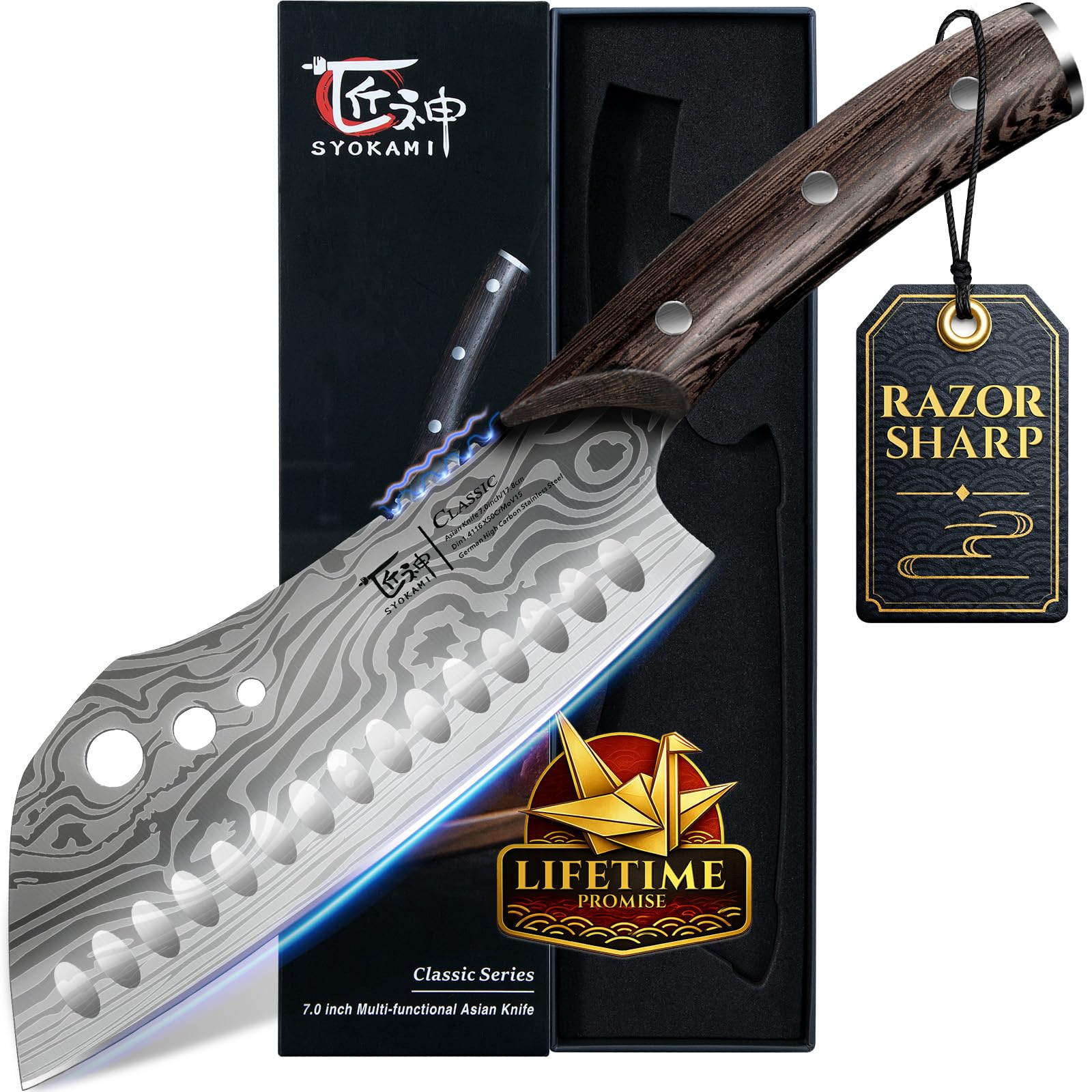
The SYOKAMI cleaver attempts to combine the features of a chef’s knife, a santoku, and a nakiri into a single 7-inch blade, which makes it a versatile entry point for home cooks who aren’t ready to invest in multiple specialized knives. The blade features a unique herb stripper notch near the spine, allowing you to strip rosemary and thyme leaves directly over your cutting board without switching tools. The high-carbon stainless steel blade is full-tang and comes with a balanced profile that works for both push-cutting and rocking motions.
For vegetable prep, the blade performs admirably on soft produce like zucchini, bell peppers, and mushrooms. The straight edge handles push cuts through onions cleanly, and the moderate blade height provides enough knuckle clearance for most users. The herb stripper is a genuinely useful addition — it removes the stalks from fresh herbs in one pass, which is a small but noticeable time-saver when you’re making multiple garnishes.
The trade-off at this price point is in the steel quality and heat treatment. The edge retention is adequate for casual use, but after several weeks of regular prep, the blade will need more frequent sharpening than higher-end options. This is a solid choice for college students, new cooks, or anyone building a first knife kit on a tight budget.
Why it’s great
- Three blade profiles in one knife offer flexibility for new cooks
- Built-in herb stripper is a functional time-saver
- Full-tang construction at an accessible price point
Good to know
- Steel edge retention is not as strong as premium German or Japanese options
- Herb stripper notch is not dishwasher-safe and requires careful cleaning
7. ROCOCO Meat Cleaver Knife Unique Effort Saving Kitchen Knife
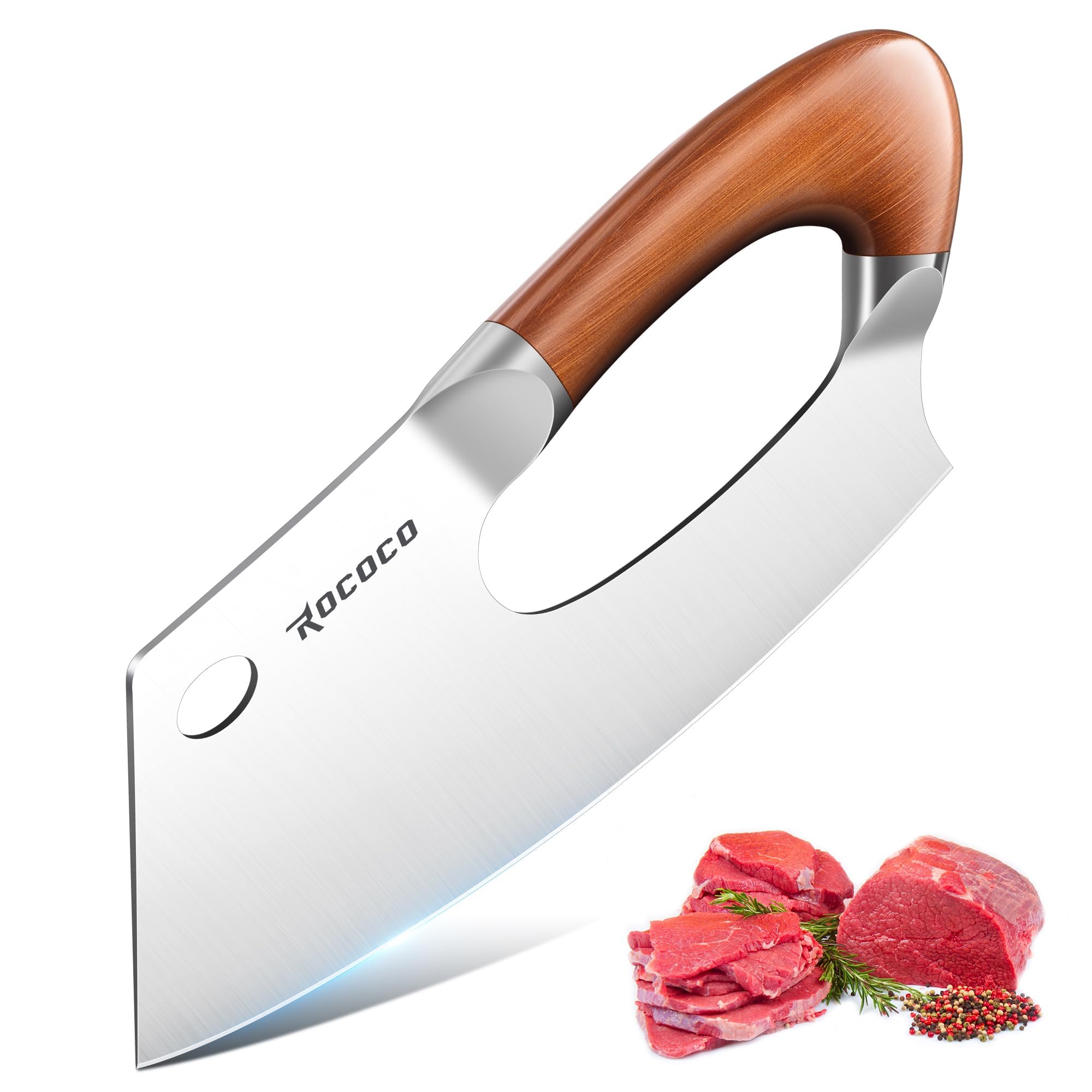
The ROCOCO cleaver stands out with its distinct “effort-saving” blade shape — a curved, almost rocking-chop profile that differs from the traditional flat-edged cleaver. The stainless steel construction keeps it rust-resistant, and the bronze finish adds a visual element that sets it apart from the standard brushed or polished blades on this list. The design aims to reduce wrist strain by encouraging a more natural rolling motion when cutting through dense vegetables like carrots and sweet potatoes.
The blade geometry is unique enough that it takes deliberate practice to adapt to. The curved edge means it does not perform the clean, single-pass push cut that a straight nakiri or cai dao would — instead, the motion is closer to a rock-chopping chef’s knife approach. It works well for breaking down larger items like squash or cabbage, where the curved profile helps manage the wide surface area without excessive force.
The main consideration is that this knife is a specialized tool for a specific cutting style rather than a general-purpose vegetable knife. If you have wrist or joint issues that make flat push-cutting uncomfortable, this alternative motion may be genuinely helpful. For standard mise en place, however, a traditional straight-edged vegetable knife will deliver more consistent results with less adaptation time.
Why it’s great
- Unique curved edge can reduce wrist strain for cooks with joint issues
- Bronze finish resists corrosion and looks distinctive on the counter
- Good performance on large, dense vegetables like squash
Good to know
- Non-traditional profile requires practice to learn the cutting rhythm
- Not ideal for precise, straight push-cuts through small produce
FAQ
What is the best blade profile for a dedicated vegetable knife?
Should I choose a carbon steel or stainless steel vegetable knife?
How often should I sharpen a vegetable knife?
Can a vegetable knife be used on meat and bones?
Final Thoughts: The Verdict
For most users, the best vegetable knife winner is the Mercer Culinary Genesis Nakiri because it combines professional-grade German steel with a purpose-built nakiri profile that makes push-cutting vegetables effortless. If you want a razor-sharp edge straight from the box and don’t mind a little extra honing, grab the Sunnecko Nakiri. And for a budget-friendly entry that covers three knife profiles in one, the SYOKAMI Cleaver is a smart pick for new cooks building their first kit.