Nothing ruins a perfectly brined, golden-brown turkey faster than oil that smokes, burns, or imparts a bitter, off-flavor to the meat. The right oil for this job must withstand prolonged high heat (typically 350°F to 400°F) without breaking down, and must taste neutral enough to let the turkey’s seasoning shine through.
I’m Mohammad Maruf — the founder and writer behind AirfryerBite. I’ve spent years analyzing smoke point data, fatty acid profiles, and thermal stability reports for hundreds of cooking oils to identify the specific chemistry that makes an oil safe and effective for high-volume deep frying.
This guide breaks down the oils that deliver consistently crisp skin and moist meat without unsafe smoke or chemical degradation. Use it to find the best turkey fryer oil for your next holiday spread or game-day feast.
How To Choose The Best Turkey Fryer Oil
Selecting the correct oil for deep-frying a whole turkey isn’t like picking a dressing oil. The thermal load and volume are far higher, and a poor choice can create offensive smoke, dangerous fire hazards, or greasy meat. Focus on three primary factors when narrowing your options.
Smoke point — the true safety threshold
The smoke point of your turkey frying oil must exceed the cooking temperature by a comfortable margin. Most recipes target an oil temperature near 350°F, but the oil will create localized hot spots above the burner. An oil with a smoke point below 450°F risks reaching its breakdown temperature before the turkey is cooked through, releasing acrolein and other irritating compounds. Look for oils rated at 465°F or higher to maintain a safe operating window throughout a 45-minute fry.
Flavor neutrality — let the turkey be the star
Oils with strong intrinsic flavors — extra virgin olive oil, unrefined coconut oil, or toasted sesame oil — will impose their taste on the skin and exterior meat. A refined or expeller-pressed oil with a clean, almost undetectable taste allows your brine, dry rub, and injection marinade to define the final result. The best turkey frying oils register as nearly flavorless on the palate, with no grassy, nutty, or earthy notes lingering after frying.
Fat composition and stability under heat
Oils high in polyunsaturated fats (common in standard vegetable blends) oxidize and polymerize faster during extended frying, leading to foaming, sticky residue, and a shorter usable life. Oils rich in monounsaturated fats, such as high-oleic safflower oil or canola oil, resist thermal breakdown longer and produce a cleaner fry. Saturated fat content also aids stability but should be balanced — an oil that is liquid at room temperature is generally easier to handle and filter than one that solidifies.
Quick Comparison
On smaller screens, swipe sideways to see the full table.
| Model | Category | Best For | Key Spec | Amazon |
|---|---|---|---|---|
| Oleico High Oleic Safflower Oil | Premium | Extended high-heat frying | 128 fl oz / High oleic | Amazon |
| AVO High Oleic Safflower Oil | Premium | Non-GMO high-heat cooking | Smoke point 510°F | Amazon |
| AVO Organic Canola Oil | Mid-Range | Organic, neutral frying | Smoke point 465°F | Amazon |
| Healthy Harvest Canola Oil | Mid-Range | Family & everyday frying | 128 fl oz / Expeller pressed | Amazon |
| Thrive Reserve Algae Oil | Premium | Specialty / sustainable frying | 16.9 fl oz / Smoke point 485°F | Amazon |
In‑Depth Reviews
1. AVO Organic Canola Oil
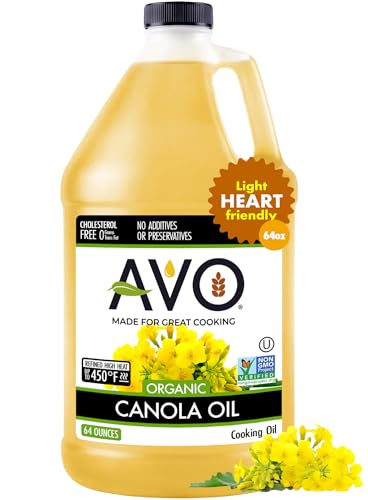
This 64-ounce half-gallon jug of USDA Organic canola oil delivers a certified smoke point of 465°F — safely above the deep-fry zone for a whole turkey. The oil is minimally processed with no chemical solvents, preserving natural Vitamin E and K levels while keeping the flavor completely neutral. Multiple customer reviews confirm the oil doesn’t smoke during extended frying sessions, a reliable indicator of its thermal stability.
Users consistently praise the light taste and clean finish, noting it works well for both savory frying and baking. The company holds Non-GMO Project verification, OU Kosher certification, and HACCP-based food safety standards, all produced and inspected in the USA. For those who prioritize organic sourcing alongside thermal performance, this oil bridges both requirements without compromise.
One caveat: the 64-ounce volume is slightly smaller than the full-gallon options below. If you are frying a bird larger than 16 pounds, you may need to buy two jugs to ensure sufficient oil volume. The subscribe-and-save option helps offset the organic premium for frequent users.
Why it’s great
- USDA Organic and Non-GMO verified
- 465°F smoke point handles turkey frying safely
- Completely flavorless — lets your brine lead
Good to know
- 64-ounce half-gallon size may need two for large birds
- Organic certification raises the per-ounce cost
2. AVO High Oleic Safflower Oil
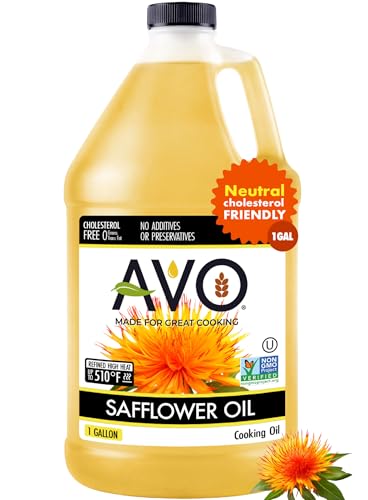
With a rated smoke point of 510°F, this full-gallon high-oleic safflower oil provides the widest thermal safety margin of any product in this guide. The high monounsaturated fat content (approximately 75%) makes it exceptionally resistant to oxidation and polymerization, meaning the oil stays clear and effective even after multiple frying sessions. Users report no burnt aftertaste or smoking, even when using it on outdoor propane burners that create uneven heat zones.
AVO produces this oil using non-GMO seeds and a natural physical refining process that avoids hexane and other chemical solvents. The gallon jug is large enough to submerge a standard 14-pound turkey with headroom, and multiple customers specifically mention it works well on Blackstone griddles and deep fryers alike. The neutral flavor profile earned particular praise from reviewers who use it for homemade mayonnaise, indicating zero residual taste transfer.
One drawback: the jug lacks a pour spout, so transferring to a smaller bottle for daily use is helpful. The high-oleic safflower oil also costs more per ounce than standard canola, but the extended thermal life offsets some of that expense if you filter and reuse the oil.
Why it’s great
- 510°F smoke point — highest in this review
- Non-GMO and expeller pressed with no solvents
- Full gallon volume ideal for large birds
Good to know
- No integrated pour spout on the jug
- Premium pricing relative to canola oil
3. Healthy Harvest Canola Oil
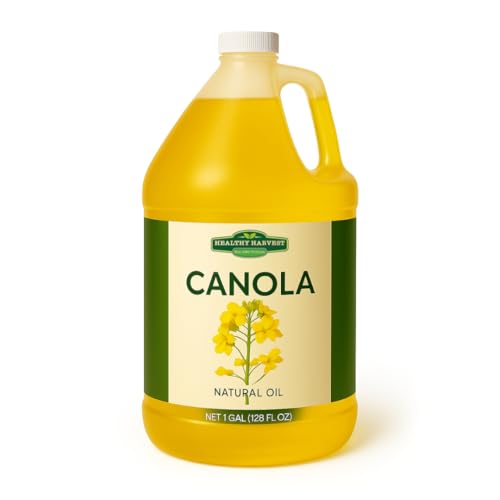
Healthy Harvest’s expeller-pressed canola oil is traceable to a specific farm of origin, giving you more transparency than most commodity oils. The physical cold-press method retains natural antioxidants and Omega-3 fatty acids while avoiding chemical extraction, and the resulting flavor is mild enough that one reviewer described their homemade fries as “better than McDonald’s.” At one gallon, this is a practical volume for turkey frying without needing a second bottle.
Canola oil’s typical smoke point hovers around 420°F with conventional processing, but expeller-pressed versions like this one often behave better because they lack the detergent residues found in solvent-extracted oils. Multiple users confirm the oil maintains stability through 10 to 15 deep-fry cycles before needing replacement, making it a cost-effective choice for frequent fryers. The longer shelf life mentioned in the product specs aligns with the natural processing method.
The main limitation is that the smoke point is not officially certified above 465°F, so you should monitor your oil temperature closely if you run your burner at maximum output. The price per ounce is lower than the organic options, which makes it a strong mid-range pick for budget-conscious cooks who still want clean processing.
Why it’s great
- Traceable to farm of origin with expeller pressing
- Full gallon size at competitive per-ounce cost
- Mild flavor suited for repeated frying sessions
Good to know
- Not certified organic
- Smoke point may be lower than high-oleic varieties
4. Oleico High Oleic Safflower Oil

Oleico’s high-oleic safflower oil is made from naturally selected seeds with a fatty acid profile that is exceptionally high in monounsaturated fats, making it one of the most thermally stable oils you can buy. The expeller-pressed extraction method and added Vitamin E as an antioxidant keep the oil fresh and free of rancid notes. Customers describe the oil as “lightweight” and “non-greasy,” with one reviewer reporting successful weight management due to the oil’s favorable fat composition.
This 128-ounce (one-gallon) bottle is a practical size for turkey frying, and the high-oleic structure means it can be reused multiple times without developing the sticky polymer residue that standard vegetable oils leave behind. The flavor is described as odorless and flavorless, which is exactly what you need for turkey frying — no competing notes, just clean crisp skin. The bottle is well-packaged and arrives leak-free according to multiple shipping reviews.
The most common criticism is that the price has risen since initial release, making it less of a budget option than it once was. Additionally, the product is not certified organic, though it is Non-GMO verified and kosher. If organic certification is a non-negotiable for you, the AVO safflower option above may be a better fit.
Why it’s great
- High monounsaturated fat content for superior thermal stability
- 128 ounces — ideal single-bottle volume for turkey frying
- Truly neutral taste and odor
Good to know
- Price increased over time
- Not certified organic
5. Thrive Reserve Culinary Algae Oil
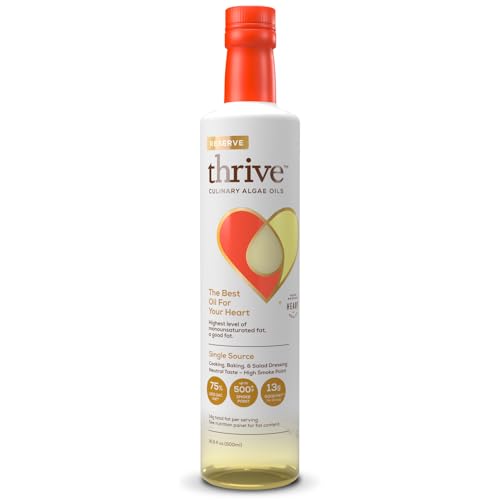
Thrive Reserve’s algae oil is a unique entrant in the turkey frying category, sourced from a renewable algae feedstock rather than traditional seed crops. Its smoke point exceeds 450°F and is independently measured around 485°F by some users, placing it well within the safe zone for turkey frying. The fatty acid profile is roughly 90% monounsaturated (Omega-9), giving it exceptional resistance to thermal breakdown and producing almost no smoke during high-heat cooking.
The oil is completely neutral in flavor — one reviewer described it as “nearly flavorless” — making it an excellent carrier for injected marinades and spice rubs. It is also vegan, Non-GMO, and gluten-free, appealing to those with dietary restrictions. Users report using it in air fryers, on Blackstone griddles, and for deep frying zucchini fries with excellent results, indicating broad versatility beyond just turkey frying.
The critical limitation is volume: this 16.9-ounce bottle is suitable for a single test fry or for supplementing a larger batch of another oil, but it is far too small to fill a turkey fryer on its own. You would need approximately eight bottles to reach the 1-gallon mark, which becomes cost-prohibitive. Treat this as a premium “top-off” oil or a small-batch specialty fry option rather than a primary turkey fryer oil.
Why it’s great
- 485°F smoke point with ~90% monounsaturated fat
- Renewable, vegan, allergen-friendly source
- Completely neutral flavor profile
Good to know
- 16.9-ounce size is too small for whole turkey frying
- High per-ounce cost limits practical volume
FAQ
Can I use olive oil in a turkey fryer?
How many times can I reuse turkey fryer oil?
Is peanut oil still the best for turkey frying?
What size jug do I need to fry a 14-pound turkey?
Final Thoughts: The Verdict
For most users, the best turkey fryer oil winner is the AVO High Oleic Safflower Oil because its 510°F smoke point and high monounsaturated fat content provide the widest safety buffer and longest usable life per batch. If you want certified organic sourcing, grab the AVO Organic Canola Oil — it still delivers 465°F performance with full USDA organic verification. And for a budget-friendly mid-range option that handles repeated frying sessions, nothing beats the per-ounce value of the Healthy Harvest Canola Oil.