That plastic bear on the grocery shelf might look like honey, but the gritty crystallized clumps, the faint burnt aftertaste, and the ingredient label that barely mentions “pollen” tell a different story. Real honey should taste like the landscape it came from — floral, complex, and alive. The difference between a processed blend and a raw, unfiltered harvest is the difference between drinking from a rain barrel and sipping from a mountain spring.
I’m Mohammad Maruf — the founder and writer behind AirfryerBite. I’ve spent years analyzing the thermal stability of natural sweeteners, cross-referencing pollen counts with USDA organic certifications, and dissecting the cold-filtration methods that strip honey of its beneficial enzymes.
Raw, unfiltered honey retains the natural pollen, enzymes, and antioxidants that heat and filtration destroy. After testing dozens of varietals from acacia to wildflower, I’ve narrowed it down to the bottles that actually deliver on flavor and purity. This is your guide to the real tasting honey — the kind that doesn’t need any excuses.
How To Choose The Best Tasting Honey
Honey shopping seems simple until you realize “pure honey” is an unregulated term. Processors can heat it to 160°F (destroying all enzymes), fine-filter it (removing all pollen), and still legally call it pure. You need to look past the marketing and check three key factors that define real flavor.
Raw vs. Processed: The Heat Is the Enemy
Raw honey is never heated above the hive’s natural temperature, typically around 95°F. This preserves delicate floral volatiles and the natural glucose oxidase that produces hydrogen peroxide, giving raw honey its antimicrobial edge. Processed honey is flash-heated to delay crystallization and filtered under pressure, which strips the very compounds that give honey its complexity. If the label doesn’t say “raw” and “unfiltered,” assume it’s been heat-treated and flavor-compromised.
The Floral Source Defines the Flavor
Acacia honey is famously mild, light, and slow to crystallize — a staple for tea drinkers who want sweetness without an overpowering floral punch. Wildflower honey shifts seasonally and tastes like the region it’s from: think dark amber, bold, and slightly tangy. Buckwheat honey is almost molasses-like, with a strong earthy aroma that bakers love. Clover honey is what most people imagine as “regular honey,” light and sweet with a simple finish. The best tasting honey for you depends entirely on what you’re pairing it with.
Glass Jars vs. Plastic Bottles: More Than Packaging
Honey is hygroscopic and slightly acidic. Over time, plastic bottles can leach trace chemicals, especially if the honey sits on a shelf for months. Glass is inert and preserves the honey’s volatile aromatic compounds far better. Premium and mid-range honeies almost always come in glass for this reason — it’s not just about looking pretty on the counter.
Quick Comparison
On smaller screens, swipe sideways to see the full table.
| Model | Category | Best For | Key Spec | Amazon |
|---|---|---|---|---|
| Carmichael’s Organic Honey | Organic Raw | All-purpose rich flavor | 32 oz glass jar, USDA organic | Amazon |
| Nature Nate’s Raw Unfiltered (4-pack) | Raw Unfiltered | Portable squeeze bottles | 8 oz x 4, award-winning taste | Amazon |
| Nate’s Organic Raw & Unfiltered | Organic Raw | Daily tea/coffee sweetener | 32 oz squeeze bottle, USDA organic | Amazon |
| Altay Raw Acacia Honey | Premium Monofloral | Delicate floral pairings | 35.2 oz glass jar, acacia blossom | Amazon |
| Florida Raw Apiaries Wildflower with Comb | Raw with Comb | Texture lovers & beeswax chew | 16 oz jar, wildflower + comb | Amazon |
In‑Depth Reviews
1. Carmichael’s Organic Honey
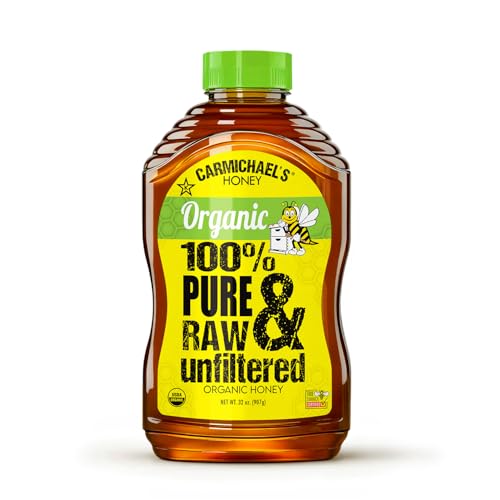
Carmichael’s hits the sweet spot between affordability and uncompromised purity. The flavor profile leans toward a rich butterscotch with subtle floral undertones — far more complex than standard grocery store clover honey. Multiple reviews confirm it remains fluid without crystallizing for weeks, which is a strong indicator of proper low-heat processing and a high fructose-to-glucose ratio.
The 32-ounce glass jar arrives sealed with an aluminum safety disc under the cap, addressing the most common complaint about honey shipments: leaking. A few reviewers noted broken caps in transit, but the inner seal held every time, and the cap is interchangeable with standard honey lids. The honey itself is thick and slow-pouring, concentrated enough that half a tablespoon delivers the sweetness of a full spoon of processed honey.
This is the bottle to reach for when you want one honey that works equally well in hot tea, on pancakes, in marinades, or straight off the spoon. The organic certification and pesticide-free sourcing back up the label claims, and the regeneratively sourced beeswax-based production model adds an ethical layer that matters to conscious buyers.
Why it’s great
- Decadent butterscotch-caramel flavor profile unmatched at this tier
- Resists crystallization longer than most raw honeies
- Thick, slow-pouring texture signals high quality
Good to know
- Shipping can crack the plastic cap — aluminum inner seal prevents leaks
- Some may find the flavor too potent for delicate teas
2. Nature Nate’s 100% Pure Raw & Unfiltered Honey (4-Pack)
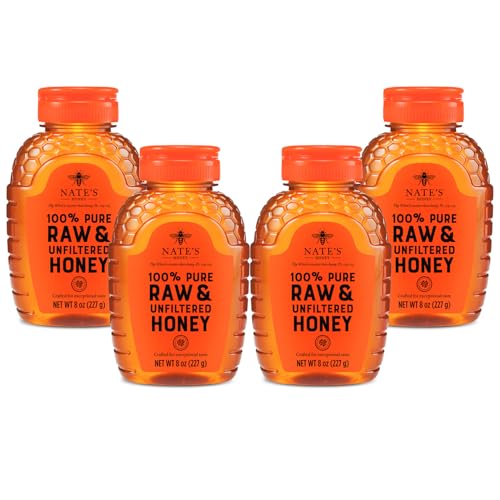
Nature Nate’s has built a reputation on consistency, and the 4-pack of 8-ounce squeeze bottles is a brilliant solution for the crystallization problem that plagues larger containers. Each bottle is small enough that most households will finish it before it granulates, and the squeeze tip gives precise control for drizzling over oatmeal or yogurt without the sticky mess of a jar and dipper.
The blend uses multiple honey varietals to create a balanced, crowd-pleasing sweetness that isn’t overpowering. Reviews consistently call it “the best flavor without tasting like cheap sweetener,” which is exactly the middle ground most buyers want. The raw and unfiltered processing retains natural pollen, giving it a slightly cloudy appearance that signals authenticity.
The 32-ounce total volume across four bottles makes this a strong pantry-stocking option. Each bottle fits neatly in a lunch bag or desk drawer, so you can keep one at work, one in the kitchen, and one in the camping kit without ever dragging a heavy glass jar around. Nature Nate’s also funds bee health research through university partnerships, which health-conscious buyers appreciate.
Why it’s great
- Portable 8 oz bottles prevent crystallization from slow usage
- Award-winning taste blend is reliably delicious every batch
- Purity guarantee backed by third-party testing
Good to know
- Flavor is less complex than single-origin monofloral honeies
- Plastic bottles, not glass — minimal but measurable migration risk over time
3. Nate’s Organic 100% Pure Raw & Unfiltered Honey (32 oz)
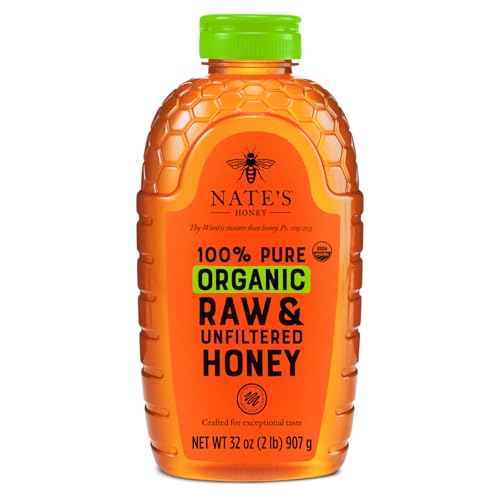
This is the organic upgrade from the same trusted Nature Nate’s brand. The 32-ounce squeeze bottle delivers the same raw, unfiltered processing with the added layer of USDA organic certification, which guarantees no synthetic pesticides or antibiotics were used anywhere near the hives or the forage fields. The taste is clean and pure — one reviewer described it as “tastes as if it came directly from the hive.”
The flip-top cap on the squeeze bottle is sturdy and leak-proof, a detail that matters when you’re storing it upright in a cabinet or horizontally in a camping bin. The honey itself has a thick consistency that survives freezing temperatures without crystallizing — a reviewer noted it remained fluid at 10°F, which suggests a carefully managed glucose-to-fructose balance.
For anyone who wants the simplicity of a squeeze bottle but refuses to compromise on organic purity, this is the bottle. It mixes effortlessly into yogurt, coffee, and baking recipes, and the 32-ounce size hits the sweet spot between value and manageable consumption speed before crystallization becomes an issue.
Why it’s great
- USDA organic certification adds layer of pesticide-free assurance
- Sturdy flip-top cap prevents leaks even when stored sideways
- Resists crystallization at freezing temperatures
Good to know
- Squeeze bottle makes it harder to get the last few tablespoons
- Flavor is excellent but less distinctive than single-origin honeies
4. Altay Raw Acacia Honey
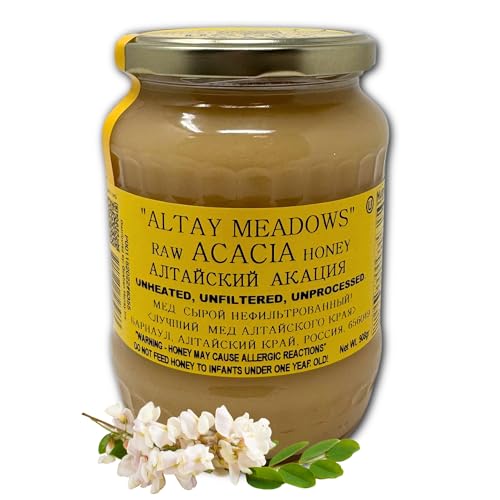
Altay Raw Acacia Honey is a monofloral honey sourced from the Altai Mountain region of Siberia, a pristine ecosystem known for its biodiversity and lack of industrial agriculture. The acacia blossom gives this honey a uniquely light amber color, almost translucent, with a mild, creamy sweetness that doesn’t overpower — it’s the honey equivalent of a delicate white wine compared to a bold red.
The glass jar packaging is premium-grade: a wide-mouth 35.2-ounce container that sits solidly on the counter and reseals tightly. The OU Kosher certification adds a layer of processing oversight that appeals to buyers with strict dietary standards.
Reviewers praise its “delicate sweetness” and “creamy” texture, making it ideal for drizzling over soft cheese, fresh fruit, or lightly sweetened tea. The subtle floral notes are present but not aggressive, so it won’t clash with the other ingredients in your recipe. This is the honey you pull out when you want to impress guests or elevate a simple dish into something memorable.
Why it’s great
- Exceptionally slow crystallization due to high fructose content
- Delicate, creamy acacia flavor perfect for pairing with cheese
- Glass jar with wide mouth for easy access and resealing
Good to know
- Sweetness is mild — not ideal for those who prefer bold, dark honey
- Sourced from Siberia, so shipping can take longer
5. Florida Raw Apiaries Wildflower Honey with Comb
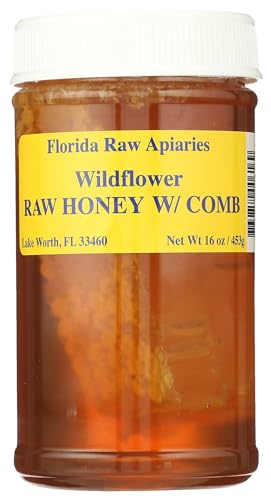
Florida Raw Apiaries delivers something increasingly rare: honey that still contains a real piece of beeswax comb. The comb is edible and waxy, offering a texture experience that no filtered honey can replicate — it’s like chewing honey. The wildflower varietal captures the seasonal blooms of Florida’s diverse ecosystem, resulting in a dark amber honey with a bold, slightly tangy flavor that changes subtly with each harvest.
The 16-ounce glass jar is smaller than the competition, but the inclusion of the comb makes each spoonful a sensory event. Buyers who appreciate authentic, unfiltered honey consistently rate this as the “best-tasting local Southern honey” available online, noting that the comb itself is delicious and fun to eat. The lack of heat treatment means the honey retains its natural enzymes and the comb stays soft and pliable.
Some batches arrive partially crystallized due to the raw processing, but a warm water bath restores the liquid consistency without damaging the comb. The packaging has been flagged as occasionally leaky in transit, so consider ordering during cooler months. This honey rewards those who value texture and provenance over convenience and consistency.
Why it’s great
- Real beeswax comb provides unmatched texture and authenticity
- Bold wildflower flavor reflects genuine Florida terroir
- No heat processing preserves natural enzymes and comb structure
Good to know
- 16 oz is smaller than most competitors at similar price tier
- Crystallization may occur — warm water bath needed
FAQ
Does raw honey crystallize faster than processed honey?
How can I tell if honey is truly raw and unfiltered?
Why does honey from different floral sources taste so different?
Final Thoughts: The Verdict
For most users, the tasting honey winner is the Carmichael’s Organic Honey because it delivers a rich butterscotch-caramel flavor, reliable non-crystallizing texture, and USDA organic certification in a glass jar — all at a mid-range price that outperforms anything in its tier. If you want a portable squeeze-bottle system that prevents waste and crystallization, grab the Nature Nate’s 4-pack. And for a delicate monofloral experience that pairs beautifully with cheese and fruit, nothing beats the Altay Raw Acacia Honey with its glass jar and slow-crystallizing acacia profile.