Tamari sauce is the richer, darker, and smoother cousin of standard soy sauce, brewed with little to no wheat for a deeper umami punch that clings to sushi, stir-fries, and marinades without overwhelming them. The challenge is finding a bottle that balances authentic fermented flavor with practical dietary needs like gluten-free certification or reduced sodium without tasting thin or chemical-laced.
I’m Mohammad Maruf — the founder and writer behind AirfryerBite. I’ve spent years analyzing the chemical composition, traditional brewing methods, and consumer feedback on hundreds of Asian condiments to separate genuinely crafted tamari from mass-produced imitations.
If you want a single dependable bottle that delivers traditional depth without the gluten or excessive salt, this guide breaks down the top contenders. Read on for five battle-tested options that define the best tamari sauce category in 2025 and beyond.
How To Choose The Best Tamari Sauce
Choosing tamari isn’t as simple as grabbing the first gluten-free label on the shelf. The brewing method, sodium level, ingredient purity, and bottle volume all affect whether the sauce lifts your dish or just adds salty liquid. Focus on the four criteria below to find a bottle that earns a permanent spot in your fridge door.
Traditional Brewing vs. Modern Hydrolysis
Authentic tamari is brewed and fermented for months, using whole soybeans, koji culture, and salt water. This natural process develops complex amino acids that deliver a savory, mellow umami. Avoid tamari made with acid-hydrolyzed soy protein, which tastes sharp and one-dimensional. Look for phrases like “naturally brewed,” “aged,” or “traditionally fermented” on the label.
Sodium Reduction Without Sacrificing Flavor
Many tamari brands offer reduced-sodium versions, but the cuts vary widely — 40%, 50%, even 75% less sodium than standard soy sauce. The trick is finding a reduction that still leaves enough salt to balance bitterness and sweetness. Tamari lite (around 50% less sodium) tends to retain the best mouthfeel, while ultra-low versions can taste flat unless they rely on premium amino acid profiles from longer fermentation.
Ingredient Purity and Certifications
Top-tier tamari contains four to five ingredients: soybeans, water, salt, and possibly a preservative like alcohol. Watch for added caramel color, MSG, corn syrup, or artificial flavor enhancers that cheapen the taste. If you need strict gluten-free assurance, choose a brand certified by the Gluten-Free Certification Organization (GFCO) rather than just trusting “gluten-free” marketing claims.
Quick Comparison
On smaller screens, swipe sideways to see the full table.
| Model | Category | Best For | Key Spec | Amazon |
|---|---|---|---|---|
| Lee Kum Kee Gluten Free Soy Sauce | Mid-Range Bulk | Everyday cooking & refills | 64 oz bulk bottle | Amazon |
| San J Organic Tamari Lite | Mid-Range | Low-sodium daily use | 50% less sodium | Amazon |
| Best of Thailand Lite Dark Soy Sauce | Mid-Range | Low-sodium stir-fry & glaze | 75% less sodium | Amazon |
| Kikkoman Less Sodium Gluten Free Tamari | Premium Bulk | Restaurant-style bulk use | 64 oz, 40% less sodium | Amazon |
| Ohsawa Nama Shoyu | Premium | Traditional Japanese cooking | Aged in cedar kegs | Amazon |
In‑Depth Reviews
1. Lee Kum Kee Gluten Free Soy Sauce (64 oz)

The Lee Kum Kee gluten-free soy sauce is a 64-ounce bulk bottle that bridges the gap between value and quality. Brewed from non-genetically modified whole soybeans, it delivers a rich, full-bodied umami that works across marinades, stir-fries, dipping sauces, and braises without the metallic aftertaste common in cheaper hydrolyzed sauces.
Customer reviews consistently mention that this product is the only gluten-free soy sauce they trust for both everyday meals and special recipes. The large format makes it ideal for households that go through tamari quickly, and the screw-cap reseals securely for fridge storage. The flavor profile leans savory with moderate saltiness, making it a safe default for any gluten-sensitive cook.
One important distinction: Lee Kum Kee labels this product as “soy sauce” rather than “tamari,” though the ingredient list and gluten-free certification confirm it fits the tamari profile. If you prefer traditional tamari labeling, you may want to look elsewhere. Otherwise, this is the most cost-effective way to stock up on a reliable, flavorful gluten-free soy sauce.
Why it’s great
- Massive 64-ounce bottle reduces per-ounce cost significantly
- Rich umami flavor that holds up in high-heat cooking
- Made from non-GMO soybeans with gluten-free assurance
Good to know
- Labeled as “soy sauce,” not “tamari,” which may confuse purists
- Not reduced-sodium; full salt content comparable to standard soy sauce
2. San J Organic Tamari Lite (20 oz)
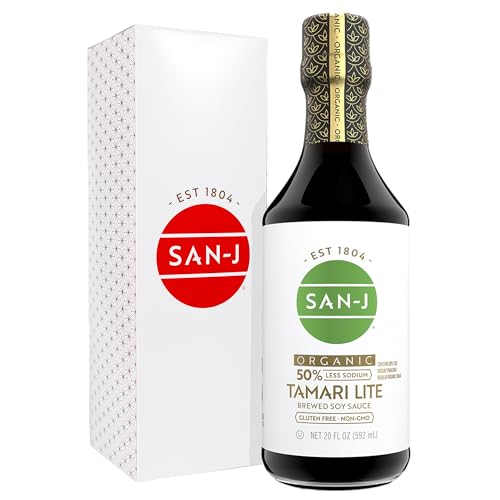
San J’s Organic Tamari Lite hits the sweet spot for anyone who wants organic ingredients and a meaningful sodium reduction without sacrificing the mouthfeel of traditional tamari. At 50% less sodium than standard soy sauce, it still packs enough salt to balance savory dishes, and the GFCO certification gives gluten-free eaters full confidence.
The brewing process follows an eight-generation family method that yields a richer, fuller flavor compared to many other reduced-sodium soy sauces on the market. Customers report using it as a daily all-purpose condiment — splashing it on fried rice, dipping sushi, and marinating meats — with consistent results. The 20-ounce bottle is a practical size for smaller households that don’t need bulk quantities.
If you prioritize organic sourcing and want a tamari that performs well in both hot and cold applications, this is a strong candidate. The only trade-off is the relatively small volume compared to the bulk options, making it less economical per ounce if you cook with tamari daily.
Why it’s great
- Organic, non-GMO ingredients with no artificial preservatives or colors
- 50% less sodium retains authentic tamari depth and flavor
- GFCO-certified gluten-free for strict dietary needs
Good to know
- Smaller 20-ounce bottle may require frequent reordering for heavy users
- Not the cheapest per ounce compared to bulk tamari options
3. Best of Thailand Lite Dark Soy Sauce (2 x 23.65 oz)

The Best of Thailand Japanese-style lite dark soy sauce cuts sodium by an impressive 75% while still delivering a balanced umami profile. Brewed with premium soybeans, wheat, salt, and water using natural fermentation, it avoids the flat, watery taste that plagues many ultra-low-sodium sauces. The two-pack of 23.65-ounce squeeze bottles offers a generous total of 47.3 fluid ounces for the price.
Customers highlight its versatility in stir-fries, teriyaki glazes, umami broth, and sushi dipping. The squeezable dispenser makes portion control easy, and the lighter sodium content allows you to use it more liberally without worrying about salt overload. Several reviews note that it’s the only low-sodium soy sauce they trust to not ruin the flavor of their Asian dishes.
It’s worth noting that this product contains wheat, so it is not gluten-free. If you need a tamari that is both gluten-free and very low in sodium, you’ll need to look at dedicated tamari brands. For everyone else, this is a top-tier choice for heart-healthy cooking that doesn’t sacrifice taste.
Why it’s great
- 75% less sodium makes it ideal for low-sodium dietary plans
- Two-pack provides excellent volume for a mid-range price
- Squeezable bottles simplify portioning and reduce mess
Good to know
- Contains wheat, so it’s not suitable for gluten-free diets
- Packaging quality reported as inconsistent in some shipments
4. Kikkoman Less Sodium Gluten Free Tamari (64 oz)
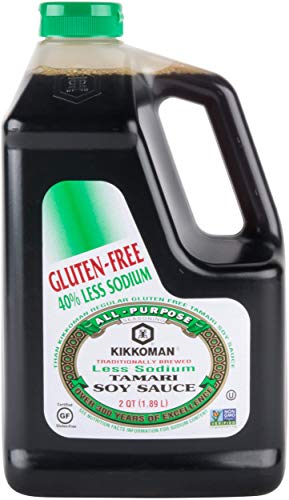
Kikkoman’s Less Sodium Gluten Free Tamari delivers the trusted Kikkoman name in a massive half-gallon container. With 40% less sodium than standard gluten-free tamari, it strikes a sensible middle ground between full-salt and ultra-low options. The taste is nearly indistinguishable from regular soy sauce according to customer reviews, making it an easy swap for anyone who needs gluten-free but doesn’t want to compromise on flavor.
The 64-ounce container is designed for heavy use — perfect for restaurants, large families, or meal prep enthusiasts who go through tamari quickly. The wide mouth allows easy refilling of smaller condiment bottles. Customers emphasize that the product ships well without leaks and fits comfortably on a standard fridge shelf.
One minor design flaw: the cap hole is relatively large, which makes it tricky to pour directly onto food without creating a puddle. It’s best used as a refill source rather than a primary dining table dispenser. If you want a single bottle that works both for cooking and table use, consider a smaller format instead.
Why it’s great
- Trusted Kikkoman quality with gluten-free and wheat-free assurance
- 40% less sodium provides a meaningful reduction without taste loss
- Bulk 64-ounce size is cost-effective for daily cooking use
Good to know
- Large cap hole makes direct pouring messy; better for refilling
- Not organic, for those who prioritize organic certification
5. Ohsawa Nama Shoyu (32 oz)

Ohsawa Nama Shoyu is the closest you can get to artisan, traditionally crafted Japanese shoyu without traveling to Japan. Made from organic soybeans and organic whole wheat, it is aged for a minimum of 1.5 years in 150-year-old Akita cedar barrels. The result is a complex, mellow umami with a more savory-than-salty profile, amber color, and aromatic bouquet that simply cannot be replicated by modern fast-brewing methods.
As an unpasteurized, raw shoyu, it retains natural enzymes that contribute to its depth. Customers describe it as the benchmark for clean, organic soy sauce that fits a whole-foods lifestyle. It works beautifully as a garnish for udon, soba, sushi, tofu, and fresh vegetables, though its robust character also shines in simple everyday dishes.
The primary drawbacks are the premium price and fragile packaging. The glass bottle arrives with a plastic lid that has weak threading, and shipping protection is often insufficient, leading to broken jars. Order with caution and be prepared to request a replacement if the bottle arrives damaged. For connoisseurs who value flavor above all else, the taste is worth the hassle.
Why it’s great
- Traditional unpasteurized nama shoyu with complex, deep umami
- Aged in cedar kegs for a unique aromatic profile
- Organic, non-GMO, and free from additives
Good to know
- Premium price point compared to mass-market tamari options
- Glass bottle and plastic lid are prone to shipping damage
FAQ
Is tamari sauce always gluten-free?
Can I substitute tamari for soy sauce in any recipe?
How should I store an opened bottle of unpasteurized nama shoyu?
Final Thoughts: The Verdict
For most users, the best tamari sauce winner is the Lee Kum Kee Gluten Free Soy Sauce because it combines bulk economy with rich, full-bodied umami that stands up to heavy cooking. If you want organic ingredients and a meaningful sodium reduction with excellent flavor, grab the San J Organic Tamari Lite. And for traditional Japanese cooking where authentic, cedar-aged complexity matters, nothing beats the Ohsawa Nama Shoyu despite its premium price and fragile packaging.