Finding a sweetener that dissolves cleanly in hot coffee without leaving a chemical aftertaste or a gritty residue is the defining challenge of the morning brew. Granulated sugar delivers instant sweetness but spikes blood glucose, while liquid alternatives often thin out the body of the cup. The right choice balances solubility, sweetness intensity, and metabolic impact so your first sip tastes as good as your last.
I’m Mohammad Maruf — the founder and writer behind AirfryerBite. I have spent years analyzing ingredient labels, glycemic index data, and customer feedback on hundreds of coffee-compatible sweeteners to separate marketing claims from measurable performance.
Whether you prioritize zero-calorie diets, keto compliance, or a clean flavor profile that does not mask your roast’s origin notes, this guide will help you pick the sweetener for coffee that actually works with your cup and your lifestyle.
How To Choose The Best Sweetener For Coffee
The ideal coffee sweetener must dissolve near-instantly in hot liquid, avoid any bitter or metallic aftertaste, and align with your dietary goals. Three factors separate a great choice from a disappointing one.
Sweetness Ratio and Serving Adjustments
Each sweetener type has a distinct sweetness multiplier compared to white sugar. Stevia extracts can be 200–300 times sweeter, requiring a tiny pinch. Allulose is only 70% as sweet, so you need about 30% more volume to match the same perceived sweetness. If you switch from table sugar to a high-intensity sweetener without adjusting your measuring spoon, you risk either an overly sweet cup or a weak one that fails to mask coffee’s natural acidity.
Bulking Agents and Dissolution Behavior
Many powdered sweeteners include a bulking agent — inulin, erythritol, dextrose, or maltodextrin — to create a 1:1 sugar-like volume. Inulin dissolves well in hot liquids but can settle in cold drinks. Erythritol has a cooling effect on the tongue and is less soluble in iced coffee. Maltodextrin dissolves quickly but ranks higher on the glycemic index. Check the ingredient list to see what sits behind the stevia or monk fruit extract, because the filler directly determines whether your coffee ends up clear or cloudy.
Glycemic Impact and Aftertaste Profile
Zero-calorie sweeteners such as stevia, monk fruit, and allulose do not raise blood glucose, making them suitable for keto and diabetic diets. Agave nectar has a lower glycemic index than table sugar (around 15–30 versus 65) but still contains calories. The biggest complaint across reviews is aftertaste: some stevia brands carry a licorice-like bitterness, while monk fruit–erythritol blends offer a cleaner finish that mimics sugar more closely. Taste tolerance is personal, so a sample-sized purchase is wise before committing to a large bag.
Quick Comparison
On smaller screens, swipe sideways to see the full table.
| Model | Category | Best For | Key Spec | Amazon |
|---|---|---|---|---|
| Golden Monk Fruit with Erythritol | Monk Fruit Blend | Baking & zero-aftertaste coffee | 363 servings per 4-lb bag | Amazon |
| SweetLeaf Stevia Powder Shaker Jar | Stevia Powder | Pure stevia with inulin prebiotic | 8 oz total (2-pack) | Amazon |
| Amazon Grocery Stevia & Erythritol | Stevia/Erythritol Blend | Budget bulk packets for travel | 1,000 single-serve packets | Amazon |
| Viva Doria Allulose Sweetener | Allulose Granules | Low-carb sugar replica | 32 oz / 907 g bag | Amazon |
| Wholesome Organic Blue Agave | Liquid Agave | Quick-dissolving liquid sweetener | 44 fl oz bottle | Amazon |
In‑Depth Reviews
1. Micro Ingredients Golden Monk Fruit Sweetener with Erythritol
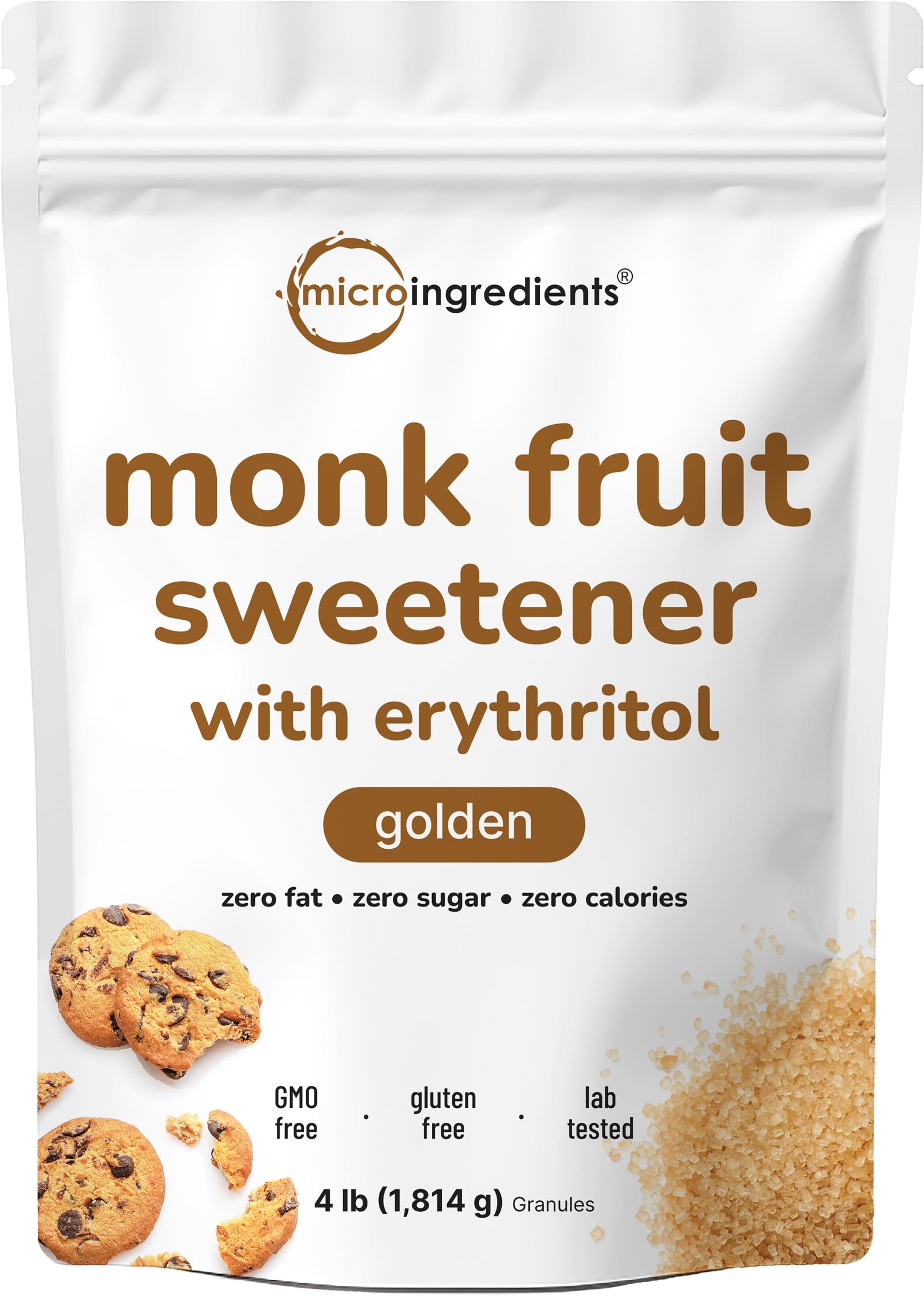
Golden monk fruit uses a different part of the fruit than standard white monk fruit, resulting in higher concentrations of natural sweetness. Micro Ingredients blends that golden extract with erythritol to balance the taste profile, so you get a 1:1 brown-sugar replacement without the cooling sensation that pure erythritol often leaves on your tongue. The 4-pound bag holds 363 servings, making it the most economical premium option for daily coffee drinkers.
Customer feedback consistently highlights the absence of a chemical aftertaste — a common complaint with pure stevia. The granulated texture dissolves readily in hot coffee, and several reviewers confirm it works well in baking and yogurt without clumping. Because the blend is sugar-free, vegan, and non-GMO, it fits keto and diabetic-friendly diets without sacrificing the sensory experience of a sweetened brew.
The only real caveat is the initial cost per bag, which is higher than grocery-store granulated sugar. However, given that a single serving replaces roughly one teaspoon of sugar, the cost per cup becomes competitive when you factor in zero calories and zero blood-sugar impact.
Why it’s great
- Clean sugar-like sweetness with no lingering bitterness
- Bulk 4-pound bag provides 363 servings for daily use
- 1:1 brown-sugar substitution makes baking conversion simple
Good to know
- Higher upfront cost than basic stevia or erythritol alone
- Some users note a very mild monk fruit-specific flavor that differs from white sugar
2. SweetLeaf Stevia Powder Shaker Jar (Pack of 2)
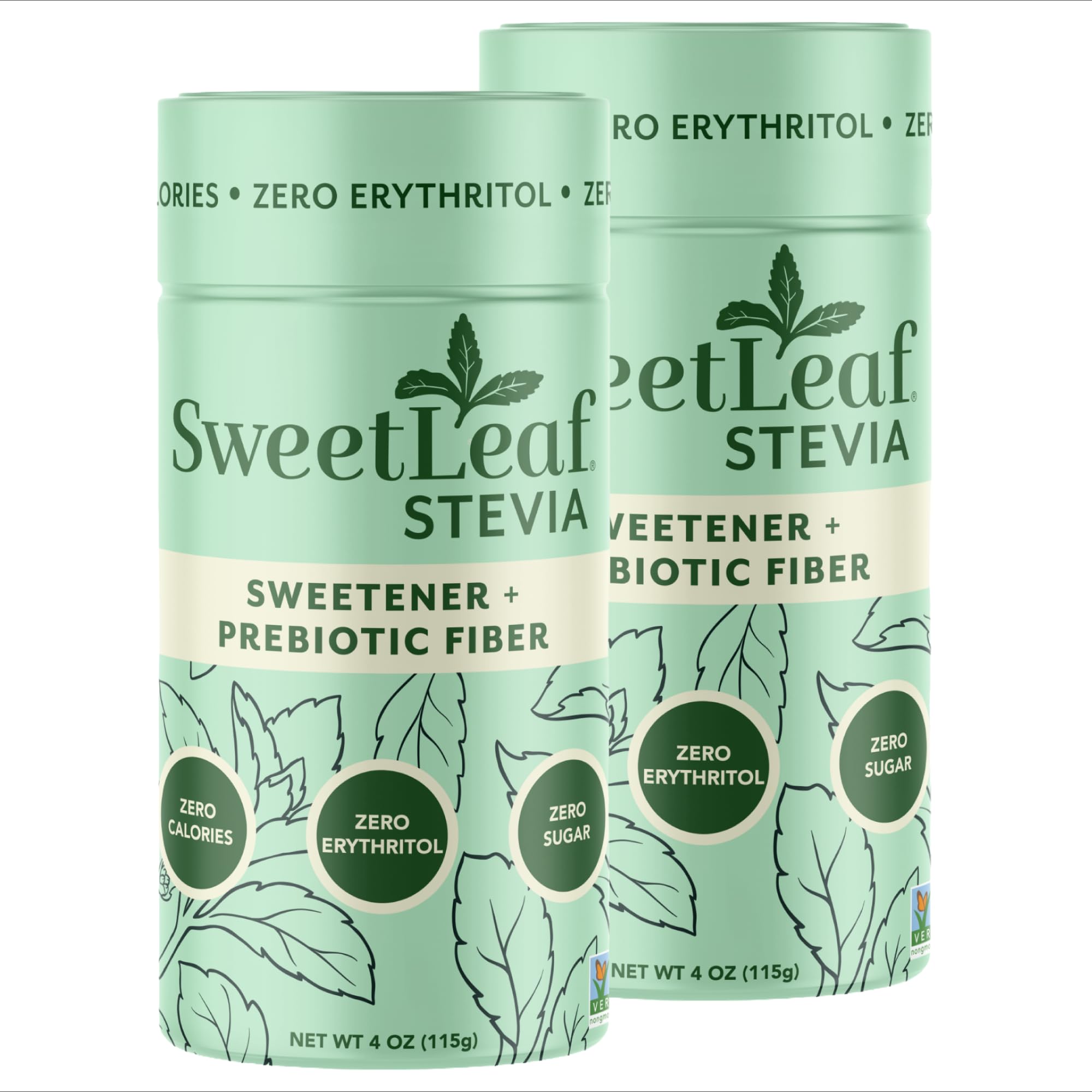
SweetLeaf uses organic stevia leaf extract combined with inulin — a prebiotic fiber — rather than maltodextrin or dextrose. That ingredient choice makes it appealing for anyone trying to stabilize blood sugar, since inulin buffers digestion and does not spike glucose. The dual-cap shaker jar lets you sprinkle powder over coffee or scoop it for baking, and the two-pack gives you 8 total ounces of product.
Many buyers report that this brand is one of the few stevia options that does not carry a bitter or licorice-like aftertaste. The adaptation period is real: your palate may need a few weeks to adjust from sugar to stevia’s faster-onset sweetness. In hot coffee the powder dissolves well with a quick stir, though cold beverages may require vigorous mixing to avoid clumps.
A small number of users experienced mild digestive noise from the inulin, especially when consuming multiple servings per day. Each serving is intensely sweet — about 1/2 teaspoon equals a full teaspoon of sugar — so the 8-ounce supply lasts much longer than a sugar bag of equal volume. If you want a zero-calorie, keto-friendly option with a clean ingredient label, this is a solid mid-range contender.
Why it’s great
- No bitter aftertaste compared to many stevia brands
- Inulin prebiotic fiber avoids glucose-spiking fillers
- Dual cap design works for shaking or scooping
Good to know
- Requires a taste adjustment period for sugar-accustomed palates
- Inulin can cause mild gas or bloating in sensitive individuals
3. Amazon Grocery Zero Calorie Stevia & Erythritol Sweetener Packets (1000 Ct)
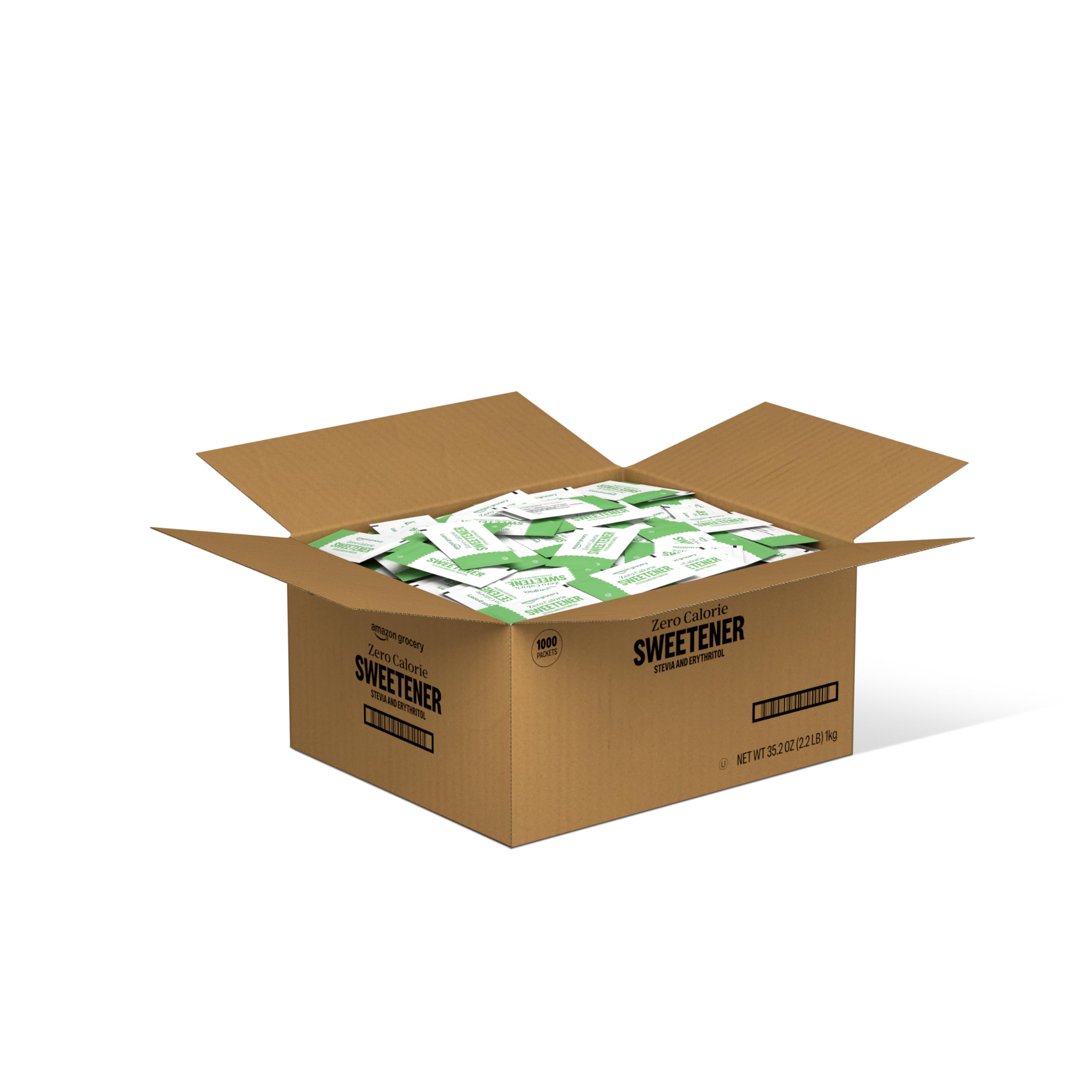
This is the closest thing to a no-brainer refill for office drawers, travel bags, and household coffee stations. Each packet delivers the sweetness equivalent of 1.5 teaspoons of sugar, so a single stick handles a standard mug of black coffee. With 1,000 packets in one box, you are set for months without running out.
The stevia-erythritol formulation avoids the intense sweetness spike of pure stevia while reducing the cooling mouthfeel that pure erythritol can create. Customer reviews highlight the value-for-money factor — the per-packet cost is significantly lower than branded sweetener packets at grocery checkout lanes. Many buyers switched from artificial sweeteners and reported that this blend helped them transition away from chemical-tasting alternatives.
One informed reviewer noted that erythritol is listed as the primary ingredient, meaning the product is more erythritol-heavy than stevia-heavy. Erythritol is a sugar alcohol that is generally well tolerated, but consuming large quantities may cause digestive discomfort in some individuals. If you prefer a stevia-dominant profile, you will need to look elsewhere, but as a convenient, zero-calorie, everyday sweetener this packet system is hard to beat.
Why it’s great
- Extreme bulk quantity — 1,000 ready-to-go packets
- Each packet equals 1.5 tsp sugar sweetness for easy dosing
- Very low per-serving cost compared to retail packets
Good to know
- Erythritol is the first ingredient, not stevia
- Large servings may cause mild gastrointestinal effects
4. Viva Doria Allulose Sweetener (2 lb)
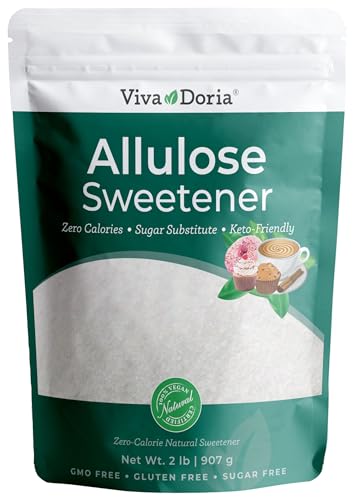
Allulose is a rare sugar naturally found in figs and raisins, but it passes through the body without being metabolized — zero net carbs and zero glycemic spike. Viva Doria packages it as a granulated powder that looks and feels very close to table sugar, making the transition psychologically easier than switching to a super-intense stevia or monk fruit. Because allulose is only 70% as sweet as sugar, you use roughly 1.3 times the volume to match your usual sweetness level.
Buyers who switched from erythritol-based sweeteners specifically cited the lack of a cooling aftertaste as the primary reason they stick with allulose. The powder dissolves in both hot and cold beverages without grittiness, and multiple reviewers mentioned using it to make homemade chocolate sauce and baked goods with no texture issues. The 2-pound bag provides roughly 280 teaspoons of allulose, which is competitive on a per-serving basis.
The main trade-off is digestive tolerance: allulose can cause gas and loose stools when consumed in large amounts, especially for individuals unaccustomed to sugar alcohols. Starting with a half-serving and gradually increasing helps the gut adapt. If you are looking for a sugar-like sweetener that checks zero-calorie and keto boxes without an aftertaste, this is a strong candidate.
Why it’s great
- Zero net carbs with no bitter or cooling aftertaste
- Granular texture closely mimics conventional sugar
- Dissolves well in both hot and cold beverages
Good to know
- Only 70% as sweet as sugar — requires a larger scoop
- Excessive consumption can cause gastrointestinal discomfort
5. Wholesome Sweeteners Organic Blue Agave Nectar (44 oz)
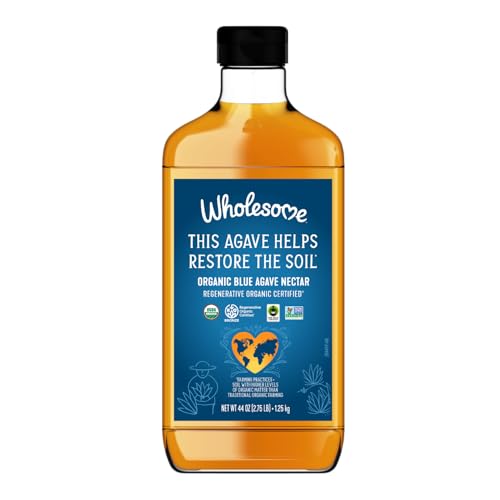
Agave nectar is the only liquid entry on this list, and the format alone solves a common complaint with powdered sweeteners: instant dissolution. Wholesome’s organic blue agave pours like syrup and mixes into hot coffee or cold brew with zero stirring effort. Because agave is 25% sweeter than sugar, you use less volume per cup — about 1 teaspoon of agave replaces 1.25 teaspoons of granulated sugar.
The glycemic index of agave is roughly 15, which is significantly lower than table sugar’s 65, making it a better choice for blood-sugar management. It does contain calories and carbohydrates, so it is not zero-calorie or ketogenic. The flavor is neutral: customers note that it sweetens without introducing a distinct taste, which is ideal for single-origin coffees where you want the bean notes to come through.
The 44-ounce bottle is large and heavy, intended for kitchen counter use rather than travel. The flip-top spout is convenient for one-handed pouring, though some users wished for a finer nozzle for more precise control. If you prefer a liquid sweetener that dissolves instantly and adds no off-flavors, this is the most reliable conventional option in the lineup.
Why it’s great
- Instantly dissolves in any temperature of coffee
- Low glycemic index (approx. 15) compared to regular sugar
- Neutral flavor does not mask coffee’s origin notes
Good to know
- Contains calories and carbs — not zero-calorie or keto-friendly
- Large bottle is less convenient for travel or desk use
FAQ
Why does stevia sometimes taste bitter in coffee?
Can I use allulose in iced coffee without it recrystallizing?
Is monk fruit sweetener safe for diabetic blood sugar control?
Final Thoughts: The Verdict
For most users, the sweetener for coffee winner is the Micro Ingredients Golden Monk Fruit with Erythritol because it delivers clean sugar-like sweetness with zero aftertaste, zero calories, and enough bulk to handle daily coffee for months. If you want a pure stevia option with a prebiotic filler, grab the SweetLeaf Stevia Powder Shaker. And for instant dissolution in every temperature, nothing beats the Wholesome Organic Blue Agave.