A sushi knife isn’t a chef’s knife with a fancy name. Its single-bevel geometry and ultra-thin blade profile are engineered for one task: drawing through raw protein in a single, uninterrupted stroke without tearing the cell structure. A dull or incorrectly ground blade mashes the surface of the fish, turning what should be translucent, velvety slices into ragged strips.
I’m Mohammad Maruf — the founder and writer behind AirfryerBite. My research focuses on cutting-edge metallurgy, blade geometry, and the specific steel types that separate a true yanagiba from a knife that merely looks like one.
After analyzing customer use data on over two dozen models and cross-referencing materials, Rockwell hardness ratings, and real-world feedback, these are the seven knives that genuinely deserve consideration for the title of best sushi knives.
How To Choose The Best Sushi Knives
Selecting a sushi knife requires understanding three non-negotiable variables: blade geometry, steel composition, and handle ergonomics. A standard western chef’s knife cannot replicate the clean, single-stroke cut of a dedicated yanagiba. Ignoring these fundamentals leads to torn fish, faster oxidation, and a frustrating experience.
Blade Geometry: Single Bevel vs. Double Bevel
A true sushi knife — specifically a yanagiba — uses a single-bevel edge ground only on one side. This creates a drastically thinner cutting angle (typically 12–15 degrees on the beveled side with a flat or slightly hollow back) that parts fish cells rather than crushing them. Double-bevel knives, even razor-sharp ones, produce a wedge effect that damages delicate raw protein. The single-bevel design also allows for the uraoshi, a concave hollow on the back face that reduces friction and prevents the slice from sticking to the blade. Beginners often mistakenly believe a double-bevel gyuto can substitute for a yanagiba; it cannot for true sashimi.
Steel Type and Hardness (HRC)
Sushi knives are typically forged from high-carbon steel, stainless steel with a high carbon content, or layered Damascus composite. White Steel #2 (Shirogami) rates around 62–63 HRC and sharpens to a frighteningly fine edge but demands diligent drying and oiling to resist rust. VG10 stainless steel, rated at 60–62 HRC, offers superior corrosion resistance with excellent edge retention, making it more forgiving for daily use. 10Cr15MoV, a Japanese-origin stainless super steel, performs similarly to VG10 at a lower entry cost. The Rockwell hardness directly correlates to how long the knife holds a working edge during continuous fish cutting — a unit serious buyers obsess over.
Handle Construction and Material
Traditional wa-handles (octagonal or D-shaped magnolia wood) are lightweight and promote the pinch grip sushi chefs rely on for precision. Western-style handles, often with a full tang and riveted bolster, offer a heavier, more familiar balance for cooks transitioning from European knives. Santoprene or synthetic handles provide slip resistance in wet conditions but lack the hygroscopic quality of untreated wood, which absorbs minor hand moisture and improves grip over time. The handle should complement the blade’s weight distribution so the knife feels neutral in hand rather than blade-heavy or handle-heavy.
Quick Comparison
On smaller screens, swipe sideways to see the full table.
| Model | Category | Best For | Key Spec | Amazon |
|---|---|---|---|---|
| Yoshihiro White #2 Yanagi 10.5″ | Premium | Traditional single-bevel sashimi | White #2 Steel, 62-63 HRC, 10.5″ blade | Amazon |
| Yoshihiro VG10 Gyuto 8.25″ | Premium | Versatile sushi prep & multi-task | VG10 Damascus, 60 HRC, 8.25″ blade | Amazon |
| Atumuryou JPCK VG10 8″ | Premium | Gift-ready Damascus chef knife | 67-layer VG10, 62 HRC, leather sheath | Amazon |
| SHAN ZU 10″ Yanagiba | Mid-Range | Left-handed friendly sashimi knife | 10Cr15MoV, 62 HRC, 12° angle | Amazon |
| HOSHANHO 10″ Yanagiba | Mid-Range | Double-bevel sashimi with Damascus look | 10Cr15CoMoV, 60+ HRC, 8-layer clad | Amazon |
| Mercer Culinary Yanagi 12″ | Entry-Level | Learning single-bevel on a budget | High-carbon German steel, 12″ blade | Amazon |
| KAI Seki Magoroku Yanagi 210mm | Entry-Level | Budget deba for fish prep | VG MAX steel, 210mm (8.3″) blade | Amazon |
In‑Depth Reviews
1. Yoshihiro Shiroko High Carbon Steel Kasumi Yanagi 10.5″ (270mm)
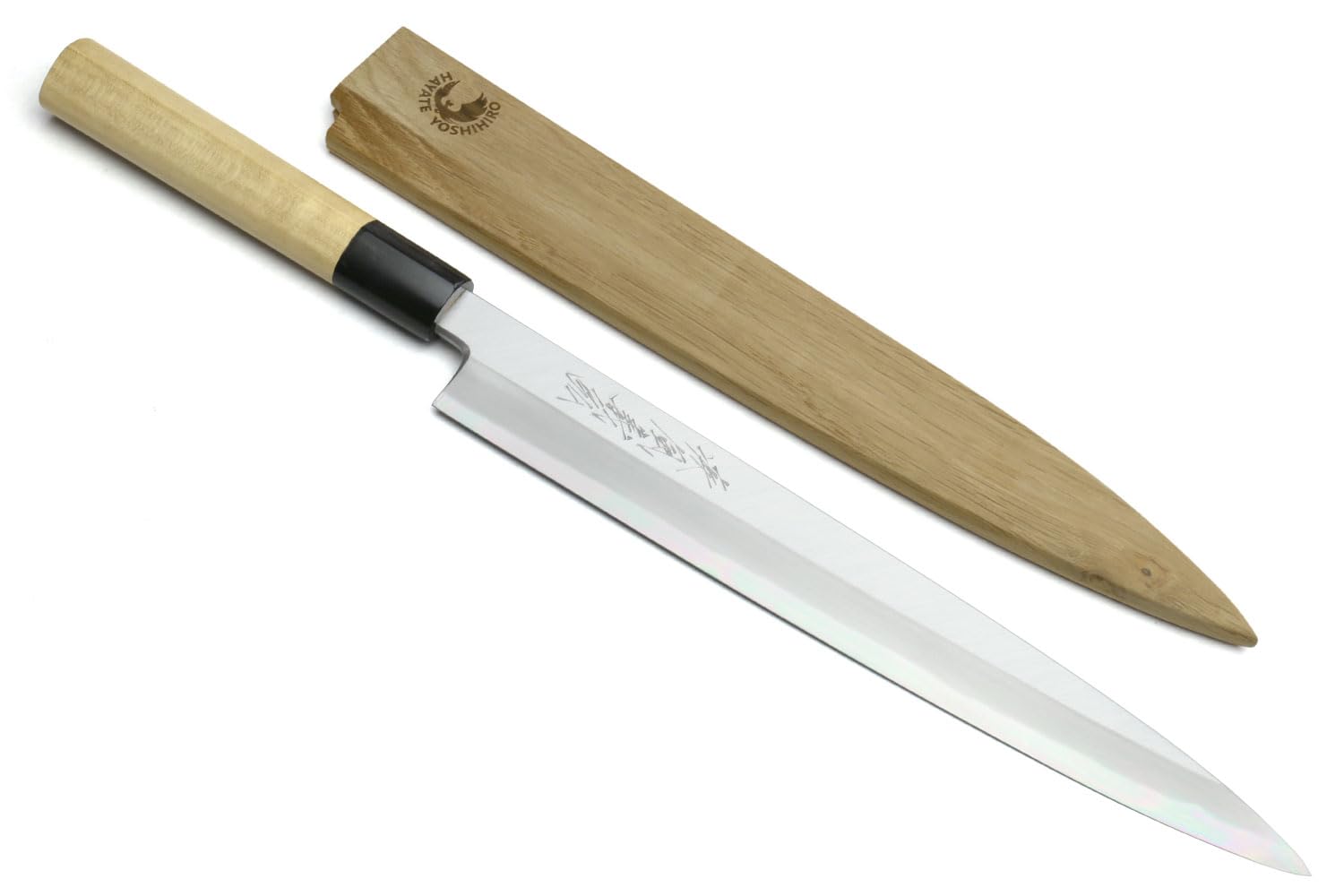
This is the nearest thing to a traditional apprentice-level yanagiba that money can reliably buy without commissioning a custom smith. Forged from White Steel #2 (Shirogami) at 62–63 HRC and clad in iron to create the mist-like Kasumi finish, this knife is purpose-built for single-stroke sashimi slicing. The blade carries a true shinogi line and a fully functional uraoshi — a concave grind on the reverse side that reduces sticking and preserves the cellular integrity of the fish. At 270mm, the length allows a full diagonal pull through a standard fillet without repositioning. The magnolia wood D-shaped handle is lightweight, absorbs moisture from the hand for a non-slip grip, and the included protective saya (wooden sheath) is a welcome addition that many competitors omit at this price tier.
Real-world feedback confirms the blade arrives sharp but often benefits from a light touch-up on a water stone to correct minor grinding inconsistencies at the heel or tip. This is normal for hand-forged carbon steel knives in this range. The non-stainless nature means it will develop a protective patina and must be washed, dried, and oiled after every use. Users who have kept the knife for years report exceptional edge retention and the ability to resharpen to a hair-whittling edge with proper stone technique. It requires a dedicated cook who understands carbon steel care — this is not a grab-and-wash kitchen tool.
The feel in hand is notably light at 11.5 ounces, with the blade’s distal taper making it agile for precise cuts. The combination of the uraoshi and the thin edge produces slices of hamachi or salmon that display a mirror-like surface without drag marks. For anyone serious about making sashimi at home or in a professional setting, this represents the most direct path to authentic single-bevel performance without spending double. The Kasumi finish is visually understated — a misty gradient along the blade spine — and patinas beautifully over time with regular use.
Why it’s great
- Authentic single-bevel yanagiba geometry with proper uraoshi for friction-free cuts
- White #2 carbon steel takes and holds an incredibly fine edge
- Includes a fitted magnolia saya for safe storage
Good to know
- Carbon steel requires immediate drying and regular oiling to prevent rust
- Some units need a water stone correction at the heel or tip out of the box
- Not for use on bones, frozen foods, or hard vegetables
2. Yoshihiro VG10 16-Layer Hammered Damascus Gyuto 8.25″ (210mm)
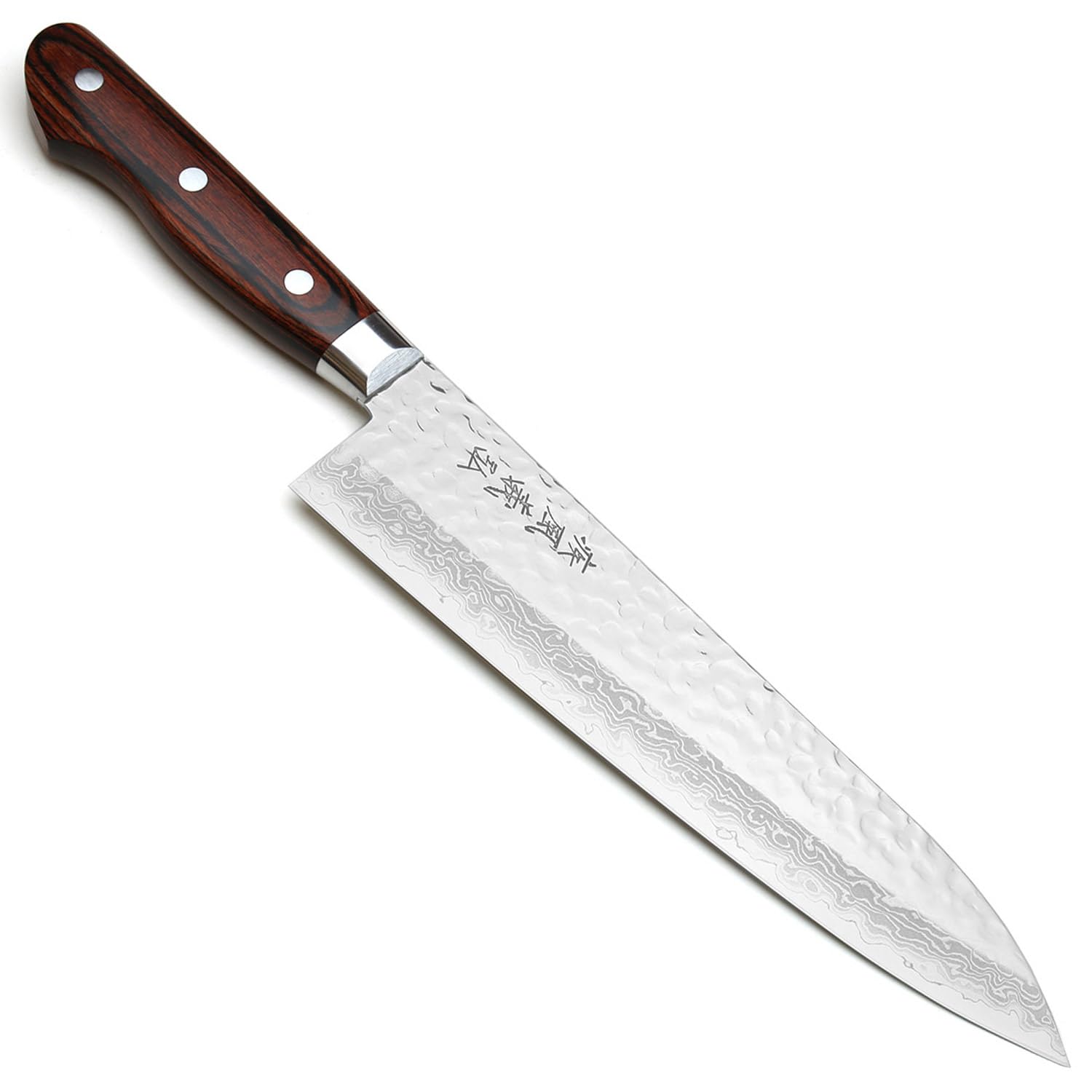
While not a single-bevel yanagiba, the gyuto is the essential companion knife for any sushi kitchen — it handles vegetable prep, portioning rolls, and trimming fish before the yanagiba takes over. This Yoshihiro model features a VG10 stainless core wrapped in 16 layers of softer Damascus stainless. The hammered (tsuchime) finish creates micro-pockets along the blade face that reduce food adhesion, so sticky daikon or cucumber slices fall away cleanly. At 60 HRC, the VG10 core holds a working edge significantly longer than the German steel found in most western chef’s knives, while the double-bevel edge (with a symmetrical 20-degree angle on each side) allows for comfortable rocking cuts.
The full-tang Western handle is carved from mahogany and is slightly heavier than a wa-handle, shifting the balance point toward the bolster. This gives the knife a planted, stable feel that home cooks transitioning from European knives will find immediately familiar. The hammered texture is not purely decorative — it also prevents thin slices of raw fish from suctioning to the blade face during repetitive cuts. Users consistently report the blade arrives shaving-sharp and requires only periodic honing on a ceramic rod or strop rather than a full whetstone session.
This knife sits at a critical intersection: it offers the corrosion resistance of stainless with the edge hardness of a carbon-steel-adjacent alloy. It will not patina or rust under normal use, making it a lower-maintenance daily driver. The 8.25-inch length is short enough for precise work but long enough to slice through a large fillet in one pass. If you buy only two knives for sushi prep, pair this gyuto with a dedicated yanagiba. Buyers should note that no saya is included, and the blade can scratch if stored loosely in a drawer. A blade guard is recommended.
Why it’s great
- VG10 core with 60 HRC delivers excellent edge retention and corrosion resistance
- Hammered tsuchime finish prevents food from sticking during repetitive cuts
- Mahogany Western handle provides balanced, familiar ergonomics
Good to know
- Double-bevel design not a substitute for a single-bevel yanagiba for sashimi
- No wooden saya or blade guard included
- Some units may show minor surface scratching from packaging
3. Atumuryou JPCK 67-Layer Damascus VG10 Chef Knife 8″
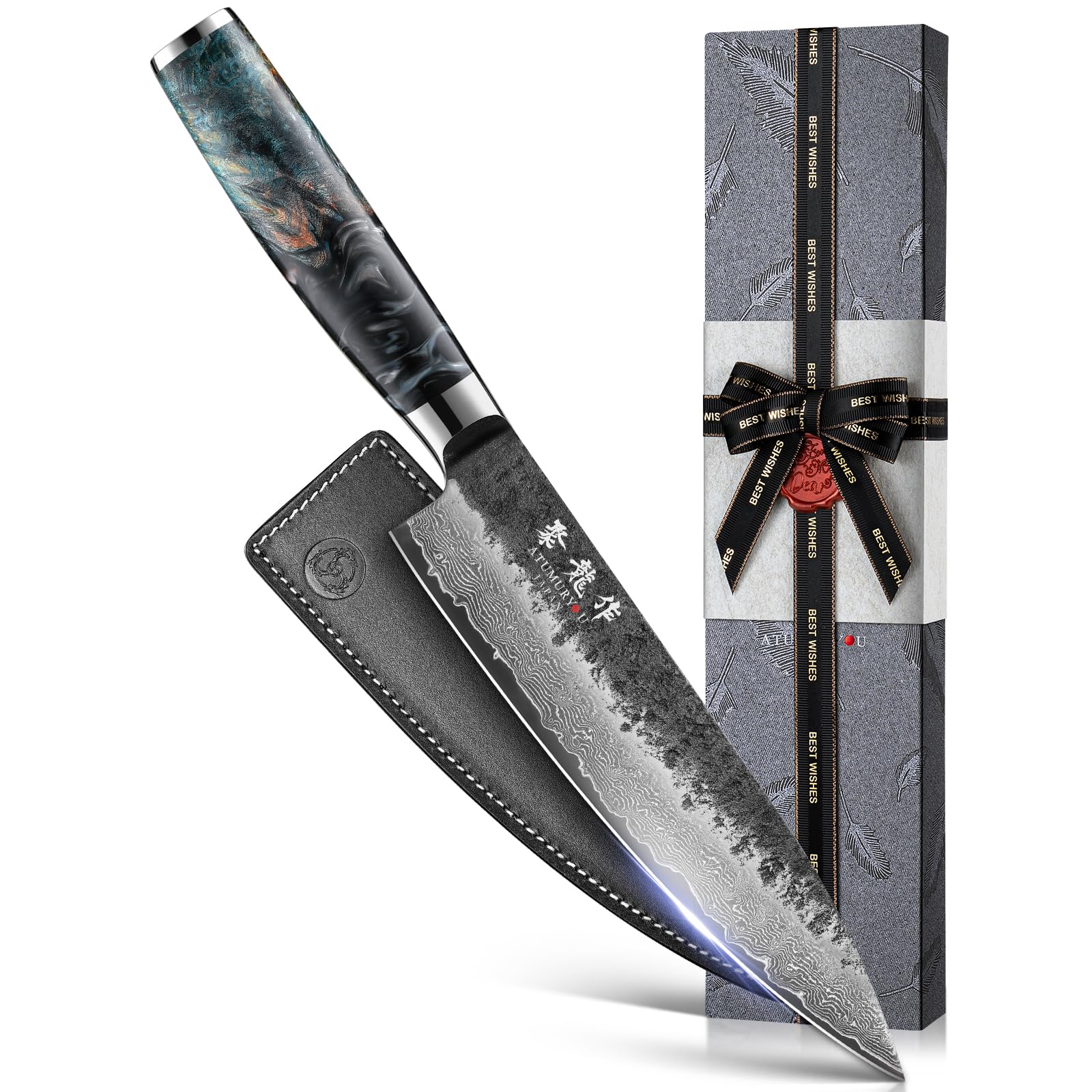
This knife is a double-bevel chef knife with a 67-layer Damascus cladding over a VG10 core, rated at 62 HRC. The extra layer count (33 layers per side plus the core) creates a distinct water-ripple pattern that is both structural and aesthetic. The stabilized wood and resin handle is cast in a mold, producing a unique multi-color pattern on every individual knife. Unlike traditional wa-handles, this full-tang construction extends through the handle and is visible at the spine, providing natural weight distribution that feels neutral rather than blade-heavy. The included genuine leather sheath is a practical addition for storage and transport, though the knife merits a saya for long-term protection.
The 8-inch blade length and double-bevel edge make this a general-purpose tool suitable for slicing, dicing, and chopping ingredients for sushi — think julienning nori, cubing tamago, or trimming avocado. The VG10 core at 62 HRC places it at the upper edge of hardness for stainless alloys, which translates to extended edge retention during a multi-hour prep session. Users report the blade arrives exceptionally sharp and retains its working edge through weeks of regular use without requiring a stone. The black-forged finish on the blade spine adds visual contrast but does not affect cutting performance.
The presentation box, leather sheath, and included certificate of authenticity make this a strong contender for a gift purchase. However, the resin handle, while visually striking, can feel slightly slick if your hands are wet or oily compared to untreated wood, which absorbs moisture. The knife is also not designed for heavy bones or frozen products — the thin edge geometry behind that 62 HRC rating can chip under lateral stress. For a home cook who wants one premium knife that looks stunning on the counter and handles 90% of sushi prep tasks, this is a compelling choice.
Why it’s great
- 67-layer Damascus cladding over a 62 HRC VG10 core for superior edge retention
- Full-tang stabilized wood handle with unique resin pattern
- Comes with leather sheath and high-end gift presentation box
Good to know
- Double-bevel design; not a dedicated single-bevel sashimi knife
- Resin handle can become slippery when wet
- Thin edge requires careful use — not for bone or frozen foods
4. SHAN ZU 10″ Japanese Sushi Knife with Red Sandalwood Handle
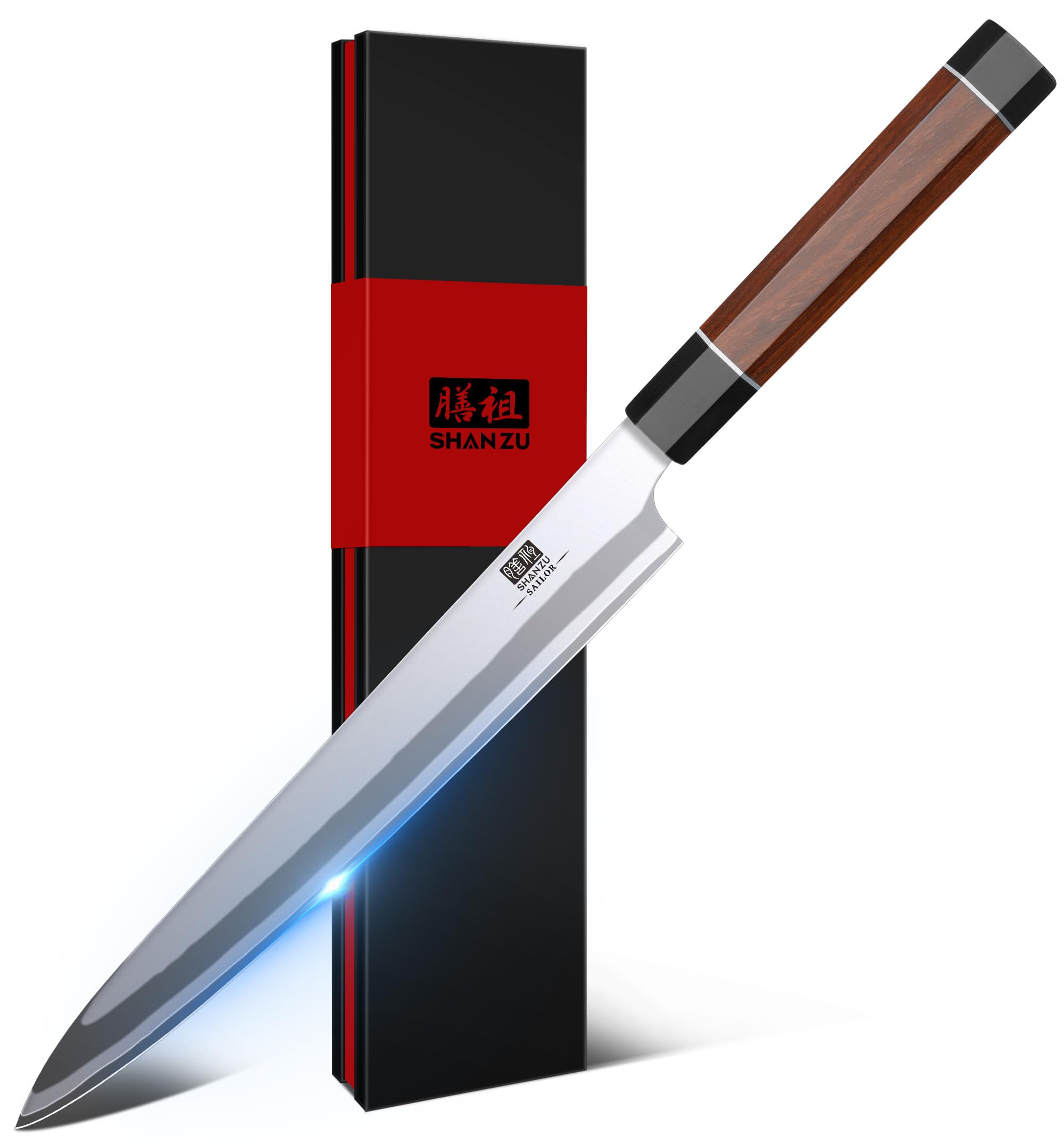
SHAN ZU brings a 10-inch yanagiba-style blade forged with a Japanese 10Cr15MoV steel core clad in 9 layers of softer stainless. The blade is hardened to 62 HRC and ground to a 12-degree angle per side — sharp enough to cut paper-skin slices of hirame without resistance. The matte blade finish is a practical touch: it resists fingerprint smudges and food residue better than a polished mirror surface, keeping the knife looking clean during extended prep sessions. The octagonal red sandalwood handle is a traditional wa-style design that encourages a pinch grip and reduces wrist fatigue during repetitive slicing.
What distinguishes this model in the mid-range segment is its availability as a left-handed variant. Most single-bevel yanagibas are ground exclusively for right-handed users, forcing left-handed cooks to either resharpen the bevel or work with a suboptimal edge. SHAN ZU explicitly offers a left-handed option with the bevel ground on the opposite side, which is rare at this price point. The gift box packaging is premium enough for gifting, and the full-tang construction adds a reassuring heft — the knife weighs 272 grams, slightly heavier than a traditional carbon steel yanagiba but still responsive.
The 10Cr15MoV steel performs comparably to VG10 in terms of stain resistance and edge retention, though it may not take quite as fine an edge as White #2. Users report the knife holds its factory edge for several weeks of weekly use before requiring a water stone touch-up. The blade spine is tapered, allowing for a thin profile behind the edge that reduces wedging in dense fish like yellowtail. The only notable omission is a saya — the knife comes in a box but no protective sheath, so owners should budget for a blade guard or fabric sleeve to protect the edge during drawer storage.
Why it’s great
- Available in left-handed configuration with correct bevel grind
- 10Cr15MoV core at 62 HRC with a 12° cutting angle for precision slicing
- Matte blade finish reduces fingerprints and food residue during use
Good to know
- No saya or blade sheath included in the packaging
- Heavier than traditional carbon steel yanagibas
- Double-bevel grind rather than true single-bevel uraoshi design
5. HOSHANHO 10″ Sushi Knife Hand Forged 10Cr15CoMoV

The HOSHANHO yanagiba uses 10Cr15CoMoV super steel, a formula that adds cobalt to the standard 10Cr15MoV alloy for increased hardness and high-temperature stability. The core is protected by 8 layers of composite steel cladding, producing a visible Damascus pattern along the blade face. The Rockwell hardness is rated at 60+ HRC, with the hand-polished edge ground to 12–15 degrees per side. Notably, this is a double-bevel grind — both sides are sharpened symmetrically — making it a hybrid design that performs like a yanagiba in profile but can be sharpened with standard techniques familiar to western cooks.
The octagonal handle is carved from rosewood with two embedded copper wire accents at the ferrule, which adds visual detail and a subtle tactile reference point for hand placement. The handle is sealed with a satin finish that resists moisture absorption better than untreated magnolia, reducing the risk of cracking in humid kitchen environments. The blade length of 10 inches is sufficient for full-length pull cuts on standard fillets, and the thin grind behind the edge allows it to pass through raw fish with minimal surface disruption. Users describe the knife as exceptionally sharp out of the box, with several reporting that it cuts through salmon skin cleanly without the sawing motion required by lesser blades.
Because the edge is double-beveled, this knife does not have a true uraoshi concave grind on the back. This means it may exhibit slightly more drag during very long pulls compared to a traditional single-bevel yanagiba. However, the trade-off is a blade that is less fragile and easier for a home cook to sharpen correctly without specialized single-bevel technique. The Damascus pattern is more subtle than the high-contrast ripple often seen in budget Damascus knives, which some buyers may prefer for its understated look. No saya is included.
Why it’s great
- 10Cr15CoMoV super steel with cobalt for enhanced hardness and edge stability
- Double-bevel design is easier to sharpen for cooks without single-bevel experience
- Rosewood octagonal handle with copper wire accents for grip and aesthetics
Good to know
- Double-bevel lacks the uraoshi concave back of a true single-bevel yanagiba
- Damascus pattern is subtle, not high-contrast
- No protective saya included
6. Mercer Culinary Asian Collection Yanagi Sashimi Knife 12″

Mercer’s entry into the sushi-knife segment is a no-frills, single-bevel yanagi made from high-carbon German stainless steel. The blade is taper-ground with a fine stone finish, producing a 6-degree bevel on the cutting side and a 15-degree micro-bevel on the reverse. This asymmetrical grind delivers many of the benefits of a traditional single-bevel edge — reduced wedging and cleaner cuts through raw fish — without the fragility of ultra-hard carbon steel. The 12-inch blade length is the longest in this guide, making it ideal for single-stroke slicing of large salmon or halibut fillets. The NSF-certified Santoprene handle is slip-resistant and ergonomically shaped with a traditional D-profile, providing a secure grip even when hands are wet.
What this knife lacks in traditional craftsmanship it makes up for in raw utility and durability. The German stainless steel is softer than VG10 or White #2 (estimated around 56–58 HRC), which means it will not hold a razor edge as long, but it is also far less likely to chip if the user accidentally contacts a cutting board edge or fish bone. This makes it an excellent training knife for someone learning single-bevel technique. The blade also lacks a true uraoshi concave grind — it has a flat back without the hollow relief that reduces friction in high-end yanagibas. Users note that the knife is extremely sharp out of the box and is easy to bring back to a working edge with a steel rod rather than a water stone.
The Santoprene handle is a double-edged attribute. It provides excellent wet-grip and is comfortable for extended use, but it does not have the warmth or beauty of a wooden wa-handle. Several users mention the back edge of the blade is sharp and angled toward the handle, requiring caution during handling. The knife does not include an edge protector, and its length makes drawer storage awkward. For a home cook who wants to learn single-bevel cutting at the lowest entry barrier without the maintenance demands of carbon steel, this Mercer is the most practical option. The limited lifetime warranty adds peace of mind.
Why it’s great
- 12-inch blade allows full-stroke slicing of large fish fillets
- Single-bevel grind at an entry-level price point with stainless durability
- NSF-certified Santoprene handle provides slip-resistant wet grip
Good to know
- No uraoshi concave back for friction reduction
- Softer steel requires more frequent honing than high-hardness alloys
- Santoprene handle lacks the feel of traditional wood; no sheath included
7. KAI Seki Magoroku Japanese Sushi Sashimi Knife Yanagi 210mm

The KAI Seki Magoroku is the budget anchor of this list, but it should not be dismissed as a mere starter knife. Forged from VG MAX steel — a proprietary variant of VG10 with enhanced carbide volume for better edge retention — it delivers legitimate single-bevel yanagiba geometry at a price that undercuts most competitors by a wide margin. The 210mm (8.3-inch) blade is shorter than the typical yanagiba, making it more maneuverable for smaller hands or cooks who prefer a compact blade profile. The handle is crafted from pakkawood, a resin-impregnated hardwood that offers the look and feel of traditional wood with superior water resistance and dimensional stability.
Customer reviews from professional fish cutters confirm that this blade performs well beyond its price tier for light fish cleaning and fillet work. The VG MAX steel arrives sharp and holds a working edge through several pounds of fish before needing a touch-up. The 3.52-ounce weight makes it one of the lightest knives here, reducing arm fatigue during repetitive slicing. Several users note the edge was slightly uneven out of the box (a borderline uraoshi level), requiring a pass on a low-grit water stone to flatten the back, after which the blade performed admirably. The pakkawood handle is comfortable in a pinch grip and has a warm, polished feel that belies its cost.
The primary limitation is the shorter blade length — 210mm limits the maximum slice distance, so very large fillets may require two passes where a 270mm yanagiba would need one. The knife also lacks a saya, so the fragile single-bevel edge must be stored with care. Some users treat it as a deba substitute for light bone work due to its sturdy feel, though the manufacturer warns against bone contact. For the budget-conscious cook who understands single-bevel technique and wants legitimate VG-series steel, this Seki Magoroku is the most cost-effective entry point in the guide without sacrificing fundamental knife architecture.
Why it’s great
- VG MAX steel provides VG10-class edge retention at a budget price point
- Lightweight 3.52-ounce build reduces fatigue during extended slicing
- Pakkawood handle combines traditional aesthetics with modern durability
Good to know
- 210mm blade is shorter than standard yanagiba; limits single-stroke length
- Some units require water stone correction at the uraoshi flat
- No protective sheath or saya included
FAQ
Can I use a sushi knife to cut through fish bones or frozen blocks?
What is the difference between a yanagiba and a gyuto for sushi prep?
How often should I sharpen a sushi knife, and what tool should I use?
Are left-handed sushi knives different from right-handed ones?
What does the term “kasumi finish” mean on a sushi knife?
Final Thoughts: The Verdict
For most users, the best sushi knives winner is the Yoshihiro Shiroko White #2 Yanagi 10.5″ because it delivers authentic single-bevel geometry with a proper uraoshi, White #2 steel that takes a hair-whittling edge, and an included saya — all at a price that undercuts hand-forged equivalents by a significant margin. If you want a durable, maintenance-free companion for all-around sushi prep, grab the Yoshihiro VG10 Hammered Damascus Gyuto 8.25″. And for the home cook on a budget who still needs legitimate VG-series steel and single-bevel construction, nothing beats the value of the KAI Seki Magoroku Yanagi 210mm.