The difference between a good steak and a great steak is almost always the pan. A thin, flimsy skillet just can’t hold enough thermal energy to build that deep, mahogany crust before the interior overcooks. Buyers looking for a real workhorse need a cooking surface that laughs at high heat and rewards patience with a sear that turns heads at the dinner table.
I’m Mohammad Maruf — the founder and writer behind AirfryerBite. I’ve spent years digging through heat conductivity data, seasoning protocols, and real-world use cases for carbon steel and cast iron cookware to separate marketing fluff from measurable performance.
Whether you favor the lightning-fast response of French carbon steel or the unrivaled heat retention of modern cast iron, this guide narrows the field to proven contenders. These are the picks that represent the current state of the steak pan market, judged by material science, build quality, and actual cooking results.
How To Choose The Best Steak Pan
Picking the right steak pan isn’t about brand loyalty. It’s about how the pan handles heat, how it responds to temperature changes, and how much work you’re willing to put into its care. The three primary materials — carbon steel, cast iron, and stainless steel — each bring a distinct thermal personality.
Carbon Steel vs. Cast Iron: Thermal Behavior
Carbon steel is lighter, heats faster, and responds quickly to adjustments. Cast iron takes longer to reach temperature but holds that heat far more stubbornly, which is ideal for a single, aggressive sear. For a flip-and-serve steak, cast iron wins on crust depth. For multi-step cooking where you need to move the pan or adjust heat rapidly, carbon steel is the better tool.
Thickness and Heat Capacity
Pan thickness is measured in millimeters. A thicker base (3 mm or above) stores more thermal mass, which means the temperature drops less when you add a cold steak. Thinner pans recover slower, leading to a gray, steamed crust instead of a brown, caramelized one. Always check the gauge when comparing models.
Seasoning and Maintenance Commitment
Both carbon steel and cast iron require seasoning — a polymerized oil layer that creates a natural non-stick surface. Stainless steel skips the seasoning but demands proper preheating and oil to prevent sticking. If you want a no-fuss pan that tolerates acidic sauces and dishwashers, go stainless. If you want a surface that improves with age, go with seasoned carbon steel or cast iron.
Quick Comparison
On smaller screens, swipe sideways to see the full table.
| Model | Category | Best For | Key Spec | Amazon |
|---|---|---|---|---|
| de Buyer MINERAL B Steak Pan 11″ | Carbon Steel | Restaurant-quality crust | Diamond-pattern cooking surface | Amazon |
| Stargazer 10.5-Inch Cast Iron | Cast Iron | Heat retention & smooth finish | Stay-cool handle, 2.3 qt capacity | Amazon |
| Stargazer 12-Inch Cast Iron | Cast Iron | Large batch searing | 3.4 qt capacity, flared rim | Amazon |
| de Buyer MINERAL B Fry Pan 12.5″ | Carbon Steel | Versatile all-day cooking | 9″ cooking surface, oven-safe to 400°F | Amazon |
| KitchenAid 5-Ply 10″ | Stainless Steel | Dishwasher-safe convenience | 5-ply clad, oven to 500°F | Amazon |
| Cuisinart Professional 12″ | Stainless Steel | Induction-ready daily pan | PowerBond base, helper handle | Amazon |
| Matfer Bourgeat Black Carbon 7″ | Carbon Steel | Solo steak or eggs | Rivetless welded handle | Amazon |
In‑Depth Reviews
1. de Buyer MINERAL B Carbon Steel Steak Pan 11″

This 11-inch pan was built specifically for steak. The diamond pattern on the cooking surface is not decorative — it creates raised contact points that intensify browning while allowing rendered fat to pool in the grooves. The result is a concentrated crust that flat-bottom pans struggle to match.
Carbon steel construction makes it noticeably lighter than an equivalent cast iron pan, and the sloped sides allow easy flipping and tossing. Once properly seasoned — beeswax coating must be removed with hot water first — the surface becomes naturally non-stick and improves with each cook. Users consistently report restaurant-quality sears on steaks, burgers, and even pork chops.
It is oven safe up to 400°F for up to 10 minutes, which means you can start a ribeye on the stovetop and finish it in the oven without switching pans. The handle stays cooler than a cast iron handle but still gets warm during extended stovetop use. Hand washing and post-cook oiling are required to prevent rust.
Why it’s great
- Diamond pattern produces superior crust depth
- Lighter than cast iron, easier to maneuver
- Excellent heat response for searing and flipping
- Versatile stove-to-oven capability
Good to know
- Requires careful initial seasoning to remove beeswax
- Hand wash only; must be dried and oiled after use
- Not suitable for acidic ingredients like tomato sauce
2. Stargazer 10.5-Inch Cast Iron Skillet

Stargazer brings a modern update to a classic material. The cooking surface is machined smooth, which drastically reduces the sticking issues common with rough cast iron. This pan comes pre-seasoned with a flaxseed-based oil, but the smooth finish means the seasoning bonds more evenly from the start.
This 10.5-inch skillet holds 2.3 quarts and is ideal for cooking a single large steak or a few chicken breasts. The heat retention is exactly what you expect from cast iron — once hot, it stays hot, delivering a deep, even sear with minimal temperature drop. The stay-cool handle is a genuine innovation; it remains comfortable to grip during stovetop cooking without a mitt.
The flared rim design eliminates pour spouts, letting you drain rendered fat from any angle without drips. The pan is oven safe indefinitely and works on all cooktops including induction. It is heavier than carbon steel, but the smooth surface and ergonomic handle make it easier to manage than traditional Lodge skillets.
Why it’s great
- Ultra-smooth cooking surface minimizes sticking
- Stay-cool handle is a real safety upgrade
- Excellent heat retention for deep searing
- Drip-free flared rim design
Good to know
- Heavier than carbon steel pans of similar size
- Premium price point reflects US craftsmanship
- Some units may have bottom flatness issues
3. Stargazer 12-Inch Cast Iron Skillet

This is the larger sibling of the 10.5-inch, built for feeding more people. The 12-inch cooking surface gives you room for two steaks side by side, a full pack of bacon, or a large batch of cornbread. The capacity jumps to 3.4 quarts, which is substantial enough for shallow braises.
The smooth machined finish and pre-seasoning treatment are identical to the smaller model. The stay-cool handle design also carries over, remaining comfortable even during extended searing sessions. Users consistently note that the pan is lighter than other 12-inch cast iron options, though still heavy compared to carbon steel.
Heat distribution is even across the entire surface, and the high sides minimize oil splatter. The flared rim makes pouring clean and precise. As with all cast iron, it requires hand washing and drying immediately to prevent rust, but the smooth seasoning layer makes cleanup noticeably easier than traditional rough cast iron.
Why it’s great
- Large capacity for multi-steak or batch cooking
- Smooth surface reduces sticking and aids cleaning
- Even heat across entire cooking surface
- Stay-cool handle works well without mitt
Good to know
- Heavy; requires two hands when full
- Premium price; not a budget option
- Requires regular seasoning maintenance
4. de Buyer MINERAL B Carbon Steel Fry Pan 12.5″

This 12.5-inch pan from de Buyer is one of the most versatile pieces in this roundup. While the 11-inch Steak Pan focuses on the diamond pattern, this version offers a flat 9-inch cooking surface that works for everything from seared ribeye to scrambled eggs to sautéed vegetables. It is lighter than cast iron and more responsive to temperature changes.
The beeswax coating must be removed before first use — a simple scrub with hot water and a sponge does the trick. After seasoning, the carbon steel develops a dark, glassy patina that rivals any non-stick coating. Users report eggs sliding effortlessly and steaks browning beautifully after just a few cooks.
Oven safe up to 400°F for up to 10 minutes, this pan can handle sear-and-finish recipes. The ergonomic welded handle stays cooler than a traditional cast iron handle but will still get warm. Hand washing is mandatory, and a thin oil wipe is recommended after each use to protect the seasoning.
Why it’s great
- Excellent heat response for searing and sautéing
- Large flat cooking surface for versatile use
- Naturally non-stick after seasoning
- Lighter than cast iron, easier to handle
Good to know
- Initial seasoning requires beeswax removal
- Hand wash only; avoid soap that strips seasoning
- Not suitable for acidic ingredients
5. KitchenAid 5-Ply Clad Polished Stainless Steel Frying Pan 10″

Stainless steel brings a completely different set of trade-offs. This KitchenAid pan uses five layers of metal — stainless steel, aluminum, and more stainless steel — to distribute heat evenly from base to rim. The 10-inch diameter is perfect for single steaks or a modest batch of vegetables.
The sealed rims prevent corrosion, and the entire pan is dishwasher safe, which is a major convenience advantage over carbon steel and cast iron. The black stainless steel handles are dual-riveted and stay cool during stovetop use. This pan is oven safe up to 500°F, giving you a wider temperature window than carbon steel for finishing steaks.
Stainless steel requires proper technique to prevent sticking: preheat the pan thoroughly, add oil, and wait until it shimmers before adding meat. Users who master this method get excellent browning with easy cleanup. The pan is also fully induction-compatible and works on all cooktops.
Why it’s great
- Dishwasher safe for easy cleanup
- Oven safe to 500°F for high-heat cooking
- Excellent heat distribution from 5-ply construction
- Stainless handles stay cool on stovetop
Good to know
- Requires proper preheating to prevent sticking
- No natural non-stick surface; oil is essential
- Polished exterior scratches easily over time
6. Cuisinart Professional Stainless Skillet 12″

This 12-inch stainless steel skillet adds a helper handle opposite the main handle, which makes a real difference when moving a heavy pan loaded with food. The PowerBond base uses high-impact bonding to distribute heat evenly and quickly, preventing hot spots that can burn a steak in one area while leaving another undercooked.
The capacity is generous at 5 quarts, and the tapered rim makes pouring out rendered fat or pan sauces clean and precise. The pan is oven safe up to 500°F and works on all cooktops including induction. Users consistently praise the even heating and ease of cleaning — stainless steel resists staining far better than carbon steel or cast iron when properly maintained.
Like all stainless cookware, this skillet requires a proper preheat and oil to achieve non-stick performance. Some users report a slight haze on the pan after cleaning, which is cosmetic and does not affect performance. The long handle stays relatively cool, and the helper handle provides better control during heavy lifting.
Why it’s great
- Helper handle improves control when moving the pan
- Even heat distribution with no hot spots
- Generous 5-quart capacity for large meals
- Oven safe to 500°F and induction compatible
Good to know
- Can develop a cosmetic haze on the surface
- Heavy; requires both hands to lift when full
- Stainless cooking requires technique to avoid sticking
7. Matfer Bourgeat Black Carbon Steel Crêpe Pan 7″
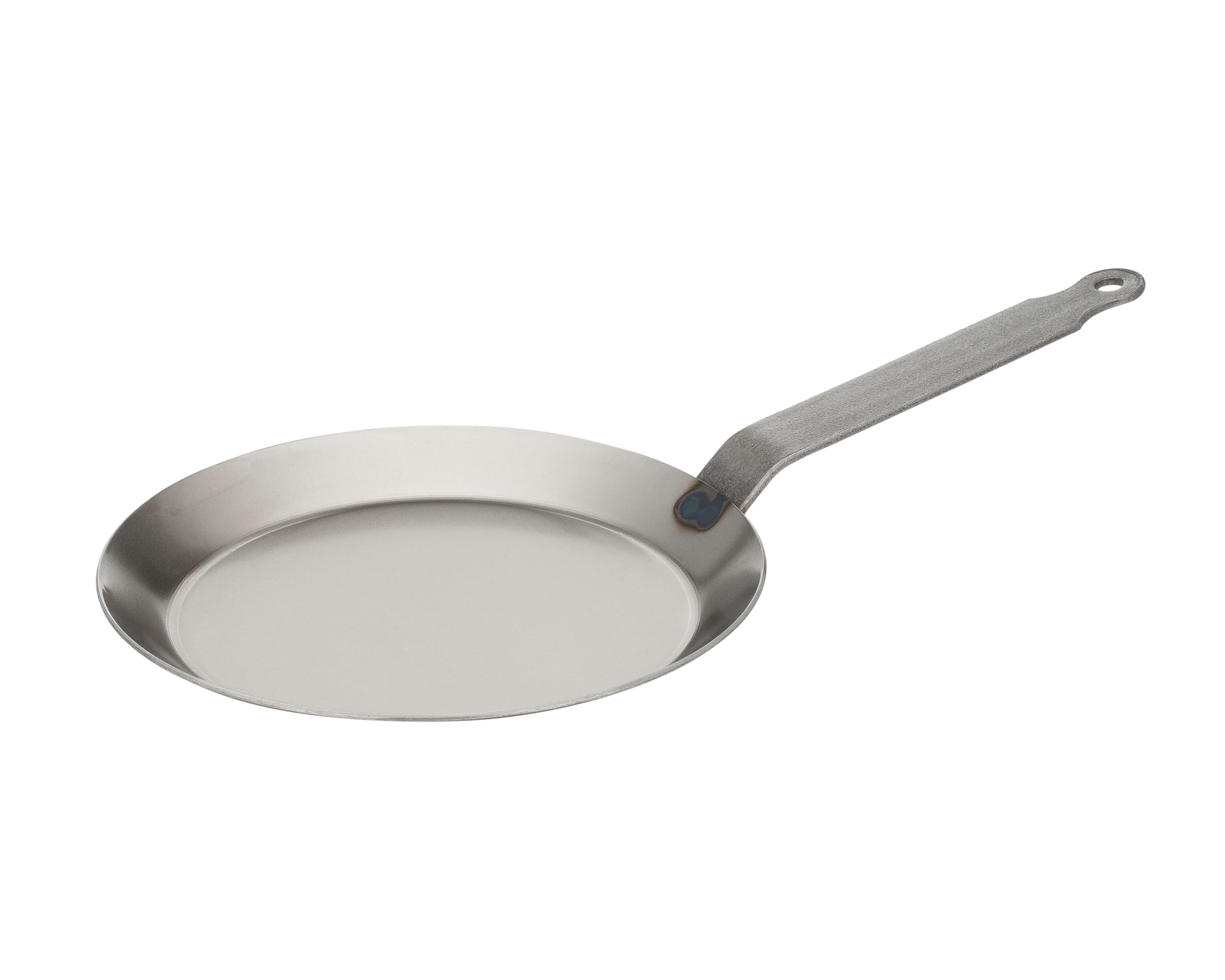
At 7 inches, this Matfer pan is the smallest in the lineup, but its utility goes beyond crepes. The low-profile sides and flat cooking surface make it excellent for single-portion steak, a perfect egg, or a quick sear for lunch. The carbon steel construction delivers the same high-heat capability as larger pans in a more nimble package.
The handle is welded to the body without rivets, which prevents food and grease buildup around hardware. This design makes cleaning significantly easier and more hygienic over the long term. The ergonomic handle angle is designed for easy flipping, and the pan works on all cooktops including induction.
Seasoning is required before first use — flaxseed oil is recommended for its high polyunsaturated fat content that polymerizes into a hard, durable layer. Users who season properly report eggs sliding without a spatula. The pan cannot be used with acidic ingredients, and it should be cleaned with hot water only and dried thoroughly to prevent rust.
Why it’s great
- Rivetless construction prevents food buildup
- Excellent heat control for single servings
- Low-profile sides make flipping easy
- Works on all cooktops including induction
Good to know
- Small size limits batch cooking
- Requires initial seasoning with flaxseed oil
- Not suitable for acidic ingredients
FAQ
Can I use metal utensils on a carbon steel steak pan?
Why does my steak stick to a stainless steel pan?
How often should I re-season my carbon steel or cast iron pan?
Final Thoughts: The Verdict
For most users, the steak pan winner is the de Buyer MINERAL B Steak Pan because its diamond pattern and responsive carbon steel construction deliver a consistently superior crust without the weight penalty of cast iron. If you want a smooth, modern cast iron experience with exceptional heat retention, grab the Stargazer 10.5-Inch Skillet. And for dishwasher-safe convenience with high-heat capability, nothing beats the KitchenAid 5-Ply Stainless Steel Pan.