A steak cutting board isn’t just a slab of wood — it’s the difference between a perfectly rested ribeye that releases its juices onto the plate and a sad puddle of myoglobin soaking into a cheap, thin board that warps after three uses. The right board preserves your knife’s edge, contains the juices, and withstands the heavy chop of a chef’s knife without showing deep gouges.
I’m Mohammad Maruf — the founder and writer behind AirfryerBite. I’ve spent years analyzing kitchen hardware, cross-referencing wood species, grain orientation, and board thickness against real user feedback to separate solid craftsmanship from marketing veneer.
Whether you’re slicing a Tomahawk or dicing onions to top a smash burger, the best steak cutting board handles the heat without dulling your tools or cracking under pressure.
How To Choose The Best Steak Cutting Board
Most buyers grab the thickest, cheapest slab they see. That’s a mistake. A steak board needs specific features to handle heavy carving, hot juices, and frequent knife contact without failing. Three factors matter most.
Wood Species and Grain Orientation
End-grain construction — where the wood fibers run vertically — absorbs knife impact like a self-healing cutting surface. It keeps blades sharper and hides scratches. Edge-grain boards are cheaper but show wear faster. Teak and hard maple are the premium choices for dense, water-resistant surfaces. Acacia offers a solid mid-range option if pre-oiled. Bamboo is hard and sustainable, but its high silica content dulls knives faster than any other wood.
Thickness and Juice Groove Design
Board thickness matters most for stability. A board under 1.5 inches tends to rock or warp over time. A 1.5-inch to 2-inch slab stays flat and absorbs heavy chopping. The juice groove depth is equally overlooked — a shallow groove (less than 0.25 inches) will overflow the moment you rest a medium-rare steak. Look for a deep, wide channel that runs completely around the edge.
Quick Comparison
On smaller screens, swipe sideways to see the full table.
| Model | Category | Best For | Key Spec | Amazon |
|---|---|---|---|---|
| Dalstrong Lionswood End-Grain Teak | Premium | Knife longevity & serving | 1.9-inch end-grain teak | Amazon |
| WoodForChef Maple XL | Premium | Large roasts & heavy use | 24x18x1.5-inch maple | Amazon |
| Socisen 3-Pack Bamboo | Mid-Range | Versatile multi-size prep | 2.8-inch thick bamboo | Amazon |
| GAOMON XL Acacia | Mid-Range | Budget steak prep | 1-inch edge-grain acacia | Amazon |
| NOVAYEAH Bamboo with Trays | Budget | Organized multi-ingredient prep | 15.7-inch bamboo with 4 trays | Amazon |
In‑Depth Reviews
1. Dalstrong Lionswood End-Grain Teak Cutting Board

The Dalstrong Lionswood is engineered for serious steak work. Its end-grain teak construction — wood fibers oriented vertically — absorbs the impact of a heavy chef’s knife, allowing the board to “self-heal” rather than show permanent gouges. At 1.9 inches thick, it resists warping even in humid kitchens, and the tight teak grain naturally repels moisture and discoloration.
Unique to this design is the half-moon cut-out on the underside, which lets you slide a plate directly under the board for easy food transfer. Integrated stainless steel carrying handles double as serving tray grips when you bring the board to the table. The alternating checkered grain pattern also creates a slip-resistant surface that keeps your cutting stable.
User reviews consistently highlight the board’s ability to keep knives sharper for longer and its aesthetic appeal as a serving piece. Some units have arrived cracked due to shipping, but Dalstrong’s warranty and replacement process has resolved those cases. It requires periodic mineral oil conditioning, especially after the first few weeks.
Why it’s great
- End-grain teak protects knife edges effectively
- Thick 1.9-inch build resists warping
- Novel cut-out allows direct plate transfer
Good to know
- May arrive cracked from shipping in some lots
- Requires regular oiling to maintain moisture barrier
2. WoodForChef Extra Large Maple Cutting Board

The WoodForChef Maple board is built for volume — its 24×18-inch surface fits an entire standing rib roast or a massive prime rib without overhang. Made from FSC-certified North American hard maple, the edge-grain construction offers a good balance between durability and knife friendliness, though it won’t self-heal as aggressively as end-grain.
A deep juice groove runs the full perimeter, capable of holding the runoff from several resting steaks without overflow. The board arrives pre-seasoned with a blend of mineral oil and beeswax, so you can use it immediately. It’s reversible, and at 1.5 inches thick and nearly 19 pounds, it won’t slide around on your counter.
Users praise the heavy, stable feel and the smooth surface that’s gentle on blades. Some note that it arrived without enough initial oiling — plan to apply 3–4 coats of mineral oil before heavy use. The board is hand-wash only; dishwasher exposure will cause cracking. Over time, regular conditioning keeps the maple rich and resistant to moisture.
Why it’s great
- Massive 24×18-inch surface handles large roasts
- Deep juice groove contains steak runoff
- Pre-seasoned with mineral oil and beeswax
Good to know
- Needs additional oil coats before first use
- Very heavy for frequent moving or storage
3. Socisen 3-Pack Heavy Duty Bamboo Cutting Board Set

The Socisen 3-pack delivers three boards — one extra-large with a juice groove and two smaller boards — at a price that undercuts most single-premium boards. Each board uses a 5-layer bamboo splicing technique that makes them roughly 2.8 inches thick, significantly heavier and more warp-resistant than standard bamboo boards. Rubber feet on the large board prevent slipping.
Bamboo is harder than maple or acacia, which means it’s less forgiving on knife edges over time. However, Socisen includes a small sanding pad to smooth any raised fibers that appear after washing. The juice groove on the largest board is functional but relatively shallow — resting a steak directly in the groove might cause overflow if you cut aggressively.
Reviews after six months of use show no warping, cracking, or splintering. The set is ideal if you want multiple boards for different tasks (meat, vegetables, bread) without buying separate boards. The included packaging also makes it a ready gift option. Hand wash only — bamboo will crack in the dishwasher.
Why it’s great
- Three boards in one set for multi-purpose prep
- Thick 2.8-inch bamboo resists warping
- Includes sanding pad for fiber maintenance
Good to know
- Bamboo dulls knives faster than maple or teak
- Juice groove on large board is shallow
4. GAOMON XL Acacia Wood Cutting Board
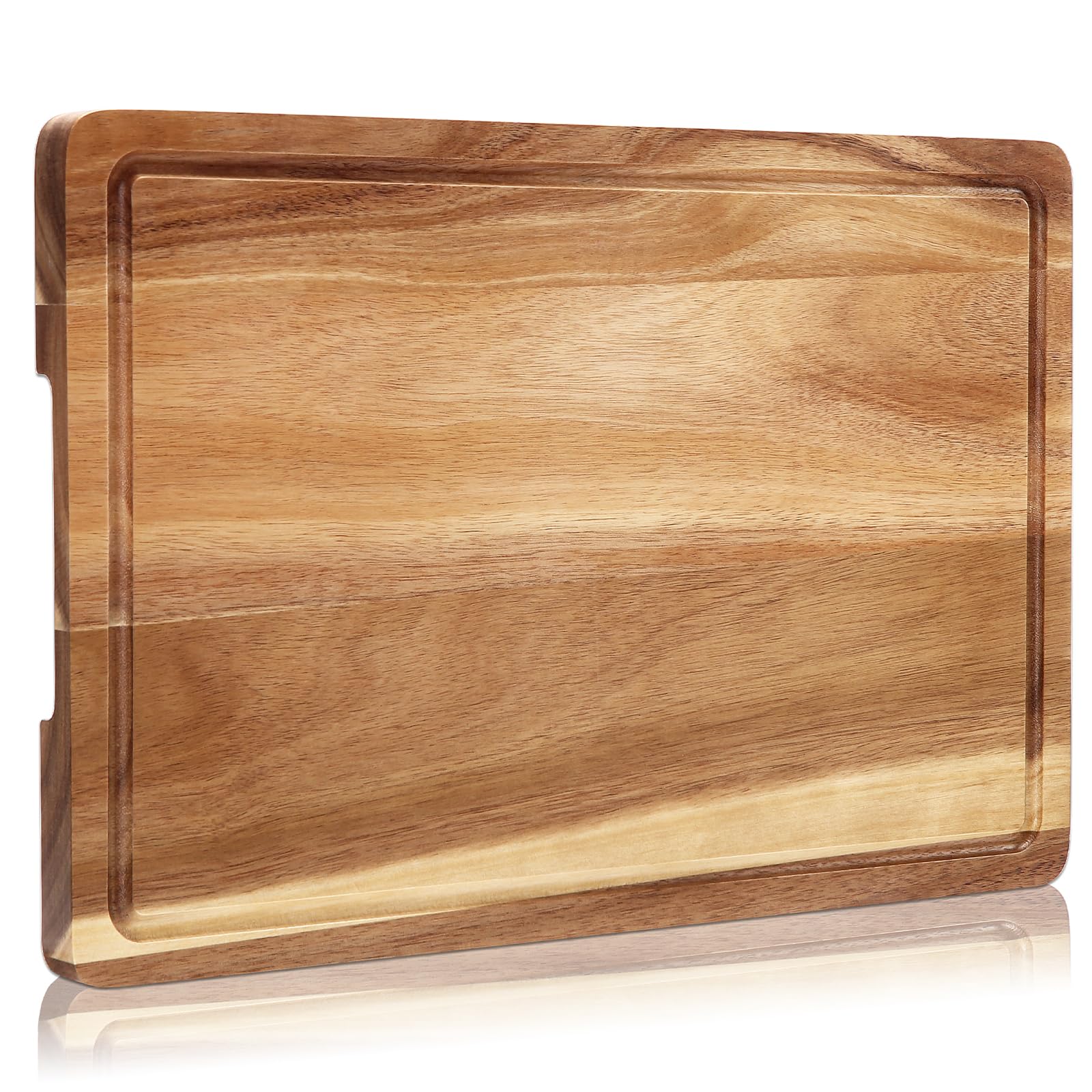
The GAOMON acacia board offers a generous 18×12-inch surface at a budget-friendly entry point. The edge-grain acacia comes pre-oiled, giving it a rich, warm finish right out of the box. At just 1 inch thick, it’s lighter and easier to store than thicker boards, but that thin profile makes it more prone to warping if exposed to moisture or heavy chopping.
Juice grooves run around the perimeter, though they’re not as deep as those on premium boards — expect to wipe up spills if you rest a full steak right on the groove. The board includes built-in handles for easy carrying, and the acacia wood is naturally dense enough to resist moderate knife marks. Some user reports indicate that the board may use a plywood core beneath a thin acacia veneer, which would reduce its long-term durability.
Overall, this is a solid entry-level choice for light steak prep and serving, but not designed for daily heavy chopping. Hand wash and occasional oiling will extend its life. It’s also reversible, though the juice groove only exists on one side.
Why it’s great
- Pre-oiled acacia finish is ready immediately
- Lightweight and easy to store
- Juice groove and handles for easy serving
Good to know
- Thin 1-inch profile may warp over time
- Some units reported as veneer over plywood core
5. NOVAYEAH Bamboo Cutting Board with 4 Trays

The NOVAYEAH is less a traditional steak board and more a meal-prep station. The bamboo board features a large drop zone — a wide slot that lets you slide chopped ingredients directly into four PET storage trays below. This keeps your counter clean and organized, especially when prepping vegetables to accompany steak.
The bamboo itself is untreated and covered with edible oil to resist moisture. It’s reversible for left- or right-handed use and includes juice grooves around the cutting area. However, the board measures 15.7 x 10.2 inches, which is on the smaller side for a full steak carving session — you’ll have limited space for a large ribeye or multiple steaks at once.
Several users report that the board arrived slightly uneven or wobbly out of the box, requiring a small spacer to sit flat. The container trays do not have lids, so they’re best for immediate prep rather than long-term storage. For organized multi-ingredient prep rather than heavy steak carving, this board delivers unique utility.
Why it’s great
- Integrated storage trays keep prep organized
- Wide drop zone for easy food transfer
- Reversible for left- or right-handed use
Good to know
- Board may arrive uneven; needs shimming
- Small surface limits full steak carving
FAQ
Is end-grain teak worth the higher price for steak cutting?
Can I use a bamboo steak cutting board for heavy carving?
How often should I oil my wooden steak board?
What’s the ideal thickness for a steak cutting board?
Final Thoughts: The Verdict
For most users, the best steak cutting board winner is the Dalstrong Lionswood End-Grain Teak because it combines knife-friendly end-grain construction, a thick 1.9-inch slab, and a smart plate-transfer cut-out that serious cooks appreciate. If you want a massive surface for big roasts and family feasts, grab the WoodForChef Maple XL. And for a versatile multi-board set that won’t break your budget, nothing beats the Socisen 3-Pack Bamboo Set.