Choosing a stain for your kitchen cabinets is about more than just picking a color off a swatch. The porosity of maple, oak, hickory, or pine dictates whether your final finish looks like a professional reface or a splotchy mess that screams DIY regret.
I’m Mohammad Maruf — the founder and writer behind AirfryerBite. I’ve spent years analyzing wood-finish composition data, reading hundreds of verified buyer reports on penetration depth, drying behavior, and blotch control so you don’t have to guess.
This guide breaks down the top options to give you a durable, even color every time. Whether you are working with raw wood or refinishing existing doors, this is your stain for kitchen cabinets roadmap to avoid common application pitfalls.
How To Choose The Best Stain For Kitchen Cabinets
Your kitchen cabinet wood species and current finish determine which stain category will work. An oil-based penetrating stain offers deep color for raw oak while a gel stain excels on vertical surfaces like cabinet doors because it resists drips and provides more even coverage over previously-coated wood.
Penetrating Oil vs. Gel Stain
Oil-based liquids like Danish oil soak into the grain emphasizing texture, making them ideal for raw or sanded bare wood on doors and face frames. Gel stains are thicker with a body that sits on the surface, which helps hide grain inconsistencies and works well on fiberglass or primed metal cabinet hardware that you want to match your wood look.
Quick Comparison
On smaller screens, swipe sideways to see the full table.
| Model | Category | Best For | Key Spec | Amazon |
|---|---|---|---|---|
| Tried & True Danish Oil | Premium Oil | Food-safe cabinets & rustic pieces | Pure polymerized linseed oil | Amazon |
| Old Masters Gel Stain | Gel Stain | Vertical doors & non-wood surfaces | Oil-based gel, Provincial color | Amazon |
| Watco Butcher Block Oil + Stain | Food Safe Oil | Butcher block counters & cutting boards | FDA-compliant, Ebony color | Amazon |
| Minwax Pre-Stain Conditioner | Prep Essential | Preventing blotch on pine and maple | Water-based, 32 fl oz | Amazon |
| Watco Danish Oil, Natural | Penetrating Oil | Enhancing natural wood grain | Low VOC, 16 fl oz, Natural | Amazon |
In‑Depth Reviews
1. Tried & True Danish Oil, Pint

This Danish oil consists of pure polymerized linseed oil with no metallic driers or solvents, which means it is non-toxic and carries a pleasant nutty odor rather than harsh chemical fumes. It penetrates deeper and cures faster than standard linseed oil, making it an excellent base for cabinet doors that require a durable matte sheen without a plastic film feel.
The application process demands a very thin coat wiped on with a lint-free cloth, allowed to soak for just five minutes, then buffed dry. Recoat after eight hours and burnish with 0000 steel wool between coats for that professional satin luster. With a coverage rate of approximately 120 square feet per pint, one pint can handle multiple cabinet doors or a full set of drawer fronts.
It is safe for food-contact surfaces when fully cured, which makes it equally suitable for butcher block countertops and cutting boards that live next to your cabinets. The soft sheen does not yellow as aggressively as tung oil, and the low odor lets you work indoors during colder months without suffocating your household.
Why it’s great
- Non-toxic and food safe with no VOCs
- Fast absorption and cure cycle for multi-coat projects
- Pleasant natural smell eliminates respirator need
Good to know
- Requires 2-3 thin coats for full protection
- Less surface-film durability than polyurethane
2. Old Masters 80508 Gel Stain, Pint, Provincial
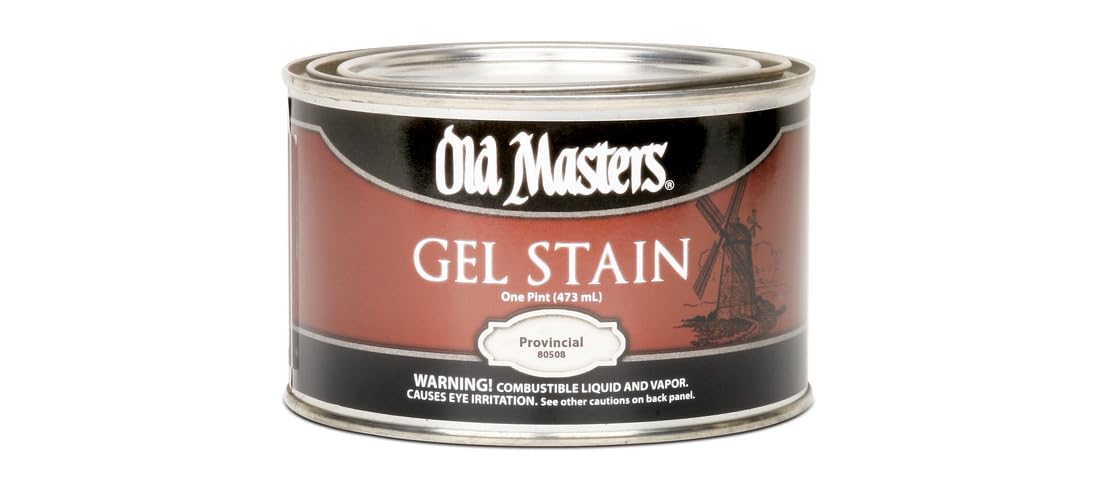
Old Masters gel stain is an oil-based formula thick enough to stay put on vertical cabinet doors without running or pooling at the bottom edge. The Provincial color delivers a rich, warm brown that looks timeless on oak and alder cabinet wood without obscuring the grain the way a paint would.
Application is straightforward — wipe on with a rag or brush, let the gel sit for a few minutes, then wipe off the excess. The long open time gives you room to work large cabinet doors without worrying about lap marks. One pint covers a surprisingly large area because the gel body spreads thin while still depositing enough pigment for even color.
The gel can also be used on fiberglass or primed metal surfaces, which matters if your kitchen has a mix of wood cabinets and a metal hood surround that needs matching. The odor is less overwhelming than typical solvent-based stains, and the rich pigment depth holds up when sealed with a clear topcoat.
Why it’s great
- Thick gel resists drips on vertical cabinet faces
- Works on wood, fiberglass, and primed metal surfaces
- Rich, even color with minimal grain obscuring
Good to know
- Packaging can leak during shipping if not cushioned
- Requires a topcoat for moisture resistance on countertops
3. Watco Butcher Block Oil + Stain, Ebony, Pint

Watco combines a deep stain with a durable oil finish in one single step, which shaves time off projects where you want both color and protection. The Ebony shade delivers an almost black appearance on butcher block countertops while still letting the wood grain peek through for a natural look rather than a flat painted surface.
It is formulated to be safe for food contact according to FDA regulation 21 CFR 175.300, so you can apply it to kitchen countertops, cutting boards, and utensil drawers that come into direct contact with food prep. Drying to the touch in 2 hours and ready for a recoat in 6 hours, you can complete a full cabinet or butcher block island in a single weekend.
The application is a simple wipe-on process using a clean cloth, and the oil penetrates deeply to protect against water damage and daily wear. Multi-coat work is where it shines — each additional layer darkens the color slightly while building a richer, more protective film. The odor is moderate, so good ventilation is recommended, but it fades rapidly as the oil cures.
Why it’s great
- One-step stain and protective oil finish in a single product
- FDA-compliant for direct food contact surfaces
- Fast recoat schedule of 6 hours
Good to know
- Color can get darker than expected with multiple coats
- Strong odor requires open windows during application
4. Minwax Water-Based Pre-Stain Wood Conditioner, Quart

Minwax Pre-Stain Conditioner is the single most effective tool to prevent the blotchy, uneven color absorption that plagues cabinet stains on pine, birch, maple, and other soft or closed-grain woods. Without this pretreatment, stain pigments soak into low-density grain zones faster than the surrounding wood, creating a patchy mess that is nearly impossible to fix without stripping everything and starting over.
The water-based formula penetrates the wood pores partially sealing them, so the stain you apply later lays down uniformly. Application requires only a brush or cloth — wipe the conditioner on, let it soak for 1-5 minutes, then sand lightly after 15-30 minutes before applying your stain. Cleanup is just soap and water, which simplifies your workflow compared to solvent-based alternatives.
The 32-ounce quart size is enough to treat multiple cabinet doors, drawer fronts, and a full face-frame set. It works with both water-based and oil-based stains, but it is specifically designed for water-based stains to control grain raising. Skipping this step on pine or maple cabinets is the number one reason home refinishers end up with a splotchy cabinet finish that they have to sand down again.
Why it’s great
- Dramatically reduces blotch on pine, maple, and birch
- Water-based for easy cleanup and low odor
- Compatible with both water and oil-based stains
Good to know
- Does not fix wood imperfections like dents or gouges
- Requires 90-minute drying time in humid conditions
5. Watco 242219 Danish Oil Wood Finish, Pint, Natural

Watco Danish Oil in Natural is a low-VOC, oil-based blend of varnish and penetrating oil that creates a rich, warm glow without adding any color pigment. For kitchen cabinet projects where the wood itself has spectacular grain — think quartersawn oak, walnut, or cherry — this clear finish enhances the natural hues and brings the figure to the foreground without staining the wood any particular shade.
The formula dries to the touch in 6 hours and covers up to 85 square feet per pint, making it an economical choice for large cabinet sets. It protects against spills, abrasion, and chipping while remaining flexible enough to handle wood movement during seasonal humidity swings that are common in kitchens. The ease of application is a major time saver: wipe on, let it soak, wipe off the excess, and your cabinet doors get both protection and a satin-to-sheened surface.
Customer reports confirm it restores aged wood beautifully — one user revived a 50-year-old walnut sculpture after removing old wax with steel wool. On maple cabinet doors, the Danish oil makes the grain pop without the plasticky appearance of film-forming finishes. The low VOC formulation means lower odor, so you can work on your kitchen without needing a respirator as long as you have basic ventilation.
Why it’s great
- Low VOC formula with reduced odor during indoor work
- Enhances natural grain without added color pigment
- Wipes on easily and cures in 6 hours
Good to know
- Not recommended for floors due to lower film hardness
- Strong smell may linger until fully cured
FAQ
Do I need to sand my kitchen cabinets before staining over old paint?
What is the best stain type for oak kitchen cabinet doors?
Final Thoughts: The Verdict
For most users, the stain for kitchen cabinets winner is the Tried & True Danish Oil because it combines food-safe, non-toxic composition with deep penetration and a professional matte finish that holds up to kitchen wear. If you need a dripless gel for vertical doors and mixed-material cabinets, grab the Old Masters Gel Stain. And for preventing blotch on pine or maple cabinets, nothing beats the Minwax Pre-Stain Conditioner.