That first sip of a meticulously pulled espresso or a perfectly bloomed pour-over sets a standard that standard drip machines rarely meet. Bridging the gap between a café barista and your countertop requires a machine that controls water temperature, pressure, and grind size with surgical precision — not a one-button appliance that hides mediocrity under convenience.
I’m Mohammad Maruf — the founder and writer behind AirfryerBite. I’ve spent months comparing PID temperature stability, burr grinder geometries, brew pressure curves, and water dispersion patterns across nine different models to separate the truly capable from the merely advertised.
Whether you are chasing the perfect crema, a clean cold brew concentrate, or a dialed-in single-origin drip, this guide breaks down the hardware decisions that matter for the best specialty coffee maker and matches each machine to a specific type of home barista.
How To Choose The Best Specialty Coffee Maker
A specialty coffee maker is defined by its ability to control variables that commodity machines ignore. Before you compare models, focus on the three components that determine cup quality: the grinder, the heating system, and the brew pressure delivery.
Grinder Quality — Conical Burr vs. Blade
Particle uniformity is non-negotiable for specialty extraction. A conical burr grinder produces consistent flakes that extract evenly, whereas blade grinders create a mix of dust and chunks that lead to over-extraction and bitterness. Look for machines with at least 30 grind settings — the ability to dial in between a fine espresso powder and a coarse cold-brew grit directly affects your brew time and flavor clarity.
Temperature Stability — PID vs. Thermostat
Water that fluctuates by even a few degrees can ruin a delicate single-origin. PID (Proportional-Integral-Derivative) controllers hold water temperature within a tight range, typically +/- 1°F, making them essential for light roasts that need higher heat to extract properly. Thermostat-based machines drift more and are better suited to forgiving medium-dark roasts where precision matters less.
Pump Pressure — 15 Bar vs. 9 Bar
Specialty espresso thrives at around 9 bar of pressure during extraction. Many machines advertise 15-bar or 20-bar pumps, but that rating is the pump’s max output before the portafilter — the actual brew pressure is regulated by an over-pressure valve. A machine that lets you see or adjust the relief valve (like the Gaggia Classic Pro) gives you direct control over the pressure profile hitting the coffee puck.
Quick Comparison
On smaller screens, swipe sideways to see the full table.
| Model | Category | Best For | Key Spec | Amazon |
|---|---|---|---|---|
| Breville Barista Express BES870XL | Mid-Range | All-in-one espresso with PID stability | PID temp control, 1600W, 54mm portafilter | Amazon |
| Gaggia Classic Pro RI9380/47 | Mid-Range | True 9 bar extraction for purists | 9 bar pump, 58mm commercial portafilter | Amazon |
| Ninja Luxe Café Pro ES701 | Premium | Multi-drink versatility (espresso, drip, cold brew) | Built-in grinder, hands-free frother, hot water dispenser | Amazon |
| KitchenAid KF6 Fully Automatic KES8556PL | Premium | One-touch specialty drinks with minimal effort | 15 recipes, automatic milk frothing, 2.2L tank | Amazon |
| xBloom Studio Coffee Machine | Premium | App-connected pour-over automation | 3 automation levels, built-in scale & grinder | Amazon |
| De’Longhi La Specialista Arte Evo | Premium | Compact cold brew and espresso combo | Cold brew cycle, integrated tamper, 20 bar pump | Amazon |
| Gevi 20 Bar Espresso Machine | Mid-Range | Budget-friendly espresso with grinder and frother | 20 bar pump, 2.3L water tank, stainless wand | Amazon |
| Electactic Espresso Machine (2026 Upgrade) | Entry-Level | Beginners wanting a built-in grinder and steam wand | Anti-clog grinder path, 15 bar pump, 2.3L tank | Amazon |
| Hamilton Beach 2-Way 47500J | Entry-Level | Budget drip with single-serve and iced options | 12-cup carafe, AquaFlow showerhead, auto pause | Amazon |
In‑Depth Reviews
1. Breville Barista Express BES870XL

The Breville Barista Express has become a reference point for home espresso because it integrates a precision conical burr grinder, a 54mm stainless steel portafilter, and digital PID temperature control into a single footprint. The grinder doses directly into the portafilter cradle, eliminating the messy step of transferring grounds, and the Razor Dose Trimming Tool levels the puck before tamping. PID control keeps water temperature locked within a tight range, critical for drawing out the full flavor of single-origin light roasts without introducing bitter notes from overheating.
Low-pressure pre-infusion gradually ramps up to full pressure, which allows the puck to saturate evenly and reduces channeling — a common issue with machines that slam coffee with instant high pressure. The steam wand is a manual one, meaning you have to texture milk yourself, but it produces microfoam dense enough for latte art once you practice the technique. The 67-ounce water tank is large enough for several back-to-back drinks, and the bean hopper holds half a pound, so you can keep a second roast ready for switching between espresso beans.
One limitation is the grinder’s stepped adjustment, which offers 30 settings but can feel a bit coarse between numbers when trying to dial in a finicky light roast. The machine also lacks a three-way solenoid valve, so the puck stays wet after extraction, requiring you to knock it out immediately to avoid a soggy mess. Despite these small trade-offs, the Barista Express delivers the four keys of specialty espresso — dose, grind, temperature, and pressure — in a package that doesn’t require separate gear.
Why it’s great
- PID temperature control ensures stable extraction across multiple shots
- Integrated conical burr grinder grinds directly into the 54mm portafilter
- Manual steam wand produces true microfoam for latte art
Good to know
- Grinder has stepped adjustments — not stepless for micro-dialing
- No three-way solenoid valve leaves the puck wet post-extraction
2. Gaggia Classic Pro RI9380/47

The Gaggia Classic Pro is built around a genuine 9-bar pump — not a higher-rated pump dialed down by a valve — so the pressure you get at the puck matches what commercial espresso machines deliver. The stainless steel 58mm portafilter is the same size used in professional settings, meaning you can use standard tampers, distribution tools, and bottomless portafilters without third-party adapters. The three-way solenoid valve on this model opens immediately after you stop the pump, venting excess pressure and keeping the puck dry, which makes cleanup faster and reduces the chance of over-extraction from stalled pressure.
The commercial steam wand is a single-hole design that gives you direct control over milk texturing without the automatic froth assist found on consumer machines. It takes a few sessions to learn the angle and depth, but once you do, you can produce silky microfoam that integrates smoothly into cappuccinos and flat whites. The solid steel housing and Made-in-Italy construction give the machine a weight and thermal stability that plastic-bodied alternatives can’t match — the boiler maintains temperature consistency better between back-to-back shots.
The main downside is the lack of a built-in grinder — you will need a separate burr grinder, which adds counter space and expense. The 1.3-liter water tank is smaller than most competitors, so expect to refill it more often, especially if you are pulling multiple shots for guests. The machine also requires a short warm-up period (about 10 minutes) because the boiler needs to reach thermal equilibrium, which slows down a rushed morning routine.
Why it’s great
- True 9-bar pump — no over-pressure valve trickery
- 58mm commercial portafilter accepts standard accessories
- Three-way solenoid valve keeps pucks dry and clean
Good to know
- No built-in grinder — requires a separate purchase
- Small 1.3L water tank needs frequent refills
3. Ninja Luxe Café Pro ES701

The Ninja Luxe Café Pro takes a multi-drink approach that most specialty machines avoid: it pulls espresso, brews drip coffee, produces cold brew concentrate, and dispenses hot water for tea or Americanos — all from the same body. The integrated grinder handles whole beans for espresso and drip, and the hands-free frother automates milk texturing for lattes, cappuccinos, and flat whites using either dairy or plant-based alternatives. The built-in tamper mechanism ensures consistent pressure on the puck, removing one of the common variables that beginners struggle with when learning espresso.
For cold brew, the machine uses a dedicated cycle that steeps grounds at room temperature for an extended period, producing a concentrate with low acidity and smooth mouthfeel. The hot water dispenser is separate from the brew group, so you can pull a shot and add hot water for an Americano without affecting the temperature of the espresso boiler. The interface is dial-based, giving you control over grind size, brew volume, and milk temperature without diving into a digital menu.
The trade-off for this versatility is that the machine does not match the espresso depth of a dedicated 9-bar machine like the Gaggia Classic Pro — the pump pressure is regulated to work across multiple brew methods, not optimized solely for espresso. The footprint is also larger than most single-purpose espresso machines, so check your counter depth before committing. The drip brew quality is good but not at the level of a dedicated pour-over setup, meaning you are trading absolute performance in one area for convenience across many.
Why it’s great
- One machine handles espresso, drip, cold brew, and hot water
- Hands-free frother works with dairy and non-dairy milk
- Integrated tamper removes guesswork from puck prep
Good to know
- Espresso quality does not rival dedicated 9-bar machines
- Large footprint requires significant counter space
4. KitchenAid KF6 Fully Automatic KES8556PL

The KitchenAid KF6 is a fully automatic espresso machine that removes the manual steps of grinding, dosing, and tamping while still producing drink quality that satisfies specialty standards. It offers 15 preset recipes, including espresso, americano, latte, cappuccino, flat white, and cortado, each adjustable in terms of strength, temperature, and volume. The automatic smart dosing technology adjusts the grind amount based on the drink selection, so you do not have to guess how many grams of beans correspond to a single or double shot.
The removable bean hopper twists off for easy bean swapping, which is useful if you switch between a morning single-origin espresso and an afternoon decaf blend. The milk tube draws from any container you provide, and the machine froths and heats the milk automatically, delivering the exact amount needed for your drink without leftover steamed milk in a pitcher. The metal-clad construction gives the machine a solid, premium feel that resists scratches and fingerprints better than plastic housings.
The fully automatic nature means you have less tactile feedback compared to a manual machine — the puck preparation is invisible, and you cannot adjust the tamp pressure or see the grind coming out of the burrs. The 2.2-liter water tank is generous, but the brew unit requires periodic manual cleaning with the provided tablets, which adds a maintenance step that purists might consider a chore. If you prioritize convenience over the ritual of hand-crafting each shot, the KF6 delivers reliable specialty drinks without the learning curve.
Why it’s great
- One-touch automation for 15 different drink types
- Automatic milk frothing with adjustable temperature and texture
- Removable bean hopper simplifies switching between bean varieties
Good to know
- Less tactile control over puck preparation and tamping
- Brew unit requires periodic manual cleaning with tablets
5. xBloom Studio Coffee Machine
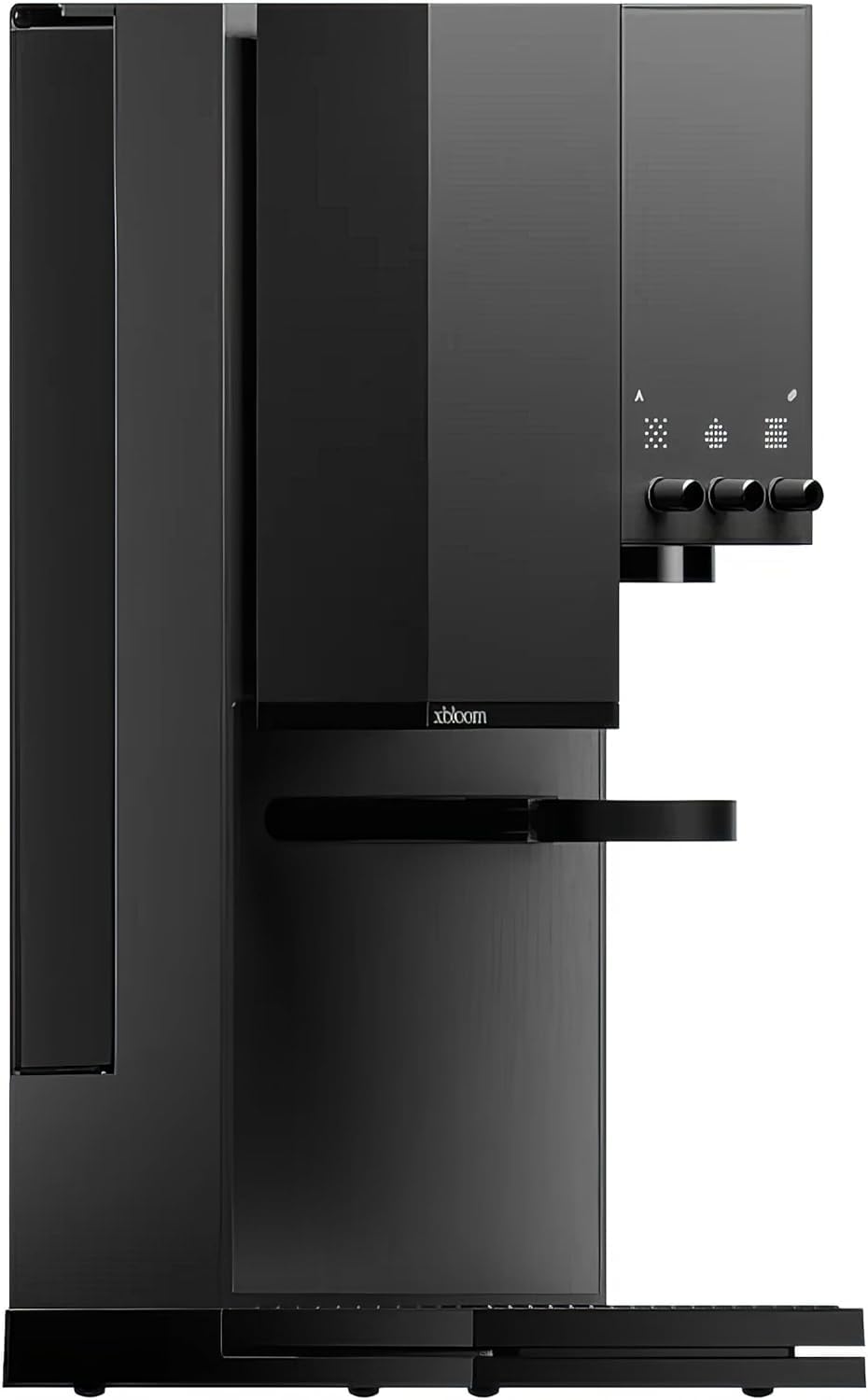
The xBloom Studio Coffee Machine reimagines pour-over by combining a built-in burr grinder, a precision scale, and a robotic pouring arm that mimics the spiral pour pattern of a skilled barista. You can operate it in three automation levels: fully automatic where the machine follows a pre-programmed recipe from grind to drip, semi-automatic where you control the pour timing while the machine handles water temperature and volume, and manual mode for experienced pour-over enthusiasts who want total control over bloom and pulse phases. The integrated scale measures coffee and water weight in real time, feeding data back to adjust the flow rate mid-brew.
The app connectivity lets you download or create custom brew profiles, adjusting parameters like water temperature, bloom time, pour count, and total brew ratio. This is particularly useful for dialing in light-roast single-origin beans where a 5-second difference in bloom time can alter the acidity profile noticeably. The water heating system uses PID control to hold the target temperature within a tight band, and the showerhead distributes water evenly across the coffee bed, reducing channeling that causes uneven extraction in manual pours.
The obvious limitation is that the machine is specialized for pour-over only — it does not produce espresso or steamed milk drinks, so you will need a separate machine if you want lattes or cappuccinos. The price positions it as a premium niche tool rather than a do-everything appliance, and the reliance on the app for full customization means you depend on Bluetooth connectivity and software updates. For the dedicated pour-over enthusiast who wants consistency without manual effort, the xBloom delivers a level of repeatability that is hard to match by hand.
Why it’s great
- Robotic pour-over arm replicates barista spiral technique
- Built-in scale and PID temperature control for repeatable results
- Three automation levels suit beginners to advanced enthusiasts
Good to know
- Limited to pour-over only — no espresso or milk steaming
- Full functionality requires the app and Bluetooth connection
6. De’Longhi La Specialista Arte Evo

The De’Longhi La Specialista Arte Evo combines a 20-bar pump with a built-in conical burr grinder, an integrated tamper that applies consistent pressure, and a dedicated cold brew cycle — a combination rarely found at this feature level. The cold brew function uses a slow, room-temperature extraction over 20-30 minutes, producing a concentrate with minimal bitterness that you can dilute with milk or water. The steam wand is a manual stainless steel model that produces microfoam for cappuccinos and lattes, though it lacks the automatic froth consistency of fully automatic machines.
The Active Temperature Control system adjusts the water temperature based on the roast level you select — lighter roasts get higher temperatures to extract fully, while darker roasts get lower temperatures to avoid burning. This automation reduces the guesswork for beginners while still allowing experienced users to override the temperature manually. The 2.0-liter water tank is mid-sized, and the drip tray is removable for easy cleaning. The machine also includes a tamper and a milk pitcher in the box, so you do not need to buy separate tools to start.
The 20-bar pump is higher than the ideal 9-bar for espresso, but the internal over-pressure valve drops it closer to 9 bar at the puck — still, purists may prefer the direct 9-bar delivery of the Gaggia. If you want espresso and cold brew from a single machine without jumping into the ultra-premium price tier, the Arte Evo offers a practical middle ground.
Why it’s great
- Dedicated cold brew cycle produces concentrate with low acidity
- Active Temperature Control adjusts for roast level automatically
- Integrated tamper ensures consistent pressure every time
Good to know
- Only 6 grinder settings — less granular than competitors
- 20-bar pump requires over-pressure valve adjustment for optimal extraction
7. Gevi 20 Bar Espresso Machine
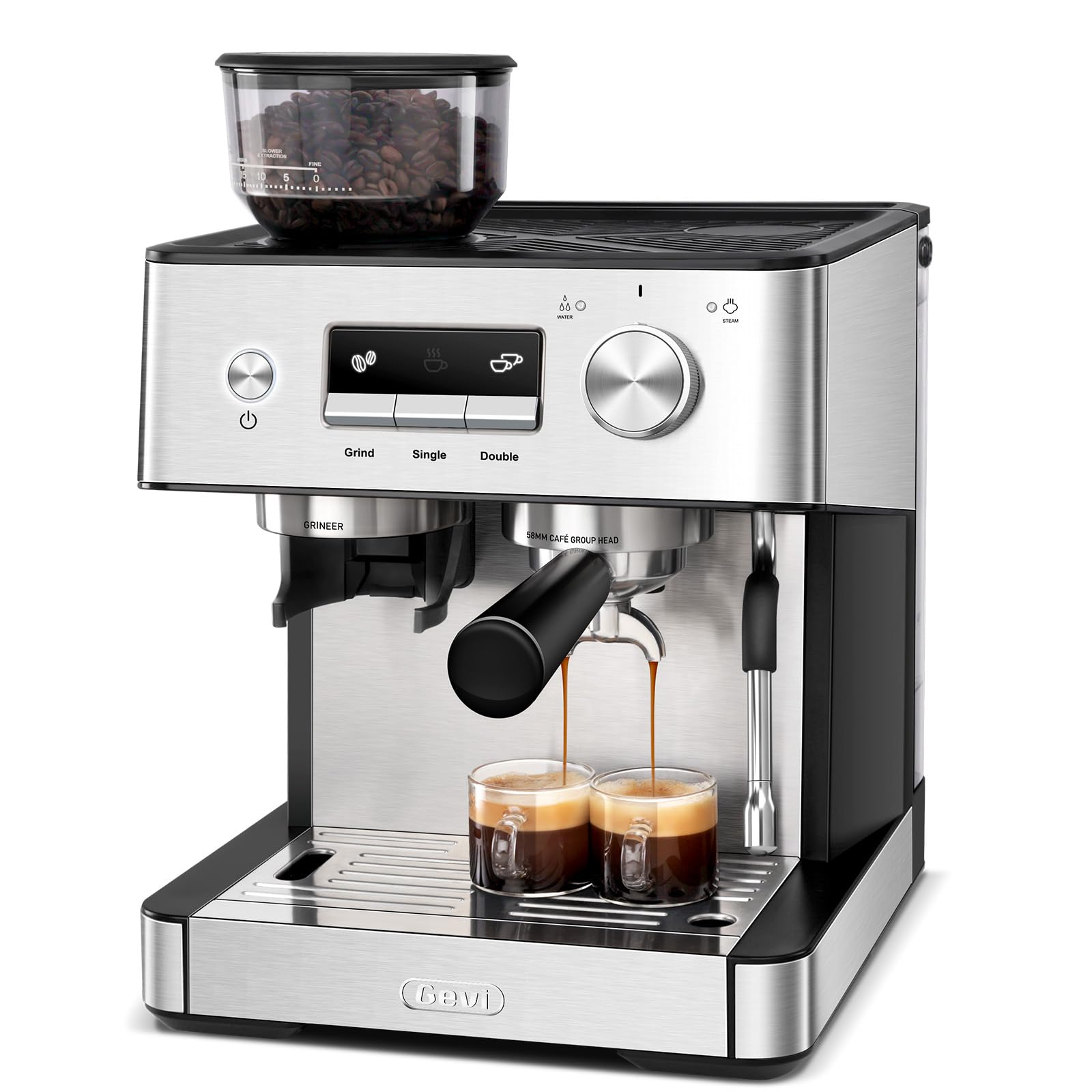
The Gevi 20 Bar Espresso Machine packs a grinder, an adjustable steam wand, and a 2.3-liter water tank into a compact chassis that undercuts the price of most integrated espresso machines. The grinder is a conical burr design with a range of settings that handle everything from fine espresso to medium-coarse drip, though the stepped adjustment means incremental changes are coarser than what premium machines offer. The 20-bar pump, like most machines in this tier, uses an over-pressure valve to bring the final brew pressure closer to 9 bar, but you cannot adjust it yourself — the factory setting is fixed.
The stainless steel steam wand is articulated and produces usable microfoam once you master the angle, but it lacks the drying power of commercial wands, so you may notice a bit of condensation after steaming. The water tank is removable and transparent, making refills and level checks easy without opening the machine. The included tamper and portafilter are standard 51mm — not the 58mm commercial size — so if you plan to upgrade accessories later, you will need a specific size for this machine.
Reliability is the main concern here: entry-level machines with integrated grinders tend to have more mechanical failure points, and the build quality of the Gevi shows some plastic components that may not hold up to daily heavy use. The group head warms up in about 3 minutes, which is quicker than the Gaggia, but the temperature consistency during back-to-back shots is less stable without PID control. For the occasional home barista who wants a grinder and steamer in one unit without spending more, the Gevi delivers functional basics at a budget-friendly cost.
Why it’s great
- Integrated conical burr grinder and steam wand in one unit
- Large 2.3L removable water tank for fewer refills
- Fast 3-minute warm-up time
Good to know
- No PID temperature control — extraction consistency varies
- 51mm portafilter is non-standard for specialty accessories
8. Electactic Espresso Machine (2026 Upgrade)
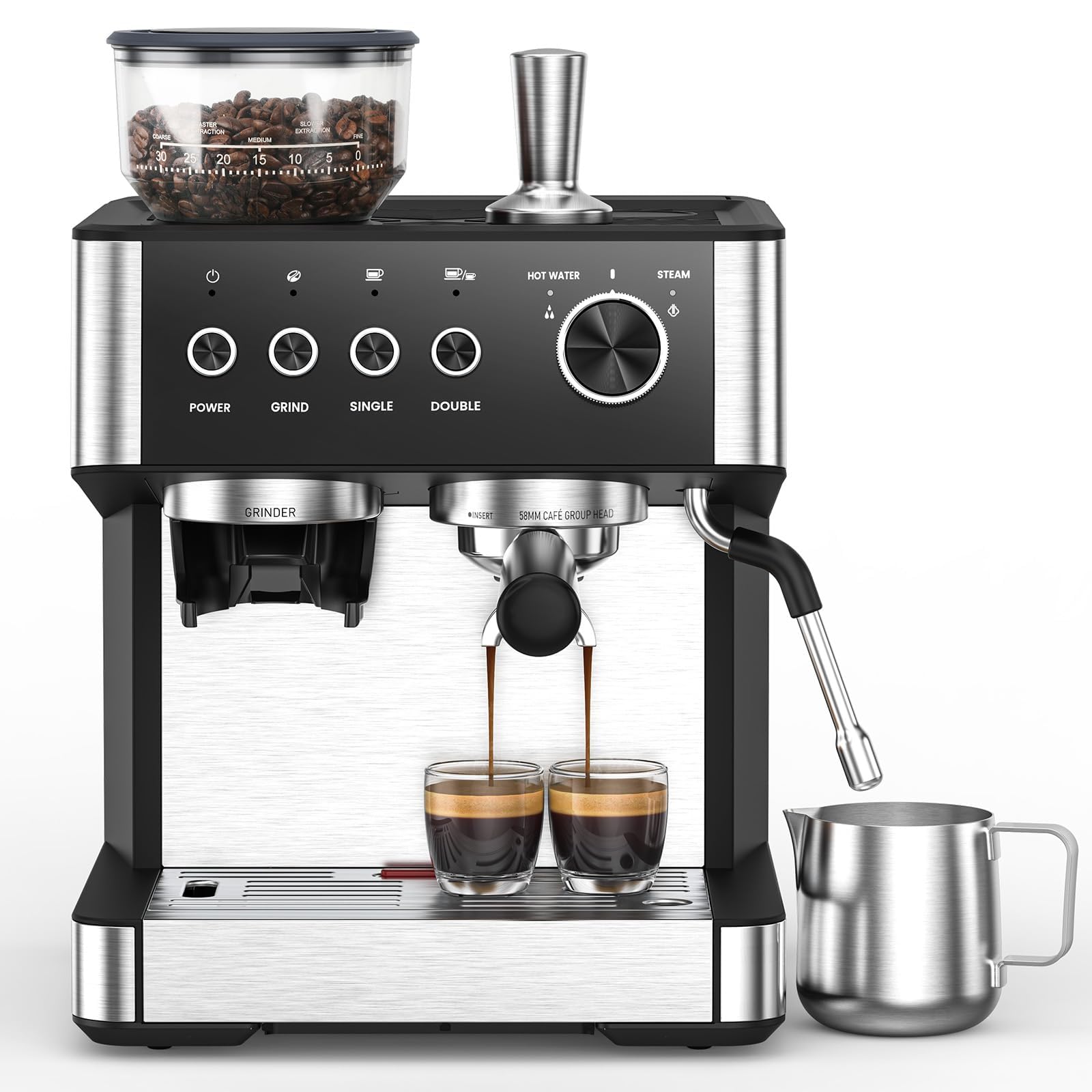
The Electactic Espresso Machine targets beginners who want a built-in grinder and steam wand at a low entry point, and its main selling point is the upgraded clog-crushing grind path that uses a 20% wider chute and a reinforced helical auger to push oily dark-roast grounds through without jamming. Most machines in this price range suffer from grinder clogs when using fresh, oily beans, so this design improvement addresses a genuine pain point. The 15-bar pump produces espresso with decent crema for the price, though the extraction lacks the depth and mouthfeel of higher-end machines due to the lack of pre-infusion and temperature control.
The steam wand is a dual-purpose design: you can froth milk for cappuccinos with the automatic mode or use the manual setting for more control over texture. The 2.3-liter removable water tank on top of the machine makes refilling simple without sliding the unit out from under a cabinet. The machine includes a 58mm portafilter, which is a welcome find at this price point — it opens up the possibility of using standard third-party accessories, though the included pressurized baskets limit some of the specialty potential.
The build quality is mostly plastic, and the boiler temperature fluctuates noticeably between shots, so consistency is a challenge if you are pulling multiple drinks back-to-back. The grinder adjustment is stepped with limited range, and the stepped detents feel imprecise compared to the grinder on the Breville or Ninja. For a first espresso machine that lets you experiment with grinding fresh beans and steaming milk without a large financial commitment, the Electactic hits the essential notes while offering a meaningful feature (anti-clog grinder) that cheaper machines lack.
Why it’s great
- Anti-clog grinder path handles oily dark roasts without jamming
- 58mm portafilter supports standard third-party accessories
- Large 2.3L water tank reduces refill frequency
Good to know
- Temperature stability is poor without PID control
- Plastic build and stepped grinder limit long-term consistency
9. Hamilton Beach 2-Way 47500J
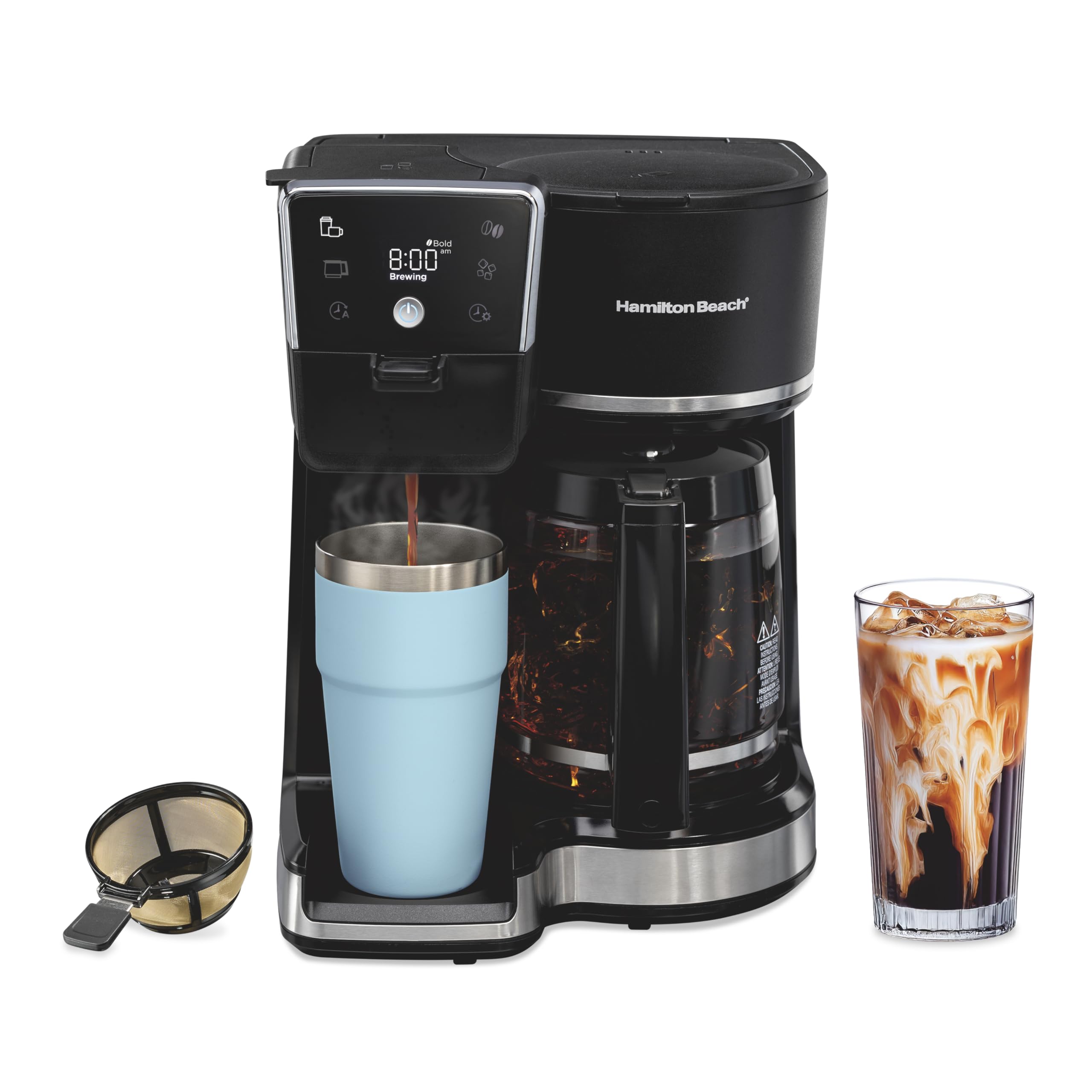
The Hamilton Beach 2-Way is not an espresso machine — it is a programmable drip coffee maker that also brews single servings directly into a mug, making it a passable entry point for specialty drip coffee without the espresso focus. The AquaFlow showerhead spreads hot water evenly over the coffee bed, which improves extraction compared to single-stream drip heads that tend to channel through the grounds. The machine includes a separate iced coffee setting that brews a stronger concentrate designed to pour over ice without tasting watery.
The 12-cup glass carafe works for batch brewing, and the single-serve basket on the side lets you brew a 14-ounce cup directly into your mug without wasting a full pot. The programmable timer, auto-pause and pour feature, and brew-strength selector add some customizability, though the water temperature is not PID-controlled — it relies on a standard thermostat that can fluctuate by several degrees during the brew cycle. For specialty coffee, this means you may need to preheat the carafe and grind slightly finer to compensate for temperature drops.
The filter basket uses standard #4 cone filters, which allow for bypass brewing — water can run around the coffee bed if the grind is too fine — so you need to match the grind size to the machine’s flow rate. The machine does not have a burr grinder, so you will need a separate grinder for fresh beans, negating the convenience of an all-in-one unit. For someone transitioning from a basic drip machine who wants to experiment with grind size and brew ratios without investing in a premium system, the Hamilton Beach 2-Way provides a usable platform at a very low commitment level.
Why it’s great
- AquaFlow showerhead improves water distribution for drip coffee
- Dual brew modes (12-cup and single-serve) reduce waste
- Iced coffee setting produces a concentrate that resists dilution
Good to know
- No PID control — water temperature fluctuates during brew
- No built-in grinder — requires a separate burr grinder for fresh beans
FAQ
What does pre-infusion do for espresso extraction?
Is a 15-bar or 20-bar pump better for specialty espresso?
Can I use a specialty coffee maker for cold brew?
Final Thoughts: The Verdict
For most users, the best specialty coffee maker winner is the Breville Barista Express BES870XL because it combines PID temperature control, an integrated conical burr grinder, and manual steaming into a single footprint that teaches you the fundamentals without requiring separate gear. If you want a true 9-bar commercial portafilter experience with upgrade potential, grab the Gaggia Classic Pro and pair it with a separate grinder. And for the versatile home barista who wants espresso, drip, cold brew, and milk drinks from one machine, nothing beats the Ninja Luxe Café Pro.