Carrots demand one thing above all else: soil that offers zero resistance. A single rock, a clump of clay, or a compacted patch forces the root to fork, twist, or stop growing entirely, leaving you with a stubby, misshapen harvest instead of the long, straight taproots you planned for. The difference between a successful carrot bed and a frustrating one is almost always decided below the surface.
I’m Mohammad Maruf — the founder and writer behind AirfryerBite. I’ve spent years analyzing growing media, focusing on how texture, drainage, and nutrient density directly impact root development in crops like carrots, where the edible part lives entirely underground.
Whether you are planting in raised beds, containers, or traditional in-ground rows, the single most important decision you will make is selecting the right soil to grow carrots — a loose, stone-free mix that allows unrestricted taproot elongation from seed to harvest.
How To Choose The Best Soil To Grow Carrots
Carrot roots push straight down, often reaching 6 to 10 inches or more depending on the variety. If the soil resists that downward movement even slightly, the carrot compensates by growing sideways or splitting. Your selection criteria must prioritize physical structure first, then nutrition second.
Texture and Drainage Above All Else
The ideal carrot soil feels loose, crumbly, and almost sandy when you squeeze a handful. It should drain quickly after watering — standing water rots carrot roots within days. Look for mixes that list perlite, vermiculite, coarse sand, or coco coir as primary ingredients. These components create air pockets that allow roots to penetrate with zero resistance.
Low Nutrient Density Is Actually Better
Carrots do not need rich, heavy nitrogen loads like tomatoes or leafy greens. Excessive nitrogen causes the roots to become hairy, forked, or overly leafy at the expense of taproot development. A balanced organic mix with moderate compost content — not a high-nitrogen fertilizer blend — produces the cleanest, straightest carrots.
pH and Salt Levels Matter for Germination
Carrots prefer a slightly acidic to neutral pH range between 6.0 and 6.8. Lime is often added to commercial mixes to buffer pH within this range. High salt content — common in unwashed coco coir or some cheap potting soils — inhibits seed germination and stunts young seedlings. Always choose pH-stabilized, low-salt formulations for direct seeding.
Quick Comparison
On smaller screens, swipe sideways to see the full table.
| Model | Category | Best For | Key Spec | Amazon |
|---|---|---|---|---|
| Espoma Organic Vegetable & Flower Garden Soil | Premium In-Ground Mix | In-ground raised beds | 1 Cubic Foot with Myco-Tone mycorrhizae | Amazon |
| MODELLOR Premium Super Washed Coco Coir Brick | Coco Coir Base | DIY soil mixes at scale | Expands to 18-20 gallons per brick | Amazon |
| Coast of Maine Organic Planting Soil for Vegetables & Tomatoes | Organic Compost Blend | Container and raised bed carrots | 20 Quarts with composted manure | Amazon |
| Soil Sunrise Coco Peat Perlite Potting Mix | Soilless Mix | Seed starting and small containers | 4 Quarts loose coco coir and perlite | Amazon |
| Jiffy Natural & Organic Seed Starting Soil Mix | Seed Starting Mix | Germinating carrot seeds indoors | 10 Quarts with peat moss and vermiculite | Amazon |
In‑Depth Reviews
1. Espoma Organic Vegetable & Flower Garden Soil

Espoma’s Vegetable & Flower Garden Soil delivers a rich, loamy structure that professional growers and home gardeners alike trust for direct-sown carrots. The 1 cubic foot bag contains endo and ecto mycorrhizae (branded as Myco-Tone), a proprietary blend that colonizes carrot roots and improves nutrient uptake without adding heavy nitrogen that causes forking. The soil texture leans toward a true loam — not mulch-heavy — which means carrot taproots can push downward unimpeded through the entire bed depth.
Customer reports confirm the mix stays bug-free and holds moisture evenly without becoming waterlogged, a critical balance for carrots that need consistent hydration during the first 14 days of germination. Several users in the high desert Southwest noted it restored their faith in online soil purchases specifically because it did not arrive as a bag of bark chips, which is a common failure point in cheaper vegetable soils.
For in-ground raised beds where you want to mix directly with native garden soil, Espoma provides a consistent, organic base that improves both drainage and aeration. The only trade-off is the weight — a full cubic foot is heavy to move — but that density translates to soil structure that holds up through a full carrot growing season without breaking down.
Why it’s great
- True loam texture supports straight root development without resistance
- Myco-Tone mycorrhizae improve nutrient access without excess nitrogen
- Bug-free bags with consistent moisture retention across watering cycles
Good to know
- Heavy bag may be difficult to lift and pour for smaller gardeners
- Best used when mixed with native soil rather than as a standalone container fill
2. MODELLOR Premium Super Washed Coco Coir Brick
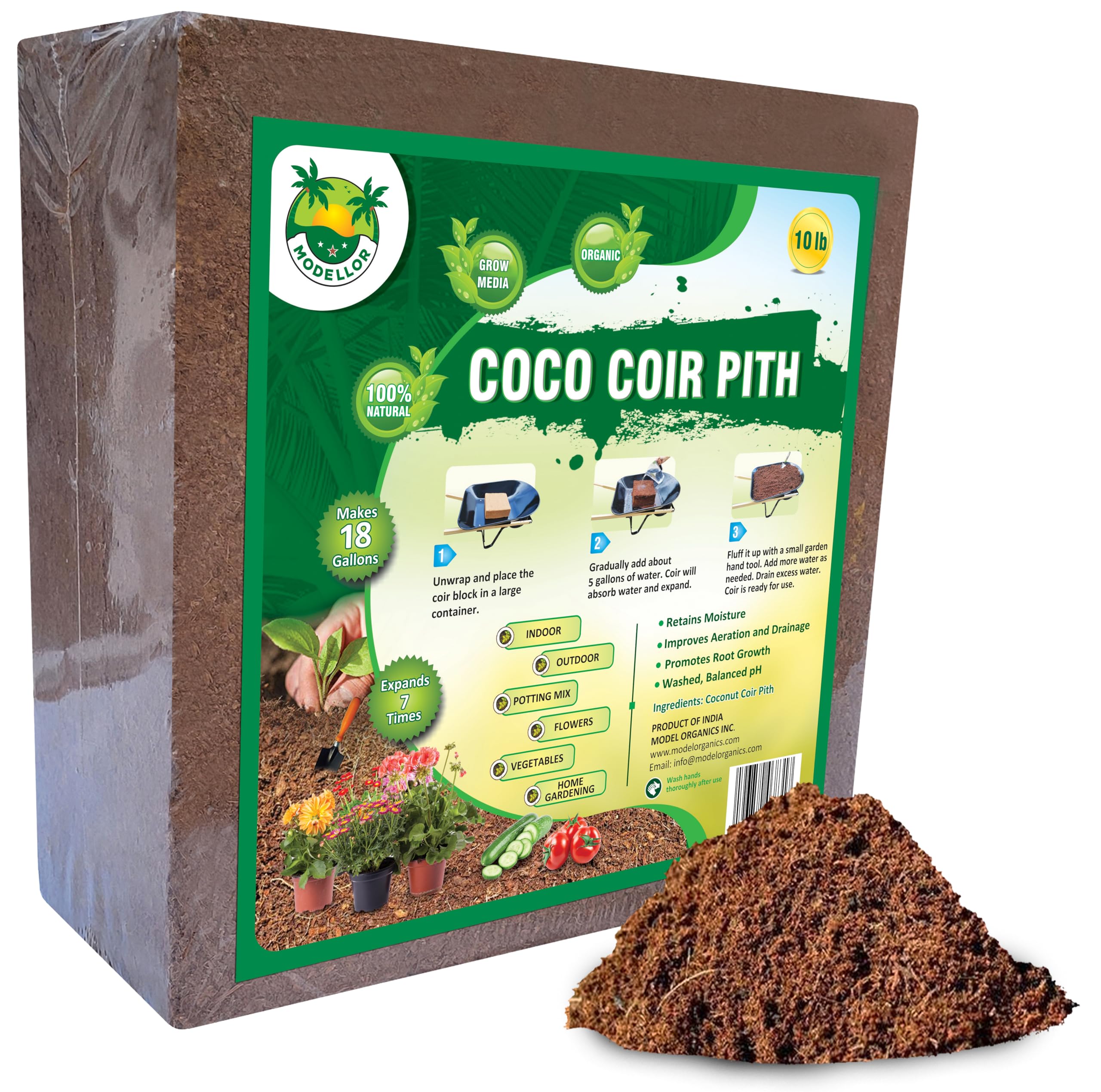
MODELLOR’s coco coir brick is an excellent choice for gardeners who want to build their own custom carrot soil at scale. One compact 10-pound brick hydrates into 18 to 20 gallons of growing medium — enough to fill several large containers or a substantial raised bed section. The triple-washing process removes excess salts that commonly plague cheaper coir products, which is essential because high salt levels stunt carrot germination more than most other garden vegetables.
The fluffy, fibrous texture after hydration mimics the ideal carrot growing environment: light, aerated, and completely free of stones or woody debris that cause root deformities. Users report that the coir rehydrates cleanly using warm or hot water, and the resulting medium smells like fresh earth without provoking allergy responses in pets. The pH is pre-balanced to a neutral range, so you can mix it directly with compost or perlite without additional lime adjustments.
For growers who need a bulk base medium that they can amend specifically for carrots — adding fine sand for drainage or worm castings for trace nutrients — this brick offers the best cost-per-quart ratio of any product on this list. The only preparation step is hydration, which takes about 30 minutes before the coir is ready to use.
Why it’s great
- Triple-washed, low-salt formula prevents germination issues in carrots
- One brick yields 18-20 gallons, offering massive value for bulk use
- pH balanced and free of debris that causes root forking
Good to know
- Requires 30-minute hydration and mixing before use
- Needs additional amendments like perlite or compost for full nutrient profile
3. Coast of Maine Organic Planting Soil for Vegetables & Tomatoes

Coast of Maine’s Tomato and Vegetable blend brings composted manure and sphagnum peat moss into a formulation that balances moisture retention with drainage — two properties that are often at odds in standard potting soils. For carrot growers using containers or raised beds, this mix provides enough organic matter to keep the root zone consistently damp during the critical germination window, while the composted manure adds slow-release nutrients at a moderate level that won’t trigger excessive top growth at the expense of the root.
Growers who tested this soil against three other brands reported the best tomato and vegetable results specifically from this blend, and the same loose structure translates well to carrot beds. The soil is noticeably heavier than peat-based seed starters, which is actually beneficial for outdoor containers where lighter mixes tend to dry out too quickly in the sun. The OMRI listing for organic use confirms no synthetic chemicals are present, so you can harvest carrots without worrying about residual inputs.
One user noted the bag is heavy and requires careful handling, but the soil texture inside is consistent — no large bark chunks or wood chips that interrupt root paths. For direct-seeded carrots, mix this soil with an additional 20 percent coarse sand or perlite to create the ultra-loose environment that produces the longest, straightest roots.
Why it’s great
- Composted manure provides balanced, slow-release nutrients ideal for root crops
- OMRI listed organic — no synthetic chemicals reaching your harvest
- Moisture retention suited for outdoor containers that dry quickly
Good to know
- Best amended with additional perlite or sand for carrot-specific looseness
- Heavy bag weight may be challenging for some gardeners to handle
4. Soil Sunrise Coco Peat Perlite Potting Mix
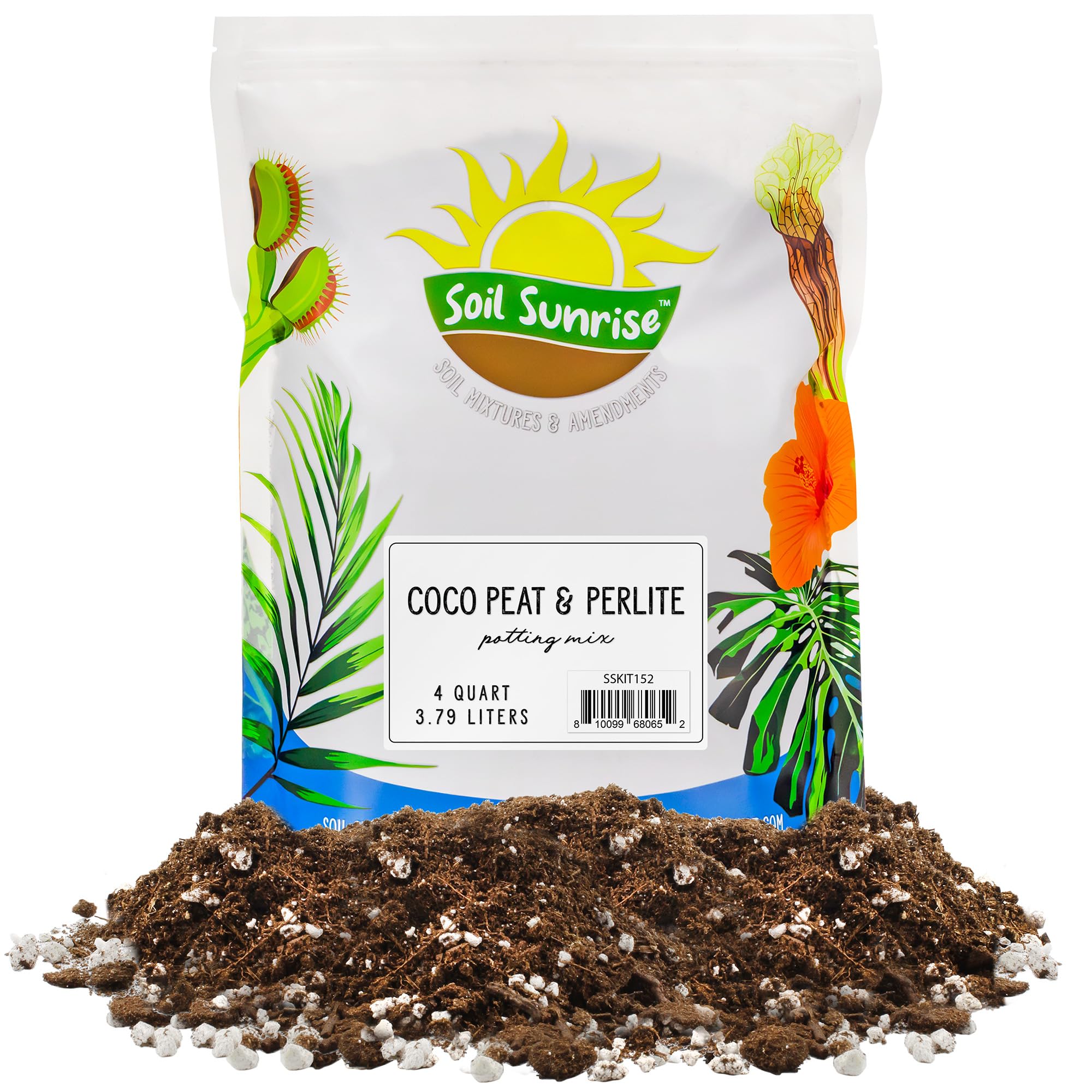
Soil Sunrise’s pre-mixed coco peat and perlite blend is ideal for small-scale carrot planting — think window boxes, shallow raised troughs, or test batches of new carrot varieties. The 4-quart bag is ready to use straight out of the package with no hydration step required, making it one of the most convenient options for gardeners who want to sow seeds immediately. The coco coir provides the fluffy, aerated base that carrot roots need, while the perlite ensures water drains quickly enough to prevent rot in the confined space of a container.
Users who have worked with this mix for months note it does not compact over time, a common issue with peat-heavy soils that gradually settle and choke root development. The lack of dust during handling is another practical advantage over dry peat moss, which can create airborne particles that irritate the airways. The resealable bag is convenient for storing leftover mix, though transferring to a sturdier container is recommended for long-term storage.
Because this is a soilless mix, it contains almost no inherent nutrients. For carrots, that is actually an advantage — you control exactly what goes in. Adding a small amount of balanced organic fertilizer or worm castings at planting time tailors the mix precisely to carrot needs without risking the nitrogen overload that causes forked, hairy roots.
Why it’s great
- Pre-mixed and ready to use — no hydration or preparation required
- Coco coir and perlite combination resists compaction over full growing season
- Dust-free handling compared to dry peat moss alternatives
Good to know
- Small 4-quart volume best suited for shallow containers or seed starting
- Contains no nutrients — must add fertilizer or worm castings for carrots
5. Jiffy Natural & Organic Seed Starting Soil Mix

Jiffy’s Seed Starting Mix is a long-standing favorite among gardeners who prioritize high germination rates for their carrot seeds. The blend of peat moss, vermiculite, and lime creates a fine-textured medium that holds moisture consistently without becoming waterlogged — two conditions that are non-negotiable for carrot seeds, which need steady hydration for the 10 to 14 days it takes them to germinate. Peat moss can absorb up to 20 times its weight in water, providing a buffer against accidental drying that kills emerging carrot sprouts.
Users consistently report excellent germination rates and healthy, vigorous seedlings when starting carrots in this mix. The fine texture means there are no large bark chunks or debris that could block a tiny carrot seed from making contact with the soil, and the lime buffers pH to the 6.0 to 6.8 range that carrots prefer. Several long-term reviewers note they have repurchased this product multiple times specifically because seedlings transition smoothly to larger pots without shock.
For starting carrot seeds indoors or in a greenhouse, this mix performs reliably. However, it is designed primarily as a seed-starting medium rather than a full growing soil. Once carrot seedlings develop their first true leaves and are ready for transplant, you will need to move them into a deeper, loamier mix — or add coarse perlite and garden soil to this blend — to support the taproot through maturity.
Why it’s great
- Fine texture ensures consistent seed-to-soil contact for germination
- Peat moss holds moisture reliably during the long carrot germination window
- Lime addition stabilizes pH within the optimal 6.0-6.8 range
Good to know
- Designed for seed starting, not as a full-season carrot growing medium
- Requires amendment with perlite or garden soil for mature root development
FAQ
Can I use standard potting soil for growing carrots directly in containers?
Why does my carrot soil need to be low in nitrogen for best root growth?
How deep should my soil bed be for long carrot varieties like Nantes or Imperator?
Final Thoughts: The Verdict
For most gardeners, the best soil to grow carrots winner is the Espoma Organic Vegetable & Flower Garden Soil because its true loam texture and mycorrhizal additives create the ideal environment for long, straight taproots without requiring extensive amendments. If you want a high-value bulk base to build custom mixes, grab the MODELLOR Premium Super Washed Coco Coir Brick. And for starting seeds indoors or in small containers, nothing beats the consistent germination rates of the Jiffy Natural & Organic Seed Starting Soil Mix.