Potatoes are heavy feeders that demand loose, well-draining soil to form large, uniform tubers. Compacted garden soil or dense potting mixes suffocate root development and lead to misshapen harvests. Choosing the wrong base means fighting drainage issues and nutrient deficiencies all season.
I’m Mohammad Maruf — the founder and writer behind AirfryerBite. I’ve analyzed dozens of growing media formulas to understand how aeration, organic matter, and pH balance directly impact tuber yield and size for home growers.
Whether you are filling grow bags, raised beds, or large containers, the right blend determines whether you harvest golf balls or fist-sized spuds. This guide walks through the top commercial options for the soil mix for potatoes to get every plant off to a strong start.
How To Choose The Best Soil Mix For Potatoes
Potatoes produce best in a loose, slightly acidic medium that holds moisture without staying wet. The wrong mix leads to compacted roots, poor tuber formation, and increased disease pressure. Focus on texture, organic content, and pH to build an ideal growing environment.
Texture and Drainage Are Non-Negotiable
Tubers expand by pushing against loose soil. A mix heavy in clay or fine sand restricts growth and traps water around developing potatoes. Look for blends containing perlite, vermiculite, peat moss, or coco coir to create air pockets that let roots breathe and excess water drain freely.
Organic Matter Feeds Heavy Growth
Potatoes are heavy feeders that require steady nitrogen, phosphorus, and potassium. A mix enriched with compost, earthworm castings, kelp meal, or aged manure provides slow-release nutrients for the entire growing cycle. Avoid mixes heavy in synthetic quick-release fertilizers which can burn tender roots near seed pieces.
pH Balance Aims for 5.0 to 6.0
Potatoes prefer slightly acidic soil to maximize nutrient uptake and reduce common scab. Peat moss and coco coir naturally lower pH into this range. Most purpose-made blends already balance pH, but testing your mix and amending with lime if it drifts too far below 5.0 keeps tuber quality high.
Quick Comparison
On smaller screens, swipe sideways to see the full table.
| Model | Category | Best For | Key Spec | Amazon |
|---|---|---|---|---|
| Espoma Organic Potting Mix | Organic Potting Mix | Container potatoes and veggie pots | 8 qt (pack of 2) | Amazon |
| Midwest Hearth Premium Potting Mix | Balanced Mix | General potato beds and raised rows | 8 Dry Quarts | Amazon |
| MODELLOR Coco Coir Brick | Coco Coir Base | DIY custom aeration mixes | Expands to 18-20 gallons | Amazon |
| Espoma Land and Sea Compost | Nutrient Amendment | Amending native soil for heavy feeding | 1 Cubic Foot | Amazon |
| Michigan Peat All Purpose | Bulk All-Purpose | Large raised beds on a budget | 50 Pounds | Amazon |
In‑Depth Reviews
1. Espoma Organic Potting Soil Mix (Pack of 2)

Espoma’s mix is a rich blend of sphagnum peat moss, humus, and perlite with added earthworm castings, alfalfa meal, and kelp meal. That combination provides the loose texture and slow-release nutrition potatoes need to form large tubers without compaction. The Myco-Tone inoculant helps roots establish faster after planting.
In container trials, this mix held moisture evenly without becoming waterlogged — critical for preventing tuber rot. The perlite content keeps air moving through the root zone, which directly supports larger potato yields in grow bags and 5-gallon buckets.
Each 8-quart bag covers roughly one large container, and two bags provide enough medium for a standard fabric potato bed. This is a ready-to-use mix that eliminates guesswork for growers focused on organic yields.
Why it’s great
- Mycorrhizae blend accelerates root colonization
- Organic meal amendments provide steady feeding
- Proper perlite volume prevents soil caking
Good to know
- Small bag size requires multiple units for larger beds
- Premium price per quart compared to bulk options
2. Midwest Hearth Premium Potting Soil Mix

Midwest Hearth delivers the same three-ingredient base — peat moss, perlite, and vermiculite — that professional growers use for consistent root crop performance. The blend is pH-controlled to stay in the 5.5–6.5 range, which suits potato cultivation perfectly and reduces the risk of common scab.
The texture is light and fluffy straight from the bag, allowing potato roots to spread without resistance. Vermiculite helps retain moisture between waterings, which is useful for potatoes grown in hot climates or fabric containers that dry out quickly.
At 8 dry quarts, this is a compact option for starting a single raised bed or several grow bags. It works equally well as a base to which you can add your own compost or slow-release fertilizer for an extra nutrient boost.
Why it’s great
- Professional-grade balanced formulation
- pH controlled to reduce tuber scab risk
- Light, airy consistency straight out of bag
Good to know
- Some users recommend pre-soaking for immediate water retention
- Bag size is modest for large-scale projects
3. MODELLOR Premium Coco Coir Brick
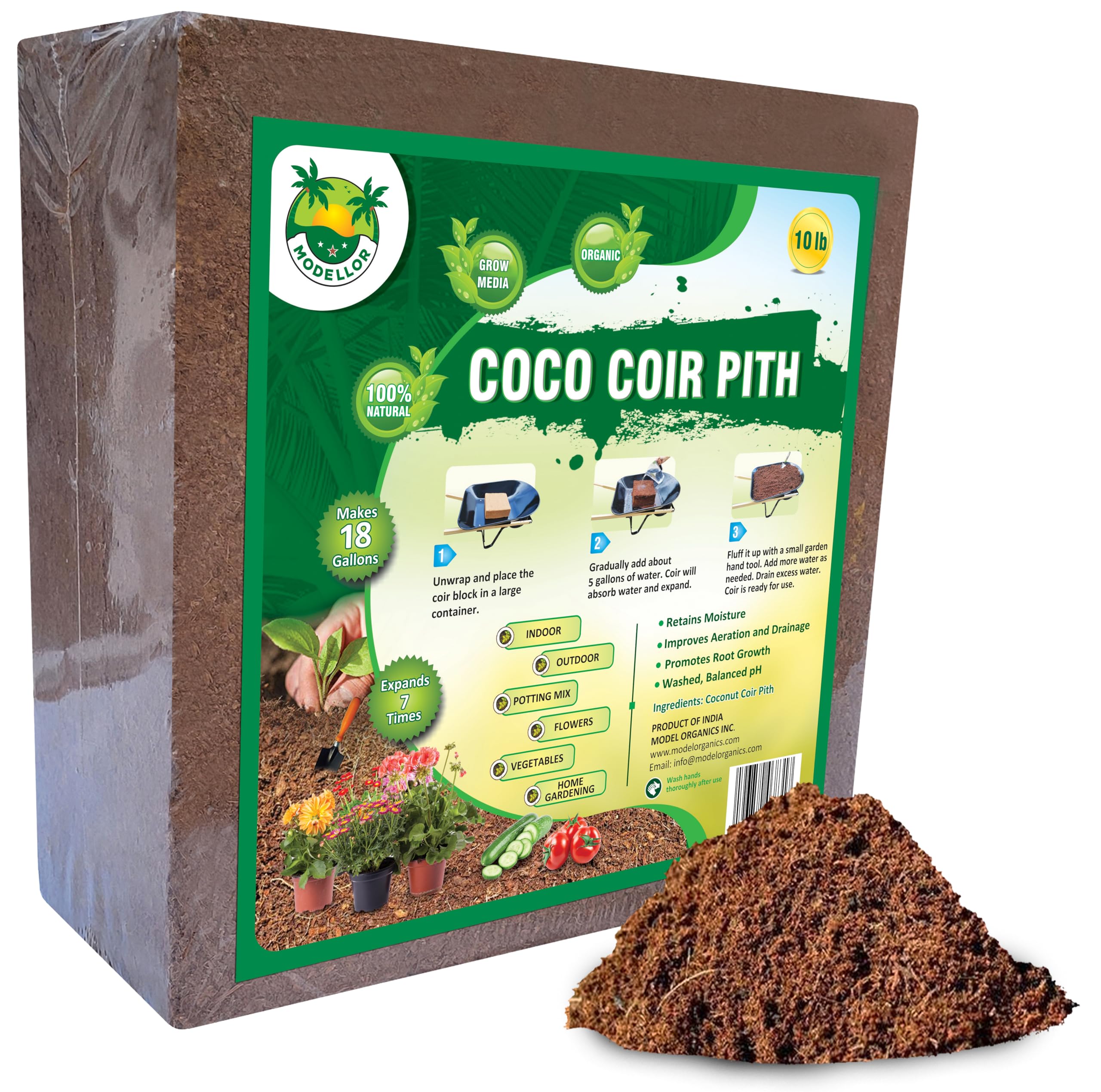
MODELLOR’s coco coir brick is triple-washed and low in salts, making it an excellent blank base for a custom potato mix. When hydrated, a single 10-pound brick expands into 18 to 20 gallons of fluffy coir — enough to fill multiple grow bags or large containers. The fibrous structure provides natural aeration and moisture retention simultaneously.
You can mix this expanded coir 50/50 with compost or a quality potting mix to create a potato bed with superior drainage and organic feeding. The pH balancer in this product lands near 5.8 to 6.5, hitting the sweet spot for tuber formation and disease resistance.
For gardeners who want control over every ingredient, this brick eliminates the compaction and salt issues found in many pre-packaged soils. Hydration takes about 20 minutes with warm water, and the finished medium is clean, odor-free, and consistent batch to batch.
Why it’s great
- Massive yield from compact storage brick
- Low salt means less risk of root burn
- pH balanced for tuber-friendly acidity
Good to know
- Requires pre-hydration before planting
- Needs additional compost or nutrients for heavy potato feeding
4. Espoma Organic Land and Sea Gourmet Compost

This is not a stand-alone potting mix — it is a concentrated organic compost enriched with lobster and crab meal, designed to be mixed into existing soil or a base medium. The granular texture blends easily, and the marine-based ingredients provide a slow-release boost of calcium and chitin, which help strengthen potato cell walls and improve storage quality.
Gardeners report noticeably larger yields when amending their potting base with this product. The Myco-Tone inoculant further supports root expansion, while the natural ingredients avoid the synthetic salt spikes common with chemical fertilizers. Use it as a top dressing halfway through the season to replenish nutrients.
The 1-cubic-foot bag covers roughly 8 square feet at a 1-inch amendment rate, making it practical for several large potato containers or a substantial portion of a raised bed. It works best when added to a lighter base like peat or coir for optimal drainage.
Why it’s great
- Unique lobster and crab meal for natural calcium
- Mycorrhizae blend for stronger root systems
- Dry granular texture mixes easily into base media
Good to know
- Must be mixed with a base medium, not used alone
- Premium price reflects specialized ingredients
5. Michigan Peat General All Purpose Premium Potting Soil

The Michigan Peat blend uses reed sedge peat as its base, combined with perlite and sand to create a free-draining medium suitable for large potato beds. This is a ready-to-use formula that includes both starter and slow-release fertilizers, reducing the need for frequent feeding during the growing season.
At 50 pounds, this is the most economical option for filling multiple raised beds or large fabric pots. The texture stays loose enough for tuber expansion, though some users note that mixing in additional perlite can further improve drainage for potatoes in heavy rainfall areas.
The inclusion of sand adds weight and stability to the mix, which can help anchor potato roots in deeper containers. However, ordering the larger bag means ensuring you have the storage and transport capacity for bulk soil. This is a no-fuss choice for gardeners prioritizing volume.
Why it’s great
- High volume delivers the lowest cost per pound
- Starter and slow-release fertilizers included
- Ready to use straight from the bag
Good to know
- Heavy bag may be difficult to handle and move
- Some batches have been reported with fungus gnat larvae
FAQ
Can I use standard garden soil for growing potatoes in containers?
Should I add extra fertilizer to a pre-mixed potato soil?
How does coco coir compare to peat moss for potato mixes?
Final Thoughts: The Verdict
For most users, the soil mix for potatoes winner is the Espoma Organic Potting Soil Mix because its mycorrhizae blend and slow-release organic meals provide the perfect balance of aeration and steady nutrition for heavy yields. If you prefer to build a custom medium, the MODELLOR Coco Coir Brick gives you complete control over texture and nutrient additives. And for large raised beds on a tighter budget, the Michigan Peat All Purpose delivers the volume you need without sacrificing drainage.