Sweet potatoes demand a specific kind of ground—one that is loose, slightly acidic, and never compacted. Packed or clay-heavy dirt produces twisted, stunted roots rather than the uniform, market-ready tubers you are after. The wrong mix suffocates the developing storage roots before they have a chance to swell.
I’m Mohammad Maruf — the founder and writer behind AirfryerBite. I have spent hundreds of hours analyzing the composition of organic amendments, soil blends, and conditioners to identify which products deliver the drainage and nutrient profile that sweet potatoes require.
The ideal rooting environment balances moisture retention with rapid drainage while providing steady, gentle nutrition over a long growing season. This guide breaks down the top contenders to help you find the best soil for sweet potatoes that supports deep root runs and heavy yields.
How To Choose The Best Soil For Sweet Potatoes
Sweet potatoes are root crops that spend months underground. The soil you choose directly determines the shape, size, and flavor of the harvest. Prioritize three factors above all else: texture, drainage, and a moderate nutrient release.
Texture and Drainage — The Sandy Loam Rule
Tubers expand by pushing through the surrounding medium. Heavy clay or densely packed garden dirt resists that expansion, forcing roots to twist or split. A sandy loam texture—one that feels crumbly in your hand and does not hold a tight ball when squeezed—allows roots to elongate freely. Any blend containing perlite, coarse sand, or aged bark will improve the physical structure for sweet potatoes.
Organic Matter and Nutrient Timing
Sweet potatoes are moderate feeders that respond poorly to excessive nitrogen. Soils high in fresh manure or fast-release fertilizers produce lush foliage at the expense of root size. Look for blends with composted manure, worm castings, or slow-release organic amendments that break down over 90 to 120 days. A product enriched with mycorrhizae helps the roots access trace minerals locked in the native soil.
Quick Comparison
On smaller screens, swipe sideways to see the full table.
| Model | Category | Best For | Key Spec | Amazon |
|---|---|---|---|---|
| Espoma Organic Land and Sea | Premium Amendment | Deep root zone enrichment | Lobster & crab meal + Myco-Tone | Amazon |
| PRO-MIX Premium Organic | Complete Mix | Large raised beds & containers | 2 cu. ft. bag; feeds up to 3 months | Amazon |
| Back to the Roots Worm Castings | Soil Booster | Gently amending existing soil | 5 lb granules; no burn or odor | Amazon |
| Coast of Maine Veggie & Tomato | Bagged Soil | In-ground garden beds | 20 qt; composted manure & peat moss | Amazon |
| Coast of Maine Acid-Loving Mix | Low pH Blend | Adjusting alkaline soil | 20 qt; low pH with perlite | Amazon |
In‑Depth Reviews
1. Espoma Organic Land and Sea Gourmet Compost

Espoma’s Land and Sea blend is a concentrated amendment that turns average dirt into a biologically active rooting zone. The lobster and crab meal provide chitin, which naturally suppresses certain soil-borne nematodes that prey on sweet potato roots, while the proprietary Myco-Tone introduces endo and ecto mycorrhizae that partner with the root system to pull phosphorus and micronutrients from the surrounding soil. At 24 pounds for a 1 cubic foot bag, this is not a standalone potting mix but a potent additive to work into the top 6 to 8 inches of a prepared bed.
Users report noticeably larger tomato, zucchini, and greens yields after incorporating this compost, and the same biology-driven swelling applies to sweet potato tubers. The texture is dry and granular, which blends evenly without clumping. A single bag covers roughly 24 square feet when top-dressed at a half-inch layer, so it stretches across a modest sweet potato patch without requiring massive volume.
The premium price reflects the specialized marine ingredients and mycorrhizal inoculants. You would pair this with a base soil like PRO-MIX or a native sandy loam rather than using it alone. For gardeners who want to push root mass without synthetic stimulants, this is the most targeted biological tool available on this list.
Why it’s great
- Lobster & crab meal adds chitin for natural pest suppression
- Myco-Tone improves phosphorus uptake for bigger tubers
- Lightweight, odorless granules mix cleanly into beds
Good to know
- Not a stand-alone potting mix; must be blended with base soil
- Higher cost per pound than standard composts
2. PRO-Mix Premium Organic Vegetable & Herb Mix
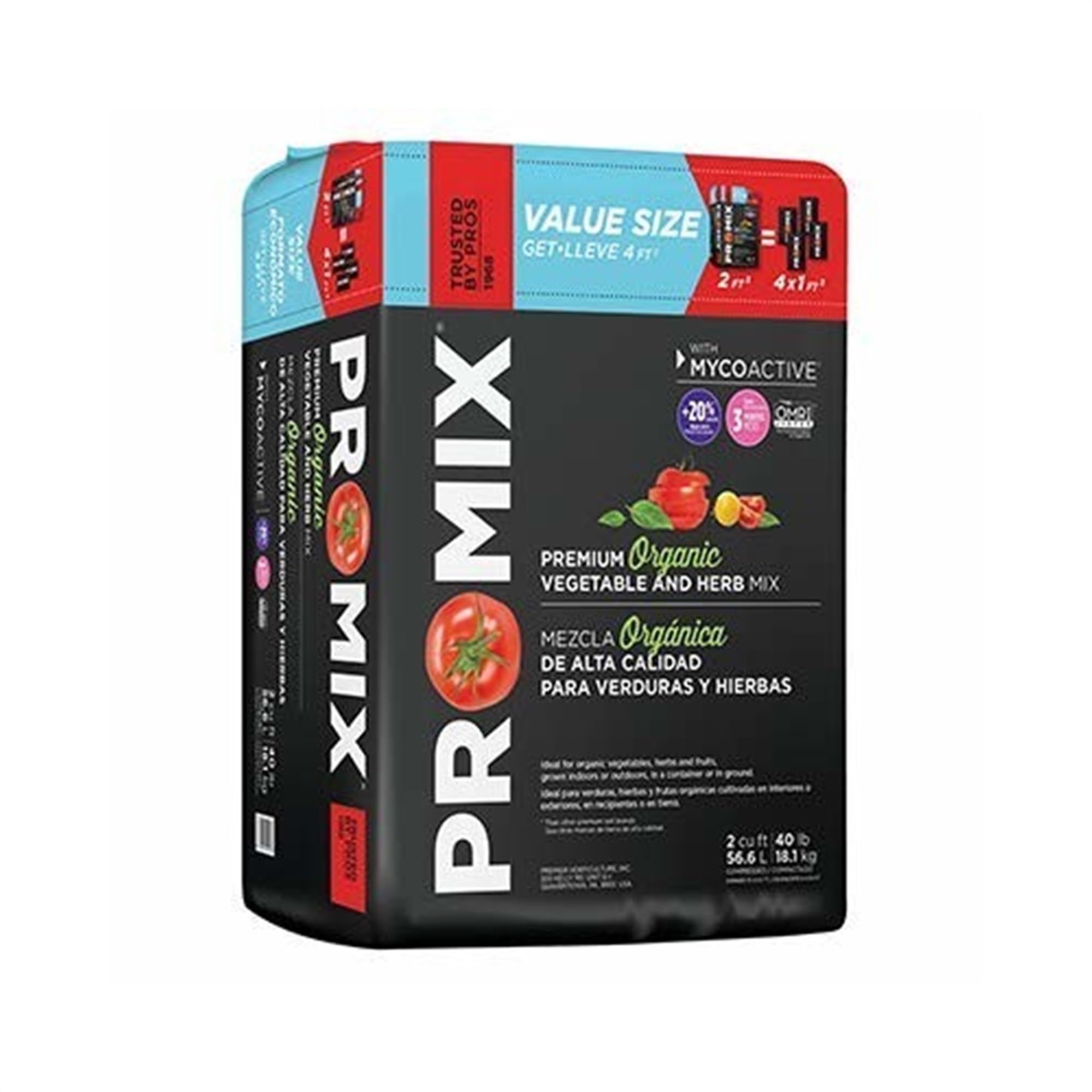
PRO-Mix is the professional greenhouse standard for a reason. This 2 cubic foot bag delivers a structure that is fluffy, well-aerated, and nearly weed-free—exactly what sweet potato slips need to send down roots without resistance. The organic fertilizer included in the mix provides a steady nutrient release for up to three months, which aligns perfectly with the 90- to 120-day growing cycle of most sweet potato varieties. The weight of the bag at 45 pounds signals a dense, high-quality media that holds moisture without becoming waterlogged.
Greenhouse operators and serious home gardeners trust this brand because it lacks the wood chips, bark chunks, and unprocessed filler that plague many big-box store soils. Customer reviews consistently note that plants grown in PRO-Mix outpace those in cheaper alternatives from the first week. The composted organic fertilizer feeds the soil biology gradually, so you avoid the leafy overgrowth that comes from nitrogen-heavy blends.
The main trade-off is availability and price volatility—Amazon pricing can spike, and some users report better deals at local garden centers. The bag can also arrive wet or heavy if stored improperly, though the soil quality remains intact. For most growers, this is the most dependable all-in-one foundation for a sweet potato bed.
Why it’s great
- Professional-grade texture prevents root compaction
- Built-in organic fertilizer feeds for an entire growing season
- Large 2 cu. ft. bag covers extensive raised beds
Good to know
- Price on Amazon can fluctuate significantly
- May contain small twigs unsuitable for seed blocking
3. Back to the Roots Organic Worm Castings

Worm castings are one of the gentlest yet most effective ways to enrich sweet potato beds without risking nitrogen burn. Back to the Roots delivers pure vermicompost in a resealable 5-pound bag that blends into chunky mixes—coco coir, perlite, charcoal—without compacting the structure. The granules release nutrients slowly as soil microbes break them down, providing a steady supply of micronutrients like calcium, magnesium, and zinc that support cell wall development in expanding tubers.
Multiple customer reviews highlight how this product improved foliage health and root growth across indoor plants, milkweed, and garden vegetables. One reviewer specifically noted that it holds moisture, which is a double-edged sword for sweet potatoes: excellent in sandy soils that drain too fast, but a potential issue in heavy clay. The absence of any odor or chemical smell makes it pleasant to work with during planting day.
The 5-pound bag is enough to amend roughly 20 to 30 square feet of bed space at a light incorporation rate. For larger patches you would need multiple bags, but the entry-level cost keeps this accessible. This is the smartest add-in for growers who already have decent native soil and just need a biological lift.
Why it’s great
- Slow-release nutrients with zero risk of burning roots
- Resealable bag keeps unused castings fresh
- Beneficial microbes suppress harmful soil pathogens
Good to know
- Holds significant moisture—use sparingly in clay soils
- Small bag size requires multiple units for large gardens
4. Coast of Maine Organic & Natural Planting Soil for Vegetables & Tomatoes

Coast of Maine builds its vegetable and tomato blend around composted manure and sphagnum peat moss, giving it a dark, rich texture that feels like premium earth straight out of the bag. The 20-quart volume is practical for topping off a small in-ground bed or filling a few large containers. The formulation balances moisture retention and drainage—peat moss holds water while the composted manure adds organic structure that prevents the mix from turning into mud.
Gardeners using this soil report healthy plant growth and strong yields, though one reviewer noted the presence of cedar or aromatic wood pieces that may help deter insects. The OMRI listing confirms it meets organic standards, which matters for anyone avoiding synthetic inputs. The lighter weight of the bag compared to traditional topsoil makes it easy to transport and work into raised beds.
The biggest caveat is the cost per volume—one reviewer warns that for larger sweet potato patches, buying multiple bags becomes expensive, and cheaper alternatives may work just as well when mixed with native soil. For a modest home garden, the convenience and quality justify the spend.
Why it’s great
- Composted manure provides balanced nutrition for root crops
- Lightweight, easy to work into beds or containers
- Natural cedar content may deter insects
Good to know
- Can contain gnats; pre-treat with neem oil if sensitive
- Cost adds up quickly for large-scale planting
5. Coast of Maine Organic & Natural Planting Soil for Acid Loving Plants

Sweet potatoes prefer a pH range of 5.5 to 6.5, and gardeners fighting naturally alkaline soil will find this low-pH blend indispensable. Coast of Maine formulates this mix with sphagnum peat moss, composted manure, and aged bark to create a lightweight medium that consistently measures on the acidic side. The inclusion of perlite ensures the drainage sweet potatoes need even when the acidity slows microbial activity that can compact heavy soils.
Blueberry and strawberry growers already rely on this product, and the same acidic conditions benefit sweet potato slips planted in regions with high-lime or hard water influence. Customer feedback emphasizes that plants respond quickly—turning deep green within days of transplanting—and that the bag size is ideal for refreshing worn planter soil. The low pH also helps suppress scurf, a common sweet potato skin blemish caused by alkaline soil conditions.
The drawback is specialization: if your native soil already sits in the ideal pH range, this mix offers no advantage over a general vegetable blend. It also contains bark pieces that may not break down fully within a single season. For alkaline-soil growers, however, this is a targeted tool that solves a problem no other product on this list addresses.
Why it’s great
- Low pH formula corrects alkaline soil for better tuber formation
- Perlite ensures drainage remains high
- Suitable for topping off worn container soil
Good to know
- Unnecessary if native pH is already 5.5–6.5
- Aged bark content may take time to break down
FAQ
Can I use bagged garden soil straight from the bag for sweet potatoes?
How deep should the loose soil layer be for sweet potato roots?
Should I add fertilizer to the soil before planting sweet potatoes?
Final Thoughts: The Verdict
For most users, the soil for sweet potatoes winner is the PRO-Mix Premium Organic Vegetable & Herb Mix because it delivers a professional-grade, fluffy texture with slow-release organic feeding that covers the entire growing cycle without burning roots. If you want to supercharge an existing bed with biology, grab the Espoma Organic Land and Sea for its unique lobster and crab meal plus mycorrhizae. And for alkaline-soil growers combatting high pH, nothing beats the Coast of Maine Acid-Loving Mix.