Standard garden soil compacts in pots, drowning delicate herb roots in stagnant water instead of delivering the air and drainage they need to produce fragrant leaves. The wrong medium turns a windowsill harvest into a lesson in root rot and yellowing stems.
I’m Mohammad Maruf — the founder and writer behind AirfryerBite. I’ve spent years dissecting potting mix formulations, comparing aeration additives, and tracking how moisture retention varies between coco coir, peat blends, and chunky bark mixes for indoor herb gardens.
This guide cuts through the marketing claims to deliver practical, test-backed recommendations for the best soil for indoor herbs across every budget and growing style.
How To Choose The Best Soil For Indoor Herbs
Indoor herbs demand a growing medium that balances moisture retention with rapid drainage. Container roots cannot escape waterlogged conditions, making aeration the single most critical factor. A poor choice invites fungal gnats, root rot, and stunted growth—common frustrations that turn a promising herb garden into a disappointment.
Aeration and Drainage Are Non‑Negotiable
Herb roots require oxygen to absorb nutrients efficiently. Dense, clay-like soils suffocate roots and trap excess water. Look for mixes containing perlite, pumice, lava rock, or coarse sand to create air pockets. The ideal mix should feel light and crumbly, not heavy and compacted.
Organic Matter vs. Added Fertilizer
Many bagged soils include a starter charge of fertilizer, but herbs generally prefer moderate feeding. Overly rich mixes can produce leggy growth with weak flavor. High-quality ingredients like worm castings, kelp meal, or alfalfa meal provide gentle, slow-release nutrition without overwhelming the plant.
pH Balance Matters for Flavor
Most culinary herbs thrive in a slightly acidic to neutral pH range between 6.0 and 7.0. Coco coir naturally sits near neutral, while peat moss is more acidic and may require lime to balance. A mix that includes garden lime or tree fern fiber helps maintain the optimal pH window.
Quick Comparison
On smaller screens, swipe sideways to see the full table.
| Model | Category | Best For | Key Spec | Amazon |
|---|---|---|---|---|
| Miracle-Gro Organic Indoor Potting Mix (2-Pack) | Moisture Control | Beginners seeking forgiving moisture balance | 8 qt. x 2, sphagnum peat + coir | Amazon |
| ZESTIGREENS 16 Pack Expanding Organic Fiber Soil | Coco Coir Discs | Small pot gardeners wanting storage convenience | Expands 16 discs to 32 cups | Amazon |
| Perfect Plants Indoor Plant Soil 4qt | Balanced Mix | Users wanting a bug-free, pre-mixed substrate | 4 qt., pine bark + coco coir + perlite | Amazon |
| Grow Queen Craft Aroid Potting Mix 2QT | Chunky Aroid | Enthusiasts who demand premium drainage for tropical herbs | 2 qt., peat-free, perlite-free | Amazon |
| Espoma Organic Potting Soil Mix (2-Pack) | Organic Premium | Gardeners wanting all-natural, mycorrhizae-enriched blend | 8 qt. x 2, Myco-Tone inoculant | Amazon |
In‑Depth Reviews
1. Miracle-Gro Organic Indoor Potting Mix (2-Pack)

This two-bag bundle delivers 16 total quarts of a sphagnum peat moss and coco coir blend engineered specifically to buffer against both overwatering and underwatering. The organic formula includes a quick-start natural fertilizer that supports seedlings and transplants without burning tender roots. Users report consistently dark, loose texture that holds moisture without becoming soggy.
The OMRI listing confirms compliance with organic gardening standards, making it a safe foundation for edible herbs like basil, mint, and cilantro. The blend works across container sizes, from small starter pots to eight-inch planters, covering the needs of a typical windowsill garden. Several reviews highlight thriving transplants and vigorous leaf production after switching from generic potting soil.
One minor concern is the inclusion of peat moss, which has a higher environmental footprint compared to coco coir. However, the manufacturer sources from certified producers, reducing the impact. For most home herb growers, the reliable moisture regulation and proven germination results make this the most practical all-rounder available.
Why it’s great
- Moisture-regulating formula protects against common watering mistakes
- Organic ingredients with OMRI certification for edible herbs
- Two-bag value covers multiple containers at once
Good to know
- Peat moss content may raise environmental concerns for some buyers
- Some users prefer to mix in extra perlite for increased aeration
2. ZESTIGREENS 16 Pack Expanding Organic Fiber Soil

These compressed coco coir wafers solve two common indoor gardening annoyances: heavy bags of damp soil and awkward storage. Each two-inch disc expands to approximately two cups of growing medium after adding five ounces of water. The pack of sixteen discs transforms into 32 cups of light, fibrous soil ideal for three and four-inch pots where basil, parsley, and chives thrive.
Coco coir offers superior oxygen retention compared to peat, reducing the risk of overwatering—the most frequent cause of herb failure indoors. The natural fibers create air channels that allow roots to breathe while still holding enough moisture between waterings. Several reviewers mention faster sprouting and softer, more consistent texture compared to standard bagged soil.
The primary caveat is packaging: some buyers reported that the outer burlap bag arrived with cuts, causing loose soil. Also, the discs are shrink-wrapped individually, which ensures freshness but generates additional plastic waste. For those who value compact storage and clean, pest-free starting medium, this is a clever entry-level solution.
Why it’s great
- Ultra-compact storage expands only when needed
- Neutral pH supports most culinary herbs without amendment
- Eco-friendly renewable resource compared to peat
Good to know
- Shipping packaging can be inconsistent and may leak soil
- Individual plastic wraps create waste per disc
3. Perfect Plants Indoor Plant Soil 4qt

Perfect Plants uses a thoughtful recipe of pine bark fines, coco coir, perlite, sand, and garden lime to create a substrate that drains quickly while retaining enough moisture for consistent herb growth. The light, fluffy texture allows roots to spread without resistance, and the resealable bag keeps unused soil fresh between repotting sessions. Many users specifically note the absence of fungus gnats—a frequent plague of cheaper mixes.
The inclusion of garden lime stabilizes pH in the 6.0 to 7.0 range, which is precisely where culinary herbs perform best. The mix is pre-moistened during production, so it arrives ready to use straight from the bag without the dusty cloud common to dry blends. This makes it particularly convenient for quick transplants or adding a new plant to the collection.
The trade-off is cost per quart relative to larger economy bags. At four quarts, the bag is best suited for a few small to medium pots rather than a full garden overhaul. Some gardeners may need to purchase multiple bags for a larger setup. For those prioritizing a clean, pest-free start for a modest herb collection, this mix delivers excellent results.
Why it’s great
- Consistently bug-free, with no reports of fungus gnats
- Perfectly balanced pH for basil, mint, and oregano
- Light, airy texture promotes fast root establishment
Good to know
- Bag size is modest, limiting coverage for multiple large pots
- Premium pricing per quart compared to commodity options
4. Grow Queen Craft Aroid Potting Mix 2QT
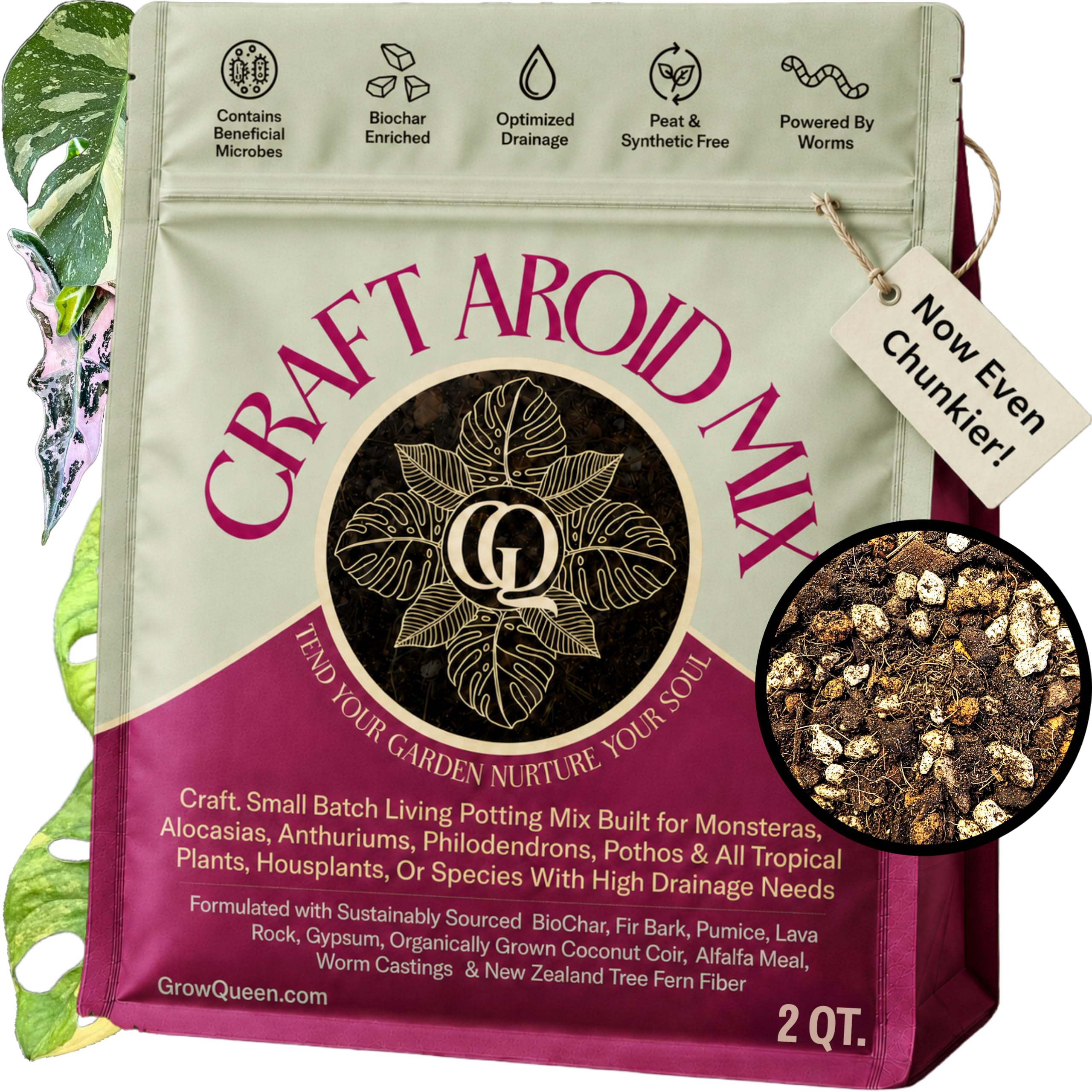
This chunky, peat-free and perlite-free blend uses Douglas fir bark fines, lava rock, pumice, and New Zealand tree fern fiber to create an exceptionally aerated environment. The large particles ensure that water flows through immediately rather than pooling around roots, making it virtually impossible to overwater—a major advantage for beginners who tend to be heavy-handed with the watering can.
The mix includes beneficial living microbes and worm castings that provide gentle, continuous nutrition without the risk of synthetic fertilizer burn. The coco coir component is certified organic and triple-washed to remove excess salts, which is critical for sensitive indoor herbs. Users consistently praise the fresh, earthy smell and complete absence of mold or pests, even after months of use.
The main limitation is the two-quart bag, which is enough for only a few smaller pots or a single medium-sized container. For a full windowsill garden, multiple bags are required. Additionally, the chunky texture is optimized for tropical aroids and may feel too coarse for tiny seedlings like thyme or oregano. Nonetheless, for established herbs that require excellent drainage, this is a top-tier option.
Why it’s great
- Exceptional aeration prevents root rot even with frequent watering
- Peat-free and perlite-free with sustainable volcanic rock alternatives
- Living microbes and worm castings provide gentle, natural feeding
Good to know
- Small two-quart bag requires multiple purchases for larger gardens
- Coarse texture may not suit very small herb seeds directly
5. Espoma Organic Potting Soil Mix (2-Pack)

Espoma’s two-pack offers 16 total quarts of a rich blend built on sphagnum peat moss, humus, perlite, worm castings, alfalfa meal, kelp meal, and feather meal. This all-natural composition provides a diverse nutrient profile that supports vigorous leaf growth without synthetic chemicals. The inclusion of Myco-Tone—a proprietary blend of endo and ecto mycorrhizae—establishes a symbiotic root network that enhances nutrient and water uptake.
This mix is versatile enough for both indoor and outdoor containers, meaning any leftover bags can be used for patio planters or vegetable pots. Users consistently report strong, green growth after transplanting, with particular success for herbs like basil and mint. Several long-term customers mention repeat purchases due to consistent quality across batches.
The primary drawback is moisture absorption when the soil is overly dry in the bag. Some buyers found that the mix repelled water initially and required thorough wetting before it would absorb properly. Additionally, the higher price per bag places it in the premium tier, making it a better investment for dedicated gardeners than casual experimenters.
Why it’s great
- Rich natural ingredients with mycorrhizae for enhanced root health
- Versatile for both indoor herbs and outdoor container vegetables
- Consistent quality praised by repeat buyers
Good to know
- Very dry bags may initially repel water and need pre-wetting
- Premium pricing reflects the high-quality organic components
FAQ
Can I use regular garden soil for indoor herbs?
Does the soil pH matter for culinary herbs like basil and mint?
What does “moisture-regulating” mean in a potting mix?
Is coco coir better than peat moss for indoor herbs?
Should I mix my own soil or buy a pre-made blend?
Final Thoughts: The Verdict
For most users, the best soil for indoor herbs winner is the Miracle-Gro Organic Indoor Potting Mix (2-Pack) because its moisture-regulating formula protects against the watering mistakes that kill more herbs than any other factor. If you want a compact, easy-to-store option for small pots, grab the ZESTIGREENS Expanding Organic Fiber Soil. And for a premium, peat-free mix with exceptional drainage, nothing beats the Grow Queen Craft Aroid Potting Mix.