Blueberries demand soil chemistry most garden beds don’t naturally provide—low pH, high organic matter, and sharp drainage. Drop standard potting mix into a container and you’ll watch leaves yellow and berry production stall within weeks. The difference between a bumper crop and a disappointing handful often comes down to what sits beneath the roots.
I’m Mohammad Maruf — the founder and writer behind AirfryerBite. Over six years of analyzing horticultural substrates, I’ve evaluated dozens of acidic blends to separate the mixes that actually maintain pH stability from those that slump toward neutral by mid-season.
This guide compares five proven formulations to help you choose the right soil for blueberry plants—whether you are planting in containers, raised beds, or amending an existing plot for long-term berry production.
How To Choose The Best Soil For Blueberry Plants
Blueberries are acid-loving plants that thrive when soil pH stays between 4.5 and 5.5. Regular garden soil or all-purpose potting mix pushes pH too high, locking up iron and causing chlorosis. Selecting the right blend means evaluating four critical factors before you open a bag.
Check the pH Range
Immediate pH is the single most important spec. A mix labeled for azaleas or blueberries should land between 4.5 and 5.5 at bag opening. Some blends incorporate elemental sulfur or pine byproducts to maintain acidity through the growing season. Avoid neutral or alkaline mixes even if they claim to be plant-specific—blueberries will struggle.
Prioritize Drainage and Aeration
Blueberry roots are fine, fibrous, and sensitive to standing water. Blends heavy with peat moss and lightweight perlite allow excess moisture to escape while retaining enough humidity between waterings. Heavy clay-based or dense organic mixes suffocate roots and invite root rot within weeks.
Look for Organic and Natural Ingredients
Peat moss, coconut coir, pine bark, and composted manure create a stable, low-fertility environment that mirrors wild blueberry habitats. Synthetic fertilizers can burn tender roots; organic nutrient release supports steady foliage and fruit development without shocking the plant.
Quick Comparison
On smaller screens, swipe sideways to see the full table.
| Model | Category | Best For | Key Spec | Amazon |
|---|---|---|---|---|
| Omitgoter 10qt | Organic Blend | Larger containers | 10 quarts volume | Amazon |
| Soil Sunrise 12qt | Artisan Mix | pH reliability | 12 quarts volume | Amazon |
| Coast of Maine 20qt | Premium Organic | Raised beds | 20 quarts volume | Amazon |
| Omitgoter 4qt | Organic Blend | Single containers | 4 quarts volume | Amazon |
| Berry Tone 4-3-4 | Plant Food | Feeding established plants | 4-3-4 NPK ratio | Amazon |
In‑Depth Reviews
1. Omitgoter Blueberry Soil Mix 10qt
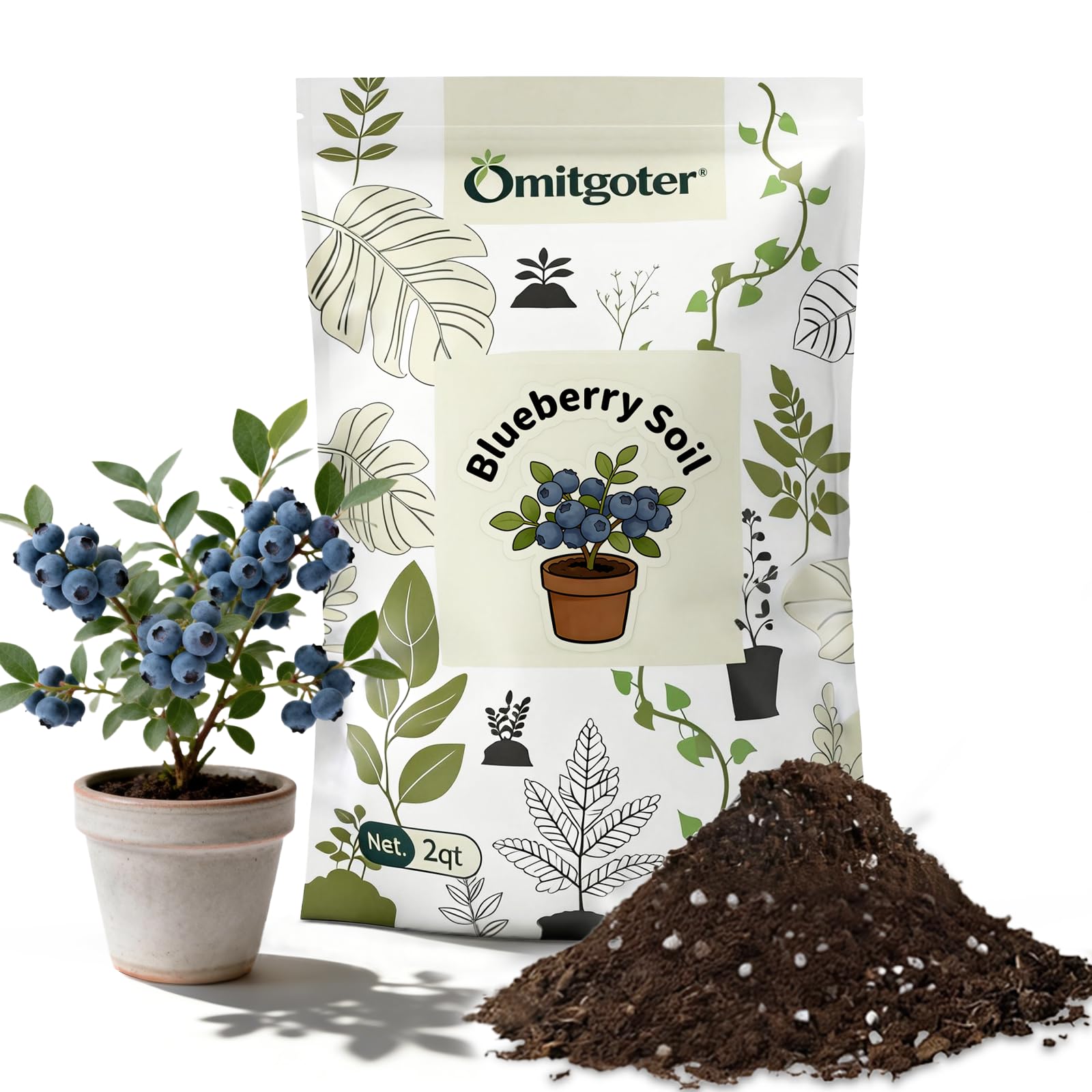
The 10-quart bag from Omitgoter delivers the same 100% natural organic formula as the smaller 4-quart version but covers larger containers and multiple pots without needing a second purchase. Pure peat moss, coconut coir, perlite, bark, and humus form the base, producing a light, fluffy texture that drains fast while holding enough moisture between waterings.
Because there are no synthetic additives, the pH arrives already in the 4.5–5.5 sweet spot. Beginner gardeners can open the bag and plant directly—no mixing, no sulfur amendments required. The organic nutrient profile feeds blueberries from seedling stage through fruit set without the burn risk that synthetic fertilizers carry for tender roots.
Indoor and outdoor versatility makes this a strong candidate for patio pots, window boxes, or backyard beds. At 10 quarts, you can fill two standard 5-gallon containers or one large raised-bed section. The bag reseals decently, though shifting dry peat dust can be messy during pour.
Why it’s great
- Ready-to-use organic blend, no mixing needed
- Large 10qt volume covers multiple containers
- pH pre-balanced for acid-loving plants
Good to know
- Peat dust can escape during pouring
- Bag resealable but not completely airtight
2. Soil Sunrise Acid Loving Plant Potting Soil Mix 12qt
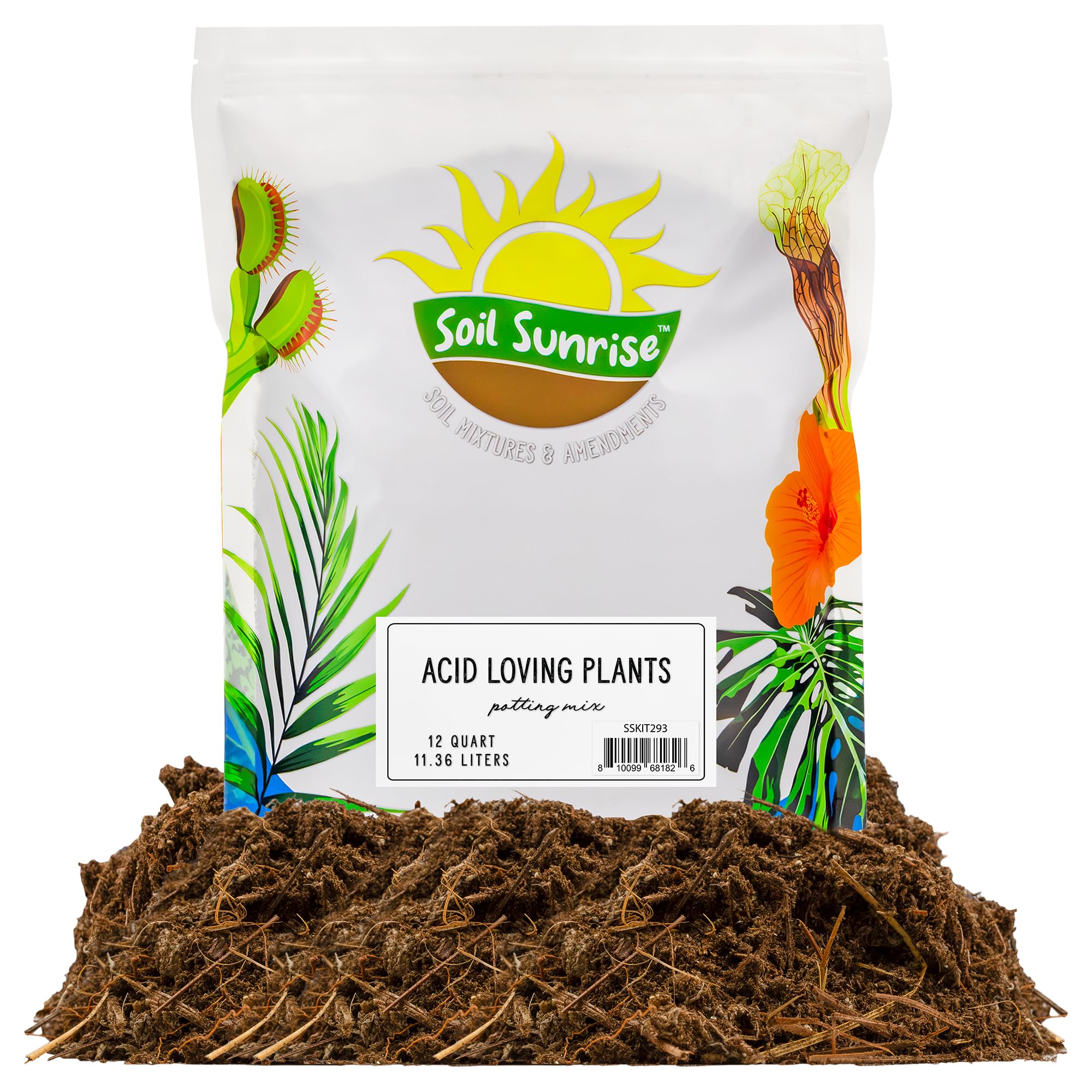
Soil Sunrise’s artisan blend combines peat moss, pine needle mulch, pine bark mulch, sphagnum moss, and vermiculite to create an acidic environment specifically calibrated for azaleas, rhododendrons, and blueberries. The pine components provide a natural pH buffer that helps maintain acidity longer than standard peat-only mixes.
Drainage and aeration are handled by the mix of coarse pine bark and vermiculite, preventing the compaction that plagues finer-textured soils in containers. Root development benefits from the consistent air pockets, and nutrient absorption improves because roots are never swimming in standing water after heavy rain.
At 12 quarts, this is a practical size for three to four 3-gallon containers or one deeper raised bed section. The all-natural ingredient list appeals to gardeners avoiding synthetic inputs. Some users note that pine needles can be slightly slow to break down, but that same longevity supports sustained pH depression across the growing season.
Why it’s great
- Pine mulch and needles help hold low pH
- Vermiculite improves moisture retention without waterlogging
- Large 12-quart bag suits multiple containers
Good to know
- Pine material may feel coarse for small pots
- Needs thorough wetting if stored dry
3. Coast of Maine Organic Planting Soil for Acid Loving Plants 20qt

Coast of Maine’s 20-quart bag is a heavy-duty organic blend built around composted manure and sphagnum peat moss, specifically formulated for acid-loving plants like azaleas, rhododendrons, and berries. The composted manure introduces a richer microbial load than peat-only mixes, supporting long-term soil health in raised beds and landscape applications.
Low pH is engineered into the formula from the start, reducing the need for elemental sulfur or acidifying fertilizers during the first growing season. Enhanced drainage comes from the coarse organic structure, though the density of composted material makes this mix heavier than lighter peat-and-perlite blends. It holds moisture well, which is beneficial in hot climates but can be problematic in poorly drained containers.
This is the best choice for gardeners amending a large bed or filling multiple 5-gallon pots. The 20-quart bag provides generous coverage, and the OMRI-listed organic certification ensures no synthetic chemicals touch the root zone. Be mindful that the compost component can carry a mild earthy odor for the first few days after opening.
Why it’s great
- Large 20-quart bag for beds and multiple pots
- Composted manure boosts soil biology
- OMRI-listed organic, no synthetic inputs
Good to know
- Heavier than peat-perlite blends
- Mild odor from composted manure
4. Omitgoter Blueberry Soil Mix 4qt
The entry-level 4-quart bag from Omitgoter offers the same 100% natural organic recipe as its larger sibling—peat moss, coconut coir, perlite, bark, and humus—in a size perfect for a single blueberry bush in a 2-gallon container. No synthetic additives or chemical fertilizers means the pH arrives pre-set for acid-loving plants, and the texture is loose enough for immediate planting.
Despite the small volume, the blend holds together well without compacting, providing the drainage blueberry roots demand. The 128-ounce bag (4 quarts) is light enough for casual gardeners to handle easily, and the bag’s resealable closure keeps unused soil fresher between plantings. This is an ideal test size if you are trying a new container spot or starting a single bare-root plant.
For gardeners managing a small patio or a windowsill blueberry, the 4-quart size minimizes waste and storage issues. The only real drawback is that you will need multiple bags for any project beyond two pots, but for the single-plant crowd the price-to-volume ratio is solid.
Why it’s great
- Ready-to-use, no mixing required
- Lightweight and easy to store
- pH pre-adjusted for blueberries
Good to know
- Small bag only covers one container
- Peat can be dusty when pouring
5. Espoma Berry Tone Plant Food 4-3-4, 4-Lb.

Espoma Berry Tone is not a soil, but a targeted organic fertilizer designed to feed blueberries and other acid-loving berries through the growing season. The 4-3-4 NPK ratio provides a balanced supply of nitrogen, phosphorus, and potassium without the salt-heavy profiles of synthetic fruit fertilizers. Bio-tone microbes are included to enhance root development and nutrient uptake.
This granular food works best when mixed into the top few inches of soil at planting time or as a mid-season top-dress for established plants. The organic components release slowly, reducing the risk of root burn even when applied around young transplants. Gardeners who already have a base soil mix and need a sustained nutrient boost will find Berry Tone a practical addition.
The 4-pound bag covers roughly ten 3-gallon containers per application, making it a cost-effective maintenance tool for berry patches. Bear in mind that Berry Tone cannot correct pH issues on its own—it is a supplement, not a soil amendment. Use it alongside a proper acidic soil blend for best results.
Why it’s great
- Organic, slow-release formula protects roots
- Bio-tone microbes support root growth
- Balanced 4-3-4 ratio suits berry development
Good to know
- Not a standalone soil; requires base mix
- Does not adjust soil pH
FAQ
Can I use regular potting soil for blueberry plants?
How often should I replace blueberry soil in containers?
Final Thoughts: The Verdict
For most users, the soil for blueberry plants winner is the Omitgoter 10qt because it delivers a ready-to-use organic blend with pre-balanced pH in a generous volume that covers multiple containers without mixing or additives. If you want sustained pH stability from a pine-enriched artisan mix, grab the Soil Sunrise 12qt. And for large raised beds or heavy feeders, nothing beats the Coast of Maine 20qt for organic richness and soil biology.