A brisket cook is a marathon, not a sprint. The wrong smoking wood produces bitter creosote, inconsistent heat, or a thin blue smoke that never penetrates that thick cut of meat. Finding the right wood chunks—kiln-dried, properly sized, and matched to beef’s dense protein structure—is the difference between a bark that shatters and a disappointing crust.
I’m Mohammad Maruf — the founder and writer behind AirfryerBite. I’ve spent hundreds of hours analyzing kiln-drying processes, burn rates, chunk size distributions, and moisture content to identify the smoking wood that delivers consistent, clean smoke across a 12-hour brisket stall.
This guide cuts through the marketing to rank the top five options by burn consistency, flavor profile, and size suitability. Ready your smoker and read on for the definitive smoking wood for brisket that guarantees a picture-perfect smoke ring every time.
How To Choose The Best Smoking Wood For Brisket
Selecting brisket wood is different from picking chips for chicken or ribs. The density of a whole packer brisket demands wood that burns long, clean, and hot enough to render fat without stalling the cook. Focus on these three parameters before buying.
Chunk Size and Burn Duration
Wood chips burn up in minutes, forcing you to reload constantly and spiking your smoker’s temperature each time you open the door. For brisket, always buy chunks measuring roughly 2 to 4 inches square. A fist-sized chunk of kiln-dried oak can smolder for 45 to 75 minutes at 225 to 275 degrees Fahrenheit, holding a steady temperature curve through the stall. Look for bags or boxes that advertise variable chunk sizing, as a mix of larger and smaller pieces lets you layer fuel for longer unattended burns.
Wood Type: Oak, Hickory, or Fruit Wood
Oak—specifically red oak and post oak—is the gold standard for brisket because its medium smoke profile doesn’t overpower beef’s natural flavor. Hickory delivers a stronger, more bacon-like punch that works well on short cooks but can turn acrid during a 16-hour smoke if you use too much. Fruit woods like apple or cherry add subtle sweetness and color but lack the density to drive smoke deep into a thick flat. For competition-grade bark, stick with oak as your base wood and add a single chunk of hickory or fruit wood as an accent.
Kiln-Dried vs. Air-Dried vs. Green Wood
Moisture content is the silent killer of good brisket smoke. Green wood (freshly cut, high moisture) produces thick white smoke that tastes of steam and creosote, ruining your bark. Air-dried wood can vary wildly by season and storage conditions. Kiln-dried wood is baked to a consistent 8 to 12 percent moisture content, ensuring you get thin blue smoke from the moment it hits the coals. Always choose USDA-certified kiln-dried wood for brisket to eliminate guesswork and guarantee a clean flavor profile.
Quick Comparison
On smaller screens, swipe sideways to see the full table.
| Model | Category | Best For | Key Spec | Amazon |
|---|---|---|---|---|
| Cattleack Smok’in Tinder Hickory Chunks | Chunks | Competition-grade brisket smoke | 3-inch square chunks, 10 lb box | Amazon |
| Smoak Firewood Red Oak Chunks | Chunks | Premium clean oak burn | 3-inch chunks, USDA kiln-dried | Amazon |
| B & B Charcoal Oak Chunks | Chunks | Steady even burn for offset smokers | 2.5 kg bag, Smoky Oak flavor | Amazon |
| Mr. Bar-B-Q Hickory Chunks | Chunks | Entry-level bold hickory flavor | 3.5 lb bag, no-soak ready | Amazon |
| Smoak Firewood White Oak Logs | Logs | Long-burn fuel for Santa Maria grills | 12-inch lengths, 45–50 lb box | Amazon |
In-Depth Reviews
1. Cattleack Smok’in Tinder Hickory Wood Chunks
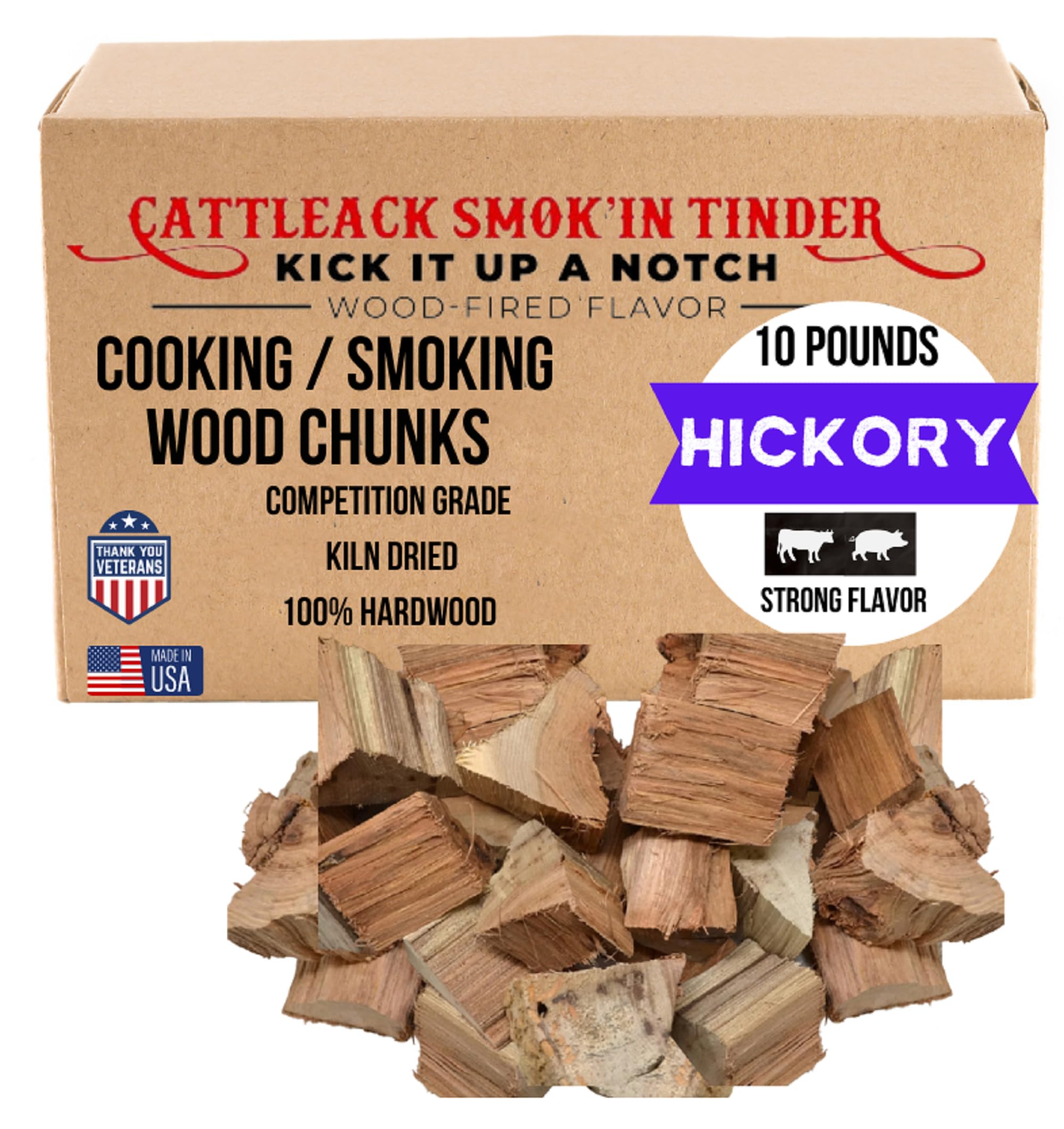
Cattleack delivers what pitmasters call “fist-sized” chunks that actually measure up to three inches square, offering a burn duration that easily outlasts standard wood chips. Sourced from the heart of BBQ country—Missouri, Texas, and Colorado—this hickory is kiln-dried to a consistent moisture level that produces thin blue smoke on the first light, eliminating the acrid starter smoke that ruins bark formation. The 10-pound box provides roughly 15 to 20 chunks, enough to fuel a full brisket cook with minimal reloading.
Hickory’s bold smoke profile pairs aggressively with beef, but the real advantage here is the variable chunk sizing. You get a mix of larger splits and smaller wedges, allowing you to layer airflow and control heat spikes during the stall. Buyers consistently report a beautiful smoke ring and bark that shatters, even on 14-hour cooks at 275 degrees Fahrenheit. The cardboard box packaging is durable for storage but not moisture-proof, so transfer unused chunks to a sealed bin.
For the price per pound, this is the most reliable mid-range option that doesn’t sacrifice quality. The only friction is the bag’s weight: at 10 pounds, shipping costs can vary, and some buyers have noted the box arriving crushed. Still, the wood itself is clean, dry, and free of mold or rot—exactly what you need for a competition-worthy brisket.
Why it’s great
- Kiln-dried to less than 12 percent moisture for instant clean smoke
- Variable chunk sizes let you control burn rate without splitting
- Strong hickory flavor penetrates thick brisket flats
Good to know
- Cardboard box can arrive crushed; transfer to an airtight container
- Hickory may overpower delicate palates if used for the entire cook
2. Smoak Firewood Red Oak Chunks (Competition Grade)

Smoak Firewood’s red oak chunks are the closest you can get to competition-grade cooking wood without running a restaurant. USDA-certified kiln-dried and completely organic with no chemical treatments, these chunks produce a steady, non-bitter smoke that buyers describe as “clean” and “rich” without any harsh aftertaste. The 8-to-10-pound box packs about 729 cubic inches of wood, with most chunks averaging three inches square—ideal for offset smokers, kamado grills, and vertical water smokers.
Red oak burns hotter than white oak or hickory, which is an advantage when you’re pushing a thick brisket through the stall. The higher density also means each chunk smolders longer, reducing the number of reloads during a long cook. Buyers report that a single layer of these chunks on a bed of charcoal runs for 45 to 60 minutes at 225 degrees Fahrenheit, making them a strong choice for unattended overnight smokes. The wood splits cleanly, so you can shave smaller pieces for quick heat adjustments without generating sawdust.
The only downside is the cost per chunk: the initial box can feel expensive if you count individual pieces, but the extended burn time offsets the sticker shock. Customer service is notably responsive—one reviewer received a free replacement and a handwritten apology when their box arrived underweight. For anyone serious about brisket bark, the Smoak red oak is a premium investment that pays for itself in consistent results.
Why it’s great
- USDA-certified kiln-dried to under 10 percent moisture for zero creosote
- High-density red oak burns longer per chunk than generic hardwoods
- Clean splits allow easy size adjustment without splintering
Good to know
- Premium tier pricing per pound relative to bagged competitors
- Overly large chunks may not fit small electric smoker chip trays
3. B & B Charcoal Oak Smoking Chunks

B & B Charcoal has been a staple in the backyard BBQ scene for years, and their oak smoking chunks deliver exactly what the name implies: reliable, well-aged wood that produces clean smoke with no bitter notes. The Smoky Oak scent is subtle enough to complement beef without competing, making this a versatile choice for brisket, ribs, and even poultry on the same cook. The bag weighs 2.5 kilograms (roughly 5.5 pounds), offering a compact size that fits neatly into a smoker shelf without taking up bin space.
What sets B & B apart is the even chunk sizing. Almost every piece in the bag falls within the 2-to-3-inch range, which means you can load your smoker with predictable burn times and fewer surprises. Buyers using Weber Smokey Mountain and horizontal offset smokers report that the wood maintains a consistent smolder at 250 degrees Fahrenheit for 40 to 50 minutes per chunk, allowing you to focus on temperature management rather than constant reloading. The oak’s medium intensity is forgiving, so even if you overdo the quantity, you won’t overwhelm the meat with smoky bitterness.
The value proposition is solid for a mid-range product. At roughly 5.5 pounds per bag, you’ll need two bags for a full brisket cook, but the predictable burn pattern reduces wasted fuel. The only minor complaint is the lack of a resealable bag—once opened, you’ll need a clip or a separate container to keep the wood dry between cooks. For a no-fuss, consistent oak experience, B & B earns its steady reputation.
Why it’s great
- Even 2-to-3-inch chunks provide predictable 40-minute burn windows
- Well-aged oak produces zero bitter aftertaste on long cooks
- Medium smoke profile works for brisket, pork, and poultry alike
Good to know
- Bag is not resealable; transfer to airtight storage
- Requires two bags for a full packer brisket cook
4. Mr. Bar-B-Q 3.5 lb Hickory Wood Chunks

Mr. Bar-B-Q’s hickory wood chunks are the go-to entry-level option for grillers who want bold smoke without the learning curve. The 3.5-pound bag is ready to use right out of the package—no soaking required—which eliminates the temperature drops and bitter steam that come from pre-wetted chips. Hickory’s robust flavor profile is a natural match for beef, pork, and poultry, making this a versatile starter bag for anyone new to brisket smoking.
The chunk size is slightly smaller than premium competitors, averaging 1.5 to 2.5 inches, which means you’ll burn through the bag faster on a full brisket cook. However, the smaller size also gives you finer control over temperature adjustments: dropping in a single piece won’t spike your smoker like a larger split would. Buyers consistently praise the “smooth burn” and “great flavor smell,” with multiple reviews noting it’s the perfect option for tomahawk steaks and ribs. The bag’s low cost makes it easy to experiment without committing to a bulk purchase.
The trade-off is burn duration. These chunks will last roughly 20 to 30 minutes at 225 degrees Fahrenheit, so you’ll be reloading every half-hour on a long brisket cook. Some buyers also note the bag can include fine dust at the bottom, though this is typical for mass-produced wood chips. For budget-friendly brisket smoking or for cooks who prefer to micro-manage fuel, Mr. Bar-B-Q delivers surprising quality at a low entry point.
Why it’s great
- No-soak design saves time and prevents temperature drops
- Smaller chunks allow precise heat adjustments mid-cook
- Bold hickory flavor works well on first-time brisket attempts
Good to know
- Shorter burn time requires frequent reloading on long cooks
- Bag may contain fine dust; sift before use
5. Smoak Firewood 12-Inch White Oak Logs
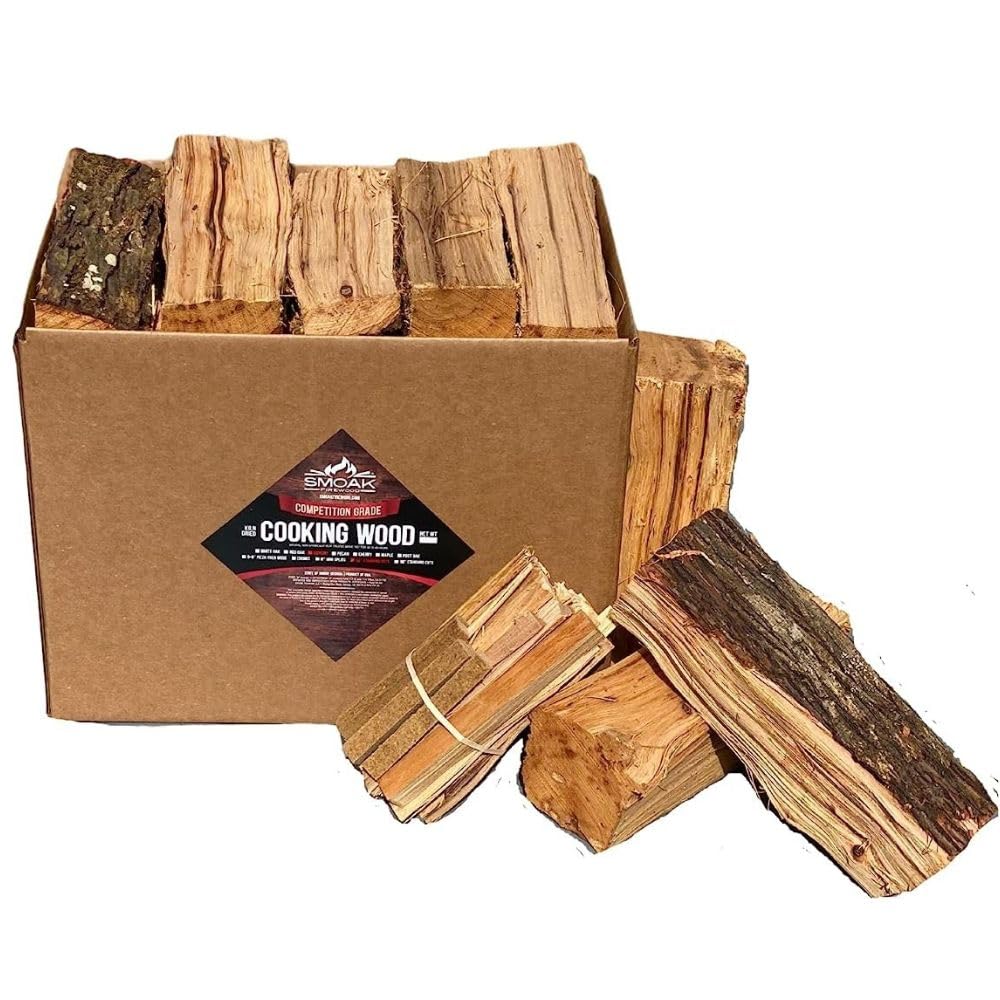
When you graduate from chunk smoking to using full splits, the Smoak Firewood 12-inch white oak logs are a premium choice for dedicated offset smokers and Santa Maria grills. USDA-certified kiln-dried and weighing 45 to 50 pounds, this box contains roughly 12 to 15 splits that average 3 to 4 inches in width—perfect for long, unattended burns. White oak burns hotter and slower than red oak, generating the kind of consistent radiant heat that renders brisket fat without stalling.
The box includes kindling and a firestarter, making it a complete fuel solution for a full cook. Buyers using Ooni pizza ovens report hitting 900 degrees Fahrenheit with minimal soot, while Santa Maria grill users love the sustained burn for tri-tip and picanha. For brisket, a single 12-inch split can run 60 to 90 minutes at 250 degrees, drastically reducing the number of times you have to open the firebox. The wood is clean, dry, and free of mold or bark sloughing, delivering a sweet, nutty smoke that pairs beautifully with beef’s natural richness.
The main consideration is size. These logs are too large for most vertical smokers, kamados, or electric smokers; you’ll need a full-size offset or a Santa Maria grill to use them effectively. The price per box is also the highest on this list, but the volume works out to a competitive cost per hour of burn time. For dedicated brisket smokers with the right gear, the Smoak white oak logs are the ultimate low-and-slow fuel.
Why it’s great
- 12-inch splits burn 60–90 minutes each for minimal reloading
- Includes kindling and firestarter for one-box convenience
- White oak produces sweet, nutty smoke ideal for beef
Good to know
- Too large for most vertical or electric smokers
- Premium tier cost requires commitment to a full box
FAQ
Can I use wood chips instead of chunks for brisket?
How much smoking wood does a full brisket cook require?
Is hickory too strong for brisket?
Should I soak wood chunks before using them?
Final Thoughts: The Verdict
For most users, the smoking wood for brisket winner is the Cattleack Smok’in Tinder Hickory Chunks because it combines competition-grade sizing, reliable kiln-drying, and strong hickory flavor at a mid-range price that suits both beginners and pitmasters. If you want a pure, clean oak burn that prioritizes temperature stability, grab the Smoak Firewood Red Oak Chunks. And for large offset smokers that can handle full splits, nothing beats the Smoak Firewood White Oak Logs for hours of unattended, sweet smoke on a packer brisket.