A small pressure cooker solves the single biggest pain point of its larger siblings: you don’t have to fill a 6-quart pot to cook a single chicken breast or a side of rice for two. These compact cookers hit pressure faster, take up less counter space, and eliminate the wasted energy of heating a cavernous vessel for a small batch meal. Whether you’re cooking for one, living in a dorm, or just tired of overcooked solo portions, the 3-quart and 4-quart category delivers the same tenderizing power in a package that fits your actual portion size.
I’m Mohammad Maruf — the founder and writer behind AirfryerBite. My research focuses on the practical specs that define category performance, such as pressure ratings, safety mechanism density, induction compatibility, and non-stick coating composition, so you can separate genuine engineering from marketing fluff.
After analyzing over a dozen models across material quality, safety features, and real-world cooking speed, this guide ranks the most capable options to help you find the best small pressure cooker that matches your kitchen workflow and portion needs.
How To Choose The Best Small Pressure Cooker
Choosing the right compact pressure cooker is about matching the form factor to your cooking volume and heat source. A 3-quart unit is ideal for singles or couples who make rice, stews, and tender meats in small batches, while a 4-quart model adds enough overhead for meal prepping two to three servings. The primary fork is between electric multi-cookers and stovetop pressure pots — each has distinct trade-offs in speed, control, and maintenance.
Capacity and Pressure Rating
The usable volume of a small pressure cooker is often less than the stated capacity because you must leave headspace for steam. A 3-quart pot typically handles 2 to 2.5 quarts of actual cooking liquid and ingredients. Pressure rating, measured in PSI, directly determines cooking speed: 15 PSI models cook about 20% faster than 11.6 PSI units, meaning you’ll need to adjust recipe timing if you switch between the two. Stovetop cookers usually operate at a higher, more consistent PSI than electric models.
Material and Heat Source Compatibility
Stainless steel construction offers durability and dishwasher convenience but requires careful heat management to avoid scorching. Ceramic nonstick interiors reduce oil usage and simplify cleanup, though they demand gentle handling to preserve the coating. If you cook on an induction cooktop, look for a tri-ply or multi-layer base that includes a ferromagnetic layer — many budget stainless pots lack this, leaving them useless on induction surfaces. Handle quality also matters: Bakelite or silicone-wrapped handles stay cool during long cooking cycles.
Safety Mechanisms and Maintenance
Compact pressure cookers pack the same pressure as larger units, so safety engineering is non-negotiable. Look for at least three independent safety systems: a primary pressure regulator, a backup release valve, and a lid lock that prevents opening while pressurized. Stovetop models require periodic replacement of the rubber gasket and cleaning of the pressure valve to maintain a tight seal. Electric models automate this with sensors and are generally easier for beginners, but their heating elements and control boards add failure points that stovetop cookers avoid entirely.
Quick Comparison
On smaller screens, swipe sideways to see the full table.
| Model | Category | Best For | Key Spec | Amazon |
|---|---|---|---|---|
| CARORI 3QT Electric | Electric Multi-Cooker | Singles wanting push-button convenience | 700W, 8 functions, ceramic nonstick pot | Amazon |
| Peterboo 3QT Stovetop | Stovetop Stainless | Induction cooktop users needing fast pressure | 11.6 PSI, tri-ply base, Bakelite handles | Amazon |
| Prestige Deluxe 3.3L | Stovetop Stainless | Long-term durability with parts availability | ISI certified, inner lid, separator cooking | Amazon |
| Hawkins Ceramic 3L | Stovetop Ceramic | Low-oil cooking with easy release | German ceramic, PFAS-free, inner lid | Amazon |
| Peterboo 4QT Stovetop | Stovetop Stainless | Couples needing a slightly larger batch | 4.22qt, 11.6 PSI, emergency release valve | Amazon |
| Presto 01341 4QT | Stovetop Stainless | High-altitude cooks needing 15 PSI | 15 PSI, induction-ready, 12-year warranty | Amazon |
| Instant Pot Duo Mini 3QT | Electric Multi-Cooker | Tech-savvy users wanting 7-in-1 functions | 700W, 7 programs, stainless steel pot | Amazon |
In‑Depth Reviews
1. Instant Pot Duo Mini 7-in-1 3QT Electric
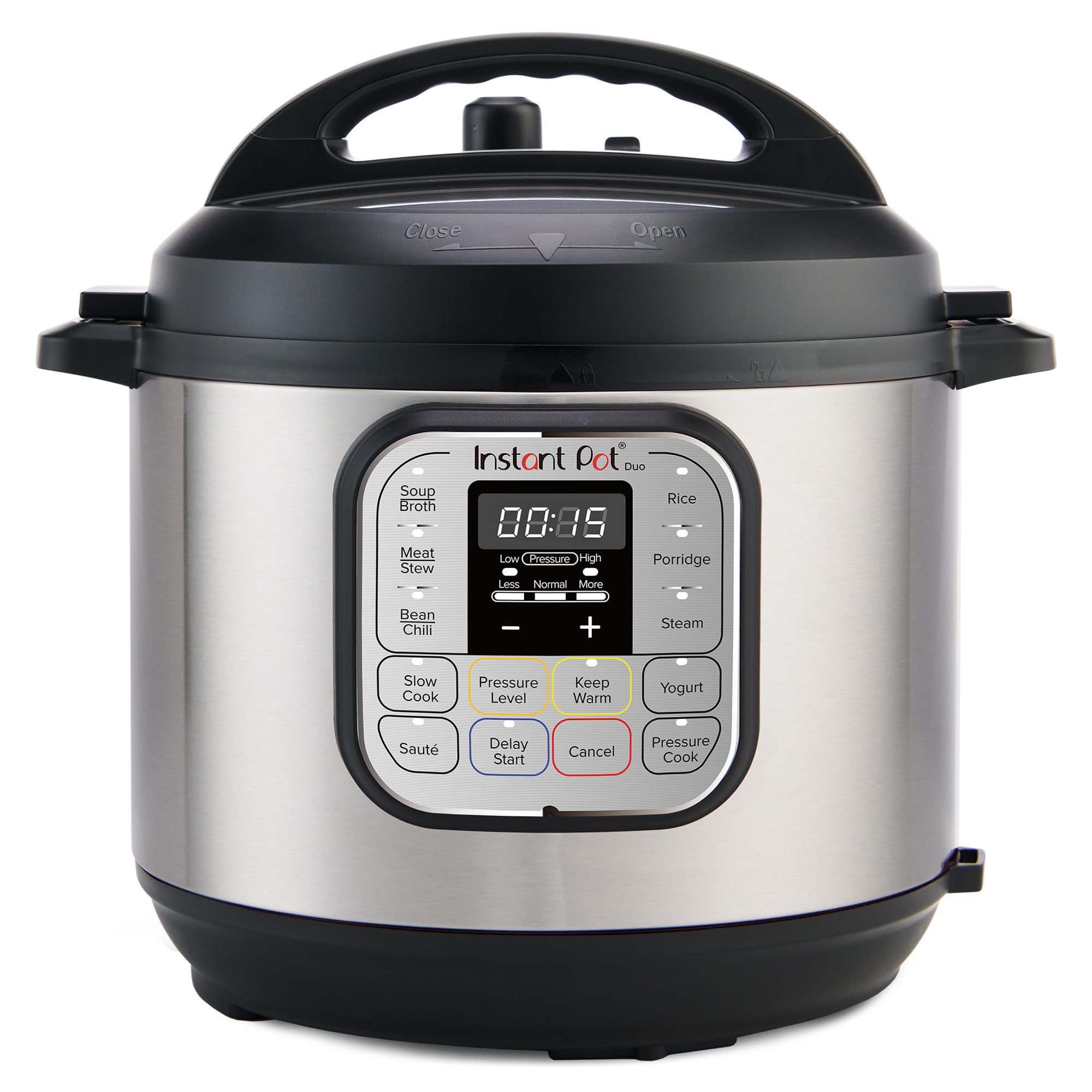
The Instant Pot Duo Mini packs seven cooking functions into a 3-quart footprint, making it the most versatile small electric pressure cooker on the market. The 700-watt heating element brings the pot up to pressure quickly — roughly 5 to 7 minutes for a full load — and the 18/8 stainless steel inner pot with a tri-ply bottom provides even heat distribution for browning and sautéing without scorching. The 11 one-touch smart programs cover everything from rice to yogurt, and the accompanying app gives you access to over 1,900 recipes, which is useful for learning pressure cooking times for smaller batches.
The safety engineering is robust: over 10 mechanisms including overheat protection, a lid lock that prevents opening under pressure, and a steam release valve that can be operated automatically or manually. The pressure rating sits at approximately 11.5 PSI on high, which is slightly lower than the 15 PSI you get from a stovetop model, so you’ll need to add about 20% more cooking time for recipes written for stovetop cookers. The 3-quart size is ideal for two people; you can fit a whole chicken up to about 4 pounds or cook a full pot of dried beans from scratch in under an hour.
The dishwasher-safe lid and inner pot make cleanup effortless, and the compact footprint (11.2 x 11.4 inches) slides easily under upper cabinets. The lack of a quick-release lever means you have to use the natural release method or manually toggle the valve with a utensil, which is a minor inconvenience. Overall, this is the plug-and-play winner for anyone who wants pressure cooking without the learning curve of stovetop PSI management.
Why it’s great
- Seven functions eliminate the need for separate appliances
- Tri-ply stainless pot heats evenly for searing
- Large recipe database helps beginners learn batch sizes
- Dishwasher-safe components simplify cleanup
Good to know
- 11.5 PSI max pressure is lower than stovetop models
- No dedicated quick-release lever; requires manual valve toggle
- Inner pot is not induction-compatible on its own
2. Presto 01341 4-Quart Stainless Steel
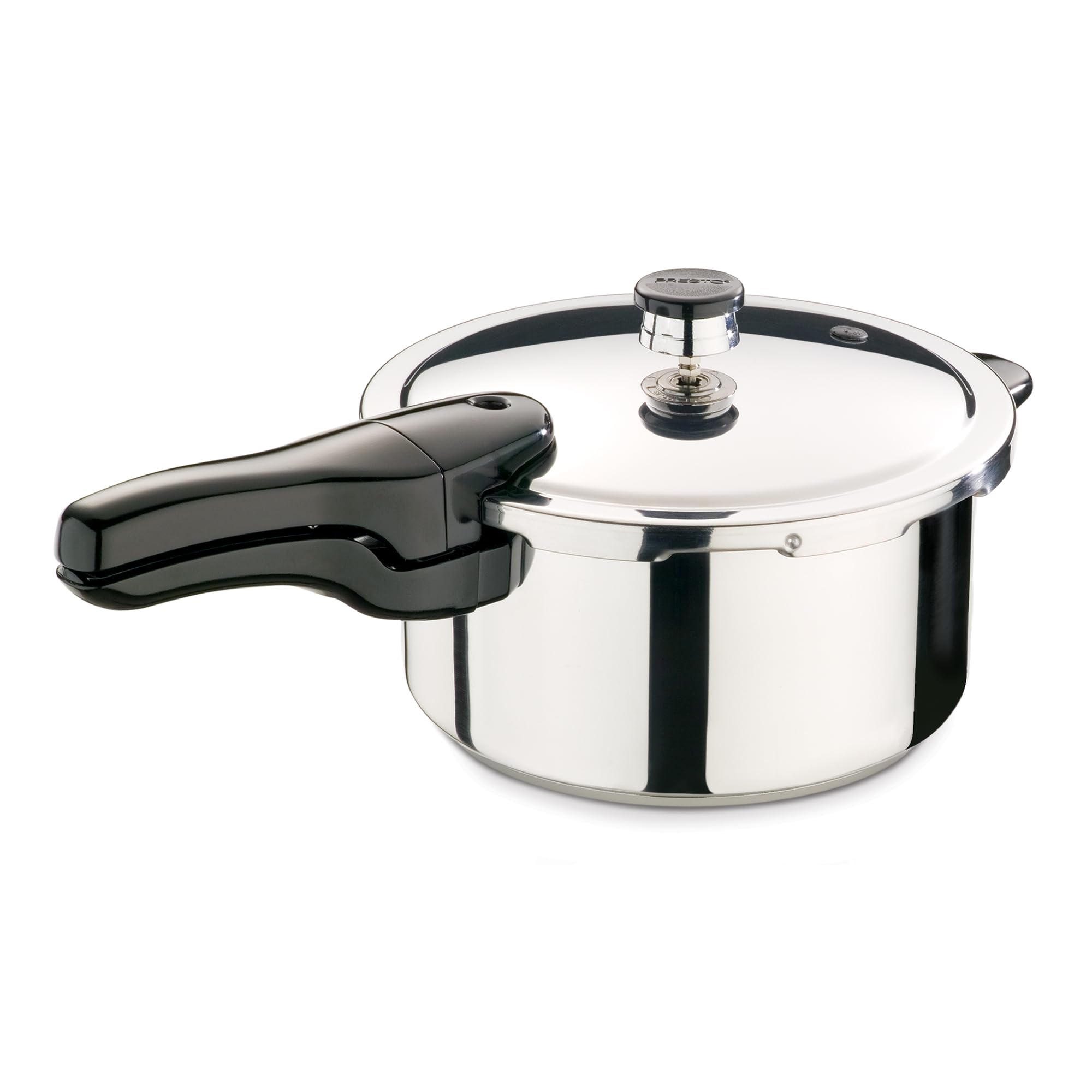
The Presto 01341 is a 4-quart stovetop pressure cooker that operates at a true 15 PSI — the gold standard for maximum cooking speed. At this pressure, dried beans cook in 20 to 30 minutes and a whole chicken is fork-tender in under 25 minutes, roughly 25% faster than typical electric models. The stainless steel construction with an aluminum-clad bottom provides even heat distribution on gas, electric, smooth-top, and induction ranges, making it one of the most heat-source-flexible small pressure cookers available.
The safety system includes a cover lock indicator that physically prevents the lid from opening while pressure is present, a pressure regulator that maintains 15 PSI automatically, and an overpressure plug that vents steam if the main regulator gets clogged. The included cooking rack lets you prepare multiple foods simultaneously without flavor transfer — a feature that smaller 3-quart pots rarely offer. The handles are secured with screws, and some users report that the screw can strip if overtightened, so hand-tightening is recommended.
One trade-off is the lack of a quick-release valve; you depressurize using the cold-water method (running cold water over the edge of the lid), which can be messy and risks thermal shock to the pot over time. The included 64-page recipe book is genuinely useful for learning the 15 PSI timing differences. With a 12-year limited warranty, this is the long-term investment pick for cooks who want maximum pressure and durability from a compact pot.
Why it’s great
- True 15 PSI delivers the fastest cooking times
- Induction-compatible base works on all cooktops
- 12-year warranty signals confidence in build quality
- Included rack enables multi-food cooking without flavor mixing
Good to know
- No quick-release valve; requires cold-water depressurization
- Handle screw can strip if over-tightened
- 4-quart capacity still requires 2/3 headspace rule for pressure building
3. CARORI 3QT Electric 8-Function
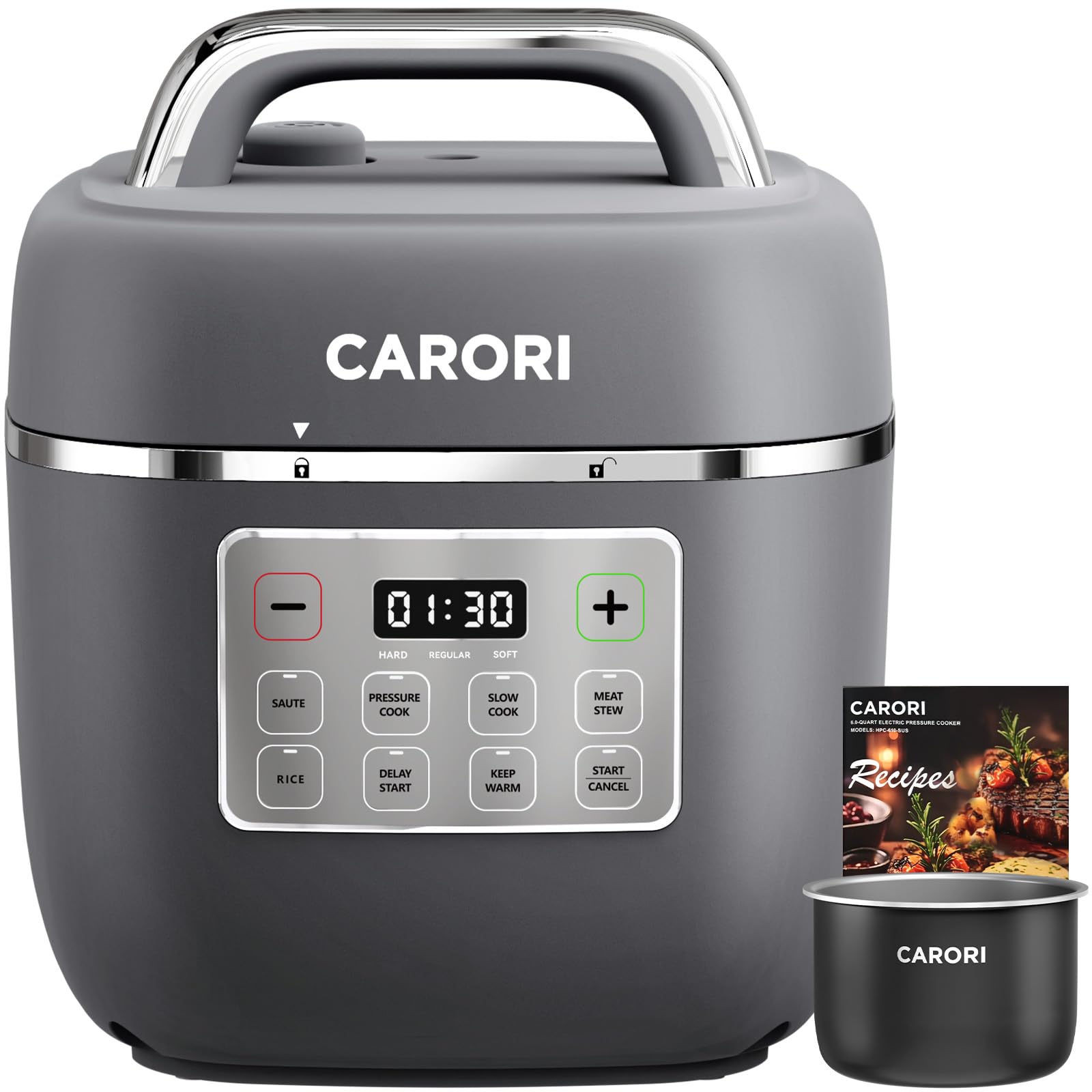
The CARORI 3QT electric pressure cooker stands out in the budget-friendly tier by offering a ceramic nonstick pot instead of the standard stainless steel or aluminum inner liner. Ceramic nonstick provides excellent food release — rice and sticky grains slide out cleanly — and requires significantly less oil for browning than bare stainless. The 8-function button panel covers pressure cook, slow cook, sauté, meat stew, rice, delay start, and keep warm, all controlled through simple push buttons rather than a digital screen, which is easier to operate if you keep the unit on a lower shelf.
The 700-watt heating element brings the 3-quart pot up to pressure in about 4 to 6 minutes, and the delay start timer lets you schedule meals up to 24 hours in advance — useful for coming home to a finished stew. Safety features include overheat protection, a lid lock, and a steam release system with a sealing ring and safety float. The ceramic pot and lid are both dishwasher safe, though the manufacturer recommends hand-washing the sealing ring to preserve its elasticity.
At roughly 8 pounds, it’s heavier than a stovetop 3-quart pot, but the countertop convenience of plug-and-play pressure cooking offsets the weight for many users. Some reviewers noted that the ceramic coating can show wear if metal utensils are used, which is standard for any nonstick surface. For someone on a tighter budget who wants the ease of electric cooking without sacrificing food release quality, this unit delivers reliable performance at a compelling price point.
Why it’s great
- Ceramic nonstick pot reduces oil use and simplifies cleanup
- 24-hour delay start enables scheduling flexibility
- Simple button interface is intuitive and reliable
- Lid and pot are dishwasher safe
Good to know
- Not induction-compatible; requires electrical outlet
- Ceramic coating can scratch if metal utensils are used
- Lower PSI than stovetop models means slightly longer cook times
4. Peterboo 3QT Stainless Steel Stovetop
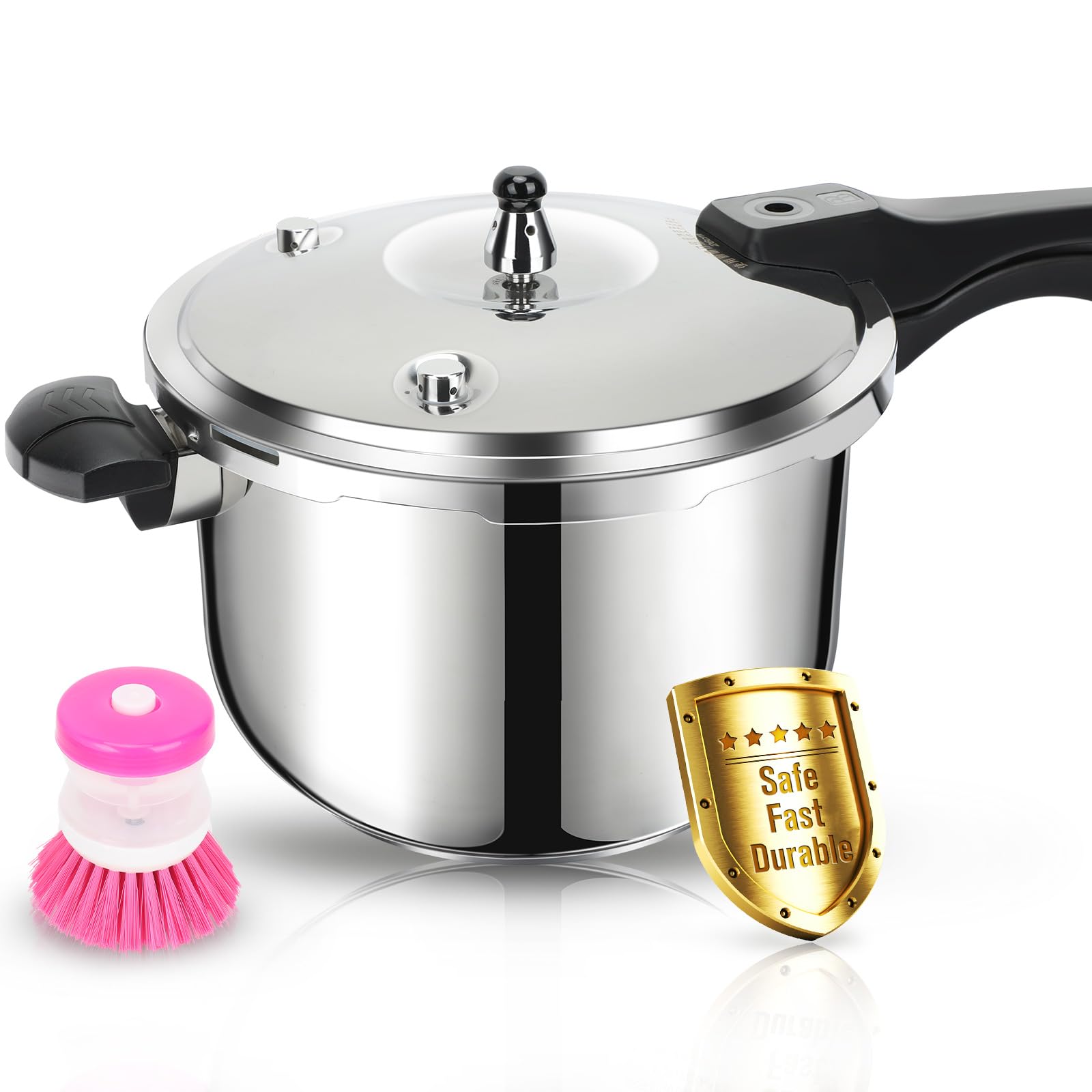
The Peterboo 3QT stovetop pressure cooker uses a multi-layer steel base that is induction-ready, a critical feature for anyone cooking on modern glass-top or induction cooktops where thin stainless pots simply won’t heat. The 2,200-ton forging pressure on the base ensures even heat distribution and accelerates heat transfer, reducing the risk of hot spots that can scorch food in smaller cookers. The 11.6 PSI operating pressure is standard for stovetop units and provides a balanced compromise between cooking speed and gentle heat for delicate foods like fish or vegetables.
Safety engineering includes four independent mechanisms: an automatic pressure-limiting valve that maintains optimal internal pressure, a self-locking valve whose central rod rises to lock the lid when pressurized, a secondary safety valve for overpressure events, and a safety window that automatically releases excess pressure if the primary systems fail. The Bakelite injection-molded handles stay cool during cooking and are ergonomically shaped for a secure grip. At 3.77 pounds, this is one of the lightest 3-quart stovetop cookers, making it easy to handle when full of hot food.
The 3.17-quart actual capacity is slightly larger than most 3-quart pots, giving you a bit more headroom for foaming foods like legumes. Cleanup is straightforward since the stainless interior and base are dishwasher safe, though the gasket and pressure-limiting valve should be hand washed. The included soap-dispensing brush is a nice bonus for scrubbing the valve assembly. For the induction user who wants a lightweight, well-protected small pressure cooker, this Peterboo model offers strong build quality without breaking into premium price territory.
Why it’s great
- Induction-compatible multi-layer base heats evenly
- Four independent safety mechanisms offer redundancy
- Bakelite handles stay cool during cooking
- Lightweight at under 4 pounds for easy handling
Good to know
- 11.6 PSI is lower than 15 PSI stovetop competitors
- Gasket and valve require hand washing
- No quick-release mechanism; relies on natural depressurization
5. Peterboo 4QT Stainless Steel Stovetop

The Peterboo 4QT version scales up the same engineering philosophy as its 3-quart sibling, offering a 4.22-quart actual capacity that gives you enough room for two to three servings of stew, a whole small chicken, or a larger batch of beans. The U-shaped cooking area promotes even heat distribution across the base, reducing the likelihood of scorching even when cooking thick sauces or sticky rice. At 11.6 PSI, it cooks about 50% faster than conventional cooking methods, according to the manufacturer’s stated performance, and the balanced pressure design helps retain moisture in meats without drying them out.
The safety suite mirrors the smaller model: a pressure indicator rod that rises to lock the lid, a pressure regulator that maintains the set PSI automatically, and an emergency release valve that activates if internal pressure exceeds safe limits. The 4.5-pound weight is still manageable for a 4-quart pot, and the stainless steel construction ensures no harmful reactions with acidic ingredients like tomato sauce. The handles are ergonomic and riveted for durability, though the screw-attached handle design found on some competing models is replaced here with a more stable fixed-mount approach.
Dishwasher cleaning is straightforward, but the sealing ring must be removed and hand washed to maintain its seal over time. The pot is compatible with gas, electric, ceramic, and induction cooktops, making it one of the most versatile 4-quart stovetop options in terms of heat source flexibility. If you occasionally cook for three people but mostly serve two, this 4-quart model gives you the buffer to avoid the 2/3 fill restriction while keeping the footprint small enough for everyday counter storage.
Why it’s great
- 4.22-quart capacity bridges the gap between 3 and 6 quart
- U-shaped cooking area promotes even heat distribution
- Emergency release valve adds a third safety layer
- Works on gas, electric, ceramic, and induction cooktops
Good to know
- 11.6 PSI max is below the 15 PSI benchmark
- Sealing ring must be hand washed to preserve seal
- Heavier than smaller version at 4.5 pounds
6. Prestige Deluxe Mini 3.3L Stainless Steel

The inner lid design (as opposed to the more common outer lid) provides a slightly larger body capacity relative to its external dimensions, meaning you get more usable volume per inch of counter space. The tri-clad stainless steel base is induction-compatible, and the mirror-polished finish, while attractive, requires careful cleaning to avoid visible scratches — a trade-off for the aesthetic payoff.
The key feature is the PI (Pressure Indicator) device, a 2-in-1 safety mechanism that rises when pressure builds and lowers when the pot is safe to open, eliminating guesswork. The cooker enables “separator cooking,” which uses a divider insert to cook three separate dishes simultaneously without flavor transfer — a real space-saving trick for small kitchens. ISI certification confirms the unit conforms to international quality standards, and the availability of replacement gaskets and pressure valves on Amazon makes long-term maintenance straightforward.
The actual usable capacity is closer to 2.8 liters (roughly 3 quarts), as one reviewer noted when measuring water fill. The safety valve can melt if food debris blocks the primary regulator, and the manufacturer’s customer support, being based in India, may be slow for US-based users. However, the robust third-party parts ecosystem and the proven track record of Prestige cookers in South Asian kitchens make this a reliable choice for someone who plans to keep a small pressure cooker for years and isn’t afraid of occasional gasket replacement.
Why it’s great
- Proven long-term reliability with easy parts sourcing
- Inner lid design maximizes usable volume per footprint
- Separator cooking enables multi-dish preparation
- ISI certified for international quality standards
Good to know
- Usable capacity is slightly less than stated 3.3 liters
- Mirror finish requires careful cleaning to avoid scratches
- US customer support can be slow
7. Hawkins Ceramic Nonstick 3L

The Hawkins Ceramic Nonstick 3-liter pressure cooker uses a German ceramic coating that is free of PFAS and heavy metals, making it one of the few small pressure cookers that prioritize non-toxic, low-oil cooking. The ceramic interior provides excellent release properties — rice, lentils, and sticky dishes come out without sticking — and it tolerates high heat without degrading, unlike some budget ceramic coatings that discolor after a few uses. The Granite Contura shape improves steam circulation, which helps food cook more evenly in the compact 3-liter volume.
The inner lid design, similar to the Prestige, maximizes headroom and allows for separator cooking. The whistle-style pressure indicator is traditional and audible, which some users prefer for knowing exactly when pressure is reached without staring at the pot. However, several reviewers noted that the steam release shoots jets several feet horizontally, which can be a burn hazard if you’re standing nearby — you’ll want to angle the pot away from traffic areas when releasing pressure. The matte gray finish hides fingerprints better than the mirror-polished stainless alternatives.
One significant concern is induction compatibility: in some units, the bottom arrived slightly bent, causing the induction cooktop to fail to detect the pot. This appears to be a quality control inconsistency rather than a design flaw, so you may need to test against your specific induction hob. The ceramic coating is durable but not scratch-proof — metal utensils will leave visible marks. For the low-oil, high-release cooking crowd who want a chemical-free cooking surface, this Hawkins model delivers ceramic nonstick performance that is rare in the stovetop pressure cooker category.
Why it’s great
- German ceramic coating is PFAS and heavy-metal free
- Excellent food release reduces oil usage
- Granite Contura shape improves steam circulation
- Audible whistle indicator for pressure feedback
Good to know
- Steam jets can be aggressive and require careful positioning
- Induction compatibility may vary due to bottom flatness
- Not dishwasher safe; hand wash recommended
FAQ
Can I use a 3-quart pressure cooker to can food safely?
How do I adjust recipe timing when switching from a 6-quart to a 3-quart pressure cooker?
Why does my small pressure cooker lose steam during cooking?
Is a stovetop small pressure cooker better than an electric one for meal prepping?
Can I cook frozen meat directly in a small pressure cooker without thawing?
Final Thoughts: The Verdict
For most users, the best small pressure cooker winner is the Instant Pot Duo Mini 3QT because it combines seven functions with a stainless steel inner pot in a footprint that fits small kitchens and RVs equally well. If you want maximum cooking speed and induction compatibility with a stovetop design, grab the Presto 01341 4-Quart. And for the lowest-oil, least-stick cooking experience without toxic coatings, nothing beats the Hawkins Ceramic Nonstick 3L.