The metallic tang of chlorine, the chalky residue from hard water, the faint earthy odor from old pipes—if you can taste or smell your tap water, you are not imagining things. A sink water filtration system is the single most targeted upgrade you can make to your kitchen, transforming what comes out of your faucet into crisp, clean, worry-free water on demand.
I’m Mohammad Maruf — the founder and writer behind AirfryerBite. I’ve spent years analyzing water filtration hardware, from micron ratings and NSF certifications to flow rates and filter lifespans, so you know exactly what separates a decent system from a truly great one.
After comparing dozens of models across countertop, under-sink, and gravity formats, I have narrowed the field to seven of the strongest contenders available today. This guide covers every major configuration to help you find the best sink water filtration system for your specific tap water challenges and kitchen layout.
How To Choose The Best Sink Water Filtration System
Not every filter is built for the same problem. Your choice depends on what is actually in your water, how much space you have under your sink, and whether you want a dedicated faucet or a quick countertop hookup. Here are the three decisions that matter most.
Filtration Type: Carbon, UF, or RO
Activated carbon blocks are the backbone of most systems—they handle chlorine, taste, and odor well. Ultrafiltration (UF) membranes with a 0.01-micron pore size catch bacteria, cysts, and finer sediment while leaving beneficial minerals in the water. Reverse osmosis (RO) systems produce near-zero TDS water by forcing water through a semi-permeable membrane, removing dissolved solids, fluoride, nitrates, and heavy metals. Choose carbon/UF if you want mineral retention and faster flow. Pick RO only if your water has high TDS, nitrates, or specific contaminants like PFAS.
Installation Type: Countertop vs. Under-Sink vs. Gravity
Countertop systems connect directly to your existing faucet with adapters and sit on the counter—ideal for renters or anyone who wants zero drilling. Under-sink systems mount inside the cabinet and require connecting to the cold water line; they free up counter space but need moderate DIY skills. Gravity-fed countertop systems use no electricity and no plumbing—you pour water into a top chamber and collect filtered water from a lower chamber—perfect for RVs, cabins, or emergency backup.
NSF Certification & Filter Lifespan
Look for systems certified against NSF/ANSI standards 42 (chlorine, taste, odor), 53 (health contaminants like lead and cysts), or 58 (reverse osmosis performance). A WQA Gold Seal is another reliable marker. Filter lifespan—measured in gallons or months—directly affects your long-term cost. A system rated for 8,000 gallons with a 12-month filter life offers better value than one needing replacement every 3 to 6 months, provided the filtration quality meets your needs.
Quick Comparison
On smaller screens, swipe sideways to see the full table.
| Model | Category | Best For | Key Spec | Amazon |
|---|---|---|---|---|
| Waterdrop G3P800 | Premium RO | Maximum contaminant removal | 800 GPD, 0 TDS, NSF 58 | Amazon |
| SimPure T1-400UV | Mid-Range RO | Near-zero TDS with UV sterilization | 400 GPD, UV light | Amazon |
| Brondell Coral UC300 | Premium Under-Sink | WQA-certified three-stage with designer faucet | NSF 42, 53, 372 | Amazon |
| Waterdrop TST-UF | Mid-Range UF | Mineral-retaining under-sink filtration | 0.01μm, 1.59 GPM | Amazon |
| Purewell Gravity | Countertop Gravity | No electricity, no plumbing | 0.01μm, 4 GPH | Amazon |
| SimPure V7 | Budget Under-Sink | Compact stainless steel direct-connect | 0.5μm, 304 SS | Amazon |
| OEMIRY Countertop | Budget Countertop | Fast-flow alkaline countertop filter | 1.6 GPM, 8000 gal | Amazon |
In‑Depth Reviews
1. Waterdrop G3P800 Reverse Osmosis System
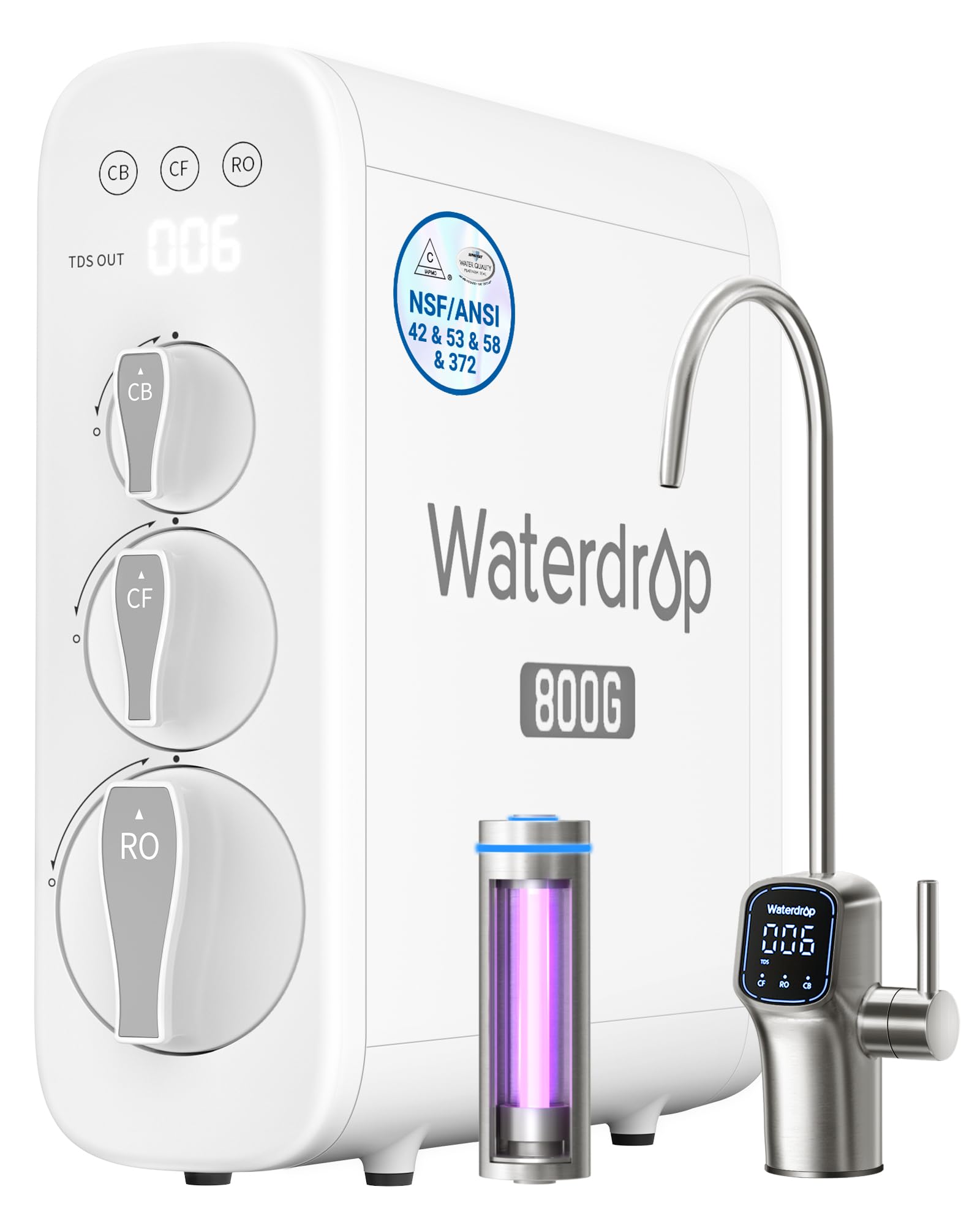
The Waterdrop G3P800 is a tankless reverse osmosis system that delivers 800 gallons per day with a 3:1 pure-to-drain ratio, meaning it wastes far less water than conventional RO units. Its 10-stage filtration line—backed by SGS testing and IAPMO certification against NSF/ANSI standards 42, 53, 58, and 372—aggressively reduces PFAS, fluoride, lead, chromium, nitrates, chloride, and even radioactive substances like radium. The smart faucet includes a built-in LED that displays real-time TDS levels and water quality, so you know exactly what you are drinking without needing a separate tester.
Installation requires drilling two holes—one for the RO faucet and one for the drain connection—so this is not a zero-drill setup. Once in place, the tankless design saves significant under-sink cabinet space and prevents secondary contamination that can occur in storage tanks. The flow rate is genuinely fast: one standard cup of water fills in about five seconds. The pump operates quietly, and filter replacement involves twisting out old cartridges and snapping in new ones without tools.
Some users noted that connecting to a refrigerator ice maker may require an optional kit, and professional installation is recommended if you are not comfortable drilling through granite or quartz countertops. The annual filter replacement cost is higher than simpler carbon systems, but the performance is head and shoulders above any non-RO alternative. For households with problem water—high TDS, nitrates, or known local contaminants—this is the complete solution.
Why it’s great
- 10-stage RO with NSF/ANSI 58 certification for TDS reduction
- Smart LED faucet shows real-time water quality and TDS
- Fast 800 GPD flow with low wastewater ratio (3:1)
Good to know
- Requires drilling two holes for installation
- Higher filter replacement cost compared to non-RO systems
- Best suited for cold water use only
2. SimPure T1-400UV Tankless Reverse Osmosis System

The SimPure T1-400UV combines an 8-stage tankless reverse osmosis membrane with an integrated ultraviolet light module, providing biological sterilization in addition to standard RO contaminant reduction. SGS-tested against NSF/ANSI 58 standards, it removes over 99.99% of 1,000+ contaminants including TDS, PFAS, heavy metals, fluoride, and nitrates. The UV feature activates automatically based on water flow, adding an extra layer of safety against bacteria and viruses that might pass through the RO membrane.
With a 400-gallon-per-day output and a 1.5:1 pure-to-drain ratio, this system balances throughput and efficiency for medium-to-large households. The tankless design frees up under-sink space and eliminates the risk of stagnant water. The unit is also designed for easy DIY installation, with quick-connect fittings and color-coded tubing.
The UV module requires a power source, so you will need an outlet near the installation site. Some users reported occasional O-ring issues on initial units, but replacement seals resolved the leaks. If your tap water TDS is under 200 ppm, the output TDS will be near zero; for higher initial TDS, the system still brings it below 25 ppm in most cases. The annual filter pack cost is moderate, making this one of the stronger value propositions in the RO category.
Why it’s great
- UV sterilization plus 8-stage RO for comprehensive contaminant removal
- Tankless design saves space and prevents secondary contamination
- Near-zero TDS output with high efficiency 1.5:1 drain ratio
Good to know
- Requires an electrical outlet under the sink for UV and pump
- Some units may have O-ring quality issues on initial installation
- Not designed for hot water or well water with high sediment load
3. Brondell Coral UC300 Under Sink Water Filtration System
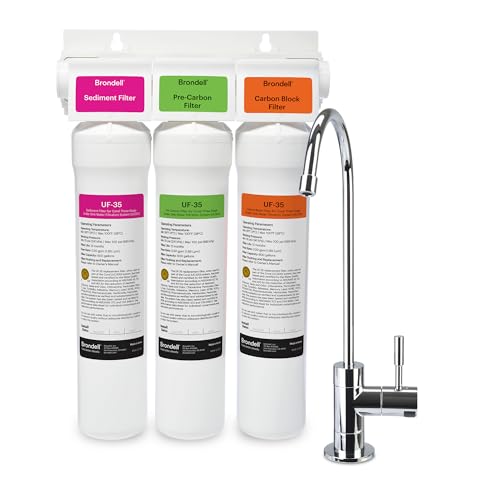
The Brondell Coral UC300 is a dedicated under-sink system that uses three separate filter cartridges—a sediment pre-filter, a pre-carbon filter, and a carbon block filter—to reduce chlorine, lead, PFAS, and other contaminants while preserving beneficial minerals. It carries the WQA Gold Seal and is certified to NSF/ANSI standards 42, 53, and 372 for lead-free materials, giving you verified third-party performance rather than marketing claims. The included chrome designer faucet features an integrated LED indicator that lights up when it is time to replace the filters.
Installation is a do-it-yourself project: the kit includes a metal T-connector, independent shutoff valve, and quick-connect fittings. You will need to drill a hole for the faucet if your sink does not already have one, but the provided template and clear instructions guide you through it. The Twist & Seal filter housing makes replacement simple—just twist the old cartridge and pull, then push the new one in and twist to lock. Each filter set is rated for 600 gallons or 12 months of use.
The system takes up more cabinet space than inline filters due to the three-cartridge housing, and replacement filter packs are relatively expensive compared to single-cartridge competitors. Some users noted that the chrome faucet can feel a bit wobbly if over-tightened, and the LED indicator runs on batteries that need periodic replacement. If you value certified contaminant reduction and want a separate, dedicated filtered-water faucet, the Coral UC300 delivers reliable performance with traceable credentials.
Why it’s great
- WQA Gold Seal certified with NSF/ANSI 42, 53, and 372 standards
- Three-stage filtration with separate sediment, pre-carbon, and carbon block cartridges
- Designer chrome faucet with integrated LED filter change reminder
Good to know
- Requires drilling a hole for the dedicated faucet
- Replacement filter packs are costly compared to single-cartridge systems
- Three-cartridge housing takes up significant under-sink cabinet space
4. Waterdrop TST-UF 0.01μm Ultra-Filtration Under Sink System

The Waterdrop TST-UF uses a 0.01-micron ultrafiltration membrane housed in a lead-free 304 stainless steel casing, giving you precision filtration without removing beneficial minerals. The six-layer composite filter media includes a PP sediment layer, a precision UF membrane, and a coconut-shell activated carbon block that reduces chlorine, heavy metals, and 99% of harmful substances larger than 0.01 microns. The flow rate is an impressive 1.59 GPM, filling an 8-ounce cup in about 2.3 seconds.
Installation is drill-free and designed for standard 3/8-inch or 1/2-inch cold water lines. The system can either sit on the cabinet floor or be hung on the wall using the included brackets, giving you flexibility for tight spaces. The stainless steel construction resists cracking and chemical degradation better than plastic housings, and the quick-connect push fittings make disconnecting for filter changes straightforward. The filter set includes a PP pre-filter (6–8 months), a UF membrane (12 months), and a CT carbon block (12–24 months), so you replace components on different schedules rather than all at once.
This system is designed specifically for municipal tap water only—it is not suitable for well water or hot water. It also does not reduce TDS, so if you need to lower dissolved solids, you will need an RO system instead. Some users found the push-connect fittings tricky to seat securely, and the included adapters may not work with every faucet thread pattern. For anyone wanting high-flow, mineral-retaining filtration with a rugged metal build, the TST-UF is a well-engineered choice.
Why it’s great
- 0.01-micron ultrafiltration retains essential minerals while removing contaminants
- Lead-free 304 stainless steel housing with high durability
- Fast 1.59 GPM flow rate and flexible wall/floor mounting
Good to know
- Does not reduce TDS—not a replacement for RO systems
- Only compatible with municipal tap water, not well water
- Push-connect fittings may require extra care to seat correctly
5. Purewell 1.5G Gravity Water Filter System
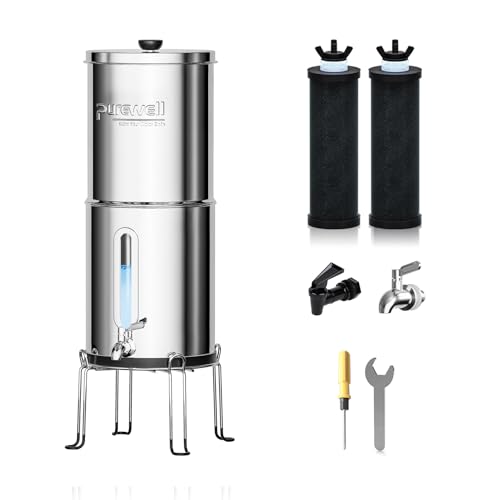
The Purewell 1.5G uses gravity-fed filtration with two carbon block filters that incorporate a 0.01-micron hollow fiber UF membrane and a silver ion antimicrobial layer. It operates on zero electricity and zero water pressure—you simply pour unfiltered tap water into the upper chamber and let gravity pull it through the filters into the lower chamber. The 0.01-micron pore size captures sediments, cysts, and organic matter far smaller than what a standard Brita-style pitcher can handle, while the silver ion layer inhibits bacterial growth inside the filter media.
The system is constructed from 304 food-grade stainless steel, with a 7.5-inch square footprint and an 18-inch height that fits neatly on most countertops. It includes a 304 stainless steel spigot, a non-slip stand, and a viewing window so you can see the water level in the lower chamber. Flow rate is around 4 gallons per hour—slower than pressurized systems but fast for a gravity filter. Each pair of filters delivers up to 6,000 gallons of filtered water, with recommended replacement every six months.
Also, the system does not reduce TDS and requires periodic cleaning of the chambers to prevent biofilm. This is the best option for cabins, RVs, emergency kits, or any scenario where you want reliable filtration without plumbing, power, or pressure.
Why it’s great
- Works completely off-grid with no electricity or plumbing required
- 0.01-micron UF membrane with silver ion antimicrobial protection
- Stainless steel build with viewing window and 4 GPH flow rate
Good to know
- Actual water capacity is slightly less than 1.5 gallons due to filter displacement
- Does not reduce TDS and requires periodic chamber cleaning
- Gravity flow is slower than pressurized countertop or under-sink systems
6. SimPure V7 Under Sink Water Filter System

The SimPure V7 packs a 5-stage composite filtration system into a slim 3.6-inch-wide, 12-inch-tall stainless steel cylinder that connects directly to your 3/8-inch or 1/2-inch cold water line. The 5-stage process uses double-sediment membranes, KDF-55 media, and double-activated carbon blocks to reduce lead, chlorine, bad tastes, and odors down to a 0.5-micron accuracy. The housing is made of food-grade 304 stainless steel—100 percent BPA-free and far more resistant to pressure cracking than plastic alternatives.
Installation is genuinely tool-free: the package includes 3/8-inch to 1/2-inch converter fittings, Teflon tape, and inlet/outlet hoses that screw onto your existing faucet connection. Most users complete the setup in under 10 minutes. The flow rate reaches 1.6 GPM, so you can fill an 8-ounce glass in about three seconds. One filter cartridge lasts 12 months or 20,000 gallons—an exceptionally long lifespan for a non-RO under-sink filter.
The V7 does not reduce TDS, so it is best suited for municipal tap water where the main concerns are chlorine, taste, and sediment. Some users reported that chlorine taste returned before the 12-month mark, suggesting actual filter life may vary with water quality. The compact cylindrical shape takes up minimal cabinet space, leaving room for a garbage disposal or cleaning supplies. This is an excellent entry-level under-sink option for renters or homeowners who want an immediate taste improvement without complex plumbing.
Why it’s great
- Ultra-compact 3.6-inch diameter fits tight under-sink spaces
- 5-stage filtration in a rugged 304 stainless steel housing
- Tool-free installation in under 10 minutes with included adapters
Good to know
- Does not reduce TDS or remove dissolved minerals
- Filter life may be shorter than 12 months with heavily chlorinated water
- Filtration accuracy is 0.5 microns, not the 0.01-micron level of UF systems
7. OEMIRY Countertop Water Filter

The OEMIRY Countertop Water Filter connects directly to standard kitchen faucets via a diverter valve, giving you separate streams for unfiltered and filtered water with a simple twist of the switch. The multi-stage alkaline filtration reduces up to 99 percent of chlorine, heavy metals, fluoride, and odors while retaining beneficial minerals like potassium, calcium, sodium, and magnesium. The flow rate is notably fast at 1.6 GPM—you can fill an 8-ounce cup in roughly two seconds, which is significantly quicker than most pitcher or gravity systems.
Installation is a one-minute job with no tools required: the package includes six adapters, Teflon tape, and a wrench. The filter housing is made from environmentally friendly ABS plastic and measures just 4.9 inches square and 12.9 inches tall, taking up relatively little counter real estate. Each filter is rated for 8,000 gallons or 12 months, making the per-gallon cost very low compared to bottled water or pitcher replacements. The diverter valve includes a switch that lets you toggle between filtered and unfiltered flow without disconnecting anything.
The OEMIRY system is only compatible with standard threaded faucets—it will not work with pull-out, pull-down, spray-type, or sensor faucets. It also does not reduce TDS, so if you are trying to lower dissolved solids or fix high-mineral hard water, this is not the tool. Some users noted the line holder feels flimsy and the shutoff can drip if not fully closed. For renters or anyone who wants a fast, affordable, no-drill solution for better-tasting tap water, this is a solid starting point.
Why it’s great
- Fast 1.6 GPM flow rate—one of the quickest countertop filters available
- Simple tool-free installation compatible with most standard faucets
- Long 8,000-gallon filter life with low per-gallon cost
Good to know
- Not compatible with pull-out, spray, or sensor-style faucets
- Does not reduce TDS or remove dissolved minerals
- ABS plastic housing is less durable than stainless steel alternatives
FAQ
Can a sink water filtration system be installed with a pull-out faucet?
How often should I replace the filter in my under-sink system?
Will a sink water filtration system reduce hard water scale?
Final Thoughts: The Verdict
For most users, the sink water filtration system winner is the SimPure V7 because it combines a rugged 304 stainless steel build, true tool-free installation, and a 20,000-gallon filter lifespan at a cost that undercuts almost everything in its class. If you want maximum contaminant removal with near-zero TDS water, grab the Waterdrop G3P800 with its 800 GPD output and NSF-certified 10-stage RO membrane. And for off-grid or rental scenarios where you cannot drill or plug anything in, nothing beats the Purewell Gravity Filter with its 0.01-micron UF membrane and zero-electricity operation.