Few things frustrate a host more than pulling out your best serving bowls only to discover a hairline crack from last week’s dinner or a dull finish that makes every dish look flat. Wooden serving bowls solve that tension by combining light weight with a warm, natural surface that complements any spread—but not all wood bowls handle daily use the same way. The grain density, fineness of the finish, and whether the wood is sealed properly determine if your bowl lasts five years or five dinners.
I’m Mohammad Maruf — the founder and writer behind AirfryerBite. I spend my days analyzing kitchenware construction specs, comparing wood types and finish durability across dozens of brands so you don’t have to guess which bowl set earns its spot in your cabinet.
This guide walks through the essential specs and real-world trade-offs so you can confidently pick best serving bowls that match how you actually cook and entertain.
How To Choose The Best Serving Bowls
Not all wooden bowls are built the same. The wood species, how the bowl is constructed, and the type of finish applied determine its resistance to cracking, staining, and warping. Below are the three specs that matter most when shopping for a set that looks good and lasts.
Wood Species: Density Determines Durability
Acacia and birch are the two most common hardwoods used in serving bowls. Acacia has a naturally high oil content that resists moisture absorption, which means it is less prone to cracking in dry climates. Birch is lighter but still dense enough to avoid the chipping issues common in pine or bamboo bowls. Softer woods like cedar offer a unique grain pattern but are best for dry items only—they absorb dressing and tomato sauce quickly, leaving permanent stains.
Finish Type: Sealed or Oiled
A food-safe lacquer seals the wood completely, creating a barrier against liquids and making cleanup faster. The trade-off is that lacquered bowls cannot be re-oiled if the surface wears down over time. Oiled finishes penetrate the wood and allow the grain to breathe, but they require periodic maintenance—typically a light rub with mineral oil every few months. If you plan to use the bowl for moist foods like salads with vinaigrette, a sealed finish is the safer long-term choice.
Size and Depth: Match Your Serving Style
Bowls under 4 fluid ounces work well for dips, spices, and small condiments but are useless for salads or pasta. A 10-inch diameter bowl with at least 2.5 inches of depth holds a family-size salad comfortably without spilling over the sides. For buffet-style hosting, a set of multiple identically sized bowls creates a cohesive table presentation—just confirm they stack to save cabinet space when not in use.
Quick Comparison
On smaller screens, swipe sideways to see the full table.
| Model | Category | Best For | Key Spec | Amazon |
|---|---|---|---|---|
| Elsjoy Wood Woven Salad Bowl | Mid-Range | Salad & pasta for gatherings | 10 in. diameter, birch wood, stackable | Amazon |
| AIDEA Acacia Serving Bowl | Premium | Daily salads & popcorn | 11 in. x 4.5 in., solid acacia | Amazon |
| Amazon Basics Acacia Bowl | Premium | Family-size everyday serving | 10 in. diameter, FSC-certified acacia | Amazon |
| LAVAUX DESIGNS Acacia Mini Bowls | Mid-Range | Dips, nuts & charcuterie boards | 4 oz capacity, hand-carved set of 6 | Amazon |
| BTEOBFY Hand Carved Wood Platter | Budget | Dry snacks & decorative display | 11-13 in., solid cedar, freeform shape | Amazon |
In‑Depth Reviews
1. Elsjoy Wood Woven Salad Bowl
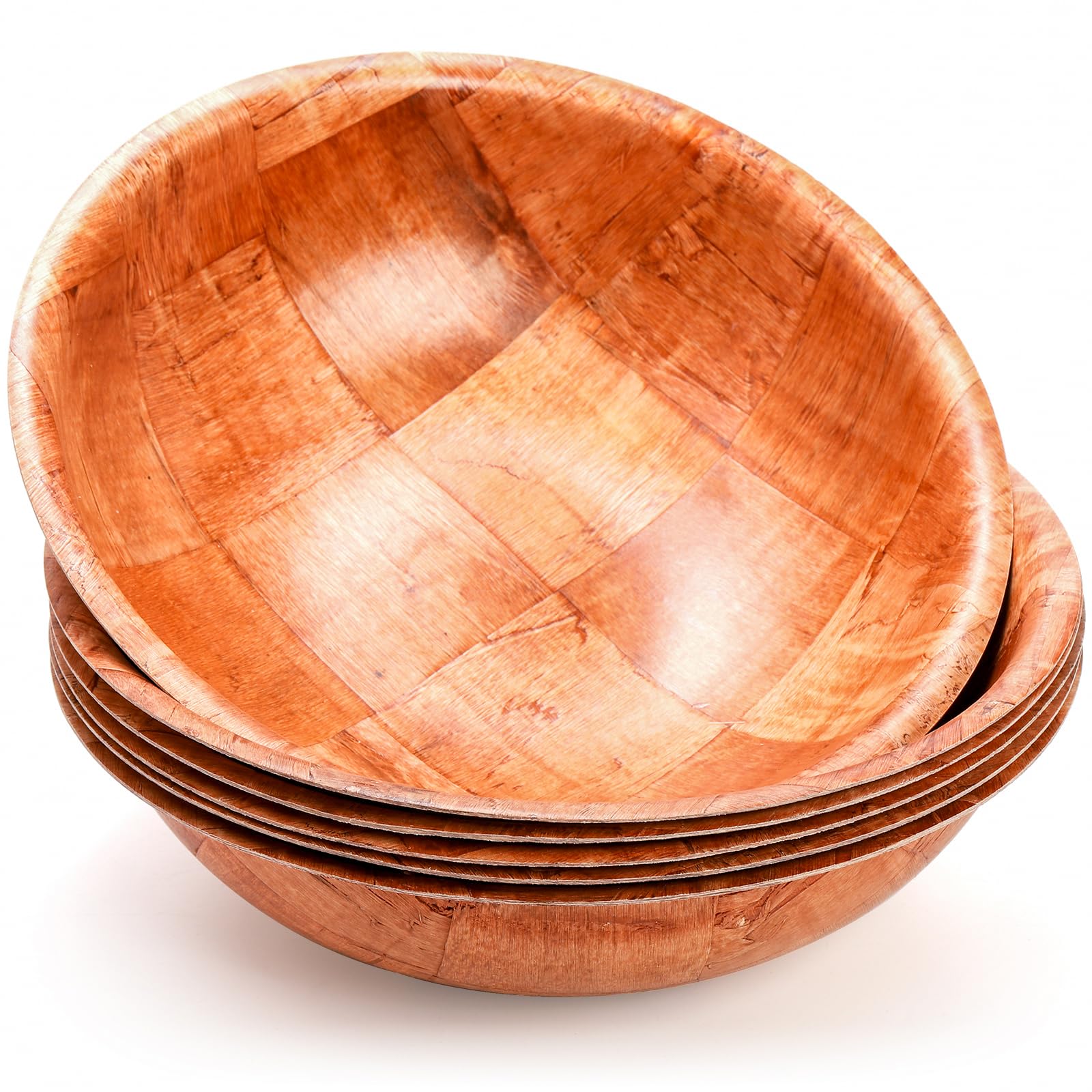
The Elsjoy set gives you six identically sized 10-inch bowls made from natural birch wood with no chemical coating. At 2.5 inches deep, they hold a standard salad for four to six people without crowding the rim.
The woven pattern isn’t just decorative—it creates air channels that help the bowl dry faster after a hand wash, which reduces the chance of moisture getting trapped in the grain. Multiple buyers noted these bowls survived years of marinating meat and weekly salad tossing without flaking or cracking, a common failure point in cheaper woven sets.
Stackability is a real advantage here. The uniform thin walls let you nest all six bowls in a single cabinet slot, freeing space for larger platters. Just keep them away from the dishwasher—like all unfinished wood, submersion in hot water will degrade the fibers and cause the woven strands to separate.
Why it’s great
- Six-piece set at a price that beats buying singles
- Birch wood is lighter than acacia but still chip-resistant
- Hand-woven texture speeds up drying time
Good to know
- Not sealed—can absorb oils from dressing over time
- Some units arrive with loose strands that need trimming
2. AIDEA Acacia Serving Bowl

The AIDEA bowl stands apart because of its 4.5-inch depth—significantly deeper than the typical 2.5-inch serving bowl. That extra inch and a half lets you toss a full salad with dressing without ingredients vaulting over the side, and it makes the bowl functional as a popcorn vessel that holds an entire standard bag without spillage.
Acacia’s natural oil content is the main durability story here. The wood resists water absorption even without a heavy lacquer, which means this bowl can handle weekly use with vinaigrette-based salads and still maintain its shape. Buyers report the darker wood grain hides minor scratches better than lighter birch, and the finish remains unchanged after fifteen uses with proper hand-washing.
The bowl weighs just over a pound despite its size, which feels substantial enough to stay put on the table but light enough to carry one-handed. Keep in mind that the maker recommends applying mineral oil after each wash to maintain the surface—skipping this step for months may cause the wood to dry out and develop hairline cracks in low-humidity environments.
Why it’s great
- Deep 4.5-inch profile handles full salads and large popcorn portions
- Acacia’s natural oils resist staining from acidic dressings
- Darker grain disguises everyday wear marks
Good to know
- Requires periodic oiling to prevent cracking
- Not dishwasher safe or microwave safe
3. Amazon Basics Acacia Wood Serving Bowl

Amazon Basics enters the wooden bowl category with an acacia option that punches above its tier in two specific areas: FSC certification and finish quality. The bowl carries Forest Stewardship Council certification (N004130), meaning the acacia was harvested from responsibly managed forests—a detail rarely found at this price point. The hand-finished surface is smooth to the touch with no rough patches along the rim.
At 10 inches in diameter and roughly 5 inches tall, the proportions lean tall and narrow rather than wide and shallow. That geometry makes it excellent for containing popcorn, chips, or dry snacks without spillage, though it feels slightly cramped when tossing a large salad with bulky vegetables. The acacia wood grain varies from bowl to bowl, so each unit arrives with a distinct pattern.
The sealed finish is more resistant to liquid penetration than oiled alternatives, which means this bowl can handle occasional contact with dressing without immediate staining. Multiple buyers remarked that the quality exceeded their expectations for the Amazon Basics line, with one noting the bowl “makes every salad look so yummy and aesthetic.” Just confirm you are comfortable with the tall, narrow proportions before ordering if you primarily plan to use it for wide salad presentations.
Why it’s great
- FSC-certified acacia supports sustainable forestry
- Sealed finish offers better moisture protection than oiled bowls
- Tall shape contains chips and popcorn without mess
Good to know
- Narrow profile limits tossing room for large salads
- Only one bowl per purchase—not a set
4. LAVAUX DESIGNS Acacia Wood Mini Bowls

The LAVAUX set targets a specific niche: small serving vessels for dips, nuts, spices, and charcuterie board accents. Each bowl holds just 4 fluid ounces, measuring 3.25 inches wide and 2 inches tall—roughly the size of a large ramekin. The hand-carved acacia construction means every bowl in the set has a slightly different grain pattern, giving a curated, artisanal look to the table.
Because these bowls are small and made from solid acacia, they are effectively unbreakable in normal use—a meaningful advantage over ceramic or glass mini bowls that can shatter if dropped on a tile floor. Buyers consistently mention using them as board game piece holders, trinket dishes, and even tiny spa oil containers when not serving food, which speaks to their versatility beyond the kitchen.
The set comes packaged in a branded box that works well for gifting, and multiple reviewers ordered additional sets specifically to give as housewarming presents. One caveat: the wood is not sealed, so oily foods like marinated olives or creamy dips can leave residue if left in the bowls for extended periods. Hand-wash promptly and avoid soaking to keep the natural finish looking fresh.
Why it’s great
- Set of six identical bowls at an approachable price
- Unbreakable acacia construction outlasts ceramic alternatives
- Small footprint fits any charcuterie board layout
Good to know
- Not sealed—oily foods may stain if left sitting
- Too small for anything beyond dips and condiments
5. BTEOBFY Hand Carved Wood Platter

The BTEOBFY piece blurs the line between serving bowl and decorative tray. It is carved from solid cedar in a freeform, wave-like shape that varies from 11 to 13 inches in length, with a depth that one buyer described as “more of a tray than a bowl.” That shallow profile makes it ideal for dry snacks like crackers, bread, or wrapped candies, but it will not contain saucy foods or dressed salads without spillage.
Cedar is significantly softer than acacia or birch, which keeps the weight down to about one pound but also means the surface scratches more easily. The varnish finish provides a barrier against light moisture, but the manufacturer explicitly warns against using this piece for wet foods or leaving it in direct sunlight, which can cause the cedar to discolor unevenly over time.
The uniqueness of each carving is the main selling point—no two buyers receive an identical shape, and the wood grain varies in color from light tan to warm brown. Some buyers use it purely as a ring dish or key tray, while others incorporate it into table decor as a bread-serving platter. If your primary need is a functional bowl for daily food service, the shallow depth and soft wood make this a niche pick rather than an all-purpose workhorse.
Why it’s great
- Freeform carving creates a one-of-a-kind decorative piece
- Lightweight cedar is easy to move around the table
- Works as both a serving piece and catch-all organizer
Good to know
- Too shallow for salads, soups, or saucy dishes
- Soft cedar scratches more easily than hardwood alternatives
FAQ
Can I use wooden serving bowls for hot foods like pasta or soup?
How often should I oil my acacia serving bowl?
Why does my wooden bowl smell like rancid oil after washing?
Can wooden serving bowls go in the microwave or dishwasher?
Final Thoughts: The Verdict
For most users, the best serving bowls winner is the Elsjoy Wood Woven Salad Bowl because it delivers six matching bowls built from lightweight birch at a price that undercuts most single-bowl options. If you want a deep, single-bowl workhorse for daily salads and popcorn, grab the AIDEA Acacia Serving Bowl. And for budget-conscious buyers who need a dependable family-size piece with sustainable sourcing, nothing beats the Amazon Basics Acacia Wood Serving Bowl.