The jump from pre-ground pods to a bean-to-cup workflow is the single biggest upgrade a home coffee enthusiast can make. A semi-automatic machine with a built-in grinder collapses the entire café process into a single countertop footprint—grinding, dosing, tamping, and pulling a shot without separate gear cluttering your space. The catch is that not every machine delivers the consistency needed to replicate a professional shot, and the differences in burr quality, temperature stability, and steam power separate the daily drivers from the frustrating paperweights.
I’m Mohammad Maruf — the founder and writer behind AirfryerBite. I’ve spent years analyzing the internal specs, real-world failure points, and extraction consistency of espresso machines to help home baristas separate genuine engineering from marketing noise.
This guide distills months of research on the latest models, focusing on the hardware that actually matters—burr geometry, pump pressure curves, PID temperature control, and steam wand performance—so you can confidently choose the semi automatic espresso machine with grinder that will become the centerpiece of your morning routine.
How To Choose The Best Semi Automatic Espresso Machine With Grinder
Selecting the right semi-automatic machine with an integrated grinder requires a clear understanding of the components that drive consistent espresso. The grinder, pump, temperature system, and steam wand each play a distinct role in the final cup quality, and ignoring any one of them can lead to frustration.
Grinder Precision and Step Settings
The burr grinder is the true heart of any combination machine. Conical burrs are the standard for home machines because they produce a uniform particle size that maximizes flavor extraction. The number of grind settings—typically ranging from 8 to 35—determines how finely you can tune the grind for different beans and roast levels. A machine with fewer than 10 settings often forces you to compromise between over-extraction and under-extraction.
Pump Pressure and Pre-Infusion
A pump rated at 15 or 20 bars provides the hydraulic force needed for espresso extraction, but the real performance lies in the pre-infusion stage. Low-pressure pre-infusion gradually saturates the coffee puck before the full 9 bars of extraction pressure hits, reducing channeling and producing a more even shot. Machines that advertise a high bar count but lack a pre-infusion phase tend to pull bitter, uneven shots.
PID Temperature Control vs. Thermostat
Digital PID (Proportional-Integral-Derivative) controllers maintain water temperature within a narrow range—typically ±1°F—throughout the brew cycle. This stability is essential for replicating espresso shots with different bean densities and roast profiles. Basic thermostats allow wider temperature swings, which can cause sour under-extraction or bitter over-extraction depending on the shot timing.
Steam Wand Design and Material
A commercial-style steam wand with a single-hole or four-hole tip gives you direct control over aeration and milk texture, enabling microfoam suitable for latte art. Panarello-style wands, which inject air automatically, are easier for beginners but produce coarser, stiffer foam that is less integrated. For anyone serious about milk-based drinks, a manual steam wand with a stainless steel construction is the clear choice.
Quick Comparison
On smaller screens, swipe sideways to see the full table.
| Model | Category | Best For | Key Spec | Amazon |
|---|---|---|---|---|
| Breville Barista Express | Semi-Auto | All-around performance | PID control, 15-bar pump | Amazon |
| De’Longhi La Specialista Touch | Semi-Auto | Guided dial-in & milk texturing | 10 presets, auto milk frothing | Amazon |
| Acaspresso Auto Tamp | Semi-Auto | Mess-free puck prep | Auto distribute & tamp, 35 grind settings | Amazon |
| Kismile 20 Bar | Semi-Auto | Budget-friendly features | PID temp control, 30 grind settings | Amazon |
| De’Longhi Magnifica Start | Super-Auto | Simple one-touch drinks | 3 one-touch recipes, 13 grind settings | Amazon |
| Smeg EGF03 | Semi-Auto | Retro design & dual thermoblock | Dual thermoblock, 58mm portafilter | Amazon |
| Hanrose Retro | Semi-Auto | Value with vintage style | 20-bar pump, 15 grind settings, removable grinder | Amazon |
| De’Longhi Arte Evo | Semi-Auto | Cold brew & everyday espresso | Cold Extraction, 8 grind settings | Amazon |
| Breville Barista Express BTR | Semi-Auto | Color option with same proven internals | PID control, 15-bar pump, Black Truffle finish | Amazon |
| De’Longhi Dinamica Plus | Super-Auto | App-driven convenience | 24 recipes, full touchscreen, auto milk | Amazon |
| Rancilio Silvia Pro X | Semi-Auto | Pro-sumer dual boiler | Dual boiler, PID, adjustable pre-infusion | Amazon |
In‑Depth Reviews
1. Breville Barista Express BES870XL
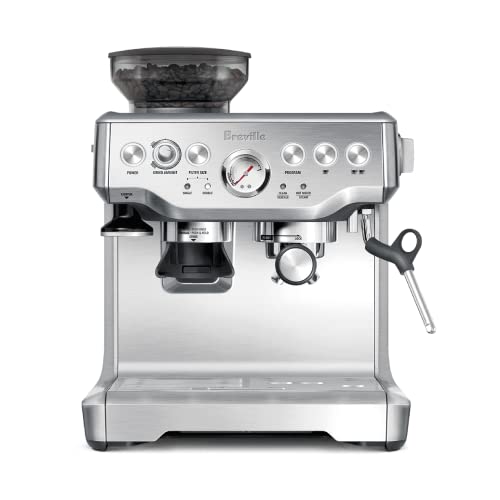
The Breville Barista Express BES870XL has been a reference point in the semi-automatic category for years because it nails the four essential pillars: dose control grinding, low-pressure pre-infusion, PID temperature stability, and manual microfoam texturing. The integrated precision conical burr grinder grinds directly into the 54mm portafilter, reducing the mess that plagues many all-in-one units. The 15-bar Italian pump delivers a gradual pre-infusion that ramps up to full pressure, which helps prevent channeling and yields a balanced, sweet shot with a thick crema.
The steam wand is a commercial-style single-hole design that gives you direct control over aeration and texture. It requires practice to master, but the resulting microfoam is dense enough for latte art. The 67-ounce water tank is generous for a home machine, and the razor dose trimming tool helps level the puck before tamping—a small detail that improves consistency shot after shot. Buyers consistently report the machine lasting five to seven years with regular maintenance, including O-ring replacements and solenoid valve cleaning.
On the downside, the machine demands a deliberate workflow. Switching between grind settings for different beans wastes some coffee during the dial-in phase, and the drip tray fills quickly during the purge cycles. The plastic internal components are durable but not serviceable without replacement parts. The machine also does not produce piping hot coffee out of the box—a common complaint that can be mitigated by warming the cup and running a blank shot before brewing.
Why it’s great
- Proven longevity—many units exceed 5 years of daily use
- PID controller ensures water temperature remains stable within ±2°F
- Low-pressure pre-infusion produces uniformly saturated pucks
Good to know
- Requires thorough weekly cleaning to avoid solenoid valve issues
- Grinder produces significant retention, wasting some grounds when dialing in
2. De’Longhi La Specialista Touch
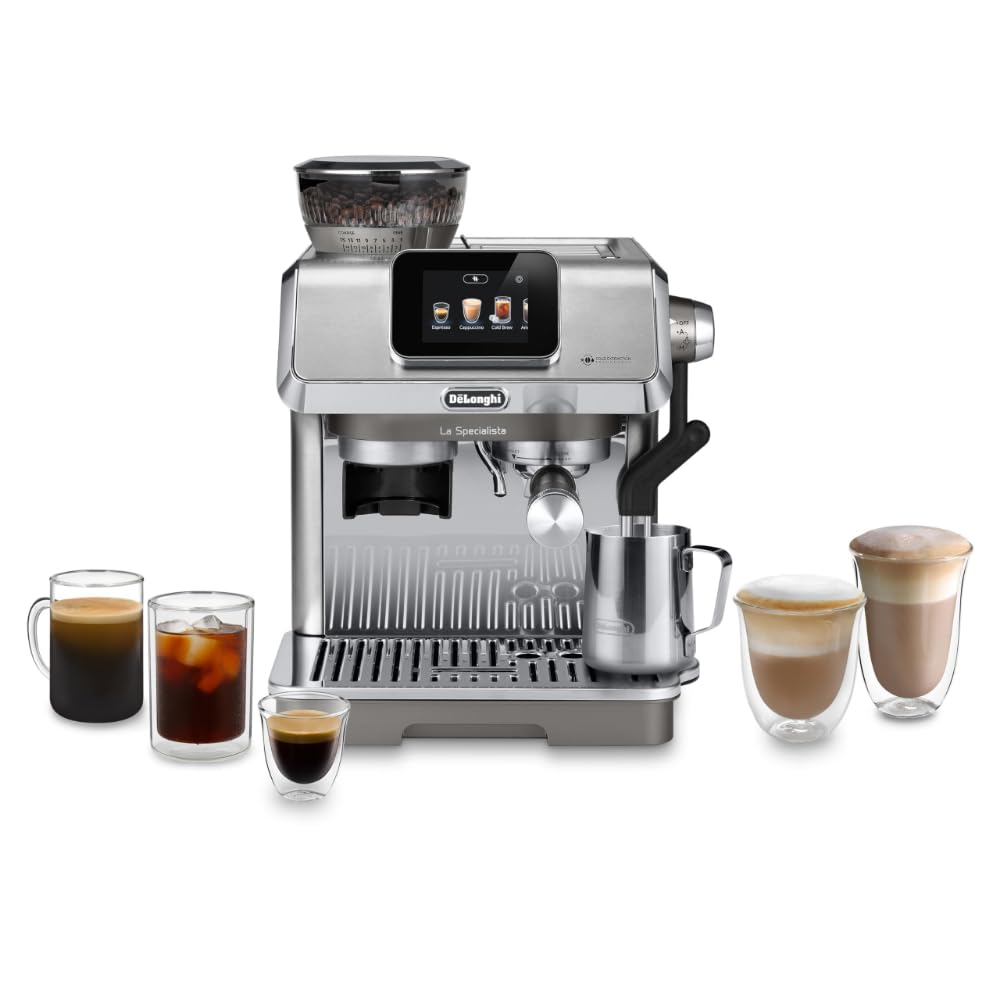
The De’Longhi La Specialista Touch redefines the semi-automatic experience by adding a guided interactive touch display that walks you through the grind, dose, pre-infusion, and temperature adjustments in real time. The Bean Adapt technology is not a gimmick—it uses a visual prompt to recommend grind fineness and dose weight based on the bean type and roast level you select. The Italian-made conical burr grinder provides 15 grind settings, and the machine stores up to 6 saved bean profiles for quick recall. The integrated 3.5-inch touchscreen displays 10 preset drink recipes, from espresso and americano to cold brew and flat white.
The automatic steam wand is a standout feature for users who want consistently textured milk without the learning curve of a manual wand. It offers 5 froth levels and 4 temperature settings, and it adjusts its behavior for dairy versus plant-based milk. The cold brew technology bypasses the thermoblock to extract at lower temperatures, producing a smooth, less acidic concentrate in under five minutes—a rare capability in this category. The advanced precision tamper provides haptic feedback to confirm you have reached the recommended 20-gram dose force.
The primary concern is reliability: some units ship with a defective grinder or inconsistent pump pressure, and De’Longhi’s warranty process has drawn criticism for slow turnaround times. The machine is also expensive enough that a lemon unit causes significant frustration. For users who get a properly functioning unit, the La Specialista Touch delivers café-quality drinks with less guesswork than any other semi-automatic machine on this list.
Why it’s great
- Interactive Bean Adapt system reduces the dial-in learning curve drastically
- Automatic steam wand produces velvety microfoam with dairy or plant milk
- Cold brew extraction in under 5 minutes is a rare, well-executed feature
Good to know
- Quality control issues appear in a minority of units, especially the grinder
- Premium price tier makes a defective unit a costly headache
3. Acaspresso Auto Distribute & Tamp
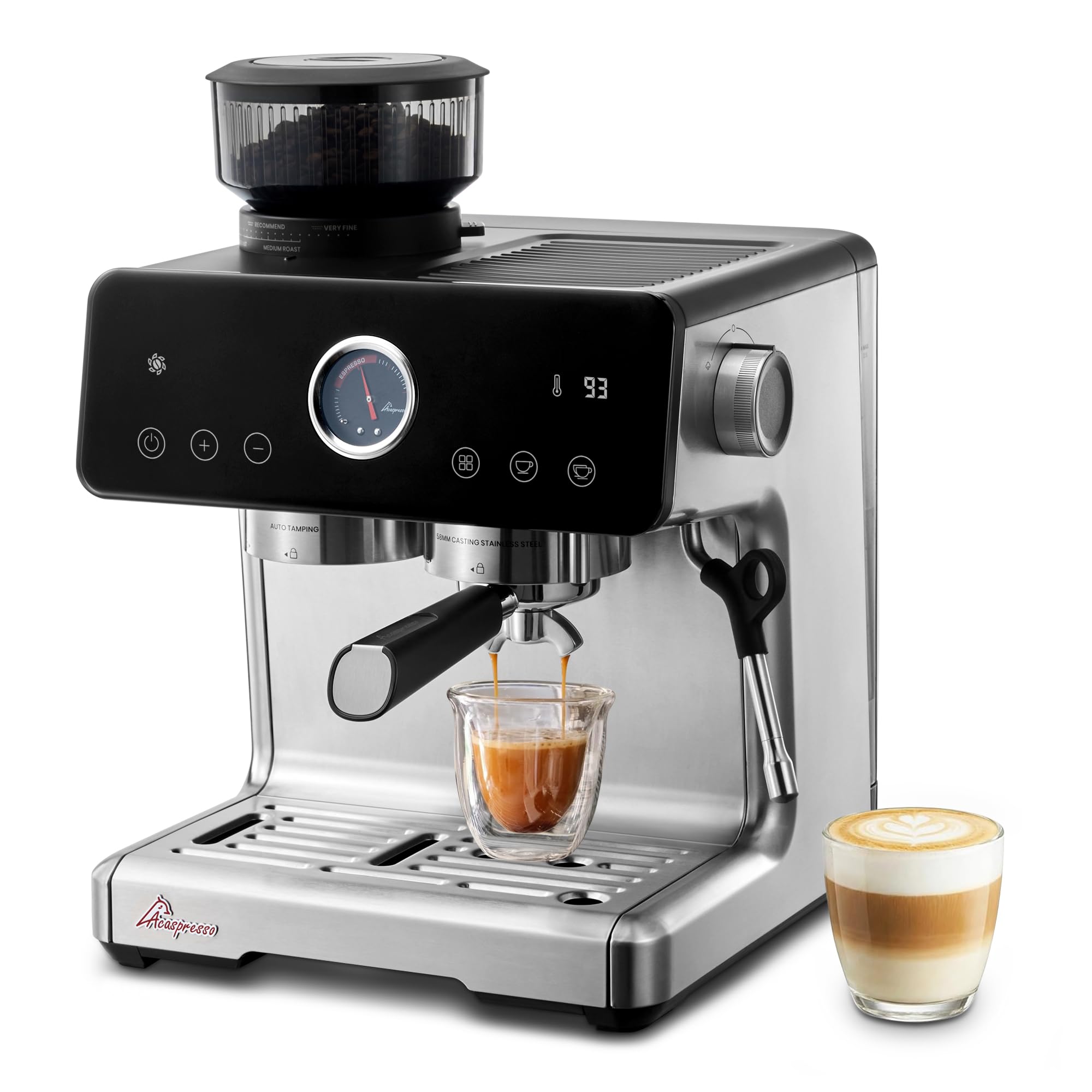
The Acaspresso machine solves the messiest part of the espresso workflow—distributing and tamping the coffee puck—by automating both steps into a single button press. The smart dosing system automatically calculates the correct grind volume based on the previous shot weight, so you can switch between beans without manually recalibrating the dose. The integrated conical burr grinder offers 35 grind settings, giving you the finest granularity of any machine in this review. The 15-bar Italian pump provides a low-pressure pre-infusion before ramping to 9 bars during extraction.
The PID digital temperature controller locks the water to 93°C (199.4°F) consistently, which is the sweet spot for most medium-roast beans. The visual pressure gauge on the front panel lets you monitor extraction pressure in real time, and the 85-ounce water tank is massive—nearly 30% larger than the Breville Barista Express tank. The cold brew function is a welcome addition, using a separate recipe that bypasses the thermoblock to produce a smooth, lower-acid concentrate.
The machine is relatively new to the market, so long-term reliability data is sparse. A small number of users report that the auto-tamp mechanism can jam if the grind is too fine or if the machine is not cleaned regularly. The plastic housing feels less substantial than the Breville or De’Longhi units, though the internal components—bras fittings and stainless steel boiler—are solid. For beginners who want café-quality espresso without the messy puck prep, this machine delivers an unmatched level of convenience.
Why it’s great
- Automated distribution and tamping eliminates puck prep inconsistency
- 35 grind settings provide the finest tuning range in this class
- Large 85-ounce water tank reduces refill frequency for heavy use
Good to know
- Auto-tamp mechanism may jam if grind is too fine without regular cleaning
- Plastic exterior feels less premium than the price would suggest
4. Kismile 20 Bar Espresso Machine
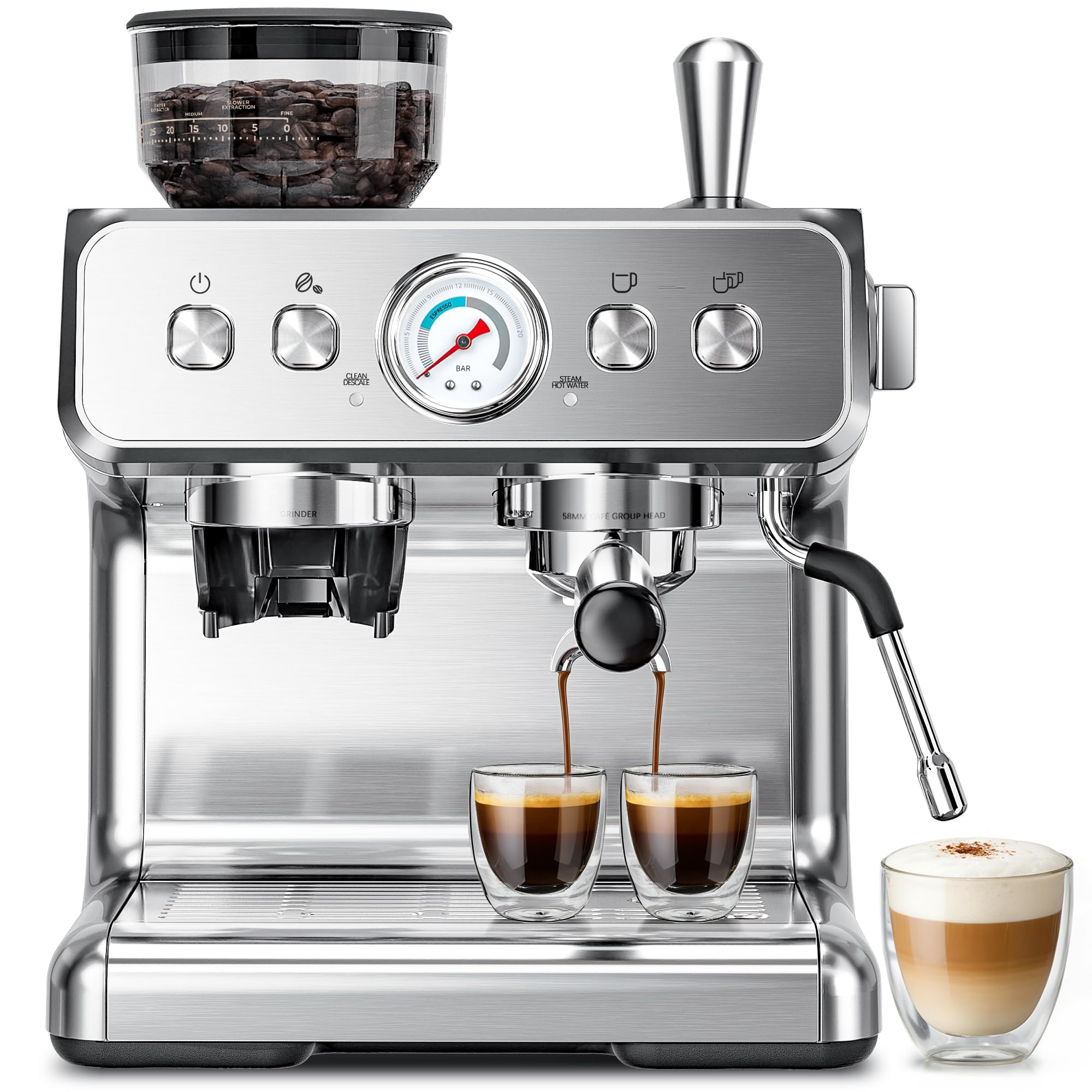
The Kismile 20 Bar machine packs an impressive spec sheet for its price tier: a 20-bar pump, PID temperature control, and 30 grind settings in a compact footprint. The PID controller ensures the water temperature stays within a tight window, which is unusual in the budget segment—most machines in this range rely on a simple thermostat that drifts by ±5°F or more. The 1500-watt heating element produces steam quickly, and the commercial-style steam wand creates silky microfoam suitable for latte art once you adjust to the learning curve.
The machine includes a complete accessory kit: a 58mm portafilter, four precision filter baskets, a tamper, a milk frothing pitcher, and a cleaning kit. The programmable feature lets you adjust the shot volume and temperature, so you can save your preferred settings for different beans. The 2.8-liter water tank is average for the category, but the removable drip tray and water tank simplify cleaning. The machine is heavier than its price suggests—the metal housing provides a stable base for the portafilter locking mechanism.
The main drawback is that some units develop issues within the first few months—the pressure gauge can stop working, or the grinder can produce inconsistent particle sizes after extended use. Customer support from Kismile is inconsistent, with some buyers reporting prompt replacement and others struggling to get assistance. For buyers willing to accept the risk, the Kismile offers more features per dollar than any other machine on this list.
Why it’s great
- PID temperature control at a price point where thermostats are the norm
- 30 grind settings provide ample tuning flexibility for diverse bean types
- Complete accessory kit means no additional purchases required to start
Good to know
- Quality control is inconsistent—some units fail within weeks
- Customer support responsiveness varies widely by region and case
5. De’Longhi Magnifica Start

The De’Longhi Magnifica Start is technically a super-automatic machine, but it earns a spot here because it still gives you grind-size control and manual steam wand operation, preserving the semi-automatic feel for those who want convenience without losing all hands-on control. The conical burr grinder offers 13 settings that cover the range from very fine espresso grind to coarser drip coffee. The one-touch recipes—Espresso, Coffee, and Americano—are programmed to deliver consistent results with a single button press, making it the fastest path from bean to cup in this guide.
The manual milk frother is a traditional steam wand that lets you texture milk manually, which is a step up from the automatic frothers found on many super-automatics. The 60-ounce water tank is large enough for a household of moderate drinkers, and the drip tray and brew group are removable for dishwasher cleaning. The machine is compact—just 9.25 inches wide—so it fits easily on a cluttered countertop. The touchscreen interface is intuitive, and the machine remembers your most frequently selected drinks.
The unit has a higher defect rate than the premium De’Longhi models. Common issues include water leaking into the spent-ground container, false “out of water” warnings, and the machine refusing to dispense after a few weeks. Some buyers report that these problems are fixable with a factory reset or a part replacement, but a new machine should not require immediate troubleshooting. If you get a working unit, the Magnifica Start offers excellent value for its price tier.
Why it’s great
- Blisteringly fast bean-to-cup time—under 60 seconds for an espresso
- Compact 9.25-inch width is ideal for small countertops
- Manual steam wand provides hands-on milk texturing control
Good to know
- Higher failure rate than other De’Longhi models—first unit may be defective
- Automatic mode limits manual adjustments compared to true semi-automatic machines
6. Smeg EGF03

The Smeg EGF03 brings the brand’s signature 1950s retro styling to the semi-automatic espresso category, but it backs up the looks with genuine engineering. The dual thermoblock heating system separates the brew water heating from the steam generation, so you can transition from pulling a shot to steaming milk without the temperature lag that plagues single-thermoblock machines. The integrated conical burr grinder provides a wide range of fineness settings, and the commercial-grade 58mm portafilter ensures even water distribution across the coffee puck.
The pressure gauge on the front panel lets you monitor extraction pressure in real time, a tool that helps you adjust the grind and dose to stay in the optimal 9-bar range. The stainless steel steam wand produces dense microfoam that integrates well into milk, and the auto shut-off function powers down the machine after a period of inactivity. The included accessory kit covers all the basics: non-pressurized and pressurized filter baskets, a tamper, a milk jug, and a cleaning kit. The machine is substantial at 28 pounds, which contributes to its stability during the locking and tamping process.
The main trade-off is the price—the Smeg sits at a premium tier that competes with machines offering PID temperature control and more extensive programmability. The limited number of grind settings (relative to the 30-step units) means you may have to compromise on grind fineness for certain beans. The machine also has a steeper learning curve than the De’Longhi Arte Evo or the Breville Barista Express, particularly for dialing in the perfect shot without the benefit of a PID controller.
Why it’s great
- Dual thermoblock enables simultaneous brewing and steaming
- 58mm commercial portafilter ensures even water distribution
- Retro design with a premium build—28 pounds of solid construction
Good to know
- Higher price tier without PID temperature control
- Limited grind settings compared to competitors at the same price
7. Hanrose Retro Espresso Machine
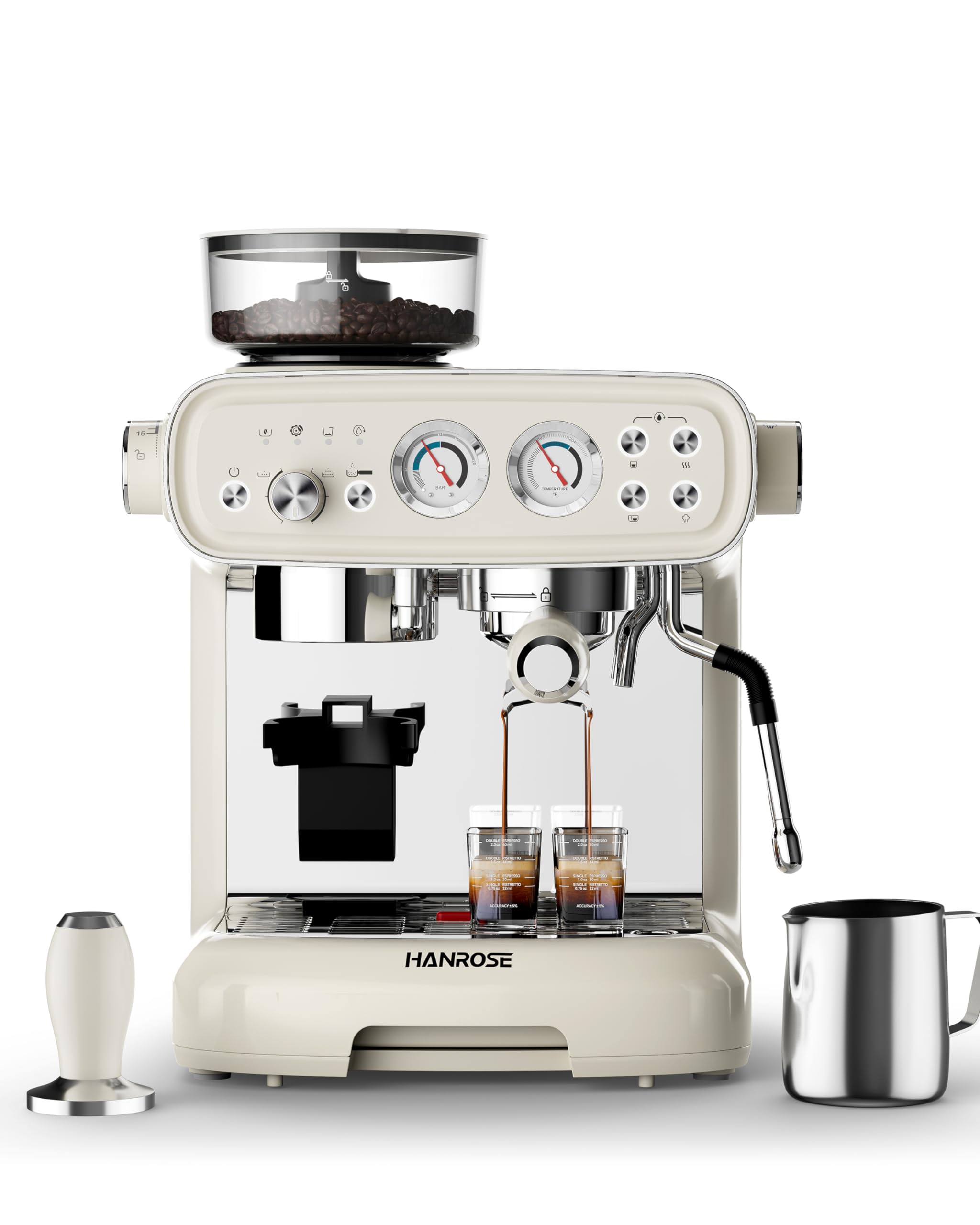
The Hanrose Retro machine delivers an impressive feature set at a budget-friendly price, including a 20-bar Italian ULKA pump, 15 grind settings, and a fully removable grinder assembly—the last of which is a rarity at any price. The removable grinder can be disassembled and brushed clean, which is a major advantage for reducing coffee bean jams and powder clogs that shorten the lifespan of built-in grinders. The 58mm commercial-grade portafilter accepts standard accessories, and the dual pressure gauges let you monitor both pump pressure and steam boiler pressure.
The 10mm universal rotation steam wand produces decent microfoam once you learn the wand’s angle and depth, though it does not match the precision of the Smeg or Breville wands. The separate hot water outlet is a thoughtful inclusion for making Americanos or rinsing cups. The 2.5-liter water tank and removable drip tray make cleaning straightforward. The retro cream-and-chrome aesthetic fits well in vintage-styled kitchens, and the machine is quiet enough that early-morning shots will not wake the household.
The build quality is where the Hanrose reveals its budget roots. The body is primarily plastic, which gives it a lighter feel and a less durable impression than the stainless steel machines. The manual has a confusing dosing system and a steep learning curve for new users—some buyers report wasting several bags of beans before getting a decent shot. The customer support team has a good reputation for responsiveness, though the one-year warranty period is standard rather than exceptional.
Why it’s great
- Fully removable grinder assembly simplifies deep cleaning and reduces jams
- 20-bar Italian pump with dual pressure gauges for real-time monitoring
- 58mm commercial portafilter accepts standard accessories
Good to know
- Plastic body feels less premium than metal competitors
- Steep learning curve for new espresso users due to confusing manual
8. De’Longhi La Specialista Arte Evo

The De’Longhi La Specialista Arte Evo is the only machine in this guide that includes proprietary Cold Extraction Technology, developed in collaboration with the Specialty Coffee Association. This feature bypasses the thermoblock to pressurize cold water through the coffee puck at specific flow rates, producing a smooth cold brew concentrate in under five minutes—no overnight steeping required. For cold brew drinkers who want to avoid the acidity and bitterness of heat-extracted coffee, this is a genuine differentiator.
The Active Temperature Control system provides three infusion temperature settings (low, medium, high) that let you adjust for different roast levels—lighter roasts benefit from the high setting, while darker roasts perform better on low. The commercial-style steam wand produces consistently smooth microfoam, and the included barista kit—dosing funnel, tamping mat, and stainless steel milk jug—makes the workflow mess-free.
The primary limitation is the grind adjustment range. Dark roast beans tend to jam the grinder because they are oilier and softer than medium roasts, and some buyers report that the manufacturer advises against using dark roasts despite the manual listing them as compatible. The machine is also not designed for heavy commercial use—it is best suited for 2–4 shots per day. For anyone who wants a reliable espresso machine that also excels at cold brew, the Arte Evo is a niche standout.
Why it’s great
- Cold Extraction Technology produces smooth cold brew in under 5 minutes
- Active Temperature Control with 3 settings optimizes extraction for roast levels
- Compact footprint and included barista kit reduce countertop clutter
Good to know
- Only 8 grind settings limit tuning for certain bean types
- Dark roast beans can jam the grinder despite manual claiming compatibility
9. Breville Barista Express BES870BTR (Black Truffle)
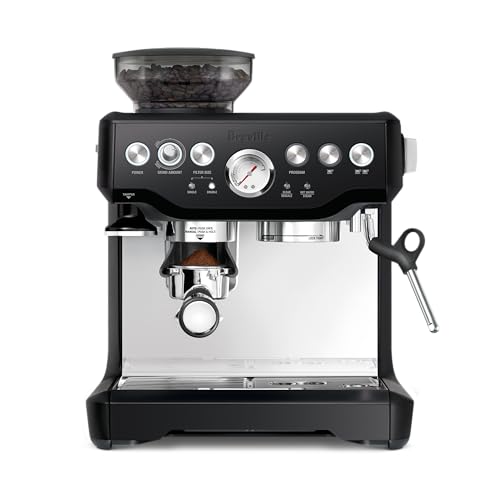
The Breville Barista Express BES870BTR is mechanically identical to the BES870XL, but the Black Truffle finish offers a darker, more modern aesthetic that suits contemporary kitchens. All the same internals are present: the precision conical burr grinder with dose control, the low-pressure pre-infusion system, the PID digital temperature controller, and the manual steam wand for microfoam texturing. The 54mm stainless steel portafilter and integrated tamper streamline the workflow, and the razor dose trimming tool ensures a level puck every time.
The 67-ounce water tank and 22-pound weight are the same as the standard model, and the machine has the same 1600-watt heating element. The Black Truffle model is eligible for the same 2-bag specialty coffee offer upon registration. Long-term reviews from owners—some spanning six years of daily use—consistently praise the machine’s durability, noting that the solenoid valve is the most common failure point and that replacement parts are widely available and affordable.
As with the standard version, the BES870BTR requires regular maintenance to stay reliable. The drip tray fills quickly during purge cycles, and the machine cannot produce piping hot coffee without pre-heating the cup and running a blank shot. The grinder also retains some coffee grounds after each grind, which means switching beans requires purging a few grams. The color is the only difference here—if the Black Truffle finish matches your kitchen aesthetic, this is the same proven machine.
Why it’s great
- Proven internals identical to the standard Barista Express with 6-year reliability data
- Integrated tamper and razor tool create a clean, repeatable puck prep workflow
- Black Truffle finish offers a modern aesthetic alternative to stainless steel
Good to know
- Same grinder retention issue as the standard model—requires purging when switching beans
- Drip tray fills quickly—plan on emptying after every 3-4 shots
10. De’Longhi Dinamica Plus
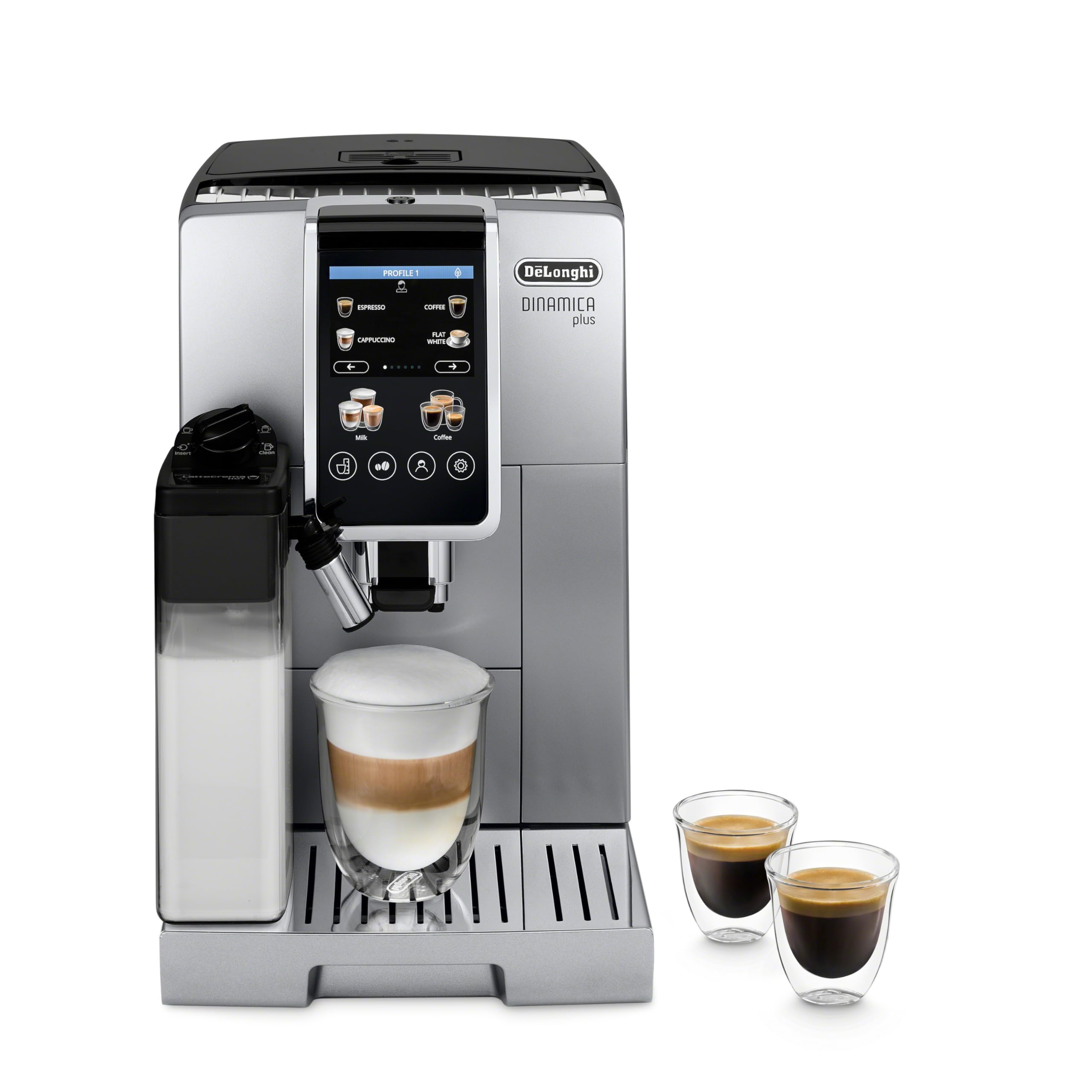
The De’Longhi Dinamica Plus is a fully automatic machine, but it earns a place on this list because its built-in conical burr grinder and manual steam wand option let you operate it in a semi-automatic style if you choose. The 3.5-inch TFT full-touch screen displays 24 one-touch recipes, and the Smart One-Touch system learns your drinking habits and surfaces your most frequent selections first. The built-in grinder offers 13 settings, and the LatteCrema Hot System automatically froths milk with three different foam density modes (cappuccino, latte, flat white).
For users who still want manual control, the machine supports manual mode for both grinding and steaming. The 4-user profile system saves individual preferences for strength, volume, and temperature, so each household member gets their preferred drink without recalibration. The machine also includes a hot water spout for Americanos or tea. The Dinamica Plus is the most technologically advanced machine in this guide, and the 3.8-pound bean hopper capacity means you do not have to refill frequently.
The main downside is the price—this is a premium-tier investment that pushes past the range of most home baristas. The auto-clean cycles are thorough but use significant water, and the milk carafe’s connection port is tight enough to make detachment awkward. Some users report that the excessive purge cycles drain the water tank faster than expected. For users who want the convenience of app connectivity and automated milk texturing, the Dinamica Plus is a polished, feature-rich machine.
Why it’s great
- 24 one-touch recipes with a responsive full-color touchscreen interface
- Smart One-Touch system learns user preferences and surfaces them automatically
- 4 user profiles allow each household member to save custom drink settings
Good to know
- Premium price tier—significantly more expensive than semi-automatic alternatives
- Milk carafe connection port is tight, making removal difficult without spillage
11. Rancilio Silvia Pro X

The Rancilio Silvia Pro X is the most serious machine in this guide, designed for users who consider espresso a craft rather than a convenience. The dual boiler system—a 1-liter steam boiler and a 300-ml brew boiler—eliminates the temperature drop that occurs when steaming milk immediately after brewing. The brew boiler is PID-controlled to within ±1°F, and the steam boiler has its own dedicated PID circuit for precise temperature management. The adjustable low-pressure pre-infusion can be set from 1 to 6 seconds, giving you tight control over the shot profile.
The commercial-grade 58mm portafilter and the four-hole steam wand are built to professional standards. The steam wand produces extremely dry, powerful steam that textures milk in under 10 seconds—ideal for busy home baristas making multiple drinks back-to-back. The shot timer integrated into the front-facing PID display accurately tracks extraction time. The programmable auto-on feature lets you set a daily wake-up time so the machine is ready when you are. The machine is built like a tank: brass internal components, a stainless steel body, and a weight of over 28 pounds.
The Silvia Pro X does not include a built-in grinder, so you need a separate burr grinder (such as the Rancilio Rocky or a comparable unit). This makes it a true semi-automatic setup rather than an all-in-one machine. The price is the highest in this guide, reflecting the industrial-grade components and the expected lifespan of 10–15 years. For users who are serious about espresso and willing to invest in a separate grinder, the Silvia Pro X offers the best build quality and temperature stability available in a consumer machine.
Why it’s great
- Dual boiler system with dedicated PID circuits for brew and steam stability
- Four-hole steam wand produces professional-quality microfoam in under 10 seconds
- Brass internal components and stainless steel body are built for 10+ year service life
Good to know
- No built-in grinder—requires a separate burr grinder for operation
- Premium price tier reflects commercial-grade internals, not home convenience features
FAQ
Is a 15-bar pump sufficient for a semi-automatic machine, or do I need 20 bars?
Can I use pre-ground coffee in a machine with a built-in grinder?
How often should I clean the internal grinder to prevent jams?
Does the 58mm portafilter size matter for home use?
Final Thoughts: The Verdict
For most users, the semi automatic espresso machine with grinder winner is the Breville Barista Express BES870XL because it combines PID temperature stability, low-pressure pre-infusion, an integrated conical burr grinder, and a proven track record of lasting 5–7 years with regular maintenance. If you want a guided dial-in experience with automatic milk texturing, grab the De’Longhi La Specialista Touch. And for the mess-free convenience of automated distribution and tamping, nothing beats the Acaspresso Auto Distribute & Tamp.