The difference between a clean, glistening slice of raw fish and a ragged, torn edge comes down to the geometry and steel of one tool. A true sashimi knife, or yanagiba, is built with an asymmetrical grind and a razor-thin blade profile designed to part muscle fibers without crushing them — a task that forces any standard chef’s knife to betray its limitations. A diamond-ground edge at 12 to 16 degrees per side versus a common 20-degree V-edge changes how the blade engages the protein, and the wrong angle guarantees bruising rather than slicing.
I’m Mohammad Maruf — the founder and writer behind AirfryerBite. My research into the specialty cutlery market has involved analyzing over 400 product listings, dissecting metallurgy specs like HRC ratings and layer counts, and cross-referencing professional chef feedback to identify the blades that deliver on their promises and those that are merely dressed up wall hangers.
Whether you are a home enthusiast attempting your first perfect belly cut or a seasoned cook looking to upgrade your station, sorting through the options requires more than just a price tag glance. After comparing construction methods, steel types, sharpness out of the box, and overall balance, this guide will walk you through the specific attributes that separate a capable tool from a great one as we examine the best sashimi knife choices available today.
How To Choose The Best Sashimi Knife
Selecting a sashimi knife requires focusing on three factors that matter more than brand reputation alone: blade geometry, steel composition, and handle balance. A knife designed for slicing raw fish must feature a thin, sharp edge that glides through delicate flesh without tearing. Understanding these distinctions will help you avoid purchasing a decorative blade that cannot perform under daily use.
Blade Geometry: Single Bevel vs. Double Bevel
Traditional yanagiba knives are single-bevel, meaning the blade is ground only on one side. This design creates a cleaner cut because the flat side rides against the fish, preventing the slice from veering off course. A double-bevel edge, common in Western-style blades, is easier to sharpen for most home cooks and works well for general carving. For pure sashimi work, a single-bevel edge offers superior precision, but it demands that you learn to sharpen on one side only. Double-bevel knives from brands like Cangshan offer ambidextrous use and easier maintenance while still delivering excellent slice quality.
Steel Type, HRC, and Layer Count
The steel chosen dictates how long the blade stays sharp and how easily it can be restored. VG-10 high-carbon stainless steel is a popular standard because it balances edge retention with corrosion resistance, typically rating between 58 and 61 on the Rockwell Hardness scale (HRC). A higher HRC number means the blade holds its edge longer but becomes more brittle and harder to sharpen on standard stones. Damascus steel knives are built by folding multiple layers — often 67 layers — which creates the signature wavy pattern and can improve toughness without sacrificing hardness. A blade at HRC 58 to 60 is ideal for a home cook, as it combines decent edge life with reasonable sharpening demands. Going above HRC 62 pushes the metal into professional territory where chipping becomes a real risk if the blade encounters bone or a cutting board edge.
Blade Length and Handle Comfort
Standard sashimi knife lengths range from 8 inches to 12 inches, and the right size depends on what you cut most frequently. An 8-inch blade offers nimble control for smaller portions and is easier to store. A 10.5-inch or 12-inch blade allows you to slice through a large salmon fillet in one continuous draw, reducing drag and preserving the texture of the fish. Handle material affects grip stability when hands are wet or oily. Rosewood, mahogany, and G-10 fiberglass handles offer different balances of weight, durability, and moisture resistance. A full-tang construction, where the steel extends through the handle, provides better weight distribution and prevents the handle from loosening over time. Always look for a handle that feels secure in your hand and matches your preferred grip style.
Quick Comparison
On smaller screens, swipe sideways to see the full table.
| Model | Category | Best For | Key Spec | Amazon |
|---|---|---|---|---|
| Sakai Takayuki Damascus Yanagiba | Premium | Professional-grade one-stroke slices | HRC 60+, V Gold No. 10 steel | Amazon |
| Cangshan YARI 12-Inch | Premium | Large fish and wide carving tasks | 67-layer X-7 Damascus, HRC 58 | Amazon |
| Tenkumun Gyutou Pro VG-10 | Mid-Range | Versatile prep beyond raw fish | 67-layer VG-10, 8-inch | Amazon |
| Cangshan KURO 8-Inch | Mid-Range | Carving and delicate slicing | X-7 Damascus, double-bevel | Amazon |
| Cangshan KITA 8-Inch | Mid-Range | Budget-friendly Damascus entry | X-7 Damascus, HRC 60 | Amazon |
| KEEMAKE VG-10 Yanagiba | Entry-Level | First sashimi knife on a budget | VG-10, HRC 58+, single-bevel | Amazon |
In-Depth Reviews
1. Sakai Takayuki Damascus Sushi Sashimi Yanagiba 10.5 inch (DY270)

The Sakai Takayuki is the benchmark that other sashimi knives are measured against. Over 90 percent of professional chefs in Japan use Sakai forged knives, and this 10.5-inch yanagiba carries that pedigree into a double-edged Damascus blade built from V Gold No. 10 stainless steel. The blade is surprisingly light at 6.5 ounces, with a thickness of only 2 millimeters, which allows it to slide through tuna belly and salmon fillets with near-zero resistance. The mahogany wood handle is ergonomically shaped to fit the pinch grip naturally, and it develops a richer color over time as the oils from your hand darken the wood.
Out of the box, the edge is factory-sharpened to a level that rivals professional honing — reviewers consistently note that it outperforms other high-end Japanese knives they own in both sharpness and edge retention. The double-bevel grind makes this knife more forgiving for cooks who are not accustomed to sharpening single-bevel edges, while still maintaining the thin profile needed for clean slices. The included paulownia wood gift box with Japanese washi paper and a traditional Awaji-knot mizuhiki transforms the unboxing into an event, making it an exceptional presentation-grade purchase.
This is not a knife for beginners on a tight budget; it represents a serious investment. The blade requires careful hand washing and immediate drying — it is not dishwasher safe. If you are committed to maintaining a premium blade with proper sharpening stones and a wooden cutting board, this knife will last multiple lifetimes and outperform cheaper alternatives on every single slice. For the dedicated home cook or professional who demands the best possible cut quality, this is the definitive choice.
Why it’s great
- Favored by over 90% of Japanese professional chefs; real pedigree in blade craftsmanship
- Extremely thin 2 mm blade profile enables effortless, drag-free slicing through raw fish
- Beautiful mahogany handle that darkens gracefully with age, paired with a premium paulownia gift box
Good to know
- Price point is significantly higher than all other options in this guide; not an entry-level buy
- Double-bevel grind is less traditional for yanagiba but easier for most home cooks to sharpen
- Requires dedicated care — hand wash only, immediate drying, and stone sharpening
2. Cangshan YARI Series 12-Inch Sashimi Knife with Sheath (501301)

The Cangshan YARI is built for those who regularly handle large fish — a 12-inch blade that allows you to pull a single, uninterrupted stroke across the entire width of a salmon fillet or a yellowfin tuna loin. Forged from 67 layers of Cangshan’s proprietary X-7 Damascus steel, the blade is hand-sharpened to a 16-degree angle per side, which yields an HRC of 58 to 60. This hardness range offers a forgiving balance: the blade stays sharp through multiple prep sessions, yet it is not so brittle that a glancing contact with a bone or a hard cutting board will chip the edge.
The YARI is double-beveled, which makes it truly ambidextrous and significantly easier to maintain than a single-bevel yanagiba. Reviewers note that it is excellent for skinning salmon and slicing raw beef for dishes like tataki, and the long, narrow blade glides through cooked poultry without tearing the skin. The G-10 fiberglass handle in gray features an ergonomic contour that feels secure even with wet hands, and the full-tang construction ensures the weight is balanced near the handle for comfortable extended use. A magnetic Saya-style sheath is included, which protects the edge during storage and adds a layer of safety when reaching into a drawer.
One thing to consider is the sheath design — the magnet is strong, but some users have noted that the blade can contact the inner face of the sheath if not inserted perfectly straight, so attention is needed when sheathing. The knife is also NSF certified, which speaks to its suitability for commercial kitchen environments. For anyone wanting a long blade that handles both sashimi and general carving tasks without the premium price of a Japanese import, the YARI is a compelling mid-range option that does not compromise on steel quality.
Why it’s great
- 12-inch blade accommodates large fish and wide cuts for one-stroke slicing
- Double-bevel edge sharpens easily on standard stones; ambidextrous design
- NSF certified and includes a magnetic Saya-style sheath for safe storage
Good to know
- Sheath magnet can cause the blade to contact the interior if not inserted carefully
- HRC 58 is on the lower end for edge retention; requires more frequent honing than VG-10 alternatives
- Fiberglass handle may feel less organic than natural wood to some users
3. Tenkumun Japanese Gyutou Pro VG-10 MAX Damascus 8-Inch Chef Knife

The Tenkumun Gyutou Pro breaks the mold of a dedicated sashimi knife by offering a gyutou (Japanese-style chef’s knife) profile that excels at both fish preparation and general kitchen tasks. The blade is crafted from VG-10 MAX Damascus steel with 67 layers, heat-treated at over 1000 degrees Celsius to achieve a high hardness rating. The 8-inch length makes it more maneuverable than longer yanagibas while still being long enough to slice smaller fish fillets and sashimi portions with a single pull. The hand-polished edge is ground to a 0-degree razor sharpness out of the box, and reviewers consistently describe the first cut as startlingly effortless.
One of the standout features is the handle: a combination of burl wood and resin in a deep red tone that provides both visual appeal and a secure grip. The handle is smooth but not slippery, and the natural pinch grip feels balanced and light in hand, weighing less than many 8-inch Western-style chef’s knives. The blade’s 67-layer Damascus pattern is not purely cosmetic — the folded construction adds toughness that helps the edge resist micro-chipping during routine use. Reviewers report that the knife remains sharp for weeks without honing, even with daily meal prep that includes vegetables and boneless meats alongside raw fish.
The Tenkumun is not a traditional long-blade yanagiba, so if you require a 10- or 12-inch blade for large tuna, this is not the right fit. It is best for the home cook who wants one high-quality knife that can handle sashimi, vegetables, and protein without switching tools. The included saya-style sheath is basic, and the red resin handle may not appeal to those who prefer classic wood tones. For its price tier, however, the VG-10 Damascus construction and hand-finished edge deliver performance that rivals knives costing twice as much.
Why it’s great
- VG-10 MAX Damascus steel with 67 layers provides excellent edge retention and toughness
- Beautiful burl wood and resin handle offers a secure, comfortable grip even when wet
- Versatile 8-inch gyutou profile handles sashimi, vegetables, and general prep tasks equally well
Good to know
- Not a true yanagiba; shorter 8-inch blade limits one-stroke cuts on very large fish fillets
- Resin handle color and pattern may not suit traditionalist preferences
- Included sheath is functional but not as premium as the knife itself
4. Cangshan KURO Series 8-Inch Carving and Sashimi Knife with Sheath (504227)
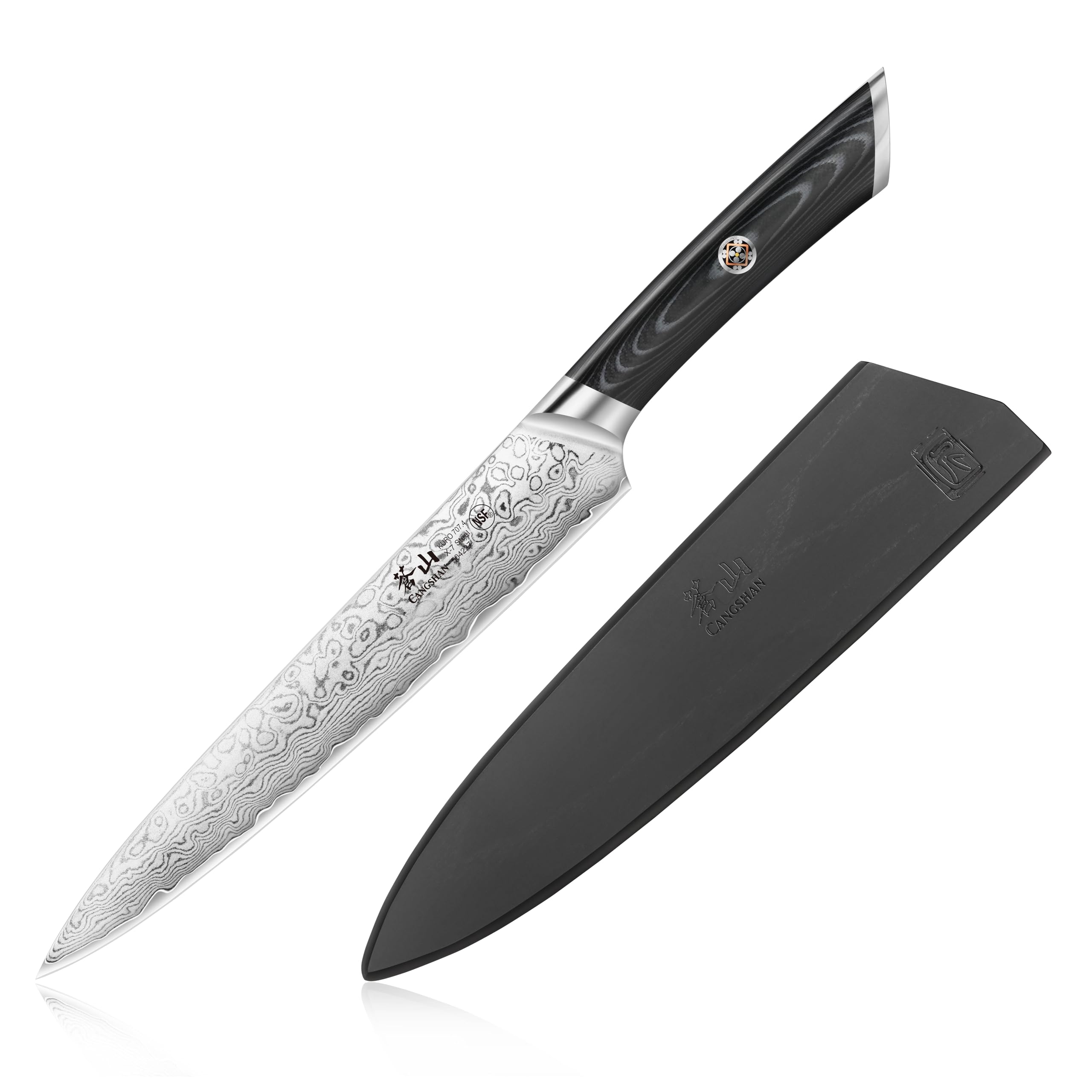
The Cangshan KURO is an 8-inch carving knife that sits at the intersection of traditional sashimi slicing and Western carving duties, making it a practical choice for the home cook who prepares both raw fish dishes and cooked proteins. The blade is forged from Cangshan’s X-7 Damascus steel, hand-sharpened to a plain edge that delivers extreme sharpness out of the box. Reviewers report that it slices through salmon skin and silverskin with minimal effort, and trims fat cleanly without tearing. The 8-inch length provides precise control for smaller fish and delicate tasks without the unwieldiness of a 12-inch blade.
One of the KURO’s strongest attributes is its handle ergonomics. The G-10 fiberglass handle is shaped in a faux wood grain pattern in deep gray, with a single mosaic rivet that adds visual interest without adding bulk. The handle is comfortable for both small and large hands, and the full-tang construction provides a well-balanced feel that reduces hand fatigue during extended prep sessions. The included magnetic Saya-style sheath in matching gray wood grain protects the blade during storage and adds a cohesive aesthetic.
The KURO is double-beveled, meaning it lacks the single-bevel precision of a traditional yanagiba, but it offers greater versatility and easier maintenance. If you primarily slice cooked meat or poultry in addition to occasional sashimi, this knife is an excellent middle ground. The Damascus pattern is genuine and visually striking, though some users note that the faux wood handle does not match the prestige of genuine hardwood. For its price range, the KURO delivers a sharp, durable blade with a comfortable grip that makes it a reliable daily driver for a wide variety of slicing tasks.
Why it’s great
- Extremely sharp out of the box; slices salmon, silverskin, and tomatoes with minimal pressure
- Comfortable G-10 handle with ergonomic contour suits both small and large hands
- Magnetic wood-grain sheath is included and matches the blade aesthetic perfectly
Good to know
- Faux wood handle lacks the natural feel and patina of genuine rosewood or mahogany
- 8-inch length is less effective for one-stroke cuts on very large tuna or salmon fillets
- Double-bevel design does not offer the same precision as a single-bevel yanagiba for pure sashimi work
5. Cangshan KITA Series 8-Inch Sashimi Knife with Sheath (501462)

The Cangshan KITA offers an entry point into Damascus steel sashimi knives without demanding a significant financial commitment. The 8-inch blade uses X-7 high-carbon Damascus steel with a Rockwell Hardness rating of 60 HRC, putting it in the same hardness bracket as much more expensive knives. The blade features a hollow edge and a hammered texture that reduces drag and helps food release from the blade surface during slicing. The hammered finish is not merely decorative — it creates micro-pockets of air that prevent thin slices of fish or meat from sticking to the blade face, which speeds up the cutting process and reduces waste.
The handle is constructed from G-10 fiberglass in a blue and black faux-wood-grain pattern, secured by a single mosaic rivet that adds a touch of elegance. The handle is balanced near the bolster, which gives the knife a slightly heavier feel than a traditional yanagiba. Some users find this weight reassuring, while others prefer a lighter, more delicate feel for precise fish slicing. The included blue wood magnetic Saya-style sheath is perfectly fitted to the blade and provides secure storage that prevents accidental edge contact. Reviewers praise the knife for its ability to cut paper-thin slices of raw beef for hot pot and thin tomato slices without crushing the flesh.
The KITA is an excellent choice for someone who wants a Damascus blade with a striking aesthetic and a functional hollow edge, but it is not the best pure sashimi knife in this guide. The hollow edge and heavier handle mean that the blade tracks differently than a smooth, slender yanagiba — it is more suited to multi-purpose carving than to dedicated sashimi preparation. The sheath’s magnet can also allow the blade to contact the interior if not aligned carefully. For a budget-conscious shopper who wants a visually impressive knife that performs well across a range of tasks, the KITA is a strong contender.
Why it’s great
- Damascus X-7 steel with HRC 60 offers excellent edge retention at a very accessible price point
- Hollow edge and hammered texture reduce drag and prevent food from sticking to the blade
- Visually striking blue wood-grain handle and matching sheath make a strong presentation
Good to know
- Heavier handle balance is less ideal for extended, delicate fish slicing sessions
- Magnetic sheath requires careful alignment to avoid blade contact with the interior
- 8-inch length may not be sufficient for one-stroke cuts on larger salmon or tuna fillets
6. KEEMAKE Sashimi Knife Japanese 10.5 Inch VG-10 Yanagiba

The KEEMAKE 10.5-inch yanagiba is the most affordable entry into a true single-bevel sashimi knife in this guide, and it punches well above its price tier in terms of raw cutting performance. The blade is made from Japanese VG-10 high-carbon stainless steel, heat-treated to an HRC of 58 or higher, and hand-sharpened to a 12- to 15-degree edge angle. This geometry mirrors traditional yanagiba design, meaning the flat side of the blade rides against the fish while the beveled side does the cutting, resulting in clean slices that do not pull or tear the flesh. The 3.1 millimeter blade spine provides enough rigidity for slicing through medium-sized fish without flexing off course.
The handle is constructed from natural rosewood, which offers a warm, smooth feel that develops a patina over time. The seamless junction between the blade and the handle provides a smooth transition that is comfortable for both pinch and handle grips. Reviewers who have used the knife to prepare hundreds of sushi rolls report that it maintains its sharpness through extended prep sessions and requires only occasional honing. The 10.5-inch length is long enough to slice across a full salmon fillet in one pass, yet the knife remains nimble enough for precise portion cuts. Several reviewers specifically note that it outperforms far more expensive knives they have owned in terms of initial sharpness.
The KEEMAKE does have some limitations that reflect its price point. The VG-10 steel is functional but not as refined as the Damascus alternatives, and the fit and finish on the handle may not match the precision of knives from established Japanese manufacturers. The single-bevel edge requires dedicated sharpening — you cannot use a typical pull-through sharpener; you need a whetstone and the knowledge to sharpen only the beveled side. For the home cook who wants to experience authentic yanagiba slicing without a significant investment, and who is willing to learn proper single-bevel maintenance, this knife offers exceptional value and performance that rivals options costing three times as much.
Why it’s great
- True single-bevel yanagiba design delivers authentic, clean slices without tearing fish flesh
- VG-10 steel with HRC 58+ provides solid edge retention at an extremely accessible price point
- 10.5-inch length is ideal for one-stroke cuts on medium to large fish fillets
Good to know
- Single-bevel edge requires a whetstone and specific sharpening technique; not beginner-friendly
- Fit and finish on the rosewood handle may lack the refinement of premium Japanese brands
- VG-10 steel is less corrosion-resistant than Damascus variants; requires immediate drying after use
FAQ
Can I use a sashimi knife to cut through bones or frozen fish?
What is the ideal blade length for a home cook making sashimi at home?
How do I sharpen a single-bevel yanagiba without ruining the edge?
Is Damascus steel better than VG-10 steel for a sashimi knife?
Final Thoughts: The Verdict
For most users, the best sashimi knife winner is the Sakai Takayuki Damascus Yanagiba because it delivers professional-grade sharpness, a historically proven blade pedigree, and a double-bevel design that balances traditional precision with modern ease of maintenance. If you want a versatile blade that handles both sashimi and everyday kitchen tasks, grab the Tenkumun Gyutou Pro VG-10. And for a budget-friendly entry into true single-bevel slicing, nothing beats the KEEMAKE VG-10 Yanagiba.