A Santoku knife promises a rhythmic, clean chop through a mountain of vegetables, a perfect slice through a boneless roast, or a precise mince of fresh herbs — but only if the blade geometry, steel composition, and handle balance are tuned for the task. Too many options on the shelf trade edge retention for a low price or flaunt a Damascus pattern without the underlying heat treatment to back it up.
I’m Mohammad Maruf — the founder and writer behind AirfryerBite. My research focuses on dissecting the metallurgy, grind angles, and handle ergonomics of kitchen cutlery to separate forged performance from stamped marketing claims.
Whether you need a razor-fresh slicer for weekday meal prep or a durable daily driver for heavier cutting, this guide breaks down the top contenders to help you find the best santoku knife for your actual cooking flow.
How To Choose The Best Santoku Knife
A Santoku knife is defined by its shorter, wider blade and a flat-to-slightly-curved cutting edge designed for a push-cut motion rather than a rock chop. Choosing the right one means balancing steel type, blade construction, handle ergonomics, and maintenance needs against your specific prep volume and skill level.
Steel Core & Blade Construction
The steel determines how long the edge stays sharp and how easily it can be honed or sharpened. Japanese VG-10 steel with a 58-60 HRC hardness offers aggressive edge retention and corrosion resistance, making it ideal for precise slicing. German high-carbon stainless steel (around 55-58 HRC) is tougher and less prone to chipping, better suited for heavy chopping and beginner sharpeners. Forged blades are heavier and typically more durable than stamped blades, which are lighter and more nimble.
Blade Geometry & The Granton Edge
Santoku blades commonly feature a Granton edge — a series of shallow hollow ground divots along the side of the blade. These divots create air pockets that reduce friction and prevent thin slices of food from sticking to the blade. A plain edge without divots is easier to sharpen but may cause more drag when slicing dense vegetables or soft cheeses.
Handle Material & Balance
Look for a full tang (the steel extends the full length of the handle) for balance and durability. Handle materials range from moisture-resistant G10 and Pakkawood (laminated hardwood) for a secure, aesthetic grip, to synthetic Delrin or Santoprene for impact resistance and a non-slip feel. A heavier handle shifts the balance point toward the rear, reducing wrist strain during repetitive chopping.
Quick Comparison
On smaller screens, swipe sideways to see the full table.
| Model | Category | Best For | Key Spec | Amazon |
|---|---|---|---|---|
| KYOKU Shogun 7-Inch | VG-10 Damascus | Edge retention & craftsmanship | VG-10 core, HRC 58-60 | Amazon |
| WÜSTHOF Classic 7-Inch | German Forged | Durable heavy-duty prep | HRC 58, PEtec edge | Amazon |
| HexClad 7-Inch Damascus | Damascus / Pakkawood | Premium feel & balance | 67-layer Damascus, 12° edge | Amazon |
| ZWILLING TWIN Signature 7-Inch | German Stamped | Lightweight precision slicing | Ice-hardened FRIODUR blade | Amazon |
| Mercer Culinary Renaissance 7-Inch | Forged German Steel | Best value for professional use | Forged, Granton edge | Amazon |
| Victorinox Fibrox 7-Inch | Stamped Swiss Steel | Budget-friendly workhorse | Lightweight, stamped blade | Amazon |
| Rachael Ray 5-Inch Santoku Set | Entry-Level Set | Starter knife with sheaths | Japanese steel, 3-piece set | Amazon |
In‑Depth Reviews
1. KYOKU Shogun Series 7-Inch Santoku Knife
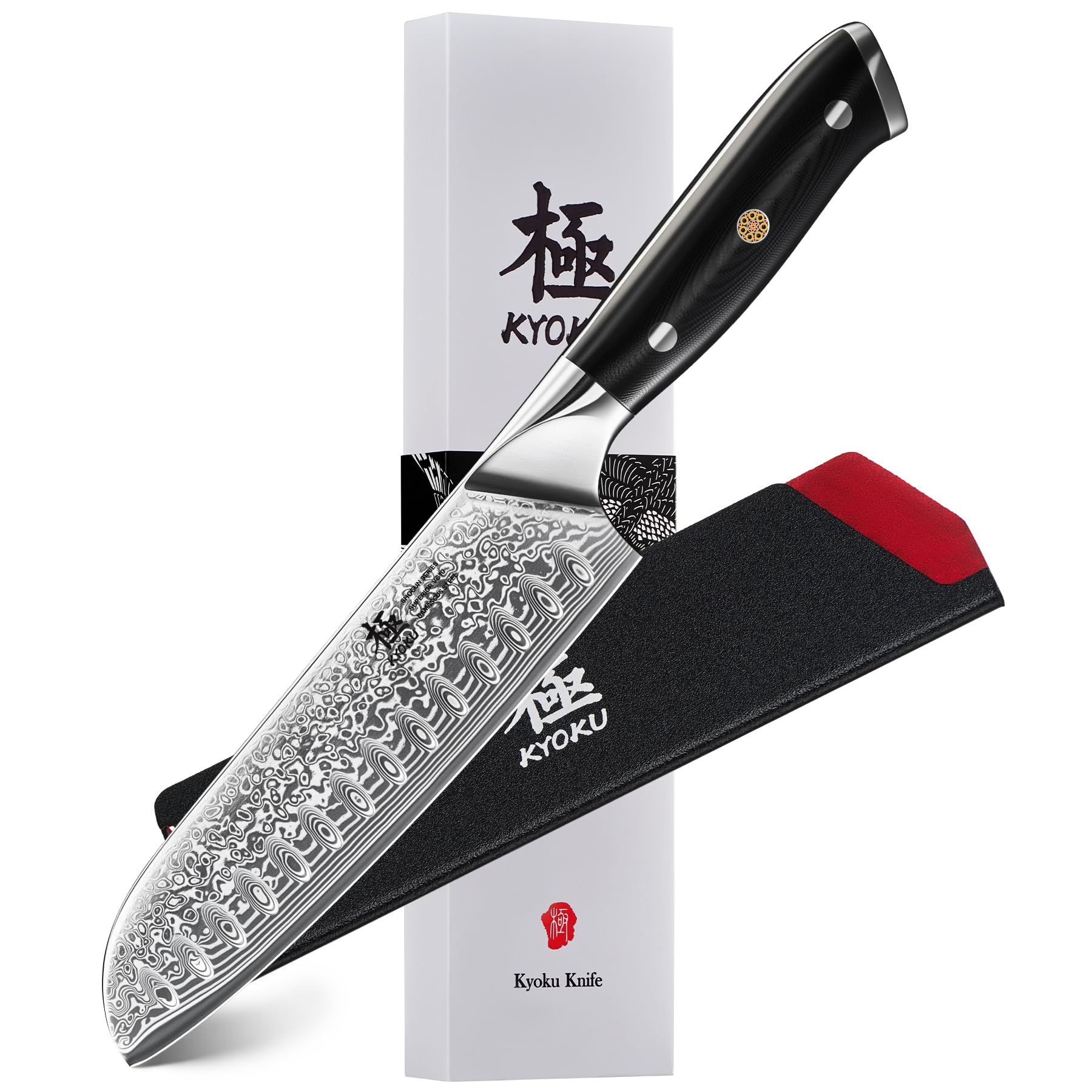
At the core of this 7-inch blade sits VG-10 Japanese super steel — a composition that includes cobalt to enhance edge durability while keeping the steel easier to sharpen than comparable AUS-10 alloys. The 67-layer Damascus cladding not only provides the classic water-ripple aesthetic but also adds a protective layer against corrosion for the high-carbon core. Hand-finished by artisans using the 3-step Honbazuke method, the edge is ground to a mirror polish at 8-12 degrees per side and nitrogen-cooled to achieve a hardness of HRC 58-60 without becoming brittle.
The G10 handle is a standout feature for this price tier — a military-grade glass-fiber composite that resists heat, moisture, and cold far better than standard polymer handles. The extra-wide blade geometry reduces finger fatigue during long chopping sessions, and the included sheath and presentation case add real storage value. Some users note the blade is noticeably heavier than a traditional stamped Santoku, which can feel less nimble for delicate work but delivers excellent momentum when cutting dense squash or root vegetables.
Customer feedback consistently highlights that the knife arrives screaming sharp — many describe it as the sharpest knife they have ever owned straight out of the box. A minority of reviews mention the weight distribution feels blade-heavy, so cooks who prefer a handle-heavy balance may need an adjustment period. The lifetime warranty provides peace of mind on a knife at this investment level.
Why it’s great
- VG-10 core with cobalt offers excellent edge retention and is easier to sharpen than AUS-10.
- Military-grade G10 handle is impervious to heat, moisture, and cold.
- Lifetime warranty covers manufacturer defects.
Good to know
- Heavier than many stamped Santoku knives — may feel blade-heavy for some.
- Hand-wash only; the high-carbon core can be prone to staining if left wet.
- Some users report the Damascus pattern varies between units.
2. WÜSTHOF Classic 7-Inch Santoku Knife

The WÜSTHOF Classic 7-inch Santoku represents over 200 years of Solingen, Germany knife-making tradition. Forged from a single block of high-carbon stainless steel and tempered to a 58 HRC hardness, this blade uses the brand’s Precision Edge Technology (PEtec) to achieve an edge that is 20% sharper than previous generations, with double the edge retention. The full bolster and finger guard provide a secure grip and protect the hand during repetitive push cuts, while the hollow edge (Granton-style divots) reduces food sticking.
The Classic handle is a full tang design with three rivets and a synthetic composite material that balances durability with a comfortable, slightly textured grip. At 0.8 pounds, this Santoku carries a solid, substantial feel — it is not a lightweight slicer but a workhorse built for volume prep. The blade geometry is optimized for the classic Santoku push-cut motion, making it exceptional for dicing onions and mincing garlic without the blade flex that cheaper stamped knives exhibit.
Professional chefs and serious home cooks frequently cite WÜSTHOF’s edge stability as the defining trait — the knife holds its working edge through heavy prep sessions without requiring mid-meal honing. The main trade-off is weight: if you prefer an ultra-light blade for precise, delicate slicing, the Classic series may feel cumbersome. Hand washing is required to preserve the edge and handle integrity, and the price reflects the Solingen pedigree and long-term durability.
Why it’s great
- PEtec edge technology delivers 20% sharper blade with double the edge retention of prior models.
- Full tang with triple-riveted handle for outstanding balance and durability.
- Forged from a single block of high-carbon stainless steel with full bolster protection.
Good to know
- Heavier than most Japanese-style Santoku knives; may fatigue smaller hands.
- Hand wash only — dishwasher use voids the edge and handle warranty.
- Premium pricing puts it above many competitors in this category.
3. HexClad 7-Inch Santoku Knife

HexClad brings the same hybrid-material philosophy from its cookware line into cutlery with this 7-inch Santoku, featuring 67 layers of Damascus stainless steel folded around a harder core. The blade is sharpened to a 12-degree angle using the Honbazuke three-step method, which combines advanced heat treatment with hand-honed precision to produce a razor edge that balances hardness with enough flexibility to resist chipping. The Pakkawood handle — layers of hardwood impregnated with resin — provides a warm, moisture-resistant grip that improves with age.
The blade measures 6.69 inches with a total length of 12.2 inches and weighs 0.62 pounds, putting it squarely between lightweight stamped knives and heavier forged models. This middle weight makes it well-suited for cooks who move between delicate slicing of tomatoes and more aggressive chopping of carrots or nuts. The Damascus cladding is more than decorative — it helps reduce friction as food passes over the blade face, which is especially noticeable when cutting sticky ingredients like raw meat or cheese.
HexClad includes a lifetime warranty against manufacturer defects, though the warranty explicitly excludes damage from dishwasher use, dulling, rust, or cutting on hard surfaces like glass or stone. Customer feedback on the edge retention is positive, with many noting the knife remains sharp for weeks of daily use between honing sessions. The main drawback is the price point, which positions it as a premium option that competes directly with established German and Japanese brands on aesthetics but still builds its reputation primarily through cookware fame.
Why it’s great
- 67-layer Damascus steel with 12-degree Honbazuke edge for exceptional sharpness.
- Pakkawood handle is moisture-resistant and ergonomically shaped for control.
- Balanced weight (0.62 lbs) suits both delicate slicing and heavier chopping.
Good to know
- Warranty excludes damage from dishwasher use, rust, and improper storage.
- Price is premium — comparable to established German forged knives from Solingen.
- Some users report the blade requires more frequent honing than VG-10 competitors.
4. ZWILLING TWIN Signature 7-Inch Hollow Edge Santoku

The ZWILLING TWIN Signature line uses a one-piece precision-stamped blade design that sacrifices the heft of a forged knife for a lighter, more agile feel — ideal for cooks who prioritize speed and precision over chopping power. The blade is made from the brand’s proprietary high-carbon NO STAIN steel, which resists rust and staining better than many high-carbon alloys while still accepting a sharp edge. The FRIODUR ice-hardening process treats the blade at sub-zero temperatures to increase hardness and edge retention, a technique ZWILLING has refined over decades.
The hollow ground edge (Granton divots) runs the length of the blade, significantly reducing drag and preventing thin slices of cucumber, tomato, or potato from clinging to the blade face. The ergonomic polymer handle is molded directly onto the full tang, creating a seamless transition that minimizes hotspots during extended use. At 0.8 pounds, the knife feels lighter than the weight suggests because the handle is slightly lighter than the blade, shifting the balance point forward for a blade-driven cutting motion.
This is a knife that arrives sharp enough for immediate use and maintains its working edge through moderate weekly prep with occasional honing. One notable advantage is that ZWILLING classifies this knife as dishwasher safe, though most knife experts still recommend hand washing to extend the edge life. Customers who appreciate a lightweight, nimble Santoku often choose this over heavier forged competitors, but those looking for a single-knife workhorse for breaking down large proteins may find the stamped blade lacks the stiffness of a forged alternative.
Why it’s great
- Ice-hardened FRIODUR blade stays sharper longer and resists chipping.
- Hollow ground edge effectively reduces food sticking during slicing.
- Lightweight stamped construction allows faster, more agile cutting.
Good to know
- Stamped blade may flex under heavy chopping compared to forged alternatives.
- Listed as dishwasher safe, but hand washing extends edge longevity.
- Polymer handle can feel less premium than wood or G10 options.
5. Mercer Culinary Renaissance 7-Inch Santoku Knife

Mercer Culinary’s Renaissance series has long been a staple in professional culinary schools and commercial kitchens because it delivers forged performance at a price that undercuts most German competitors. This 7-inch Santoku is precision-forged from high-carbon German cutlery steel and features a Granton edge (hollow ground divots) to reduce sticking. The full tang is triple-riveted to a handle made from Santoprene and Delrin — a combination that provides a non-slip, shock-absorbing grip without adding excess weight.
At 0.4 pounds, the Renaissance Santoku is noticeably lighter than the WÜSTHOF and ZWILLING forged options, making it a strong choice for cooks who want the durability of a forged blade without the fatigue of a heavy knife. The blade geometry features a rounded spine for comfort during pinch-grip cutting, and the edge arrives sharp enough for immediate use — several customer reviews note it competes with knives costing three times as much. The steel is softer than premium Japanese VG-10, which means it can be sharpened easily on a waterstone but will require more frequent honing to maintain peak sharpness.
The primary value proposition is clear: a forged, full-tang Santoku with professional-grade ergonomics at an entry-level price. Some users report that the blade finish is not as refined as higher-end German knives, with slightly visible grind marks, but this does not affect cutting performance. The knife is not dishwasher safe and should be hand-washed and dried immediately to prevent the high-carbon steel from developing patina.
Why it’s great
- Forged high-carbon German steel provides excellent durability at an accessible price.
- Santoprene/Delrin handle offers a secure, non-slip grip even when wet.
- Lightweight (0.4 lbs) reduces fatigue during long prep sessions.
Good to know
- Softer steel requires more frequent honing than harder VG-10 or Japanese alloys.
- Blade finish may show grind marks — cosmetic, not functional.
- High-carbon steel can discolor if not dried promptly after washing.
6. Victorinox Fibrox 7-Inch Santoku Knife

The Victorinox Fibrox Santoku is the budget-friendly legend of the commercial kitchen — the same Swiss manufacturer that produces the iconic Swiss Army knife applies its stainless steel expertise to cutlery. The blade is stamped (not forged), which keeps the weight down to 0.26 pounds and the cost low, but the steel composition and heat treatment are calibrated to deliver surprising edge retention for the price. The Fibrox handle is textured, slip-resistant, and ergonomically shaped to provide a secure grip even with wet or greasy hands.
The 6.7-inch blade is slightly shorter than the standard 7-inch Santoku, which some users find more maneuverable for smaller cutting boards or tighter prep spaces. Unlike most knives in this category, Victorinox explicitly lists this Santoku as dishwasher safe, though repeated dishwasher cycles will eventually dull any blade faster than hand washing. The Granton-style hollow edge is absent on this model, so food may stick slightly more during slicing compared to knives with divots — a minor trade-off for the price and durability.
Customer feedback consistently praises the value equation: the knife gets sharp, stays sharp through moderate weekly use, and the Fibrox handle outlasts many cheaper synthetic handles without cracking or becoming slippery. The main compromises are the lack of a forged bolster, the absence of a Granton edge, and the lighter weight that some cooks find less stable when cutting hard vegetables. For anyone building a first knife kit or equipping a vacation kitchen, this Santoku provides professional-level utility at a fraction of the cost.
Why it’s great
- Extremely lightweight (0.26 lbs) reduces hand fatigue significantly.
- Fibrox handle provides excellent slip resistance even when wet or oily.
- Dishwasher safe — convenient for low-maintenance cleaning.
Good to know
- Stamped blade lacks the heft and stiffness of forged alternatives.
- No Granton edge — food may stick to the blade during slicing.
- Shorter 6.7-inch blade may feel undersized for larger hands or big cutting tasks.
7. Rachael Ray Cutlery Japanese Stainless Steel Knife Set

The Rachael Ray Cutlery set includes an 8-inch chef knife, a 5-inch Santoku knife, and a 3.5-inch paring knife — all made from Japanese stainless steel and packaged with color-coded plastic sheaths for each blade. The 5-inch Santoku is smaller than the standard 7-inch format, making it better suited for cooks with smaller hands or those who prefer a compact knife for detail work and small-volume prep. The blades are finely honed and corrosion-resistant, delivering acceptable sharpness out of the box for light to moderate kitchen use.
The rubberized grips are shaped for comfort and feature a colorful aesthetic that extends to the blade coating. The knives are hollow ground (plain edge, no Granton divots), so thin slices of food may stick occasionally, but the shorter blade length reduces the surface area contact. The included sheaths are a practical addition for drawer storage, protecting both the edges and the user’s fingers when reaching into a cluttered drawer. The set is not dishwasher safe, which is a minor inconvenience given the otherwise beginner-friendly design.
This set targets the casual cook who wants a coordinated knife collection without investing heavily in individual blades. Customer feedback notes the Santoku is lightweight and easy to handle, but the edge dulls faster than higher-end options, requiring more frequent sharpening. The value lies in the completeness of the set — three essential knives with storage sheaths — rather than in premium metallurgy or long-term edge retention.
Why it’s great
- Three-knife set covers chef, Santoku, and paring needs in one purchase.
- Colorful rubberized handles provide a comfortable, non-slip grip.
- Plastic sheaths protect blades during drawer storage.
Good to know
- 5-inch Santoku is significantly shorter than the standard 7-inch format.
- Edge dulls faster than higher-end forged or VG-10 knives.
- Not dishwasher safe despite the beginner-friendly positioning.
FAQ
How does a Santoku knife differ from a chef’s knife?
Should I choose a forged or stamped Santoku blade?
What does HRC 58-60 mean for Santoku knives?
Can I use a Santoku knife for cutting meat or fish?
Final Thoughts: The Verdict
For most users, the best santoku knife winner is the KYOKU Shogun 7-Inch because it delivers VG-10 core performance, a 67-layer Damascus build, and a G10 handle at a mid-range price that outperforms its sticker value. If you want German forged durability and Solingen heritage, grab the WÜSTHOF Classic 7-Inch. And for a lightweight, commercial-grade workhorse without breaking your budget, nothing beats the Victorinox Fibrox 7-Inch.