A great rack of ribs starts long before the smoker door closes — it starts with the rub you choose. Too much sugar burns before the collagen renders. Too much salt and you taste only brine. The right blend delivers a bark that cracks with every bite, a balanced heat that lingers, and a savory depth that complements, never overwhelms, the pork or beef.
I’m Mohammad Maruf — the founder and writer behind AirfryerBite. Over the last decade, I have analyzed hundreds of spice formulation sheets, studied ingredient ratios for moisture retention versus bark formation, and tracked which commercial blends deliver consistent results across different cooker types and cook times for the rubs for ribs category.
This guide breaks down five top-rated commercial rib rubs, from classic American pantry staples to competition-level blends, so you can match the right profile to your cooking style and avoid the rookie mistakes that ruin an eight-hour smoke.
How To Choose The Best Rubs For Ribs
A rib rub is not just a seasoning — it is a chemical layer that determines whether your final product has a dark, crunchy bark or a gummy, burnt-sugar shell. Understanding the interplay of sugar base, salt punch, heat source, and particle size separates a decent rack from a memorable one.
Sugar Type and Content
White sugar (sucrose) caramelizes around 320°F and burns quickly at smoking temperatures, while turbinado or raw sugar and brown sugar melt at slightly different rates. For longer smokes (2-2-1 or 3-2-1 methods), a rub with a higher proportion of unrefined sugar or a lower total sugar percentage helps prevent the dreaded black crust. The best rib rubs for competition cooks often keep added sugar below 30 percent of the total blend by weight.
Salt Granulation and Volume
Salt is the rub’s primary moisture retainer. Coarse kosher salt crystals dissolve slower and draw moisture more gradually than fine table salt, creating a more even brine over a multi-hour cook. A rub that tastes salty straight from the bottle may overwhelm ribs after a full smoke. Look for blends where salt is listed after the primary spices in the ingredient order — a sign the producer prioritized flavor layering over simple salinity.
Pepper and Heat Profile
Black pepper provides the classic bite, and its particle size (fine powder versus coarse cracked) dramatically affects bark texture. Flaked black pepper creates visible, crunchy specks on the surface, while powdered pepper distributes heat more evenly. Chili powder, cayenne, and ancho add color and delayed heat. A balanced rib rub uses pepper as a structural element, not merely a seasoning.
Quick Comparison
On smaller screens, swipe sideways to see the full table.
| Model | Category | Best For | Key Spec | Amazon |
|---|---|---|---|---|
| Blues Hog Original Dry Rub | Competition-Grade | Low-sodium bark building | 26 oz; slight sweet-savory balance | Amazon |
| Pappy’s Choice Prime Rib Rub | Premium All-Purpose | Versatile use from ribs to vegetables | 24 oz; powder form, 30-year blend | Amazon |
| McCormick Culinary Barbecue Spice | Commercial Pantry | Everyday affordable BBQ flavor | 18 oz; kosher, no added MSG | Amazon |
| Spiceology Prime Rib Rub | Chef-Crafted Blend | Umami-rich crust with tomato powder | 4.5 oz; smoked paprika & garlic base | Amazon |
| 10-42 BBQ Brisket Rub | Bark Specialist | Heavy flake pepper bark formula | 10.5 oz; zero calorie, no MSG | Amazon |
In‑Depth Reviews
1. Blues Hog Original Dry Rub Seasoning

The Blues Hog Original Dry Rub sets the standard for competition-level rib seasoning. Its Southern-style profile delivers a slightly sweet, earthy base without relying on excessive sugar — a critical advantage for low-and-slow cooks where a high-sugar rub would carbonize before the collagen breaks down. The lower sodium content allows you to apply a generous layer without oversalting the meat, and multiple verified buyers confirm that applying it a full day before smoking yields deeper flavor penetration.
At 26 ounces, this container offers exceptional volume for the tier. The blend uses granulated spices that stick well to moist ribs and maintain their integrity through a 3-2-1 cook cycle. Reviewers consistently praise its versatility on chicken, brisket, and even vegetables, making it a true all-rounder for serious backyard smokers.
The only compromise is that the flavor profile leans savory rather than sweet-forward, which may not satisfy cooks who want a sticky Kansas City-style glaze without added sauce. Some users note that a light spritz of apple juice or apple cider vinegar helps develop an even deeper bark when using this rub.
Why it’s great
- Low sodium allows heavy application without over-brining ribs
- Large container size delivers best cost-per-ounce in the category
- All-natural ingredients with no artificial additives listed
Good to know
- Not designed for high-sugar KC-style bark without additional sauce
- Some reviewers prefer more pronounced black pepper heat
2. Pappy’s Choice Prime Rib Rub

Pappy’s Choice Prime Rib Rub originated in California’s central valley over three decades ago and has built a loyal following for its balanced savory profile. Unlike many mass-market blends, it uses visible rosemary flakes and coarsely ground spices that create a textured bark rather than a smooth paste when applied to ribs. The powder form allows it to penetrate the meat quickly, making it effective even with shorter rest times.
This rub performs equally well on beef and pork ribs. The ingredient mix includes premium spices sourced internationally, and the absence of heavy sugar makes it a strong candidate for smoking, not just grilling. Customer reviews spanning years confirm consistent quality across batches, and the 24-ounce container provides enough rub for multiple large cooks or competition-level preparation.
One tradeoff is the light overall flavor intensity — some buyers find it better suited for chicken or lighter meats than for hearty beef ribs. The larger rosemary pieces can also settle unevenly in the bottle, so shaking thoroughly before each application is recommended for consistent distribution.
Why it’s great
- Long-standing commercial reputation with consistent flavor across 30 years
- Visible herb flakes create a textured, non-gummy bark
- High versatility from ribs to vegetables and light meats
Good to know
- Rosemary pieces can cluster; shake well before each use
- May be too mild for bold beef rib applications without added pepper
3. McCormick Culinary Barbecue Spice

McCormick Culinary Barbecue Spice is the workhorse option for cooks who want a reliable, widely available rub without breaking their budget. The 18-ounce container is designed for back-of-house food service, which means the blend prioritizes consistency and shelf stability. Ingredients include coriander, celery seed, paprika, and both red and black pepper — a classic combination that works on ribs, chicken, and pork.
This rub is certified kosher, vegan, and vegetarian, with no added MSG or high-fructose corn syrup. Several reviewers note that a little goes a long way, and many use it as a base seasoning for sauces and marinades rather than a standalone finishing rub. Its fine grind adheres well to wet racks but may not create the heavy crunch that coarse-pepper blends deliver.
Some feedback suggests the pepper heat is more pronounced than the standard retail version, likely due to the higher spice-to-sugar ratio in the culinary formulation. If you prefer a sweet-leaning profile, mixing this rub with brown sugar before application is a common workaround.
Why it’s great
- Proven food-service formula with consistent spice ratios
- Large 18-ounce container at an accessible entry point
- Clean label — kosher, vegan, no MSG, no HFCS
Good to know
- Fine grind limits bark depth compared to coarser competition rubs
- Pepper heat can catch cooks expecting milder grocery-store profiles
4. Spiceology Prime Rib Rub

Spiceology rounds out its lineup with a Prime Rib Rub that builds its flavor foundation on smoked paprika, garlic, tomato powder, and red bell pepper. This combination produces a deep umami character that most dry rubs lack, making it especially effective for short cooks or high-heat searing where sugar-based rubs would scorch. The tomato powder creates a subtle tang and color transformation without relying on citric acid or vinegar additives.
At 4.5 ounces, this is the smallest container in the group, but the density of flavor means a little covers a lot of surface area. Reviewers frequently use it on steaks and brisket in addition to ribs, and many note that combining it with kosher salt and Worcestershire in a vacuum-seal bag for 72 hours yields exceptional results for large cuts.
The spice level is noticeable — several customers were surprised by its heat — so cooks feeding a sensitive palate may want to dial back the quantity or mix it with a neutral salt base. The absence of a shaker top also means you need to sprinkle manually or use a spice dredge.
Why it’s great
- Tomato powder and smoked paprika deliver rare umami depth for a dry rub
- Fresh, chef-developed formulation with premium spice sourcing
- Works well for high-heat applications where sugar rubs fail
Good to know
- Small 4.5-ounce container is less economical for frequent smokers
- Heat level may surprise cooks expecting a mild prime rib seasoning
5. 10-42 BBQ Brisket Rub
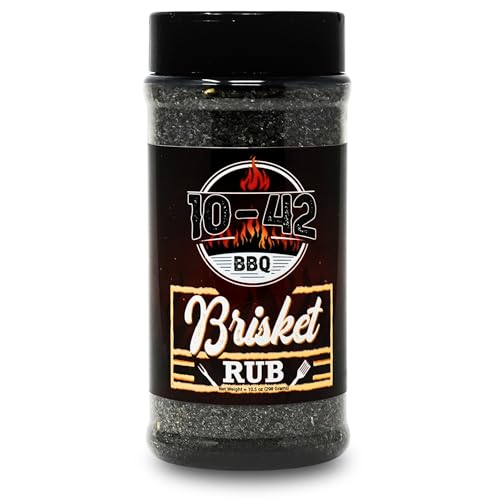
The 10-42 BBQ Brisket Rub is formulated specifically for bark development, using large, flaky black pepper as its primary structural ingredient. This zero-calorie, no-MSG blend is built around an all-natural spice base with a heavy pepper-forward profile that creates the dark, crunchy shell that competition judges look for on brisket and ribs alike. The coarser grind helps the rub stay on the meat rather than burning off, even during extended smokes at 225°F to 250°F.
Made in the USA in small batches, this rub uses only natural ingredients and no fillers. Customers consistently report that it excels at forming bark and adds a clean, spice-driven flavor without relying on sugar for color. Many reviewers use it on pork ribs as well as brisket and note that the pepper flakes distribute evenly and adhere well without a binder.
The single-note pepper dominance means it lacks the sweetness or herb complexity of multi-purpose rubs. For cooks who want a deeper flavor profile, layering this rub with a sweeter base blend or adding a finishing sauce is recommended. The 10.5-ounce bottle provides good value for dedicated bark chasers.
Why it’s great
- Large-flake pepper delivers the best bark formation in this test group
- Zero calories and no MSG for clean-label smokers
- Small-batch production ensures spice freshness
Good to know
- Pepper-dominant profile lacks the depth of multi-spice blends
- Not ideal for cooks seeking sweet or herbaceous rib texture
FAQ
How far in advance should I apply a dry rub to ribs?
What is the ideal sugar type for low-and-slow rib cooking?
Can I use a beef-focused rub on pork ribs without ruining the flavor?
Final Thoughts: The Verdict
For most users, the rubs for ribs winner is the Blues Hog Original Dry Rub because it delivers a competition-grade savory-sweet balance with low sodium for heavy application across multiple racks. If you want a premium, decades-proven all-purpose blend, grab the Pappy’s Choice Prime Rib Rub. And for bark-focused cooks who prioritize a crunchy black-pepper shell above all else, nothing beats the 10-42 BBQ Brisket Rub.