Building a deep, flavorful bark on a brisket rarely happens by accident — it demands a rub that balances salt, sugar, spice, and adherence in precise measure. The wrong blend can leave you with a pale, bitter, or overly salty crust that no amount of smoke can fix.
I’m Mohammad Maruf — the founder and writer behind AirfryerBite. I analyze hundreds of spice blends each year, parsing ingredient lists for hidden fillers, anti-caking agents, and flavor profiles that hold up during a 12-hour low-and-slow smoke.
This guide focuses on blends with real ingredient integrity and proven bark performance. Here is the final list you need for choosing your next rub for brisket smoking.
How To Choose The Best Rub For Brisket Smoking
Not every bottle labeled “brisket rub” will perform the same way over a 12-hour smoke. The heat, the moisture, and the duration all test the blend’s integrity, which is why knowing what to look for—and what to avoid—determines whether you end up with a brittle bark or a gummy mess.
Sugar Ratio and Melt Point
The amount and type of sugar in a rub dictates bark color and texture. Rubs with high dextrose or white sugar content caramelize quickly and can scorch above 275°F, leaving a bitter, blackened crust. Blends using turbinado or demerara sugar, which have a higher melt point, create a darker, more stable bark without burning. For a classic Texas-style brisket, look for a rub where sugar is not the first ingredient—salt and black pepper should lead the list.
Particle Size and Stick Factor
A rub that is ground too fine will dissolve into the meat’s surface moisture and fail to form a visible bark. Coarser blends with visible pepper flakes, salt crystals, and granulated garlic adhere better and build texture on the exterior during the stall phase. A rub that seems “dusty” in the jar typically contains anti-caking agents like silicon dioxide or rice flour—ingredients that do nothing for flavor and can leave a chalky residue.
Ingredient Purity and Dietary Constraints
Many mass-market rubs hide cheap fillers, MSG, and artificial colors behind a bold front label. If you follow a carnivore, keto, or Whole30 diet, you need a blend with zero sugar or dextrose. For gluten-sensitive cooks, the label must explicitly state “gluten-free”—cross-contamination is common in co-packing facilities. Rubs that list recognizable spices first and avoid “natural flavors” are generally the most honest blends on the shelf.
Quick Comparison
On smaller screens, swipe sideways to see the full table.
| Model | Category | Best For | Key Spec | Amazon |
|---|---|---|---|---|
| Revolution Barbecue Texas Beef BBQ Rub | Mid-Range | Carnivore diet, no fillers | 7.76 oz, no sugar or dextrose | Amazon |
| Kosmos Q Texas Beef Dry Rub | Mid-Range | All-purpose beef and poultry | 13.8 oz, lemon juice powder | Amazon |
| RubWise Texas Style BBQ Brisket Rub | Mid-Range | Competition-level bark | 16 oz, chipotle heat | Amazon |
| Rufus Teague Meat Rub | Premium | Kansas City sweet-savory profile | 6.5 oz, gluten-free, Non-GMO | Amazon |
| John Henry’s Texas Brisket Rub | Premium | Family-sized batches | 26 oz, no MSG | Amazon |
In‑Depth Reviews
1. Revolution Barbecue Texas Beef BBQ Rub
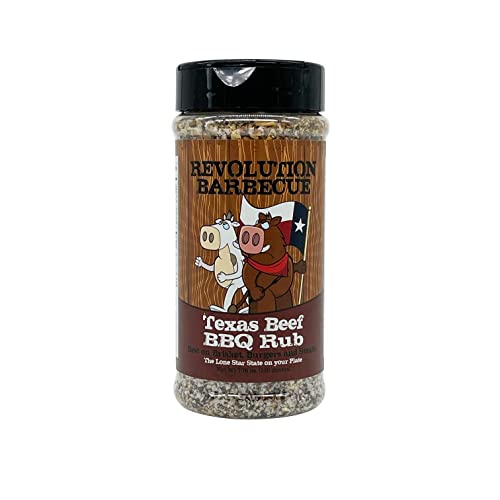
This rub took 1st Place in the 2025 Barbecue News Magazine Rubs of Honor competition for beef rubs, a credential that backs up its performance on the smoker. The ingredient list is clean—no sugar, no dextrose, no rice flour, and no seed oils—which makes it one of the few competition-grade blends compatible with carnivore and keto diets.
The flavor profile leans heavily on black pepper, garlic, and onion with just a whisper of sweetness from peppers and paprika. At 7.76 ounces per bottle, you get about four full briskets per container. It is made by a woman-owned small-batch facility in Colorado, so each batch has the attention you would expect from a craft producer.
During a 10-hour smoke on a choice-grade brisket, the rub formed a dark, crunchy bark that did not turn bitter despite the long cook. It also works well on ribeyes, burgers, and even vegetables, but its real strength remains the low-and-slow beef application. The only trade-off is the smaller bottle size compared to value-priced competitors.
Why it’s great
- Zero sugar or dextrose—ideal for carnivore diets
- Award-winning formula with clean ingredient deck
- Produces a deep bark without bitterness after long cooks
Good to know
- Smaller bottle size (7.76 oz) compared to budget rubs
- Slightly higher per-ounce cost for craft quality
2. Kosmos Q Texas Beef Dry Rub

Kosmos Q has a loyal following among backyard pitmasters, and this Texas Beef Dry Rub explains why. The blend combines garlic, onion, salt, sugar, and a unique addition of lemon juice powder that gives the beef a subtle brightness—an uncommon note in the typically heavy Texas-style category.
The particle size is medium-coarse, which helps the rub cling to the meat and form a consistent bark during the first few hours of a smoke. At 13.8 ounces, the shaker bottle covers roughly five to six full packer briskets, making it a solid value for frequent smokers. Many users report that the flavor holds up well during 9-hour cooks without turning acrid.
Beyond brisket, this rub adapts to beef ribs, chuck roast, burgers, potatoes, and even casseroles. The sweetness is noticeable but not cloying—more of a background note that complements rather than masks the beef. If you want a single rub that works across multiple meats and cooking methods, this is a strong candidate.
Why it’s great
- Unique lemon powder adds bright balance to savory beef
- Large 13.8 oz bottle lasts multiple cooks
- Stands up to extended smokes without bitterness
Good to know
- Contains sugar, not suitable for keto or carnivore diets
- Sweet note may not appeal to purist salt-and-pepper fans
3. RubWise Texas Style BBQ Brisket Rub
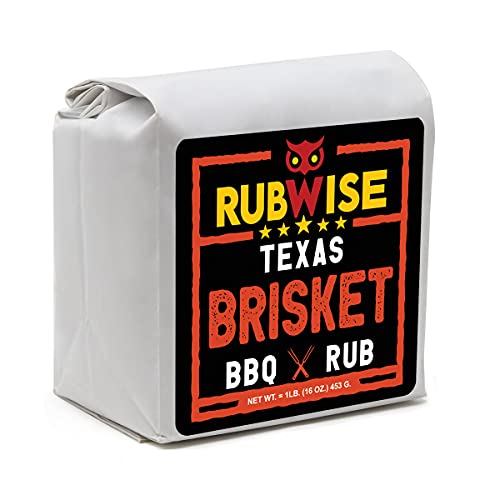
RubWise produced this signature blend for championship cook-off winners in Texas, and it shows in the balance of sweet, savory, and heat. The rub delivers saltiness from kosher salt, a mild sweetness, and a noticeable but not punishing chipotle kick that builds as you chew—exactly what you want for a brisket that needs complexity without overwhelming the meat.
The 16-ounce package is generous—users report getting four to five briskets per bag, which makes the per-cook cost very reasonable. The particle size is intentionally coarse, creating a thick bark layer that stays intact even when the brisket is wrapped during the stall. Several reviews note that the rub is “not too spicy” even for heat-sensitive guests, which indicates the chipotle is more about depth than burn.
One minor point: if you prefer a classic Central Texas “dalmatian” rub of just salt and pepper, this will taste like a departure. The sugar and chipotle make it decidedly more complex. But for anyone who wants a competition-inspired brisket with visible bark and layered flavor, this rub delivers reliably.
Why it’s great
- Generous 16 oz container yields 4–5 briskets per bag
- Chipotle adds depth without overwhelming spice
- Proven formula used by Texas competition winners
Good to know
- Sugar content makes it unsuitable for keto/carnivore diets
- Not a traditional salt-and-pepper-only blend
4. Rufus Teague Meat Rub
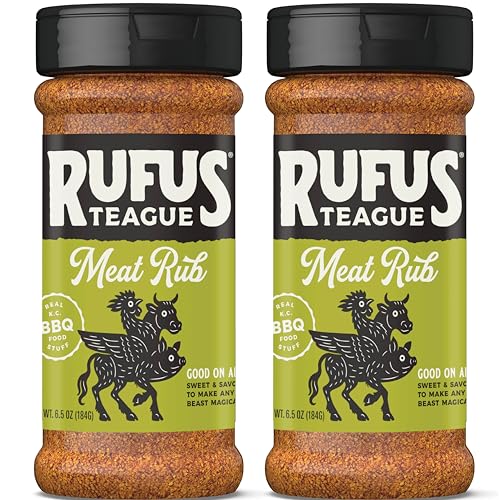
Rufus Teague brings Kansas City tradition into the blend, offering a savory-slightly-sweet profile that works across beef, pork, chicken, and even vegetables. The rub contains no MSG, no artificial additives, and is certified gluten-free and Non-GMO, which matters if you cook for a crowd with dietary restrictions.
The grind is fine enough to adhere well but coarse enough to build visible bark during a 300°F smoker run. Users have used it successfully on pressure-cooked ribs followed by a broil, sous vide bison roasts, and oven-baked shrimp, demonstrating impressive versatility. The 6.5-ounce bottle is smaller than the bulk offerings from RubWise or John Henry’s, but the ingredient quality justifies the premium tier.
On a brisket, the rub creates a mahogany-colored crust with a balanced sweetness that does not dominate. The flavor profile leans more toward the “Kansas City sweet” camp than the “Texas pepper-forward” style, so purists may want to layer extra black pepper. If you prefer a rub that works on everything from brisket to grilled vegetables without a separate kitchen arsenal, this is a smart buy.
Why it’s great
- Clean label—gluten-free, Non-GMO, no MSG
- Versatile across beef, pork, poultry, and vegetables
- Creates a rich mahogany bark with balanced sweetness
Good to know
- Small 6.5 oz bottle offers less per-cook value
- Sweet Kansas City profile may not suit Texas purists
5. John Henry’s Texas Brisket Rub Seasoning
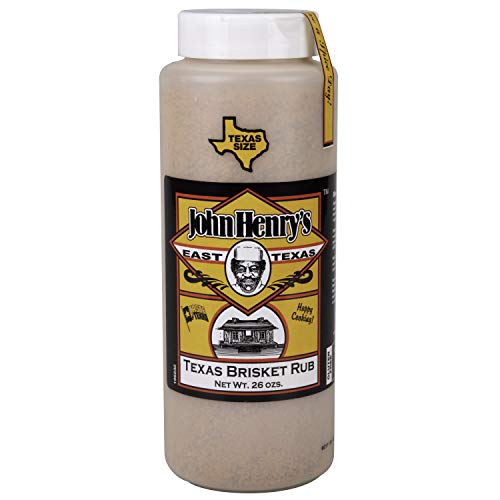
John Henry’s delivers the largest container in this roundup at 26 ounces, making it the obvious choice if you smoke multiple briskets each month or feed a large family. The blend is a balanced mix of sugar, salt, and spices with no MSG and gluten-free labeling, designed to hold juices in while building bark on the exterior.
Users report that the rub does not turn bitter even after long cooking sessions—a common failure point for blends with high dextrose content. The texture is moderately coarse, allowing good adhesion and bark development during a low-and-slow smoke. Beyond brisket, it works on tri-tip, chicken, pork, ribs, and even fish, making it a true all-purpose contender.
The one caveat is that the sugar content is high enough that it caramelizes quickly above 275°F. If you prefer a hot-and-fast brisket cook, monitor your smoker temp closely to avoid a scorched crust. For traditional low-and-slow smokers who want maximum volume without sacrificing flavor quality, this is the most economical option on the list.
Why it’s great
- Massive 26 oz container—best value for volume
- Does not turn bitter during extended smokes
- Versatile across multiple proteins and cooking methods
Good to know
- Sugar content can scorch above 275°F
- Not suitable for keto or carnivore diets
FAQ
Should I apply the rub 12 hours before smoking or right before?
Does a rub with sugar ruin the bark on a long smoke?
Final Thoughts: The Verdict
For most users, the rub for brisket smoking winner is the Revolution Barbecue Texas Beef BBQ Rub because it combines an award-winning formula with a clean, zero-sugar ingredient deck that produces a deep, non-bitter bark on long smokes. If you want a versatile all-purpose rub with a unique citrus note, grab the Kosmos Q Texas Beef Dry Rub. And for feeding a crowd or smoking multiple briskets per month without breaking the bank, nothing beats the sheer volume and consistent flavor of the John Henry’s Texas Brisket Rub Seasoning.